

PM Edition: Here are the top 10 law and security articles on LiveNews.co.nz for April 21, 2026 – Full Text
Intimate partner homicide has clear warning signs – and is often preventable, research shows
April 21, 2026
Source: MIL-OSI-Submissions-English
Source: The Conversation – USA (3) – By Kathryn Spearman, Assistant Professor of Nursing, Penn State

Dr. Cerina Wanzer Fairfax was an accomplished dentist and a loving mom to two teenage children. On April 16, 2026, she was killed by her estranged husband, former Virginia Lt. Gov. Justin Fairfax, who then killed himself, according to news reports. This apparent intimate partner murder-suicide has garnered widespread media attention because of Justin Fairfax’s public profile.
As if to prove how pervasive such incidents are, just three days later, on April 19, 2026, eight children were killed in a mass shooting related to intimate partner violence in Louisiana. Seven of the children were shot by their father, who also killed another child and wounded his wife and another woman in the same attack, according to news reports. Both wounded women were mothers of some of the seven children.
Two-thirds of mass shootings in the United States are linked to domestic violence, and 40% of the victims in domestic violence-related mass shootings are children. The terms domestic violence homicide and intimate partner homicide are often used interchangeably, but the former includes all killings within a household or family, while the latter specifically refers to murders related to a current or former partner.
I am a public health nurse scientist who studies risk factors for intimate partner homicides and post-separation abuse. Research consistently shows that the period of separation and divorce is when the risk of intimate partner homicide is highest.
Tragically, the warning signs that precede homicides by an intimate partner are common but often misunderstood or unrecognized. All too often, escalating behaviors during separation may be chalked up to a “messy divorce” or “custody battle.” But such language obscures patterns of danger that are recognizable, predictable – and, importantly, preventable.
Clear warning signs for domestic violence homicides
Four of the most dangerous warning signs that a woman is at risk of being murdered by an intimate partner are firearm access, separation, prior nonfatal strangulation and stalking. Other red flags that indicate a partner may kill include unemployment, substance use, problematic drinking, controlling or jealous behavior, abuse during pregnancy, rape and prior threats of suicide or with weapons.
The pattern of behavior matters. These risk factors have been studied extensively and are best understood not in isolation but in how they interact.
Several elements in the Fairfax case were red flags that should have prompted intervention: Justin Fairfax’s unemployment, problematic drinking and firearm access; a prior concern for suicide; and a separation that involved an ongoing family court case for divorce and child custody. The warning signs were there: Dr. Cerina Wanzer Fairfax was in danger.

Alex Wong/Getty Images via Getty Images News
Who is most at risk?
Nearly five women are murdered in America every day by a current, former or estranged intimate partner. Intimate partner homicide is a leading cause of mortality for women of reproductive age, and Black women are murdered at disproportionately higher rates. The vast majority of adult victims of intimate partner murder-suicides – 95% – are women. The killer is almost always a man, the weapon is most often a gun, and these incidents occur most often in the home.
The uncomfortable truth is that the home is the most dangerous place for women.
Children are not spared from this danger. Research shows that children are at risk if their mothers are at risk, and intimate partner violence is also a leading cause of death of American children. What’s more, 40% of children who are murdered in a domestic violence mass shooting are killed by a parent – someone who should love and protect them – most often in their homes.
Turns out, home is the most dangerous place for children too.
Children who survive their mothers’ murder find their bodies or witness the homicide in about 70% of cases.
Cerina Wanzer Fairfax’s teenage son found her and called 911. Behind these heartbreaking details is trauma that is difficult to comprehend. The needs and long-term outcomes of child survivors of intimate partner homicide, like the Fairfax children and those who may have witnessed the Louisiana mass shooting, remain largely invisible in the research on domestic violence. Addressing this research gap is essential for communities to respond effectively to support the needs of children who are surviving devastating grief.
Separation is the most lethal time
Contrary to common misperception, leaving an abusive relationship does not end the abuse – nor does it necessarily lead to safety. About half of murders of women by an intimate partner occur as or after a woman tries to leave the relationship or when she is involved in civil family law proceedings, including civil protective orders, child custody, separation and divorce. Physical separation, such as moving out, coupled with legal separation is associated with the greatest risk.
The gunman in the Louisiana case was separating from his wife, and the duo had a court appearance scheduled for the day following the shooting, according to news reports.
Separation is particularly risky from a controlling partner, or perhaps more aptly worded, from someone who is losing control. Women who leave a controlling male partner are nine times more likely to be murdered.
The judge in the Fairfax custody proceedings noted that Justin Fairfax had purchased a gun in 2022 with money designated for their children’s activities. People who engage in abusive behaviors may directly or indirectly threaten their partners with firearms, which can often include subtle threats toward their children.
Assessing risk and accessing interventions
Guns and separation are a deadly combination. Research shows that in about 3 in 5 cases of murder-suicide perpetrated by men with a firearm, family court is somehow involved. In other words, the homicide perpetrator was participating in legal proceedings relating to separation, divorce or child custody.
This evidence points to family court proceedings as a place where interventions could work. Research shows that domestic violence protection orders, which allow courts to remove firearms from people identified as being at high risk for using violence against a partner, reduce the risk of intimate partner homicide-suicides. Removing firearm access is one of the few effective interventions for reducing intimate partner homicide.
Researchers have developed tools that can help advocates and legal professionals identify women most at risk as well as help women recognize their own risk. A particularly well-tested one is the danger assessment, which can be used in health, legal and advocacy settings.
But screening on its own is not enough. Women at high risk need to be connected to safety planning resources. People who may be concerned for themselves or a loved one can use an app such as MyPlan, which incorporates the danger assessment and provides safety planning suggestions.
Intimate partner homicides follow a pattern of known, predictable risks. And predictable patterns are very often preventable. The warning signs are well studied. Translating that knowledge into consistent recognition and response across courts, law enforcement and communities is where the work remains.

Kathryn Spearman has received funding for her research from Eunice Kennedy Shriver National Institute of Child Health and Human Development and The Pennsylvania State University Child Maltreatment Solutions Network.
– ref. Intimate partner homicide has clear warning signs – and is often preventable, research shows – https://theconversation.com/intimate-partner-homicide-has-clear-warning-signs-and-is-often-preventable-research-shows-280984
Back to index · Read original article
ICE’s heavy-handed immigration enforcement was tried once before – by Arizona’s notorious sheriff Joe Arpaio in the early 2000s
April 21, 2026
Source: MIL-OSI-Submissions-English
Source: The Conversation – USA – By Jonathan van Harmelen, Visiting Assistant Professor, Oberlin College and Conservatory

For the past 13 years, Maricopa County in Arizona has attempted to reform its sheriff’s department after Joe Arpaio made it into a national flash point for extreme immigration tactics. After a legal immigrant sued Arpaio and the county Sheriff’s Office, a federal district court ruled in 2015 that Arpaio and his deputies relied on racial profiling to target Latinos.
Arpaio was at the center of that suit. From 2006 to 2017, he implemented his own immigration detention program, instructing deputies to detain anyone who did not carry a valid identification and did not speak English. One U.S. Department of Justice attorney characterized Arpaio as overseeing “the worst pattern of racial profiling by a law enforcement agency in U.S. history.”
Federal oversight has since aimed to reform the sheriff’s department and improve trust with the county’s Latino residents, which had been destroyed under Arpaio’s tenure.
As a historian of U.S. immigration, I believe Arpaio’s immigration detention methods are clearly echoed in the hardline immigration policies devised by presidential aide Stephen Miller. That’s evident in actions by immigration agents with Immigration and Customs Enforcement and Customs and Border Protection that have been described as inhumane by some lawmakers and civil rights groups.
A blueprint for ICE facilities
From his election to sheriff in 1993 until 2017, Arpaio made constant headlines for his creation of a tent jail and his heavy-handed immigration enforcement tactics.
Using surplus army tents from the Korean War to house up to 1,700 inmates, Arpaio built Tent City in August 1993 to address overcrowding in Phoenix jails. By the time the jail closed in 2017, Sheriff Paul Penzone estimated that running Tent City cost taxpayers US$8.5 million annually.
Tent City was initially used for detaining criminals, but after 2009, Arpaio used the facility for housing detained immigrants.
News reports said Arpaio forced inmates to wear pink underwear and often fed them expired food and undrinkable water. The tents did little to shield inmates from the Arizona desert, where temperatures rose to 130 degrees Fahrenheit, (54 degrees celsius) at times. Tent City stirred a national uproar.

John Moore/Getty Images
Starting in 2006, Arpaio and Maricopa County sheriffs engaged in a pattern of “unlawful discriminatory police conduct directed at Hispanic persons,” according to Deputy Assistant Attorney General Mark Kappelhoff. During these operations, he directed deputies to detain people suspected as being undocumented immigrants without legal immigration authorization.
Arpaio’s deputies explicitly targeted Latino drivers in their traffic stops. A Department of Justice investigation concluded that Arpaio used race as a criteria for stopping and detaining Latino drivers. Legal U.S. residents and U.S. citizens were occasionally arrested in these sweeps.
Phoenix News-Times journalist Stephen Lemons in January 2009 noted that, during operations, some Maricopa County sheriff’s deputies wore ski masks and carried assault rifles while conducting immigration sweeps.
Camp East Montana
Tent City appears to be an early version of the detention facilities used by ICE today, where detainees have complained of squalid conditions and poor food.
ICE currently detains some 70,000 people in 224 detention centers nationwide. Of those, two camps, Camp East Montana near El Paso, Texas, and Alligator Alcatraz in Florida, are eerily similar to Tent City.
Camp East Montana is the most recent of these new facilities. Opened in August 2025, the 60-acre detention center has become one of the largest ICE facilities in the U.S., holding 5,000 detainees.

AP Photo/Morgan Lee
Like Tent City, Camp East Montana was constructed using tents that do little to shield inmates from the elements. The Washington Post reported in September that the facility’s poor food, shoddy living quarters and exposure to the desert sun violated 60 federal regulations.
The cost of inhumane policies
During Arpaio’s tenure, his office faced 6,000 federal lawsuits.
Those included a $9 million payout to the parents of Charles Agster III, after a federal jury found Arpaio and jailhouse nurses negligent in his death. And they included a $2 million payout to the parents of Brian Crenshaw after the disabled man died following an altercation with a sheriff’s detention officer.
The most costly, though, was the 2013 ruling in Melendres v. Arpaio. U.S. District Judge Murray Snow found Arpaio guilty of racial profiling. The ruling placed Arpaio’s office under federal monitoring with orders to overhaul the department. As a result, Maricopa County residents have paid $323 million to reform the department.
Arpaio left office in January 2017. Months later, Tent City closed. After a failed attempt to run for U.S. Senate in 2018, Arpaio retired from politics.
But I believe that the resemblance between Arpaio’s fixation on immigration and Trump’s deportation campaign remains.
Since Trump’s second election, ICE and CBP agents have followed Arpaio’s playbook. Along with erecting tent jails for detaining immigrants, agents have used racial profiling during immigration raids. Consequently, hundreds of U.S. citizens have been detained during raids and protests.
On April 2, 2026, Judge Jennifer Thurston ruled that CBP agents violated court orders and “again detained people without reasonable suspicion” – tactics similar to those used by Arpaio.
Arpaio’s policies foreshadowed Trump’s deportation policy: one that uses racial profiling and shows little regard for human rights.
As U.S. Supreme Court Justice Sonia Sotomayor noted in her dissent in Noem v. Vazquez-Perdomo in 2025, many Latinos now carry proof of citizenship out of fear of racial profiling.
In July 2017, a federal court found Arpaio guilty of criminal contempt for violating a 2011 federal order to stop detaining people solely on suspicion of illegal immigration status.
A month later, before Arpaio’s sentencing, Trump pardoned Arpaio. He described the sheriff as a “great American patriot” who had “done a lot in the fight against illegal immigration.”

Jonathan van Harmelen does not work for, consult, own shares in or receive funding from any company or organization that would benefit from this article, and has disclosed no relevant affiliations beyond their academic appointment.
– ref. ICE’s heavy-handed immigration enforcement was tried once before – by Arizona’s notorious sheriff Joe Arpaio in the early 2000s – https://theconversation.com/ices-heavy-handed-immigration-enforcement-was-tried-once-before-by-arizonas-notorious-sheriff-joe-arpaio-in-the-early-2000s-279310
Back to index · Read original article
Political violence in South Africa is driven by a power elite trying to establish dominance – new research
April 21, 2026
Source: MIL-OSI-Submissions-English
Source: The Conversation – Africa (2) – By Ivor Chipkin, Associate lecturer, University of Pretoria
For much of the past two decades, South Africa’s recurring waves of protest have been interpreted through a dominant lens: the failure of the post-apartheid state to deliver services to its poorest citizens. Rising unemployment, corroding infrastructure and inadequate housing are the familiar explanations offered.
We are political scientists who have been analysing protests and protest data for years. In a recent article we propose that the overall pattern of protest activity in South Africa cannot be explained by socio-economic conditions alone. It tracks the internal power struggles of the ruling party, the African National Congress (ANC).
This has led us to a new reading of state capture.
As we set out in a paper in 2025, state capture in South Africa is often reduced to a phenomenon of large-scale corruption. The focus has been on the way that private businesses, working with politicians, repurposed legislative and administrative processes to serve their interests and disable the criminal justice system to avoid consequences.
The conventional understanding casts state capture as looting: the opportunistic and organised theft of public resources by politically connected networks and enabled by a compromised presidency.
We do not contest the reality of this pillaging. But we argue that it was also something more structurally purposeful. State capture, in our account, was the mechanism by which former president Jacob Zuma sought to forge a “power elite” in the ANC.
This is a term we borrow from the sociological tradition of C. Wright Mills to refer to a small cohesive group that is able to make decisions with national consequences in political, military and economic institutions. In contrast a politically connected network may have influence but is too diffuse to exercise power as such.
The power elite matters because it explains who really makes the biggest decisions in society and why democratic institutions do not always fully control those decisions.
The argument we’re presenting has consequences for how the country understands what state capture is, and the trajectory of South African democracy itself.
Protests as a barometer
Drawing on data from the South African Police Service, the Armed Conflict Location and Event Data Project, and the Institute for Security Studies, we identify a striking pattern. Protest events rose sharply from around 2006, reaching what some researchers called “insurrectionary proportions” by 2011.
Then they stabilised and began to decline between roughly 2013 and 2017. This period coincided with the consolidation of Zuma’s hold on power and the height of state capture.
After 2018, protests surged again to unprecedented levels. In 2021, the country
experienced its worst civil revolt since the end of apartheid.
The socio-economic conditions typically cited to explain protest – unemployment, inequality, poor service delivery – do not follow this same pattern. They did not improve during the 2013-2017 lull. If anything, they worsened. As our paper records, municipal audit outcomes deteriorated sharply by the end of the period.
Inequality, measured by Gini coefficients across South Africa’s major
cities, remained essentially unchanged. The exception was Cape Town, where inequality seems to have declined.
The stabilisation of protest activity, we conclude, cannot be attributed to improvements in the living conditions of poor South Africans.
Something else was suppressing the mobilisation of discontent.
Our answer draws on political sociology and on comparative work on elite formation in Africa and beyond. We conclude that protests are instruments of elite competition. This includes the tactical deployments of professional agitators by local politicians and their networks contesting for control of resources, positions and patronage within the ANC.
When these competitions are acute and unresolved, they spill outward as protests. When they are contained, protest subsides.
The how
By repurposing state-owned enterprises away from their public mandates, the Zuma network generated enormous rents that were then used for private enrichment and to finance factional political activity. This included paying for party rallies, sustaining provincial and regional networks, creating sympathetic media infrastructure, and distributing cash and contracts to potential opponents in exchange for loyalty or silence.
The result was a temporary stabilisation of what had been a fractured and contested elite terrain.
Between roughly 2013 and 2017, a group of politically aligned operators was able to discipline internal competition, in part by allocating positions in government, state-owned enterprises and the party apparatus.
Those who would not be bought were expelled, marginalised, or subjected to violence. We note that political assassinations rose sharply during Zuma’s second term. Evidence before the Zondo Commission into state capture pointed to the deployment of armed units under presidential operational control.
The relative “stability” observable in protest data between 2013 and 2017 was the successful suppression of elite competition through corruption, patronage and coercion. The modest improvement in municipal spending was the result of elite power exercised over administrative systems.
The unravelling under Ramaphosa
If Zuma’s presidency saw the construction of a power elite, Cyril Ramaphosa’s has seen its unravelling.
The consequences have been severe.
At the ANC’s 54th national conference in December 2017, Ramaphosa narrowly defeated Nkosazana Dlamini-Zuma for the party presidency. Zuma’s internal compact then began to fracture. The spike in protest activity that followed was almost immediate.
Ramaphosa was not prepared to deploy corruption and violence as political solutions. But without an alternative basis for managing elite competition, the ANC’s internal fissures deepened.
There were symptoms of this disintegration in 2023:
-
the establishment of the uMkhonto weSizwe (MK) Party by Zuma
-
its performance in the May 2024 general election – it emerged as the third-largest party nationally.
Gatekeeping became decentralised and unregulated. Elite contestation began migrating out of the party system altogether.
A sobering conclusion, and hint of hope
We conclude that some of it will be pushed towards organised crime. Mafia-type networks, we suggest, should be expected to grow.
There is, however, a more hopeful possibility. The reason the ANC has functioned as the primary arena for elite competition is that it has controlled access to the “gate” – the allocation of positions in the state, the civil service and state-owned enterprises.
Remove that control, and the character of elite competition changes. This is precisely what is at stake in the amendments to the Public Service Act of 1994. Signed into law by Ramaphosa on 26 March 2026, it was gazetted on 1 April 2026.
The legislation aims to:
-
reduce executive discretion over appointments in the public service
-
insulate civil service recruitment and operations from party-political interference.
If implemented, political parties will be compelled to compete for support through policy and performance rather than patronage. Elite competition will shift to the public administration system itself. Ideally, this will be governed by merit, transparency and professional standards.
We are cautious about the prospects for this reform. History is not encouraging and the political conditions are challenging.
But if it can end gatekeeping, new legislation like the Public Service Amendment Act will change the elite social terrain in South Africa.

Ivor Chipkin and Jelena Vidojević are affiliated with New South Institute
Jelena Vidojević does not work for, consult, own shares in or receive funding from any company or organisation that would benefit from this article, and has disclosed no relevant affiliations beyond their academic appointment.
– ref. Political violence in South Africa is driven by a power elite trying to establish dominance – new research – https://theconversation.com/political-violence-in-south-africa-is-driven-by-a-power-elite-trying-to-establish-dominance-new-research-280504
Back to index · Read original article
Schools are supposed to limit using restraint and seclusion to discipline kids – but parents I spoke with say the practice is wildly misused
April 21, 2026
Source: MIL-OSI-Submissions-English
Source: The Conversation – USA (2) – By Charles Bell, Associate Professor of Criminal Justice Sciences, Illinois State University

“Jessica,” the adoptive mother of a third grade student, was shocked when she discovered that her daughter had spent over 100 hours locked in a room alone at her North Carolina public school.
School staff locked the child in a room by herself after she flipped markers in the air, lay on the floor and tilted her chair back, Jessica told me in 2024. Jessica’s daughter has a nonverbal learning disability, mild attention-deficit/hyperactivity disorder and bipolar disorder.
Jessica’s situation is one of dozens that I document in my 2026 book, “No Restraint: Disabled Children and Institutionalized Violence in America’s Schools.” This book is part of my research on how families of children with disabilities navigate public schools that use restraint and seclusion to discipline students.
Restraint in this context means reducing a student’s ability to move their body freely, whether it is someone physically holding a student back or using bungee cords to constrain them, according to the U.S. Department of Education. Seclusion means a student is physically prevented from leaving a room until they are calm.
Not all public schools have seclusion rooms. And seclusion rooms can look different in various schools. Some schools refer to them as quiet rooms or a timeout box. In some schools, a seclusion room has a door with an outside lock. In other schools, a staff member holds the door shut.
Restraint and seclusion are intended to be used in situations where a child is a danger to themselves or others. Some teachers argue that seclusion rooms are necessary to protect them when students become violent.
But parents like Jessica told me school staff routinely used these tactics to punish students for nonviolent, minor offenses.
Understanding restraint and seclusion
Approximately 100,000 students are restrained and secluded in public schools each year, according to the Department of Education’s most recent data, from 2020.
Students with disabilities make up 13% of the school-age population in the U.S. but constitute nearly 80% of those who were restrained and secluded in public schools. Widespread underreporting of this method of discipline is common.
There is no federal law that regulates seclusion and restraint in public schools.
That said, 44 states have laws that limit the use of restraint and seclusion to emergency situations or ban it altogether. Minnesota, for example, bans the use of seclusion for children who are in third grade or younger.
And 41 of these same states have laws that schools must notify parents each time their child is restrained or secluded.
Various news organizations, such as ChalkBeat, have found that schools in North Carolina, Michigan and Illinois have violated restraint and seclusion laws.
In some cases, schools use terms such as “quiet room” and “timeout” to circumvent laws that mandate reporting restraint and seclusion to parents and government agencies.
Talking directly with parents
I interviewed 50 parents of children with disabilities from urban, suburban and rural public schools across 15 states, including North Carolina, Michigan, Illinois, Texas, Utah and Massachusetts, between 2021 and 2024.
I recruited parents by posting a flyer on social media and contacting disability advocates in multiple states. I was interested in speaking with families whose children had been restrained and secluded at school. Some of the families were struggling financially, while others were affluent. I used fake names in my book to protect their identities.
All of the parents I spoke with had children who were restrained and secluded at school at least once, with some experiencing the punishment more than 30 times.
Children could be restrained and secluded for violent behavior. But this punishment was also meted out for relatively minor infractions: singing loudly in class, repeatedly leaving their seat, and eating snow. In some cases, after being restrained and secluded, children began hitting school staff, which led to additional time in the seclusion room.

Oscar Romero Ruiz/iStock
Punishing with restraint and seclusion
The Department of Education has said that restraint and seclusion “should never be used as punishment or discipline … as a means of coercion or retaliation, or as a convenience.”
However, most of the parents I interviewed told me that school staff were using restraint and seclusion as punishment.
A few parents I spoke with called the police or child protective services after their children were locked in seclusion rooms. Thirty-eight of the 50 parents I spoke with spent between US$2,000 and $300,000 on lawsuits against the schools.
In return, some school staff allegedly used intimidation tactics to stop parents from speaking out about their child’s seclusion, parents told me.
For example, two Michigan parents named “Amy” and “John” told me in 2024 that school staff restrained their 11-year-old son, “Michael,” in 2023 after he pushed a boy who was bullying him. Michael had been diagnosed with ADHD and pediatric autoimmune neuropsychiatric disorders associated with streptococcal infections, or PANDAS, a disorder that can cause intense anxiety and mood swings.
School staff physically held Michael back. A teacher then allegedly dragged Michael to a seclusion room and locked him inside with another boy. Moments later, a second altercation occurred between the two boys in the room.
After learning about this incident in 2023, Amy and John withdrew Michael and sued the school.
After they spent $90,000 on a lawsuit, John said, the school requested a gag order to prevent them from speaking about their child’s experience. School administrators also offered John and Amy a $15,000 settlement.
John and Amy decided to stand their ground in court. As the lawsuit continued, school staff retaliated and called CPS on the family.
“There is a saying in the special needs community: ‘It isn’t if CPS gets called on you, it’s when.’ And it’s all because the school is using them as a tool to either push people out of the school or to intimidate them into behaving correctly,” John said.
When I contacted the school in 2024, administrators did not respond to comment on the lawsuit.
In Jessica’s case, she also hired an attorney and filed a federal lawsuit.
Jessica told me school staff concealed evidence of the more than 20 instances between 2018 and 2020 that they locked her daughter in a seclusion room.
When I spoke with Jessica in 2024, she told me that school administrators tried to fire her husband, who was employed by the district at the time of their lawsuit. In this case, Jessica shared how a judge intervened to prevent her husband from being fired.
Searching for meaningful solutions
Within the past few years, there have been calls for Congress to pass the Keeping All Students Safe Act.
After a failed attempt to pass this legislation in 2021, U.S. Rep. Donald Beyer, a Democrat from Virginia, reintroduced the Keeping All Students Safe Act to Congress in December 2025. The bill remains in the House Committee on Education and Workforce.
This legislation would protect children from harmful restraint and seclusion practices by ensuring that school staff are properly trained on this practice. The bill would limit the use of restraint and seclusion to emergency situations. And it would mandate that parents are notified every time their child is restrained or secluded at school.
Regardless of federal legislation, I think that parents play an important role in understanding how school restraint and seclusion affect families. Also, researchers and policymakers cannot fully understand how retaliation influences parents’ schooling decisions if parents are not included in this discussion.

Charles Bell does not work for, consult, own shares in or receive funding from any company or organization that would benefit from this article, and has disclosed no relevant affiliations beyond their academic appointment.
– ref. Schools are supposed to limit using restraint and seclusion to discipline kids – but parents I spoke with say the practice is wildly misused – https://theconversation.com/schools-are-supposed-to-limit-using-restraint-and-seclusion-to-discipline-kids-but-parents-i-spoke-with-say-the-practice-is-wildly-misused-279920
Back to index · Read original article
There is something wrong with the asylum process for LGBTQ+ people – but it’s not fake claimants
April 21, 2026
Source: MIL-OSI-Submissions-English
Source: The Conversation – UK – By Raawiyah Rifath, Lecturer in Law, University of Exeter
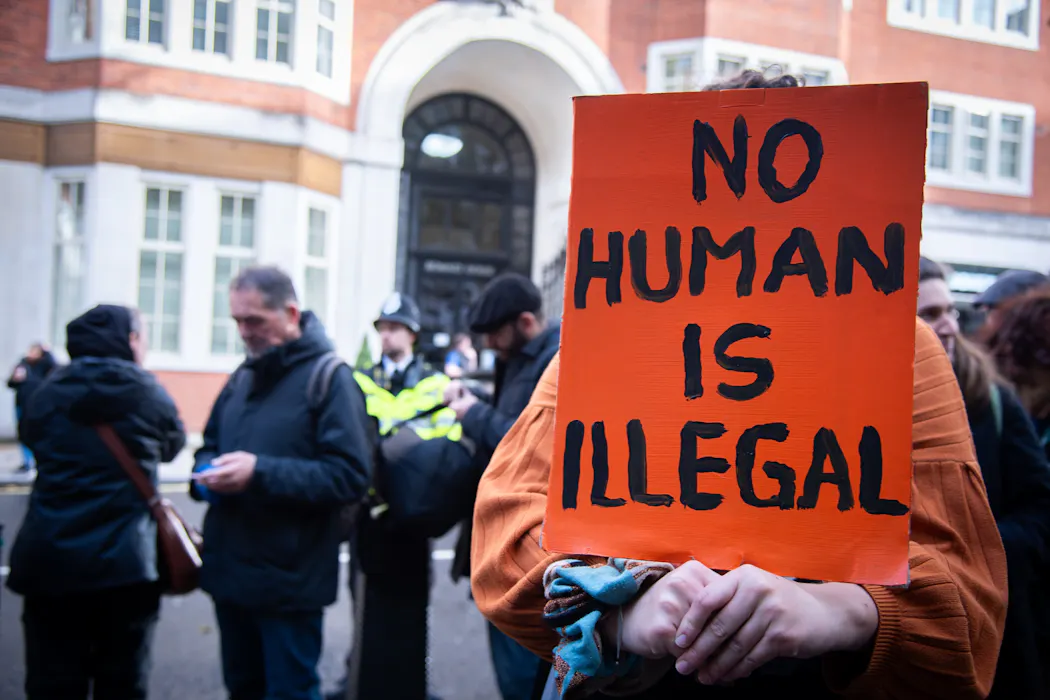
An undercover investigation by BBC News has found evidence of people falsely claiming to be gay to gain asylum in the UK. The findings are concerning. But rather than assume this means all asylum applicants are lying, it’s worth asking why people might be drawn to this route.
There is good reason for the UK and other countries to offer refuge to LGBTQ+ asylum seekers. Extensive evidence from organisations such as Human Rights Watch and UNHCR shows that LGBTQ+ people in countries like Pakistan and Bangladesh face imprisonment, family and community violence, police harassment and so-called honour-based abuse. This is precisely why sexual orientation is recognised as a basis for protection in international refugee law.
Sexual orientation claims make up a very small proportion of overall asylum applications. Only 2% of all asylum claims made in 2023 included sexual orientation as part of the reasoning.
Proving to the Home Office that someone is LGBTQ+ isn’t an easy feat. The BBC investigation repeats an adviser’s claim that “there is no check-up”. In reality, the Home Office conducts an intensive refugee status determination process. This involves two interviews, and places the burden of proof on the claimant to show that they require protection from persecution.
In recent years, sexuality in asylum claims has come to be about identity, rather than behaviour. This view – which is often about how people see themselves or what protests or nightclubs they attend – isn’t necessarily consistent with how applicants understand their own sexuality.
Research suggests that decision-makers often rely on narrow, formulaic expectations of how an LGBTQ+ person “should” behave, rather than properly assessing the risk of persecution. For example, one of our research participants, a Ugandan refugee, said that her having been previously married to a man (in a forced marriage), was taken as evidence that she was not a lesbian.
The asylum process makes stereotypical performances of credibility easier to read for decision-makers, compared to the ambivalent and fluid reality of LGBTQ+ lived experience. It privileges linear emotional journeys and open and visible participation in LGBTQ+ spaces. This is often through a western lens of what sexual orientation as an identity means.
For example, research has shown that perceptions of homosexuality being at odds with religion means religious LGBTQ+ asylum seekers face additional suspicion.
This creates incentives for legal experts, charity workers and advisers to package LGBTQ+ claimants into institutionally recognisable categories. In other words, it is the assessment process itself that produces the conditions in which “coached” identities are viewed as a way through the asylum system.
Fabricating a claim is not easy, however: it is risky, expensive and often unsuccessful. One of the BBC’s core examples, “Ali”, was ultimately not successful in securing refugee status in the UK. Since the passage of the Nationality and Borders Act 2022, an even higher standard of proof has applied to all asylum claims.
A culture of disbelief
Research in refugee and migration studies has consistently shown evidence of a widespread culture of disbelief by authorities towards people seeking asylum. This is particularly true in the case of those basing their claims on their sexual orientation.
Asylum systems are sceptical by design. Applicants undergo long, detailed interviews. They must demonstrate consistency and plausibility, and face significant rejection rates. In the UK, the initial grant rate for the year ending December 2025 was 42%, meaning most claims were rejected (many of these are later granted on appeal).
At the same time, a lack of accessible information about the asylum system as well as affordable legal advice and representation mean that applicants are easily misled or exploited by bad faith actors.
The BBC investigation exposes a handful of cases, but there is no credible evidence that fraudulent claims in this category are widespread. When similar allegations were made by former home secretary Suella Braverman in 2023, the Home Office was unable to provide evidence of systemic abuse.
More than anything, the BBC’s report is evidence of a regulatory issue in the legal system that should be addressed. But it is likely to cast suspicion over LGBTQ+ asylum claims more broadly, reinforcing the idea that people seeking asylum are trying to “game the system”. It says little about the structural conditions that shape these claims in the first place. These include an underfunded legal aid sector, and the lack of safe and managed routes for refugees, forcing people into precarious and informal systems in the first place.
Rather than leading to better decision-making by the Home Office, panic over fake claimants could create a harsher atmosphere where those with well-founded fear of persecution may find it even harder to be protected.

Raawiyah Rifath has received funding from the Wellcome Centre for Cultures and Environments of Health.
Alex Powell and Calogero Giametta do not work for, consult, own shares in or receive funding from any company or organisation that would benefit from this article, and have disclosed no relevant affiliations beyond their academic appointment.
– ref. There is something wrong with the asylum process for LGBTQ+ people – but it’s not fake claimants – https://theconversation.com/there-is-something-wrong-with-the-asylum-process-for-lgbtq-people-but-its-not-fake-claimants-280838
Back to index · Read original article
Y a-t-il des peines plus clémentes pour des non-citoyens au Québec ?
April 21, 2026
Source: MIL-OSI-Submissions-French
Source: The Conversation – in French – By Meritxell Abellan-Almenara, Candidate au doctorat, Université de Montréal
Un juge de la Cour du Québec a jeté un pavé dans la mare en suggérant que les personnes non citoyennes qui se retrouvent devant la justice bénéficient de peines plus clémentes, afin d’éviter leur déportation vers leur pays d’origine une fois cette peine purgée.
Le mercredi 8 avril 2026, dans l’affaire R. c. Bladimir-Castillo, le juge de la Cour du Québec Antoine Piché a en effet clamé que certaines pratiques de la Couronne seraient en train de créer un système pénal plus clément en faveur des personnes non citoyennes, contournant ainsi l’intention du législateur fédéral.
Le ministre de la Justice du Québec, Simon Jolin-Barrette, a aussitôt réagi en exhortant le Directeur des poursuites criminelles et pénales (DPCP) à réviser ses pratiques. Mais le DPCP nie l’existence de tout système parallèle.
Une dynamique similaire s’observe au niveau fédéral, où le Parti conservateur du Canada a présenté en septembre 2025 un projet de loi intitulé Une loi pour tous. Celle-ci vise à dénoncer un système de justice à deux vitesses contraire aux principes d’équité et d’égalité devant la loi.
Qu’y a-t-il de vrai dans ces allégations ? Sommes-nous face à un système de détermination de la peine qui pénalise les citoyens canadiens et favorise les non-citoyens ? Mes recherches doctorales permettent d’éclairer la question en mettant en lumière l’influence réelle du statut migratoire lors de la détermination de la peine par les cours québécoises.
Les mêmes principes pour tous, dit la Cour suprême
L’article 36 de la Loi sur l’immigration et la protection des réfugiés (LIPR) établit les règles de base : toute personne non-citoyenne (qu’elle soit détentrice d’un visa, réfugiée ou même résidente permanente) déclarée coupable d’une infraction criminelle punissable d’un maximum d’au moins dix ans de prison ou ayant écopée d’une peine prison de plus de six mois, sera déclarée interdite — et donc expulsée — du territoire canadien.
De plus, toute personne non citoyenne qui n’est pas résidente permanente sera aussi interdite si elle est trouvée coupable d’une infraction punissable par mise en accusation, ou bien de deux infractions distinctes.
Depuis 2013, la Cour suprême indique aux juges qu’ils peuvent prendre en compte ce risque d’interdiction et d’expulsion pour décider quelle peine ils imposent à une personne non citoyenne. La cour les astreint cependant à deux conditions. D’abord, la peine imposée doit être proportionnelle à la gravité de l’infraction et à la responsabilité de la personne accusée. Ensuite, la prise en compte des conséquences migratoires ne doit pas mener à une peine artificiellement réduite contournant la volonté du législateur.
Les instructions de la Cour suprême sont claires : la détermination de la peine d’une personne non citoyenne doit suivre exactement les mêmes principes que pour une personne canadienne. Les limites à la discrétion du juge imposées par le principe de proportionnalité demeurent identiques, que la personne soit citoyenne ou pas.
Les conséquences en matière d’immigration peuvent être prises en compte, mais au même titre que d’autres conséquences collatérales qui font partie de la situation globale de la personne accusée, comme la perte d’un emploi ou d’un permis de conduire. Si on généralise la logique du juge Piché, il faudrait alors conclure que la justice canadienne a créé un système parallèle pénalisant les personnes au chômage ou ne détenant pas le permis de conduire.
Ainsi, sur la base de la LIPR et des recommandations de la Cour suprême, les personnes non citoyennes font face à des conséquences beaucoup plus sérieuses que les Canadiens lorsqu’elles sont déclarées coupables d’un crime. Les statistiques de l’Agence des services frontaliers du Canada le confirment : chaque année, environ 1000 personnes non citoyennes sont expulsées du Canada à la suite de leur condamnation.
Les conséquences mentionnées, mais sans effet sur la peine imposée
Sur la base d’une analyse qualitative de la jurisprudence de la Cour du Québec depuis 2001 (année d’adoption de la LIPR) et de 16 entrevues semi-structurées menées en 2025 avec des juges de la Chambre criminelle et pénale de la Cour du Québec, mes travaux montrent que les personnes non citoyennes ne bénéficient pas d’un traitement plus clément que celles ayant la nationalité canadienne. De plus, l’intention du législateur de ne pas créer un système parallèle constitue un facteur central qui encadre et limite l’action de la Couronne et des juges québécois.
L’analyse de la jurisprudence montre que la quasi-totalité des décisions concernant des personnes non citoyennes mentionne les conséquences en matière d’immigration. Mais cette mention n’a, dans la plupart des cas, aucun effet réel sur la peine imposée : malgré la prise en compte du statut migratoire, la personne se voit généralement imposer une peine entraînant son interdiction de territoire.
Un juge du district de Longueuil l’explique ainsi :
Moi, j’applique la loi ; si d’autres sont chargés de décider si quelqu’un doit rester au pays, qui suis-je pour en décider autrement ?
Le nombre d’affaires où la réduction d’une peine permet à une personne non citoyenne d’éviter une déclaration d’interdiction demeure ainsi très restreint, ce qui contredit la thèse d’un système parallèle. Et, même dans les rares cas où la peine est réduite, les juges confirment que le risque d’expulsion ne constitue jamais le facteur décisif.
Comme le dit ce juge montréalais avec presque 20 ans d’expérience :
la loi est la même pour tous, que l’on soit canadien où que l’on soit immigrant […] c’est le même traitement qui doit être imposé. […] Ça ne signifie pas que ce critère là ou cette conséquence indirecte ne soit pas prise en compte, mais elle ne doit pas effacer tous les autres critères qui doivent être pesés, qui doivent être mis dans la balance.
Les entretiens révèlent ainsi que les juges respectent scrupuleusement les limites imposées par le législateur et s’inscrivent dans une logique de stricte application du droit.
Comme l’exprime un autre juge siégeant à Montréal :
c’est le choix des personnes élues par la population ; je m’incline et j’applique la loi.
Contrairement à ce qu’avance le Parti conservateur du Canada, les données probantes montrent que le respect de la volonté du législateur demeure le principal critère guidant la prise de décision judiciaire, quelle que soit la nationalité de la personne accusée.
Une réflexion s’impose sur le pouvoir disproportionné de la Couronne
Ces constats doivent cependant être nuancés : mes travaux concernent des décisions où le juge détermine lui-même la peine, sans suggestion commune des parties. Or, au Canada, environ 90 % des affaires criminelles se règlent par des plaidoyers de culpabilité, dans le cadre duquel la poursuite et la défense négocient la peine et la proposent au juge, qui doit l’accepter sauf dans des cas exceptionnels.
Déjà des milliers d’abonnés à l’infolettre de La Conversation. Et vous ? Abonnez-vous gratuitement à notre infolettre pour mieux comprendre les grands enjeux contemporains.
Les procès où le juge détermine la peine sans être lié par une proposition conjointe, et peut donc exercer pleinement son pouvoir discrétionnaire, ne représentent ainsi qu’une proportion marginale des dossiers qu’ils traitent. La Cour suprême l’a d’ailleurs reconnu : les accords entre parties en échange d’un plaidoyer de culpabilité sont non seulement acceptés au Canada, ils sont « tout à fait souhaitables » et même « essentiels au bon fonctionnement de notre système de justice pénale ».
Ainsi, plutôt que de débattre d’une éventuelle différence de traitement entre personnes citoyennes et non-citoyennes, ne serait-il pas plus pertinent de s’interroger sur les fondements d’un système qui nécessite les plaidoyers de culpabilité pour fonctionner, et sur l’énorme pouvoir que cela confère à la Couronne ? À cet égard, et pour reprendre les mots du juge Piché dans son jugement, « une réflexion s’impose ».

Meritxell Abellan-Almenara a reçu des financements du Conseil de recherches en sciences humaines du Canada (CRSH) à travers le Programme de bourses d’études supérieures du Canada Vanier (BESC Vanier) et de la Maison des Affaires Publiques et Internationales de l’Université de Montréal.
– ref. Y a-t-il des peines plus clémentes pour des non-citoyens au Québec ? – https://theconversation.com/y-a-t-il-des-peines-plus-clementes-pour-des-non-citoyens-au-quebec-280646
Back to index · Read original article
1914 Ludlow Massacre took lives of 25 miners and family members during bitter strike for fair wages and conditions
April 21, 2026
Source: MIL-OSI-Submissions-English
Source: The Conversation – USA – By Robert Forrant, Professor of U.S. History and Labor Studies, UMass Lowell
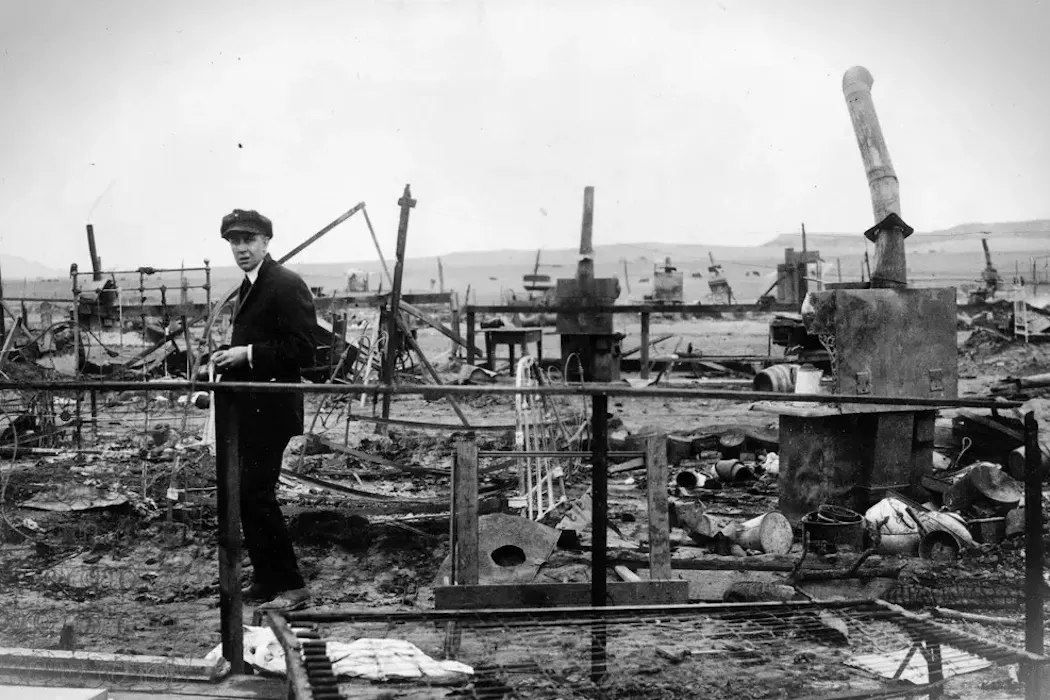
On a spring morning in 1914, miners in Ludlow, Colorado, were celebrating Greek Easter when the Colorado National Guard and a private security agency opened fire on their camp with a machine-gun-equipped armored car called the Death Special.
The miners waged a pitched battle with the National Guard for 10 days before President Woodrow Wilson ordered federal soldiers to intervene. An estimated 69 to 199 people were killed. It was the end of one of the most bitter and violent miner strikes in U.S. labor history, which had begun in September 1913. The strike and massacre prompted Congress to take a hard look at labor reform. But significant changes in labor relations and unionization didn’t come until the mid-1930s.
Some state labor laws were on the books, but in 1914 the U.S. House Committee on Mines and Mining reported: “Colorado has good mining laws and such that ought to afford protection to the miners as to safety in the mine if they were enforced, yet in this State the percentage of fatalities is larger than any other, showing there is undoubtedly something wrong in reference to the management of its coal mines.”
Once the initial shock of the violence wore off, the Ludlow strike received little public attention outside of the immediate families affected and some Colorado residents until late in the 20th century. In “Where Are the Workers,” Mary Anne Trasciatti, a professor at Hofstra University, and I edited a collection of essays written by labor historians and archivists that explore nationwide efforts to bring the history of labor and working people into mainstream narratives of U.S. history.
The Ludlow Massacre is one of the most dramatic and deadly of those stories. It rivals the West Virginia Mine Wars of the 1920s.
The Ludlow Massacre
In September 1913, roughly 10,000 mostly immigrant miners who worked for the Colorado Fuel & Iron Co. went on strike. The miners were represented by the United Mine Workers of America, which submitted a list of demands when the strike began, including implementing the eight-hour workday, being compensated for the time miners spent in the shafts, and the right to select their own housing and doctors.
Since national strikes were called in the 1880s demanding the eight-hour day, this had been a goal for workers throughout the U.S. In Colorado, voters had endorsed such an amendment to the state constitution in 1902, but it was not uniformly enforced.
Coal mining in the early 1900s was labor intensive and dangerous. Death rates were high. Workers had no say in how the mines operated. From 1884 to 1912, more than 1,708 men died in the state’s coal mines, a rate twice the national average. In 1910, explosions at two Colorado Fuel & Iron mines killed 131 people. In 1912, 125 workers lost their lives in mine accidents across Colorado. That year, the annual death rate in Colorado’s mines was 7.06 per 1,000 employees, compared to a national rate of 3.15. Every trip down a shaft was fraught, with workers paid only for the weight of the coal they mined, not for their travel time.
John D. Rockefeller, the nation’s wealthiest man at the time of the strike, was the main owner of the fuel and iron company. With about 10,000 workers and nearly 70,000 acres of land under control, Colorado Fuel and Iron was one of the most powerful mining companies of that era.
Coal companies often owned entire towns, including miners’ homes, which was the case in Ludlow. Worker protests often led to widespread evictions. As a result of the Ludlow strike, 1,200 coal miners and their families were evicted and took refuge in tent colonies around the mines during the winter of 1913-14.
Colorado Fuel & Iron hired and armed 300 members of a private security agency known as Baldwin-Felts when the strike began. The agency was founded in the early 1890s by William Gibbony Baldwin and employed by mining companies in West Virginia and Colorado to repress strikes. Their job was to keep order and – if possible – break the walkout and reopen the mines.
Members of the United Mine Workers of America armed themselves as conflicts with the mining company’s private security force intensified.
Eventually, the Colorado governor, Elias M. Ammons, ordered the Colorado National Guard to join the fray on the corporation’s side, with the Rockefellers paying their wages. The Guard arrested hundreds of strikers.
Then, on April 20, 1914, the National Guard and the private company opened fire on the tent colonies where the miners lived. After several hours of gunfire, with miners defending their camp, 25 people were dead, including two women and eleven children trapped when the camp was intentionally set ablaze.

Denver Public Library, Special Collections
Months earlier, miners had dug foxholes under tents so women and children could avoid bullets randomly fired through the camps. When the armored vehicle opened fire, everyone in the camps ducked into the holes. Later, women and children were found by miners huddled together at the bottoms of their burned-out tents.
Many miners’ family members were saved when the engineer on a passing train witnessed what was happening and stopped on the track to shield them from the gunfire.
This violence led to 10 more days of conflict before President Wilson finally ordered federal troops to disarm both sides.
Changes to labor law
In Congress, the House Committee on Mines and Mining conducted an investigation into the events and released a report in 1915. John D. Rockefeller Jr. was summoned before the committee, where he was questioned for several hours on May 20, 1914. There, he admitted that he had not visited the site since the incidents that led to the deaths of workers and their families.
According to a New York Times report, when asked whether he knew that thousands of his employees had been evicted from their homes and were living in tent colonies, and that the striking workers and their families were suffering without work or food, Rockefeller replied that he could not say, but that company officials could provide the facts. None were forthcoming.
A federal Commission on Industrial Relations also held hearings, determined to quell the upsurge in early 20th-century labor violence.
In 1912, the immigrant- and women-led Bread and Roses strike in Lawrence, Massachusetts, also led to a congressional investigation. In its report on the 1914 miners’ strike, the commission described the strike by workers as “against arbitrary power.” It summarized that miners “passionately felt” that they were denied “a voice in fixing working conditions in the mines” and that political democracy had been “repudiated by the owners.”
The commission determined that the strike raised a fundamental question about whether workers had a right to a voice at work. This question would animate labor struggles into the 1930s.
In 1935, Congress passed and President Franklin Roosevelt signed into law the National Labor Relations Act, which provided federal guidelines for labor union formation and stated that workers had a federal right to bargain over wages, hours and conditions of employment, the very things Colorado coal miners sought when they went on strike in 1913.
Commemorating the Ludlow strike and massacre
In 1915, officers of the United Mine Workers of America purchased 40 acres of land north of the Ludlow, Colorado, train depot, on the site where the tent colony had sheltered coal miners and their families during the 1913-14 strike.
Three years later, United Mine Workers officials dedicated a granite monument at the site where the women and children were killed. Labor historian James Green noted that of all the violence against workers at the time, none shocked the nation or troubled its collective conscience more than the Ludlow massacre because of the deaths of children. However, even incidents like the Ludlow Massacre did not become a significant part of the public discourse. This has changed some in the recent past.
Today, the tent colony site is a National Historic Landmark.
The labor movement in the United States remains a bulwark of democracy, and workers have often been a driving force for social and economic equality in their communities. Yet its stories are not widely known, even one so dramatic as this battle in the Colorado coalfields.
The recognition of the Ludlow site as a National Historic Landmark and the recent release of a Library of Congress research guide propel the history of labor and working people into the mainstream. Such place-based labor history promotes our understanding of how and why things we sometimes take for granted – such as the eight-hour workday, paid holidays or workplace safety laws – came about only because people were willing to risk their lives fighting for these rights.
Read more of our stories about Colorado.

Robert Forrant does not work for, consult, own shares in or receive funding from any company or organization that would benefit from this article, and has disclosed no relevant affiliations beyond their academic appointment.
– ref. 1914 Ludlow Massacre took lives of 25 miners and family members during bitter strike for fair wages and conditions – https://theconversation.com/1914-ludlow-massacre-took-lives-of-25-miners-and-family-members-during-bitter-strike-for-fair-wages-and-conditions-278626
Back to index · Read original article
Mint: new BBC crime drama is visually dazzling but emotionally thin
April 21, 2026
Source: MIL-OSI-Submissions-English
Source: The Conversation – UK – By Laura Minor, Lecturer in Television Studies, University of Salford
When Charlotte Regan’s debut feature film, Scrapper, won the grand jury prize at the prestigious Sundance film festival in 2023, it announced a filmmaker of rare instinctive warmth.
Scrapper showed Regan to be capable of rendering working-class life with tenderness, wit and a magical lightness that felt entirely her own. With her new eight-part BBC series Mint, the filmmaker turns her hand to crime drama, bringing that same sensibility to television.
Mint sits squarely within what film scholar David Forrest, in his 2020 book New Realism: Contemporary British Cinema, identified as a poetic turn in British screen culture. Where the social realist tradition (think the films of Ken Loach and Mike Leigh) favours direct, politically explicit storytelling, this newer mode prefers something more impressionistic and ambiguous. Forrest traces this tendency through filmmakers such as Andrea Arnold, Clio Barnard and Shane Meadows. Regan is its natural inheritor.
That she should apply this sensibility to a BBC crime drama was, at first, enough to raise an eyebrow. The genre’s conventions (cold proceduralism, gritty realism, familiar signifiers of deprivation) seem antithetical to everything that made Scrapper so alive – a film in which a 12-year-old girl squatting alone in a council house is the unlikely centre of a story that is both sweet and charming.
Set in Grangemouth, Scotland, amid the eerily beautiful landscape of cooling towers and housing estates, Mint is, in its first episode, unapologetically Romeo and Juliet. Shannon (Emma Laird) is the daughter of crime boss Dylan (Sam Riley); Arran (Benjamin Coyle-Larner, the rapper better known as Loyle Carner, making his acting debut) is the prodigal son of a rival family, newly arrived from London. The two are star-crossed before even exchanging a word.
They meet at a train station, lock eyes across the tracks and the air around Arran seems to catch light. This is not a metaphor. Sparks erupt around Arran’s silhouette and the camera lingers on Shannon’s face with piercing intensity. It is a visual language of magic realism shaped by Regan’s background in music videos, which she has directed since she was 15. Super 8 footage punctuates the narrative throughout the series, offering slivers of a family history that feel, texturally, as immediate as the present.
But Mint runs into difficulties when it must dramatise rather than observe. Regan’s camera is an attentive instrument, alive to the unspoken interior lives of its subjects – but lyricism alone cannot carry a story.
A shallow love story
Shannon and Arran’s romance, for all its visual electricity, is paper thin. Their relationship escalates from a quick encounter at a train station to declarations of deep emotional significance within the space of 30 minutes. This is not Laird’s fault – she is magnetic throughout, giving Shannon a volatile, searching quality that makes the character compelling even when the writing does not. It is a problem of the script’s pacing and, perhaps, its misplaced faith that poetic vision can do the emotional work character development has not yet earned.
The crime world that surrounds the central romance is similarly under-explored. Sam Riley is reliably imposing as Dylan. But the gang dynamics feel sketched rather than inhabited, gesturing toward the genre’s conventions (slow-motion confrontations, coded loyalties, fathers trying to keep daughters in gilded cages) without interrogating or subverting them with any particular rigour.
There is a richer series lurking in Mint, one that more seriously pursues the feminist undercurrent running through it. At its heart are three generations of women – Shannon, her mother Cat (Laura Fraser) and grandmother Ollie (Lindsay Duncan) – watching the men in their lives perform masculinity and violence, navigating complicity and quiet resistance in equal measure.
Too often, though, visual boldness is allowed to stand in for dramatic depth, and the result, for all its beauty, is a series that dazzles more than it moves.

Laura Minor does not work for, consult, own shares in or receive funding from any company or organisation that would benefit from this article, and has disclosed no relevant affiliations beyond their academic appointment.
– ref. Mint: new BBC crime drama is visually dazzling but emotionally thin – https://theconversation.com/mint-new-bbc-crime-drama-is-visually-dazzling-but-emotionally-thin-280882
Back to index · Read original article
Les pistes juridiques de réforme du régime mondial des drogues : viables en théorie, bloquées en pratique
April 21, 2026
Source: MIL-OSI-Submissions-French
Source: The Conversation – in French – By Khalid Tinasti, Chercheur au Center on Conflict, Development and Peacebuilding, Graduate Institute – Institut de hautes études internationales et du développement (IHEID)
Entre chiffres alarmants et tensions géopolitiques croissantes, le régime multilatéral de contrôle des drogues suscite des appels à la réforme depuis une bonne décennie. Pourtant, chacune des voies envisagées se heurte à des obstacles si sérieux qu’aucune ne peut être considérée comme véritablement viable.
Selon les données de l’Office des Nations unies contre la drogue et le crime (ONUDC), environ 292 millions de personnes consomment des drogues dans le monde, ce qui représente une hausse de 20 % en dix ans. Le nombre de personnes souffrant de troubles liés à l’usage de stupéfiants a atteint 64 millions.
La production de cocaïne a simultanément atteint un niveau record en 2022, avec plus de 2 700 tonnes fabriquées, près du triple des volumes de 2013-2014. Sur le marché illicite, 44 nouvelles substances psychoactives étaient identifiées. Enfin, 6,9 millions de personnes ont eu un contact formel avec la police pour des infractions liées aux drogues, 1,7 million ont été condamnées.
Ce tableau s’inscrit dans un cadre juridique construit au fil du XXᵉ siècle autour de trois instruments fondateurs : la Convention unique sur les stupéfiants de 1961, la Convention sur les substances psychotropes de 1971 et la Convention contre le trafic illicite de 1988.
Ensemble, ces traités forment un système fondé sur la classification harmonisée des substances selon leur dangerosité présumée, dont le but affiché est d’éliminer l’usage non médical des drogues. Ils ont profondément influencé les politiques nationales, mais provoquent de vives critiques relatives à la rigidité de leur cadre, à la sur-criminalisation qu’ils entraînent et à l’écart béant constaté entre objectifs et résultats.
Pourquoi il faut réformer, et pourquoi c’est si difficile
Le postulat fondateur du régime – que l’élimination totale de l’usage non médical des drogues soit atteignable – est empiriquement contestable. Malgré quatre grandes déclarations politiques mondiales en seize ans, les marchés continuent de croître sur tous les continents.
L’ONU elle-même a reconnu, en 2008, les « conséquences inattendues » d’un siècle de prohibition. Militarisation de la répression, redistribution mondiale de la violence ou marginalisation des consommateurs : ces effets ne sont pas anecdotiques mais bel et bien systémiques. L’économie illicite de la drogue prospère dans le vide créé par la prohibition ; elle finance le crime organisé et fragilise la gouvernance dans les pays producteurs et de transit.
La rigidité du droit du contrôle des drogues entre également en collision avec d’autres pans du droit international : les droits humains, la santé et le développement.
L’interprétation dominante des conventions a favorisé l’incarcération par rapport au traitement et la criminalisation par rapport à la réduction des risques. Ce n’est pas tant les textes des traités qui sont en cause que leur interprétation trop rigide. Les normes internationales dictent les actions locales, rarement l’inverse.
C’est dans ce contexte que la légalisation du cannabis dans plusieurs pays (Canada, Uruguay) a rendu ces contradictions impossibles à ignorer, en exposant l’écart croissant entre obligations conventionnelles et réalités nationales.
À lire aussi :
Légalisation du cannabis par le Canada et modèle québécois : quels constats ?
Cinq voies de réforme, cinq impasses ?
La première option consiste à amender directement les conventions. Procéduralement, une simple majorité à l’Assemblée générale de l’ONU suffirait. Politiquement, la voie est quasi impraticable. Dans le climat multilatéral actuel, ouvrir la porte aux amendements risque d’aboutir à des normes plus, et non moins, restrictives ou à une opportunité de réforme transformée en tribune pour le repli conservateur.
La deuxième option, la révision du système de classification des substances par l’intermédiaire de la Commission des stupéfiants, semble plus technique. Mais déclasser certaines drogues sans toucher aux conventions pourrait créer une confusion mondiale. Cela risquerait aussi de fragiliser l’accès aux médicaments contrôlés à des fins médicales légitimes, aggravant certains des problèmes que toute réforme est censée résoudre.
La troisième voie, le retrait d’une convention suivi d’une réadhésion avec réserve, dispose d’un seul précédent. La Bolivie a réintégré la Convention unique de 1961 en 2013 avec une réserve autorisant la mastication traditionnelle de feuilles de coca. Cette manœuvre illustre la complexité de l’exercice. L’article 49 n’autorise de telles réserves que pour des usages reconnus au 1er janvier 1961, une condition que ne satisfait pas l’usage non médical du cannabis ou des psychédéliques dans la grande majorité des pays.
La quatrième option, le non-respect unilatéral, est celle qu’ont de facto choisie le Canada ou l’Uruguay en légalisant le cannabis tout en professant leur attachement aux objectifs généraux des traités. Cette posture peut parfois jouer un rôle fonctionnel dans des systèmes juridiques sans mécanismes d’application contraignants, voire catalyser une évolution normative. Mais elle reste fondamentalement instable, car elle érode la légitimité du droit international. Comme un barrage fissuré maintenu avec du ruban adhésif, elle tient jusqu’au moment où elle ne tiendra plus.
À lire aussi :
Cinq ans plus tard, quel bilan pour la légalisation du cannabis au Canada ?
La cinquième option, les accords conclus entre deux ou plusieurs parties ayant pour objet de modifier un traité dans leurs relations mutuelles seulement, possible sous l’article 41 de la Convention de Vienne de 1969, permettrait à un groupe d’États de modifier les conventions entre eux sans affecter les autres parties. Des experts reconnus y voient un mécanisme de réforme à « plusieurs vitesses », juridiquement cohérent et susceptible d’ouvrir de nouveaux espaces économiques pour les producteurs traditionnels du Sud. Mais même cette option, la plus rapidement applicable sur le plan juridique, exige coordination, confiance mutuelle et volonté politique soutenue.
Surtout, créer un marché mondial du cannabis non médical ne s’attaque pas aux défaillances structurelles du régime : les crises de santé publique, les violations des droits humains ou l’inaccessibilité aux médicaments essentiels contrôlés (comme la morphine). Légaliser le cannabis peut réduire la pénalisation d’une grande partie des consommateurs. Mais cela risque également de concentrer la répression sur les consommateurs de substances plus dangereuses, renforçant la marginalisation des plus vulnérables.
Les voies sont connues, mais non l’équation géopolitique
Aucune des cinq options n’est juridiquement impossible. Toutes se heurtent au même obstacle : l’absence de conditions politiques pour les actionner. Amender les conventions relève de l’utopie géopolitique. Réviser les classifications risque des effets collatéraux non maîtrisés. Le modèle bolivien de réadhésion avec réserve est d’applicabilité très limitée. Le non-respect unilatéral est insoutenable à long terme. Les accords entre parties sous le traité de 1969 demeurent une construction intellectuellement séduisante mais politiquement hors de portée.
Une réforme sérieuse supposerait une reconfiguration en profondeur des structures de financement, des procédures de décision et des autorités interprétatives du régime. Cela exigerait des coalitions construites autour de leviers institutionnels, et notamment financiers, qui déterminent ce qui devient politique et ce qui reste lettre morte.
Le régime international de contrôle des drogues ne résiste pas au changement parce qu’il est défaillant. Il y résiste parce qu’il fonctionne exactement comme ses participants les plus investis l’ont conçu. En ce sens, le blocage n’est pas accidentel. Il est, en lui-même, une politique.

Khalid Tinasti est membre du Panel d’experts de l’ONU chargé de contribuer à l’examen mondial des politiques en matière de drogues de 2029, établi par la résolution CND 68/6 et qui doit rendre ses recommandations à la 70ème Commission des stupéfiants.
– ref. Les pistes juridiques de réforme du régime mondial des drogues : viables en théorie, bloquées en pratique – https://theconversation.com/les-pistes-juridiques-de-reforme-du-regime-mondial-des-drogues-viables-en-theorie-bloquees-en-pratique-278949
Back to index · Read original article
Both the US and Iran are firing on commercial ships in the Strait of Hormuz. Are both sides acting lawfully?
April 21, 2026
Source: MIL-OSI-Submissions-English
Source: The Conversation – Global Perspectives – By Justin Bergman, International Affairs Editor, The Conversation
Over the past several days, there have been conflicting reports about the Strait of Hormuz. It’s difficult to know what’s happening from one moment to the next.
Iran said the waterway was open to commercial shipping again, then turned around and said it was closed.
Iran then fired at two Indian-flagged ships going through the strait, forcing them to turn around.
The next day, the US fired on an Iranian cargo vessel, which Tehran called a violation of the two countries’ temporary ceasefire and threatened retaliation.
What’s actually happening in the strait? Are both sides acting lawfully? We asked naval expert Jennifer Parker to explain.
What happened over the weekend?
There have been several key developments over the last 48 hours.
The first was the statement from US President Donald Trump and the Iranian foreign minister on social media that the Strait of Hormuz remained open. It was an interesting announcement because it was consistent with what the foreign minister had said at the beginning of the ceasefire a week and a half ago.
On Saturday, we saw a large number of tankers and cargo vessels move towards the top of the strait to follow what Iran has designated as a new passageway. Some ships that are clearly desperate to get out of the strait were obviously more confident they were safe to transit through at that point.
The Joint Maritime Information Centre in Bahrain said 18 ships were able to transit through, at least ten through the new Iranian-designated transit route, which is north of the normal transit route.
However, Iranian Revolutionary Guard Corps Navy then reportedly attacked a number of
civilian merchant vessels. One was an Indian tanker that was on an approved list with the IRGC to travel through the strait.
This suggests the Iranian military may have been disagreeing with the statement of the Iranian foreign minister, saying the strait remains closed.
Is the US blockade legal?
Then, on Sunday, the US fired on an Iranian-flagged cargo ship in the Arabian Sea.
The US is blockading Iranian ports through what’s called a distant blockade. This means US Navy ships are not sitting right off Iran’s ports to stop vessels. Rather, they are positioned further back in the Gulf of Oman and the northern Arabian Sea, with a blockade line effectively drawn between the Iranian-Pakistan border to around the Omani-UAE border.
The US Central Command has reported turning away a number of ships – at least 23 as of April 18.
When a ship approaches the blockade line en route to or from an Iranian port, the US Navy will radio the vessel and say it is not free to go through. Most ships will then turn around.
This is allowed in a lawful blockade under the law of naval warfare. Once a conflict has started, a blockade is a lawful if it complies with certain provisions:
-
the blockade must be declared
-
it must be impartial, meaning it needs to apply to all ships
-
humanitarian goods must be permitted to go through
-
it must be effective, meaning you can’t declare a blockade, start doing it, and then not actually enforce it
-
it can’t close off neutral ports.
Many news reports have said the US is blockading the Strait of Hormuz. But it is actually blockading Iranian ports, not the strait. A blockade of the strait would be illegal because this would affect neutral ports in the Persian Gulf. Ships in an international strait enjoy unimpeded transit passage, which cannot be hampered or suspended by the coastal state.
Is the US permitted to fire on a cargo vessel?
The US says it warned the Touska, the Iranian-flagged vessel, to stop over a six-hour period.
If a vessel doesn’t comply with warnings like this, warning shots can then be fired, depending on your country’s rules of engagement. The country maintaining the blockade may also use “disabling fire” against the ship.
This is what the US claims happened – the US Navy destroyer fired on the Touska’s engine room to make it stop. My assessment is this is consistent with the law of naval warfare because the US Navy is enforcing an effective blockade. It also appears to have adhered to the principles of proportionality and necessity under international law.
The US also seized the ship, which is consistent with the law. In terms of the crew, the US has not announced what it intends to do with them. If the crew is non-Iranian, they would likely be released and repatriated. If the crew is Iranian, or if some of the crew are linked to the IRGC, they could be detained.
By contrast, based on current reporting, the ships fired on by Iran appear to have been neutral merchant vessels transiting an international strait. On the information publicly available, there is no indication they had become lawful military objectives.
This is not a lawful use of force because these vessels are not a lawful military objective.
Neutral merchant vessels are generally considered civilian objects under the law unless, by their nature, location, purpose or use, they make an effective contribution to military action. Therefore, it’s not lawful to attack them.
There are some exceptions to that, including a merchant vessel seeking to breach a lawful blockade.
Where do things go from here?
The US is not saying it’s in control of the strait, it’s saying it’s in control of the vessels going in and out of Iran, which is different.
Iran has claimed it’s in control of the strait since the war began. It has been attacking and threatening civilian, predominantly neutral vessels since then.
What I think we are seeing is a tussle for leverage to supercharge the negotiations between the US and Iran, should they continue this week in Pakistan.

– ref. Both the US and Iran are firing on commercial ships in the Strait of Hormuz. Are both sides acting lawfully? – https://theconversation.com/both-the-us-and-iran-are-firing-on-commercial-ships-in-the-strait-of-hormuz-are-both-sides-acting-lawfully-281008
Back to index · Read original article