

Source: French to English Tester Published on: 2026-04-23
Source: The Conversation – in French– By David Philippy, Associate Professor of Economics, Catholic Institute of Paris (ICP)
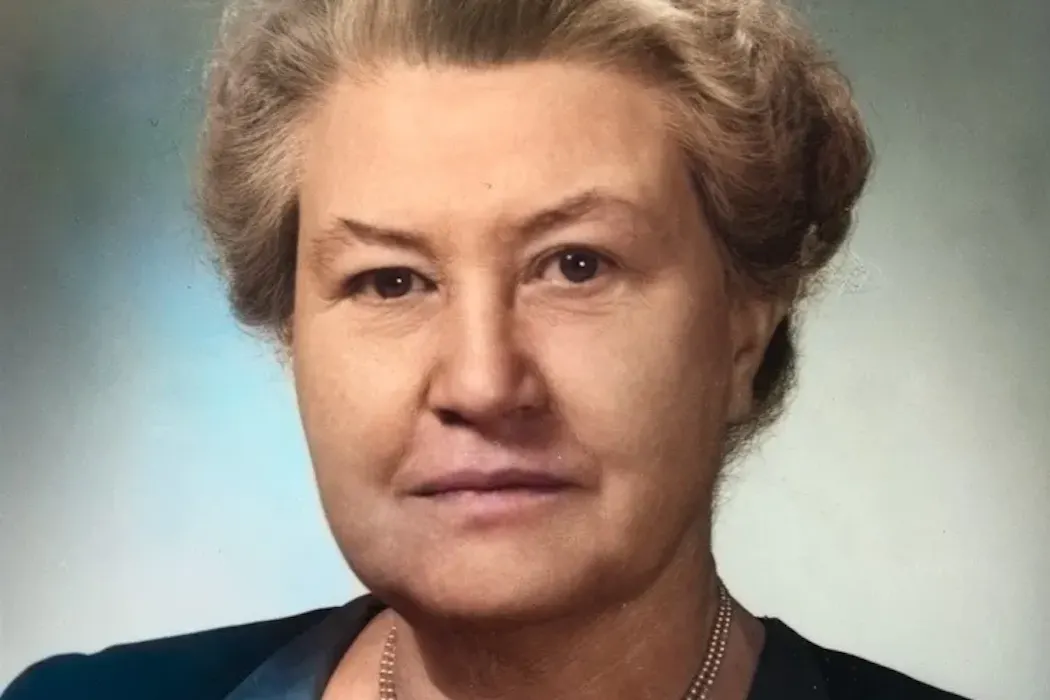
As early as 1923 in hisTheory of consumption, Hazel Kyrk (1886-1957) anticipates the emergence of a consumer society by seeking to analyze the reasons why American households buy goods or services. Far from limiting herself to the study of the home and family, like many women economists of the time, her visionary work still influences the way we think about consumption today.
A useless, uninteresting question. Until the 1920s, this is how economists perceived the study of consumption… For Adam Smith, the founding father of economics in the 18th century, theconsumptionis only the “ultimate goal” of production. There is therefore no reason to study it for its own sake. At the end of the 19th century, the few rare economists who were interested in the study of consumption, such asThorstein Veblen, are seldom heeded.
It is in this context that, in 1923,Hazel Kyrk (1886-1957)publishes its very first book,Theory of consumption(A Theory of Consumption). Born into a modest rural family in the heart of the state of Ohio in the United States, she worked for a time as a family assistant for the economist Leon Carroll Marshall (1879-1966). A decisive encounter since it led Hazel Kyrk to pursue her studies at the University of Chicago, where she obtained her doctorate in economics in 1920.
Throughout her life, the question she asks is the following: to what extent are consumers free in their choices?
“Consumers are social animals”
In itsTheory of consumption, Hazel Kyrk makes a bold criticism of the concept of the free market. To properly understand how individuals make their consumption choices, she tells us, it is necessary to take into account the entirety of their decision-making environment, and not limit oneself to the sole law of supply and demand. According tothe economist, advances in psychology show that:
“Consumers are social animals, members of social groups, within a complex social organization.”
To do this, she develops an innovative theory of freedom of choice, taking into account sociological and psychological factors as well as the influence of advertising. By linking it with the question of the power of influence of companies, she takes a careful look at themarketing development.
One of the avenues that itsuggestsis notably to educate consumers to recognize the mechanisms used by marketing professionals in order to “develop defenses against undesirable methods in vogue.”
Gender as a determining element

McMaster University
Hazel Kyrk contributes significantly to the development of the field of consumption economics, of which she has now become the leading figure. She develops large-scale national surveys and statistical analyses on the consumption of American households within the federal administration. Her work allows us to understand how thegender appears as a determining elementin the construction of economic science as a discipline.
In the 1920s, economic science was clearly a man’s domain. In the United States, somewomen have been awarded a doctorate in economics since the 1900s. The themes of their research at that time are still very different from those of their male counterparts. They are rather encouraged to focus on domestic issues, women’s and children’s labor, and, of course, consumption. The economist Richard T. Elyunderlines in 1936A:
“My wife had looked into Patten’s economy. She felt that she had to do her part to contribute to good consumption.”
At the end of the 19th century, economic science became established as a full academic discipline, notably during the creation ofthe American Economic Association in 1885. This movement goes hand in hand with the exclusion of certain research topics, notably including the study of consumption. There is the idea of a“separation of spheres”(masculine/public vs feminine/private). Consumption (and thus its study) was then associated with afeminine image, and considered unscientific or subjective.
Beyond the domestic economy

“The Journal of Home Economics”, February 1909, 1(1)
At the turn of the 20th century, a group of progressive women gathered and developed around“household economy movement”(“Home Economics Movement“) which led in 1909 to the creation of the American Home Economics Association.
According to them, progress must come through the improvement, even rationalization, of the home and various domestic tasks. In 1920, the majority of women in the United States did not engage in paid employment –this is the case for only 22.4% of women between 25 and 44 years old. In this respect, consumption increasingly appears as a new activity whose scope depends directly on women, as managers of consumer expenditures.
Like many women nonetheless holding a doctorate in economics, Hazel Kyrk is systematically reminded of this intellectual heritage from which she seeks to distance herself. Yet, in her bookEconomics Problems of the Familypublished in 1933, its perspective is that of an economist, and not that of a household economist. She emphasizes this in herletter to Dorothy Dickens, dated January 29, 1946Â :
“When I was asked, as an economist by training, with all the education I have received, to join a home economics department to teach economics courses, I assumed that it was ‘economics’ as economists use the term. I am not qualified to teach anything else.”
This recall effect was particularly noticeable when she obtained her position at the University of Chicago in 1925; she accepted on the sole condition of also being affiliated with the economics department. This dual affiliation was ultimately granted to heronly five years later, in 1929.
Consuming becomes an identity
In the United States, the socio-economic context at the beginning of the 20th century is characterized by three important elements:
-
the transformation of the status of women in society;
-
the emergence of modern consumerism;
-
the growing problem of the high cost of living.
Faced with this triple transformation, Hazel Kyrk seeks to propose a theory that is both realistic (allowing an accurate explanation of reality) and useful to the greatest number. In doing so, she explicitly aims to address the problem of the high cost of living, at a time when household consumption is developing, to the detriment of self-consumption – such as domestic production of goods like clothing.
During the interwar period, a significant social change took place: households (and therefore the individuals who make them up) are increasingly defined through the goods and services they consume. Consuming is no longer simply a task, a mundane activity, but gradually becomes a structuring element of identity.
In this perspective, Hazel Kyrk proposes an in-depth study of “standards of living” in order to understand how households’ perception of their own socioeconomic position evolves. Her goal is to determine how this impacts their consumption decisions.
Consuming well is not easy, as the influences the consumer faces are numerous. According to Hazel Kyrk, the role of the consumption expert must be to provide consumers with the tools for their economic emancipation by promotingsources of its autonomyA:
“The education that the consumer most needs is that which will free him from his blind conformity. He must learn to consult his own needs, to form his own judgments, to desire for himself.”
The search field inaugurated by Hazel Kyrk in herTheory of consumptionfrom 1923 will be followed by multiple intellectual legacies, notably through several of his doctoral students in Chicago. This will be particularly the case ofMargaret G. Reid (1896-1991)whose workswill directly inspire several Nobel Prizes in EconomicsasFranco ModiglianiorGary Becker.

David Philippy does not work for, advise, hold shares in, or receive funds from any organization that could benefit from this article, and has declared no affiliation other than his research institution.
–ref. Hazel Kyrk, the little-known economist who anticipated our modern consumer society –https://theconversation.com/hazel-kyrk-the-little-known-economist-who-anticipated-our-modern-consumer-society-276199