

Source: French to English Tester Published on: 2026-04-23
Source: The Conversation – in French– By Patrick Eveno, Professor Emeritus of Media History, University Paris 1 Panthéon-Sorbonne
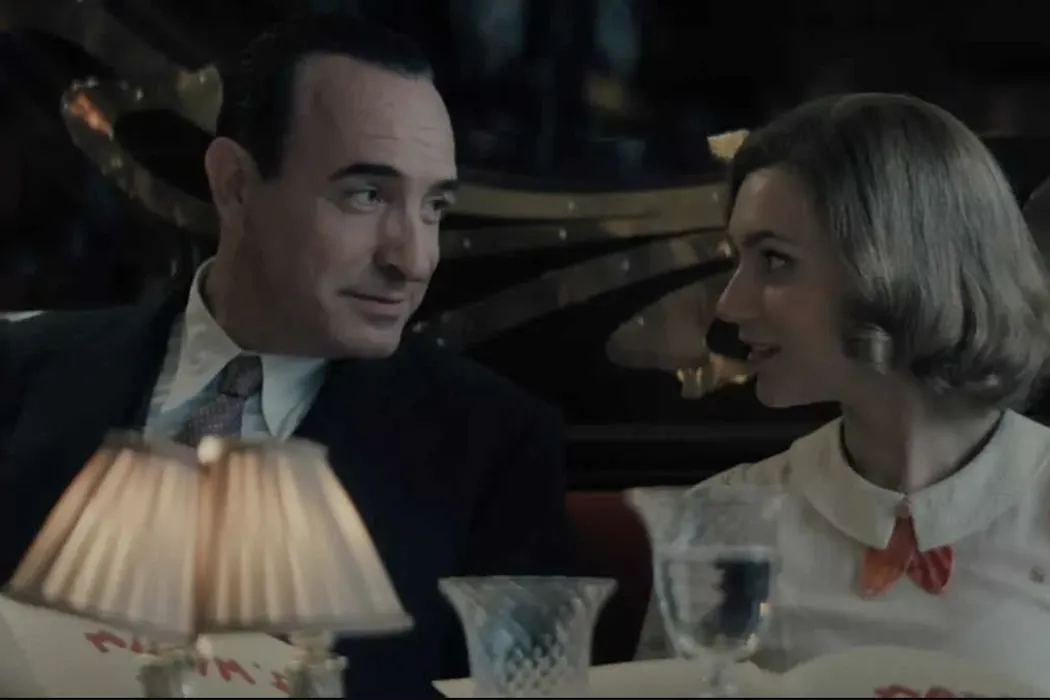
Through the portrait of Jean Luchaire, a notorious collaborator who appears to enjoy free will in practicing his profession, Xavier Giannoli’s film shows the compromises but does not accurately reflect the realities of the French press under the Occupation.
The film by Xavier Giannoli,The Rays and the Shadows, sparked a media battle between the director and historians of the Second World War.
I approach this dispute from another angle, that of the history of the press. I have some ammunition for this, having participated in the Research Group (GDR) “French Enterprises under the Occupation”. We held conferences and published books. For my part, I presented on themedia archives under the Occupation, then on theNational Corporation of the French Press, on the press market, finally on the purge at the Liberation. Moreover, I published an article on Jean Luchaire, included in the collective bookThey made the press.
I saw thefilmwith pleasure, because it’s a good film, and I understood thedebatesÂ: on one side, historians dispossessed of their subject (the Occupation, collaboration), on the other, a filmmaker entrenched in his certainties, claiming the right to fictional distortion. I will not dwell on the question of the supposed antisemitism or Nazism of Jean Luchaire,Laurent Jolypeople talk about it better than I do. What interests me here is the history of the press.
For those who are not familiar with this period, the film makes the compromises accessible, but it could have been more developed, even at the cost of being less romanticized. Xavier Giannoli ignores the realities of the press under the Occupation, which leads him to unfortunate distortions, probably to make his characters more romantic, even romanticized. On numerous occasions, he tries to make believe that Luchaire and the others are free in their editorial choices. Which is completely false.
The path of an opportunist
Born in 1901, Jean Luchaire comes from a dynasty of academics (his father, grandfather, and great-grandfather were general inspectors of public education, members of the Institute). From 1920, he began in journalism, then founded and led from 1927 to 1934 thenewspaperOur time, a supporter of the Franco-German rapprochement, funded by the secret funds of the Ministry of Foreign Affairs and then by Nazi funds. At the end of the 1930s, despite his networks, Luchaire was a marginal figure without influence; the war gave himon the occasion of taking a leading role. TheMemoriesof Jean Luchaire’s daughter, Corinne, whom Xavier Giannoli uses, are very poor in revelations and analysis; they were published in 1949, and are titledMy funny life, (reissued in 2026).
Jean Luchaire, thanks to his acquaintances (Otto Abetz, Pierre Laval, Paul Marion, Henri Lafont of the French Gestapo at 93 rue Lauriston, theDr. Eich,Marcel Déat,Marcel Bucard, and many others), thanks to his connections, thanks to his taste for luxury, receptions, good meals, and lavish parties, quickly established himself as the indispensable head of the entire French press in the occupied zone, as well as related businesses (distribution, paper, advertising, etc.).
Nicknamed the “Führer of the French press” or “Louche Herr,” he takes advantage of this situation, which meets the ambitions of the Germans or Vichy, but also those of the press owners and employees, to carry out three tasks: the propagation of collaborationism; the protection of the press, its owners, workers, employees and editors; and finally a very rapid personal enrichment. These three tasks that he has assigned to himself are intertwined in his approach.
A press completely subservient to the Nazi occupier
Xavier Giannoli presents us with a Luchaire who is master of his decisions in press affairs. But this is not the case. Indeed, in the occupied zone, thePropaganda Department, subordinated to section IC (military intelligence) of the military governor in France, is established at the Majestic Hotel. Composed of elements of the Wehrmacht, it depends on the Reich Ministry of Information and Propaganda led by Joseph Goebbels. The Presse Gruppe, led by Eich, supervises several sub-groups: paper monitoring, provincial press, French press information agency, Information Office, and especially Censorship.
It is this censorship that dictates what journalists can or must write. Thus, Giannoli shows a Luchaire refusing to write an editorial on the status of the Jews of October 4, 1940. However, on this status, as on its second version of June 15, 1941, German censorship forbade newspapers from writing an editorial.
On September 25, 1940, at the instigation of the German authorities (several documents in the Luchaire trial file testify to this at the National Archives, AN, AJ40 1001 to 1016, Propaganda Abteilung Frankreich, Propagandastaffel Paris, 1938-1944), the Corporate Group of the Parisian Daily Press (GCPQP) was created in the occupied zone, chaired by Luchaire, then editor-in-chief ofMorningand soon director ofNew Times. On June 9, 1941, this group was transformed into the National Corporation of the French Press.
The Corporation scandal
Luchaire uses this position to build a considerable fortune in just a few years and to live, along with his family, in great style. Between September 1940 and August 1944, he buys at low prices a private mansion on Avenue des Ternes, a property in Barbizon, and the Château Saint-Lazare in Vernon. The expense notes for meals taken at his two favorite canteens, Maxim’s and La Tour d’Argent, reveal Luchaire’s lifestyle. For example, a meal for three guests at La Tour d’Argent on May 20, 1943: three foie gras, three tournedos, three vegetables, two cheeses, and a sorbet, three desserts, two coffees, an Armagnac 1893, and a Cognac 1875, seven bottles of Pichon Longueville (a grand cru from Bordeaux) 1924, for a total of 3,500 francs of the time, equivalent to the monthly salary of an editor-in-chief of a Parisian daily. Five of the bottles as well as two packs of English cigarettes are taken away by Luchaire…
The mechanism goes through the company Éditions Lutétia, 31 rue du Louvre, which publishes the daily newspaperthe New Timeswhose first issue was released on October 31, 1940, and the last on August 17, 1944 (AN, 2AR). Lutétia is a structurally deficit company due to weak sales (between 50,000 and 60,000 copies per day, of which a considerable share is purchased by the Occupation administrations), but above all because of Luchaire’s lifestyle, which is revealed by the importance of the “general expenses” item, representing more than 40% of the newspaper’s expenses, compared to less than 20% in comparable press companies.
The deficit is covered by the Germans, in the form of advertising announcements: they account for 50% of the turnover as early as 1941 and continue to increase to reach 65% in 1943, while at the same time, those of other daily newspapers fall from 35 to 18%. The deficit is also covered by capital increases, subscribed by the German embassy, then byGerhard Hibbelenwho takes care of buying from publishers and newspapers for the occupant.
Furthermore, on several occasions Luchaire personally cashes the Germans’ checks, while recording the capital increases in the company’s account. Adding the salaries and expenses, which reach 4 million francs over four years, and the capital increases, which exceed 6 million francs, Luchaire has drawn more than 10 million francs from the company, representing 20% of its total turnover during the period. In addition, there are expense reports paid by the Corporation.
The paradox is that the Germans are not fooled. Thus, the Propaganda Staffel offers a harsh assessment of Luchaire: “If Luchaire used a lot of ink in favor of 100% collaboration, it was less out of honest conviction than because he speculates on the future. Luchaire does not have a combative temperament, he is a schemer in [French in the text]. He does not hide his ambitions to become the French Goebbels.” (Pariser Journalisten, 1941, AN, AJ40 1008). And many journalists and press owners in Paris denounced the scandal of the Corporation.

Patrick Eveno does not work for, advise, hold shares in, or receive funds from any organization that could benefit from this article, and has declared no other affiliation than his research institution.
–ref. The French press under the Occupation as seen by the film “The Rays and the Shadows” –https://theconversation.com/french-press-under-occupation-as-seen-in-the-film-the-rays-and-the-shadows-281358