

AM Edition: Here are the top 10 business articles on LiveNews.co.nz for July 8, 2026 – Full Text
Kenya, Africa – ATIDI Celebrates Silver Jubilee at AGM, Posts Strong Performance and Is Endorsed as Pan African Guarantee Platform
July 8, 2026
Source: Media Fast
July 7, 2026 – Nairobi, Kenya – At the 26th Annual General Meeting of the African Trade & Investment Development Insurance (ATIDI), President William Ruto of Kenya issued a clarion call for Africa to strengthen its financial institutions and fund its development on its own terms. The meetings, which took place in Nairobi from 30 June to 3 July, proceeded under the theme: "Empowering Africa: Risk Managed, Growth Unlocked".
"For years, we have called for a fairer global financial architecture, one that stops mispricing African risk and making our capital needlessly expensive. That call remains right. But Africa cannot wait for reform elsewhere. While the world debates reform, Africa must build," Ruto said at a gala dinner at State House held to commemorate ATIDI's 25th anniversary.
President Ruto endorsed the establishment of the New African Financial Architecture for Development (NAFAD), an initiative launched by Dr. Sidi Ould Tah, President of the African Development Bank Group (AfDB) in April 2026. The NAFAD aims to call African institutions to work together to strengthen the continent's risk-sharing mechanisms, to reduce the continent's borrowing costs, and to unlock domestic capital at scale for Africa's development.
Africa holds nearly USD4 trillion in long-term domestic savings through pension funds, insurance assets, and central bank reserves. Much of this capital is, however, invested overseas, despite Africa facing an annual financing gap of more than USD400 billion.
"Africa does not suffer from a shortage of capital. Africa suffers from a shortage of institutions capable of transforming risk, mobilising savings and connecting them to productive investment," President Ruto said.
Kenya pledges increased support
President Ruto said that NAFAD would help plug this USD400bn financing gap by leveraging the collective strengths of the continent's leading multilateral financial institutions to catalyse increased domestic and global investment.
At the heart of NAFAD is the Alliance of African Multilateral Financial Institutions (AAMFI), which brings continental powerhouses like the AfDB, Afreximbank, Africa Finance Corporation, ATIDI, and others. President Ruto announced that, in support of the alliance, the Government of Kenya had approved the establishment of its Secretariat in Nairobi.
He singled out ATIDI's strategic role in the alliance. "Within this Alliance, ATIDI occupies a uniquely strategic place. Investment follows confidence, and confidence follows credible risk mitigation."
He called for ATIDI's recapitalisation to USD2 billion, noting that every dollar invested in the continent's guarantee architecture has the potential to mobilise ten dollars more in private capital.
"Today, I invite every Member State represented here to join Kenya in launching the Nairobi Capital Compact on African Economic Sovereignty. The Compact rests on five commitments: to progressively recapitalise ATIDI, to strengthen the AAMFI, to mobilise Africa's domestic capital, to expand our guarantee and risk-sharing capacity, and to build globally competitive African multilateral financial institutions," he said.
Kenya remains a strategic market for ATIDI, with the organization's solutions unlocking more than USD7 billion in investments across energy, transport, manufacturing, agriculture, and trade sectors.
To deepen that partnership, President Ruto announced that Kenya will, subject to the necessary national processes, progressively increase its shareholding in ATIDI from USD25 million to USD65 million. He also presented ATIDI with the title deed for land for the construction of its permanent headquarters.
A legacy worth protecting
In his address at the AGM's opening ceremony, ATIDI CEO Manuel Moses reflected on the silver jubilee. He said that the organization had "demonstrated that African solutions are often best placed to address Africa's unique challenges and opportunities."
Since its inception, ATIDI has catalysed more than USD93 billion in private investment across Africa through innovative risk mitigation instruments like political risk and credit insurance that strengthen investor confidence. Its shareholder base, meanwhile, has grown from seven founding members to 24 African countries, 13 institutional members and 1 non-African member state. It also remains one of Africa's highest rated insurers, having consistently maintained an investment grade rating with major global credit rating agencies since its founding.
"We have built our success on the ability to combine world-class standards with a deep understanding of African markets, designing solutions that reflect local realities while meeting the expectations of global investors," he remarked.
This is a legacy worth protecting, he argued, highlighting the critical need for African countries to continue honouring ATIDI's preferred creditor status (PCS). ATIDI relies on its preferred creditor status to ensure that member states prioritise obligations to it even during financial distress. This is what underpins investor confidence in ATIDI's guarantees and is "fundamental to the business model", Moses explained.
Moses expressed confidence in the institution's financial strength, underwriting capacity, and strategic direction, citing its strong 2025 results.
In 2025, ATIDI recorded strong financial performance, with total exposure increasing to USD9.2 billion from USD8.9 billion in 2024, profit for the year rising by 20% to USD71.4 million, total assets growing by 20% to USD1.06 billion, and total equity increasing by 12% to USD883 million.
"Against a backdrop of continued global uncertainty and the lingering effects of the COVID pandemic, ATIDI delivered another year of resilient growth in 2025, with strong results across insurance revenue, investment income and total equity," he said.
In his address, Professor Kelly Mua Kingsly, Chairman of the Board of Directors at ATIDI, argued that Africa's economic advancement hinges on boosting investor confidence. The continent's vast natural resources or attractive demographics may capture investors' interest, but projects will not be financed unless investors have the confidence to commit funds.
"Africa's greatest asset is confidence. If capital is the engine of development, confidence is its fuel. That is where ATIDI has found its unique purpose. We do not merely mitigate risk. We create confidence," he said.
Leaders urge increased private investment
A central feature of the AGM was the Leaders' Panel, which explored how Africa can build a more resilient and self‑sustaining development finance ecosystem amid shifting global capital flows, rising debt pressures, and growing demand for infrastructure and industrial investment.
Speaking on the panel, Dr. Sidi Ould Tah, President of the African Development Bank (AfDB), called for greater support to African financial institutions. He highlighted the role of institutions such as ATIDI in making Africa's high‑potential industries more attractive to local investors, many of whom continue to deploy their funds overseas due to persistent misperceptions of risk on the continent.
The African Development Bank Group has recently decided to increase its participation in the capital of ATIDI five-fold, becoming the largest institutional shareholder of ATIDI. AfDB will also support the growth of membership in ATIDI. President Tah stated AfDB is "also mobilizing our partners to provide support to African countries who are not yet members of ATIDI to join ATIDI and to help them to pay for their participation in the capital of ATIDI."
"The challenge before us is not a lack of capital or opportunities, but a persistent mispricing of the African risk, and this is leading to excessive cost of capital in the continent", President Tah said. "Under the NAFAD framework, our ambition is clear: to unlock Africa's capital by combining domestic and international resources while strengthening our financial sovereignty. This is how we will create jobs, accelerate industrial transformation, and build a more prosperous, resilient, and financially sovereign Africa." President Tah also stated that within the NAFAD architecture, ATIDI plays an indispensable role.
President Tah urged leaders and policymakers to maintain a laser focus on creating an environment conducive to private investment. "This is why the African Development Bank Group is evolving from a traditional project financier into a catalyst for markets. We want to be the solution Bank for the Africa we want" he said. "Together with ATIDI and through guarantee and blended finance, we are demonstrating that every dollar of public finance can mobilise significantly more private capital for infrastructure." President Tah added.
Professor Kithure Kindiki, Kenya's deputy president, echoed the call for stronger private‑sector participation in Africa's economic development, citing the fiscal constraints and debt pressures facing many African governments.
"The public sector doesn't have enough resources to undertake some of the ambitions that we have, so that money will have to come from private investments," he said.
The second day of the AGM was dedicated to investment promotion and business development and featured in-depth presentations on macroeconomic developments and proposed projects in Cameroon and Kenya. Projects in strategic sectors such as renewable energy, water, agriculture and transport were showcased.
The programme also included a series of curated Business-to-Business (B2B) and Business-to-Government (B2G) meetings designed to connect investors, businesses and public sector stakeholders.
About ATIDI
The African Trade Insurance Agency (commonly known as African Trade & Investment Development Insurance – ATIDI) was founded in 2001 by African States to cover trade and investment risks of companies doing business in Africa. The organisation notably provides Political Risk, Credit Insurance and Surety Insurance. Since inception, ATIDI has supported USD93 billion worth of investments and cross border trade into Africa. It is rated A by both Standard & Poor's and Moody's, which reflects the organization's robust financial position and strong risk management practices. In recognition of its growing impact, ATIDI was named the Development Finance Institution (DFI) of the Year at the 2025 African Banker Awards. For further information: www.atidi.org
Back to index · Read original article
Spain: EIB to lend €175 million for water infrastructure investments by Acosol on Costa del Sol
July 8, 2026
Source: European Union 2 Published on: 2026-07-07
• The European Investment Bank (EIB) and Acosol have signed the first tranche, for €75 million, of a total approved loan of €175 million.
• It will finance the upgrade and expansion of drinking water supply, sanitation and benefiting 1 million residents across the 11 municipalities encompassing the Association of Municipalities of the Western Costa del Sol.
• The investments are expected to help alleviate the significant water stress affecting the area, with more efficient water management thanks to more resilient infrastructure, adapted to climate change.
The EIB, part of the European Investment Bank Group (EIB Group), will provide €175 million in financing for Acosol’s investment programme to upgrade water infrastructure in western Andalusia, helping better manage a natural resource of vital importance to the region.
Today, the EIB and Acosol signed the first tranche of this loan, for €75 million. Acosol is a public company owned by the association of municipalities of the Western Costa del Sol that manages the entire urban water cycle, including water supply and sanitation services, in this part of the Province of Málaga.
The investments are expected to benefit around 1 million people in the municipalities of Benahavis, Benalmádena, Casares, Estepona, Fuengirola, Istán, Manilva, Marbella, Mijas, Ojén and Torremolinos – and more than 1.4 million in summer, when the population increases considerably. The planned measures contain energy efficiency improvements, including to generate renewable energy for own consumption at the Marbella desalination plant, EDAM (Estación Desalinizadora de Agua de Mar). This includes the rehabilitation and upgrade of water production, conveyance, storage and electromechanical systems, with the replacement of more than 20 km of collectors in the integrated sewerage network affected by leakage and seawater infiltration. They also include upgrading wastewater treatment plants and rehabilitating the integrated sewerage network to comply with environmental requirements, and helping recycle wastewater by installing reclaimed water networks. In addition, more than 30 km of drinking water pipelines will be refurbished and a new service reservoir will be built at the Río Verde drinking water treatment plant, ETAP (Estación de Tratamiento de Agua Potable de Río Verde), among other improvements.
The project will alleviate the significant water stress affecting Spain’s Costa del Sol while increasing environmental sustainability and improving services for people. By reducing water loss, increasing reuse and improving water management, it will also address recurring drought risk and strengthen the region’s climate resilience. The project will thus help meet the water needs of future generations facing a more uncertain and variable climate.
EIB support for efficient water management
Contributing to the efficient management of such a vital natural resource as water is a priority for the EIB. The project with Acosol forms part of the EIB Group’s Water Resilience Programme, an initiative to invest €15 billion between 2025 and 2027 to increase water security, upgrade infrastructure and promote more sustainable water management in Europe and around the world. The programme constitutes the EIB’s main financial contribution to the European Water Resilience Strategy, and will help mobilise up to €40 billion in investment.
In Spain, EIB financing for projects contributing to efficient water management reached a record €570 million in 2025, maintaining the strong momentum in this area from the previous financial year.
The project will contribute significantly to the climate action objectives set out in the EIB Group’s Strategic Roadmap for 2024-2027 and phase two of the Climate Bank Roadmap for 2026-2030.
Background information
The EIB Group is the financing arm of the European Union. Its shareholders are the 27 Member States, and it is one of the largest multilateral development banks in the world. In 2025, the EIB Group signed €100 billion in new financing and advisory services for over 870 high-impact projects under eight core priorities that support EU policy objectives: climate action and the environment, digitalisation and technological innovation, security and defence, cohesion, agriculture and bioeconomy, social infrastructure, global partnerships and the savings and investments union. Beyond long-term loans for large infrastructure, the EIB Group crowds in private investment for high-risk innovative projects and businesses, with a growing role in Europe’s markets for venture debt, venture capital, guarantees and securitisations. In 2025, the EIB Group completed financing and investment operations in Spain totalling around €11 billion, which came alongside an additional €2.9 billion under the Regional Resilience Fund (NextGenerationEU loans).
The European Investment Fund (EIF) is the subsidiary of the EIB Group specialised in providing guarantees and equity to improve access to finance for small and medium-sized businesses and startups across Europe. Acting as an anchor investor, through its extensive network of partnering banks and investment funds, the EIF mobilises private investment and nurtures the ecosystem of venture capital funds to support innovative European entrepreneurs.
In 2023, the EIF, together with six Member States (France, Germany, Italy, Spain, Belgium and the Netherlands), launched the European Tech Champions Initiative (ETCI), a fund of funds to help innovative companies scale up. This initiative has already enabled the creation of 15 European venture capital mega funds and scaled up 43 companies, including 12 unicorns (with more than €1 billion in capital).
Photos of the EIB Group management and headquarters, logo files and video B-roll for media use are available here.
Acosol S.A. is a public company owned by the municipalities’ association Mancomunidad de Municipios de la Costa del Sol Occidental, responsible for managing the entire urban water cycle. It covers all systems: from the abstraction, treatment and bulk distribution of drinking water to the eleven municipalities of the Costa del Sol, through to the conveyance of wastewater via the integrated sewerage network, treatment at its six wastewater treatment plants, and water reclamation, allowing it to be reused to water golf courses – an area Acosol has been active in for more than 20 years. It was founded as a public company in 1994 by the municipalities’ association to provide services throughout the Costa del Sol region, and currently employs more than 400 people.
Acosol is always evolving, and is adapting to new tools and technologies thanks to the Agua 360 digitalisation project, which forms part of the third call under the PERTE programme and is financed by NextGenerationEU funds. This modernisation and expansion extends to all of its shared infrastructure assets: the drinking water, wastewater and desalination facilities ETAP de Río Verde, Desaladora de Marbella (EDAM), EDAR Arroyo de la Miel, EDAR Cerro del Águila, EDAR Cala de Mijas, EDAR La Víbora, EDAR Casares and EDAR Guadalmansa. In 2024, an investment plan for €348 million was approved to address the new water-related challenges facing the area, following several droughts in the region. This programme of works and projects aims to strengthen Acosol’s response capacity – promoting quality, making water and energy consumption more efficient, and investing in the infrastructure required to achieve these objectives. Thanks to the EIB loan, Acosol gains access to €175 million to make these projects and measures a reality.
The project will finance water supply and wastewater schemes from the Promoter’s investment programme over the period 2025-2029.
• Water and wastewater management
•
The Mulembwe hydroelectric power plant in Burundi was officially inaugurated by the country’s Prime Minister of Burundi, Nestot Ntahontuye, marking a new milestone in national efforts to strengthen electricity production in Burundi.
The European Investment Bank (EIB) and Airbus have signed a first €1 billion loan to support the European aerospace champion’s ambitious research, development and innovation programme aimed at advancing its technological edge in commercial and defence aviation. The agreement comes under an unprecedented €3 billion envelope tailored to underpin enterprising innovation. It will contribute directly to strengthening Europe’s tech leadership and manufacturing excellence, the building blocks of economic security.
The urban development project in Joensuu is supported by the European Union under the Public Sector Loan Facility (PSLF), with a grant of €18 million complementing a €120 million loan from the European Investment Bank (EIB) and bringing the total project budget to €160 million. The remaining financing is provided by the City of Joensuu through its own resources (€22 million).
Back to index · Read original article
EIB provides €250 million to Italgas Group to promote energy efficiency in Italy
July 8, 2026
Source: European Union 2 Published on: 2026-07-07
• First €150 million tranche signed, as part of the broader €250 million financing approved by the EIB.
• Measure to support a programme of energy efficiency upgrades across the country, carried out by Italgas Group companies.
• Focus on public and private buildings, SMEs, photovoltaic systems for self-consumption and public lighting.
• Ninth transaction between the EIB and Italgas Group, bringing the total to €1.9 billion.
The European Investment Bank (EIB) has approved a new €250 million, 15-year financing package for Italgas Group to support energy efficiency upgrades across Italy, to be carried out by Geoside and Italgas Properties, respectively the Group’s Energy Service Company (ESCo) and its new real estate company. Today, the parties signed a first tranche of €150 million.
The agreement will support a broad portfolio of small- and medium-sized projects to be implemented over the 2026–2029 period, including the energy-efficient renovation of public and private buildings, energy efficiency measures in the industrial sector, the installation of integrated photovoltaic systems for self-consumption and the modernisation of public lighting infrastructure. According to EIB estimates, the operation is expected to deliver primary energy savings of approximately 30.6 GWh per year and generate around 21.5 GWh of primary energy from renewable sources each year, equivalent to the annual electricity consumption of around 8 200 Italian households.
This is the second EIB framework loan to Italgas entirely dedicated to aggregating several investments aimed at improving energy efficiency, and the ninth operation overall with the Group. To date, the total value of EIB loans granted to Italgas Group exceeds €1.9 billion. The financing contributes to accelerating the implementation of the investment programme in a context marked by market volatility, geopolitical tensions and complex trade dynamics.
“This agreement strengthens the EIB’s role in supporting large-scale investment programmes in the energy efficiency sector, mobilising resources in a segment characterised by high fragmentation and significant financing needs. The operation enables capital to be channelled into projects spread across the country, helping to improve the sustainability profile of investments and generate long-term environmental and socioeconomic returns,” said Gelsomina Vigliotti, EIB Vice-President.
“Energy efficiency is the most tangible way to reduce energy consumption without compromising performance, while delivering immediate benefits in terms of security of supply, competitiveness for businesses and households, and environmental sustainability. The EIB financing further strengthens our ability to develop innovative solutions based on Geoside’s proprietary technologies and the artificial intelligence systems we have developed in-house. Our goal is to create value by reducing energy consumption, fully aware that the best energy is the energy we do not use,” commented Paolo Gallo, Chief Executive Officer of Italgas.
Background information
The European Investment Bank (EIB) Group is the financing arm of the European Union, owned by the 27 Member States, and one of the largest multilateral development banks in the world. In 2025, the EIB Group signed €100 billion in new financing and advisory services for over 870 high impact projects under eight core priorities that support EU policy objectives: climate action and the environment, digitalisation and technological innovation, security and defence, territorial cohesion, agriculture and the bioeconomy, social infrastructure, strong global partnerships and the savings and investments union. In Italy, the EIB Group signed 105 new financing agreements totalling €12.3 billion in 2025. Beyond long term loans for large infrastructure, the EIB Group crowds in private investment for high-risk innovative projects and businesses. It also plays a growing role in Europe’s markets for venture debt, venture capital, guarantees and securitisations. The European Investment Fund (EIF) is the EIB Group subsidiary specialised in guarantees and equity. Its specific role is to improve access to finance for small and medium sized businesses and startups across Europe. Acting as an anchor investor through its broad network of partner banks and investment funds, the EIF mobilises private investment and supports a venture capital ecosystem for innovative European entrepreneurs.
Italgas is a Network Tech Company active in gas distribution, water services, energy efficiency and IT. Following the acquisition of 2i Rete Gas, Italgas became the leading gas distribution operator in Europe, with a network of around 155 000 kilometres, 12.7 million customers in Italy and Greece, and around 6 500 employees. Through Nepta, the Group’s water sector company, it provides services directly and indirectly to 6.3 million people, equal to 10% of the Italian population, mainly in the regions of Lazio, Sicily and Campania. Geoside, the Group’s ESCo, manages energy efficiency for condominiums, public administrations and businesses across Italy. It takes an innovative approach, leveraging proprietary technologies developed to serve the Group and Artificial Intelligence applied to its energy management systems.
• The EIB in the circular economy
• Small and medium-sized enterprises
•
The European Investment Bank (EIB) has signed an €80 million financing agreement with Milione S.p.A., the parent company of SAVE S.p.A., which operates Venice Marco Polo Airport. In June, the airport was recognized by ACI EUROPE (Airports Council International) as the Best Airport in Europe in the 10–25 million passengers’ category.
La Banque européenne d’investissement (BEI) et Bpifrance annoncent la signature de deux nouvelles opérations de financement représentant un montant total de 550 millions d’euros. Ces financements visent à soutenir la transition énergétique et à renforcer la compétitivité et la sécurité européenne en accompagnant le développement des entreprises actives dans ces deux secteurs clé pour l’autonomie stratégique européenne.
The European Investment Bank (EIB) has approved financing of up to €345 million for Alperia, one of Italy’s leading green energy companies, to support a broad investment programme across multiple sectors, designed to strengthen the sustainability and security of energy supply in South Tyrol. The first €200 million tranche was signed on 1 July 2026 by Jean-Christophe Laloux, EIB Director General and Head of EU Lending and Advisory, and Luis Amort, Chief Executive Officer of Alperia.
Back to index · Read original article
EIB provides €345 million to Alperia to strengthen sustainable energy and infrastructure in South Tyrol
July 8, 2026
Source: European Union 2 Published on: 2026-07-07
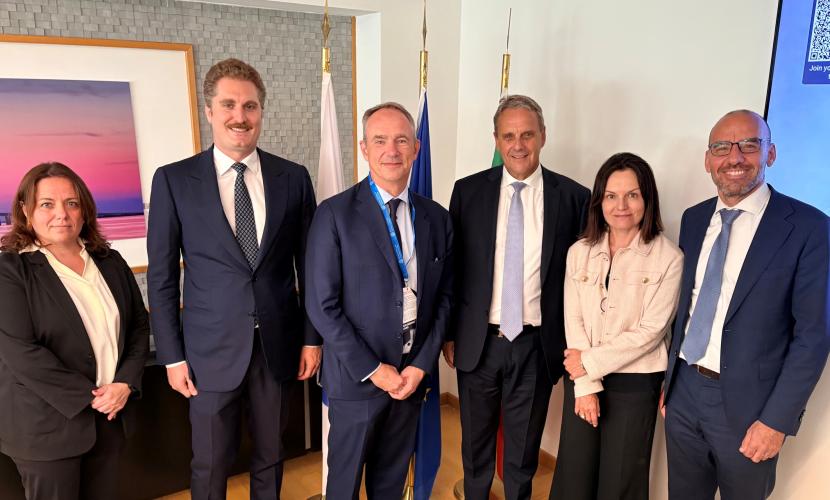
• First €200 million tranche signed on 1 July 2026
• Agreement will support the modernisation of hydropower plants, electricity grids, electric vehicle charging infrastructure and district heating
The European Investment Bank (EIB) has approved financing of up to €345 million for Alperia, one of Italy’s leading green energy companies, to support a broad investment programme across multiple sectors, designed to strengthen the sustainability and security of energy supply in South Tyrol. The first €200 million tranche was signed on 1 July 2026 by Jean-Christophe Laloux, EIB Director General and Head of EU Lending and Advisory, and Luis Amort, Chief Executive Officer of Alperia.
Structured as a Green Loan[1], the financing will support investments to refurbish and modernise existing hydropower plants, upgrade electricity distribution networks, develop charging infrastructure for electric vehicles and expand district heating networks. These investments are expected to reduce CO2 and air pollutant emissions while improving the security and reliability of electricity and heat supply.
The hydropower investments will renew major generation plants in South Tyrol that produce more than 3 000 gigawatt hours (GWh) of electricity, enough to power around 1.16 million households in Italy. Investments in electricity networks will help meet additional power demand of around 140 GWh and support the installation of around 400 electric vehicle charging stations. Investments in district heating will connect more than 200 buildings through the expansion of the existing network.
“Accelerating investment is essential to help energy operators reduce their environmental footprint over the long term and ensure safer, more resilient systems,” said Jean-Christophe Laloux, EIB Director General and Head of EU Lending and Advisory. “This financing supports a comprehensive programme that strengthens strategic infrastructure and makes a tangible contribution to the energy transition.”
“This financing is an important endorsement of the strength of our Group and of the key role it plays in developing efficient, secure and sustainable energy infrastructure for the benefit of the region,” said Luis Amort, Chief Executive Officer of Alperia. “The EIB’s support is of strategic importance for the implementation of our industrial plan, backing targeted investments in hydropower plants, electricity grids, electric mobility and district heating, in line with the objectives of the energy transition.”
Background information
The European Investment Bank (EIB) Group is the financing arm of the European Union, owned by the 27 Member States, and one of the largest multilateral development banks in the world. In 2025, the EIB Group signed €100 billion in new financing and advisory services for over 870 high impact projects under eight core priorities that support EU policy objectives: climate action and the environment, digitalisation and technological innovation, security and defence, territorial cohesion, agriculture and the bioeconomy, social infrastructure, strong global partnerships and the savings and investments union. In Italy, the EIB Group signed 105 new financing agreements totalling €12.3 billion in 2025. Beyond long term loans for large infrastructure, the EIB Group crowds in private investment for high-risk innovative projects and businesses. It also plays a growing role in Europe’s markets for venture debt, venture capital, guarantees and securitisations. The European Investment Fund (EIF) is the EIB Group subsidiary specialised in guarantees and equity. Its specific role is to improve access to finance for small and medium sized businesses and startups across Europe. Acting as an anchor investor through its broad network of partner banks and investment funds, the EIF mobilises private investment and supports a venture capital ecosystem for innovative European entrepreneurs.
Alperia is one of the leading multi utilities in northern Italy, with consolidated revenue of €2.43 billion, EBITDA of €446 million and investments of €222 million in 2025. It is also one of Italy’s largest hydropower producers, with more than 1 400 MW of installed capacity. The South Tyrol based company’s activities range from renewable energy production, electricity grid and district heating management to the supply of green electricity and CO2 compensated gas, as well as solutions for electric mobility and energy efficiency. Alperia offers innovative technologies for improving building energy performance and supports companies on their decarbonisation journey, with solutions to reduce energy consumption from energy audits to artificial intelligence, advanced automation systems to optimise complex production processes and building climate control systems. Since 2020, Alperia has offset its operational emissions (Scopes 1 and 2) and has set targets to reduce emissions by 46% by 2027 and by 70% by 2031, compared with 2021, with the aim of reaching net zero by 2040.
[1] The EIB Green Loan is granted to financing that contributes 100% to the Bank’s climate action and environmental sustainability objectives, in line with the Green Loan Principles.

€345 million to Alperia to strengthen sustainable energy and infrastructure in Northern Italy
European Investment Bank
Download original

€345 million to Alperia to strengthen sustainable energy and infrastructure in Northern Italy
European Investment Bank
Download original
The project will support the promoter’s investments across several sectors between 2025 and 2030. These include e-mobility infrastructure, the modernisation of several existing hydropower plants, as well as the refurbishment, upgrading, and expansion of its electricity distribution network and district heating assets in Italy.
The European Investment Bank (EIB) has signed an €80 million financing agreement with Milione S.p.A., the parent company of SAVE S.p.A., which operates Venice Marco Polo Airport. In June, the airport was recognized by ACI EUROPE (Airports Council International) as the Best Airport in Europe in the 10–25 million passengers’ category.
La Banque européenne d’investissement (BEI) et Bpifrance annoncent la signature de deux nouvelles opérations de financement représentant un montant total de 550 millions d’euros. Ces financements visent à soutenir la transition énergétique et à renforcer la compétitivité et la sécurité européenne en accompagnant le développement des entreprises actives dans ces deux secteurs clé pour l’autonomie stratégique européenne.
The Mulembwe hydroelectric power plant in Burundi was officially inaugurated by the country’s Prime Minister of Burundi, Nestot Ntahontuye, marking a new milestone in national efforts to strengthen electricity production in Burundi.
Back to index · Read original article
Press release – MEPs debate Irish Presidency priorities with Taoiseach Micheál Martin
July 8, 2026
Source: European Parliament

Irish Taoiseach, Micheál Martin, presents the Irish Presidency of the Council programme in Strasbourg July 2026.  European Union 2026 – EP
On Tuesday, Micheál Martin set out Irelandâs priorities: to enhance EU competitiveness, values, and security, under the banner of âstrength with unityâ.
Welcoming Irelandâs Taoiseach, European Parliament President Roberta Metsola said, âWe are entering a critical six months for our continent. With the Irish Presidency’s leadership and focus on competitiveness, security and values, we are pulling in the same direction. The coming months are an opportunity to act together on some transformative files and deliver the progress people demand of us. The European Parliament will be a trusted partner.”
On competitiveness, Taoiseach Micheál Martin said the Presidency will work to eliminate barriers, tackle unnecessary regulatory burdens, and boost internal market trade. On external trade, the Irish Presidency will seek to build an EU-US trade and investment relationship that benefits both, and work for a close and constructive partnership with the UK. The Presidency will continue to deepen the EUâs trade relationships with partners such as India, Australia, Malaysia, the Philippines, Thailand and the United Arab Emirates. The Irish Presidency will work with MEPs, Martin said, to conclude the European grids package, as part of their focus on enhancing Europeâs security of supply and the development of sustainable, affordable, and secure energy systems.
Ireland will aim to complete accession negotiations with Montenegro, to make substantial progress with Moldova and Ukraine, and to advance the countries of the Western Balkans along their EU accession trajectories as far as they are ready to go. The Irish Presidency will, the Taoiseach said, continue to support EU efforts toward stability in Lebanon, Syria, and the wider Gulf region, as well as reaffirming the EUâs long-standing commitment to a two-state solution to the Israel-Palestine conflict. Describing the humanitarian situation in Gaza and the West bank as dire, Mr Martin said Europe must do more.
On security, he said the Presidency would continue its unwavering support for Ukraine, and that political, financial, military and humanitarian support for the country must be coupled with ever-increasing pressure on Russia, including tighter and stronger sanctions. The Irish Presidency will support deep collaboration to build European resilience, particularly in the face of sophisticated hybrid threats, and to advance maritime and cyber security.
The Taoiseach said he believed agreement in the Council on the EUâs next long-term budget can be achieved by the end of 2026, and that the Irish Presidency will set out its thinking on this in a new negotiating box in the autumn.
In their responses, MEPs welcomed the Irish Presidencyâs focus on competitiveness, security and European resilience, expressing support for priorities aimed at strengthening the EUâs economy and strategic autonomy. Competitiveness featured prominently throughout the debate, with speakers calling for higher productivity, lower regulatory burdens, affordable energy and progress on the single market, while enlargement was identified as a key geopolitical priority.
The EUâs next long-term budget was also raised by several speakers, with MEPs debating how to balance investment in defence and competitiveness with continued support for cohesion policy, the EUâs Common Agricultural Policy and social priorities.
There were references to migration and climate issues too, while a number of speakers brought up housing, support for Ukraine, the rule of law, and online safety for children.
• Eoghan WALSH
Press Officer (IE)
Contact data:
+32 228 32591 (BXL)
+32 485 39 94 43
E-mail:
eoghan.walsh@europarl.europa.eu
+32 228 32591 (BXL)
+32 485 39 94 43
E-mail:
eoghan.walsh@europarl.europa.eu
Back to index · Read original article
Italy: EIB provides €80 million to improve energy efficiency and sustainability at Venice Marco Polo Airport
July 8, 2026
Source: European Union 2 Published on: 2026-07-07
• The financing supports the electrification of operations and low-emission infrastructure
• Investments will also cover digitalisation, operational resilience and sustainable resource management
The European Investment Bank (EIB) has signed an €80 million financing agreement with Milione S.p.A., the parent company of SAVE S.p.A., which operates Venice Marco Polo Airport. In June, the airport was recognized by ACI EUROPE (Airports Council International) as the Best Airport in Europe in the 10–25 million passengers’ category.
The agreement, which supports targeted investments to improve the airport’s energy efficiency and environmental sustainability, was signed in Rome by Jean Christophe Laloux, Director General and Head of EU Lending and Advisory at the EIB, and Giovanni Curtolo, Chief Financial Officer of both Milione S.p.A. and SAVE S.p.A..
The financing supports an investment program focused on the electrification of airport operations, digitalization, and strengthening operational resilience, as part of the company’s roadmap to achieve net-zero emissions by 2030. The planned investments include the development of low-emission infrastructure, the acquisition of electric vehicles, the expansion of infrastructure for electricity generation from renewable energy sources, and upgrades to IT systems, including cybersecurity.
The operation is also expected to generate positive impacts on local employment, with approximately 1,000 temporary jobs anticipated during the implementation phase of the project. The investment program includes the installation of around 500 electric vehicle charging stations and the purchase of more than 20 zero-emission electric vehicles, further advancing the decarbonization of airport operations.
The project also includes improvements to waste management and stormwater treatment, helping to reduce the airport’s environmental impact and enhance its resilience to extreme weather events. The investments do not involve any expansion of the airport’s capacity.
With 11.8 million passengers in 2025, Venice Marco Polo Airport is Italy’s third-largest intercontinental airport and the hub of the Northeast Airport System, managed by the SAVE Group.
“Airports today need to accelerate investment to make concrete reductions in their environmental footprint and strengthen the resilience of their infrastructure,” said Jean-Christophe Laloux, Director General and Head of EU Lending and Advisory at the EIB. “With this financing, the EIB is supporting a transformation pathway that combines energy efficiency, decarbonisation and innovation, helping to align the sector with Europe’s climate objectives.”
“The SAVE Group has long placed sustainability—in all its dimensions and forms—at the heart of the operations of Venice Airport and all the airports it manages,” said Giovanni Curtolo, Chief Financial Officer of Milione S.p.A. and SAVE S.p.A.. “Our strong focus on environmental issues is particularly significant given the sensitive lagoon environment in which Venice Airport operates. This commitment is reflected in a roadmap that will enable the airport to achieve net-zero emissions by 2030. At the same time, the airport serves as a key driver of the local economy, supporting 24,000 jobs—direct, indirect, and induced—and generating approximately €1.2 billion in GDP.”
Background information
The European Investment Bank (EIB) Group is the financing arm of the European Union, owned by the 27 Member States, and one of the largest multilateral development banks in the world. In 2025, the EIB Group signed €100 billion in new financing and advisory services for over 870 high-impact projects under eight core priorities that support EU policy objectives: climate action and the environment, digitalisation and technological innovation, security and defence, territorial cohesion, agriculture and the bioeconomy, social infrastructure, strong global partnerships and the savings and investments union. In Italy, the EIB Group signed 105 new financing agreements totalling €12.3 billion in 2025. Beyond long-term loans for large infrastructure, the EIB Group crowds in private investment for high-risk innovative projects and businesses, with a growing role in Europe’s markets for venture debt, venture capital, guarantees and securitisations. The European Investment Fund (EIF) is the EIB Group subsidiary specialised in guarantees and equity. Its specific role is to improve access to finance for small and medium-sized businesses and startups across Europe. Acting as an anchor investor through its extensive network of partner banks and investment funds, the EIF mobilises private investment and nurtures the venture capital fund ecosystem to support innovative European entrepreneurs.
Founded in 1987, SAVE is the holding company of a group primarily active in airport management. The Group operates the Northeast Airport System, which includes the airports of Venice, Treviso, Verona, and Brescia, and also holds a stake in the management of Belgium’s Charleroi Airport.
Through an integrated and synergistic approach across its airports, SAVE promotes the development of infrastructure, connectivity, and passenger services, with a strong focus on sustainability, innovation, and the quality of the travel experience.

Italy: EIB provides €80 million to improve energy efficiency and sustainability at Venice Marco Polo Airport
EIB
Download original

Italy: EIB provides €80 million to improve energy efficiency and sustainability at Venice Marco Polo Airport
EIB
Download original
The project concerns the electrification of airport operations, digitalisation and operational resilience upgrades, under the Venice airport 2021 Masterplan.
Related works consist of the implementation of low carbon infrastructure, acquisition of electrical vehicles, upgrade of the electrical network, IT systems (including cybersecurity), waste management, runoff water treatment and other decarbonisation measures.
The European Investment Bank (EIB) has approved financing of up to €345 million for Alperia, one of Italy’s leading green energy companies, to support a broad investment programme across multiple sectors, designed to strengthen the sustainability and security of energy supply in South Tyrol. The first €200 million tranche was signed on 1 July 2026 by Jean-Christophe Laloux, EIB Director General and Head of EU Lending and Advisory, and Luis Amort, Chief Executive Officer of Alperia.
The European Investment Bank (EIB) is providing €100 million in financing to ASA Azienda Servizi Ambientali S.p.A. (ASA), the integrated water service provider for 32 municipalities in the provinces of Livorno, Pisa and Siena. The financing is supported by SACE’s Archimede guarantee and by InvestEU, the European Union programme through which the EIB Group has already invested more than €6 billion in Italy.
The European Investment Bank (EIB) and the City of Naples signed a new €40 million financing agreement aimed at supporting a broad programme of urban regeneration, social development and climate transition.
Back to index · Read original article
Investment Sector – Mega-rotation could be biggest since post-pandemic: deVere CEO
July 8, 2026
Source: deVere Group
July 6 2026 – Mega-rotation out of Big Tech is going to be a major theme for investors for the rest of 2026, predicts the CEO of one of the world's largest independent financial advisory organisations.
The prediction from deVere Group's Nigel Green comes as investors accelerate a broad shift away from concentrated positions in mega-cap technology stocks and into financials, industrials, healthcare, energy, infrastructure and value sectors, following softer-than-expected US jobs data and growing evidence that market leadership is widening.
The S&P 500 Equal Weight Index is enjoying its strongest relative start to a year since 1992, while equal-weight US equities have outperformed their market-cap weighted counterparts in recent months, highlighting a major broadening of participation beyond the largest technology stocks. The shift comes as the Dow Jones Industrial Average notched its second record closing high last week, rising above 52,900 as investors rotated into economically sensitive sectors while reducing exposure to parts of the technology and semiconductor complex.
He says: "We believe investors are witnessing the beginning of one of the most important reallocations of capital since the post-pandemic recovery.
"For years, returns became increasingly concentrated in a handful of mega-cap technology companies. This trade generated exceptional wealth. It also created extraordinary concentration risk.
"Investors are now repositioning aggressively because they recognise that opportunity has expanded far beyond the narrow group of stocks that dominated markets over recent years.
"We expect this mega-rotation to become one of the defining investment themes for the remainder of 2026."
The shift accelerated after the latest US employment report showed the economy added just 57,000 jobs in June, roughly half of consensus expectations, while previous months were revised lower.
Markets responded by sharply reducing expectations of further Federal Reserve tightening, with investors increasingly betting that the Fed will remain on hold as labour market momentum cools. The shift in interest rate expectations has helped fuel renewed interest in sectors that have lagged the AI-led rally and stand to benefit from a more stable monetary environment.
The deVere CEO continues: "The labour market data has reinforced a growing belief that the next phase of this market cycle will look very different from the previous one.
"Investors are increasingly positioning for a world in which interest rates stabilise, economic growth moderates rather than collapses, and market leadership broadens substantially.
"The combination creates enormous opportunities.
"The Federal Reserve remains central to this story. Markets are increasingly concluding that policymakers have room to be patient, and that changes the opportunity set for investors considerably.
"When interest rate expectations stabilise, capital typically broadens out across the market. We believe that process has already begun.
"We remain very bullish on artificial intelligence over the long term. AI will continue to reshape industries, business models and investment portfolios for years to come.
"But investors are asking an increasingly important question: where does the next wave of returns come from?
"Our answer is becoming clearer by the week."
Wall Street strategists have increasingly described the current environment as a major rotation trade, with capital flowing into cyclical and value-oriented sectors after years of extreme technology dominance.
Recent weakness in momentum-driven semiconductor trades has further strengthened expectations that broader market participation could become a defining feature of the second half of the year.
Nigel Green explains: "We believe financials, industrials, healthcare, infrastructure, energy and selected consumer sectors are entering a powerful period of renewed investor demand.
"These sectors possess attractive valuations, strong earnings potential and significant room for capital inflows.
"The opportunity set available to investors today is arguably broader than at any point over the last several years.
"When market leadership expands, bull markets become stronger, deeper and more durable. The process is now underway."
He concludes: "Many investors remain anchored to the winners of the previous phase of the cycle. History teaches us that such an approach rarely delivers the strongest returns.
"The investors who identify major transitions early are typically the ones who benefit most.
"The mega-rotation has powerful economic, monetary and valuation drivers behind it.
"Our view is that this trend has further to run, participation will continue to broaden, and the opportunities emerging across global markets are exceptionally compelling."
deVere Group is one of the world's largest independent advisors of specialist global financial solutions to international, local mass affluent, and high-net-worth clients. It has a network of offices around the world, more than 80,000 clients, and $14bn under advisement.
Back to index · Read original article
Research – Business results outweigh individual performance in bonus payouts – Robert Half
July 8, 2026
Source: Robert Half
Top factors influencing bonuses are company performance (58%), individual performance (49%), and cost/available budget (48%)
53% of employers say bonuses were higher in their last bonus cycle compared to previous years, while 40% say they were around the same amount
Auckland, 8 July 2026 – While bonuses are often viewed by employees as a direct reflection of their individual contribution, Kiwi employers reveal that broader business considerations weigh just as heavily in determining payout amounts, new independent research by specialised recruiter Robert Half reveals.
Bonuses reflect business realities over personal achievement
While individual performance remains central to how Kiwi employers determine bonuses, business results carry more weight than individual effort, based on the research results.
When asked what the top factors are influencing their company's decision making when considering bonus amounts, employers cited:
Company performance (58%)
Individual performance (49%)
Cost/available budget (48%)
Competitor benchmarking (48%)
Employee expectations (47%)
Industry trends (47%).
Uplift in bonuses for some, while others remain unchanged
Despite ongoing economic pressures, bonus payouts appear to be holding firm — and in many cases, increasing.
In the most recent bonus cycle, about half (53%) of employers reported that bonuses were higher than in previous years, while 40% said payouts remained at similar levels. Only 6% indicated bonuses were lower than the year prior, and just 1% said no bonuses were awarded at all.
"In the current economic climate, bonuses are progressively reflecting overall business performance rather than individual achievement alone," says Megan Alexander, Managing Director at Robert Half. "While personal contribution remains an important component, employers are making bonus decisions within the context of broader commercial conditions, signalling a more balanced and financially disciplined approach to reward strategy.
"Variable pay has become an important lever for managing risk. Employers are using bonuses to drive motivation and maintain market competitiveness without permanently increasing fixed remuneration. With most organisations holding bonuses steady, they are taking a considered and disciplined approach to reward calibration."
Who gets what bonus?
Bonus eligibility and structure vary by seniority level, reflecting how employers align rewards with responsibility, tenure, and impact on overall business performance.
While performance bonuses remain the most common incentive across nearly all employee levels, the type and frequency of additional bonuses evolve as professionals progress in their careers.
| Employee level | Type of bonus | ||||||
| Performance | Profit- sharing | Sign on | Retention | Project completion | Holiday | Referral | |
| Entry level | 22% | 20% | 16% | 15% | 17% | 17% | 20% |
| Individual contributor with 2-5 years' experience | 30% | 22% | 21% | 26% | 29% | 33% | 30% |
| Individual contributor with 5+ years' experience | 28% | 30% | 26% | 32% | 28% | 24% | 28% |
| People manager | 25% | 25% | 26% | 20% | 29% | 23% | 20% |
| Senior leader | 22% | 20% | 18% | 21% | 20% | 17% | 22% |
| Executive leader | 25% | 20% | 18% | 18% | 17% | 18% | 11% |
Independent survey commissioned by Robert Half among 250 hiring managers in New Zealand.
"The difference in bonus structures across seniority levels depicts how incentives are aligned to impact. Executives and senior leaders are typically more closely tied to profit-sharing and performance because their influence sits at the enterprise level. The modern remuneration strategy is strategically engineered to mirror accountability, influence, and business outcomes," concludes Alexander.
Notes
About the research
The study was developed by Robert Half and was conducted online in October 2025 by an independent research company of 250 finance, accounting, and IT and technology hiring managers. Respondents are drawn from a sample of SMEs as well as large private, publicly-listed, and public sector organisations across New Zealand. This survey is part of the international workplace survey, a questionnaire about job trends, talent management, and trends in the workplace.
About Robert Half
Robert Half is the global, specialised talent solutions provider that helps employers find their next great hire and jobseekers uncover their next opportunity. Robert Half offers both contract and permanent placement services, and is the parent company of Protiviti, a global consulting firm. Robert Half New Zealand has an office in Auckland and the South Island. More information on roberthalf.com/nz.
Back to index · Read original article
Startup World Cup Ukraine 2026: EIT Community Hub Ukraine connects founders to Europe and the global stage
July 8, 2026
Source: European Union 2 Published on: 2026-07-07
Nine Ukrainian startups competed at Startup World Cup Ukraine 2026 for the opportunity to represent Ukraine at the global finals in Silicon Valley and access opportunities through the EIT Community in Europe and beyond.
The EIT Community Hub Ukraine fosters entrepreneurship, internationalisation, and innovation-driven growth. Startup World Cup Ukraine 2026 plays a crucial role in ensuring that Ukrainian founders remain visible, competitive, and well-connected to opportunities in Europe and on the global stage.
Organised by EIT Community Hub Ukraine for the third consecutive year as part of the 2U Tech Forum, the national competition brought together founders, investors, ecosystem builders, and international partners to showcase the strength and diversity of Ukraine’s innovation ecosystem.
The winner, Jetbeep, will represent Ukraine at the Startup World Cup Grand Finale in San Francisco, where startups from around the world will compete for a USD 1 million investment prize. The team will be further supported by the EIT Community Hub Ukraine to connect with the EIT Community’s Knowledge and Innovation Communities (KICs).
Ukraine remains on the radar of global venture capital
The event opened with remarks from Bill Reichert, Chief Evangelist of Startup World Cup and General Partner at Pegasus Tech Ventures, one of Silicon Valley’s leading venture capital firms and the organiser of the global competition. His participation sent a strong signal that Ukrainian founders continue to attract international attention and investment interest despite the challenges posed by the Russian invasion of Ukraine.
Startup World Cup Ukraine has become an important platform for connecting Ukrainian startups with global investors and innovation networks, such as the EIT Community. Beyond the competition itself, it provides founders with visibility, validation, and access to opportunities that can accelerate international growth.
Showcasing the diversity of Ukrainian innovation
This year’s finalists reflected the breadth of Ukraine’s startup ecosystem. The competition featured:
• Mindship :A bio-responsive breathing app that detects users’ breathing patterns via smartphone microphone and delivers personalised 29-second stress-relief sessions in real time.
• Subjektiv : A global art marketplace with 4,000+ artworks and 1,000+ artists that lets collectors discover and buy physical art directly, with lifetime resale royalties for creators.
• LLM API : A Ukrainian AI gateway providing access to 400+ language models through a single OpenAI-compatible API, cutting LLM infrastructure costs by up to 60%.
• DIM.SYSTEMS : An IoT platform for distributed building infrastructure monitoring that uses sensors and AI-driven predictive maintenance to cut critical incidents by 80% and reduce manual management labour by 40%.
• Psynex : An AI relationships app that maps users’ behavioural patterns through short sessions to help them build more conscious personal and professional connections.
• Sirocco Energy : A cleantech startup developing U.S.-patented suburban wind turbines with linear blade movement that generate energy at $0.03–0.08/kWh — 2–4x cheaper than grid power.
• Tayra : An AI medical scribe integrated into EHRs that automatically transcribes and structures doctor-patient consultations — currently used by 1,500 doctors across 35 pilot clinics.
• Jetbeep : A Ukrainian IoT company providing battery-powered autonomous parcel locker technology with 5,800+ devices deployed across 7 European countries.
• Lex AI : An AI-powered legal intelligence platform offering semantic search across 110M+ court decisions and legislative monitoring across 12 jurisdictions for law firms and corporate counsel.
Each startup had five minutes to pitch its solution to an expert jury composed of investors, venture capital professionals, and experienced entrepreneurs.
• Oksana Izakova, Senior Project Lead at 1991 Ventures
• Andrii Zaikin, Founder and CEO of YEP Accelerator and expert at the Ukrainian Startup Fund
• Petro Soviak-Krukovskyi, Investment Director at Vesna Capital
• Roman Kirigetov, CEO and Co-Founder of FunApps and former founder of Kabanchik.ua
• Volodymyr Nerubenko, Managing Partner at Vien Capital and Co-Founder of TerraLab
The competition highlighted innovative solutions addressing challenges in healthcare, logistics, energy, enterprise software, artificial intelligence, and digital transformation, demonstrating the increasing maturity and global ambitions of Ukrainian startups.
Jetbeep wins national title
The national title was awarded to Jetbeep, a company developing autonomous smart locker infrastructure for delivery operators and logistics companies.
The startup addresses one of the fastest-growing challenges in global logistics: last-mile delivery. As parcel volumes continue to rise across Europe and beyond, Jetbeep’s technology enables logistics operators to deploy locker networks significantly faster and at lower cost than traditional solutions. The company’s proprietary technology reduces deployment time from approximately twelve months to as little as two weeks, making it faster and more cost-effective for operators to expand parcel locker networks into new locations.
Today, Jetbeep supports more than 6 500 lockers for major international operators and generates approximately €3 million in annual revenue. The company is currently raising capital to expand its own infrastructure-as-a-service network and aims to capture a share of a global market expected to reach around 10 million parcel lockers by 2030.
By winning Startup World Cup Ukraine, Jetbeep secured the opportunity to present its solution on one of the world’s most visible startup stages in Silicon Valley.
More than a competition
Startup World Cup Ukraine 2026 did more than select a national champion. The event also served as a platform for knowledge exchange and dialogue between generations of founders, investors, and innovation leaders.
The programme featured a Battle of Generations discussion with prominent Ukrainian entrepreneurs, including Oleksii Orap (YouScan), Daria Leshchenko (SupportYourApp and CoSupport.ai), Dana Bezryma (Bezryma Group), and Dmytro Suslov (Uspacy), who shared perspectives on building and scaling companies in rapidly changing environments.
Another highlight was the Crash Test session, where investors challenged founders with direct questions about business models, growth strategies, and investment readiness. Participants included Volodymyr Nerubenko (Vien Capital), Anna Bilyk (Toloka.vc), and Shahin Musaiev (PAMPIK and MAUDAU).
The programme also included a case study by Alina Ross on the role of non-fiction publishing as a business development tool and a presentation by Diana Bobrivets of EIT Community Hub Ukraine and Mariia Romanova of Radar Tech on a new hub supporting agrifood innovation and helping Ukrainian solutions access European markets.
Strengthening Ukraine’s innovation ecosystem
Startup World Cup Ukraine 2026 demonstrated the continued resilience, creativity, and international potential of Ukrainian entrepreneurship.
By connecting founders with global investors, experienced entrepreneurs, and international innovation networks, the competition contributes to the broader goal of integrating Ukrainian startups into the global innovation ecosystem.
As EIT Community Hub Ukraine continues to support entrepreneurship, internationalisation, and innovation-driven growth, initiatives such as Startup World Cup Ukraine help Ukrainian startups expand their networks, access international opportunities, and strengthen their role in the global innovation ecosystem.
 You may also be interested in
Back to index · Read original article
Study – Research for HOUS Special Committee – Housing speculation in the EU: Corporate landlords, real estate trusts, abusive speculative behaviour and impacts on prices and transactions – 07-07-2026
July 8, 2026
Source: European Parliament
This study examines the growing financialisation of housing in the EU, focusing on the role of institutional investors and corporate landlords in rental housing markets. It identifies two forms of speculation: valuation-driven business models centred on asset appreciation and landlord practices that undermine tenants’ rights and housing security. While the Commission’s European Affordable Housing Plan recognises these challenges, the study argues that more action and EU-level coordination are needed to address housing financialisation and support alternative, non-financialised housing models that ensure affordability.
This document was prepared at the request of the Special Committee on the Housing Crisis in the European Union (HOUS).
Manuel B. AALBERS, Felix BÖHMER, Rodrigo FERNANDEZ
Contract Law, Commercial Law and Company Law
Economics and Monetary Issues
EU Law: Legal System and Acts
Evaluation of Law and Policy in Practice
Financial and Banking Issues
Regional Development
Back to index · Read original article