

Source: The Conversation – in French– By Alex Brown, Associate Professor of Medieval History, Durham University
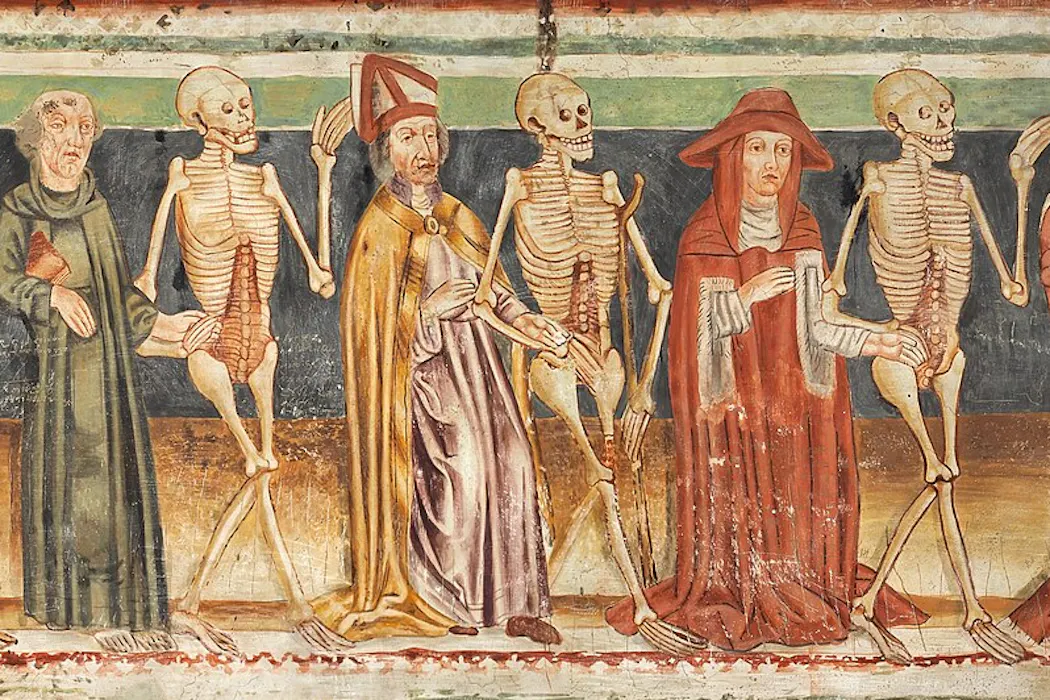
Who survived the Black Death, and how long did it take to recover? An exceptional document found in the archives of an English abbey reveals the names of peasants affected by the disease, the length of their absence, and the magnitude of the shock caused by the epidemic in medieval rural areas.
As part of our research in the medieval collections of the British Library, we identified a document that had so far gone unnoticed, which provides unprecedented insight into the survivors of the Black Death epidemic (1346-1353).
This document — a fragment of parchment inserted inan accounting register of Ramsey Abbeyconcerning the Warboys manor, in theHuntingdonshirein the center-east of England — indicates how long peasants were absent from their work when they were struck by theplague. It also reveals the names of those who survived as well as the estimated convalescence period given by their employers.
Inour recent article written with Barney Sloane, we shed new light on a group of 22 peasants from the estate who probably contracted the plague, remained bedridden for several weeks, before finally recovering.
Considered one of the deadliest pandemics in history, theblack plagueis believed to have caused the death of between one third and two thirds of the population of medieval Europe.
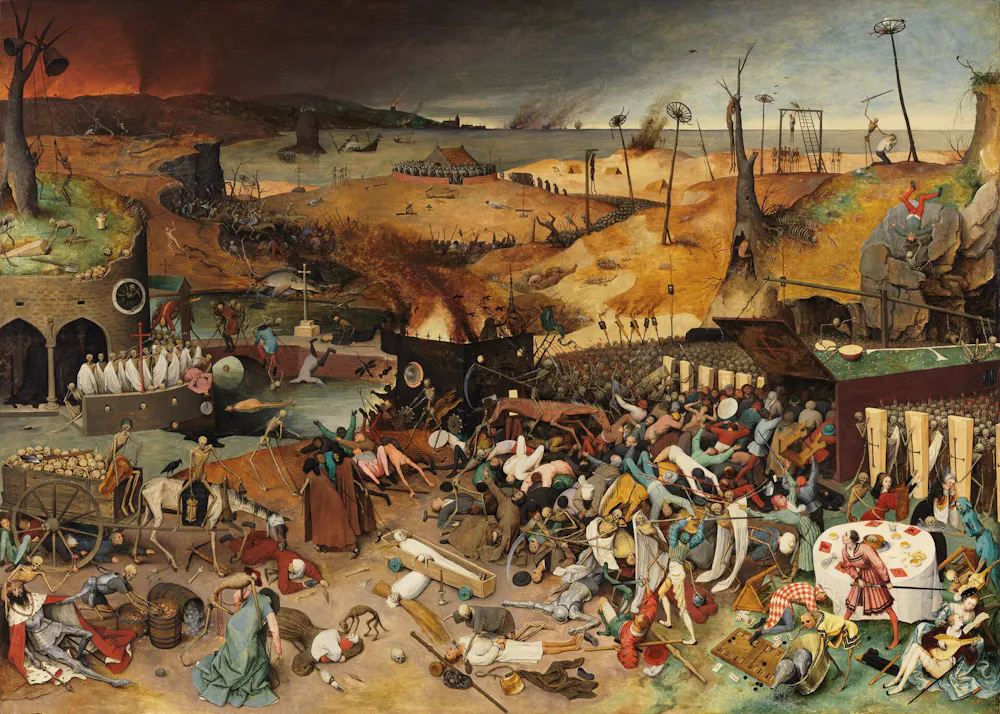
Prado Museum
Faced with the scale of the disaster, historians have mainly focused on finding traces of the victims. But this approach has largely left in the shadows the story of those who contracted the disease and then recovered from it.
Despite the extremely high mortality of the epidemic, it was possible to survive the plague, and medieval chroniclers mention this eventuality—however unlikely it may be. Thus,Geoffrey le Baker, clerk of Swinbrook in theOxfordshirein the center of England, wrote in the following decade that the chances of recovery depended, according to him, on thesymptoms presented by the patients:
“People who, one day, were full of joy were found dead the next day. Some were tormented by buboes suddenly appearing on different parts of the body, so hard and dry that when pierced, almost no liquid came out. Many of these people survived, either thanks to the incision of the buboes or after long suffering. Other victims had small black pustules spread over the entire skin of the body. Among them, very few — so to speak none — regained life and health.”
But who actually survived? Why did so many people succumb to the disease while others escaped it? And how long exactly did these “long sufferings” last? Unfortunately, documentary evidence is extremely rare, as most medieval sources record information about themortality rather than the disease itself.
A unique list of plague survivors
An unprecedented element appearing in the accounts of the Warboys manor details the case of a group of people who fell ill between the end of April and the beginning of August 1349. The monks ofRamsey Abbeyhave drawn up a list of their peasants who are ill enough to no longer be able to work on the lord’s lands, specifying the duration of their absence.
The experience of the plague clearly varied greatly from one person to another.
The fastest recovery was that of Henry Broun, who missed only one week of work. In contrast, John Derworth and Agnes Mold suffered from much longer forms of the illness and were absent for nine weeks.
On average, the illness lasted between three and four weeks, with three-quarters of people returning to work in less than a month. The speed of these recoveries is all the more surprising given that these workers were entitled toup to one year and one day of sick leave.
This list of survivors includes a significant proportion of peasants who benefited from the largest holdings of the estate. Thehistoriansand thearchaeologistshave long debated the question of whether the plague struck indiscriminately, without regard to social status, sex, or age, or whether the poorest and oldest populations were more vulnerable.
The fact that such a large number of relatively well-off peasants survived could indicate that their better living conditions facilitated their recovery compared to their poorer neighbors, perhaps because they resisted secondary infections and complications better.
One should also not place too much importance on the fact that 19 of the 22 survivors were men: this reflects the gender bias inherent in the distribution of land in medieval lordships rather than any difference in vulnerability to the plague according to sex.
This figure of 22 people may seem low, but normally, during the 1340s, only two or three absences were recorded during the summer months. This therefore represents a tenfold increase in the usual number of illnesses on the estate.
In other words, these sick farmers alone accumulated 91 weeks of lost work over a period of only 13 weeks.

The Psalter of Queen Marie (Ms. Royal 2. B. VII).
Our understandingThe consequences of the Black Death were long shaped by the dreadful scale of mortality. However, it is only by reintegrating into the picture those who fell ill and then survived that one can truly gauge the colossal shock the pandemic caused in society. In both villages and cities across Europe, the dead, the dying, and the sick must have far outnumbered the people still in good health.
The consequences appear clearly in medieval stories and chronicles. One of themreportsthat “there was such a shortage of servants and workers that no one knew what had to be done anymore.” Due to the combined effect of this massive mortality, an unprecedented wave of diseases, and disastrous weather conditions, the harvests of 1349 and 1350 have been described asthe worst known to medieval England, even worse than those that caused theGreat Famine of 1315-1317.
This document exhumed from the archives allows reintegrating the history of illness and healing into that of the Black Death, showing that it was possible to survive one of the worst pandemics in history.
These new findings also reveal the extraordinary resilience of medieval peasants. Many remained bedridden for weeks, covered in buboes — these inflamed, swollen, and painful lymph nodes in the groin or neck, characteristic of the Black Death — vomiting blood and ravaged by fever. Yet, many of them survived and resumed work after only a few weeks.

The research that enabled the writing of this article was conducted thanks to funding from a research project supported by the Leverhulme Trust, entitled “Modelling the Black Death and Social Connectivity in Medieval England.”
Grace Owen is a postdoctoral researcher associated with the project “Modelling the Black Death and Social Connectivity in Medieval England,” funded by the Leverhulme Trust.
–ref. The discovery of a list of survivors of the Black Death sheds light on how the disease was cured in the Middle Ages –https://theconversation.com/the-discovery-of-a-list-of-survivors-of-the-black-plague-sheds-light-on-how-the-disease-was-treated-in-the-middle-ages-283077