

Source: French to English Tester Published on: 2026-05-03
Source: The Conversation – in French– By Yuanyuan (Gina) Cui, Assistant Professor of Marketing, Coastal Carolina University
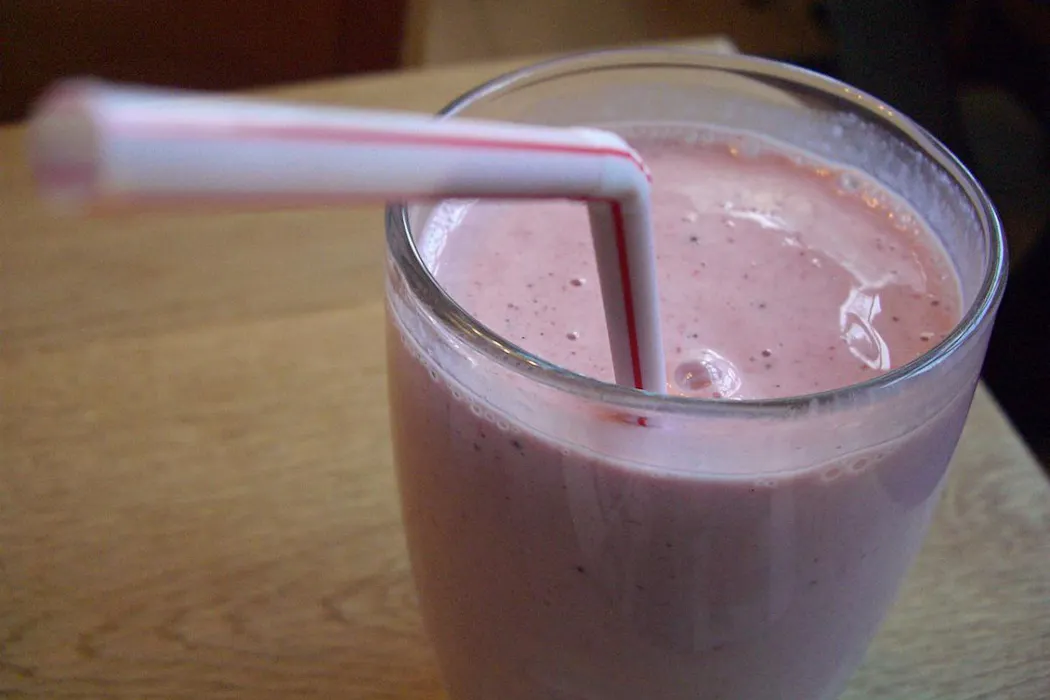
Behind the success of luxury smoothies, a psychological mechanism: in times of uncertainty, consumers turn to small premium purchases to regain control.
Faced with the purchasing power crisis, Americans are giving up ondinners at the restaurant, repel thepurchase of a carand track thegood deals in supermarket. Amid concerns related to customs duties and, more broadly, the cost of living, consumer confidence isfallen to levelsunpublished for more than ten years, according to The Conference Board, an economic think tank. At this stage, these are thewealthier consumerswhich carry the bulk of spending in the American economy.
How can one then explain the spectacular success of the $22 (about 19 euros) smoothies sold there by the chain specialized in “healthy” food, Erewhon?
This Los Angeles grocery chain that sells these sophisticated preparations is doing so well that it has openedthree new storesin 2025 – its strongest expansion since 2011. It would generate between 1,500 and 2,100 euros in revenue per square meter, up to five times more than a typical American supermarket.
And these are not just simple smoothies: they contain ingredients such as premium marine algae gel, adaptogenic mushrooms, or collagen peptides. Often, these drinks even bear the name of a celebrity.
All of this is part of the broader growth of the American specialty food market, which hasexceeded 187 billion euros– an increase of nearly 150% in ten years, according to the Specialty Food Association. A growth far superior to that of overall food product sales in the United States, which have only increased by about47% over the same period.
Independent data from the research firm Circana confirms this trend: despite inflation, which is leading many consumers to turn to store brands, thepremium and specialty products resistand even continued to gain market share in value until 2025. On TikTok, creators who once filmed their luxury bag purchases now post trays of12 dollar canned fish. As for the artisanal chocolate bars sold for between 8 and 12 dollars, they are now presented, without irony, as“auto-soins“.
If consumers are so anxious, why do they continue to indulge themselves? In fact, there is no contradiction: these are two expressions of the same psychological reaction.
When individuals feel they are losing control of their lives, they turn to modest but costly purchases that allow them to display certain values.This is the real reasonfor which premium food products are booming while some traditional luxury brands are struggling, explain specialists in consumer psychology.
We are professors inconsumer behavior and marketingand we study how individuals make their purchasing decisions during periods of economic uncertainty as well as the gap between what they feel and how they actually spend.Our workshighlight a recurring observation: when people feel like they are losing control over the major aspects of their lives, they seek to regain control over the smaller ones.
A detour through the makeup bag
Economists have already observed this phenomenon.
In 2001, Leonard Lauder, chairman of Estée Lauder, coined the expression“lipstick shade”after noting that lipstick sales increased by 11% following the September 11, 2001 attacks. When luxury products become inaccessible, consumers turn to more modest substitutes. A $60 lipstick (over 51 euros) remains expensive for a cosmetic product, but compared to the Hermès bag it symbolically replaces, it gives the impression of being a good deal.
Yesterday as today, individuals seek to regain control wherever they can. Consumer psychologists talk about “compensatory consumption”: buying toregain controlwhen life seems to escape us.
Even if thebeauty product sales are currently slowing down, this momentum has not disappeared. It has simply found new areas of expression such as food.
In many respects, food is an ideal medium for this form of compensation. It is primarily sensory: we taste it, smell it, savor it. It is also emotional, loaded with associations related to comfort, care, and home. And it is visible: in the era of social networks, what we eat has become as exposed as what we wear. Premium food products are not only consumed – they are filmed, posted, and staged.
Above all, they remain relatively affordable. Nineteen euros may seem like an absurd price for a drink, but it is little compared to a wellness retreat costing more than 300 euros.
Treat yourself, with an extra touch of virtue
This is what distinguishes the current situation from Lauder’s red lipstick index.This exampleprimarily involved pleasure: consumers were seeking a form of consolation in small indulgent purchases. Today, premium food products add an additional dimension: they are perceived as virtuous.
An Erewhon smoothie is not just a treat. It is organic, enriched with superfoods, and aligned with a wellness philosophy. Similarly, a bottle of single-varietal olive oil at 17 euros is not just a cooking fat; it is a commitment to craftsmanship and health. As for premium canned fish, they are no longer just emergency products: they are proteins from wild, sustainable fishing, presented in packaging refined enough to be displayed.
This staging of virtue accomplishes the most important psychological work at the moment of purchase: it transforms a weakness into an investment in oneself.
We do not spend excessively in difficult times; we do something for our health. We are not frivolous; we support small producers. Research shows that theconsumers need reasonsto justify impulsive purchases, especially during times of financial anxiety — and premium food products are particularly effective, as this justification is built into the product itself.
The organic label, the sustainability narrative, the framing around well-being: everything works to dispel guilt even before it arises.
Consumed in cooking… and on social media
There is a reason for the acceleration of this trend. Many premium food purchases are consumed twice – first physically, second digitally. Buying a smoothie at Erewhon is not just about the drink; it also concerns the content it allows to produce. The seafood can platter is arranged for Instagram even before anyone tastes it.
Social networks do not merely amplify the trend; they complete it. By posting a photo or a video of this smoothie, one displays attachment to well-being, quality, and a form of intentionality. At a time when flaunting a designer bag may seem inappropriate, food offers an ideal cover. It is the most acceptable demonstration of status there is. It is therefore not surprising that aYouTube videoof a “haul“These videos where someone shows everything they bought in one shopping session, made at Erewhon by culinary creator @KarissaEats, have exceeded 14 million views.
All this raises a legitimate question: the rise of the“K-shaped economy”Is this enough to explain the boom? For many economists, low- and middle-income households are reducing their spending, caught in a squeeze from health care costs, housing, and education. Conversely, the wealthiest consumers more than compensate by continuing to spend and driving the growth of gross domestic product.
In this context, premium food products thrive because they remain accessible to those who are financially well-off, while others tighten their belts. This is partly true. But this explanation is not enough to account for another shift: why well-off consumers are abandoning certain ostentatious expenses, such as designer bags, in favor of high-end grocery shopping.
This is why this analysis centered on “virtue” is so decisive. If the question were solely about purchasing power, traditional luxury would also be booming. However, this is not the case.
LVMH, the group behind Louis Vuitton and Dior, whose Fashion division saw itsprofits decrease by 13% in 2025.
Even consumers with comfortable incomes need a form of psychological permission to spend during times of uncertainty. The phenomenon of premium food products is therefore less about who can afford to spend and more about understanding why food has become the preferred area for such expenditures.
And when a smoothie becomes a status symbol, it says something broader about economic security. Food prices have increased by nearly 30% since 2019, compared to 23% for all consumer prices, according to the Bureau of Labor Statistics. For a family on a tight budget, 19 euros is not a smoothie: it’s a dinner.
Theneed for control, thedesire for identity, thecomfort that a form of moral legitimation brings – these mechanisms are universal. A single mother holding two jobs feels the same need to regain control as the influencer who films her shopping. Simply, the purchases capable of meeting these needs are increasingly constrained by prices. The justification only works if one can afford this kind of expense.
What is really in the basket
The next time you are at the supermarket and you reach for a product that is a bit more expensive than necessary, pause – not to put it back, but to think about what you are really looking for.
There is a strong chance that it is not really the product itself. It is the feeling of choosing something, at a moment when everything seems to be slipping out of control. A 19-euro smoothie is never just a smoothie. It is what we seek when we need to give ourselves permission to feel good.

The authors do not work for, advise, hold shares in, receive funds from any organization that could benefit from this article, and have declared no other affiliations besides their research institution.
–ref. Why Americans tighten their belts but can spend nearly 20 euros on a smoothie –https://theconversation.com/why-americans-tighten-their-belts-but-can-spend-nearly-20-euros-on-a-smoothie-281260