

Education Morning briefing summary for April 21, 2026.
Hampshire College’s demise is yet another blow to creative, outside-the-box options in higher education
April 21, 2026
Source: MIL-OSI-Submissions-English
Source: The Conversation – USA (2) – By Austin Sarat, William Nelson Cromwell Professor of Jurisprudence and Political Science, Amherst College
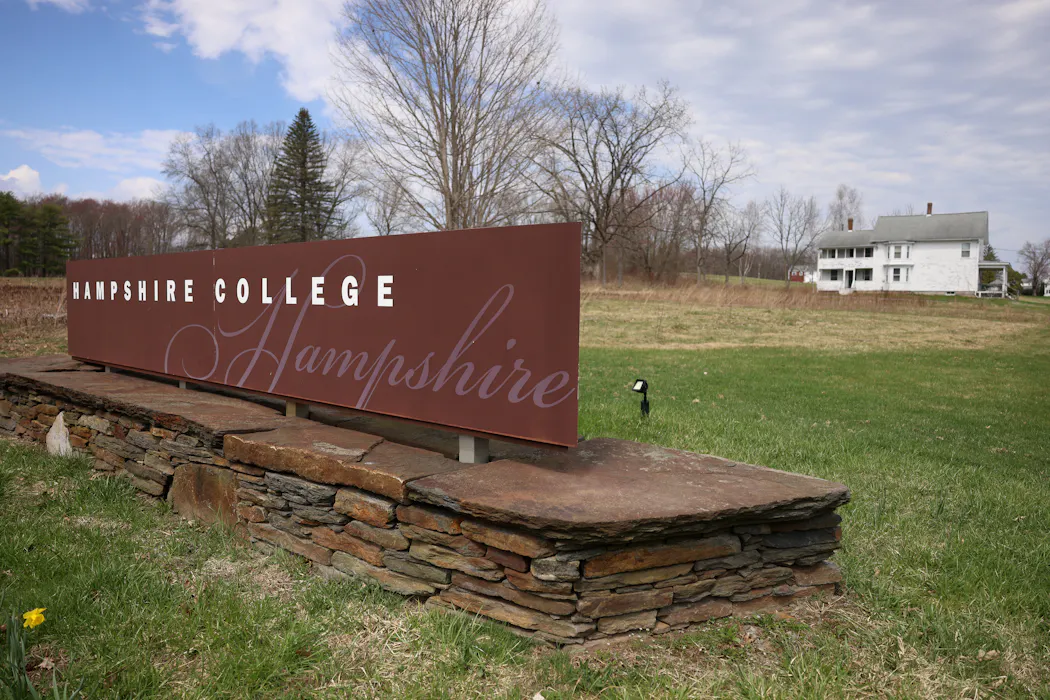
Hampshire College, a private college located in Amherst, Massachusetts, announced on April 14, 2026, that it was joining the list of small, experimental liberal arts colleges that have closed their doors over the past few years.
Hampshire will cease operations in December 2026 because of “declining enrollment, the weight of long-standing debt, and stalled progress on land development,” Hampshire board chair Jose Fuentes said in a statement. Hampshire currently enrolls 625 students, about half the number who attended in the early 2000s.
Recently admitted Hampshire students will receive a refund on their deposit. Hampshire’s current students completing their final capstone project can still graduate from the school. Other enrolled students can transfer to another school in Massachusetts that is part of the Five College Consortium. Amherst College, where I teach law, is part of this consortium. This arrangement allows students from participating colleges to take classes on different campuses.
As someone who has taught many Hampshire students, I can attest that the college delivered an education that lived up to its motto, “Non Satis Scire,” meaning “To Know Is Not Enough.”
I have also written about the financial dilemmas liberal arts colleges are facing, as enrollment drops, finances are strained and they are pressured to adopt vocational programs.
Hampshire’s demise is another sign of the consolidation occurring in higher education, in which wealthy schools and those that deliver a traditional and often vocationally driven curriculum have an advantage. Meanwhile, dozens of small colleges with small endowments, like Hampshire, cannot keep up.

Jonathan Wiggs/The Boston Globe via Getty Images
A growing list of shuttered liberal arts schools
Founded in 1965, Hampshire billed itself as a school that “scrapped generic models of learning” and offered a student-driven curriculum. It does not have traditional core course requirements and encourages students to undertake self-directed projects.
Hampshire is the latest experimental New England college to find its approach was not sustainable.
Three Vermont colleges – Green Mountain College, Marlboro College and Goddard College – closed in 2019, 2020 and 2024, respectively.
These schools were hardly household names in the higher education world, but each was prominent among aficionados of experimental education.
These colleges emphasized students undertaking independent studies, did not have standard academic departments and de-emphasized faculty research. They attracted quirky, passionate students, many of whom did not thrive in traditional high school settings.
The dream of experimental education
The origins of experimental education in colleges and universities can be traced to the turn of the 20th century and the American philosopher John Dewey. While Dewey focused on elementary and secondary education, he also wrote a book in 1899 called “The School and Society: Being Three Lectures,” which became a handbook for schools like Hampshire College.
Dewey “insisted that the old model of schooling … was antiquated,” explained Peter Gibbon, an education scholar at Boston University.
Dewey believed that “students should be active, not passive,” wrote Gibbon. “Interest, not fear, should be used to motivate them. They should cooperate, not compete.”
Those principles inspired the first stirrings of experimental education in the United States.
In 1917, Deep Springs College, a college focused on student self-government and manual labor, opened on a California cattle ranch. There are 24 to 30 undergraduate students at a time at this two-year school. Students are responsible for helping to run the school, including hiring faculty and admitting new students.
In 1921, Antioch College, a private college in Ohio that had opened 70 years earlier, reorganized itself to emphasize learning by doing. It became the first liberal arts college in the U.S. to create a co-op program, which combined in-class instruction with learning through employment outside the college.
Dewey’s influence also inspired Alexander Meiklejohn, who, after a tumultuous tenure as president of Amherst College in the early 1900s, directed the Experimental College at the University of Wisconsin from 1927 to 1932. Students at this independent college, operating within the broader University of Wisconsin, did not receive conventional grades. They also studied in six-week sessions, rather than traditional semesters that last a few months.
Meiklejohn wrote that this school had “one aim and that aim is intelligence.”
Some University of Wisconsin faculty, though, thought Meiklejohn’s approach was not rigorous. In a preview of what was to come a century later, the Experimental College closed five years after its inception.
Sarah Lawrence, a New York liberal arts college that opened in 1926, and Bennington College, a small college that opened in Vermont in 1932, were soon added to the list of the early adopters of experimental education.

Robert Gauthier/Los Angeles Times via Getty Image
Experimental colleges come into their own
Throughout the late 1950s and ’60s, dozens of other experimental colleges were founded, including Evergreen State College in Washington state.
These schools were not developed to transform higher education, argues education scholar Reid Pitney Higginson. They were designed to add variety to the menu of existing schools.
In a sense, experimental colleges captured the spirit of the 1960s. They wanted to free their students from the traditional educational paths and empower them to have a say in how their colleges operate. That sometimes caused difficulty, when students pushed for greater control over their schools.
Yet even in their halcyon days, experimental colleges never became as financially well off nor as prestigious as their mainstream competitors. At its founding, Hampshire seemed to have a distinct advantage: its membership in the Five College Consortium, connecting it with Amherst, Smith College, Mount Holyoke College and the University of Massachusetts.
An exception to the rule
But even that was not enough to save Hampshire. One challenge for it and other higher education institutions is that a rising number of students are questioning the value of a college degree, especially if it does not result in skills or a certification they can quickly use as graduates to make a living.
Tuition and housing for students attending Hampshire in the 2025-26 school year costs more than US$72,000.
Hampshire’s closing signals the full flowering of a higher education era that favors well-resourced schools, which benefit from federal funding and large private donations. Those schools often deliver a more conventional, safer educational product and can attract students from wealthy families.
Because Hampshire remained steadfastly unconventional, its failure may encourage schools to double down on offerings they know will attract a job-anxious generation of students.
What documentary filmmaker and Hampshire graduate Ken Burns told The New York Times about his alma mater’s closing helps explain why it and other experimental colleges could not survive as the exception to the rule in today’s higher education landscape.
“(Hampshire) was dedicated to a transformational education, in an era when higher education has been hijacked by the transactional,” Burns said. “A college education is, to some, like a Louis Vuitton handbag. And that’s not Hampshire.”

Austin Sarat does not work for, consult, own shares in or receive funding from any company or organization that would benefit from this article, and has disclosed no relevant affiliations beyond their academic appointment.
– ref. Hampshire College’s demise is yet another blow to creative, outside-the-box options in higher education – https://theconversation.com/hampshire-colleges-demise-is-yet-another-blow-to-creative-outside-the-box-options-in-higher-education-280791
Back to index · Read original article
What Canada, the U.K. and other G7 nations learned about building resilient education systems during the COVID-19 pandemic
April 21, 2026
Source: MIL-OSI-Submissions-English
Source: The Conversation – Canada – By Louis Volante, Distinguished Professor, Faculty of Education, Brock University
By a dictionary definition, the word resilient means an ability to recover from or adjust easily to misfortune or change. The key words here? “Recover” and “change.”
The notion that psychological characteristics strongly influence resilience is likely familiar to many of us, influenced through mental health or popular discussion.
But in education, resilience should mean more than simply coping with difficulty. It should describe whether students can keep learning, stay motivated and remain connected to school even when their lives are disrupted by crisis, poverty or uncertainty.
From an education perspective, resilience largely pertains to understanding how well students from economically disadvantaged backgrounds perform in traditional subjects like reading, mathematics and science compared to their more affluent peers.
That definition matters, because it reminds us that resilience is not just an individual trait. It is also shaped by schools, families, public policy and the support systems surrounding children. Some students are asked to overcome or recover from much more than others.
What policies help promote student resilience in education systems?
Our research tackled this question by examining how well students responded to the adversity of the COVID-19 pandemic and how effective government policies were in reducing long-term negative impacts.
We compared Canada, the United Kingdom, France, Germany, Italy, Sweden, the Netherlands, Belgium and Japan — the G10 nations, minus Switzerland and the United States.
Relationship of ‘soft skills’ to achievement?
There appears to be a disconnect between popular and educational notions of resilience, since the former focuses on “non-cognitive” skills — what many might think of as “soft skills” or “socio-emotional skills” — and the latter focuses on achievement.
In practice, however, these two ideas cannot be separated. A student’s confidence, sense of belonging, emotional stability, perseverance and ability to adapt, all influence academic performance. Likewise, repeated academic struggles can weaken well-being and increase disengagement from school.
Read more:
Concerned about student mental health? How wellness is related to academic achievement
Our previous research suggested students with stronger non-cognitive skills perform one full year higher in mathematics, and 1.5 years years higher in reading and science, than students with weaker non-cognitive skills.
Clearly, student achievement and the development of non-cognitive skills should be complementary objectives in education systems. That is an important message for policymakers. Too often, education debates force a false choice between raising test scores and supporting well-being. The evidence suggests that systems that neglect one will ultimately undermine the other.
The pandemic stress test
The pandemic created a real-world stress test for schools. It exposed which systems were able to respond quickly, protect vulnerable learners and adapt to new forms of teaching, and which systems were less prepared.
The lessons remain highly relevant today because the academic and emotional aftershocks of COVID-19 have not fully disappeared.
We want to discuss what we learned about national and provincial education policies that work best. Across the very different systems we examined, one broad conclusion stood out: resilience does not happen by accident. It must be designed into education policy through targeted support, early identification of need and sustained investment in students and teachers.
1) Targeted policies
When students are struggling in school, personalized academic supports such as the U.K.’s National Tutoring Programme, France’s intensive tutoring programs or Germany’s remedial education programs were particularly effective.
The implication is fairly clear: education systems should direct resources where they are needed most and avoid funding models that fail to account for the different needs of students and schools. This is especially true because the pandemic did not affect all children equally.
Students from disadvantaged families, those with fewer digital resources and those already at risk of falling behind often experienced the largest learning losses.
Universal support has value, but targeted interventions are usually more efficient and more equitable. Small-group tutoring, structured catch-up programs and direct outreach to families can make the difference between temporary disruption and permanent educational damage.
2) Mental-health policies
Supporting student mental health must accompany academic support. The latter was clear from differences observed between Belgium and Japan. Belgium demonstrated the value of proactive mental health interventions while Japan recorded an alarming increase in youth suicides. Clearly, Japan’s academic achievement objectives must also be met with an urgent need for comprehensive mental health strategies. This is not a secondary issue.
Read more:
Suicide prevention: Protective factors can build hope and mitigate risks
Schools are not only places of instruction; they are social environments where children build friendships, establish routines and develop a sense of belonging. When those connections are weakened, learning suffers too.
Education recovery plans should include school-based counselling, teacher training to recognize distress and preventive interventions that strengthen peer relationships and student engagement. A resilient education system is one that protects both minds and futures.
3) Data collection and monitoring policies
Education systems that collect and monitor detailed data on their student population are better positioned to track both cognitive and non-cognitive outcomes and respond accordingly. The Netherlands is one example of a country that maintains robust longitudinal data. Conversely, across Canada’s decentralized education systems, select provinces experienced significant gaps in data collection, particularly for special education student populations.
Read more:
Children with special health needs are more likely to come from poorer neighbourhoods
Without reliable data, policymakers are often flying blind. They cannot easily identify who has fallen behind, which interventions are working or whether inequalities are widening.
Better data systems do not mean more bureaucracy for its own sake. They mean better tools for timely action, better accountability for public spending and better protection for students who might otherwise be overlooked.
Supporting students today
Collectively, our cross-national research suggests that education policies matter. Organizational structures, supports and governance approaches have the power to help or hinder the development of resilient education systems.
Although the pandemic may seem like a distant memory, many of the long-term impacts remain. These ongoing challenges to cognitive and non-cognitive student development have also been met with new academic integrity concerns related to the proliferation of artificial intelligence (AI) applications in schools. Future research will need to better understand how AI, and associated policies, are shaping both academic achievement and non-cognitive skills.
The challenge for education systems now is not simply to “return to normal,” but to build something stronger than what existed before. Academic resilience should be understood as the capacity of schools to help all students recover, adapt and thrive.
If policymakers take seriously the lessons of the pandemic, they will recognize that resilience requires targeted learning support, investment in mental health, strong data systems and thoughtful digital strategies. These are not temporary fixes. They are the foundations of a fairer and more future-proof education system.

Louis Volante receives funding from the Social Sciences and Humanities Research Council of Canada (SSHRC).
Kristof De Witte receives funding from Horizon Europe EFFEct grant (101129146). Views and opinions expressed are however those of the author(s) only and do not necessarily reflect those of the European Union or the granting authority. Neither the European Union nor the granting authority can be held responsible for them.
Luca Salmieri and Orazio Giancola do not work for, consult, own shares in or receive funding from any company or organisation that would benefit from this article, and have disclosed no relevant affiliations beyond their academic appointment.
– ref. What Canada, the U.K. and other G7 nations learned about building resilient education systems during the COVID-19 pandemic – https://theconversation.com/what-canada-the-u-k-and-other-g7-nations-learned-about-building-resilient-education-systems-during-the-covid-19-pandemic-278367
Back to index · Read original article
What Canada, England and other G7 nations learned about building resilient education systems during the COVID-19 pandemic
April 21, 2026
Source: MIL-OSI-Submissions-English
Source: The Conversation – Canada – By Louis Volante, Distinguished Professor, Faculty of Education, Brock University
By a dictionary definition, the word resilient means an ability to recover from or adjust easily to misfortune or change. The key words here? “Recover” and “change.”
The notion that psychological characteristics strongly influence resilience is likely familiar to many of us, influenced through mental health or popular discussion.
But in education, resilience should mean more than simply coping with difficulty. It should describe whether students can keep learning, stay motivated and remain connected to school even when their lives are disrupted by crisis, poverty or uncertainty.
From an education perspective, resilience largely pertains to understanding how well students from economically disadvantaged backgrounds perform in traditional subjects like reading, mathematics and science compared to their more affluent peers.
That definition matters, because it reminds us that resilience is not just an individual trait. It is also shaped by schools, families, public policy and the support systems surrounding children. Some students are asked to overcome or recover from much more than others.
What policies help promote student resilience in education systems?
Our research tackled this question by examining how well students responded to the adversity of the COVID-19 pandemic and how effective government policies were in reducing long-term negative impacts.
We compared Canada, England, France, Germany, Italy, Sweden, the Netherlands, Belgium and Japan — the G10 nations, minus Switzerland and the United States.
Relationship of ‘soft skills’ to achievement?
There appears to be a disconnect between popular and educational notions of resilience, since the former focuses on “non-cognitive” skills — what many might think of as “soft skills” or “socio-emotional skills” — and the latter focuses on achievement.
In practice, however, these two ideas cannot be separated. A student’s confidence, sense of belonging, emotional stability, perseverance and ability to adapt, all influence academic performance. Likewise, repeated academic struggles can weaken well-being and increase disengagement from school.
Read more:
Concerned about student mental health? How wellness is related to academic achievement
Our previous research suggested students with stronger non-cognitive skills perform one full year higher in mathematics, and 1.5 years years higher in reading and science, than students with weaker non-cognitive skills.
Clearly, student achievement and the development of non-cognitive skills should be complementary objectives in education systems. That is an important message for policymakers. Too often, education debates force a false choice between raising test scores and supporting well-being. The evidence suggests that systems that neglect one will ultimately undermine the other.
The pandemic stress test
The pandemic created a real-world stress test for schools. It exposed which systems were able to respond quickly, protect vulnerable learners and adapt to new forms of teaching, and which systems were less prepared.
The lessons remain highly relevant today because the academic and emotional aftershocks of COVID-19 have not fully disappeared.
We want to discuss what we learned about national and provincial education policies that work best. Across the very different systems we examined, one broad conclusion stood out: resilience does not happen by accident. It must be designed into education policy through targeted support, early identification of need and sustained investment in students and teachers.
1) Targeted policies
When students are struggling in school, personalized academic supports such as England’s National Tutoring Programme, France’s intensive tutoring programs or Germany’s remedial education programs were particularly effective.
The implication is fairly clear: education systems should direct resources where they are needed most and avoid funding models that fail to account for the different needs of students and schools. This is especially true because the pandemic did not affect all children equally.
Students from disadvantaged families, those with fewer digital resources and those already at risk of falling behind often experienced the largest learning losses.
Universal support has value, but targeted interventions are usually more efficient and more equitable. Small-group tutoring, structured catch-up programs and direct outreach to families can make the difference between temporary disruption and permanent educational damage.
2) Mental-health policies
Supporting student mental health must accompany academic support. The latter was clear from differences observed between Belgium and Japan. Belgium demonstrated the value of proactive mental health interventions while Japan recorded an alarming increase in youth suicides. Clearly, Japan’s academic achievement objectives must also be met with an urgent need for comprehensive mental health strategies. This is not a secondary issue.
Read more:
Suicide prevention: Protective factors can build hope and mitigate risks
Schools are not only places of instruction; they are social environments where children build friendships, establish routines and develop a sense of belonging. When those connections are weakened, learning suffers too.
Education recovery plans should include school-based counselling, teacher training to recognize distress and preventive interventions that strengthen peer relationships and student engagement. A resilient education system is one that protects both minds and futures.
3) Data collection and monitoring policies
Education systems that collect and monitor detailed data on their student population are better positioned to track both cognitive and non-cognitive outcomes and respond accordingly. The Netherlands is one example of a country that maintains robust longitudinal data. Conversely, across Canada’s decentralized education systems, select provinces experienced significant gaps in data collection, particularly for special education student populations.
Read more:
Children with special health needs are more likely to come from poorer neighbourhoods
Without reliable data, policymakers are often flying blind. They cannot easily identify who has fallen behind, which interventions are working or whether inequalities are widening.
Better data systems do not mean more bureaucracy for its own sake. They mean better tools for timely action, better accountability for public spending and better protection for students who might otherwise be overlooked.
Supporting students today
Collectively, our cross-national research suggests that education policies matter. Organizational structures, supports and governance approaches have the power to help or hinder the development of resilient education systems.
Although the pandemic may seem like a distant memory, many of the long-term impacts remain. These ongoing challenges to cognitive and non-cognitive student development have also been met with new academic integrity concerns related to the proliferation of artificial intelligence (AI) applications in schools. Future research will need to better understand how AI, and associated policies, are shaping both academic achievement and non-cognitive skills.
The challenge for education systems now is not simply to “return to normal,” but to build something stronger than what existed before. Academic resilience should be understood as the capacity of schools to help all students recover, adapt and thrive.
If policymakers take seriously the lessons of the pandemic, they will recognize that resilience requires targeted learning support, investment in mental health, strong data systems and thoughtful digital strategies. These are not temporary fixes. They are the foundations of a fairer and more future-proof education system.
Louis Volante receives funding from the Social Sciences and Humanities Research Council of Canada (SSHRC).
Kristof De Witte receives funding from Horizon Europe EFFEct grant (101129146). Views and opinions expressed are however those of the author(s) only and do not necessarily reflect those of the European Union or the granting authority. Neither the European Union nor the granting authority can be held responsible for them.
Luca Salmieri and Orazio Giancola do not work for, consult, own shares in or receive funding from any company or organisation that would benefit from this article, and have disclosed no relevant affiliations beyond their academic appointment.
– ref. What Canada, England and other G7 nations learned about building resilient education systems during the COVID-19 pandemic – https://theconversation.com/what-canada-england-and-other-g7-nations-learned-about-building-resilient-education-systems-during-the-covid-19-pandemic-278367
Back to index · Read original article
Schools are supposed to limit using restraint and seclusion to discipline kids – but parents I spoke with say the practice is wildly misused
April 21, 2026
Source: MIL-OSI-Submissions-English
Source: The Conversation – USA (2) – By Charles Bell, Associate Professor of Criminal Justice Sciences, Illinois State University
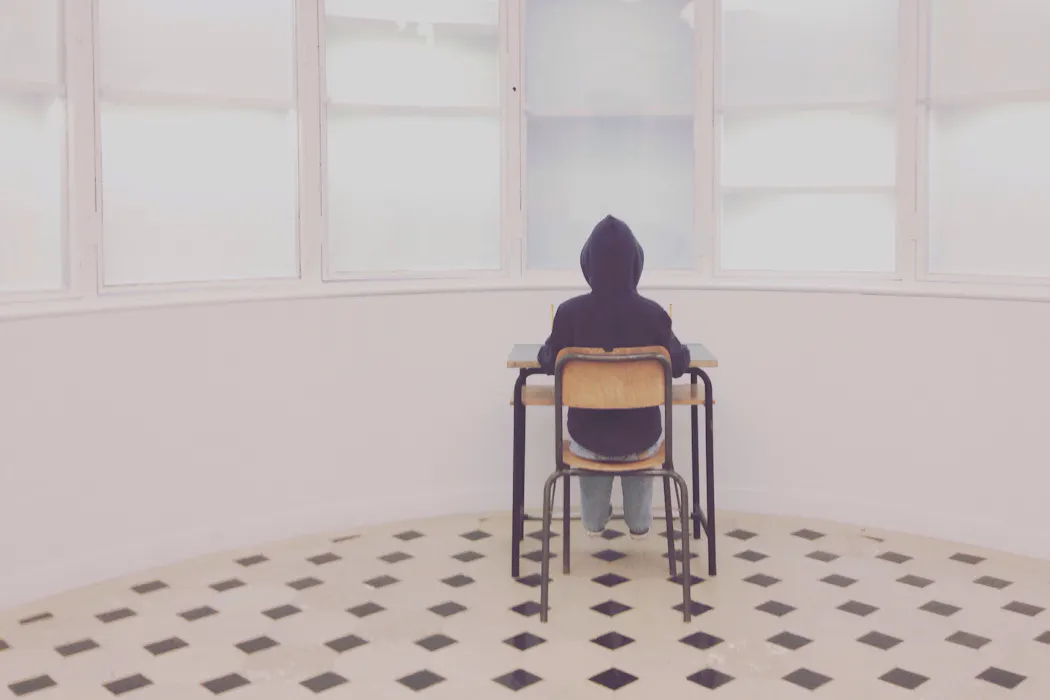
“Jessica,” the adoptive mother of a third grade student, was shocked when she discovered that her daughter had spent over 100 hours locked in a room alone at her North Carolina public school.
School staff locked the child in a room by herself after she flipped markers in the air, lay on the floor and tilted her chair back, Jessica told me in 2024. Jessica’s daughter has a nonverbal learning disability, mild attention-deficit/hyperactivity disorder and bipolar disorder.
Jessica’s situation is one of dozens that I document in my 2026 book, “No Restraint: Disabled Children and Institutionalized Violence in America’s Schools.” This book is part of my research on how families of children with disabilities navigate public schools that use restraint and seclusion to discipline students.
Restraint in this context means reducing a student’s ability to move their body freely, whether it is someone physically holding a student back or using bungee cords to constrain them, according to the U.S. Department of Education. Seclusion means a student is physically prevented from leaving a room until they are calm.
Not all public schools have seclusion rooms. And seclusion rooms can look different in various schools. Some schools refer to them as quiet rooms or a timeout box. In some schools, a seclusion room has a door with an outside lock. In other schools, a staff member holds the door shut.
Restraint and seclusion are intended to be used in situations where a child is a danger to themselves or others. Some teachers argue that seclusion rooms are necessary to protect them when students become violent.
But parents like Jessica told me school staff routinely used these tactics to punish students for nonviolent, minor offenses.
Understanding restraint and seclusion
Approximately 100,000 students are restrained and secluded in public schools each year, according to the Department of Education’s most recent data, from 2020.
Students with disabilities make up 13% of the school-age population in the U.S. but constitute nearly 80% of those who were restrained and secluded in public schools. Widespread underreporting of this method of discipline is common.
There is no federal law that regulates seclusion and restraint in public schools.
That said, 44 states have laws that limit the use of restraint and seclusion to emergency situations or ban it altogether. Minnesota, for example, bans the use of seclusion for children who are in third grade or younger.
And 41 of these same states have laws that schools must notify parents each time their child is restrained or secluded.
Various news organizations, such as ChalkBeat, have found that schools in North Carolina, Michigan and Illinois have violated restraint and seclusion laws.
In some cases, schools use terms such as “quiet room” and “timeout” to circumvent laws that mandate reporting restraint and seclusion to parents and government agencies.
Talking directly with parents
I interviewed 50 parents of children with disabilities from urban, suburban and rural public schools across 15 states, including North Carolina, Michigan, Illinois, Texas, Utah and Massachusetts, between 2021 and 2024.
I recruited parents by posting a flyer on social media and contacting disability advocates in multiple states. I was interested in speaking with families whose children had been restrained and secluded at school. Some of the families were struggling financially, while others were affluent. I used fake names in my book to protect their identities.
All of the parents I spoke with had children who were restrained and secluded at school at least once, with some experiencing the punishment more than 30 times.
Children could be restrained and secluded for violent behavior. But this punishment was also meted out for relatively minor infractions: singing loudly in class, repeatedly leaving their seat, and eating snow. In some cases, after being restrained and secluded, children began hitting school staff, which led to additional time in the seclusion room.

Oscar Romero Ruiz/iStock
Punishing with restraint and seclusion
The Department of Education has said that restraint and seclusion “should never be used as punishment or discipline … as a means of coercion or retaliation, or as a convenience.”
However, most of the parents I interviewed told me that school staff were using restraint and seclusion as punishment.
A few parents I spoke with called the police or child protective services after their children were locked in seclusion rooms. Thirty-eight of the 50 parents I spoke with spent between US$2,000 and $300,000 on lawsuits against the schools.
In return, some school staff allegedly used intimidation tactics to stop parents from speaking out about their child’s seclusion, parents told me.
For example, two Michigan parents named “Amy” and “John” told me in 2024 that school staff restrained their 11-year-old son, “Michael,” in 2023 after he pushed a boy who was bullying him. Michael had been diagnosed with ADHD and pediatric autoimmune neuropsychiatric disorders associated with streptococcal infections, or PANDAS, a disorder that can cause intense anxiety and mood swings.
School staff physically held Michael back. A teacher then allegedly dragged Michael to a seclusion room and locked him inside with another boy. Moments later, a second altercation occurred between the two boys in the room.
After learning about this incident in 2023, Amy and John withdrew Michael and sued the school.
After they spent $90,000 on a lawsuit, John said, the school requested a gag order to prevent them from speaking about their child’s experience. School administrators also offered John and Amy a $15,000 settlement.
John and Amy decided to stand their ground in court. As the lawsuit continued, school staff retaliated and called CPS on the family.
“There is a saying in the special needs community: ‘It isn’t if CPS gets called on you, it’s when.’ And it’s all because the school is using them as a tool to either push people out of the school or to intimidate them into behaving correctly,” John said.
When I contacted the school in 2024, administrators did not respond to comment on the lawsuit.
In Jessica’s case, she also hired an attorney and filed a federal lawsuit.
Jessica told me school staff concealed evidence of the more than 20 instances between 2018 and 2020 that they locked her daughter in a seclusion room.
When I spoke with Jessica in 2024, she told me that school administrators tried to fire her husband, who was employed by the district at the time of their lawsuit. In this case, Jessica shared how a judge intervened to prevent her husband from being fired.
Searching for meaningful solutions
Within the past few years, there have been calls for Congress to pass the Keeping All Students Safe Act.
After a failed attempt to pass this legislation in 2021, U.S. Rep. Donald Beyer, a Democrat from Virginia, reintroduced the Keeping All Students Safe Act to Congress in December 2025. The bill remains in the House Committee on Education and Workforce.
This legislation would protect children from harmful restraint and seclusion practices by ensuring that school staff are properly trained on this practice. The bill would limit the use of restraint and seclusion to emergency situations. And it would mandate that parents are notified every time their child is restrained or secluded at school.
Regardless of federal legislation, I think that parents play an important role in understanding how school restraint and seclusion affect families. Also, researchers and policymakers cannot fully understand how retaliation influences parents’ schooling decisions if parents are not included in this discussion.

Charles Bell does not work for, consult, own shares in or receive funding from any company or organization that would benefit from this article, and has disclosed no relevant affiliations beyond their academic appointment.
– ref. Schools are supposed to limit using restraint and seclusion to discipline kids – but parents I spoke with say the practice is wildly misused – https://theconversation.com/schools-are-supposed-to-limit-using-restraint-and-seclusion-to-discipline-kids-but-parents-i-spoke-with-say-the-practice-is-wildly-misused-279920
Back to index · Read original article
A historian of Black Canada gives a report card on Ontario’s new mandated Black history education
April 21, 2026
Source: MIL-OSI-Submissions-English
Source: The Conversation – Canada – By Natasha Henry-Dixon, Assistant Professor of African Canadian History, York University, Canada
During Black History Month more than two years ago, in February 2024, the Ontario Conservative government announced it would introduce mandatory curriculum expectations focused on the history of Black Canadians for Grades 7, 8 and 10, with new learning to start in September 2025.
The government then postponed this and other curricular changes.
In February 2026 (during Black History Month), the Ministry of Education released the new curriculum expectations, now to come into effect this coming September.
Decades of advocacy
Despite decades of advocacy, there has never been a singular historical fact that all students in Ontario have had to learn about Black Canadians’ 400-year presence in what is now Canada.
To date, inclusion of Black history has been based on the voluntary efforts of individual educators or some school board equity initiatives.
As highlighted in the Ontario Human Rights Commission’s Dreams Delayed report, the Black community has long criticized the over-emphasis on Black American history and the exclusion of the rich and diverse histories and contributions of Black Canadians.
I have been waiting with bated breath.
I am a historian of Black Canada, an assistant professor and a curriculum consultant specializing in Black Canadian history. I have taught Black Canadian history at the elementary and secondary levels and facilitated professional development for educators on the same subject for more than 20 years.
I’ve also studied the Ontario curriculum pertaining to Black Canadian history since 1999. During the early stages of the development of the new expectations, I was invited to review only initial drafts.
Read more:
‘Dreams delayed’ no longer: Report identifies key changes needed around Black students’ education
According to the Ontario Ministry of Education, “the 2026 revisions to the Grades 7 and 8 history curriculum were made in collaboration with Black history organizations, academic scholars, subject matter experts, subject division experts, parent and education organizations, and francophone partners,” but only generalized detail is provided about the process.
Questions have been raised about this because of the final output. I’ve examined the released revised history curriculum and present here an assessment.
New expectations
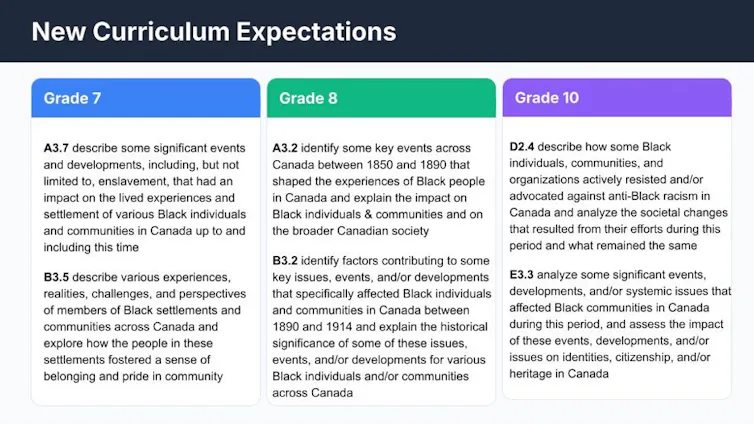
The new mandated expectations pertaining to Black Canadian history were included in a revision of the Grades 7, 8 and 10 history curriculum. These are the grades where students learn Canadian history. The number of expectations regarding Black history is reasonable because there is a lot to cover in the history curriculum overall.
(Natasha Henry-Dixon)
However, unlike all of the other specific expectations in the history curriculum, the “Black-specific expectations” are the only ones that don’t have any supporting topic suggestions or optional topics.
While specific curriculum expectations for Grades 7 and 8 don’t have any framing questions like other ones do, the Grade 10 expectations have two framing questions: “In what ways did the actions of various Black individuals, communities and organizations during this period help shape strategies and initiatives combating anti-Black racism today?” and “How did Black communities contribute to Canada’s identity and heritage during this period?”
Read more:
Black Londoners of Canada: Digital mapping reveals Ontario’s Black history and challenges myths
The ministry could argue that such open expectations give teachers room to teach what they’d like. But teachers should receive as much informed guidance as possible, particularly because most have not taught any Black history content before.
Black Canadian history topic suggestions
There are Black Canadian historical subjects included as topic suggestions in other specific expectations throughout the history curriculum.
The ministry has maintained all of the topic suggestions from the current (soon-to-be-retired) version. I compared these using my 2016 master’s study, Lend Me Your Ear, where I evaluated the 2013 social studies, history and geography curriculum.
There are also very broad topics in the history curriculum — such as immigration and analyzing the social and political values and significant aspects of life for some different groups and communities. Black Canadian experiences could be included, if a teacher chooses to do so.
Some information excluded
In the revised history curriculum, two topics have been cut from Grade 10. The No. 2 Construction Battalion, the all-Black segregated military unit in the First World War, was removed.

(F 2076 Alvin D. McCurdy fonds/Archives of Ontario/Wikimedia)
These soldiers and their descendants received an apology from the federal government in 2022 for the appalling mistreatment they endured in their service to Canada.
Black History Month was suggested as a Canadian commemoration in the soon-to-be former version, but was the second topic cut from the new version.

(National Archives of Canada/C-029977/Wikimedia)
2026 marks 100 years that Black people have commemorated Black history in the month of February and the 30th anniversary since Black History Month has been recognized at the federal level in Canada. Ironically, this elimination was made public during Black History Month.
For some of the topics, their inclusion left out some information. In Grade 7, Black Loyalists in Ontario were not recognized. Mary Ann Shadd Cary’s last name “Cary” was not used in Grade 8. She married Thomas Cary in 1856 and used that last name throughout her life.
The inclusion of the Black Cross Nurses in Grade 10 excludes the main organization they were an auxiliary of: the Universal Negro Improvement Association (UNIA).
More was possible
The ministry missed the opportunity to include a range of new topics to demonstrate more meaningful integration of Black Canadian history.
New topics would provide more explicit examples of the contributions of diverse Black individuals to Canada’s foundation, the obstacles they faced in the pursuit of full citizenship and equality and the many ways they resisted that helped build a more inclusive and prosperous country.
A major omission is the longstanding cultural tradition of Emancipation Day (Aug. 1), which commemorates the abolition of British slavery.
The occasion has been marked for 192 years and was recognized federally in 2021. This treatment maintains the relegation of Black Canadian history to the periphery.
My grade
I give the new expectations a “D,” a marginal pass, only because they were actually implemented.
The revisions instituted two expectations per grade on Black Canadian history that is now part of the official curriculum policy. In this respect, the changes advance the cause long lobbied for by the Black community.
However, the new expectations miss the mark.
They lack substance and leave gaps that can further perpetuate the nonexistent and inconsistent teaching of Black Canadian history.
Given the nature of the content, and because this is the ministry’s first foray into mandating Black history in Canada, the regularly opaque revision process should have been more transparent. One wonders if issues and questions raised could have been avoided if the process was more collaborative. Questions include:
• Was feedback gathered from collaborators really considered or was checking the box that they met with them the total sum of the “collaboration?”
• Who was involved internally and externally? What are their expertise and credentials? Were they involved from beginning to end?
• What feedback was provided and implemented or not? Why?
• What kind of professional development will be provided? Who will deliver it?
• What instructional resources will be provided and who will develop them?
• How will accountability and the impact of the curriculum expectations be measured?
The new expectations establish a standard that needs to be greatly improved upon in the next cycle of revisions. Hopefully this happens in my lifetime and more valuable time isn’t lost. I’ll continue to hold my breath until then.

Natasha Henry-Dixon reviewed early drafts of the curriculum revision.
– ref. A historian of Black Canada gives a report card on Ontario’s new mandated Black history education – https://theconversation.com/a-historian-of-black-canada-gives-a-report-card-on-ontarios-new-mandated-black-history-education-279144
Back to index · Read original article
Southport inquiry: schools are key to safeguarding, but their job is getting harder
April 21, 2026
Source: MIL-OSI-Submissions-English
Source: The Conversation – UK – By Colin Diamond, Professor of Educational Leadership, University of Birmingham
Sir Adrian Fulford’s report into the July 2024 attack in Southport that killed three young girls does not pull any punches. He concluded that the UK’s safeguarding model had completely failed, with no agency taking lead responsibility. He referred to “an inappropriate merry-go-round” of state agencies, none of which took responsibility for the risks posed by 17-year-old Axel Rudakubana.
There were red flags about Rudakubana for several years before the attack. This included him carrying knives to school with the stated intention to use them, attacking fellow pupils, telling police that he had considered poisoning people, and a browsing history obsessed by violence and death.
The Southport inquiry reveals the pivotal role of schools in these situations – they have deep knowledge and understanding of their pupils and families. But of course, they cannot do it alone. Their powers and duties are rightly rooted in education.
The weakness in the system is not what schools are doing in relation to safeguarding – it is that when they attempt to escalate concerns (in this case via three Prevent referrals), they are not always picked up.
While Fulford praised schools’ efforts to intervene, the inquiry found that there had been gaps in information-sharing between schools, and overdependence on individual designated safeguarding leads.
Schools, broadly, have a deeper understanding of a child’s behaviour than other agencies involved with safeguarding. They see their pupils for 190 days a year, while interactions with other agencies are occasional or even one-off. But they are frustrated by different thresholds for intervention in other agencies.
We saw this with Southport. Rudakubana attended school almost 100% in years 7 and 8. He and his family were well known to the school. Fulford reported extensively on the levels of interaction between all three secondary schools which Rudakubana attended. But staff from one school felt that they were going round in circles, as no other agency would take responsibility for the risks which he was presenting. That included local authorities, the police and social care. Arguably, the voice of schools should be given more weight more than they are now when multiple agencies are invited to discuss a case.
How schools’ jobs are getting harder
Within a school, the designated safeguarding lead is responsible for managing referrals to statutory agencies, maintaining confidential records and helping staff recognise and report safeguarding concerns of any nature, from child protection to radicalisation. A 2024 government consultation revealed growing pressure in the system, with greater numbers of more complex referrals. Typically, schools will have pupils from more than one local authority area which complicates the role. While training is mandatory, it is of variable quality.
Schools must discharge their legal Prevent Duty. Teachers need to look out for the signs of radicalisation and engagement with extremist ideology. It goes way beyond traditional subject boundaries and exam teaching. And all schools are inspected by Ofsted on how effectively they keep their pupils safe.
The Southport inquiry reveals that this is becoming an even more complex role.
Rudakubana’s school referring his case to Prevent, the specialist police officers did not escalate concerns, because Rudakubana did not present a coherent ideology. While his conversations with teachers and online behaviour suggested obsessions with violent death, he was not obviously aligned with any ideology. There was no political or religious agenda per se.
His motivations were unclear and confusing, yet they were sufficient for the three schools involved to raise concerns with other agencies numerous times from 2019-24.
This suggests that Prevent is out of step with the issues schools deal with on a day-to-day basis. Referrals where no ideology was identified now comprise the largest number of Prevent referrals . A review of Prevent and its interactions with schools in now overdue.
We also know that Rudakubana had a form of autism which the inquiry found “manifestly fell into the cohort of those … whose individual characteristics mean that their autism does carry an increased risk of harm to others”.
It is important to state that there is no evidence that autistic people are more likely to commit violent acts than neurotypical people. However, specific autistic traits can make some more susceptible to non-violent extremism, radicalisation or the adoption of extremist views, particularly in online environments. Working to affect change with autistic pupils who have deeply embedded obsessions with violence requires the highest level of specialist skills.
In the English school system, professional development and provision has not kept up with the demand generated by increased numbers of pupils with complex needs. The government is currently consulting on proposals to overhaul the Send system in England.
Schools’ responsibilities in relation to safeguarding have grown in recent years. At the same time, they find themselves dependent on other organisations to fully discharge their duties. This is the fundamental weakness in the system. While schools did not share information between themselves fully effectively, their subsequent efforts to alert other agencies to the risks Rudakubana presented were not taken seriously.
The chain is only as strong as its weakest link. It will be of no great solace to school leaders whose work is praised by Fulford to know that if their advice and warnings had been heeded by all the other agencies, the Southport killings would not have happened.

Colin Diamond does not work for, consult, own shares in or receive funding from any company or organisation that would benefit from this article, and has disclosed no relevant affiliations beyond their academic appointment.
– ref. Southport inquiry: schools are key to safeguarding, but their job is getting harder – https://theconversation.com/southport-inquiry-schools-are-key-to-safeguarding-but-their-job-is-getting-harder-280855
Back to index · Read original article
The fake disease that fooled the internet — and what it says about all of us
April 21, 2026
Source: MIL-OSI-Submissions-English
Source: The Conversation – UK – By Jonathan R. Goodman, Assistant Research Professor, Psychiatry, University of Cambridge

Until a few years ago, no one had heard of bixonimania. Then, in 2024, a group of scientists posted findings online announcing the condition, which they claimed affected the eyes after computer use. However, the scientists had made it up – not just the work, but the authors’ names, affiliations, locations and funding, which was the University of Fellowship of the Ring and the Galactic Triad.
Large language models like ChatGPT and Gemini treated it as real anyway, and in doing so, helped turn a fictional disease into a legitimate-sounding health concern.
Bixonimania is not an isolated case. Being deceived – whether you are a person or an AI model – is concerningly common, in science and beyond. Whether we’re talking about AI hallucinations, state-backed disinformation or just everyday lies, humans have a remarkable knack for naivety, owing to our biases and increasing need to outsource learning to others. These are problems we – individually and collectively – urgently need to better understand and overcome.
Our shared fascination with deception may help explain the popularity of The Traitors, a TV programme built around the tension between trust and suspicion, where contestants must decide who among them is deceiving the group.
The show captures something intrinsic to being human: the persistent threat of being unsure about whether we’re placing trust effectively. Yet in the modern era of mass digital communication and AI, we’re now almost constantly faced with a similar threat, often without realising it.
At a recent event at the Cambridge Festival, we aimed to highlight this risk through a Traitors-themed science event. Four panellists presented work, all of which could have been a lie. The audience was asked to vote on which of the presenters was deceiving them and why.
We deliberately made the presenters and their work outlandish. From their varying backgrounds and with varying accents, the panellists presented their work in global health, climate, media and astrophysics. Some dressed formally, while one – a Nigerian researcher presenting her work on immigration in a healthcare context – wore clothes linked to her ethnic identity.
We were interested in exploring which of these signals – accent, gender, ethnicity, and dress and presentation style – influenced the audience’s decisions. Both content and presentation styles influenced them, but the signals they relied on led them to the wrong conclusions, rating the traitors as more credible than honest researchers.
The ones who received the most votes were the two “faithful” researchers (to use the language of The Traitors) – Ada, from the non-profit Development Media Initiative, and Sarah, an astrophysicist working in galactic archaeology.
Ada’s team had saved lives by sharing health information with communities in the global south through running ten radio broadcasts daily. The audience thought the results were implausibly impressive.
“Ada’s data is too good to be true,” one person reported in our questionnaire. She was also presenting work she hadn’t personally contributed to. Even though this is common in large collaborations, this distance led to perceptions of a lack of confidence, undermining her credibility.
Sarah, an astrophysicist, had presented her subfield of galactic archaeology – the study of the Milky Way’s formation history through the chemical signatures of ancient stars. Yet with only four minutes to speak, she was unable to convey significant depth. The audience read that as a lack of understanding.
The outlandishness of her field’s name also harmed perceptions of her legitimacy. “Galaxy [sic] archaeology is too cool a name to exist,” one audience member wrote.
By contrast, the two traitors, Jack and Joyce, received the fewest votes. Jack was an actor who created the persona of a climate researcher specialising in rain. Joyce presented her own work but falsified the results.
Interestingly, Joyce’s personal connection to her work – she is a Nigerian woman conducting research into Nigerian communities – helped to convince the audience of her authenticity. “Joyce’s presentation sounded very considered and genuine – the process of her research and recounts of her personal experiences sounded like she had lots of interest in the area,” one person wrote.
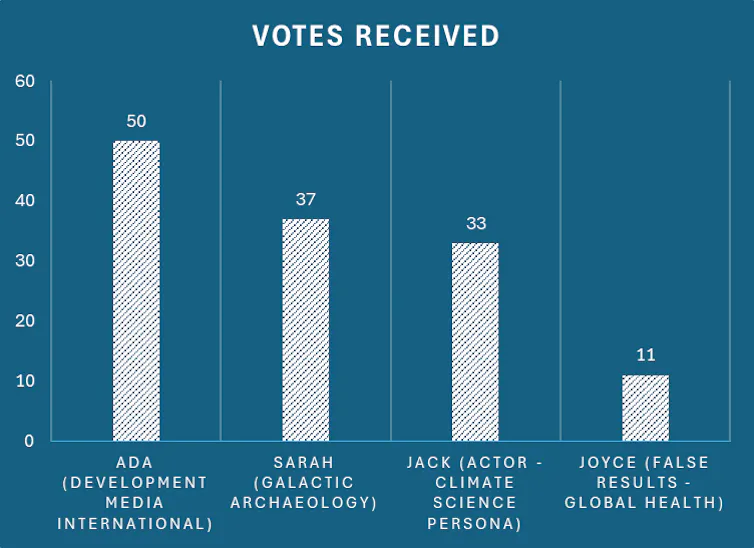
University of Cambridge, CC BY-SA
The event was meant to be fun and engaging. Yet we also wanted to illustrate the many ways people can misrepresent themselves, whether in science or beyond. Our traitors showed that lies don’t just have to be about who you are (Jack is an actor, not a researcher) but about what you say (Joyce is a researcher but falsified her results).
Misinformation has always existed. What’s new is the speed at which it spreads, the tools that generate it, and how convincingly it mimics the real thing.
Why maths isn’t enough
Our collective capacity to recognise false information is also at risk. This is because, as a society, we continue to promote the importance of hard science subjects at the expense of the critical thinking skills derived from studies of the arts, humanities and social sciences.
This can be seen, for example, in the 2023 UK governmental push to require all school students to take maths until age 18. No such push exists to promote and develop the critical thinking skills of young people. It’s easy to see how increasingly convincing falsehoods like bixonimania’s existence can be accepted as truth, especially when touted by AI models.
Tools are helpful. AI is a tool, the internet is a tool, the media is a tool. But it’s up to us to ensure that we are using them and not being manipulated by them.
In The Traitors, we have little to go on to determine what is true. Yet in the real world, we have the ability to check the truth of claims. With effective caution and critical thinking, it is entirely possible to determine what is trustworthy, but it requires thinking for ourselves. Trust is ours to give, and we need to learn to give it wisely.

Jonathan R. Goodman receives funding from the National Institute of Health Research, the Wellcome Sanger Institute, and the Wellcome Trust.
Mariam Rashid receives funding from the Isaac Newton Trust and the Kavli Foundation.
– ref. The fake disease that fooled the internet — and what it says about all of us – https://theconversation.com/the-fake-disease-that-fooled-the-internet-and-what-it-says-about-all-of-us-280615
Back to index · Read original article
Économie de l’attention : former des « consommateurs avertis », une priorité de l’éducation aux médias
April 21, 2026
Source: MIL-OSI-Submissions-French
Source: The Conversation – in French – By Divina Frau-Meigs, Professeur des sciences de l’information et de la communication, Auteurs historiques The Conversation France
Le procès qui vient de reconnaître aux États-Unis la responsabilité de YouTube et d’Instagram dans les troubles psychiques développés par une utilisatrice invite à interroger les objectifs de l’éducation aux médias. Si celle-ci vise à aiguiser l’esprit critique des jeunes citoyens, elle ne peut mener sa mission à bien sans éclairer les rouages commerciaux des plateformes.
Dans les cours d’Éducation aux Médias et à l’Information (EMI), l’accent est ostensiblement mis sur l’« esprit critique », c’est-à-dire la capacité à prendre du recul par rapport à l’information et à se faire une opinion fondée.
Mais qu’en est-il de la compétence à la « consommation avertie », c’est-à-dire de la capacité à réfléchir à sa consommation, ses choix, ses besoins et ses budgets en toute connaissance de cause, et de faire valoir ses droits ? Celle-ci passe beaucoup plus souvent au second rang. Elle figure pourtant dans le programme d’éducation à la citoyenneté numérique du Conseil de l’Europe.
Le procès historique gagné par une consommatrice des applications de Meta (Instagram et Facebook) et YouTube (filiale de Google au sein d’Alphabet) illustre pourtant sa puissance d’action. Le jury a tranché en faveur de la plaignante, considérant que ces plateformes lui avaient causé préjudice en raison de la conception du produit, dont le design et les fonctionnalités ont entraîné chez elle des troubles de santé mentale.
C’est la première fois que l’addiction numérique est reconnue comme dépendance forte entraînant une conduite compulsive, sans prise de substances. Voilà qui donne des perspectives d’actions dans les classes. Comment retourner l’économie de l’attention contre ceux qui la manipulent et la monétisent ?
En EMI, la critique de l’économie de l’attention passe par une connaissance des stratégies des plateformes visant à capter et maintenir l’intérêt des usagers, afin que les messages des annonceurs laissent une empreinte forte et répétée dans leur esprit et les engagent à passer à l’achat. La compétence « consommation avertie » rappelle aux usagers qu’ils ne sont pas une simple audience mais des consommateurs et des citoyens à la fois.
Construire l’usager comme consommateur et citoyen, et non comme simple utilisateur, passe par la reconnaissance de ses capacités d’action autonome, c’est-à-dire de recours, et ses capacités d’action de groupe, c’est-à-dire de protestation, voire de conflit.
Définir la « consommation avertie »
Pour le consommateur américain, les moyens d’action sont clairs et balisés, car ils autorisent la saisie en justice tout comme la réclamation client auprès d’une entreprise récalcitrante. Ce qui n’est pas sans effets d’aubaine pour certains : K.G.M. pourrait recevoir 6 millions de dollars de Meta et YouTube à titre de dommages-intérêts compensatoires et punitifs.
Pour le consommateur européen, les moyens d’action sont moins balisés, même si les plateformes sont gérées par la direction générale des réseaux de communication, du contenu et des technologies (DG-Connect), qui entremêle les contenus et leurs transports. Le répertoire des actions contre les plateformes est en grande partie saisi par les États, ce qui tend à dé-saisir, voire à dé-responsabiliser, les consommateurs et, par contrecoup, les citoyens.
La réglementation mise en place par le Digital Services Act (DSA) (2024) oblige à la transparence algorithmique : les très grandes plateformes (plus de 45 millions d’utilisateurs actifs mensuels) doivent publier des rapports trimestriels détaillant leurs algorithmes de recommandation et leurs métriques d’amplification, ce qui expose leurs fonctionnalités sans toutefois les obliger à en changer.
Côté usagers, le DSA crée le statut de signaleurs de confiance – il s’agit d’organisations reconnues pour leur expertise dans la détection, l’identification et la notification de contenus illicites ou toxiques. La solution pour le consommateur citoyen est donc de repérer ces signaleurs, et de les saisir. En France, c’est le régulateur des médias, l’ARCOM, qui désigne ces instances pouvant se saisir à la place des usagers. Ainsi, il se trouve qu’Addictions France en fait partie, tout comme Indecosa CGT, pour la défense des consommateurs.
Questionner la figure de l’usager
Les plateformes cherchent à mettre l’utilisateur en condition physique et psychologique de recourir à l’écran. Cette relation établit un contrat de partage direct, souvent scellé par des « conditions générales d’utilisation » (CGU) illisibles, notamment par les mineurs, qui donnent aux plateformes un large contrôle des données cédées en échange d’un accès « gratuit ».
Aux États-Unis, ce contrat de partage a été testé en 1996 et encore en 2012, par des « web blackout ». Les acteurs de l’internet ont affiché un écran noir sur leurs pages d’accueil ou suspendu leurs services pour protester contre des projets de loi menaçant leur liberté de commerce. En 1996, ils ont ainsi obtenu l’immunité dans la section 230 du Communications Decency Act. En 2012, ils ont obtenu le retrait de la loi SOPA antipiratage qui visait à élargir les capacités d’application du droit d’auteur pour lutter contre sa violation en ligne.
Au nom de la liberté d’expression et de consommation en ligne, ils ont incité les usagers à faire des pétitions, à boycotter les acteurs qui ne suivaient pas le mouvement et à manifester dans la rue pour faire valoir leur soutien aux plateformes et obtenir ainsi le retrait des projets de loi. En Europe, ce répertoire d’actions a été bien moins utilisé.
Mais les conditions d’usage se sont dégradées et avec elles le statut des usagers, devenus des ouvriers cachés, qui travaillent par leur temps d’attention à enrichir les plateformes. Les likes se transforment en espèces sonnantes et trébuchantes en optimisant le référencement et le placement de produit ; la création de contenus est assimilable à une forme de rédaction gratuite, ce qui va à l’encontre du droit du travail, notamment quand il s’agit de mineurs.
Visibiliser le rôle des annonceurs et des actionnaires
En EMI, il s’agit aussi de montrer le dessous des cartes. Les annonceurs et les actionnaires sont deux acteurs invisibles mais cruciaux de l’économie de l’attention. Principal mode de paiement des médias en système commercial concurrentiel, l’intégration publicitaire dicte les fonctionnalités de l’attention, comme les algorithmes de recommandation, les notifications push, le design « infinite scroll », les formats viraux, les titres « click-bait ».
L’économie de l’attention se fonde sur ce flux continu qui est propice à l’addiction. La vente d’espaces publicitaires permet de financer le web « gratuit » ce qui passe par des fonctionnalités de ciblage comportemental, d’achat et de partage de données, etc. Le prix de ces unités publicitaires dépend de la capacité de la plateforme à garantir une exposition prolongée (temps de visionnage, taux d’engagement).
L’usager doit être informé des montants faramineux engagés, du duopole des deux régies publicitaires de Meta et Google, rejointes récemment par Amazon, ce qui oblige tous les autres acteurs du net à passer par leurs fourches caudines, y compris les médias audiovisuels et la presse.
La publicité est aussi un secteur en concentration croissante, avec 5 à 6 agences médias en contrôle du secteur, qu’elles se sont accordées pour réguler entre elles, notamment pour ce qui est de la vente d’espaces en ligne. Leur système est complexe et opaque et rend la chaîne de valeur (créée ou détruite) difficile à traiter pour les usagers, y compris les créateurs de contenu, rémunérés au clic.
A cela s’ajoute le rôle des actionnaires de ces plateformes, dont la plupart sont entrées en bourse entre 2004 (Google) et 2012 (Facebook). Sans oublier que leurs fondateurs restent en contrôle du capital comme des actions. Ces acteurs que sont les agences et les actionnaires ont contribué à rompre le contrat de partage avec l’usager de base. Cette rupture s’est révélée au grand public avec leur volte-face et leur ralliement aux politiques ultra-libérales de Donald Trump en 2025. Elle révèle le fossé creusé entre les élites de la Tech et la base progressiste de leurs usagers croyant en un progrès social porté par les réseaux numériques.
Responsabiliser les plateformes
Les fonctionnalités du design ne sont pas une fatalité. C’est ce que démontrent les milliers de poursuites engagées par des jeunes, à titre individuel, mais aussi, à titre collectif, par des districts scolaires et des procureurs généraux d’État (devant le tribunal fédéral de première instance du district nord de la Californie, par exemple).
Elles vont se heurter à la résistance des plateformes, qui font appel systématiquement, arguant de la difficulté à mesurer et démontrer juridiquement l’impact individuel de l’addiction numérique, sans consensus scientifique massif. Mais elles signalent une ère nouvelle pour les usagers. Outre le recours au pénal (pour vice de conception de produit ou fonctionnalités addictives), la doctrine du « duty of care » (obligation de soin) évolue. Elle ouvre la porte à des initiatives de design éthique des fonctionnalités, comme l’arrêt des likes, les limites de temps d’écran, les notifications de pause, qui visent à redonner du contrôle aux utilisateurs.
Ces affaires impliquent la nécessité d’une coopération internationale pour harmoniser les standards des fonctionnalités, mais aussi l’âge de la majorité numérique. Entre les États-Unis et l’Europe, il y a deux années de hiatus en général, ce qui bénéficie aux plateformes américaines. La loi COPPA (Children’s Online Privacy Protection Act) entrée en vigueur dès 1998 et révisée en 2013 puis en 2025 la fixe à 13 ans aux États-Unis alors qu’en France, par exemple, elle est à 15 ans.
Ces affaires signalent la possibilité d’actions de classe internationales, surtout depuis la Directive relative aux actions représentatives (2020), qui relève d’un « new deal » pour les consommateurs, notamment en matière de pratiques commerciales déloyales et de clauses abusives. Les consommateurs européens pourraient joindre leurs forces aux Américains, et pousser au changement des fonctionnalités des écrans.
L’affaire K.G.M. remet en perspective l’interdiction des smartphones dans les écoles, préconisée par plusieurs pays dans le monde. Le ban laisse les praticiens de l’EMI dubitatifs, car inapplicable si tous les accessoires juridiques, techniques et éducatifs qui vont avec ne sont pas mis en place. La reconnaissance de la responsabilité des plateformes pour conception de produits à finalités addictives est plus prometteuse… si tant est que les consommateurs s’en saisissent, avec ou sans l’appui des États.
C’est en effet le design des applications de médias sociaux qui doit changer, pour les mineurs comme pour les adultes. En matière de résilience, l’efficacité de l’interdiction des smartphones comme celle du bouclier démocratique dépendra de cette mise en œuvre de la compétence « consommation avertie », par le biais de l’EMI, dès le plus jeune âge.

Divina Frau-Meigs ne travaille pas, ne conseille pas, ne possède pas de parts, ne reçoit pas de fonds d’une organisation qui pourrait tirer profit de cet article, et n’a déclaré aucune autre affiliation que son organisme de recherche.
– ref. Économie de l’attention : former des « consommateurs avertis », une priorité de l’éducation aux médias – https://theconversation.com/economie-de-lattention-former-des-consommateurs-avertis-une-priorite-de-leducation-aux-medias-279775
Back to index · Read original article