

PM Edition: Here are the top 10 business articles on LiveNews.co.nz for April 2, 2026 – Full Text
Iran war: what African countries can do to get through the crisis and emerge in a better place
April 1, 2026
Source: MIL-OSI-Submissions-English
Source: The Conversation – Africa – By Danny Bradlow, Professor/Senior Research Fellow, Centre for Advancement of Scholarship, University of Pretoria

By Easter 2026 it was still not clear when – or how – the war initiated by Israel and the US against Iran would end. But what was already clear was that it would harm Africa in a number of ways.
Firstly, it would adversely affect the global supply and prices of oil and gas, fertilisers and food. Secondly, local currencies would be affected. More than a month after the war had started a number of African currencies had begun to lose value against the US dollar.
Thirdly, interest rates stopped falling and further rate increases were highly likely. Fourth, there will be a decline in access to affordable foreign financing.
How should Africa respond?
African countries cannot avoid being harmed by the current Gulf war. Nevertheless, based on my work in international economic law and global economic governance, I think there are two lessons that, if followed, can help the continent emerge from the crisis in a better place.
First, governments and societies need to be pragmatic. Their first priority must be to do whatever they can to mitigate the impact of the war, particularly on their most vulnerable citizens. This will require governments to make trade-offs.
They will have to reallocate budgets to at least maintain the level of imports necessary to meet the society’s basic needs. They will need to convince their creditors to help finance their necessary imports. They will also need to persuade them to be flexible enough that they leave governments with at least some policy space.
Second, states and societies need to identify opportunities within the crisis for actions that over the medium term can help them meet their financing, economic, environmental and social challenges. This requires collaboration between the state and its non-state stakeholders. Business, labour, religious groups, civil society organisations and international organisations all have something to contribute.
Action in the short run
The focus of Africa’s efforts in the short term must be on minimising the negative effects of the war and on managing the state’s external debts in the most sustainable and effective way.
This is easy to state, but hard to implement. This is particularly the case in the current international environment, in which it is not realistic to expect donor countries and other international sources of finance to be particularly generous.
African countries will need to convince their creditors to acknowledge that this crisis is beyond Africa’s control and that they should not compound the pain that’s being experienced. This will require, at a minimum, that the creditors agree to suspend debt payments for the next year.
Creditors have already accepted the principle that debt payments can be suspended when debt challenges arise from sources beyond the debtor’s control. Many of them have accepted clauses requiring such action under specific conditions in their most recent debt contracts. They also did this during COVID.
Second, African countries, which are already heavily indebted, should challenge their multilateral creditors to accept the consequences of being among the biggest creditors for the continent. This includes the World Bank, the International Monetary Fund and the African Development Bank. By custom these institutions are treated as preferred creditors. This means that they get paid before all other creditors. Instead of participating in any debt restructurings, they also make new loans to the debtor in crisis. This shifts the debt restructuring burden onto the debtor’s other creditors. It also increases the total amount owed to the multilaterals.
This cannot continue. These institutions need to be more creative in providing Africa to financing. This should include:
-
Using their financial resources to guarantee the financial transactions of African countries so that they can reduce their borrowing costs and attract new equity investments.
-
More generously supporting innovative debt for development swaps. These involve creditors agreeing with African sovereign debtors to convert a portion of the existing debts into financing for specific local projects, for example in health or education.
-
Helping African governments convert their foreign exchange denominated debts into local currency debts at affordable interest rates.
Third, governments should work with the Alliance of African Multilateral Financial Institutions to use these institutions more effectively to finance African development. For example:
-
They should require the institutions to only undertake transactions that are consistent with their development mandates. This means no more opaque transactions like the recent one that the African Finance Corporation concluded with Senegal.
-
African governments should take the necessary action to activate the African Financial Stability Mechanism that they agreed to establish last year. This would create a useful financial safety net for the continent.
Fourth, African governments must build on the efforts they began last year to become a more effective advocate for African development financing interests at the international level. Among these efforts was the initiative by African ministers of finance to develop common African positions on sovereign debt restructurings. Another was South Africa’s launch of the African Expert Panel that proposed a number of initiatives on African debt and development financing.
In the medium term
African countries should advocate for the IMF to review its governance arrangements so that it becomes more accountable and responsive to developing countries, including African states and societies.
They should also advocate for the IMF to more use its existing resources, including its gold reserves, more creatively to support Africa.
Second, Africa should call for a debate on the preferred creditor status of multilateral financial institutions. This has become particularly relevant because the members of the Alliance of African Multilateral Financial Institutions are claiming that, like all other multilateral financial institutions, they are entitled to this status.
It is not clear that there are good arguments for excluding these institutions from preferred creditor status while protecting the position of the legacy institutions. This suggests that there is a need for some general principles that help determine which institutions should be treated as preferred creditors. These should be acceptable to all multilateral financial institutions and other market participants.
Third, African societies must make every effort to demonstrate that they are taking control of their own development. They should demand that their governments and all other actors in African development finance behave responsibly in regard to the financial, economic, environmental and social aspects of these transactions.
Another medium term objective should be to limit the illicit financial flows that are so often associated with international trade and investment. This goal would be advanced by the successful conclusion of the current efforts to agree on a UN Framework Convention on International Tax Cooperation.

Danny Bradlow is s Senior Non-Resident Fellow, Global Development Policy Center, Boston University and a Senior Fellow, South African Institute of International Affairs
– ref. Iran war: what African countries can do to get through the crisis and emerge in a better place – https://theconversation.com/iran-war-what-african-countries-can-do-to-get-through-the-crisis-and-emerge-in-a-better-place-279689
Back to index · Read original article
How Taiwan came to dominate the global chip industry
April 1, 2026
Source: MIL-OSI-Submissions-English
Source: The Conversation – UK – By Robyn Klingler-Vidra, Vice Dean, Global Engagement | Associate Professor in Political Economy and Entrepreneurship, King’s College London
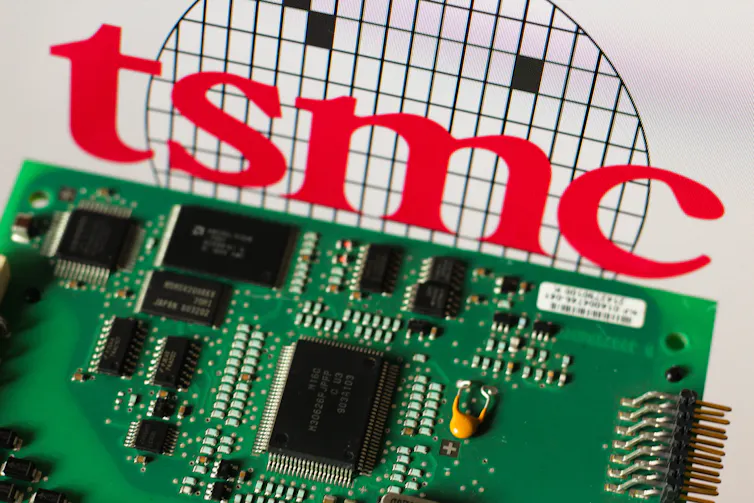
One firm, Taiwan Semiconductor Manufacturing Company (TSMC), produces more than 90% of the world’s most advanced semiconductor chips. These chips are essential for smartphones, artificial intelligence, high-performance computing and cutting-edge military systems.
Taiwan’s dominance of advanced chips acts as a chokepoint for the global economy. Days or weeks without their manufacturing would affect the supply and price of numerous products around the world. This is comparable to how the current disruption to shipping in the Persian Gulf due to the Iran war is affecting oil-dependent markets globally.
Taiwanese semiconductor manufacturing supremacy has transformed the island nation into what I have described in my research as a “niche superpower”. It wields outsized global influence by commanding a strategically indispensable industry.
Taiwan did not stumble into this position. In the 1970s, Taiwanese technocrats recognised that the nation could not immediately compete at the world’s electronics frontier. One of them was Kwoh-Ting Li, then minister of economic affairs, who is often referred to as the “father of Taiwan’s economic miracle”.
At that time, Taiwan lacked the financial capital and technological skills to compete with industry leaders such as Japan and the US. So rather than trying to dominate the entire semiconductor industry from design through to production, Taiwanese policymakers focused on building capabilities in precision manufacturing. This is the most operationally demanding part of the semiconductor value chain.
Established in 1973 by the Taiwanese government, the Industrial Technology Research Institute carefully acquired semiconductor process technology through licensing agreements with the now defunct US firm Radio Corporation of America (RCA). It then trained a generation of Taiwanese engineers.
jackpress / Shutterstock
The pivotal moment came in 1987, when Morris Chang established TSMC. Chang, a US-trained engineer who had spent decades at American semiconductor multinational Texas Instruments, devised what is now known as the “pure-play foundry” model.
Rather than designing and manufacturing its own branded chips, this meant that TSMC would manufacture chips for other firms. This strategic choice was transformative because it reassured American and European semiconductor companies that TSMC would not compete with them. It allowed major tech firms such as Qualcomm and later Nvidia to outsource chip production to Taiwan without fear of intellectual property leakage or strategic rivalry.
The Taiwanese semiconductor industry grew within the Hsinchu Science Park, a major industrial cluster south of the Taiwanese capital of Taipei. By the early 1990s, Hsinchu Park hosted more than 140 chip manufacturing firms and employed around 30,000 workers. The strength of the cluster attracted legions of Taiwanese engineers back from the US, helping Taiwan become the global leader in the production of advanced semiconductors.
The ‘silicon shield’
Taiwan’s semiconductor dominance has played an overt role in protecting the island from its existential threat – a Chinese invasion. This phenomenon was explicitly named in 2021 in an article published in Foreign Affairs magazine, where the former Taiwanese president, Tsai Ing-wen, argued that Taiwan’s semiconductor industry acts as a “silicon shield”.
The dependence of the global economy on Taiwanese-made advanced chips, she argued, means the disruption caused by a Chinese invasion would trigger catastrophic global economic consequences. Taiwan’s allies would thus be compelled to come to its defence.
In recent years, Taiwan’s silicon shield has come under threat. Following the start of US export restrictions on advanced chipmaking equipment to China in 2020, Beijing has accelerated its efforts to build indigenous capacity in chip manufacturing. It has significantly increased investment in its semiconductor industry.
Semiconductors were the underperformer in the Made in China 2025 strategy, through which Chinese leadership aimed to transform their nation into a high-tech manufacturing superpower. China fell short of its goals for the localisation of semiconductor production and global market share, missing targets by the 2025 deadline.
However, Chinese chip manufacturers like HiSilicon and Semiconductor Manufacturing International Corporation have been gaining momentum. A proposal by 13 Chinese chip industry executives in March outlined aims to increase self-sufficiency to 80% by 2030. China’s semiconductor self-sufficiency is currently around 33%.
At the same time, Washington is pushing to bring semiconductor manufacturing back onshore. Biden-era initiatives such as the Chips and Science Act offered incentives for TSMC’s sprawling manufacturing facility in Arizona, which opened in 2022 as part of US efforts to boost domestic chip production.
These incentives for TSMC included up to US$6.6 billion (£5 billion) in direct investment and significant tax credits. TSMC committed an initial US$65 billion to the plan, with the Trump administration announcing in March 2025 that the company would boost its US investment by a further US$100 billion.
Elon Musk also recently announced plans for advanced chip facilities in Texas for his two companies, Tesla and SpaceX. In light of Musk’s concerns that companies like TSMC are not producing the volume of chips his companies need, the so-called “Terafab” venture aims to consolidate every stage of the semiconductor production process under one roof and is expected to cost in the range of US$25 billion. Other companies investing in chip fabrication in the US include Micron, Texas Instruments and Intel.
Despite US and Chinese efforts, replicating Taiwan’s manufacturing ecosystem is difficult. It requires not only capital and equipment, but also knowledge that has been accumulated over decades as well as dense supplier networks and an unparalleled engineering workforce.
TSMC has struggled to hire talent in Arizona, and has resorted to flying thousands of workers in from Taiwan in a bid to improve the skills of locals. And while TSMC is now producing semiconductors at the cutting edge of 2-nanometre scale, the Chinese self-sufficiency goals aim to have “entirely domestically produced equipment” for the less sophisticated 7-nanometre and 14-nanometre generations of chips.
The difference between 2nm and 7nm chips is significant – a 45% increase in performance while using 75% less power. The narrower chips are used for advanced processes such as cutting-edge AI, while the wider ones are used in a broader range of electronics, like smartphones, desktop processors and automobiles.
Taiwan’s semiconductor story is ultimately one of strategic foresight. By choosing manufacturing over design, embedding itself within US-led technological networks and cultivating world-class process expertise, Taiwan transformed structural vulnerability into structural power.
Through its semiconductor dominance, Taiwan stands out as the quintessential niche superpower. But history shows that superpower status, including in niches, is never permanent. The technological frontier moves, rivals learn and allies hedge.
For Taiwan, remaining indispensable to the global economy will require not only staying ahead technologically. It will also require carefully orchestrating the political, financial and human capital foundations that made its silicon shield possible in the first place.

Robyn Klingler-Vidra received a research grant from the Chiang Ching-kuo Foundation between 2019 and 2023. The grant funded research on the educational and professional background of north-east Asia’s innovation policy leaders across the post-war period. The study was published in World Development in April 2025 and is available here: https://www.sciencedirect.com/science/article/pii/S0305750X25000646.
– ref. How Taiwan came to dominate the global chip industry – https://theconversation.com/how-taiwan-came-to-dominate-the-global-chip-industry-276939
Back to index · Read original article
Javier Milei’s inflation ‘miracle’ in Argentina is a warning to the world, not a blueprint
April 1, 2026
Source: MIL-OSI-Submissions-English
Source: The Conversation – UK – By Can Cinar, Honorary Visiting Researcher, City St George’s, University of London
On paper, the numbers look astonishing. The annual rate of inflation in Argentina has plummeted from 211% in 2023 to 31.5% by the end of 2025.
President Javier Milei is taking plenty of credit for the drop. And he spent some time on Wall Street last month, pitching his “chainsaw” approach to public spending as a triumph against inflation.
But as a political economist who has tracked the cyclical history of economic crisis in Argentina, I see a much grimmer story unfolding.
For the drop in inflation is certainly not a victory for Argentine productivity. It’s a byproduct of a deliberate and engineered collapse in people’s wages.
Milei hasn’t fixed the engine of Argentina’s economy, he has simply turned it off. Since he took office in 2023, the country’s manufacturing output has dropped dramatically, with over 2,000 businesses shutting down and 73,000 jobs lost.
In the automotive sector, factories are operating at just 24% of capacity.
These aren’t just dry statistics. Real wages have been crushed so hard that demand for Argentine goods has evaporated. If a manufacturer is only using a third of its machinery because nobody can afford their goods, they lose their ability to put up prices, and inflation rates stop rising.
By drastically reducing demand, Milei has not solved the inflation puzzle. He has simply removed some of the pieces, by making the population too poor to participate in the Argentine economy.
On top of this, the fear of mass unemployment means workers have no choice but to accept an ever smaller share of the nation’s economic pie. Again, low wages serve to prevent the upward spiral of prices.
So the supposed victory over inflation is actually the institutionalisation of lower wages and a lower standard of living for most people.
A recently passed law (officially named “labour modernisation”) reinforces this new reality. It has effectively increased many workers’ hours and reduced their protections, making labour both cheaper and more disposable.
The new legislation has been criticised as a return to working practices of the 19th century. Far from modernising work, it is about normalising a lower wage share of GDP and ensuring that the shrinking slice of the national income for the Argentine worker isn’t just a temporary emergency, but a permanent feature of the model.
And while the government highlights 4% GDP growth forecasts for 2026, that growth is focused in sectors like agriculture, mining and lithium, which create very few jobs. For the average urban worker the economy hasn’t recovered – it has simply bottomed out at a new, lower standard of living.
Wages down, inflation down
That doesn’t mean that the drop in inflation counts for nothing. There has been a genuine sense of relief after the triple-digit chaos of 2023.
The simple ability to shop at a supermarket without the price of goods changing dramatically in days will mark a deep psychological shift for many Argentinians.
But that shift is not based on solid ground. Inflation hasn’t been tamed by a more efficient economy – it has been starved into submission.
Yet remarkably, Milei’s “miracle” is already being packaged for export. From the radical fiscal cuts proposed by Trump in the US to the nationalist platforms of Orbán in Hungary and the Vox party in Spain, Milei and his model are being touted as a blueprint for other economies struggling with inflation.
But what looks like a triumph to some is, in reality, a deepening social crisis. Milei’s Argentina is not a blueprint to be followed. It is a warning of what happens when the cure for inflation is more lethal than the disease itself.
For this level of wage suppression is a stark reminder of Argentina’s economic crisis of 2001, a period of total state failure, sovereign default, bank freezes and 20% unemployment that left a permanent scar on the national psyche.
To have surpassed that level of wage suppression today is a damning indictment of Milei’s approach. But while 2001 was a sudden collapse of a monetary system, the 2026 reality is a slow, institutionalised asphyxiation.
The question for the coming years is how such a model can possibly be sustained. Milei has left the country with no economic levers to pull for a genuine recovery.
With negative net reserves, a domestic market in ruins, and multi-billion dollar IMF and private debts hanging over the country, the government’s path is now dictated entirely by a desperate need for dollars that turns every domestic policy into a plea for foreign capital.
This has created an economic vacuum in which there is no credit for small businesses, no surplus for public investment and no consumer demand to entice private capital back into the real economy.
That is why the administration’s pitch to New York investors in March was essentially a desperate plea for capital to fill this void. But Wall Street is not generally in the business of building factories or creating jobs in Argentina.
If anything, its investors will be looking for easy short-term profits in a newly deregulated market. And what emerges then is an economically divided Argentina. On one side of this will be a thriving enclave of mining and agribusiness designed for the global market, and on the other, a vast urban industrial wasteland where millions of Argentinians struggle desperately to make ends meet.

Can Cinar does not work for, consult, own shares in or receive funding from any company or organisation that would benefit from this article, and has disclosed no relevant affiliations beyond their academic appointment.
– ref. Javier Milei’s inflation ‘miracle’ in Argentina is a warning to the world, not a blueprint – https://theconversation.com/javier-mileis-inflation-miracle-in-argentina-is-a-warning-to-the-world-not-a-blueprint-278840
Back to index · Read original article
Why Michael Jackson’s daughter, Paris, won’t stop ‘til she gets enough from his estate
April 1, 2026
Source: MIL-OSI-Submissions-English
Source: The Conversation – USA (2) – By Reid Kress Weisbord, Distinguished Professor of Law and Judge Norma Shapiro Scholar, Rutgers University – Newark

When Michael Jackson died in 2009, left everything he owned to a family trust – an estate planning technique for giving away property that allows for privacy. The trust benefits Jackson’s three children and his mother, but nearly two decades later, Jackson’s estate, now worth an estimated US$2 billion, still hasn’t been fully distributed to the trust.
The most recent of many legal skirmishes to come to the public’s attention involves Paris Jackson, Michael Jackson’s daughter. She is asking a court to take a closer look at how the pop icon’s estate is being handled by its executors – the people responsible for managing it.
Paris Jackson has accused executors John Branca and John McClain of paying themselves and the estate’s lawyers too much, and for leaving $464 million owned by the estate uninvested. If that’s true, it would mean there is less money than there should be left over for her and her father’s other heirs. Branca is an entertainment lawyer, and McClain is a music executive.
Both were selected by Michael Jackson and named as executors in his will. They have repeatedly disputed Paris Jackson’s allegations and asserted that Paris has received at least $65 million in payouts from the estate.
Paris Jackson also has accused Branca of misusing his position as producer of “Michael,” an upcoming Michael Jackson biopic reportedly financed by Jackson’s estate, to cast an A-list celebrity – Miles Teller – to play the role of Branca himself in the film. According to Paris, the casting choice was costly and unlikely to increase box office revenue.
Paris Jackson has also stated that the $150 million film is a “botched production.” The executors have responded by arguing that the application of their expertise to other productions about the singer has already provided a huge payoff to the estate. The executors also recently won a court battle against Paris Jackson that ended with a judge ordering her to pay their attorney’s fees in a related dispute.
As law professors who study the transfer of property after death, we find that when disputes over inherited wealth become national news, they are often difficult to understand because this type of legal process is obscure and most people never interact directly with the probate court system.
This case illustrates what happens to property after death, even if the dispute is unusual due to the unique assets involved.

Mohamed Hadid via Getty Images
What happens to property after death
When someone dies, whether or not they’re a celebrity, any property they owned usually goes through a legal process called probate.
Probate is a court process that’s designed to notify everyone who may have an interest in the estate and to make sure that all property the dead person owned is handled properly. The court oversees the collection of assets, the payment of debts and taxes, and the distribution of any remaining assets to heirs.
This process can be completed in roughly one year for typical estates that do not contain unusual assets or erupt into litigation. But when the estate is large, complicated or disputed, probate can last for years or decades.
One of us, Reid Weisbord, co-authored a study of probate cases in San Francisco and found that the average estate remains open for a year and a half, and hotly contested and complex cases tended to linger in the system for two years or longer.
In one of the most extreme examples, resolving probate disputes over the estate of actress and model Marilyn Monroe took more than 40 years after her 1962 death.
Who manages the estate
When people draft their wills, they typically name one or more executors.
Most people who do that choose a child, grandchild, spouse or sibling to serve in that role. On occasion, people choose a lawyer or other professional to serve as executor. That’s what happened in Jackson’s case.
Being an executor for the man who revolutionized pop music after a successful run as a child star is even more complex than it would be for most huge estates because it includes music rights, business interests and licensing agreements that continue to earn money.
Like other executors in this situation, the men handling Jackson’s estate have hired lawyers, accountants and other professionals to assist them. The cost of paying for those professional services comes out of the estate. In this case, Paris Jackson is complaining that the compensation paid to executors of her father’s estate has been excessive. According to her legal complaint, they were paid more than $148 million through the end of 2021, a number that “dwarfs any amount distributed to Paris or her siblings.”
Common causes of probate disputes
To be sure, the Jackson case is an extreme example of probate battles. But about 1 in 9 estates are legally disputed for a wide range of reasons that include:
-
Challenges to the validity of a will, often based on claims like undue influence or diminished mental capacity.
-
Fights over who should serve as executor.
-
Disputes about how much executors and lawyers should be paid.
-
Disagreements about how to interpret unclear language in a will.
A role with fiduciary duty
Executors have many important responsibilities. They must find and protect the dead person’s property, pay their estate’s debts, file tax returns, manage investments and eventually distribute property to the estate’s heirs.
The law says executors must act in the best interests of the estate and its beneficiaries. This is called a fiduciary duty, meaning they must act carefully and honestly.
In real life, it’s hard for executors to be completely neutral.
If the estate hires executors who do not stand to inherit anything from it, they usually expect to be paid for their work. Managing an estate, especially a large one, can take years and require specialized skills.
If the executor is also a beneficiary, meaning they are named in the will or an associated trust, the situation can be even more complicated because they have a personal financial stake in the outcome. Even if they act in good faith, heirs and other people named in the will may question their decisions.
This kind of conflict of interest is often unavoidable, but it is one reason why disputes over fees and decision-making are so common.

Dia Dipasupil/Getty Images
What makes this fight different
Disputes over executor pay are not unusual. But this case stands out because of the type of spending being challenged.
Jackson’s estate is not just collecting his assets and then distributing them. It is actively managing a complex portfolio of intellectual property rights that includes movies, music deals, publicity rights and other business ventures.
That raises a question that can be hard to answer: Are some expenditures from the estate benefiting those managing the estate rather than those who inherit from it?
Paying top lawyers or investing in a film could increase the estate’s value. But Jackson’s relatives may see those same decisions as unnecessary or excessive.
Paris Jackson’s latest legal challenge reflects this tension. Executors get broad power to run an estate, especially one that operates like a business. But they must still justify their decisions to the people who will inherit the estate’s assets once it has settled. That’s why the choice of executor is so important.
As this dispute moves forward, the court will continue to supervise the process, which is helpful when the parties cannot agree on how to settle an estate. In the end, the case highlights a basic truth about probate: Even after death, managing wealth can be complicated, slow and deeply contested.

The authors do not work for, consult, own shares in or receive funding from any company or organization that would benefit from this article, and have disclosed no relevant affiliations beyond their academic appointment.
– ref. Why Michael Jackson’s daughter, Paris, won’t stop ‘til she gets enough from his estate – https://theconversation.com/why-michael-jacksons-daughter-paris-wont-stop-til-she-gets-enough-from-his-estate-279510
Back to index · Read original article
Why Iran targeted Amazon data centers and what that does – and doesn’t – change about warfare
April 1, 2026
Source: MIL-OSI-Submissions-English
Source: The Conversation – USA – By Dennis Murphy, Ph.D. Student of International Affairs, Georgia Institute of Technology

Before dawn on March 1, 2026, Iranian Shahed drones struck two Amazon Web Services data centers in the United Arab Emirates. A third commercial data center in Bahrain was hit, though it is less clear whether it was deliberately targeted. Iran has also indicated that it considers commercial data centers to be targets.
This is the first time that a country has deliberately targeted commercial data centers during wartime. Data centers have been targets of espionage and cyberattacks in the past, notably when Ukrainian hackers destroyed data stored in a Russian military-affiliated data center in 2024. This, however, was a physical attack. Drones damaged buildings.
Advances in artificial intelligence have increased the importance of data centers. The U.S. military, in particular, has made great use of AI systems for decision support in its attacks on Iran and Venezuela. Given how important data centers are, Iranian forces could be targeting the infrastructure Iran’s leaders believe is supporting strikes on Iran.
It is not altogether clear that these particular data centers were used by the U.S. military. Instead, the attacks may have been part of a broader effort to punish the United Arab Emirates for its ties with the U.S.
In my experience as a Ph.D. candidate at Georgia Tech studying how technology drives changes in international security, I don’t think the attacks signal any significant change in the nature of warfare. But they are forcing nations to recognize that data centers are targets of war – even if they don’t directly support military operations.
Data centers and the cloud
The United States military is increasingly incorporating advanced AI capabilities into its decision support systems. From the operation to capture Venezuelan President Nicolás Maduro to supporting military strikes against Iran, the U.S. has been using AI, especially Anthropic’s Claude, for intelligence analysis and operational support.
AI is unlocking faster ways to carry out operations in war, but the AI tools the military often uses are not located on a plane or ship. When a service member uses Claude, the computing infrastructure that powers the model and its analysis usually goes to a secure Amazon Web Services cloud that hosts secret government data and software tools.
Commercial data centers are where the cloud lives. The next time you pull up Netflix and watch your favorite shows, you are likely streaming the programming from a data center, possibly AWS. When AWS data centers go down, outages affect all sorts of entertainment, news and government functions.
With AI as a driver of economic growth, data centers are key forms of infrastructure. They ensure that AI can continue to run, as well as much of the underlying internet that governments and industry rely on. When Iran attacked the UAE’s data centers, it caused widespread disruption to the local banking system.
Commercial data centers enable most of the technology that runs the modern world, including AI systems. Disrupting them is key to disrupting the military and society of a country. Given that AWS provides and operates many of the commercial data centers where the cloud lives, it is likely that its data centers will continue to be targeted in conflict.
Going after US allies
Researchers at Just Security noted on March 12, 2026, that the United States requires cloud-computing service providers to store government and military data within the U.S. or on Department of Defense bases: “Moving such data to Amazon data centers in the Gulf region would require special authorization; we are unaware if that has been granted.”
Nevertheless, Iran’s Islamic Revolutionary Guard Corps claimed the strikes were against data centers supporting “the enemy’s” military and intelligence activities. And 10 days after the initial attack on the data centers, an Iranian news agency claimed that major tech company data centers and other physical assets in the region were considered “enemy technology infrastructure.”
Instead of military reasons, Iran may well have targeted the UAE to rattle the global economy and garner attention. Given the prominence of the Gulf as a major recipient of U.S. technological investment, the attack may also have been a symbolic one aimed at the heart of U.S.-Gulf cooperation. AI infrastructure such as commercial data centers is a growing part of U.S. leadership in the region, and this war could jeopardize the future of AI infrastructure in the Gulf.

Giuseppe CACACE/AFP via Getty Images
Growing importance, easy targets
Though data centers are increasingly important for national security, the economy and society at large, it can be tempting to suggest these strikes represent a fundamental shift in the nature of war. While that is a possibility, it is important to remember that Iran launched thousands of missiles and drones at targets in the UAE. Though the vast majority were intercepted, the two that struck data centers are a small portion of the ones that got through to civilian targets in UAE territory, including strikes on airports and hotels.
The relative vulnerability of commercial data centers – they are large, relatively fragile and lack dedicated air defenses – suggests that the ones in the UAE may have been targets of opportunity or convenience. In other words, they were hit because they could be hit.
Nevertheless, it seems likely that as the use of AI tools and other cloud-based resources continues to grow in importance for countries around the world, commercial data centers will be targets in future conflicts.

Dennis Murphy is affiliated with Georgia Tech, the Georgia Tech Research Institute, the RAND Corporation, the Notre Dame International Security Center, and the Astra Fellowship. He previously was affiliated with Lawrence Livermore National Lab, Marine Corps University, and the Cambridge University ERA Fellowship.
– ref. Why Iran targeted Amazon data centers and what that does – and doesn’t – change about warfare – https://theconversation.com/why-iran-targeted-amazon-data-centers-and-what-that-does-and-doesnt-change-about-warfare-278642
Back to index · Read original article
What Detroit can learn from participatory budgeting processes in NYC, Boston and Brazil
April 1, 2026
Source: MIL-OSI-Submissions-English
Source: The Conversation – USA – By Celina Su, Professor of Political Science, CUNY Graduate Center

Detroit Mayor Mary Sheffield delivered her first State of the City address on March 31, 2026, at Mumford High School on the city’s northwest side.
In the speech, Sheffield touted the accomplishments of her administration’s first 90 days, which included bringing the cash assistance program RxKids to Detroit. Sheffield also announced a new initiative called Ride to Rise, which offers free bus service to the city’s K-12 students year-round.
Sheffield stressed mandates to tackle poverty, support youth development and seniors, build more single-family homes, increase homeownership and make the city a welcoming place for small businesses to grow and thrive.
That commitment to improving the lives of Detroiters, according to Sheffield, is reflected in the $US3 billion budget she introduced on March 9, 2026.
“This budget is a statement of our priorities and our values,” Sheffield said during the address.
Giving residents a say
One thing that’s missing from her budget proposal is any mention of participatory budgeting – something that Sheffield often championed during her 12 years serving on the City Council.
On the campaign trail, Sheffied said that participatory budgeting allows “residents to feel empowered and have a direct say in how their tax dollars are spent.”
I’m a professor of political science and author of a recent book called “Budget Justice” about grassroots politics. I think Sheffield had it right on the campaign trail – communities around the country want to democratize the budget process so that local governments better address their needs and increase transparency and accountability.
I gained this perspective by serving on New York City Mayor Zohran Mamdani’s transition team on community organizing, mass governance and participatory budgeting.
Participatory budgeting is a democratic experiment that gives constituents, rather than elected officials, power to decide how to allocate a portion of public funds. Although Detroit often holds community engagement forums and open calls for grant funding, participatory budgeting differs because it puts the power of the purse into the people’s hands.
Cities need democracy between elections
I first encountered participatory budgeting in 2011. Leaders from the grassroots organization Community Voices Heard and others helped to bring it to New York City during the Occupy Wall Street protests. Protesters who were part of that movement questioned why banks received governmental bailouts while households struggling with predatory student debt did not. I joined the rulemaking steering committee for New York’s new participatory budgeting process and stayed involved for the next decade.
New York’s process consists of four stages each year. In the fall, residents learn about the process through public service announcements, local media, door-knocking outreach or word of mouth. They then attend neighborhood assemblies where they pitch thousands of proposals for community projects. Frequently, a simple question gets them started: “How would you spend $1 million of the city’s budget?”
Meeting face to face matters. I’ve observed dozens of these assemblies, and people are much less likely to troll others in person than they are online, when they are anonymous and fueled by keyboard courage.
Over each winter, some residents volunteer to research and curate the proposals that will end up on the ballot. They also work with city agencies to develop ideas into full-fledged proposals. In New York, these projects have ranged from curb extensions at intersections identified as dangerous by local residents to summer arts camps and conflict resolution training programs.
Each spring, residents vote for the proposals that they want implemented.
Each summer, winning projects get funded.
In New York City, voting week for 2026 participatory budgeting proposals is April 11-19.
Engagement beyond voting
In the fiscal year 2026 budget cycle, New Yorkers allocated $30 million in public funds as part of the city’s $116 billion budget.
The nonprofit Community Development Project reported that 68% of the 17,000 people who voted on participatory budget proposals at the time of the survey had never worked together on a community issue before. Roughly 1 in 4 stated that they were not eligible to vote in regular elections, primarily because of being under age 18 or holding an undocumented immigration status.
For many, participatory budgeting helped them to understand their communities in new ways. As one participant put it, “I was able to see the needs (of) the community in a way I’ve never seen before. … I didn’t know how bad of an asthma cluster there was in public housing. I don’t have kids, so I don’t know about needs at school. I don’t have any relatives who live in senior housing, so I didn’t know about the issues they faced.”
Participatory budgeting also produced ripple effects. Participants were 8.4% more likely to vote than those who had not participated in the process. The effects are even greater for those who have lower probabilities of voting, such as low-income and Black voters.
In Detroit, only 22% of voters took part in the most recent municipal election. Participatory budgeting could be a tool for increasing turnout.

City of Detroit/Flickr
No shortcuts for meaningful participation
In my experience, participants need to feel they are doing meaningful work.
Research shows that participatory budgeting works best when communities allocate significant pots of money through the process, when residents are trained and encouraged to stay engaged beyond the process, and when combined with efforts to change practices in other parts of government, too.
In Boston, the Better Budget Alliance works to make sure projects that didn’t get funded through the city’s participatory budgeting process still get included in community demands for the larger city operating budget, and vice versa.
In New York, the Mamdani administration has just announced a new Office of Mass Engagement that aims to deepen the levels of transparency, listening and follow-through in the city.
In other words, experiments such as participatory budgeting can serve as an entry point to transformational change.
That change may look like the ambitious and growing national people’s budgets movement, which brings together local residents and community groups to protest budget cuts on essential services, articulate budget priorities and democratize the budget process. Unlike participatory budgeting, the movement’s campaigns often ask questions regarding divestments – for example, from jail expansions – as well as investments. It also concerns itself with taxes and the revenue side of the budget, and how budgetary powers should be shared by the mayor, city council, agencies and residents.
A beginning in Brazil
In Brazil, where participatory budgeting first began, the process was seen as an investment in working-class residents. Brazilian cities that implemented the process collected 16% more in taxes than cities that did not implement the process. Cities with participatory budgeting were seen as more legitimate, making their residents more willing to support additional taxes. These cities also boasted of higher tax collection and compliance rates.
Participatory budgeting also helped residents to harness the popular pressure and political will to reject development projects – such as luxury hotels – that they felt reflected business interests more than public needs. Because citizens expressed interest in providing funds for prenatal health, prominent political scientists even credit participatory budgeting with lowering infant mortality.
In American cities such as New York and Detroit, participatory budgeting processes could in time take on more challenging issues, such as universal day care or social housing.
Opaque budgets and an austerity mindset lead to distrust in government, perpetuating anti-tax sentiments.
This undermines the capacity of government to get things done. Robust participatory budgeting can help residents press for what they value most and serve as a tool to help cities such as Detroit thrive.

Celina Su served on New York Mayor Zohran Mamdani’s administration transition team’s subcommittee on community organizing. She also served on the New York city-wide steering committee for participatory budgeting and advised the process for its first decade, from 2011 to 2021.
– ref. What Detroit can learn from participatory budgeting processes in NYC, Boston and Brazil – https://theconversation.com/what-detroit-can-learn-from-participatory-budgeting-processes-in-nyc-boston-and-brazil-278764
Back to index · Read original article
What the government’s plan for social cohesion gets wrong about community division
April 1, 2026
Source: MIL-OSI-Submissions-English
Source: The Conversation – UK – By Adam Coutts, Senior Research Fellow, Department of Sociology, University of Cambridge

The government’s new social cohesion action plan, Protecting What Matters, is frank about its urgency: “Social cohesion is … not just a good in and of itself. It is also a vital front in the resilience of our national security.”
The 2024 Southport attacks and subsequent disorder, rising religious hate crime, unrest over migration policy and domestic extremism have all forced the issue of community division. Yet the government’s answer, built around integration, interfaith dialogue and civic ceremonies, mistakes the symptom for the disease.
“Cohesion” is vague, unmeasurable and elastic enough to mean whatever the government of the day needs it to mean. People describe the places they love as close-knit and safe, not “cohesive”.
A better framework would be community resilience: the measurable capacity of neighbourhoods to absorb shocks, resist divisive narratives and recover from crises. You cannot integrate people who are isolated, impoverished and without the infrastructure to bring them together. COVID laid bare what the evidence already showed: communities with stronger social infrastructure and higher levels of social capital demonstrated greater resilience to the pandemic’s social and economic shocks.
The government strategy does contain a chapter on “resilient communities”. However, it frames resilience narrowly, as emergency management of religious and political extremism, rather than as the everyday and routine fabric that makes any form of solidarity possible at all.
The missing piece
There is an extraordinary gap in Protecting What Matters. While there is acknowledgement of the effects of “visible deterioration of public services”, the word “poverty” does not appear once. The plan frames division through religion, identity and Islamophobia, which are outcomes and proxies, not root causes.
A study of over 15,000 residents across 839 English and Welsh neighbourhoods, validated by a 2024 analysis of the Understanding Society dataset, shows that deprivation, not diversity, erodes trust, participation and neighbourliness. Once you control for poverty, diversity is associated with higher volunteering and charitable giving. The crisis of solidarity is a crisis of resources, not cultural difference.
There is an undertone of nostalgia in the government’s plea for communities to “integrate”, a wistfulness for tight-knit mining towns where everyone knew their neighbour. But those communities were built on something material: secure jobs, union membership, working men’s clubs and shared economic fate.
More in Common’s 2025 polling finds that 44% of Britons sometimes feel like strangers in their own country – a figure that could be read as evidence of cultural division. But More in Common’s own analysis shows this alienation is concentrated in economically left-behind areas, not diverse ones. People do not feel like strangers because their neighbours look different. They feel like strangers because the institutions that once made them feel they belonged – clubs, pubs, unions and jobs – have gone.

chrisdorney/Shutterstock
The argument that more homogenous communities are more cohesive is seductive, but weak. Britain’s most ethnically diverse neighbourhoods are not its least cohesive – they are, as Manchester researchers found, its healthiest. Mining towns were cohesive despite being male-dominated, often racially exclusive and economically coercive. The lesson is to replicate not their demographics, but the material conditions: jobs, institutions and shared infrastructure that give people a reason to show up.
Work provides far more than income: it furnishes identity, routine and daily social connection. Unemployment is not merely an economic condition; it is an isolating one.
A recent randomised controlled trial by the Department for Work and Pensions found that structured group job-search workshops improved both mental health and employment outcomes among benefit claimants, precisely because they restored the social support, routine and shared purpose that work normally provides. Community resilience cannot be separated from economic development. Departments such as DWP and Jobcentre Plus have a direct stake in the social capital agenda.
Building resilient communities
Research I have conducted at the Independent Commission on Neighbourhoods (ICON) and a recent Joseph Rowntree report show that social infrastructure is key to resilience, but that different communities have different needs.
New housing developments need parks and primary schools from day one: accessible spaces that create early encounters and establish trust between newcomers. Established but deprived communities need to restore what has been stripped away, whether the pub, the library or the community centre. Sports facilities build bridging connections across difference, faith buildings deepen bonds within communities and civic spaces create the linking ties between residents and institutions. The task is to match the infrastructure to the social capital gap, not apply a single template everywhere.
The real test, which my colleagues and I call the “Wet Wednesday Night Test”, is whether your investment in social infrastructure gets 14 people to turn up for football (or cub scouts, or a book group) on a wet Wednesday in February. Nobody comes to “build social capital”. They come because the pitch is free, the lights work and there are hot showers. The pint afterwards does more for integration and social capital than any strategy document ever will.

Natee K Jindakum/Shutterstock
ICON’s research, drawing on over 100 peer-reviewed studies, shows that social infrastructure generates £3.50 for every £1 invested. Every £10,000 invested prevents an estimated £105,000 in riot damages.
During the 2011 riots, 71% of incidents occurred in areas ranked among the most deprived 10% of England – the same year in which 287 community centres had closed. The government described this as a “social cohesion” problem; it was a social infrastructure problem.
The government’s £5 billion Pride in Place programme makes a start at investing in communities. But more investment is needed to address the challenges in our most deprived neighbourhoods, where people face life expectancy four years below the national average.
A serious approach would use existing schools, job centres and childcare settings as social hubs, and make public transport free for under-18s so that young people can move around their own towns. And, it would tackle the poverty, insecure work and collapse of institutions that once gave people a reason and the means to show up for each other.
Build those foundations and what politicians call “cohesion” will follow. Nobody will use that word to describe what they feel when they step outside of their front door. They will just say it is a good place to live. That is enough.

Adam Coutts does not work for, consult, own shares in or receive funding from any company or organisation that would benefit from this article, and has disclosed no relevant affiliations beyond their academic appointment.
– ref. What the government’s plan for social cohesion gets wrong about community division – https://theconversation.com/what-the-governments-plan-for-social-cohesion-gets-wrong-about-community-division-278702
Back to index · Read original article
A popular horror novel was pulled over AI concerns – here’s what it means for publishing
April 1, 2026
Source: MIL-OSI-Submissions-English
Source: The Conversation – UK – By Natalie Wall, PhD in English Literature, University of Liverpool
One of the largest book publishers in the US has pulled an upcoming horror novel from its scheduled release later this year following accusations that the author used artificial intelligence to write it.
Hachette Book Group was approached with what The New York Times claimed was evidence that Shy Girl by Mia Ballard was allegedly AI-generated. Following this, the publisher said its imprint Orbit was removing the book from publication in the US and UK.
The novel follows Gia, a young woman who is “lonely, broke and depressed with a serious case of OCD”. She encounters a mysterious and rich man who, in exchange for her living as his devoted pet, promises to erase all her debts. The novel follows her time in captivity as she becomes increasingly animalistic in nature.
In an email to The New York Times, Ballard said the controversy “has changed my life in many ways and my mental health is at an all time low”. Ballard has denied personally using AI to write the novel. But she has said that an acquaintance she hired to work on an earlier self-published version incorporated AI tools.
Many people disagree with the use of AI for a host of reasons, from environmental to ethical concerns. But cultivating a climate of distrust around writing and authors is also not necessarily productive, and further pushes AI use into secrecy.
The author now faces a challenging situation, as Hachette withdrawing the book will appear to some to validate the accusations, even if it simply reflects uncertainty.
What happened?
The book was initially self-published in February 2025 before it was bought by Orbit Books, following a growing industry trend to traditionally publish successful self-published or fan-fiction works.
Issues started to arise regarding the novel’s provenance in mid-2025 on Reddit when one user, who claimed they were a book editor, made a post which pointed out several issues with the novel that suggested it was AI generated.
Their main claim was based on the novel’s repetitive style, something also pointed out by other critical readers. Specifically, they highlighted that almost every noun is preceded by an adjective, actions are frequently described with similes, descriptions came in lists of three and certain words are overused.
The discussion spread to other platforms such as the BookTok community (TikTok users dedicated to discussing books and publishing), Instagram and YouTube.
There is still no final consensus about how Shy Girl was written and Ballard has removed herself from the public eye and taken her social media accounts offline following the scandal. Hachette told The Independent that they “remain committed to protecting original creative expression and storytelling”. They have made no definitive statement on the claims but did tell the NYT that they conducted a thorough and lengthy review of the text.
How should readers and publishers respond?
Readers and publishers have spent years debating the impact of AI in the abstract but 2026 is the year these debates have become reality.
Stories like Shy Girl and The New York Times’ profile of AI romance author Coral Hart, who boasted of using AI to write and self-publish 200 hundred books across 21 pen names in a recent profile by The New York Times, demonstrate that theoretical disputes did not prepare us to be confronted with the reality of AI.
It’s clear that even the suggestion of AI writing inspires immense disgust in many readers. This means that regardless of the truth (if we ever find it out) Shy Girl and Ballard will likely be tainted by this scandal. Therefore, we must ask whether it is possible for publishing and reading to survive not just AI’s increasing normalisation but also the hostile and suspicious environment its use is creating for writers.
As a researcher of contemporary and digital reading culture, I believe we should cultivate an openness around the use of AI in writing by lobbying publishers to provide this information openly and clearly. This is already starting to happen. The Society of Authors, which is the UK’s largest writers’ trade union, has launched a logo to be used to identify “human authored” books – a step toward empowering consumers to know what they are choosing to support with their money.
Copyright law also needs to reflect AI’s reshaping of the creative field. A work requires a human author to be covered under copyright law in the US and any doubts about this are potentially a big part of Hachette pulling Shy Girl from publication due to the publisher’s inability to copyright.
This creates a difficult position for the novel and author. The book’s cancellation looks like confirmation of guilt whereas it may just be doubt. However, UK copyright law does offer protection for computer-generated works. This creates a murky area where AI-generated or assisted works can receive certain legal protections, but not necessarily the same rights as human-authored works.
Under UK law, computer-generated works can qualify for copyright, with authorship attributed to the person who made the necessary arrangements for the work’s creation. However, these works do not benefit from the full range of protections afforded to human authors, particularly moral rights, such as the right to be identified as the author or to object to derogatory treatment of the work.
This framework may change following a recent consultation led by the UK government on copyright and artificial intelligence. The consultation has now closed and the government has not yet implemented definitive legislative changes. However, its stated priorities suggest any reforms will aim to balance protecting creators’ rights with supporting innovation, investment and growth in the AI sector.
It’s an undeniably fraught situation, which is continually developing. In the near future we may unfortunately see more authors like Ballard made examples of while, behind the scenes, many more may be using AI undetected.

Natalie Wall does not work for, consult, own shares in or receive funding from any company or organisation that would benefit from this article, and has disclosed no relevant affiliations beyond their academic appointment.
– ref. A popular horror novel was pulled over AI concerns – here’s what it means for publishing – https://theconversation.com/a-popular-horror-novel-was-pulled-over-ai-concerns-heres-what-it-means-for-publishing-279714
Back to index · Read original article
Silence: a brief literary history
April 1, 2026
Source: MIL-OSI-Submissions-English
Source: The Conversation – UK – By Kate McLoughlin, Professor of English Literature, University of Oxford

Literature expresses complex and nuanced ideas – the powerful feelings that define us as human beings and the detailed observations that illuminate all aspects of our lives. It does so with words put together with consummate skill.
So, surely silence is a nothingness, an affront to the communication of both rational argument and strong emotion – literature’s opposite, even its anathema?
Well, no. In my new book Silence: A Literary History, I’ve set out to show that, over 1,200 years, English literature has spoken to us – and spoken to us eloquently – through silences as well as through words. Without silences, both formal and thematic, we wouldn’t have the exquisite hush of medieval lullabies, the suspenseful secrets of the realist novel, or the jagged fragmentation of modernist poetry.
We would lose implicitness, a good deal of ambiguity, much precision, a powerful mode of protest and a variety of moods. Iago would explain exactly why he wanted to destroy Othello in Shakespeare’s play. The dog would bark in the night time in The Hound of the Baskervilles, by Arthur Conan Doyle. And D.H. Lawrence’s sex scenes would come with a running commentary.
The start of silence
If silence has a starting point in English literary history, it’s a man at sea. The 9th-century poem The Wanderer, composed in the Old English language of the Anglo-Saxons, communicates the sheer strangeness of silence via an alien grey seascape in which the protagonist is utterly alone.
This silence is composed not of complete noiselessness – the hail beats on the waves and a seabird occasionally mews – but of an intense and total absence of human voices.
The poem conveys the difficulty of this silence – its wretched, aching loneliness and its perpetual reminder of lost happiness. But it also portrays silence as a duty, the mark of a seasoned warrior forged by Graeco-Roman stoicism, the Germanic hero ethos and Christian asceticism.
And it confronts readers, here at the very beginnings of English literature, with a silent inner voice: the necessary basis of an interior life.
Scroll on 1,200 years. En route, we will take in the tongue-tied silences of Renaissance love poetry, the green silences of 18th-century pastoral scenes and the dumbfounded wonder of the romantic sublime.
We will pause, awestruck, at Tennyson’s great epic of speechless grief, In Memoriam. We will relish the social silences of the Victorian novel, from the hilariously awkward to the emotionally profound.
The fascism-bordering silences of Modernism will make us shiver, before we ponder 20th-century experiments with visual, acoustic and dramatic silences. And we will arrive at the genre-defying, multimedia poetry collection that is Jay Bernard’s Surge (2019).
Voices that we cannot hear
In 2016, Bernard took up a residency at the George Padmore Institute in London, an archive dedicated to radical Black history in Britain. The New Cross fire, which in 1981 had killed 13 young Black people, was playing on their mind. And then on June 14 2017, as Bernard puts it: “Grenfell happened”.
Bernard was sickened by the similarities: “The lack of closure, the lack of responsibility and the lack of accountability” at the centre of both conflagrations.
Surge’s response takes its title from a remark by the Black activist Darcus Howe, one of the organisers of the Black People’s Day of Action in 1981: “When you surge and you don’t deal with the question, barbarism expresses itself.”
Speaking over the barbarism, Surge registers a gamut of other silences as it winds between the New Cross and Grenfell fires, and historic and ongoing injustices to Black people.
There is the “muffling” of the New Cross fire by the police, and the details that were literally “tippex’d out” of the file. The silence of the media cannot dispel the weighty silences of the ghostly dead. Then there are the silences that surround transness: hiddenness, rejection and defiance of conventional categories.
With this last issue, we can scroll back up the centuries again. The 13th-century romance Silence, written in Old French by a Cornishman, Heldris de Cornualle, relates the legend of a girl-child being brought up as a boy called Silence because women are forbidden to inherit their parents’ estates. This causes a furious argument between the characters of Nature and Nurture, which anticipates our own age’s differences over transness by eight centuries.
“They have insulted me,” complains Nature, “by acting as if the work of Nurture / were superior to mine!”
But Reason, on behalf of Nurture, urges Silence to resist Nature’s blandishments, or “you will never train for knighthood afterwards. / You will lose your horse and chariot.”
Nature is the winner in the story, but the poem is able to accommodate Silence as both male and female – effortlessly embracing apparent contradictions in such lines as “he was a girl”.

The Fitzwilliam Museum
I believe noticing silences in literature makes us better readers. We come to recognise that some things are better left unsaid – indeed, that some things can’t be said. As a result, our antennae become attuned to literature’s stock-in-trade: the indirect and the inexplicit.
Importantly, we become aware of who hasn’t spoken. All this means we gain a better understanding of what communication is, and how we interact with other people. As our reading acquires a new, slower tempo and a new rhythm, our interpretations change.
What can silences speak to us about? Some of the profoundest aspects of our existence: our understanding of what makes a self; our sense of sacredness; our most powerful and intimate feelings; our place in the natural world; our capacity for wonder. All we have to do is notice.
The excerpt from Silence: A Thirteenth-Century French Romance was translated by Sarah Roche-Mahdi. This article features references to books that have been included for editorial reasons, and may contain links to bookshop.org. If you click on one of the links and go on to buy something from bookshop.org The Conversation UK may earn a commission.

Kate McLoughlin was awarded a Major Research Fellowship by the Leverhulme Trust to write Silence: A Literary History.
– ref. Silence: a brief literary history – https://theconversation.com/silence-a-brief-literary-history-277903
Back to index · Read original article
Selling stolen art is tricky, so why even bother heisting it? An expert explains
April 1, 2026
Source: MIL-OSI-Submissions-English
Source: The Conversation – UK – By Anja Shortland, Reader in Political Economy, King’s College London
It took less than three minutes for an organised crime gang to steal a Renoir, Matisse and a Cezanne painting collectively worth around €9 million (£7.8m) from a private museum near Parma, Italy in March 2026. This is the second high profile art heist in recent months, after the theft of jewellery worth €9.5 million (£8.25m) from Paris’s Louvre in October 2025.
The items stolen are clearly valuable. But, as an expert in the governance of criminal markets, I can tell you acquiring the goods is only the first step. Turning this loot into cash is fraught with risk .
The Italian government takes the protection of its cultural heritage seriously, with a whole department of the Carabinieri (Italian police) devoted to the theft of arts and antiquities. This department scans the global art trade for forged, stolen and illegally exported treasures, demanding their return.
There is little chance of selling the stolen masterpieces on the international art market – even at a knockdown price. Whereas in the past dealers and auction houses might have turned a blind eye to the fishy origins of an outstanding artwork, over the past two decades the norms and procedures of the market have tightened considerably.
Anyone who buys art without checking whether a former owner has registered their interest in the object fails the bona fide (good faith) test. This means that they cannot obtain a good title and so the legal property right remains with the person or institution the artwork was stolen from. Also sales of stolen art where the seller sidestepped due diligence can be voided, meaning the money must be returned.
So reputable dealers and auction houses take their duty of care very seriously. At the very least they check the freely accessible Interpol database of stolen art before the sale. However, private databases – like that of the Art Loss Register – provide greater peace of mind, listing many more lost and stolen objects and limit searching to those with a legitimate interest in an object. When a register finds that someone is trying to bring a stolen artwork into the open market, they collect and pass on all information that could lead the police to its location or the people involved in its sale or storage.
Anything fresh from a museum wall is therefore unsaleable – unless it is jewellery that can be broken up and sold as (expensive) scrap. So, what might be the financial motivation behind this theft?
A Bond-style villain ordering favourite paintings to adorn their lair is an unlikely explanation. Yes, paintings could be stolen to order, but buying art on the open market to launder money is less risky. With high rewards for information or the return of stolen artworks, security and omerta (the code of silence) would have to be completely watertight when displaying stolen treasures.
On the other hand, “rewards for information” could be a motivation for theft in itself. In the middle of the last century, insurers regularly paid “finders” with so little scrutiny that high-value art theft became a profitable low-risk occupation. Institutions like the Art Loss Register broke that cosy coexistence and instead used any leads to help the police conduct recoveries and sting operations.
Nowadays, it is only safe to negotiate a deal over a “finder’s fee” when a stolen object has changed hands so many times that the line to the original thieves is lost in the mist of time. Even so, the ultimate “finder” would be lucky to realise more than 10% of the painting’s value, which they would also likely have to share with the thieves and various shady underworld owners along the way.
However, there is a third reason to steal artworks. Organised crime groups sometimes use stolen artworks as bargaining chips to negotiate more lenient punishment. For example, the Dresden jewellery thieves kept a few pieces of their haul aside to use their recovery to negotiate shorter sentences. Penitentos (“repentant ones”) who want to leave mafia organisations also sometimes provide information on the whereabouts of missing treasures. If there is a perception that stolen artworks can used to reduce a prison sentence or financial compensation package, their underworld value can grow far beyond the finder’s fee.
While it is difficult to verify the assertion that stolen artworks are used as collateral in drug deals, several unique treasures have indeed been retrieved from properties owned by senior mafiosi. These works have not been found in temperature controlled galleries, but rolled up in dank places that make museum curators weep with despair. Let us hope that the beautiful artworks from Parma are treated with respect until we see them again.
This article features references to books that have been included for editorial reasons, and may contain links to bookshop.org. If you click on one of the links and go on to buy something from bookshop.org The Conversation UK may earn a commission.

Anja Shortland does not work for, consult, own shares in or receive funding from any company or organisation that would benefit from this article, and has disclosed no relevant affiliations beyond their academic appointment.
– ref. Selling stolen art is tricky, so why even bother heisting it? An expert explains – https://theconversation.com/selling-stolen-art-is-tricky-so-why-even-bother-heisting-it-an-expert-explains-279700
Back to index · Read original article