

AM Edition – Here are the Top Full Text Law and Order Articles on ForeignAffairs.co.nz for April 2, 2026.
New Israeli law could mean death penalty by default for Palestinians convicted of deadly attacks
April 1, 2026
Source: MIL-OSI-Submissions-English
Source: The Conversation – Global Perspectives – By Shannon Bosch, Associate Professor (Law), Edith Cowan University
Israel’s parliament, the Knesset, this week passed legislation that would vastly expand capital punishment in Israel and in the occupied Palestinian territories.
The changes, made via an amendment to Israel’s penal law, allow for executions without proper appeal, pardons or meaningful judicial discretion.
According to media reports, 62 of 120 Knesset members voted in favour of the bill on Monday, including Prime Minister Benjamin Netanyahu, and 48 voted against. The remainder absented themselves from the vote or abstained.
UN experts and Amnesty International have warned these new death sentencing rules would apply almost exclusively to Palestinians.
It would, they argue, entrench discrimination already identified by the International Court of Justice as amounting to apartheid. UN experts said of the bill:
Since Israeli military trials of civilians typically do not meet fair trial standards under international human rights law and humanitarian law, any resulting death sentence would further violate the right to life […] Denial of a fair trial is also a war crime.
This development is a significant change for Israel, which has not executed anyone for more than 60 years. It reverses decades of global movement towards abolition, while normalising executions in an occupied territory.
Death penalty as the default
These changes were made via legislation brought by National Security Minister Itamar Ben-Gvir and his far-right Otzma Yehudit party.
The Penal Bill (Amendment ― Death Penalty for Terrorists) amends both Israeli civil law (applicable to Israeli settlers) and Israeli military law (applicable to Palestinians) in the occupied West Bank.
The law states, according to a Deutsche Welle media report:
Palestinians in the occupied West Bank convicted of terrorism in military courts will face a mandatory death sentence or, in the wording of the bill “his sentence shall be death, and this penalty only.” Only if the court determines that there are “special reasons” can it then commute the death sentence to life in prison.
Under this change:
- prosecutors do not need to request the death penalty
- the defence minister may submit an opinion to the judicial panel of three military officials who only need a simple majority to impose the death penalty
- judges need to record exceptional reasons for imposing a life sentence over the death penalty
- avenues for appeal would be tightly restricted
- there would be no possibility of a pardon
- people sentenced to death would be detained in isolated facilities that would have restricted visitor access, with legal counsel only by video link
- executions (by hanging) would take place within 90 days of the final judgement.
Another yet-to-be-passed bill that may still be brought before the Knesset – the Prosecution of Participants in the October 7 Massacre Events Bill – would also see more death sentences handed down.
It establishes ad hoc military tribunals with retrospective jurisdiction to prosecute those accused of participating in the October 7 2023 Hamas-led attacks on southern Israel.
These tribunals would:
- consist of a retired district court judge and two officers qualified to serve as judges
- be authorised to depart from ordinary rules around evidence and procedure
- be able to impose the death penalty via a simple majority, without prosecutors requesting it.
Appeals and clemency mechanisms would again be extremely limited.
Taken together, the two amendments significantly expand the scope of capital punishment in Israel. They also remove many procedural safeguards.
Supporters argue capital punishment could deter future attacks and preclude hostage-taking for prisoner exchanges.
Yet, historically, Israel’s intelligence services have opposed death sentences. They have argued it may encourage armed groups to kidnap Israelis as bargaining chips to prevent executions.
International humanitarian law
Critics have argued the new changes place Israel in breach of international humanitarian law and international human rights law.
As critics point out, Israel’s new death penalty rules limit access to legal counsel. They also:
- restrict appeals
- allows trials before ad hoc military tribunals for new capital offences
- mandate executions be carried out within 90 days.
This all runs counter to international humanitarian law.
Significant legal concerns are raised by Israel enforcing new capital offences in the occupied territory after the International Court of Justice concluded Israel’s occupation violates international law and must cease.
These concerns are compounded by longstanding criticisms of Israeli military courts in the occupied West Bank, where conviction rates for Palestinian defendants reportedly exceed 99%.
International human rights law
Under international human rights law people should be guaranteed equality before the law and protected from discrimination.
But the changes passed by the Knesset this week subject Palestinians to death sentences as the default, while Israeli citizens accused of killing Palestinians would appear before civil courts. Here, capital punishment would be discretionary and far more limited. This entrenches a discriminatory system.
Critics argue this amounts to collective punishment against Palestinians, which is prohibited under the Geneva Convention.
The European Union has warned that executions through hanging would also violate the absolute prohibition on cruel, inhuman or degrading treatment.
Taken together, the two new amendments normalise state-sanctioned executions and violate Israel’s obligations under international law.

Shannon Bosch does not work for, consult, own shares in or receive funding from any company or organisation that would benefit from this article, and has disclosed no relevant affiliations beyond their academic appointment.
– ref. New Israeli law could mean death penalty by default for Palestinians convicted of deadly attacks – https://theconversation.com/new-israeli-law-could-mean-death-penalty-by-default-for-palestinians-convicted-of-deadly-attacks-279458
Back to index · Read original article
The transatlantic slave trade is the gravest crime against humanity – why the UN declaration matters
March 28, 2026
Source: The Conversation – Africa – By Kwasi Konadu, Professor in Africana & Latin American Studies, Colgate University
The resolution passed by United Nations General Assembly on 25 May 2026 seeking recognition of the transatlantic slave trade as the “gravest crime against humanity” potentially creates a broader definition of crimes against humanity in international law and allows for restitution claims against perpetrators. The resolution could elevate the legal and moral standard for what counts as the worst crimes against humanity, and compel more people to legally pursue reparations or compensation cases and thus deter such crimes.
Proposed by Ghana, it was adopted with 123 votes. The United States, Israel and Argentina voted against it. Fifty-two countries abstained, among them the UK and European states.
There has never been a single “gravest crime” designation applied to one human event or condition. Instead, international law defines categories of crimes considered the most serious. Examples are genocide, war crimes, crimes of aggression, and crimes against humanity. Being classified under these categories triggers severe legal consequences. These include global prosecution, lifelong accountability, international sanctions, and reparation claims.
Ghana’s declaration views transatlantic slavery and its system of forced African labour as the worst crime ever committed. It explains how millions of Africans were abducted, treated like property, and abused because of their race.
The declaration points out that the effects of slavery still influence inequality and racism today. It calls on all nations to recognise what happened, teach its history honestly, and remember the victims. It also works towards fixing the lasting damage, including institutional and monetary reparations.
I am a professor of history who has researched and written extensively on the slave trade and its impact. I argue that Ghana’s resolution represents more than a moral or diplomatic statement. It marks a decisive step in an ongoing effort of historical reclamation and political transformation. It asserts that the histories of enslavement, displacement and organised theft are foundational to the modern world.
More importantly, it insists that recognition must lead to action. For contemporary Africa, this moment is about leveraging historical truth to reshape present conditions and future possibilities within a global system still marked by the legacies of transatlantic slaving.
Slavery shaped the modern world
Transatlantic slaving was not an isolated historical episode but a foundational process that made the modern world. Between the 15th and 19th centuries, over 12 million Africans were forcibly removed from their homelands. It was a massive, organised system of theft that left African societies dealing with long-term demographic, political and economic disruptions.
During the 1800s slavery changed form. It became tied to European imperialism. Powerful nations such as Britain and France took over land in Africa and other regions. The countries that had been major slave traders became the leading imperial powers in Africa. For example, French forces in the late 1800s still captured people and forced them into service. Laws in French west Africa didn’t truly end slavery. They simply allowed colonial governments to take over land.
The colonising countries often claimed they were bringing “civilisation”. Similarly, European colonisers in central Africa – especially under Belgian rule in the Congo Free State (1885-1908) – caused massive suffering and death. Around 10 million people died over about 40 years.
The creation of diaspora communities
Over the course of transatlantic slaving, Africans participated, resisted, adapted, and preserved cultural and intellectual systems that would later shape diaspora communities and their bonds with Africa. Those bonds included shared historical experiences, cultural practices, religious systems, political ideas and intellectual traditions that travelled and transformed across the ocean.
Recent calls for reparatory justice emerge from this long-standing network of connections.
Ghana’s resolution comes out of a convergence of continental and diaspora political efforts. African states and Caribbean nations have increasingly coordinated their positions on historical injustice and reparations.
Ghana’s resolution was built on earlier declarations:
-
the Abuja Proclamation of 1993. It formally recognised that a moral debt is owed to the peoples of Africa for slavery and colonisation.
-
the Durban Declaration and Programme of Action, tabled at the United Nations in 2001. In it transatlantic slaving was acknowledged as a crime against humanity.
The Ghana declaration sets a precedent. It seeks to redefine the moral language of the international order. Elevating it as the gravest crime underscores slavery’s scale and duration. Its systemic nature establishes it as the fundamental architect of global capitalism, racial hierarchies and modern state formation.
Why it matters
The Ghana declaration recognises the centrality of transatlantic slavery and compels a reassessment of how modern inequalities are explained and addressed.
For contemporary Africa, this recognition carries material implications. The aftermath of transatlantic slaving are evident in patterns of underdevelopment, external dependency and unequal integration into global markets. A formal recognition at the highest level of international governance strengthens the basis for claims to reparatory justice.
Such claims may take multiple forms. These may include investment in infrastructure, education and health systems. There could also be reforms to global financial institutions that boost mobilising resources within African borders.
Equally significant is the resolution’s role in consolidating pan-African and diasporic solidarity. By aligning African states with Caribbean nations and broader diaspora communities, it reactivates a political consciousness rooted in shared histories and strategic alignments.
A unified transatlantic African bloc possesses greater leverage within – and outside – international institutions and can more effectively advocate for systemic transformation.
The Ghana resolution also functions as a global educational intervention. Public understanding of transatlantic slaving often remains fragmented or minimised. This is true particularly in regions where some groups or historical individuals benefited from it.
By placing this issue before the United Nations General Assembly, Ghana compels a broader confrontation with the scale and consequences of transatlantic slaving. This is essential for historical accuracy as well as for shaping near future policies and coordinated actions.
Resistance lies ahead
The resolution will face resistance. Some nations such as the United States and Great Britain remain wary of the legal and financial implications of a “gravest crime” recognition. The subject of reparations for them is contentious and untenable. These tensions reveal enduring asymmetries in global power and the difficulty of translating moral or historical claims into enforceable outcomes.
Yet resistance itself underscores the resolution’s significance. It exposes the extent to which historical injustices remain embedded in contemporary political and economic power arrangements.

Kwasi Konadu does not work for, consult, own shares in or receive funding from any company or organisation that would benefit from this article, and has disclosed no relevant affiliations beyond their academic appointment.
– ref. The transatlantic slave trade is the gravest crime against humanity – why the UN declaration matters – https://theconversation.com/the-transatlantic-slave-trade-is-the-gravest-crime-against-humanity-why-the-un-declaration-matters-279218
Back to index · Read original article
A war without accountability: why the Middle East crisis is also a legal quagmire
March 31, 2026
Source: MIL-OSI-Submissions-English
Source: The Conversation – Global Perspectives – By Anna Marie Brennan, Senior Lecturer in Law, University of Waikato
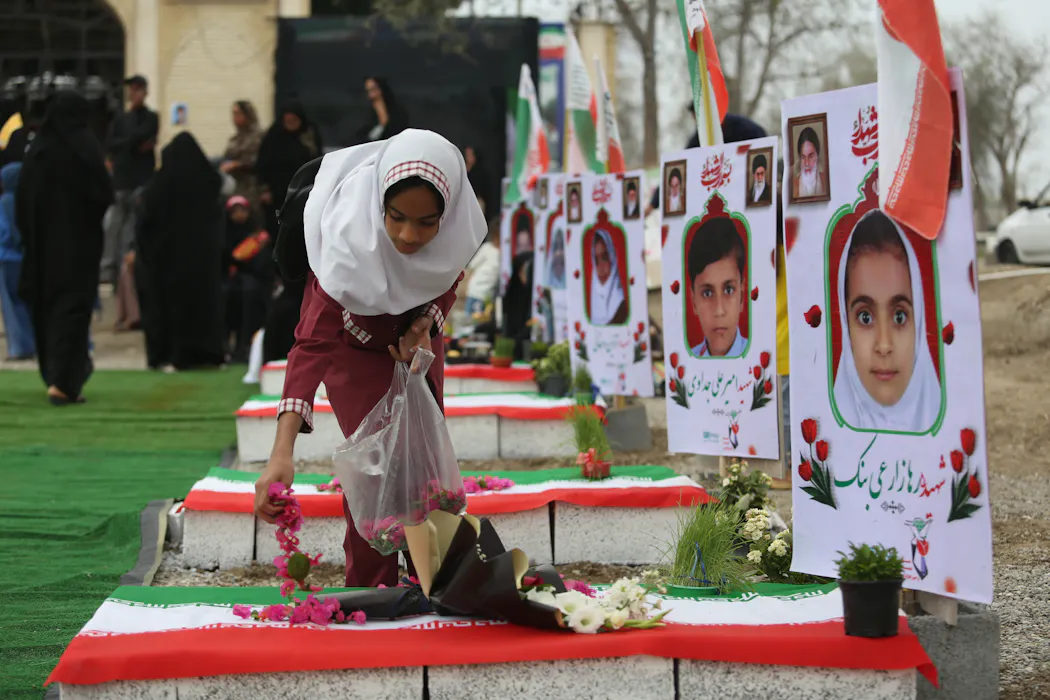
What began with surprise US and Israeli strikes on Iran one month ago has hardened into a grinding stand-off, with no clear way out.
The conflict’s opening blows on February 28 killed senior leaders in Tehran, including Supreme Leader Ali Khamenei – prompting retaliatory missile and drone attacks on Israel, US bases and Gulf infrastructure.
Years of tension over Iran’s nuclear programme and its regional influence have now boiled over into open warfare, with diplomacy faltering as both sides entrench their positions.
On the ground in Iran, the violence is worsening what was already a strained human rights situation. News reporting from within the country carries daily images of damaged neighbourhoods, overwhelmed hospitals and families fleeing tit-for-tat strikes.
One incident in particular – the US airstrike on a school in Minab in southern Iran that left dozens of girls dead – highlights the scale of the devastation, as well as the war’s murky legal context.
Future war crimes investigators will need to ask some obvious questions. Was the school a civilian site, was it used for military purposes, what precautions were taken and was the civilian harm excessive relative to any military advantage?
Only then will responsibility be able to be determined – but such clarity is likely to be a long way off.
When the law is clear, but accountability is not
Many observers have already criticised the shaky legal basis for the conflict.
Some have described the US position – as set out in a letter to the United Nations invoking self-defence and the protection of Israel against an alleged imminent threat from Iran and its allied groups – as thin.
Others have argued that strikes supporting the stated goal of regime change were unlawful, citing the UN Charter’s prohibition on the use of force against the political independence of a state and the principle of non-intervention.
At this point, it is safe to assume that accountability for alleged international crimes by all sides to this ongoing conflict will remain elusive.
The International Criminal Court has no automatic jurisdiction because the United States, Israel and Iran are not parties to the Rome Statute, the treaty that established the court and defines its powers.
A UN Security Council referral of the situation to the court for investigation and possible prosecution is also unlikely, given the high potential for any such move to be blocked by veto-wielding permanent members.
Is any accountability likely to come through internal investigations by the states involved? This too is uncertain, as such investigations are often classified or narrowly framed by military and legal authorities.
This means independent investigators are often left to piece together their cases from satellite imagery, authenticated videos, mass graves, weapon remnants and medical and mortuary records.
While this can establish what happened and where, linking harm to identifiable decision-makers and proving intent is far harder while the conflict continues and key military records remain sealed.
This is not to say the laws of war themselves are ambiguous. They require forces to distinguish between civilians and fighters, avoid excessive civilian harm and take practical precautions.
International criminal cases turn on attribution and intent, meaning investigators must show who authorised an attack and what they knew. But without insider witnesses or key evidence, that is difficult, and proper accountability for war crimes often fall short.
A pattern of impunity?
We have seen this pattern before, where efforts to secure accountability are blocked or weakened by international deadlocks.
In 2014, the UN Security Council attempted to refer alleged war crimes and crimes against humanity against civilians in Syria’s civil war to the ICC. The effort failed after Russia and China vetoed it, citing concerns about sovereignty and the impact on a political settlement.
In 2021, the UN Human Rights Council ended the mandate of the Group of Eminent Experts on Yemen – an independent body tasked with investigating and reporting on violations by all parties – after some member states voted against renewing it. This removed one of the international community’s few mechanisms for documenting human rights abuses.
The ongoing crisis in Gaza has also proved a defining test of whether international law can be enforced.
The ICC has opened an investigation into Palestine and issued arrest warrants for senior Israeli and Hamas officials over alleged war crimes and crimes against humanity.
But such warrants depend on states to enforce them, and cooperation has been limited. A parallel UN inquiry has found Israel has committed genocide, yet the path to legal accountability remains contested.
In Iran, a similar outcome – or lack of one – now appears sadly likely.

I was a visiting professional at the International Criminal Court in 2014. I worked in chambers for Judge Sylvia Steiner on the Jean-Pierre Bemba Gombo (Central African Republic) case.
– ref. A war without accountability: why the Middle East crisis is also a legal quagmire – https://theconversation.com/a-war-without-accountability-why-the-middle-east-crisis-is-also-a-legal-quagmire-279199
Back to index · Read original article
More evidence doesn’t mean more justice: The limits of visual technologies in human rights cases
March 31, 2026
Source: MIL-OSI-Submissions-English
Source: The Conversation – Canada – By Kamari Maxine Clarke, Full Professor, University of Toronto
Editor’s note: This story is part of a series of articles from Canada’s top social sciences and humanities academics in a partnership between the Social Sciences and Humanities Research Council of Canada and The Conversation Canada.
Body cameras, satellites and digital verification tools are generating more evidence of violence than ever before. But the institutions responsible for delivering justice still decide what counts as evidence — and what does not.
Some of the most consequential reporting on state-sanctioned violence concerns disputes over evidence: who controls the video, the metadata and the channels where events are logged in real time.
In Minnesota in January 2026, that meant court fights and public pressure over preserving — and potentially sharing — U.S. Immigration and Customs Enforcement (ICE) body camera footage after the killings of Alex Pretti and Renée Good, alongside wider disputes over federal transparency during immigration enforcement operations.
National outlets have tracked how community members are using encrypted messaging such as Signal to spot and report ICE activity, prompting an FBI investigation that civil liberties experts say tests the boundary between protected observation and alleged “interference.”
Meanwhile, in Canada, the RCMP is rolling out body cameras nationwide, raising questions about how the data collected by state security services might provide a future archive for complaint processes, prosecutions and civil litigation.
What we are witnessing is a “juriscopic regime” — a dense entanglement of scopic technologies (body cameras, satellites, open‑source verification), scientific protocols and legal evidentiary horizons that together govern what can be seen, verified and acted upon as “truth” — defining who counts as an expert and what forms of knowledge are ignored as anecdotal, non-scientific or non-legal.
How communities document violence
Citizens are taking these documentation tools into their own hands.
Families who have experienced violence and the forced disappearance or murder of loved ones are increasingly building grassroots “evidence infrastructures” with these technologies.
In Mexico, for example, colectivos — groups of families searching for their loved ones — have added geolocation mapping, drone surveys and other geospatial tools to identify possible clandestine grave sites and to document searches in real time, both to generate leads and to pressure reluctant institutions into action.
Some groups are experimenting with AI-mediated storytelling, creating “living” videos and other digital interventions to keep cases visible while simultaneously navigating new risks like digital extortion and retaliation that follow from making personal information public.
In Nigeria, families use social media and emerging missing persons portals to widen the radius of who might recognize a face, a name or a location, effectively crowd-sourcing identification and tips when official registries are fragmented or difficult to access.
Across these and many other contexts globally, communities are organizing mutual aid, warning others about threats, preserving data before it disappears and transforming private grief into collective, actionable knowledge.
But visibility is unevenly distributed.
This “evidence revolution” is often treated as if better visibility produces better justice but in practice, courts and legal institutions decide what becomes legible as truth. It is this gatekeeping that distorts what harms are recognized and acted upon, and that narrows the scope of what justice looks like.
The legal limits of digital evidence
Human rights and international justice professionals are increasingly relying on digital and visual evidence — satellite imagery, crowd-sourced video, geolocation and AI-assisted analysis — to document harm and hold perpetrators to account.
Turning to these technologies may even deepen the distance between those victimized and the evidence meant to help them.
Family members of the missing frequently have extensive knowledge, but their expertise may not be taken seriously.
Law reshapes what “evidence” means, and even the best technology must pass through evidentiary rules and institutional priorities, which narrow what can be acted on — often in opaque ways.
Our recently released research findings show that these systems make certain forms of harm more legible than others. While this is helpful for certain evidentiary processes, disappearances, abductions and many forms of state violence can be virtually impossible to “see” from above.
In Nigeria, for example, those optical biases can also reproduce older hierarchies: communities that align with modern land tenure and fixed settlement patterns may be more legible than nomadic or displaced populations, shaping which harms travel as authoritative evidence.
What we see is that optical and digital technologies don’t simply reveal truth; they are translated and authorized through legal institutions and expert hierarchies, sometimes sidelining grassroots knowledge.
At the International Criminal Court (ICC), for example, where mass atrocity and disappearance cases could potentially be heard, the evidentiary rules and institutional priorities of the court — the ways in which it determines admissibility, relevance and probative value — act as obstacles to admitting evidence. In the case of technologically derived evidence, the court relies on a few technical experts to render it legible to judges.
As a result, socially constructed technical judgments govern the production of knowledge. Forensic science makes explicit what the ICC’s evidence law often implies: that evidence is not a thing but an inference.
Expanding evidentiary frameworks for justice
When a mother in Mexico or a sister in Nigeria searches for a disappeared or killed loved one, she enters an evidence regime long before any court does. Her “evidence” archive begins as a series of data — messages, sightings, scraps, rumours, maps. Forensic science teaches us what must happen with this data in order for it to become viable evidence: Is there a chain of custody? Contamination control? Validated methods? Honest statements of uncertainty?
But the family’s need to know the truth of what happened exposes the limits of both forensic science and international courts.
A trace of evidence can be existentially decisive yet institutionally inadmissible; scientifically interpretable yet socially insufficient; legally persuasive yet too late to end the disappearance as a lived everyday condition.
In that gap, the struggle is not only over facts, but over whose knowledge becomes official, and whether truth is treated as a right owed to families rather than a byproduct of prosecution.
We need a more expansive regime of what counts as evidence in courts, moving toward an approach that regards documentation as political, treats law as a constraining optic as much as a solution, insists that accountability projects be regrounded in local knowledge and grassroots priorities and acknowledges that various forms of harm do not neatly convert into evidentiary categories.
We also need to widen the scope of who counts as an expert, include families’ vernacular forensic practice and the embodied work of searching, mapping and enduring.
Unless we change what justice looks like, we will continue to miss a lot.

The authors do not work for, consult, own shares in or receive funding from any company or organisation that would benefit from this article, and have disclosed no relevant affiliations beyond their academic appointment.
– ref. More evidence doesn’t mean more justice: The limits of visual technologies in human rights cases – https://theconversation.com/more-evidence-doesnt-mean-more-justice-the-limits-of-visual-technologies-in-human-rights-cases-274929
Back to index · Read original article
How do Israel and Iran’s nuclear status differ under international law?
March 31, 2026
Source: MIL-OSI-Submissions-English
Source: The Conversation – France – By Catherine Maia, Professeure de droit international à l’Université Lusófona (Portugal) et professeure invitée à Sciences Po Paris (France), Sciences Po
At a time when military tensions in the Middle East have further intensified in recent weeks, in the context of operations conducted by the United States and Israel and renewed concerns surrounding Iran’s nuclear programme, a recurring question has re-emerged in public debate: why does Israel possess nuclear weapons while Iran is legally prohibited from acquiring them?
Often framed in terms of unequal treatment or “double standards,” this question actually relates to the very structure of the international legal regime governing nuclear weapons.
International law is a legal order created by states and for states. As such, it is grounded in the consent of states, which derives from their sovereignty. This fundamental principle also applies to the legal regime governing nuclear weapons: the possession of nuclear weapons – or the decision to renounce them – is a matter of sovereign choice. In other words, only a state may consent to limiting its military capabilities by renouncing possession of such weapons of mass destruction.
This state voluntarism is clearly reflected in the 1968 Treaty on the Non-Proliferation of Nuclear Weapons (NPT).
What’s the NPT?
This treaty constitutes one of the pillars of collective security in international law. Its purpose is to prevent the proliferation of nuclear weapons – in particular to additional states – in order to promote nuclear disarmament, and encourage safe and peaceful use of nuclear energy.
The NPT distinguishes between nuclear-weapon states (United States, Russia, the United Kingdom, France, and China) and non-nuclear-weapon states. More specifically, it defines nuclear-weapon states as those that had manufactured and exploded a nuclear weapon or other nuclear explosive device before 1 January 1967, while the other parties are classified as non-nuclear-weapon states and have agreed to forswear the possession of nuclear weapons.
Nuclear power: different rules for the haves and the have nots
This fundamental distinction structures the entire legal regime of the treaty and entails differentiated but complementary obligations among the 191 States parties. While non-nuclear-weapon states agree not to acquire nuclear weapons, nuclear-weapon states agree not to transfer such weapons or assist other states in acquiring them. The treaty also stipulates an obligation to pursue negotiations in good faith towards nuclear disarmament.
In a context marked by Cold War tensions and fears of an uncontrolled proliferation of nuclear powers, the spread of nuclear weapons to an increasing number of states was perceived in 1968 as a major factor of international instability and a heightened risk of nuclear conflict. Against this backdrop, the compromise at the heart of the NPT was accepted, based on a differentiated allocation of obligations between nuclear-weapon states and non-nuclear-weapon states.
Although this asymmetrical compromise may, at first glance, appear unequal, it was designed as an instrument of strategic stability and collective security, while also constituting a direct expression of state sovereignty. A state may indeed decide to limit its own prerogatives. In return, breaches of these commitments entail legal consequences. This is where the debate over the different treatment of Iran and Israel arises.
If Israel has a nuclear arsenal, why can’t Iran?
Iran has been a party to the NPT since 1970 and is legally bound, as a non-nuclear-weapon state, not to acquire nuclear weapons, while also being subject to the safeguards mechanisms of the International Atomic Energy Agency (IAEA). Its nuclear programme is therefore assessed within a treaty framework that imposes specific legal obligations and international verification requirements.
By contrast, Israel is not a party to the NPT. Under the principle of the relative effect of treaties, Israel, not being a party to the NPT, cannot be legally bound by obligations arising from that treaty.
A legal framework producing differentiated outcomes
The difference in treatment between the two countries thus stems less from a legal inconsistency than from the very logic of international law. It illustrates the coexistence within the international order of de jure nuclear-weapon states and de facto nuclear-weapon states, such as Israel.
Several states currently possess nuclear weapons outside the framework of the NPT. In addition to Israel, this is also the case for India, Pakistan and North Korea (since its withdrawal from the treaty in 2003). Their situation does not, in itself, constitute a violation of the NPT, since they are not (or are no longer) parties to it. They therefore operate within a legal framework distinct from that applicable to states bound by the treaty.
This situation reflects a fundamental feature of the international legal order: the coexistence of treaty regimes to which not all states necessarily adhere. One example is the 2017 Treaty on the Prohibition of Nuclear Weapons (TPNW), to which 74 states are currently parties, and which prohibits the acquisition, possession and use of such weapons. This legal regime coexists alongside that of the NPT.
Accordingly, the question of why Israel possesses nuclear weapons, while Iran is denied that possibility is less a reflection of a contradiction in international law than a consequence of its structure.
In the absence of a treaty commitment, general international law does not currently establish a comprehensive and absolute prohibition on the possession of nuclear weapons as such. Only those states that have consented to specific obligations – notably within the framework of the NPT or the TPNW – are legally bound.
This analysis is supported by the jurisprudence of the International Court of Justice. In its 1986 judgement in Military and Paramilitary Activities in and against Nicaragua, the Court stated:
“In international law there are no rules, other than such rules as may be accepted by the state concerned, by treaty or otherwise, whereby the level of armaments of a sovereign state can be limited, and this principle is valid for all states without exception.”
Thus, in accordance with the principle of sovereign equality, limitations on military capabilities derive solely from state consent. In the absence of such a commitment, no state may legally impose on another an obligation of renunciation.
International law governing nuclear weapons therefore does not establish any general right to possess such weapons.
Rather, it reflects the existence of sovereign commitments through which some states have chosen to renounce them, while others have decided not to subject themselves to such constraints.
This article was co-authored with Débora Surreco Carrilho, PhD candidate in international law, University of Orléans (France).

A weekly e-mail in English featuring expertise from scholars and researchers. It provides an introduction to the diversity of research coming out of the continent and considers some of the key issues facing European countries. Get the newsletter!

Catherine Maia ne travaille pas, ne conseille pas, ne possède pas de parts, ne reçoit pas de fonds d’une organisation qui pourrait tirer profit de cet article, et n’a déclaré aucune autre affiliation que son organisme de recherche.
– ref. How do Israel and Iran’s nuclear status differ under international law? – https://theconversation.com/how-do-israel-and-irans-nuclear-status-differ-under-international-law-278916
Back to index · Read original article