Victory in Gorton and Denton is historic for the Greens – and cataclysmic for Britain’s two-party politics

Source: The Conversation – UK – By Jonathan Tonge, Professor of Politics, University of Liverpool

The Green party’s dramatic capture of Gorton and Denton, supposedly one of Labour’s safest parliamentary constituencies, offers yet more evidence of the fragmentation of British politics.

The Green candidate, 34-year-old plumber Hannah Spencer, won 40.69% of the vote, a notable 12 points ahead of Reform UK’s Matt Goodwin (28.73%). Labour candidate Angeliki Stogia came third, with 25.44% of the vote.

In terms of size of majority toppled, this was the sixth-worst byelection defeat ever for Labour. Gorton had been Labour for more than 90 years. In what is now Greater Manchester, Labour has had to defend 20 seats at byelections since the second world war, and has been successful in 16 cases.

Although Labour might dismiss a byelection defeat as a mid-term blip, this is a government which has failed to enjoy a honeymoon period, led by a prime minister who has plumbed new depths in popularity ratings. It is also worth noting that turnout on Thursday was identical to that at the general election.

For Keir Starmer, it was a truly awful result. But Labour really lost this byelection over a month ago, when its national executive committee (NEC) blocked the candidature of Andy Burnham, the mayor of Greater Manchester and believed by many to be the one person who might have held the seat for the party.

Starmer spoke against Burnham standing and his view held sway at that NEC meeting by eight votes to one. The one vote in favour of Burnham standing came from a Manchester MP, Lucy Powell, who was elected Labour’s deputy leader last year after being mysteriously sacked from the cabinet by Starmer.

The prime minister had good reasons for his stance. An early exit by Burnham from the mayoralty would trigger a difficult byelection across the region. But the overarching reason for blockage appeared to be Starmer’s personal political security.

Popular among Labour members and perhaps the one rival to Starmer around which the parliamentary party could coalesce, Burnham might have offered a potential leadership challenge. He is also highly popular in Greater Manchester, averaging two-thirds of the vote in the three mayoralty contests he has fought. The newly elected Green MP Spencer trailed Burnham by a huge 375,000 votes in the most recent mayoral election in 2024.

Clearly, this poor result increases the pressure on the prime minister, but two things remain in his favour. First, Labour MPs may find it difficult to unite behind a clear challenger. Entry barriers are high; 80 MPs need to support the person prepared to raise their head above the parapet. Second, the economy is showing signs of improvement, which might eventually stem the flow to the Greens on the left. On the right, the exodus towards Reform may be slowed by the decline in net migration.

Yet things will get worse before they might get better for Labour. The Scottish parliament, Welsh senedd and English local elections are a mere 69 days away, and offer a bleak vista of large seat losses. Labour’s control of the senedd seems sure to end and the party has to defend the bulk of council seats being contested.

The end of two-party politics?

The Gorton and Denton result confirmed the death of old loyalties in British politics. Given the existence of four-party politics in Scotland and Wales and the electoral significance of the Liberal Democrats in England, the two-party duopoly has long been gone, perhaps never to return. Politics has never been as fragmented across parties.

For the first time in England, Labour finds itself challenged by a significant party of the left, while Reform on the right challenges both Labour and the Conservatives.

That the right vote is splintered offers some succour to Labour. An even split between Reform and the Conservatives could allow Labour to win again at the next general election, with an even more pitifully low percentage share of the vote than the one in 2024 which nonetheless yielded two-thirds of the Westminster seats.

This fragmentation may widen voter choice, but not all is healthy. This was at times a toxic byelection. The Greens argued it was possible to be jointly concerned with Gaza and Gorton. They were, however, accused of sectarianism, for example by by issuing Urdu-language leaflets and a campaign video showing Starmer greeting the Indian prime minister, Hindu nationalist Modi, to appeal to Muslim voters.

Reform, on the other hand, has been accused of racism in targeting the white vote and showing scant regard for the large Muslim minority within the constituency. Its candidate, former academic Matt Goodwin, was already controversial for his views questioning whether non-white people born in the UK could be classed as British.

Meanwhile, the first-past-the-post voting system struggles to deal with the reality of modern multiparty politics, with abject disproportionality between vote shares and levels of representation. But that fragmentation increasingly seems permanent.

The Conversation

Jonathan Tonge does not work for, consult, own shares in or receive funding from any company or organisation that would benefit from this article, and has disclosed no relevant affiliations beyond their academic appointment.

ref. Victory in Gorton and Denton is historic for the Greens – and cataclysmic for Britain’s two-party politics – https://theconversation.com/victory-in-gorton-and-denton-is-historic-for-the-greens-and-cataclysmic-for-britains-two-party-politics-277001

There aren’t enough geriatricians – here’s how older adults can still get the right care

Source: The Conversation – USA (3) – By Jerry Gurwitz, Professor of Geriatrics, UMass Chan Medical School

Geriatricians are trained to look beyond individual illnesses that older adults may face, and instead to look at the bigger picture of aging. MoMo Productions/DigitalVision via Getty Images

More than 70 million baby boomers – those born between 1946 and 1964 – are alive today. In 2026, the oldest of them are turning 80.

With longer lives often comes more complicated health needs: multiple chronic conditions, long lists of medications, balance problems that can increase the risk of falls, and changes in memory. Many older adults also begin relying more on spouses, children or other family members to help manage medical decisions.

Ideally, health care in later life should go beyond just treating individual diseases and medical conditions. It should aim to help older people maintain health, independence and optimal quality of life for as long as possible.

Doctors and nurse practitioners trained in geriatrics specialize in doing exactly that. As a geriatrician for nearly four decades, I’ve seen how the right care for older people can prevent falls, reduce risk of medication side effects and help patients make medical decisions that reflect their goals and wishes.

The problem? There just aren’t enough of us. Finding a health care provider with expertise in geriatrics can be extraordinarily difficult. But there’s good news: You can use a few simple strategies that geriatricians rely on to have more productive conversations with your or your family member’s doctor.

A whole-person approach to aging

Geriatricians are trained to see the bigger picture of aging. They don’t just treat individual diseases – they also focus on preserving independence, function and safety. That includes addressing memory changes, balance problems, complex medication regimens and the difficult trade-offs that often come with complicated medical decisions.

Older adult couple speaking with a doctor
New symptoms in older adults should not just be blamed on aging.
Morsa Images/E+ via Getty Images

A geriatrician can help patients and their families weigh whether a test or procedure will truly improve their patient’s life. Specialists in geriatrics know that most falls have multiple causes – and that practical steps like reviewing medications or improving home safety can prevent the next one.

They also recognize that in older adults, new symptoms should not be blamed simply on aging. Sometimes they can be due to drug side effects. For example, stopping certain sleep medications can reduce confusion and daytime drowsiness, and limiting or avoiding use of opioids for pain relief can prevent debilitating constipation.

Unfortunately, geriatrics is a specialty with a dearth of providers. Nationally, there are fewer than 12 geriatric physicians and 10 geriatric nurse practitioners per 100,000 older Americans. In many rural areas, there are none. And the shortage is unlikely to improve anytime soon. That’s because medical students and advanced practice nurses rarely choose to specialize in geriatrics, and many medical schools provide no formal training in the care of older adults.

This means most older adults will be cared for by clinicians without specialized geriatric training. But older patients and families can still steer care in the right direction by using a straightforward framework geriatricians follow called the “5Ms.”

A geriatrician’s framework

This mnemonic captures the core principles of optimal geriatric care. The letters stand for mind, mobility, medications, multicomplexity and matters most. The importance of each of these essentials of care for older adults may seem obvious, but it’s amazing how often they are overlooked when doctors without training in geriatrics take care of their older patients. Here’s how you can think about them in speaking with your doctor:

Mind: About 10% of adults age 65 and older have dementia, and another 22% have mild cognitive impairment. If you’ve noticed changes in your memory – forgetting appointments or conversations, forgetting to take medications, struggling with bills or relying more on family for help with tasks you once handled easily – bring it to your doctor’s attention. These concerns don’t always surface unless you mention them. When doctors know about memory problems, they can check for treatable causes, adjust medications or recommend further evaluation and lifestyle changes that may be of benefit.

Aging well means maintaining health, independence and optimal quality of life for as long as possible.

Mobility: Each year, about a third of older adults report at least one fall, and 1 in 10 suffer a fall-related injury. Make sure to tell your health care provider if you have fallen, feel unsteady when standing or walking, or if you worry about falling. Request advice about how you can improve strength, flexibility and balance to reduce the risk of falls and serious injury.

Medications: Four out of every 10 Americans age 65 and older take five or more different medications every day, and 1 in 10 take 10 or more. Any new symptom in an older person could be due to a drug side effect of their medication. So don’t be afraid to ask whether every medication you are taking is absolutely necessary, or whether a new symptom you are experiencing might be a side effect. If you see multiple health care providers who each prescribe medications to you, ask for a comprehensive review of your medications to make certain that nothing is being missed and all your drugs and dosages are appropriate.

Multicomplexity: About 75% of older adults live with two or more chronic medical conditions. When you are followed by several specialists – who limit their focus to a single disease – your care can become fragmented. That often means long medication lists, frequent tests and recommendations that don’t always fit together. A whole-person approach looks at how everything connects. You and your family can help by asking your primary health care provider to step back and review the full picture – all medications, all specialists and any upcoming tests – and help coordinate a clear, organized plan that is best for you.

Matters most: Asking yourself to pin down what matters most to you is a simple but powerful way to help your doctors understand what to prioritize in thinking through your care. With that information, your doctor can look beyond focusing on any one disease or condition and instead work with you to support your personal goals for a good old age. Maybe it’s being able to walk to the mailbox without falling. Or staying in your own home for as long as possible. Or avoiding medications that make you sleepy or confused. Or staying out of hospitals and emergency rooms. Whatever it is, it’s important to have your health care provider focus on your own priorities.

Aging well is not about having more doctor’s appointments or medical tests, nor is it about taking more medications. It’s about getting the kind of health care that will maintain function, independence and quality of life into old age. You may not be able to find a geriatrician, but you can definitely help your doctor better understand the care that’s right for you or your loved one.

The Conversation

Jerry Gurwitz receives funding from the National Institute on Aging. He serves as a paid consultant to United Healthcare.

ref. There aren’t enough geriatricians – here’s how older adults can still get the right care – https://theconversation.com/there-arent-enough-geriatricians-heres-how-older-adults-can-still-get-the-right-care-269789

Drug company ads are easy to blame for misleading patients and raising costs, but research shows they do help patients get needed treatment

Source: The Conversation – USA (3) – By Anna Chorniy, Assistant Professor of Pediatrics, Icahn School of Medicine at Mount Sinai; Institute for Humane Studies

The United States is one of just two countries where drugmakers can advertise directly to patients. BrianAJackson/iStock via Getty Images

It’s a familiar experience for many Americans: You’re watching your favorite show and suddenly you’re ambushed by an ad for a drug whose name sounds like a Wi-Fi password, before a relentlessly cheerful voice tells you to “Ask your doctor” and then blasts through a side-effect list that’s laughably long.

But that might soon change. After nearly 30 years of giving pharmaceutical companies free rein to advertise prescription drugs directly to consumers, U.S. officials are now seeking to curb this practice.

Soon after his appointment in 2025, Health and Human Services Secretary Robert F. Kennedy Jr. stated that he believes direct-to-consumer advertising of prescription drugs has contributed to overmedication and inflated health care costs, and that stronger oversight is long overdue. Meanwhile, politicians on both sides of the aisle have called for banning direct-to-consumer drug ads outright – though the Food and Drug Administration has so far focused on restricting “digital” loopholes and enforcing the laws about advertisement.

As a health economist who studies how health care policies shape decisions made by doctors and patients, I agree that the practice can steer patients toward heavily marketed brands instead of the most appropriate treatment.

But the research on how such advertising affects patients is more nuanced. Many rigorous studies show that these ads can benefit patients’ health by encouraging them to seek lifesaving treatment for conditions such as depression and heart disease and sparking conversations with their doctors. In my view, within the realities of the U.S. health care system, getting rid of direct-to-consumer drug advertising may do more harm than good.

The origins of US prescription drug advertising

Only two countries – the U.S. and New Zealand – allow drug companies to advertise prescription medications directly to the public. Elsewhere, this practice is banned out of concern that short ads cannot adequately explain medical risks and that prescribing decisions should remain under physicians’ control.

And for good reason: Research on risk statements in drug ads on television shows they are often dense, fast-paced and paired with distracting visuals, making them difficult for consumers to understand.

In the European Union, Canada and Japan, for example, manufacturers may run disease awareness campaigns but cannot name specific products.

The U.S. approach to regulating drug advertising evolved gradually over more than a century. Congress’ 1906 Pure Food and Drugs Act was the first major federal step in drug oversight. It required manufacturers to label their products accurately and to disclose the presence of key ingredients.

An old-fashioned illustration of a herald arriving on horseback to a pharmacy to promote Carter's Little Liver Pills
An early 20th-century advertisement for a cure-all medicine called Carter’s Little Liver Pills, made by a Pennsylvania company. In 1959 the Federal Trade Commission made the company take ‘liver’ out of the name.
Wellcome Collection, CC BY

For decades, pharmaceutical marketing focused on physicians by advertising in medical journals, visits by sales representatives and providing free samples. Drug companies still market heavily to physicians, but FDA policies and television changed the calculus.

By the 1960s and ’70s, the reach of mass media prompted companies to communicate complex medical information in brief commercial formats. The 1962 Kefauver–Harris Amendments, which required drugmakers to prove their products were both safe and effective to receive FDA approval, also gave the FDA explicit authority over prescription drug advertising. This allowed the agency to police exaggerated claims and require that promotional materials present a fair balance of benefits and risks, including clear disclosure of known side effects.

In the 1980s, several pharmaceutical companies experimented with marketing drugs directly to consumers in magazines and newspapers. The FDA paused these efforts in 1985 to study their effects but later allowed them to resume.

An opening for television ads

The pivotal change came in 1997, when the agency issued draft guidance that television ads needed to present only major risk information and could direct viewers elsewhere – via phone lines, print materials or websites – for the full details.

Reliable, up-to-date figures are hard to come by, but according to a widely cited estimate, the U.S. pharmaceutical industry now spends more than US$6 billion on direct-to-consumer advertising, roughly twice the amount spent in 2012.

In September 2025, the FDA announced it would revoke this change, restoring pre-1997 standards for fuller disclosure, and would more aggressively enforce currently existing rules for direct-to-consumer drug advertising. Despite growing interest from policymakers and Congress to ban them outright, a total ban likely would not survive a Supreme Court challenge.

How direct-to-consumer ads affect patients

Studies show direct-to-consumer drug advertising increases demand for medications and prompts more doctor visits and diagnoses. Policymakers and the FDA specifically have raised concerns that these ads mislead patients, encouraging them to overuse or inappropriately use drugs and choose more expensive treatments over less costly alternatives. This, in addition, could raise drug prices and result in wasteful spending. But research convincingly demonstrating this has been difficult to come by.

For example, a 2023 analysis showed that drug companies spend more on advertising drugs that have been rated as having relatively lower clinical benefit than on drugs that offer higher clinical benefit. This may imply, according to the authors, that drug companies are trying to steer patients to drugs that physicians would be less likely to prescribe.

Interestingly, though, rigorous research showed that direct-to-consumer advertising increases prescribing of both advertised and nonadvertised drugs – suggesting that overall this increase is serving patients.

U.S. health officials are moving to restrict direct-to-consumer drug advertising.

Demonstrated benefits

For all the criticism that these ads are deceptive, the evidence indicates they can generate substantial clinical benefits for patients.

Research finds that ads bring patients into care, while leaving prescribing decisions largely in physicians’ hands, resulting in more patients being diagnosed and treated. For example, according to a 2022 study on antidepressants, advertising encouraged more people to start treatment and expanded overall use, especially for underdiagnosed conditions.

During the 2008 election season, political ads displaced drug commercials, providing a natural experiment on the effects of direct-to-consumer drug advertising. One study probed that period to examine ads for cholesterol-lowering medications known as statins, which are some of the most widely prescribed medications in the U.S. It found that removing drug ads reduced sales.

That study also ran a simulation banning drug ads entirely to show that doing so would have reduced new statin users by about 600,000 in 2008. Combining their estimates with clinical evidence on the drug’s benefits, the researchers found that health gains from additional treatment outweighed the costs of advertising.

Another study took advantage of the rollout of Medicare Part D, which helps cover the cost of prescription drugs, as a natural experiment. After Part D expanded drug coverage, pharmaceutical advertising increased more in areas with larger Medicare populations. In those areas, researchers found that more patients began treatment and stuck with it.

Importantly, the number of prescriptions also rose for nonadvertised drugs, including lower-cost generics, suggesting that advertising expanded overall treatment rather than simply shifting patients to heavily promoted brands.

It’s easy to single out pharmaceutical ads aimed at patients, but they are only one piece of a complex health care system – one in which drug manufacturers, providers, insurers and pharmacies all have financial incentives that shape which medications patients can access.

For example, drug company marketing directly to physicians does skew prescribing, increasing drug costs, with little evidence that patients receive better or more appropriate treatment as a result. Yet in the absence of direct-to-consumer advertising, patients’ choices of medications would be more heavily controlled by that dynamic.

The challenge for policymakers will be to curb misleading promotion without cutting off patients’ access to reliable information or undermining their role in directing their own care – and that will likely require addressing broader issues in the health care system.

The Conversation

Anna Chorniy does not work for, consult, own shares in or receive funding from any company or organization that would benefit from this article, and has disclosed no relevant affiliations beyond their academic appointment.

ref. Drug company ads are easy to blame for misleading patients and raising costs, but research shows they do help patients get needed treatment – https://theconversation.com/drug-company-ads-are-easy-to-blame-for-misleading-patients-and-raising-costs-but-research-shows-they-do-help-patients-get-needed-treatment-265724

Former Harvard president Summers’ soft landing after Epstein revelations is case study of economics’ trouble with misbehaving men

Source: The Conversation – USA (2) – By Yana van der Meulen Rodgers, Professor of Labor Studies, Rutgers University

Larry Summers, center, is surrounded by the media in 2005 amid calls for his resignation. Jodi Hilton/Getty Images

Economist Larry Summers will resign from his tenured job as a professor at Harvard University, the school announced on Feb. 25, 2026, following heightened scrutiny of his ties with the late convicted sex offender Jeffrey Epstein. Summers will leave at the end of the 2025-26 academic year, with a new title: president emeritus.

It’s a soft landing for his fall from grace.

In November 2025, Harvard launched an investigation of Summers, a former U.S. treasury secretary who previously served as Harvard’s president.

The probe looked into whether Summers and other members of Harvard’s faculty and administration had interactions with Epstein that violated its guidelines on accepting gifts and should be subject to disciplinary action. Summers’ resignation is connected with this ongoing investigation, a Harvard spokesperson told The Hill.

Despite repeated calls by students for Harvard to revoke Summers’ tenure, he held onto his teaching and academic appointments at Harvard until he chose to retire. Students and staff also called for his resignation in 2005 following his disparaging comments about women in science.

“Free of formal responsibility, as President Emeritus and a retired professor, I look forward in time to engaging in research, analysis, and commentary on a range of global economic issues,” Summers said in a statement released on Feb. 25.

Not surprised

As a female economist and a board member of the Committee on the Status of Women in the Economics Profession – a standing committee of the American Economic Association – I wasn’t surprised by the revelations of Summers’ apparent chumminess with Epstein, shocking as they may appear.

After all, it was Summers’ disparaging remarks about what he said was women’s relative inability to do math that led him to agree to relinquish the Harvard presidency in 2006.

And for years, researchers have documented the gender bias that pervades the field of economics.

The title of president emeritus is honorary. It brings with it symbolic recognition and the opportunity to maintain a formal connection to the university. Emeritus status is selective and requires approval at most universities. It’s usually bestowed on retiring professors.

In my view, by conferring this title on Summers, Harvard is signaling that powerful men can outlast gross misconduct with their honorifics intact.

Mugshot of Jeffrey Epstein, left, and headshot of economist Larry Summers.
Documents released in 2025 pointed to close ties between Jeffrey Epstein and Larry Summers.
New York State Sex Offender Registry via AP/Michel Euler

Summers’ ties to Epstein

Summers, until his entanglement in the Epstein scandal came to light, was among the nation’s most influential economists.

But his history of public controversy stretches back to at least 1991, when a memo he wrote while serving as the World Bank’s chief economist appeared to justify sending toxic waste to poorer countries.

Criticism of Summers surged after the House of Representatives released damning messages between Summers and Epstein as part of a dump of more than 20,000 public documents from Epstein’s estate in November 2025.

A series of emails and texts documented how Summers repeatedly sought Epstein’s advice while pursuing an intimate relationship with a woman he was mentoring – while the economist was married to someone else.

Summers was close enough to Epstein that in 2014, the sex offender named the economist as a backup executor for his estate.

The Department of Justice released a much larger tranche of documents in January 2026 in compliance with a law passed by Congress. So far, no major media outlet has reported on any new Summers materials discovered as a result.

Four women hold photos of Jeffrey Epstein aloft.
Protesters hold signs bearing photos of convicted sex criminal and Larry Summers confidante Jeffrey Epstein in front of a federal courthouse on July 8, 2019, in New York.
Stephanie Keith/Getty Images

Harvard’s slow response

The Summers-Epstein exchanges released in November ignited a new round of scrutiny and led to the unraveling of Summers’ prestigious career.

Summers went on leave from teaching at Harvard on Nov. 19 and stepped down from several high-profile boards.

But beyond launching the investigation, Harvard took no decisive action to discipline or sanction Summers. This calculated hesitation, which reflects the institution’s efforts to court funding, power and influence among top donors, appears to have put donor politics above basic accountability.

By contrast, the American Economic Association, the primary professional association for economists, did take swift and harsh action. In an unprecedented move, on Dec. 2, 2025, the AEA announced that it had placed a lifetime ban on Summers from all its conferences and other activities.

Having lots of company

To be sure, Harvard is not the only prestigious university dealing with the aftermath of the Epstein revelations.

The Epstein documents include evidence that administrators and professors at other prestigious colleges and universities like Duke, Yale, Bard, Princeton and Columbia also exchanged messages with Epstein.

As public funding for higher education has eroded, universities have increasingly turned to wealthy donors to underwrite major projects and supplement budgets by endowing professorships and research centers. Epstein appears to have taken advantage of this dependence on rich supporters by presenting himself as someone who could deliver both his own money and access to other affluent donors.

The Epstein files uncovered many email exchanges, meetings and discussions with the sex offender about research and funding opportunities, and they demonstrated how thoroughly the man had embedded himself in academic circles.

Disturbingly, Summers was hardly the only scholar to solicit Epstein’s help in pursuing women.

Among others, Duke University economist Dan Ariely asked him for the contact information of a “redhead” he had met, and Yale computer scientist David Gelernter told Epstein about a woman he called a “v small goodlooking blonde.”

Young women hold signs that say 'Larry Must Go!'
Harvard students and other protesters demand an end to Larry Summers’ Harvard presidency in 2005, after he made disparaging remarks about women in science.
Jodi Hilton/Getty Images

An economics problem

While Summers’ behavior and the reported dynamics between him and a woman he mentored may appear shocking, they are all too common in economics. For years, researchers have been documenting the gender bias that pervades the profession.

The data shows that abuse of power is common among male economists.

A 2019 survey by the AEA documented widespread sexual discrimination and harassment. Almost half of the women surveyed said that they had experienced sexual discrimination, and 43% reported having experienced offensive sexual behavior from another economist – almost always men.

Also, a 2021 study published by the National Bureau of Economic Research documented hostile environments in economics seminars, with female presenters experiencing more interruptions and encountering more patronizing behavior.

In 2024, according to the National Science Foundation, about 1 in 3 newly minted economics Ph.D.s in the U.S. were women, a considerably lower share than in other social sciences, business, the humanities and scientific disciplines. This ratio has changed very little since 1995.

After earning doctoral degrees in economics, women face a leaky pipeline in the tenure track, which represents the highest-paid, most secure and prestigious academic jobs. The higher the rank, the lower the representation of women.

The gender gap is wider in influential positions, such as economics department chairs and the editorial board members of economics journals. Women are also substantially underrepresented as authors in the top economics journals.

This bias not only hurts women who are economists; it can also hamper policymaking by limiting the range of perspectives that inform economic decisions.

Allowing a soft landing

Allowing Summers to commence a dignified retirement while continuing to hold honorifics risks signaling that there are ultimately few consequences at the very top in higher education.

I believe that if colleges and universities want to prove that they are serious about confronting abuses of power within their ranks, they must show that prestige does not entitle anyone, however accomplished, to a soft landing.

Portions of this article appeared in a related article published on Dec. 2, 2025.

The Conversation

Yana van der Meulen Rodgers is a board member of the Committee on the Status of Women in the Economics Association.

ref. Former Harvard president Summers’ soft landing after Epstein revelations is case study of economics’ trouble with misbehaving men – https://theconversation.com/former-harvard-president-summers-soft-landing-after-epstein-revelations-is-case-study-of-economics-trouble-with-misbehaving-men-277025

How the Seattle Seahawks’ sale will score a touchdown for charity 8 years after Paul Allen’s death

Source: The Conversation – USA (2) – By Reid Kress Weisbord, Distinguished Professor of Law and Judge Norma Shapiro Scholar, Rutgers University – Newark

Paul Allen, wearing a gray jacket, salutes the crowd during a celebration of the Seattle Seahawks’ Super Bowl victory in 2014. AP Photo/Ted S. Warren

When Microsoft co-founder Paul Allen died on Oct. 15, 2018, he left behind an estimated US$26 billion that he wanted to largely leave to charity.

Allen died at 65 of septic shock after a yearslong cancer battle. He’s back in the news because his estate is finally selling an asset that represents nearly a quarter of his fortune: the Seattle Seahawks football team, which he bought in 1997 for roughly $200 million.

The sale of the 2014 and 2026 Super Bowl champions could fetch more than $6.5 billion – a potentially record-breaking sum.

Allen never married and he had no children. His sister, businesswoman Jody Allen, is his estate’s trustee and executor. She’s now overseeing the Seahawks’ sale.

As law professors who study the transfer of property after death, we can explain why it often takes a long time for complex estates to settle following the death of ultrawealthy people.

Settling the estates of billionaires

When most people die, the distribution of any wealth they leave to their heirs or charitable causes can be relatively straightforward.

If all goes well, the process will take a few years at most. Homes, vehicles, bank accounts and retirement assets can usually be relatively quickly sold or transferred to members of the family or friends of the deceased.

When people hear that an estate is still being sorted out years after someone’s death, they often assume that big disputes have interfered with the settlement process.

Indeed, high-profile celebrity estates, including those that celebrity musicians such Prince and Aretha Franklin left behind, have been delayed by legal battles.

But delays are common even without conflicts, particularly when an estate is very large or complex.

Similar to sprawling empires

As you might imagine, billionaires’ estates are different. They tend to be more like sprawling business empires than what your beloved aunt left behind when she died. Multibillion-dollar estates usually take many years to unwind because they involve complex assets that are hard to assess and sell.

Some of Allen’s holdings, for example, were patents, which often complicate estate administration because intellectual property rights can be difficult to value for tax purposes.

Although the contents of Allen’s will were made public in 2018, the specifics of his estate plan remain confidential.

That’s because he used a private family office to manage his wealth – and he left all of his property owned at death to a private trust.

The specific terms of that trust aren’t publicly known, but his family foundation continues to support charitable causes tied to the arts, the environment and the engagement of young people in civic life.

An ecstatic woman holds a shiny trophy aloft while a man behind her pumps his fist into the air.
Jody Allen, the sister of the Seattle Seahawks’ late owner Paul Allen, lifts the Vince Lombardi Trophy as she celebrates with head coach Mike Macdonald after the Seattle Seahawks won their second Super Bowl in 2026.
Josh Edelson/AFP via Getty Images

Unwinding unusual assets

Sports teams, while clearly valuable, are infrequently sold. That makes them some of the hardest assets to get rid of after an owner’s death.

Jody Allen, as her brother’s executor and trustee, has a legal obligation to sell the team for as much money as possible, which requires careful timing and good business judgment when appraising the asset’s fair market value.

She managed the sale of another sports franchise Allen owned, the NBA’s Portland Trail Blazers, in 2025. The reportedly $4.25 billion deal brought the estate revenue that’s also slated for charity. The timing of the Seahawks’ pending sale – shortly after their latest Super Bowl win – is most likely intended to maximize the amount of money the estate will collect from the eventual buyer.

But some of the National Football League’s rules can complicate a team’s sale.

Other team owners and league officials, for example, must approve any change of ownership. Approval requires the support of more than three-quarters of the league’s other owners.

The NFL also requires all teams to submit a succession plan that explains what will happen if their owner dies to reduce the chance of any disruption that could arise from uncertainty of ownership.

Bulking up his endowment

Once the sale does go through, the money could end up in the foundation Paul Allen co-founded.

Allen donated more than $2 billion during his lifetime to support a wide range of causes primarily tied to medical research, education, the arts and the environment.

Like many ultrawealthy donors, he gave through his own foundation, now called Allen Family Philanthropies.

Six years after his death, it had a roughly $1.4 billion endowment and made more than $62 million in grants annually. Jody Allen, who co-founded Allen Family Philanthropies with her late brother, serves as its board chair and president.

The sale of the Trail Blazers, like the upcoming sale of the Seattle Seahawks, may make his foundation far bigger – leading to even more charitable gifts for years to come.

The Conversation

The authors do not work for, consult, own shares in or receive funding from any company or organization that would benefit from this article, and have disclosed no relevant affiliations beyond their academic appointment.

ref. How the Seattle Seahawks’ sale will score a touchdown for charity 8 years after Paul Allen’s death – https://theconversation.com/how-the-seattle-seahawks-sale-will-score-a-touchdown-for-charity-8-years-after-paul-allens-death-276577

Nanoparticles and artificial intelligence can help researchers detect pollutants in water, soil and blood

Source: The Conversation – USA (2) – By Andres B. Sanchez Alvarado, Ph.D. Candidate in Chemistry, Rice University

Nanoparticles on a glass slide amplify the sensitivity of a microscope to detect trace amounts of hazardous pollutants. Brandon Martin/Rice University

Across the U.S., hundreds of sites on land or in lakes and rivers are heavily contaminated with hazardous waste produced by human activity. Many of these places, designated as Superfund sites by the Environmental Protection Agency, can be found in Houston, Texas, the city where my colleagues and I live and work.

Hazardous contaminants present at these sites that can increase the risk of cancer – such as polycyclic aromatic hydrocarbons, or PAHs – are pervasive in soil and water. Detecting these contaminants is only the first step to cleaning them up and keeping the environment safe.

The EPA’s standard methods for analyzing water samples from a well, for example, involve expensive techniques that must be carried out in a separate location, taking weeks.

Our chemistry research group develops new methods that are more accessible and portable to detect toxic pollutants in soil, water and even blood.

My colleagues and I use machine learning methods to detect individual compounds in mixtures without separating them and to automatically identify those compounds by comparing them to a digital database. With machine learning we can streamline analysis of a contaminated site, detecting hazardous pollutants faster and on-site, for more efficient environmental monitoring.

Nanomaterials are extra sensitive

Imagine trying to look at the end of a strand of your hair head on. You would barely see the width of the tiny filament. Now try to imagine a material that is 1,000 times smaller than the width of that hair strand. You wouldn’t see anything at all. My research uses microscopic objects known as nanoparticles that are about that size.

These nanoparticles interact with light in unique ways – kind of like how a magnifying glass focuses sunlight. Any substances near the nanoparticles are exposed to this focused light. We take advantage of this property by shining a beam of infrared light on the nanoparticles, so the substances around them absorb the intense light and generate a signal. We can detect the signal with a spectrophotometer: an instrument that measures the amount of light of a specific frequency.

Any toxic pollutant near the nanoparticles will absorb more of that infrared light than it normally would, enhancing the signal that we can measure. This process occurs only when the pollutant is close to the nanoparticles’ surface. But even the smallest concentrations of these pollutants can be detected using the nanoparticles’ enhancement, if they’re nearby.

In our laboratory, I make the nanoparticles using solutions of metal salts. I then dissolve them in a liquid to make an ink, which I then paint onto glass microscope plates. After the ink dries, I am left with nanoparticles packed together on the surface of the glass, like beads on a diamond painting kit.

A gloved hand holding a tube containing reddish-green liquid.
Nanoparticle ‘ink’ used for sample preparation shows the special way these nanomaterials interact with light. From a certain angle the liquid looks red, and from another, green.
Brandon Martin/Rice University

Once the nanoparticle painting is ready, I add a drop of contaminated water on top of the tinted glass and let it dry again. During this process, the contaminant molecules stick to the nanoparticles. Once dry, I slide the glass inside a spectrophotometer and measure the light absorbed and emitted by the pollutants on the nanoparticles.

The specific frequencies of light that a compound absorbs and emits are like a signature. Each contaminant will have a different signature that we can use to identify them in the water.

A diagram showing light, indicated by a wavy arrow, entering a cluster of nanoparticles and being amplified by molecules on the particles' surface
A schematic representation of the nanoparticles on a glass slide, as they are irradiated by infrared light. The molecules stuck to the particles’ surface amplify the light they can absorb, making even trace amounts of a compound detectable.
Andres B. Sanchez Alvarado

Machine learning simplifies the analysis

Sometimes, the contaminated water contains a mix of many different compounds, which complicates the analysis. Each compound will absorb light, and they might absorb similar wavelengths. To prevent this interference, scientists usually need to use sophisticated techniques to physically separate out each compound. These techniques can be time-consuming, so our team wanted to figure out how to circumvent this step.

We partnered with computer scientists who have been designing tailored algorithms that use machine learning. These programs take the data from our measurements and find patterns so subtle that even the most skilled analyst would miss them.

The left photos shows a gloved hand holding a jar full of water, the right shows a gloved hand holding a small tube of clear liquid.
Researchers first sample water or soil from a site. Then they analyze the sample using the combination of spectroscopy and machine learning to identify any pollutants present.
Brandon Martin from Rice University

These methods can simplify the data and extract the most significant characteristics from each compound. These distinctive characteristics help the computer distinguish the individual compounds present in a mixture, bypassing any physical separation stage in the analysis. Computer scientists can make these algorithms so sophisticated that we don’t even need to train the machine before analyzing a sample.

We can use our nanoparticles to measure water or soil polluted with a toxic contaminant, feed the data into the algorithms, and the machine will find the most important features and match them to a reference database. This analysis takes only a few hours, making it at least twice as fast as standard methods.

However, our method is far from perfect. One of the biggest challenges we face is optimizing the nanoparticles’ composition for different classes of contaminants. It can take different nanoparticles to enhance the detection of different pollutants. We also have to tweak the algorithm to look more closely for different signatures in the data.

This method could screen a site for broad classes of contaminants that are similar in chemical structure. Subsequently, in the future a specific type of nanoparticle and a more refined model could be used to identify each specific pollutant molecule.

Streamlined analysis can get the job done

Analyzing contaminants in the environment helps detect the presence of hazardous pollutants, and doing so efficiently can prevent exposure to people. The techniques our group uses to detect contaminants and analyze the data have been used in the field with portable instrumentation by other researchers. These portable instruments are still cheaper than those required for standard techniques.

Currently, our team is exploring the use of these machine learning-enhanced methods in different environmental contexts. We’ve analyzed other types of samples, such as water and air from contaminated sites. We are working on expanding the scope of analysis to a wider range of hazardous pollutants. We also collaborate with toxicologists and environmental engineers in the Texas Medical Center, with the goal of transferring this technology as an alternative method for environmental and public health agencies.

To that end, we’ve filed a patent for our method that combines spectroscopy and machine learning to analyze complex samples. While our team is not currently pursuing commercialization of this technology, it is a possibility down the road.

Still, detection is not the end for environmental safety. After a hazardous pollutant has been identified, a site must be investigated to decide how to clean it up. Our motivation is to streamline the process of detecting and identifying contaminants. The faster we can detect a hazardous substance, the faster we can prevent future emissions and begin cleanups.

The Conversation

Andres B. Sanchez Alvarado participated in research into combining spectroscopy and ML to analyze complex samples, which has a patent pending.

ref. Nanoparticles and artificial intelligence can help researchers detect pollutants in water, soil and blood – https://theconversation.com/nanoparticles-and-artificial-intelligence-can-help-researchers-detect-pollutants-in-water-soil-and-blood-271149

Tiny recording backpacks reveal bats’ surprising hunting strategy

Source: The Conversation – USA – By Leonie Baier, Postdoctoral Fellow in Behavioral Biology, Naturalis Biodiversity Center

A fringe-lipped bat carries a sound-and-movement biologging tag. Leonie Baier, CC BY-SA

Deep into the Panamanian night, the forest hums with sound. Chirping insects form a steady backdrop, rain softly trickles from leaves. Somewhere above a stream, frogs call into the darkness.

But I am not there to see this scene.

It’s already passed. What I hold now is a small, mud-smeared biologger, no larger than a Lego brick. This tag recorded the sounds of the previous night.

Three people wearing headlamps seated on the ground tagging bats at night.
Deep in the jungle of Soberanía National Park, researchers Gregg Cohen, Leonie Baier and Sebastian Mortensen process fringe-lipped bats under red-light headlamps. The nonintrusive light minimizes disturbance as the team weighs, measures and assesses each bat before tagging it.
Imran Razik, Smithsonian Tropical Research Institute, CC BY-SA

The evening before, my team and I had set nets outside the roosts – hollow trees or human-made structures such as tunnels or bunkers – where fringe-lipped bats (Trachops cirrhosus) sleep during the day. Under the faint glow of red headlamps, we weighed each bat we caught on its way out of the roost, checked its age and sex, and carefully glued a tiny tag to the fur between its shoulder blades.

When we released a tagged bat into the darkness, it vanished into the trees, carrying our recorder into the night.

The researchers carefully release the tagged bats into the night. Credit: Eric de Framond

Within a few days, the tags either fell off naturally or I gently removed them from recaptured bats with a quick trim of fur. Each biologger captured five to six hours of continuous sound and movement data – every flight, every attack, every crunch of prey bones between sharp teeth.

For the first time, I could follow a predator through the forest from its own point of view. And what those recordings revealed surprised me: Our fringe-lipped bats don’t simply grab the first thing they detect. Instead, they stalk the forest’s creatures with a patience and precision I hadn’t expected.

Person seated on forest floor wrapped in a mosquito net
Once a bat is recaptured, no chances are taken that it might fly off with its precious load – the biologger holding all the data – still attached. Here, Leonie Baier works under a mosquito net to safely remove the tag before releasing the bat, tag-free.
Eric de Framond, Smithsonian Tropical Research Institute, CC BY-SA

Tiny tags for tiny hunters

I’m a behavioral ecologist, and fringe-lipped bats have been part of my scientific life for years, through my work with animal behavior researcher Rachel Page at the Smithsonian Tropical Research Institute in Panama. In our recent study published in the journal Current Biology, we paired decades of field knowledge with miniature biologging technology, allowing us to accompany the bats through the night.

When I plug a tag into my laptop, I follow that journey in sound and movement. Through my headphones, I hear a familiar note. A túngara frog (Engystomops pustulosus) calls; that distinctive “whiiiiine-chuck-chuck” I know so well.

A túngara frog calls, looking for a mate. Credit: Leonie Baier

On my screen, the line charting the bat’s motions stirs: a tremor of movement, then a sharp burst of wingbeats. At the same time, the audio trace fills with a rapid series of ultrasonic echolocation calls, the staccato sound of a hunter steering through darkness. In my ears, a rush of air surges past the tiny microphone, then there’s a splash, more wingbeats, and finally the faint, wet crunching of teeth. A few minutes later, it’s over.

The bat has eaten the frog. I smile; we’ve studied this bat for so many years, the data matches what we have observed in the laboratory. But now, for the first time, I can hear how the hunt unfolds in the wild.

Biologger recording of a bat catching a frog from flight.
Leonie Baier434 KB (download)

I scroll further in my recording.

A new sequence begins, but this time there are no frog calls. No sound to guide a strike. Just a sudden rush of air, a violent rustling, and then the unmistakable sounds of a fight thrash through my headphones: wings flapping, claws scraping, and the harsh cries of a prey animal fighting to survive.

Biologger recording of a bat attacking its protesting prey.
Leonie Baier297 KB (download)

Eventually – silence.

For a long moment, I hear only the sounds of the forest. Then again, the beat of wings. The bat is flying once more. It lands. And then comes that telltale sound again – slow, steady and deliberate. The bat is eating its catch.

Five minutes pass. Ten. Twenty. The chewing stops. The motion trace falls flat. As the night drifts on, nothing moves. The bat has fallen asleep.

Much later, the silence breaks. A quick shudder, a few brief pulses of echolocation: The bat is awake again. But it doesn’t fly off. It starts chewing again. And again. In the end, I count a total of 84 minutes of chewing, spread out across several bouts. Whatever this tiny bat caught, it was nothing like the quick frog meal I’d heard before.

Size of predator usually matches size of prey

In the animal kingdom, size usually dictates strategy.

Large lions, wolves and polar bears chase prey nearly their own size, at enormous costs: hours of stalking, bursts of sprinting and long fasts between meals. Their energy reserves let them weather failure after failure until finally a single successful kill restores the balance.

Small predators live by different rules. The tiny bodies of weasels, shrews and bats burn energy so fast that skipping even one meal can mean starvation. For bats, the demands of powered flight push those costs even higher. So they hunt small, abundant prey: quick, low-cost meals that keep the metabolic fire burning.

On average, the bats we tracked made around seven attacks per night and succeeded roughly half the time. Hearing that more-than-one-hour-long chewing episode recorded on the biologger left me astonished. Was this individual bat just an exceptionally slow eater? Or had it taken down something very large?

In the flight cage, a fringe-lipped bat (Trachops cirrhosus) feeds on a túngara frog. Under controlled conditions, researchers can observe its feeding behavior in detail: The bat holds its prey in its jaws, braced by one or both thumb claws, and methodically gnaws until only the gallbladder is left uneaten. Credit: Joseph See, Smithsonian Tropical Research Institute

To find out, I turned to a feeding experiment I had run in captivity, where I measured how long bats chewed prey of known weights. That calibration allowed me to translate chewing time in the wild into meal size. I discovered that most prey weighed around 2 grams, about 7% of a bat’s body mass. But some meals were far larger, reaching up to 30 grams – nearly the bat’s own weight.

How can a creature so small, with so little energy to spare, afford to hunt like a lion?

Listening to dinner

Our bats’ style of hunting is close to that of lions or polar bears, but the efficiency of their hunts sets the bats apart from any large predator. After leaving the roost at dusk, they spent just over five minutes flying in total before making their first attack. So rather than spending the whole night in search on the wing, they flew only about 11% of the time – less than half an hour over five hours of recording.

How could they find their meals so quickly? The answer lies in their extraordinary ears.

Fringe-lipped bats are masters of acoustic espionage. Instead of using echolocation alone to detect their prey, they eavesdrop on the sounds that frogs and other animals make. A túngara frog’s distinctive “tuuuuungara,” for example, carries through the forest and serves as a perfect beacon for a hungry bat.

Trachops splashing while catching a tungara frog from a pond
The fringe-lipped bat (Trachops cirrhosus) splashes while catching a túngara frog from a pond in the rainforest in Panama.
Grant Maslowski, CC BY-SA

Our recordings show that attacks were eight to 12 times more likely when frog calls were present. Strikes launched from flight clustered near loud choruses, while nearly all attacks from perches occurred in silence.

The bats have a dual ambush strategy. They launch strikes from the air when prey are advertising themselves. When the forest falls quiet, they hang almost motionless from branches to listen for subtler cues, sweeping the scene with their large ears before swooping down onto their prey.

By alternating between active flight and patient perch hunting, they minimize effort and maximize success.

Learning to thrive in a changing world

Fringe-lipped bats have solved the small-predator dilemma by hunting large prey – such as frogs, lizards, birds or rodents – with remarkably little effort.

But not every bat we tracked was equally efficient. Adults tackled a wider range of prey, while juveniles focused only on smaller, more manageable meals – likely smaller frogs, grasshoppers and dragonflies. This variation suggests that experience plays a major role.

Fringe-lipped bats are long-lived – some over 14 years – and have exceptional memories. They can learn new prey sounds by trial and error, or even by observing other bats. Over a lifetime, a bat refines its strategy, becoming more selective in its choice of prey. In this way, it seems that its hunting success is not just a product of anatomy or instinct – it’s also a story of cognitive evolution.

The bats’ success, however, depends on a thriving forest. As amphibians face global declines from disease, habitat loss and climate change, the bats’ longevity gives them some time to respond and learn, offering hope that these extraordinary predators can persist even as ecosystems change – if we work to keep their forests alive.

Extreme hunting efficiency in a carnivorous bat.

The Conversation

Leonie Baier has received funding from the European Union’s Horizon 2020 research and innovation
program (Marie Skłodowska-Curie Actions) and the Smithsonian Tropical Research Institute.

ref. Tiny recording backpacks reveal bats’ surprising hunting strategy – https://theconversation.com/tiny-recording-backpacks-reveal-bats-surprising-hunting-strategy-271996

Bad Bunny says reggaeton is Puerto Rican, but it was born in Panama

Source: The Conversation – USA (2) – By Brendan Frizzell, PhD Student in Sociology, USC Dornsife College of Letters, Arts and Sciences

Puerto Rican reggaeton artist Bad Bunny performs the Super Bowl halftime show on Feb. 8, 2026, in Santa Clara, Calif. Bob Kupbens/Icon Sportswire via Getty Images

Bad Bunny likes to remind the world where he and his music come from.

In “EoO,” a song from his 2025 album “DeBÍ TiRAR MáS FOToS,” he raps, “‘Tás escuchando música de Puerto Rico” (“You’re listening to music from Puerto Rico”). Similarly, in the album’s second track, “VOY A LLeVARTE PA PR,” he announces that both he and reggaeton were born in Puerto Rico: “Aquí nací yo y el reggaetón, pa’ que sepa’.”

Puerto Rican artists like Bad Bunny certainly helped popularize the genre. But they didn’t create it.

In my own research of Latin America, I’ve explored how reggaeton comes from the small Central American nation of Panama, where the sound emerged from a swirl of sonic influences that included Spanish conquistadors, Caribbean immigrants and American colonizers.

English and Spanish collide

Understanding reggaeton requires understanding the intermingling of cultures and languages that Panama experienced over a relatively short period of time.

After Panama gained its independence from Spain in 1821, it became part of Gran Colombia, which, at its peak, included modern-day Colombia, Venezuela, Ecuador and Panama.

Throughout the 19th century, Panama experienced population growth and mass industrialization, and waves of Afro Caribbean immigrants arrived in northern Panama in search of economic opportunities. Since they came from former British colonies, many of them spoke English. Meanwhile, the many Afro Panamanians already living in the country, whose descendants had been trafficked as slaves, spoke Spanish.

These linguistic distinctions resulted in two primary groups of Black people in Panama: Spanish-speaking Afro Panamanians and English-speaking West Indians. They worked alongside one another on construction projects, such as the trans-Isthmus railroad, in the mid-19th century. But with their different languages, colonial histories and cultures, they didn’t always get along.

In 1903, Panama separated from Gran Colombia, becoming the independent nation we know today. The U.S. had supported Panama’s independence for strategic reasons: It wanted to build and control the Panama Canal to secure influence over maritime trade and military movement in the Western Hemisphere. While Gran Colombia had rebuffed earlier U.S. overtures, leaders of the newly independent Panama were more receptive to American interests.

Jim Crow is imported to the Canal Zone

Police brutality, exploitation and intra-racial and interracial tensions also served as scaffolding for reggaeton.

During the canal’s construction, the U.S. operated and controlled the Panama Canal Zone, a 553 square-mile (1,432 square-kilometer) parcel of land encompassing the canal. Up to 60,000 people lived there while the canal was being built, with residents segregated by race into “gold roll” and “silver roll” workers. Gold roll workers were usually white. Silver roll workers were Black, and they were tasked with the most dangerous jobs.

The Canal Zone’s white residents were far more likely to have access to health services and have proper sanitation; Afro Panamanian and immigrant workers from Barbados, the Antilles, Jamaica and other Caribbean countries were much more likely to be exposed to – and die from – malaria.

West Indians and Afro Panamanians also experienced police brutality. Black women, in particular, were harassed by white police officers, who often accused them of sex work.

While both West Indians and Afro Panamanians were subjected to segregation and police brutality, the Americans running the Canal Zone tended to treat the English-speaking West Indians better. Meanwhile, children born and raised in the Canal Zone were only taught English in schools, which Afro Panamanians resented.

These tensions led to the rise of “panameñismo,” a movement that sought to preserve and promote Spanish language and culture in Panama. This movement culminated in the passing of restrictive immigration laws targeted at West Indians and stripping second-generation West Indians of their citizenship.

Despite these anti-West Indian policies, many Jamaican, Barbadian and Antillean immigrants who had already built a life in Panama remained in the country even after the canal was completed in 1914.

Black-and-white photo of a huge metal gate with tiny workers either posing or working from the wooden scaffolding.
Laborers work from scaffolding during the construction of the gates of Gatun Locks at the Panama Canal, c. 1914.
Detroit Publishing Company/Library of Congress via Getty Images

Reggae with a Spanish twist

In the 1960s and 1970s, Jamaicans introduced three subgenres of reggaemento, ska and dancehall – to Panama.

The lyrics were in English and Jamaican Patois, an English-based creole language. But it didn’t take long for an offshoot of reggae, “reggae en español,” to emerge. By the end of the 1970s, reggae en español had become popular in Panama and had spread throughout Latin America. Similarly, the nascent genre of hip-hop was gaining steam in the U.S. and eventually made its way to Panama, where an American presence had remained since the completion of the canal. It wasn’t until 1979 that the Canal Zone was abolished, and Panama did not have ownership over the canal until 2000.

It was out of this diverse mix of musical and linguistic influences that reggaeton was born, a genre that features the looping drum pattern – called “dembow riddim” – of Jamaican dancehall, the tropical vibe of reggae and a mixture of rapping and singing. Like reggae and hip-hop, reggaeton lyrics often emphasize Black solidarity and speak out against racial oppression and police violence.

The Panamanian artist Renato is credited with releasing the first reggaeton song, titled, “El D.E.N.I.,” in 1985.

The D.E.N.I. – an acronym for the Departamento Nacional de Investigaciones, or National Department of Investigations – was a tool of repression for Panama’s military dictatorship under Omar Torrijos in the 1970s and later under Manuel Noriega in the 1980s. The secret police force became entangled in drug trafficking and political corruption.

In ‘El D.E.N.I.,’ Renato denounces police brutality and racism.

In the song, Renato assumes the role of a racist police officer, the kind he encountered after relocating from the Canal Zone to Rio Abajo, an impoverished neighborhood in Panama City:

Con mi cara albina, te puedo golpear …

(With my albino face, I can hit you …)

Te voy a enseñar

(I am going to teach you)

Que a la justicia no se puede burlar

(That you cannot make fun of the justice system)

After its release, the track became a protest anthem against Panama’s military government.

While Renato’s popularity was growing in Panama, early Panamanian reggaeton artists and producers like El General were collaborating with Jamaican and American artists in New York City, where the underground dancehall and “hip-hop en español” scene thrived.

Even though El General primarily produced music, one of his tracks, “No Mas Guerra,” channeled the fighting spirit of original reggaeton, calling for Latin American communities to come together to end violence and wars.

A sanitized version of reggaeton goes mainstream

Despite not being responsible for its creation, Puerto Rico is where the genre went mainstream – largely thanks to the popular Puerto Rican artist Daddy Yankee.

Daddy Yankee’s music spread, in part, thanks to American brands like Kellogg’s and Reebok, whose ads featuring his songs were broadcast to American audiences. Few of his tracks contained the social justice themes that characterized early reggaeton.

Meanwhile, Tego Calderon, a Black Puerto Rican reggaeton artist, struggled to find a buyer for his 2003 debut album, “El Abayarde,” after being told he was too ugly for a musical career – a remark rooted in the anti-Blackness that’s pervasive in Puerto Rico.

Calderon’s experience in the industry and as a Black Puerto Rican dictated how he viewed the genre and created his music. Like Calderon, Renato and other Black reggaeton artists have spoken out against racism in reggaeton.

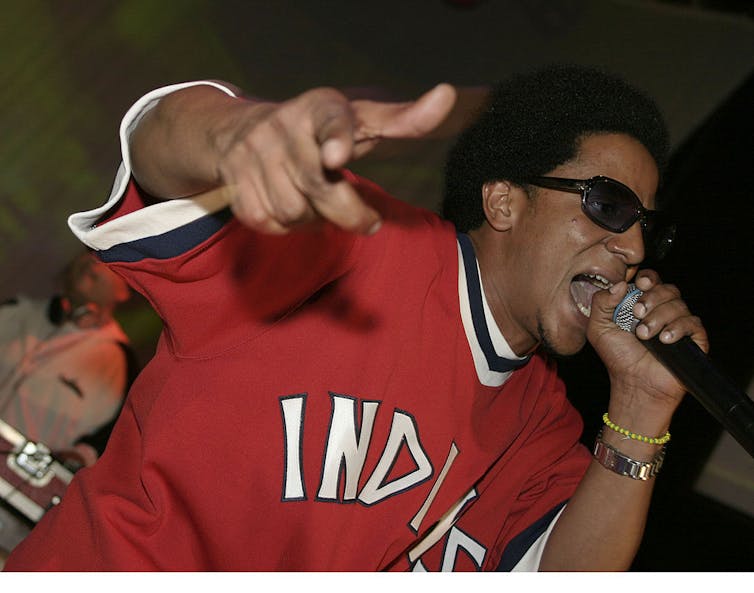
Man with afro wearing sunglasses and a red baseball jersey gestures while rapping into a microphone.
Reggaeton artist Tego Calderon performs at the BMG Music Showcase at Billboard Live in Miami Beach in 2003.
Rodrigo Varela/WireImage via Getty Images

Bringing reggaeton back to its roots

Though he may have the genre’s history slightly wrong, Bad Bunny’s own tracks return to reggaeton’s social justice roots.

Performed during the Super Bowl halftime show by Ricky Martin, Bad Bunny’s “LO QUE LE PASÓ A HAWAii” describes the history of U.S. colonialism in Hawaii and Puerto Rico, pointing out how local communities have been forced out by gentrifiers:

Quieren quitarme el río y también la playa

(They want to take the river and the beach away from me)

Quieren al barrio mío y que tus hijos se vayan

(They want my neighborhood and for your kids to leave)

And while the early-2000s reggaeton popularized by Daddy Yankee, Tego Calderon and Don Omar contained elements of misogyny and homophobia, Bad Bunny’s tracks “Yo Perreo Sola” and “YO VISTO ASÍ” build on feminist reggaeton anthems like Ivy Queen’s “Yo Quiero Bailar.”

Reggaeton was born out of a call for freedom, equality and justice. So I find it fitting that Bad Bunny is creating music that speaks to all types of people from all over the world.

The Conversation

Brendan Frizzell does not work for, consult, own shares in or receive funding from any company or organization that would benefit from this article, and has disclosed no relevant affiliations beyond their academic appointment.

ref. Bad Bunny says reggaeton is Puerto Rican, but it was born in Panama – https://theconversation.com/bad-bunny-says-reggaeton-is-puerto-rican-but-it-was-born-in-panama-276347

What Hannah Spencer’s historic win means for the Green party’s future

Source: The Conversation – UK – By Louise Thompson, Senior Lecturer in Politics, University of Manchester

Thursday’s byelection in Gorton and Denton has been huge for the Green party of England and Wales, with Hannah Spencer pushing Reform’s Matt Goodwin into second place, and Labour into third. Having one extra MP in parliament may not seem like a big milestone, but this byelection win is record-breaking for the Greens. I believe it shows their potential to be a credible alternative to Labour.

The Greens have never won a byelection before. They polled less than 7% of the vote (coming in fourth place) in the Runcorn and Helsby byelection in May 2025. And, unlike Reform UK in that byelection, the Greens didn’t just edge this victory – they took nearly 41% of the vote. That’s a whopping 28-point increase on their performance in the same constituency at the 2024 general election.


Read more:
Victory in Gorton and Denton is historic for the Greens – and cataclysmic for Britain’s two-party politics


The victory has given party leader Zack Polanski the confidence that voters now see the Greens as a viable alternative to Labour, even in former Labour strongholds. He announced to supporters, “this is what replacing Labour looks like”.

Over the past few years the Greens have really professionalised their party. We saw the impact of this in the 2024 general election, when they quadrupled their number of MPs and finished second in 40 constituencies.

Under Polanski’s leadership, they’ve developed a more populist edge, focusing on issues such as the cost of living and moving away from being “just” a climate party. They’ve also had a more visible media presence and started to take their communication strategy more seriously.

Spencer’s win increases the size of the Green parliamentary group to five MPs. In the context of a 650-member House of Commons, this doesn’t seem like much.

The Greens certainly aren’t large enough to swing any votes, or cause the government many problems. And although they now have more MPs than ever before, they are still only the sixth-largest party group in the Commons. There are still over twice as many independent MPs as there are Greens.

The win will, however, give the Greens some breathing space. It’s a tough job being a small party in the Commons, and the existing group of four Green MPs have shared a heavy burden of responsibilities in the chamber since their arrival in 2024. As Spencer finds her feet, she will be able to take on some of these policy portfolio responsibilities.

Having a bigger parliamentary team doesn’t just alleviate some of the pressure to be in the chamber all the time. It also allows the party to be more strategic, and to insert Green voices into more conversations than before.

This could be through places on committees scrutinising legislation, trying to catch the speaker’s eye during high-profile government statements and question times, or holding backbench debates on more local issues. There is no place for passengers in any small party, so we can expect to see Spencer playing a very visible role for the rest of the parliament.

The battle ahead

When the next general election draws closer, the Greens may be grateful of this bigger team. They will want to capitalise on their success in Manchester and continue to professionalise their operations as a national party.

They are also likely to face more hostility at Westminster. Labour is now fighting a war on two fronts. The party’s embarrassing third-place result in Gorton and Denton – which Keir Starmer called “very disappointing” – will have hammered this home. We can expect to see more attacks on the Greens, including in the Commons chamber.

Until now, the prime minister has focused much more consistent attention on discrediting Reform. Now, he needs to worry much more about Polanski and the Greens, and will be directing some focus to winning back Labour voters who see the Greens as the stronger party of the left.

We had a glimpse of this in January, when North Herefordshire’s Ellie Chowns used her occasional opportunity to question the prime minister to ask about water pollution. Starmer turned it into a partisan attack on the unrelated topic of Polanski’s comments about Nato.

While the Reform UK leader, Nigel Farage, regularly berates Starmer in the Commons, the Greens rarely take such an overtly partisan approach. Reform MPs tend to participate more frequently in high-profile parliamentary occasions, where they can question the government. The Greens tend to have a more balanced, policy-focused approach, regularly popping up on committees to scrutinise legislation.

This is helped by Polanski’s position as a leader who sits outside the Commons (a member of the London Assembly). He can delegate the scrutiny of government policy to Chowns and her colleagues, while he takes broader comments about the government’s performance directly to the press.

This balance will be important as the Greens think about the upcoming local elections. Spencer told the press today that the party can now “win anywhere”, and Polanski predicted a “tidal wave” of Green MPs at the next election.

To do this, they need to maintain the momentum they’ve created this week. This means keeping a tight hold of the former Labour voters who chose them instead in Gorton and Denton.

It will be difficult for the party to carry out the same intensive campaign strategy on a more national level, but this sort of intensity is key to ensuring that the left vote goes to the Greens rather than to the other alternatives. Having more party members than ever before will help with this, but they will need to rely on their on-the-ground campaigners to feel secure.

The Conversation

Louise Thompson receives funding from the ESRC ES/R005915/2

ref. What Hannah Spencer’s historic win means for the Green party’s future – https://theconversation.com/what-hannah-spencers-historic-win-means-for-the-green-partys-future-277114

What weight loss jabs teach us about how appetite works

Source: The Conversation – UK – By Lewis Mattin, Senior Lecturer, Life Sciences, University of Westminster

New Africa/Shutterstock

Hunger is often discussed as a matter of willpower. In appetite research, it looks very different. Physiologists who study eating behaviour and metabolism see hunger as a fluctuating biological signal shaped by hormones, digestion, activity and environment. The recent surge of interest in GLP-1 drugs has brought one part of this system into public view.

GLP-1, or glucagon-like peptide-1, is a hormone produced naturally in the gut and plays a key role in controlling blood sugar, appetite and digestion. After eating, it helps signal fullness and slows the rate at which food leaves the stomach, shaping how quickly nutrients enter the bloodstream and how much energy the body takes in.

Appetite regulation begins in the gut rather than the brain alone. Signals from digestion, microbes and nutrient absorption activate hormonal pathways that travel to the brain through the bloodstream and nervous system.

Hunger is shaped by several of these signals. Ghrelin, released from the stomach, stimulates appetite. After food is eaten, levels of GLP-1 typically rise, helping signal satiety. Research shows appetite is closely linked to this increase in GLP-1 and how it communicates with brain regions involved in regulating eating.

Drugs such as Ozempic, Wegovy and Mounjaro are known as GLP-1 receptor agonists. They were originally developed for diabetes treatment and have been used to treat Type 2 diabetes since 2025. More recently, they have been prescribed for obesity management.

These medications activate the same biological pathways as natural GLP-1, but for much longer. Under normal conditions, GLP-1 rises for a relatively short period after eating, typically around two hours. This post-meal phase is when appetite is naturally suppressed and digestion slows. GLP-1 medications extend that state. Rather than simply blocking hunger, they maintain a physiological signal associated with having recently eaten.

This helps explain their impact. By reducing appetite and slowing gastric emptying, they can support sustained weight loss. But they also highlight how dynamic appetite is.

Research in exercise and nutrition shows that hunger does not increase in a simple, linear way with energy expenditure. Intense physical activity can temporarily suppress appetite through shifts in gut hormones, including GLP-1, even as energy needs rise.

Appetite often returns later as the body re-balances. In some cases, particularly after sessions such as high intensity intermittent training (HIIT), cravings for food can increase substantially.

Typically, weight loss of up to 5 to 8% can be achieved with a GLP-1 receptor agonist, although outcomes vary and tend to occur gradually over months. Medical advice should always be sought before starting treatment, and nutritional strategies should be discussed with a dietician or qualified nutritionist.

The rise of these medications has also reshaped how obesity is understood. For decades, weight was often framed primarily in terms of personal responsibility. GLP-1 therapies instead highlight the biological regulation of appetite and metabolism. They shift attention toward physiology and the gut-brain axis, rather than willpower alone, and have influenced public conversations about stigma, treatment access and the medicalisation of weight management.

Yet appetite reduction does not remove the body’s need for nutrients and fluids. When food intake falls, the challenge becomes maintaining nutritional balance. Hydration remains essential, as the body can lose around 2 to 3 litres of fluid each day through urine, sweat, breathing and bowel movements. Replacing this fluid supports circulation, temperature regulation and organ function. Hydration therefore remains fundamental even when appetite is reduced.


Read more:
Weight loss drugs make it harder to get the nutrients you need – here’s what to do about it


Electrolytes also play a central role in nerve activity, muscle contraction and fluid balance. These charged minerals, including sodium, potassium, chloride, magnesium and calcium, are present in everyday foods and drinks, but reduced intake can lower overall levels.

Maintaining muscle mass is another consideration. When calorie intake drops substantially, the body may begin to break down muscle tissue for energy. Preserving muscle supports metabolic health and physical function. Protein intake of around 1.2 g per kg of body weight per day is often recommended, with sources including eggs, dairy, legumes, tofu and lean meats.

Changes in eating patterns can also affect digestion. Reduced food intake increases the likelihood of constipation, particularly if fibre consumption falls. Foods that are high in fibre help maintain bowel health by supporting regular movement and gut function.

Like most medications, GLP-1 drugs can have side effects. These may include nausea, abdominal discomfort, fatigue, bloating, constipation or diarrhoea. In some cases, there may be muscle loss and gallbladder problems. Ongoing monitoring is therefore important.

Another key question is what happens when treatment stops. Research suggests weight regain is common once medication is discontinued. When the prolonged satiety signal is removed, appetite-regulating hormones return to previous patterns. The biological drive to regain lost weight can re-emerge, highlighting that these drugs modify appetite while they are taken but do not permanently reset the systems that regulate it.

The wider implications extend beyond individual treatment. Appetite is influenced by multiple factors, including gut hormones, microbiome activity, physical activity, circadian rhythms and metabolic health. GLP-1 therapies interact with this wider system rather than replacing it. They also raise questions about long-term use, access and how food environments might respond to widespread appetite suppression.

From a physiological perspective, the significance of GLP-1 medications lies not only in their clinical effects but in what they reveal. Hunger is not a fixed trait. It is a fluctuating signal shaped by gut-derived hormones, digestion, activity and environment. These drugs amplify one part of that system by extending the post-meal state, but they do not replace the broader mechanisms that govern appetite, nutrition and metabolism.

Weight management therefore remains embedded in a wider biological and social context. Hormones matter, but so do daily routines, physical activity, food availability and long-term health patterns. GLP-1 therapies highlight how strongly biology shapes hunger, while also underscoring how complex and interconnected appetite regulation really is.

The Conversation

Lewis Mattin is affiliated with The Physiological Society, The Society for Endocrinology, UKRI funded Ageing and Nutrient Sensing Network, BBSRC UK GIBA network & SENr-Academic Associate Registration

ref. What weight loss jabs teach us about how appetite works – https://theconversation.com/what-weight-loss-jabs-teach-us-about-how-appetite-works-276105