Trump and Netanyahu want regime change, but Iran’s regime was built for survival. A long war is now likely

Source: MIL-OSI-Submissions-English

Source: The Conversation – Global Perspectives – By Amin Saikal, Emeritus Professor of Middle Eastern Studies, Australian National University; The University of Western Australia; Victoria University

The joint US–Israel strikes on Iran, which killed the Iranian supreme leader, Ayatollah Ali Khamenei, and Tehran’s retaliatory strikes on Israel and neighbouring Arab countries have again plunged the Middle East into war.

US President Donald Trump and Israeli Prime Minister Benjamin Netanyahu said their aim is to bring about a favourable regime change in Iran. The implications of this for Iran, the region and beyond should not be underestimated.

Although Khamenei’s killing is a significant blow to the Islamic regime, it is not insurmountable. Many Iranian leaders have been killed in the past, including Qassem Soleimani, Tehran’s regional security architect, who was assassinated by the US in January 2020.

But they have been replaced relatively smoothly, and the Islamic regime has endured.

Khamenei’s departure is unlikely to mean the end of the Islamic regime in the short run. He anticipated this eventuality, and reportedly last week arranged a line of succession for his leadership and that of senior military, security and political leaders if they were “martyred”.

However, Khamenei was both a political and spiritual leader. He has commanded followers not only among devout Shias in Iran, but also many Muslims across the wider region. His assassination will spur some of them to seek revenge, potentially sparking a wave of extremist violent actions in the region and beyond.

A regime built for survival

Under a constitutional provision of the Islamic Republic, the Assembly of Experts – the body responsible for appointing and dismissing a supreme leader – will now meet and appoint an interim or long-term leader, either from among their own ranks or outside.

There are three likely candidates to be his successor:

  • Gholam-Hossein Mohseni-Eje’i, the head of the judiciary
  • Ali Asghar Hejazi, Khamenei’s chief-of-staff
  • Hassan Khomeini, the grandson of the founder of the Islamic Republic, Ayatollah Rohullah Khomeini.

The regime has every incentive to do what it must to ensure its survival.
There are many regime enforcers and defenders, led by the Islamic Revolutionary Guard Corps (IRGC) and its subordinate paramilitary Basij group, across the country to suppress any domestic uprisings and fight for the endurance of the regime.

Their fortunes are intimately tied to the regime. So are a range of administrators and bureaucrats in the Iranian government, as well as regime sympathisers among ordinary Iranians. They are motivated by a blend of Shi’ism and fierce nationalism to remain loyal to the regime.

Trump and Netanyahu have called on the Iranian people – some 60% of whom are below the age of 30 – to topple the regime once the US-Israeli operations have crippled it.

Many are deeply aggrieved by the regime’s theocratic impositions and dire economic situation and took to the streets in protests in late 2025 and early 2026. The regime cracked down harshly then, killing thousands.

Could a public uprising happen now? So far, the coercive and administrative state apparatus seems to be solidly backing the regime. Without serious cracks appearing among these figures – particularly the IRGC – the regime can be expected to survive this crisis.

Global economic pain

The regime has also been able to respond very quickly to outside aggression. It has already hit back at Israel and US military bases across the Persian Gulf, using short-range and long-range advanced ballistic missiles and drones.

While many of the projectiles have been repelled, some have hit their targets, causing serious damage.

The IRGC has also set out to choke the Strait of Hormuz – the narrow strategic waterway that connects the Persian Gulf to the Gulf of Oman and Indian Ocean. Some 20% of the world’s oil and 25% of its liquefied gas flows through the strait every day.

The United States has vowed to keep the strait remain open, but the IRGC is potentially well-placed to block traffic from going through. There could be serious implications for the global energy supply and broader economy.

Both sides in this conflict have trespassed all of the previous red lines. They are now in open warfare, which is engulfing the entire region.

A prolonged war looks likely

If there was any pretence on the part of Washington and Jerusalem that their attacks would not lead to a regional war, they were wrong. This is
already happening.

Many countries that have close cooperation agreements with Iran, including China and Russia, have condemned the US-Israeli actions. The United Nations secretary-general António Guterres has also urgently called for de-escalation and a return to diplomatic negotiations, as have many others.

But the chances for this look very slim. The US and Iran were in the middle of a second round of talks over Tehran’s nuclear program when the attacks happened. The Omani foreign minister, who mediated between the two sides, publicly said just days ago that “peace was within reach”.

But this was not enough to convince Trump and Netanyahu to let the negotiations continue. They sensed now was the best time to strike the Islamic Republic to destroy not just its nuclear program but also its military capability after Israel degraded some of Tehran’s regional affiliates, such as Hamas and Hezbollah, and expanded its footprint in Lebanon and Syria over the last two and a half years.

While it is difficult to be definitive about where the war is likely to lead, the scene is set for a long conflict. It may not last days, but rather weeks. The US and Israel do not want anything short of regime change, and the regime is determined to survive.

With this war, the Trump leadership is also signalling to its adversaries – China, in particular – that the US remains the preeminent global power, while Netanyahu is seeking to cement Israel’s position as the dominant regional actor.

Pity the Iranian people, the region and the world that have to endure the consequences of another war of choice in the Middle East for geopolitical gains in an already deeply troubled world.

The Conversation

Amin Saikal does not work for, consult, own shares in or receive funding from any company or organisation that would benefit from this article, and has disclosed no relevant affiliations beyond their academic appointment.

ref. Trump and Netanyahu want regime change, but Iran’s regime was built for survival. A long war is now likely – https://theconversation.com/trump-and-netanyahu-want-regime-change-but-irans-regime-was-built-for-survival-a-long-war-is-now-likely-277193
Kansas revoked transgender people’s IDs overnight – researchers anticipate cascading health and social consequences

Source: MIL-OSI-Submissions-English

Source: The Conversation – USA – By Jae A. Puckett, Associate Professor of Psychology, Michigan State University

Anti-trans bills effectively restrict transgender people’s ability to participate fully in society. AP Photo/Julia Demaree Nikhinson

The number of bills directly targeting and undermining the existing legal rights of transgender and nonbinary people in the U.S. has been escalating, with sharp increases since 2021 and with each consecutive year. Kansas dealt the most radical blow yet on Feb. 26, 2026, as a law that immediately invalidates state-issued driver’s licenses, identification cards and birth certificates for holders whose gender marker does not match their sex assigned at birth took effect overnight.

This new law, called the House Substitute for Senate Bill 244, passed after legislators overrode the governor’s veto to rush it through legislation.

There is no grace period for this law, meaning trans and nonbinary people will have immediately invalid documents putting them at risk of a US$1,000 fine and up to six months in jail for driving with an invalid license. The law also restricts bathroom use to assigned sex at birth, and it allows citizens to sue transgender people for up to $1,000 for not complying.

While 21 states have passed similar bathroom restrictions, Kansas is the first to invalidate state-issued identification documents that were legally obtained.

We are researchers who study how marginalization and resilience affect the lives of trans and nonbinary people. Our work has documented how lack of access to accurate and affirming identification documents affects the health and well-being of this community.

By mandating the use of birth-assigned sex on identity documents, Kansas denies transgender people legal recognition and curtails their freedom of movement. These laws open the door to an even wider range of discriminatory policies.

People holding signs in protest, one reading 'My trans patients risk their health every day, because they are scared to use public restrooms. You just made this so much worse for them. I'll be sending the KS legislature the bill to treat those UTIs'
In addition to invalidating the IDs of transgender people, the Kansas law included what some have called a bounty hunter approach to bathroom restrictions.
AP Photo/John Hanna

ID is essential to participate in society

Invalidating someone’s identification documents has immediate and powerful consequences that cascade into all aspects of their life.

For example, without a valid driver’s license, many trans and nonbinary people will be unable to get to work, attend classes, pick up their children, visit the doctor, see friends or go to the grocery store. Trans and nonbinary people who need to drive with an invalid license risk fines and jail time, where they would be housed according to their sex assigned at birth.

Taking a train or bus is not a solution that would work for many people. Almost half of the U.S. population does not have access to public transportation, and for those who do, it is often poorly maintained, sparse or unreliable. The two transgender men who sued the state of Kansas to block the law noted how loss of their ability to drive makes them unable to work.

The effects of invalidating someone’s legal documents goes far beyond just transportation. Legal IDs are required to access health care, obtain housing, have a job, vote, attend college, access financial assistance or even purchase cold medicine at a pharmacy.

Health effects of incorrect ID

Not having identification documents with the correct gender marker also poses a safety and health risk.

Trans and nonbinary people who have not updated their identification documents are more likely to experience psychological distress and suicidality, in part due to increased day-to-day stress. For trans and nonbinary people whose physical appearance no longer aligns with their ID, not having updated documents puts them at increased risk for harassment and violence.

Roughly a quarter of trans and nonbinary people who have not updated their identification documents experience subsequent mistreatment when showing their IDs, including verbal harassment, assault and denial of services or access to settings. In our research, we similarly found that not having one’s gender legally affirmed is associated with greater discrimination and social rejection – one pathway to negative effects on mental and physical health.

To comply with the current law sets up an impossible situation for many trans and nonbinary people who have been using the restroom aligning with their gender identity and presentation for years. These individuals are set up to face violence, legal action or criminal penalties even when they are complying with the law, as using the restroom aligned with their sex assigned at birth will appear to others as contradicting their gender presentation.

Researchers and public health officials consider accurate and affirming identification documents an essential determinant of health. The World Health Organization, United Nations and the World Professional Association for Transgender Health have called for trans and nonbinary people to have the right to legal recognition of their gender.

Small LGBTQ+ and trans pride flags adorn two legislators' desks
Hundreds of anti-trans bills have circulated in the courts since 2021.
AP Photo/John Hanna

Another blow in a broader battle

The Kansas law is a flash point in the ongoing battle across the country for legal recognition of trans and nonbinary people’s existence.

The process for gender marker changes varies widely across states. Some require documentation of medical procedures to affirm one’s gender, while some do not allow gender marker changes at all. Some allow for gender-neutral gender markers, like the letter X.

According to the 2022 U.S. Trans Survey, which had over 92,000 participants, 59% of trans and nonbinary people have not updated their gender on any of their documents, and 23% have some of their documents updated but not others. This law and others like it will disadvantage even more trans and nonbinary people.

To us, this is about more than access to driving a car – it is a direct attack on the ability of trans and nonbinary people to live and survive. As of February 2026, 711 bills are under consideration across 41 states, with 110 at the national level. The restrictions these bills propose are far-reaching – prohibiting access to gender-affirming medical care, prohibiting students from using their chosen names and pronouns, banning trans and nonbinary youth from participating in sports, restricting access to bathroom facilities and censoring public education on issues related to gender.

In the face of these legislative efforts to control and erase trans and nonbinary people from public life, trans and nonbinary people, along with their allies, continue to stand up for each other and fight for their rights.

The Conversation

Jae A. Puckett co-leads the Gender Affirmation Project.

Noelle Martin is affiliated with the Gender Affirmation Project.

L. Zachary DuBois does not work for, consult, own shares in or receive funding from any company or organization that would benefit from this article, and has disclosed no relevant affiliations beyond their academic appointment.

ref. Kansas revoked transgender people’s IDs overnight – researchers anticipate cascading health and social consequences – https://theconversation.com/kansas-revoked-transgender-peoples-ids-overnight-researchers-anticipate-cascading-health-and-social-consequences-277052

The hidden enemy on Mount Kilimanjaro: Safely dealing with low oxygen at high altitude

Source: MIL-OSI-Submissions-English

Source: The Conversation – Canada – By Stephen L Archer, Director of Translational Institute of Medicine (TIME), Queen’s University, Ontario

Last October, my daughter Elizabeth and I stood at Londorossi gate (elevation 2,250 metres), the western entrance to Mount Kilimanjaro National Park in Tanzania, ready to begin the nine-day Lemosho route up Mount Kilimanjaro. Climbing “Kili” would fulfil a dream I’ve had since working as a medical student in Kenya. Elizabeth’s dream was to ensure her dad came back in one piece.

Unlike Mount Everest, Kilimanjaro is a hike, not a technical climb requiring ropes or crampons. However, as a cardiologist and researcher in oxygen sensing, I knew that our key challenge would be the lack of oxygen — a condition called hypoxia.

Altitude and oxygen

Hypoxia occurs at altitude. At sea level, gravity creates barometric pressure, which compresses nitrogen and oxygen, accounting for Earth’s oxygen-rich atmosphere. However, gravity diminishes with distance from the planet’s centre. At altitude, the low barometric pressure causes gases to expand, meaning there are fewer molecules of oxygen per volume of air.

Mount Kilimanjaro, one of the world’s seven summits, is Africa’s highest point at 5,895 metres and the world’s tallest free-standing mountain. At its summit, barometric pressure falls 50 per cent compared to sea level (around 50 kiloPascals compared to 101 kiloPascals), so although oxygen still makes up 21 per cent of air, there are only half as many oxygen molecules in each breath.

Venture above 2,400 metres and you may develop acute mountain sickness (AMS) as a result of hypoxia. At altitudes of around 4,000 to 6,000 metres, the chances of developing AMS are 50/50.

Fortunately the risk of the more life-threatening hypoxia-related conditions — like high-altitude pulmonary edema (HAPE) or high-altitude cerebral edema (HACE) — is lower.

Acute mountain sickness is defined by a constellation of symptoms, including headache, nausea and vomiting, loss of appetite and dizziness.

HAPE and HACE are different than acute mountain sickness. HAPE is driven by excessive hypoxic constriction of the lung’s arteries (called pulmonary arteries). The pressure in these arteries rises, flooding the lung’s airways with bloody fluid, causing severe shortness of breath, bloody sputum and low blood oxygen.

Even more severe is HACE (hypoxic brain swelling), which shows up as severe headache, disorientation and imbalance. While one may endure acute mountain sickness with minor medical assistance, both HAPE and HACE require immediate medical intervention and rapid descent. However, distinguishing acute mountain sickness from early HAPE or HACE and choosing to descend is not always easy, particularly as climbers are often motivated to summit. Careful monitoring by impartial, safety-focused guides with twice daily oximetry is important. Oximetry measures oxygen in blood using a probe placed on the finger.

By the time we reached Barafu base camp (4,673 metres), our oxygen saturations had dropped from over 95 per cent at sea level to 87 per cent and 83 per cent. Those with oxygen saturations below 80 per cent at base camp are advised not to proceed to the summit.

Once the decision to descend due to low oxygen saturation is made, the choices are to walk down (if able), to be wheeled down on a stretcher or to take a helicopter, which is expensive and not without its own risks.

Aspiring climbers should be aware of three factors relating to hypoxia that can reduce their risk of altitude sicknesses and make climbing safer:

1. How the body detects hypoxia

Your body has oxygen sensors to detect hypoxia. These sensors are mitochondria, tiny intracellular powerhouses that trigger adaptive responses to boost oxygen uptake and delivery to vital organs.

In the carotid body — a tiny sensor in the carotid artery — and in the lung’s pulmonary arteries, mitochondria produce signalling molecules (called oxygen radicals) that trigger responses. These responses include neurotransmitter release, contraction of lung blood vessels and changes in gene expression.

The carotid body samples blood headed to the brain and, if it is acidic or hypoxic, signals the brain to increase the depth and rate of breathing. This is a helpful response because it increases ventilation, bringing more oxygen into your body.

A similar sensor in the lung’s pulmonary arteries constricts those arteries in response to hypoxic air (hypoxic pulmonary vasoconstriction, or HPV). HPV is helpful when lung hypoxia involves only a segment of lung, as in pneumonia. But at altitude, where the entire lung is filled with hypoxic air, HPV raises the pressure in the pulmonary arteries, which promotes fluid leakage from blood vessels into the airways, causing HAPE.

2. Acclimatization is key to surviving hypoxia

Slow ascent gives oxygen sensors time to condition climbers to function in the rarified air at altitudes like Kilimanjaro. The first adaptation, carotid body activation, happens quickly: breathing increases within minutes of hypoxic exposure.

Hours later, gene and protein expression changes. This is due to activation of transcription factors that control genes’ on and off switches. One such transcription factor that is activated by hypoxia, named HIF-1, regulates the hormone erythropoietin. More erythropoietin means more production of hemoglobin and red blood cells which increases the blood’s oxygen-carrying capacity.

Third, with a slow climb and sustained hypoxia, HPV gradually lessens, preventing pulmonary hypertension and HAPE. Our guides were very familiar with the necessity of acclimatization, and cheered us on with the refrain “Pole pole,” Swahili for “slowly slowly.”

Going slowly reduces the risk of developing acute mountain sickness. Like the parable of the tortoise and the hare, it more often strikes fit young people, whose bravado and strength allow rapid ascent, rather than slow-moving seniors. In addition to going “pole pole,” one can improve the chances of summiting by choosing a longer route (on Kilimanjaro, ideally a six- or seven-day ascent, like the Lemosho route) and following a “climb high, sleep low” philosophy: Hike to a higher altitude each day and then descend to your campsite.

Dr. Peter Hackett, an experienced mountaineer, documented the importance of acclimatization in a 1976 study.

Of 278 unacclimatized hikers ascending to 4,243 metres en route to Everest base camp, he found that 53 per cent developed acute mountain sickness; fewer experienced HAPE (2.5 per cent) or HACE (1.8 per cent). Acute mountain sickness was commonest among younger climbers and those who began their hike at 2,800 metres (after flying in), rather than those who hiked to the starting point at that altitude. Among those who did not acclimatize, acute mountain sickness incidence was reduced by taking acetazolamide, a drug that enhances breathing and suppresses HPV.

A more recent study further illustrates the dangers of rapid ascent, finding that 2.5 per cent of hikers trekking to 5,500 metres over four to six days developed HAPE, compared to 15.5 per cent of those airlifted directly to 5,500 metres.

3. Medications can help

Certain medicines do prevent and/or treat high altitude illnesses, increasing the chances of a safe climb by enhancing breathing and suppressing HPV (acetazolamide, brand name Diamox), suppressing HPV (sildenafil, brand name Viagra; and calcium channel blockers like nifedipine) and preventing inflammation (ibuprofen, brand name Motrin; and dexamethasone).

Our own Kilimanjaro medicine kit included three prescription medications (acetazolamide, sildenafil and dexamethasone) and one over-the-counter medicine (ibuprofen).

I’d like to stress that this article is not intended as medical advice. See your physician for fitness confirmation and prescriptions (and try any medicine pre-climb to check for allergies or side-effects) prior to climbing. Most of the medications recommended by the Wilderness Medicine Society’s 2024 Clinical Practice Guidelines for the Prevention, Diagnosis, and Treatment of Acute Altitude Illness require a prescription.

Lest you think that using medications is a cheat, trust me: The climb will be challenging despite pharmacological assistance. Elizabeth and I safely summited. Emerging happy but tired through the Mweka gate (1,680 metres), we felt gratitude to our guides, respect for the mountain and pride in realizing our dreams together.

This article was co-authored by Elizabeth Archer MFA, of Chicago, Illinois. She is a Canadian-Ukrainian playwright.

The Conversation

Stephen L Archer receives funding from CIHR

ref. The hidden enemy on Mount Kilimanjaro: Safely dealing with low oxygen at high altitude – https://theconversation.com/the-hidden-enemy-on-mount-kilimanjaro-safely-dealing-with-low-oxygen-at-high-altitude-271716

Actually, Doug Ford, basket-weaving is innovative and in-demand

Source: MIL-OSI-Submissions-English

Source: The Conversation – Canada – By Victoria MacBeath, PhD Candidate, Art History, Concordia University

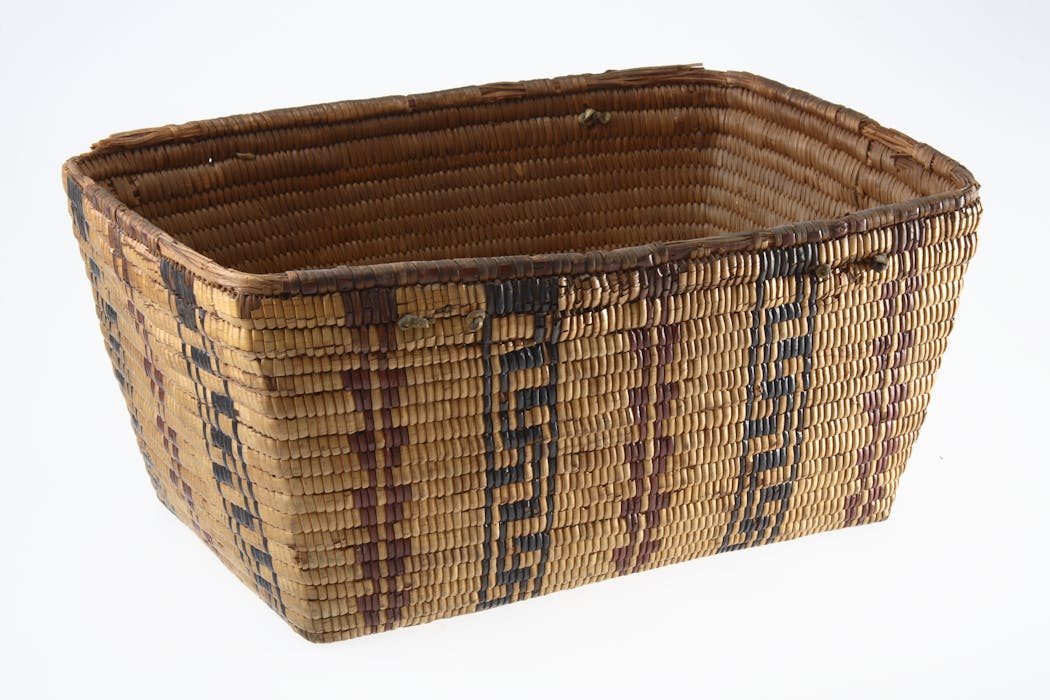
Salish Nlaka’pamux basket made of cedar or spruce root, cedar wood and hide. (McCord Museum)

The Ontario government recently announced massive cuts to Ontario Student Assistance Program (OSAP) funding, decreasing the maximum funding from 85 per cent to 25 per cent.

Student response to this has been largely negative. Speaking to the media, Ontario Premier Doug Ford said that he received “thousands of calls” from students expressing concerns. Ford’s response: telling them to invest in education that leads to in-demand jobs.

At a February news conference responding to OSAP cuts, Ford relayed that he told frustrated students: “You’re picking basket-weaving courses, and there’s not too many baskets being sold out there.” He said, instead, students should invest in their future through their program decisions — insinuating that craft curriculums hold no value in the job market. Ford mentioned trades, STEM and health-care fields as ones that would provide post-graduation employment.

As a researcher that engages with scholars specialized in the history of craft practices in Canada, alongside teaching art history courses that highlight the social, political and economic importance of fibre arts, Ford’s response is troubling and unsurprising.

Basket-weavers push back

Ford’s rhetoric demonstrates a misunderstanding of Canada’s cultural sector, basket weaving and the purpose of higher education.

In response to Ford’s comments, basket-weavers and craft organizations across the country noted the lucrative nature of their practice alongside the widely applicable skills learned through craft education.

Basket-maker Spencer Lunham Jr., of the Chippewas of Kettle and Stony Point First Nation, for example, told CBC that he sells a couple hundred baskets per year for around $150 to $3,000 each.

The prosperity of Canada’s cultural sector is backed by data from the Canadian chamber of Commerce, whose business data lab reported in October 2025 that the arts and culture sector’s GDP has grown nearly eight per cent, outpacing an overall economic growth of four per cent. In addition, the sector supports “13 jobs for every million in output, which is more than oil and gas, manufacturing or agriculture.”

Ontario is one of the provinces to see the highest economic impact from the sector, according to the report.

Winner of Sobey Art Award

Ford’s emphasis on the uselessness of craft practices is also challenged by recent winners of the Sobey Art Award, one of the most prestigious art awards in the country.

Many of the recent winners incorporate craft or craft-like practices into their work. This includes the 2017 winner of the award, Ursula Johnson,
an artist from the Eskasoni First Nation, in Cape Breton, Nova Scotia, who has an innovative basket-making practice. It seems that, at the very least, gallerists are buying baskets.

Johnson’s practice in particular highlights that — despite craft’s common framing as traditional, overly indulgent and frozen in time — basket-weaving is an innovative, adaptive and in-demand field.

As curator Heather Anderson argues in her 2021 writing on Johnson’s work: the artist utilizes weaving practices to highlight Canada’s ongoing role in colonization, and to question the contemporary museum’s implication in it.

Craft and technological innovation

A large wooden weaving loom.
Wooden Jacquard loom shown at the Museum of Science and Industry in Manchester, England.
(Wikimedia), CC BY

Craft practices have always been at the centre of technological innovation.

Some scholars contend that the inventor of the computer, Charles Babbage, was likely inspired by the Jacquard loom: a weaving machine whose invention had a profound impact on the industrial revolution in Europe.

Other writers, like journalist Brian Merchant, have recently argued that those opposed to artificial intelligence can take inspiration from the first rebellions against big tech: the 19th century Luddites who opposed the mass industrialization of weaving practices.

Illustration of a 19th century protest figure outdoors.
‘The Leader of the Luddites,’ illustration, 1812.
(Wikimedia)

From AI to the clothes we wear, weaving has shaped the contemporary global economy.

While weaving can be lucrative, members of the Toronto Guild of Spinners and Weavers noted that basket-weaving courses do not emphasize their monetary value, but rather their educational value.

Purpose of learning

This is where Ford’s real misunderstanding of education is revealed: the purpose of learning is not simply to remember and regurgitate facts, it is to problem solve, to expand our horizons and to think critically. These skills can be developed in basket-weaving courses just as well as math courses.


Read more:
Ada Lovelace’s skills with language, music and needlepoint contributed to her pioneering work in computing


Johnson, for example, says that her grandmother taught her that the maker does not manipulate the wood they use to weave, but instead the wood guides the maker. Basket weaving teaches us to listen, to collaborate and build from a strong foundation and work our way up.

TED talk with Ursula Johnson, an artist from the Eskasoni First Nation who tells the story of preserving Mi’kmaq culture through the art of basketry.

College admissions expert and counsellor Scott White, writing for Forbes Magazine, wrote in 2025 that “we need a system that prioritizes critical thinking, emotional intelligence and practical skills over rote memorization.”

He and many others who are invested in supporting young people and helping our systems change to support our society through turbulent times note that current education systems still reflects outdated ideas about the future of workers: of those in factories, rather than creative thinkers.

Pipeline to a job?

The Ford government’s approach to higher education seems to be the same — funding a system that put us on a pipeline to a job and where programs that demand critical and creative thinking are undervalued, and also, underfunded: Recent reports note that funding for Ontario’s post-secondary sector is low compared to support in other provinces.

Author Ursula K. Le Guin argued in 1986 that rather than a weapon for killing, the first human tool was likely a container: a basket or a woven net. She writes that the basket — and craft practices — are not supplemental to human survival: rather, they enable it.

Craft practices allow us to carry our culture, our belongings and our sustenance. If we focus only on the money-making schemes in society, then we lose a part of ourselves.

This is the real power of craft education: when we engage hands-on craft, we learn about our past and build problem-solving skills.

The Conversation

Victoria MacBeath receives funding from the Social Sciences and Humanities Research Council of Canada for craft history research.

ref. Actually, Doug Ford, basket-weaving is innovative and in-demand – https://theconversation.com/actually-doug-ford-basket-weaving-is-innovative-and-in-demand-276496

U.S.-Israeli strikes against Iran may succeed on a military basis, but at what political cost?

Source: MIL-OSI-Submissions-English

Source: The Conversation – Canada – By James Horncastle, Assistant Professor and Edward and Emily McWhinney Professor in International Relations, Simon Fraser University

Israel and the United States have launched combat operations against Iran via Operation Epic Fury. The air campaign appears aimed at three targets: Iran’s military bases and command structure, its air defences and strategic missile sites and its leadership.

Early strikes were successful in killing Iran’s Supreme Leader Ali Khamanei and several key members of the leadership.


Read more:
Ayatollah Ali Khamenei ruled Iran with defiance and brutality for 36 years. For many Iranians, he will not be revered


The strikes themselves are likely to be successful from a strictly military standpoint. Israeli and American forces are quickly establishing air superiority over Iran and disabling Iran’s anti-air capabilities.

These attacks occur at a moment when Iran is weakened both domestically and internationally.

The Iranian regime is still recovering from the December and January protests that were the greatest challenge to the Iranian government since the 1979 Iranian Revolution.

Internationally, key members of Iran’s “ring of fire,” like the Houthis in Yemen and Hezbollah in Lebanon, are in a vulnerable position. Furthermore, the domestic unrest have emboldened people around the world to challenge the Iranian regime’s legitimacy.

Nevertheless, the U.S. and Israel are unlikely to be successful in their stated goal of regime change. Historically, air power alone is insufficient. Furthermore, even if they succeed in regime change, they may create an even more volatile geopolitical situation.

Escalating tensions

The tensions between the U.S.-Israel and Iran are nothing new. Their foundations go back to the birth of the Islamic Republic.

There’s been a significant escalation of tensions, however, over the past few years. The Oct. 7, 2023, Hamas attack against Israeli citizens and Iran’s role in supporting Hamas and other paramilitary groups opposed to the Israeli state resulted in Israel launching extensive strikes against Iranian assets in the region.

These strikes culminated in last year’s Twelve Day War between Israel and Iran, with the U.S. playing an auxilliary role. American and Israeli strikes inflicted significant damage on Iranian infrastructure. But they didn’t achieve the American goal of eliminating Iran’s nuclear program, despite President Donald Trump’s claims to the contrary.

Iranian protests

Against this backdrop of rising tensions between Israel/the United States and Iran, the economic situation in Iran deteriorated, resulting in shopkeepers and merchants in Tehran going on strike. These protests served as a spark for what became the largest public demonstrations against the Iranian regime that it had encountered since the birth of the Islamic Republic.

This latest uprising by the Iranian people presented an opportunity for the U.S. and Israel. Israeli Prime Minister Benjamin Netanyahu has never backed down from his goal of regime change in Iran. Trump actively encouraged the protesters to fight for regime change.

The protesters, however, needed material support that only the U.S. could provide. But with American military assets in the Caribbean challenging Venezuela, there were insufficient forces available.


Read more:
‘Woman, Life, Freedom’ hasn’t faded in Iran — it’s being actively eliminated


The result was that the U.S. was not able to intervene, and the Iranian regime succeeded in quashing the protests. Total deaths from the government’s crackdown are estimated to be in the thousands.

The U.S., having missed its ideal opportunity for regime change due to its fixation on Venezuela earlier in the year, nevertheless went through with pursuing its goal on Feb. 28.

An uncertain end

The problem now faced by Israel and the U.S. s the stated goal of regime change and the long-term stability of Iran. Not only is regime change uncertain due to the limitations of a strictly air campaign, but it could also create a scenario where more radicalized forces come to power.

This comes from the fact that, while the Iranian regime is often equated with prominent figures like the Ayatollah, it operates as more than a system centred on a single individual.

Unlike other authoritarian countries where key individuals or families have power, Iran is a complex state with a complex governance structure. At its heart is the Islamic Revolutionary Guard Corps (IRGC). Far from merely a military unit or secret police, the IRGC is a vast institution integrated within the security, economy and governance of Iran.

This is where the difference between “regime change” and “regime building” comes to light. Removing key leaders may destabilize Iran and change who wields power, but that usually means power is then consolidated by people already in place. That’s not the citizens Iran, who Trump urged to rise up, but the vast infrastructure of the IRGC.


Read more:
Trump and Netanyahu want regime change, but Iran’s regime was built for survival. A long war is now likely


Conflict could spread

This outcome is more likely given the instability of Iran over the past few weeks. If the regime were stable, Iranian political and military leaders wouldn’t view the current attacks as posing a threat to their control. But under the current volatile domestic circumstances, these leaders are likely to respond more forcefully and broadly because they believe their own future — and lives — are at stake.

The IRGC isn’t likely to be a more conciliatory or ideologically permissive interlocutor. In fact, the opposite is probably true.

Faced with the threat of further American and Israeli attacks and nascent discontent at home, the IRGC may move quickly to further lock down its own power and respond aggressively. This power struggle could not only result in significant Iranian deaths, but cause the war to spread throughout Middle East.

The Conversation

The authors do not work for, consult, own shares in or receive funding from any company or organisation that would benefit from this article, and have disclosed no relevant affiliations beyond their academic appointment.

ref. U.S.-Israeli strikes against Iran may succeed on a military basis, but at what political cost? – https://theconversation.com/u-s-israeli-strikes-against-iran-may-succeed-on-a-military-basis-but-at-what-political-cost-277182

Mark Carney’s visit to India hits the reset button on the Canada–India relationship

Source: MIL-OSI-Submissions-English

Source: The Conversation – Canada – By Saira Bano, Assistant Professor in Political Science, Thompson Rivers University

Prime Minister Mark Carney’s visit to India marks the most consequential step in years to rebuild Canada–India relations after the diplomatic rupture in 2023 over allegations linking Indian agents to the killing of a Canadian Sikh activist.

The visit signals a deliberate shift from crisis management to economic statecraft.

In Mumbai, Carney announced that Canada aims to conclude a Comprehensive Economic Partnership Agreement (CEPA) with India by the end of this year, with the goal of doubling two-way trade by 2030. The message was pragmatic: the two countries may not always agree, but engagement must continue.

From rupture to reset

Canada-India relations deteriorated sharply in September 2023, leading to diplomatic expulsions, reduced staffing and suspended trade negotiations. For much of the past two years, the relationship was defined by security tensions and mutual distrust.

The first signs of stabilization came at the 2025 G7 Summit in Kananaskis, Alta., when Carney’s invitation to Prime Minister Narendra Modi signalled a diplomatic breakthrough. High commissioners were reinstated and ministerial channels reopened. Carney’s India visit suggests the reset is moving from symbolism to implementation.

The logic is clear. Canada’s heavy trade dependence on the United States has become riskier amid tariff threats and political volatility. Diversification is no longer aspirational; it’s strategic.

India, as one of the world’s fastest growing major economies and an increasingly central figure in global supply chains, offers scale and long-term opportunity.

Energy as the anchor

Energy emerged as the central pillar of Carney’s two-day visit. Canada and India have relaunched the Ministerial Energy Dialogue and are advancing discussions on uranium supply, conventional energy trade and clean energy co-operation.

India’s energy demand continues to rise as economic growth accelerates. It remains heavily import-dependent on crude oil and natural gas while also seeking to expand low-carbon baseload power. Canada, meanwhile, is looking to reduce its overwhelming reliance on the U.S. market.

With expanded export capacity through the Trans Mountain pipeline and growing LNG infrastructure, Canada is better positioned to reach Indo-Pacific markets than at any point in recent decades.

While Canada will not displace other suppliers, it can become part of India’s diversification portfolio. Long-term uranium agreements, in particular, would embed trust through decades of commercial interdependence. Nuclear co-operation offers durability that few other sectors can match.

Critical minerals, structural alignment

Beyond fuels, critical minerals represent a deeper strategic opportunity. Canada’s Critical Minerals Strategy aligns closely with India’s National Critical Minerals Mission in terms of lithium, nickel, cobalt, rare earth elements and downstream supply chains.

For Canada, the goal is not simply exporting raw resources, but building integrated value chains through processing partnerships, recycling and technology collaboration. For India, secure access to minerals is essential for electric vehicles, semiconductors, defence industrial supply chains and clean energy technologies, particularly as it seeks to reduce dependence on China-dominated processing networks.

Progress in critical minerals would move the relationship beyond symbolic diplomacy toward structural alignment.

Although CEPA negotiations have stalled in the past, both countries now face stronger incentives to revive them amid global trade turbulence and diversification pressures.

Progress on energy and minerals can help build domestic support for stability while wider trade talks continue.

Innovation, security

Carney’s visit also emphasized people-to-people and innovation ties. Foreign Affairs Minister Anita Anand launched a new Canada–India Talent and Innovation Strategy, including 13 new university partnerships spanning artificial intelligence, hydrogen research, digital agriculture and health sciences.

Education has long anchored Canada–India relations. Embedding research collaboration and talent mobility strengthens long term institutional linkages that outlast political cycles. Artificial intelligence co-operation, in particular, aligns Canada’s strengths in responsible AI governance with India’s scale in digital infrastructure and AI deployment.

Despite economic progress, however, security concerns between India and Canada remain unresolved. The diplomatic fallout of 2023 continues to affect trust.

During the visit, Anand faced repeated questions about foreign interference and transnational repression. She emphasized that public safety concerns must be addressed through direct engagement rather than disengagement.

Recent reports of ongoing threats and warnings to Sikh activists in Canada show that underlying tensions persist, even as both governments seek to prevent them from defining the entire relationship.

Ottawa’s tone appears more measured, but the conflicting narratives between the two countries remains evident.

The road ahead

Carney’s challenge is now therefore twofold: advance economic co-operation while preventing unresolved security disputes from derailing the broader reset of the Canada-India relationship.

Improved ties with India also align with Carney’s broader foreign policy vision, articulated in Davos, that middle powers must co-operate more closely in response to fractures in the global order.

India’s inclusion in a broader Indo-Pacific tour alongside Australia and Japan underscores that this engagement is part of a wider strategic recalibration.

Stabilizing relations with India is therefore not simply a bilateral exercise. It’s about positioning Canada more credibly in the Indo-Pacific region and strengthening co-ordination among democratic middle powers navigating geopolitical uncertainty.

The significance of Carney’s visit lies less in rhetoric and more in trajectory. By setting a target for a trade agreement, advancing energy and uranium co-operation, deepening critical minerals alignment and expanding academic partnerships, Ottawa is attempting to anchor the relationship in long-term interdependence.

The reset is not complete. Security tensions still cast a shadow. But the visit suggests that both governments are willing to compartmentalize disputes and focus on areas of shared economic and strategic interest.

The Conversation

Saira Bano does not work for, consult, own shares in or receive funding from any company or organisation that would benefit from this article, and has disclosed no relevant affiliations beyond their academic appointment.

ref. Mark Carney’s visit to India hits the reset button on the Canada–India relationship – https://theconversation.com/mark-carneys-visit-to-india-hits-the-reset-button-on-the-canada-india-relationship-277015

Strait of Hormuz: if the Iran conflict shuts world’s most important oil chokepoint, global economic chaos could follow

Source: MIL-OSI-Submissions-English

Source: The Conversation – UK – By Sarah Schiffling, Deputy Director of the HUMLOG (Humanitarian Logistics and Supply Chain Management Research) Institute, Hanken School of Economics

The reported sinking of several Iranian warships by US missiles in the Gulf of Oman serves as a reminder of the maritime aspect of the conflict which began February 28 with a barrage of Israeli and American missiles targeting Iran. Two other vessels, believed to be tankers, have also been reported as having been hit by missiles, of an as yet undetermined source, in the vicinity of the Strait of Hormuz, underlining the importance of this vital shipping lane – which is likely to play an key part in all sides’ calculations.

Full details have yet to emerge of the incidents. But there are already signs that the strait will become a major focus of concern because of the huge implications should the conflict disrupt maritime traffic through this the narrow outlet of the Persian Gulf. Ships crossing the Strait of Hormuz carry around one-fifth of global oil supplies. That’s about 20 million barrels per day. This makes the strait the most critical energy chokepoint.

There are a small number of strategic passageways, or chokepoints on which global trade depends and which are vulnerable to disruption. Any disruption reverberates instantly through global markets and supply chains. With conflict raging in Iran and attacks across the Middle East, traders, governments and businesses will be watching oil prices closely as the markets open.

After Israel and the US launched attacks on Iran on February 28, prompting retaliatory strikes across the region from Iran, Tehran broadcast to vessels in the region claiming that the Strait of Hormuz was closed.

Although the shipping lanes are only about two miles wide, actually physically closing them would be difficult to achieve. The most decisive action Tehran could take would be to mine the shipping lanes. With the large US naval presence in the area, this would be very difficult for Iran to achieve.

But a formal blockade is not necessary to stop traffic. When perceived threat levels rise, ships stay away. Big shipping companies such as Hapag Lloyd and CMA CGA have already suspended transit through the strait and advised their ships to proceed to shelter.

Vessel tracking already shows reduced movements in the Strait of Hormuz. Ships are waiting to enter or exit the Persian Gulf or diverting away from the region. An advisory from the United Kingdom Maritime Trade Operations (UKMTO) Centre has warned of the “increased risk of miscalculation or misidentification, particularly in proximity to military units”.

Several ports have suspended operations after debris from an intercepted missile sparked a fire at Dubai’s Jebel Ali Port. While other ports continue to operate, the risk and uncertainty are disrupting shipping in the region.

Supply chain disruption

Hormuz is dominated by oil tankers and liquid natural gas carriers, so disruption directly hits global energy supplies. In addition, a lesser-known dependency is that one-third of the world’s fertiliser trade passes through the strait. Both energy and agricultural supply chains have already been destabilised by the Ukraine war. Further price rises could have far-reaching consequences.

Map of Straits of Hormuz
The Strait of Hormuz is one of the world’s most important waterways, with 20% of the global trade in oil flowing through a narrow maritime channel.
Wikimedia Commons

The main destinations for oil and gas flowing through Hormuz are China, India, Japan, and South Korea. India, which imports about half of its crude oil through the strait, has activated contingency plans to safeguard energy supplies.

But apart from amassing strategic national stockpiles to weather immediate disruptions, there may be limited alternatives for countries dependent on getting their energy supplies through the strait. Saudi Arabia and the UAE have some pipelines for both oil and gas that can bypass the Hormuz. There is an estimated spare capacity of 2.6 million barrels per day for these pipelines. But that’s a fraction of what is normally shipped through the strait.

Oil and gas are traded globally. So even countries whose energy needs are not met by imports from the Persian Gulf will be affected by price increases. Oil prices are expected to increase to up to US$100 (£74) per barrel when markets open on Monday. Opec has agreed to modestly boost oil output in a bid to stabilise markets. But the group of oil producing countries has limited options as key members are affected by the fallout of the attacks on Iran.

Energy price increases will hit consumers directly when filling up their cars or heating their homes. They also affect companies across a wide range of industries. This has the potential to cause further supply chain disruptions.

Supply chains rely on predictability. The persistent geopolitical uncertainty has complicated operations worldwide. Limited alternatives make the de facto closure of the Strait of Hormuz all the more impactful. The longer the disruption persists, the more significant and structural the economic damage will become.

Potential for escalation

There is still a potential for a catastrophic escalation in the Strait of Hormuz. The sinking of a tanker would have dramatic consequences for the environment and would likely halt navigation for an extended period of time.

But prolonged instability may also prove destructive for the global economy.
Previously, Iran closing the strait was seen as unlikely considering the global backlash and economic harm to Iran itself. But with regime change now the stated goal of the US-Israeli attacks, the cost of holding the world economy hostage might seem justified to the rulers in Tehran.

The Conversation

Sarah Schiffling does not work for, consult, own shares in or receive funding from any company or organisation that would benefit from this article, and has disclosed no relevant affiliations beyond their academic appointment.

ref. Strait of Hormuz: if the Iran conflict shuts world’s most important oil chokepoint, global economic chaos could follow – https://theconversation.com/strait-of-hormuz-if-the-iran-conflict-shuts-worlds-most-important-oil-chokepoint-global-economic-chaos-could-follow-277199

Failure of US-Iran talks was all-too predictable – but Trump could still have stuck with diplomacy over strikes

Source: MIL-OSI-Submissions-English

Source: The Conversation – USA – By Nina Srinivasan Rathbun, Professor of International Relations, Munk School of Global Affairs & Public Policy, University of Toronto; USC Dornsife College of Letters, Arts and Sciences

When it came to U.S.-Iran talks, the writing was on the wall. Morteza Nikoubazl/NurPhoto via Getty Images

Three rounds of nuclear talks between the U.S. and Iran failed to persuade President Donald Trump that a solution to the two country’s nuclear impasse lay in diplomacy, rather than military action. A perceived lack of progress in the last of those indirect negotiations on Feb 26, 2026, was enough to prompt Trump to green-light a massive onslaught of missiles that has degraded Iran’s offensive capabilities and killed Ayatollah Ali Khamenei and several members of Iran’s senior military leadership.

In response, Tehran has launched strikes across the Middle East, targeting Israel as well as Gulf states that host U.S. airbases. At least three Americans have been killed.

While the scale of the U.S., Israeli and Iranian strikes has taken some observers by surprise, the failure of the talks that led to them was all too predictable.

For diplomacy to be successful, both sides need to agree on the issues subject to negotiation and also believe that peaceful resolution is more valuable than military engagement. This clearly was not the case in the U.S.-Iran nuclear talks of 2025 and 2026.

An arm holds aloft a photo of a man with a long beard.
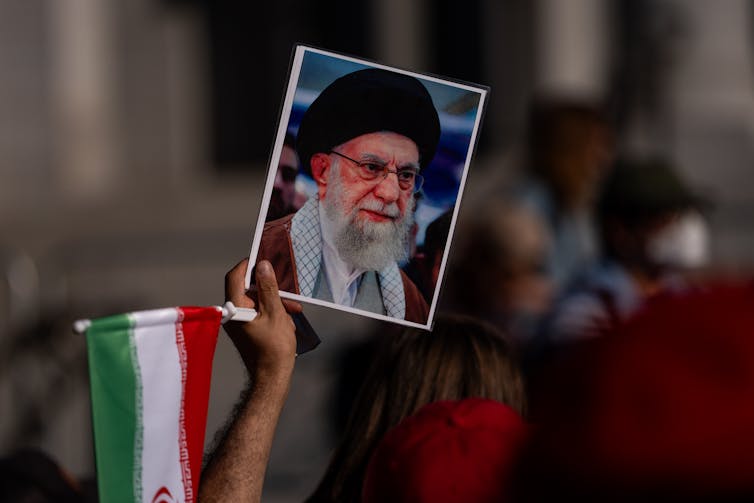
A demonstrator holds a portrait of Ayatollah Ali Khamenei in Los Angeles on Feb. 28, 2026.
Qian Weizhong/VCG via Getty Images

As someone who has researched nonproliferation and U.S. national security for two decades and was involved in State Department nuclear diplomacy, I know that even under more favorable conditions, negotiations often fail. And the chances for success in the Iran-U.S. talks were always slim. In fact, publicly stated red lines by both sides were incompatible with each other – meaning negotiations were always likely to fail.

Iran wanted the talks confined only to guarantees about the civilian purpose of its nuclear program, not its missile program, support of regional proxy groups or human rights abuses. Essentially it wanted a return to 2015’s Joint Comprehensive Plan of Action, which halted Iran’s development of nuclear technology and stockpiling of nuclear material in exchange for lifting multiple international economic sanctions placed on Iran.

Meanwhile, Trump insisted on limits to Iran’s ballistic missiles and the cutting of Tehran’s support for regional militias. These were not included in the 2015 agreement, with parties ultimately deciding that a nuclear deal was better than the alternative of no deal at all.

False hope

Nevertheless, there had been a slim chance for a breakthrough of late.

While the positions of both the U.S. and Iranian governments had ossified since May 8, 2018 – the date when the first Trump administration withdrew the United States from the Obama-era Iran nuclear deal – there had been some recent movement by Iran, according to former U.S. diplomats involved in negotiations during the Obama and Biden administrations.

With U.S. military building up in the region, Iran appeared more willing to negotiate within the nuclear arena than before. There were plausible solutions to the issue of Iran’s enrichment of uranium capabilities, including maintaining a minimum domestic capacity to develop medical isotopes and a removal of Iran’s stockpile of enriched uranium necessary to build a nuclear bomb.

There was less openness on other points of contention. Notably, there was no movement on ballistic missiles, which had always been a red line. On the eve of the round of discussions held in Geneva on Feb. 17, Trump stated: “I think they want to make a deal.” Iran’s foreign minister, Abbas Araghchi, noted progress over the “guiding principles” of the talks.

But a lot of this optimism appeared to have dissipated by the time the two sides held another round of talks on Feb. 26. While mediator Oman’s negotiators continued to talk of progress, the U.S. side was noticeably silent. Reporting since has suggested that Trump was displeased with the way the talks had gone, setting the stage for the Feb. 28 attack.

Military brinkmanship

The threat of military action was, of course, a continued backdrop to the talks.

The USS Abraham Lincoln carrier group was deployed near Iranian waters in January as a signal of support to the Iranian protesters. The USS Gerald R Ford carrier group joined the buildup before the last round of talks.

Trump warned Iran that “if they don’t make a deal, the consequences are very steep.”

The thinking may have been that Iran, weakened by both the June 2025 U.S.-Israeli strikes and diminished capabilities of Tehran proxies Hamas and Hezbollah, was playing a weak hand in the talks.

Yet Iran also signaled a willingness to engage in military action. In the run-up to the last round of talks, Iran held military exercises and closed the Strait of Hormuz for a live-fire drill. Leaders in Tehran also declared that they would not restrain its response to another attack. The world is seeing that now, with a response that has seen Iran launch missiles across the Middle East and at rival Gulf nations.

Optimism has fallen before

Trump isn’t the first president to fail to secure a nuclear deal, although he is the first to respond to that failure with military action.

The Biden administration publicly pledged to strengthen and renew the Obama-era nuclear deal in 2021. However, Iran had significantly increased its nuclear technical capability during the years that had passed since the Joint Comprehensive Plan of Action collapsed. That increased the difficulty – just to return to the previous deal would have required Iran to give up the new technical capability it had achieved for no new benefits.

That window closed in 2022 after Iran removed all of the International Atomic Energy Agency’s surveillance and monitoring under the deal and started enriching uranium to near-weapons levels and stockpiling sufficient amounts for several nuclear weapons. The IAEA, the United Nations’ nuclear watchdog, maintains only normal safeguards that Iran had agreed to before the plan of action.

Optimism also existed for a short time in spring 2025 during five rounds of indirect talks that preceded the United States bombing Iran’s nuclear infrastructure in June as part of a broader Israeli attack.

A more unstable Middle East

When I worked in multilateral nuclear diplomacy for the U.S. State Department, we saw talks fail in 2009 regarding North Korea’s nuclear weapons program, after six years of on-and-off progress. The consequence of that failure is a more unstable East Asia and renewed interest by South Korea in developing nuclear weapons.

Unfortunately, the same dynamic appears to be playing out in the Middle East.

Military strikes have already killed more than 200 in Iran and across the region. A wider war in the Middle East is a possibility, and should the Iranian regime survive, it may commit to developing nuclear weapons given that the lack of them proved no deterrent to U.S. and Israeli military action.

Talks do not necessarily need an end point – in the shape of a deal – for them to have purpose. Under situations of increased military brinkmanship, talks could have helped the U.S. and Iran step back from the edge, build trust and perhaps develop better political relations – even if an actual deal remained out of reach.

Instead, Trump opted to go a different route.

This article includes sections originally published by The Conversation U.S. on Feb. 17, 2026.

The Conversation

Nina Srinivasan Rathbun does not work for, consult, own shares in or receive funding from any company or organization that would benefit from this article, and has disclosed no relevant affiliations beyond their academic appointment.

ref. Failure of US-Iran talks was all-too predictable – but Trump could still have stuck with diplomacy over strikes – https://theconversation.com/failure-of-us-iran-talks-was-all-too-predictable-but-trump-could-still-have-stuck-with-diplomacy-over-strikes-277209