Could joining the state sector be an option for private schools?

Source: The Conversation – UK – By Tilly Clough, Lecturer in Law, Queen’s University Belfast

Molodid Studio/Shutterstock

Private schools in England are facing new financial realities. Following the UK general election in July 2024, the new government introduced VAT on school fees and removed charitable business rates relief for independent schools. At the same time, staffing costs have continued to rise. Employer national insurance contributions have increased, and the national minimum wage has risen.

For some schools – particularly smaller institutions with limited endowments or declining enrolments – this has raised questions about their sustainability.

Although the full impact of these funding changes remains to be seen, they have intensified concerns about sustainability within parts of the independent sector and raised broader questions about reform.

One viable yet underexplored option is the conversion of private schools to the state sector.

Although still relatively rare, a small number of independent schools have taken this route over the past two decades. In a new report, commissioned by thinktank the Private Education Policy Forum, my colleague Tom Richmond and I have carried out the first comprehensive analysis of what happens when independent schools become state schools in England.

Between 2007 and 2017, 27 independent schools converted into state-funded academies or free schools. Twenty-four are still operating today. While the legal route from independent to state provision technically still exists, it has largely fallen out of use, with no conversions taking place since 2017. Independent to state conversion is therefore often overlooked in debates about the future of private education.

Conversion is often viewed as a last resort taken only by schools in serious financial trouble. However, while financial pressures were relevant to many of the schools that converted between 2007 and 2017, they were not the whole story. Schools have also framed conversion as a way to return to their founding missions, which were often explicitly about inclusion and serving local communities rather than educating a fee-paying intake.

The transition itself was not straightforward. Schools reported significant challenges in adapting to the expectations of the state sector. These included the loss of academic selection, the requirement to deliver the national curriculum, and regular inspections by Ofsted, England’s school inspectorate. Many also highlighted the absence of clear guidance from government on key aspects of the conversion process.

In practical terms, this meant that schools which had previously operated with considerable autonomy had to adjust to a far more regulated environment. In some cases, early Ofsted inspections highlighted weaknesses in data use, governance and oversight as schools adjusted to the demands of state accountability.

However, these difficulties were not permanent. Over time, outcomes improved markedly. All but one of the schools that converted and remained open are now rated “good” or “outstanding” by Ofsted.

Former independent primary schools perform at broadly similar levels than other schools in their local authorities. Former independent secondary schools generally achieve stronger attainment and progress outcomes than nearby state schools, though performance varies. Initial adjustment challenges, in other words, did not prevent long-term success.

The consequences – and the future

One of the most significant changes following conversion is in pupil intake.

Removing academic selection and fees transformed who these schools serve. Since conversion, the proportion of pupils with special educational needs has more than doubled. The share eligible for free school meals has risen sharply.

Children on school staircase
There are challenges in moving to the state sector.
Monkey Business Images/Shutterstock

Research has shown that while these schools do not perfectly mirror the national state school population, the gap between them and their local communities has narrowed dramatically.

In many cases, they are far more representative of their surrounding areas than they were as independent institutions. Conversion does not simply change how a school is funded. It can reshape who benefits from its facilities and educational offer.

A common concern is that families will withdraw their children once fees are removed. In practice, this rarely appears to have happened at scale.

Consultation evidence and enrolment patterns show that large majorities of parents supported the move, particularly because it eliminated fees and provided financial certainty. Where schools were required to demonstrate parental demand, applications frequently exceeded available places. Widespread collapse in enrolment – a frequently voiced fear – did not materialise.

Conversion to the state sector is not a solution for every school. Local context matters. The availability of places, building condition and leadership capacity all shape whether conversion is viable. But, the experience of the past two decades suggests that, where carefully managed, conversion can preserve provision, widen access and deliver strong outcomes.

As debates about school funding and the future of private education continue, independent to state conversion is likely to resurface.

If the route is to become viable again, greater clarity is necessary. A clear and permanent pathway – assessed case by case and aligned with local need – would reduce uncertainty. Drawing on the more flexible elements of earlier academy reforms and providing practical support during transition could make the process more workable.

The Conversation

This report was commissioned by the Private Education Policy Forum.

ref. Could joining the state sector be an option for private schools? – https://theconversation.com/could-joining-the-state-sector-be-an-option-for-private-schools-275132

Former Harvard president Summers’ soft landing after Epstein revelations is case study of economics’ trouble with misbehaving men

Source: The Conversation – USA (2) – By Yana van der Meulen Rodgers, Professor of Labor Studies, Rutgers University

Larry Summers, center, is surrounded by the media in 2005 amid calls for his resignation. Jodi Hilton/Getty Images

Economist Larry Summers will resign from his tenured job as a professor at Harvard University, the school announced on Feb. 25, 2026, following heightened scrutiny of his ties with the late convicted sex offender Jeffrey Epstein. Summers will leave at the end of the 2025-26 academic year, with a new title: president emeritus.

It’s a soft landing for his fall from grace.

In November 2025, Harvard launched an investigation of Summers, a former U.S. treasury secretary who previously served as Harvard’s president.

The probe looked into whether Summers and other members of Harvard’s faculty and administration had interactions with Epstein that violated its guidelines on accepting gifts and should be subject to disciplinary action. Summers’ resignation is connected with this ongoing investigation, a Harvard spokesperson told The Hill.

Despite repeated calls by students for Harvard to revoke Summers’ tenure, he held onto his teaching and academic appointments at Harvard until he chose to retire. Students and staff also called for his resignation in 2005 following his disparaging comments about women in science.

“Free of formal responsibility, as President Emeritus and a retired professor, I look forward in time to engaging in research, analysis, and commentary on a range of global economic issues,” Summers said in a statement released on Feb. 25.

Not surprised

As a female economist and a board member of the Committee on the Status of Women in the Economics Profession – a standing committee of the American Economic Association – I wasn’t surprised by the revelations of Summers’ apparent chumminess with Epstein, shocking as they may appear.

After all, it was Summers’ disparaging remarks about what he said was women’s relative inability to do math that led him to agree to relinquish the Harvard presidency in 2006.

And for years, researchers have documented the gender bias that pervades the field of economics.

The title of president emeritus is honorary. It brings with it symbolic recognition and the opportunity to maintain a formal connection to the university. Emeritus status is selective and requires approval at most universities. It’s usually bestowed on retiring professors.

In my view, by conferring this title on Summers, Harvard is signaling that powerful men can outlast gross misconduct with their honorifics intact.

Mugshot of Jeffrey Epstein, left, and headshot of economist Larry Summers.
Documents released in 2025 pointed to close ties between Jeffrey Epstein and Larry Summers.
New York State Sex Offender Registry via AP/Michel Euler

Summers’ ties to Epstein

Summers, until his entanglement in the Epstein scandal came to light, was among the nation’s most influential economists.

But his history of public controversy stretches back to at least 1991, when a memo he wrote while serving as the World Bank’s chief economist appeared to justify sending toxic waste to poorer countries.

Criticism of Summers surged after the House of Representatives released damning messages between Summers and Epstein as part of a dump of more than 20,000 public documents from Epstein’s estate in November 2025.

A series of emails and texts documented how Summers repeatedly sought Epstein’s advice while pursuing an intimate relationship with a woman he was mentoring – while the economist was married to someone else.

Summers was close enough to Epstein that in 2014, the sex offender named the economist as a backup executor for his estate.

The Department of Justice released a much larger tranche of documents in January 2026 in compliance with a law passed by Congress. So far, no major media outlet has reported on any new Summers materials discovered as a result.

Four women hold photos of Jeffrey Epstein aloft.
Protesters hold signs bearing photos of convicted sex criminal and Larry Summers confidante Jeffrey Epstein in front of a federal courthouse on July 8, 2019, in New York.
Stephanie Keith/Getty Images

Harvard’s slow response

The Summers-Epstein exchanges released in November ignited a new round of scrutiny and led to the unraveling of Summers’ prestigious career.

Summers went on leave from teaching at Harvard on Nov. 19 and stepped down from several high-profile boards.

But beyond launching the investigation, Harvard took no decisive action to discipline or sanction Summers. This calculated hesitation, which reflects the institution’s efforts to court funding, power and influence among top donors, appears to have put donor politics above basic accountability.

By contrast, the American Economic Association, the primary professional association for economists, did take swift and harsh action. In an unprecedented move, on Dec. 2, 2025, the AEA announced that it had placed a lifetime ban on Summers from all its conferences and other activities.

Having lots of company

To be sure, Harvard is not the only prestigious university dealing with the aftermath of the Epstein revelations.

The Epstein documents include evidence that administrators and professors at other prestigious colleges and universities like Duke, Yale, Bard, Princeton and Columbia also exchanged messages with Epstein.

As public funding for higher education has eroded, universities have increasingly turned to wealthy donors to underwrite major projects and supplement budgets by endowing professorships and research centers. Epstein appears to have taken advantage of this dependence on rich supporters by presenting himself as someone who could deliver both his own money and access to other affluent donors.

The Epstein files uncovered many email exchanges, meetings and discussions with the sex offender about research and funding opportunities, and they demonstrated how thoroughly the man had embedded himself in academic circles.

Disturbingly, Summers was hardly the only scholar to solicit Epstein’s help in pursuing women.

Among others, Duke University economist Dan Ariely asked him for the contact information of a “redhead” he had met, and Yale computer scientist David Gelernter told Epstein about a woman he called a “v small goodlooking blonde.”

Young women hold signs that say 'Larry Must Go!'
Harvard students and other protesters demand an end to Larry Summers’ Harvard presidency in 2005, after he made disparaging remarks about women in science.
Jodi Hilton/Getty Images

An economics problem

While Summers’ behavior and the reported dynamics between him and a woman he mentored may appear shocking, they are all too common in economics. For years, researchers have been documenting the gender bias that pervades the profession.

The data shows that abuse of power is common among male economists.

A 2019 survey by the AEA documented widespread sexual discrimination and harassment. Almost half of the women surveyed said that they had experienced sexual discrimination, and 43% reported having experienced offensive sexual behavior from another economist – almost always men.

Also, a 2021 study published by the National Bureau of Economic Research documented hostile environments in economics seminars, with female presenters experiencing more interruptions and encountering more patronizing behavior.

In 2024, according to the National Science Foundation, about 1 in 3 newly minted economics Ph.D.s in the U.S. were women, a considerably lower share than in other social sciences, business, the humanities and scientific disciplines. This ratio has changed very little since 1995.

After earning doctoral degrees in economics, women face a leaky pipeline in the tenure track, which represents the highest-paid, most secure and prestigious academic jobs. The higher the rank, the lower the representation of women.

The gender gap is wider in influential positions, such as economics department chairs and the editorial board members of economics journals. Women are also substantially underrepresented as authors in the top economics journals.

This bias not only hurts women who are economists; it can also hamper policymaking by limiting the range of perspectives that inform economic decisions.

Allowing a soft landing

Allowing Summers to commence a dignified retirement while continuing to hold honorifics risks signaling that there are ultimately few consequences at the very top in higher education.

I believe that if colleges and universities want to prove that they are serious about confronting abuses of power within their ranks, they must show that prestige does not entitle anyone, however accomplished, to a soft landing.

Portions of this article appeared in a related article published on Dec. 2, 2025.

The Conversation

Yana van der Meulen Rodgers is a board member of the Committee on the Status of Women in the Economics Association.

ref. Former Harvard president Summers’ soft landing after Epstein revelations is case study of economics’ trouble with misbehaving men – https://theconversation.com/former-harvard-president-summers-soft-landing-after-epstein-revelations-is-case-study-of-economics-trouble-with-misbehaving-men-277025

The man who fell in love with the sound of Spitfires – here’s what this unusual symptom can teach us about dementia

Source: The Conversation – UK – By Lucy Core, Postdoctoral Researcher in the Brain Behaviour Group, UCL

A 68-year-old man’s sudden love for Spitfire engine noises turned out to be an early sign of dementia. Kev Gregory/ Shutterstock

When people hear the word dementia, they often think of someone who has problems with memory. While memory is often affected in dementia, this is not always the case. There are many different types of dementia – and each can produce a wide range of symptoms.

A recent case study has even described a 68-year-old man with a rare form of dementia that caused him to develop a fascination with a very specific type of noise. As this type of dementia has only been recently recognised by medical experts, this finding suggests that changes in preferences for sounds may be a key feature of the syndrome.

Dementia is an umbrella term to describe cognitive (thinking) problems that are severe enough to affect everyday life. There are many types of dementia – such as Alzheimer’s disease, which is the most common form. It is characterised by memory loss and other cognitive changes.

Another subtype is frontotemporal dementia, which tends to affect people before age 65.

As the name suggests, frontotemporal dementia affects brain regions in the frontal and temporal lobes, which sit behind the forehead and above the ears. These areas of the brain are involved in a wide range of functions – including personality, behaviour, problem solving, planning, language, processing and understanding sounds. This form of dementia mainly affects behaviour or language abilities.

There are three main variants of frontotemporal dementia, each of which have differing symptoms: the behavioural variant (affecting behaviour and personality), the non-fluent variant (affecting speech production) and the semantic variant (affecting knowledge and understanding speech).

But some researchers believe there’s a fourth variant of frontotemporal dementia, as well. Evidence for this fourth variant was described in a case study I helped conduct.

A 68-year-old man, who we called “CP”, developed an unusual love for Spitfire engine noises. CP’s wife first noticed this strange behaviour about two years before he was diagnosed with dementia.

CP lived near an airfield, and veteran aircraft would frequently fly over his home. He would drop whatever he was doing and run outside, waving at the planes and crying tears of joy whenever he heard them. He had never reacted this way before the onset of his condition.

His love for engine noises was very specific to this type of plane. He did not react the same way to the sound of other planes, nor show a general interest in aircraft or vehicles. He also found birdsong and people with high-pitched voices irritating. He even became very particular about music, disliking covers and preferring originals.

A few years before his sudden love for Spitfire noises began, CP became moody and short-tempered. He became increasingly cold and apathetic towards others and lacked impulse control and awareness of socially acceptable behaviour. For instance, he was indifferent to a death in the family and frequently interrupted other people when they were speaking – things he would have never done before his disease.

He also lost understanding of humour, developed a sweet tooth and became fixated on playing chess and doing word searches. He sometimes failed to recognise the faces of acquaintances but did not have problems recognising people’s voices over the telephone. CP did not show any problems with remembering previous events or language.

About five years after symptoms emerged, CP was diagnosed with behavioural variant frontotemporal dementia. But we believe CP had a newer, fourth variant – sometimes referred to as the “right temporal variant”.

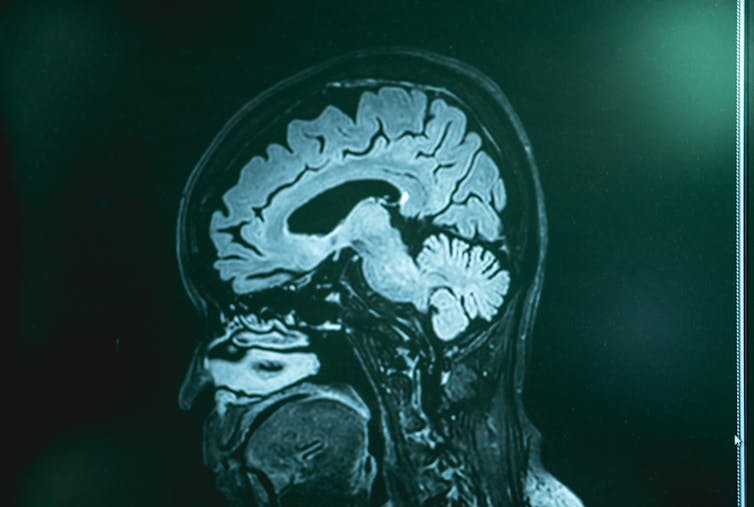
An MRI scan showing a brain with frontotemporal dementia.
There are potentially four variants of frontotemporal dementia.
Atthapon Raksthaput/ Shutterstock

This variant was given its name because most of the tissue loss occurs in the right temporal lobe of the brain. This brain area is mainly involved in understanding concepts and deriving meaning from nonverbal information, such as social cues. Scans of CP’s brain showed that large portions of this region were missing.

The right temporal variant of frontotemporal dementia also appears to cause a mix of symptoms typically seen in both the behavioural and semantic variants. However, there’s still debate within the research community over how to define it.

Learning about dementia

There’s a lot that can be learned from CP.

First, his story helps spread awareness of frontotemporal dementia. Lack of awareness is a major issue – even among doctors, as it’s commonly misdiagnosed as other psychiatric illnesses or Alzheimer’s disease.

CP’s story also helps to clarify the right temporal variant of frontotemporal dementia. His symptoms suggest that the development of new fixations may be a defining feature of the syndrome.

CP’s case is also an example of how dementia can cause changes in how people process sounds.

A link between hearing impairment and dementia is already well established. However, the nature of this relationship is unclear.

Although it has been widely claimed in the media that hearing loss causes dementia, it might also be the other way around – that dementia causes hearing changes. CP’s story provides evidence of this, as his abnormal love for specific noises only occurred after disease onset.

Alzheimer’s disease research also supports the idea of dementia causing hearing changes. For instance, impairments in auditory scene analysis – the ability to separate overlapping sounds, such as listening to one speaker among background noise – has emerged as a common symptom.

CP’s story also demonstrates how dementia can change what people find pleasurable as well as their emotions. Intense obsessions, aversions and changes in preferences (such as suddenly loving or hating certain foods, music or colours) have been widely reported in frontotemporal dementia.

I had the pleasure of meeting CP and his wife and learning about their dementia journey first-hand. CP’s story illustrates how important it is to recognise the variety of symptoms in dementia. This will in turn help lead to earlier diagnosis and the development of tailored interventions.

The Conversation

Lucy Core was supported by the UCL Research Excellence Scholarship while the case study was conducted and received funding from the Royal National Institute of the Deaf while preparing this article.

ref. The man who fell in love with the sound of Spitfires – here’s what this unusual symptom can teach us about dementia – https://theconversation.com/the-man-who-fell-in-love-with-the-sound-of-spitfires-heres-what-this-unusual-symptom-can-teach-us-about-dementia-275107

Drug company ads are easy to blame for misleading patients and raising costs, but research shows they do help patients get needed treatment

Source: The Conversation – USA (3) – By Anna Chorniy, Assistant Professor of Pediatrics, Icahn School of Medicine at Mount Sinai; Institute for Humane Studies

The United States is one of just two countries where drugmakers can advertise directly to patients. BrianAJackson/iStock via Getty Images

It’s a familiar experience for many Americans: You’re watching your favorite show and suddenly you’re ambushed by an ad for a drug whose name sounds like a Wi-Fi password, before a relentlessly cheerful voice tells you to “Ask your doctor” and then blasts through a side-effect list that’s laughably long.

But that might soon change. After nearly 30 years of giving pharmaceutical companies free rein to advertise prescription drugs directly to consumers, U.S. officials are now seeking to curb this practice.

Soon after his appointment in 2025, Health and Human Services Secretary Robert F. Kennedy Jr. stated that he believes direct-to-consumer advertising of prescription drugs has contributed to overmedication and inflated health care costs, and that stronger oversight is long overdue. Meanwhile, politicians on both sides of the aisle have called for banning direct-to-consumer drug ads outright – though the Food and Drug Administration has so far focused on restricting “digital” loopholes and enforcing the laws about advertisement.

As a health economist who studies how health care policies shape decisions made by doctors and patients, I agree that the practice can steer patients toward heavily marketed brands instead of the most appropriate treatment.

But the research on how such advertising affects patients is more nuanced. Many rigorous studies show that these ads can benefit patients’ health by encouraging them to seek lifesaving treatment for conditions such as depression and heart disease and sparking conversations with their doctors. In my view, within the realities of the U.S. health care system, getting rid of direct-to-consumer drug advertising may do more harm than good.

The origins of US prescription drug advertising

Only two countries – the U.S. and New Zealand – allow drug companies to advertise prescription medications directly to the public. Elsewhere, this practice is banned out of concern that short ads cannot adequately explain medical risks and that prescribing decisions should remain under physicians’ control.

And for good reason: Research on risk statements in drug ads on television shows they are often dense, fast-paced and paired with distracting visuals, making them difficult for consumers to understand.

In the European Union, Canada and Japan, for example, manufacturers may run disease awareness campaigns but cannot name specific products.

The U.S. approach to regulating drug advertising evolved gradually over more than a century. Congress’ 1906 Pure Food and Drugs Act was the first major federal step in drug oversight. It required manufacturers to label their products accurately and to disclose the presence of key ingredients.

An old-fashioned illustration of a herald arriving on horseback to a pharmacy to promote Carter's Little Liver Pills
An early 20th-century advertisement for a cure-all medicine called Carter’s Little Liver Pills, made by a Pennsylvania company. In 1959 the Federal Trade Commission made the company take ‘liver’ out of the name.
Wellcome Collection, CC BY

For decades, pharmaceutical marketing focused on physicians by advertising in medical journals, visits by sales representatives and providing free samples. Drug companies still market heavily to physicians, but FDA policies and television changed the calculus.

By the 1960s and ’70s, the reach of mass media prompted companies to communicate complex medical information in brief commercial formats. The 1962 Kefauver–Harris Amendments, which required drugmakers to prove their products were both safe and effective to receive FDA approval, also gave the FDA explicit authority over prescription drug advertising. This allowed the agency to police exaggerated claims and require that promotional materials present a fair balance of benefits and risks, including clear disclosure of known side effects.

In the 1980s, several pharmaceutical companies experimented with marketing drugs directly to consumers in magazines and newspapers. The FDA paused these efforts in 1985 to study their effects but later allowed them to resume.

An opening for television ads

The pivotal change came in 1997, when the agency issued draft guidance that television ads needed to present only major risk information and could direct viewers elsewhere – via phone lines, print materials or websites – for the full details.

Reliable, up-to-date figures are hard to come by, but according to a widely cited estimate, the U.S. pharmaceutical industry now spends more than US$6 billion on direct-to-consumer advertising, roughly twice the amount spent in 2012.

In September 2025, the FDA announced it would revoke this change, restoring pre-1997 standards for fuller disclosure, and would more aggressively enforce currently existing rules for direct-to-consumer drug advertising. Despite growing interest from policymakers and Congress to ban them outright, a total ban likely would not survive a Supreme Court challenge.

How direct-to-consumer ads affect patients

Studies show direct-to-consumer drug advertising increases demand for medications and prompts more doctor visits and diagnoses. Policymakers and the FDA specifically have raised concerns that these ads mislead patients, encouraging them to overuse or inappropriately use drugs and choose more expensive treatments over less costly alternatives. This, in addition, could raise drug prices and result in wasteful spending. But research convincingly demonstrating this has been difficult to come by.

For example, a 2023 analysis showed that drug companies spend more on advertising drugs that have been rated as having relatively lower clinical benefit than on drugs that offer higher clinical benefit. This may imply, according to the authors, that drug companies are trying to steer patients to drugs that physicians would be less likely to prescribe.

Interestingly, though, rigorous research showed that direct-to-consumer advertising increases prescribing of both advertised and nonadvertised drugs – suggesting that overall this increase is serving patients.

U.S. health officials are moving to restrict direct-to-consumer drug advertising.

Demonstrated benefits

For all the criticism that these ads are deceptive, the evidence indicates they can generate substantial clinical benefits for patients.

Research finds that ads bring patients into care, while leaving prescribing decisions largely in physicians’ hands, resulting in more patients being diagnosed and treated. For example, according to a 2022 study on antidepressants, advertising encouraged more people to start treatment and expanded overall use, especially for underdiagnosed conditions.

During the 2008 election season, political ads displaced drug commercials, providing a natural experiment on the effects of direct-to-consumer drug advertising. One study probed that period to examine ads for cholesterol-lowering medications known as statins, which are some of the most widely prescribed medications in the U.S. It found that removing drug ads reduced sales.

That study also ran a simulation banning drug ads entirely to show that doing so would have reduced new statin users by about 600,000 in 2008. Combining their estimates with clinical evidence on the drug’s benefits, the researchers found that health gains from additional treatment outweighed the costs of advertising.

Another study took advantage of the rollout of Medicare Part D, which helps cover the cost of prescription drugs, as a natural experiment. After Part D expanded drug coverage, pharmaceutical advertising increased more in areas with larger Medicare populations. In those areas, researchers found that more patients began treatment and stuck with it.

Importantly, the number of prescriptions also rose for nonadvertised drugs, including lower-cost generics, suggesting that advertising expanded overall treatment rather than simply shifting patients to heavily promoted brands.

It’s easy to single out pharmaceutical ads aimed at patients, but they are only one piece of a complex health care system – one in which drug manufacturers, providers, insurers and pharmacies all have financial incentives that shape which medications patients can access.

For example, drug company marketing directly to physicians does skew prescribing, increasing drug costs, with little evidence that patients receive better or more appropriate treatment as a result. Yet in the absence of direct-to-consumer advertising, patients’ choices of medications would be more heavily controlled by that dynamic.

The challenge for policymakers will be to curb misleading promotion without cutting off patients’ access to reliable information or undermining their role in directing their own care – and that will likely require addressing broader issues in the health care system.

The Conversation

Anna Chorniy does not work for, consult, own shares in or receive funding from any company or organization that would benefit from this article, and has disclosed no relevant affiliations beyond their academic appointment.

ref. Drug company ads are easy to blame for misleading patients and raising costs, but research shows they do help patients get needed treatment – https://theconversation.com/drug-company-ads-are-easy-to-blame-for-misleading-patients-and-raising-costs-but-research-shows-they-do-help-patients-get-needed-treatment-265724

Mexico is losing its battle with the cartels after years of flawed strategy

Source: The Conversation – UK – By Amalendu Misra, Professor of International Politics, Lancaster University

Crime is deeply entrenched in Mexico. The Global Organized Crime Index, a tool designed to measure levels of organised crime in a country, places Mexico third out of 193 nations in terms of criminality. At the core of Mexico’s struggle with organised crime is its network of powerful drug cartels.

The Mexican state and society have long been held hostage to the power and influence of these organisations, the most recent manifestation being the anarchy that followed the killing of Jalisco cartel leader, Nemesio “El Mencho” Oseguera Cervantes, by security forces on February 22.

His killing unleashed a wave of violent unrest. Cartel members blockaded roads and torched vehicles across various towns and cities in retaliation. And a number of inmates were sprung from a prison in the coastal city of Puerto Vallarta, prompting the authorities to urge people not to venture out.

Mexico has been following the same rulebook of engagement with the cartels for much of the past two decades, with limited success. The war on drugs that started in 2006 under the then-Mexican president, Felipe Calderón, has seen the authorities go after cartel bosses.

This has resulted in the capture of senior Sinaloa cartel figures like Joaquín “El Chapo” Guzmán, Ovidio Guzmán López and Ismael “El Mayo” Zambada. It has also led to a number of high-profile killings, including Los Zetas cartel leader Heriberto Lazcano Lazcano in 2010 and now El Mencho.

As I have argued in the past, this is a futile strategy. The killing or arrest of cartel leaders rarely spells the end for an affected organisation. As El Mayo said in an interview with a Mexican news magazine called El Proceso in 2010: “As soon as capos [leaders] are locked up, killed or extradited, their replacements are already around.”

Killings and arrests can also create openings for other cartels or splinter groups to fill the vacuum left behind by the previous leadership. This often results in violent turf wars. The arrest of Sinaloa cartel leader El Chapo in 2016, for example, led to hundreds of killings within the cartel itself as well between rival cartels that continue to this day. The killing of El Mencho is likewise bound to stir the pot of violence.

Explaining cartel violence

There are several interrelated factors that contribute to the power of Mexican cartels, complicating the government’s efforts to tackle crime. Restricting cartel violence in Mexico requires overcoming criminal impunity, youth unemployment and, perhaps the most challenging problem, the complete disregard for life among cartel members.

The Mexican judiciary has long been plagued by impunity, corruption and mismanagement. The rate of impunity for violent crimes in Mexico is estimated to stand at close to 95%, while just 16% of criminal investigations in the country were resolved in 2022. According to Human Rights watch, the violence perpetrated by Mexican criminal groups is directly linked to the impunity they enjoy.

Mexico, like many other countries in Latin America, is also affected by rampant youth unemployment. Figures released by the International Labour Organization suggest the unemployment rate for young people in the region was three times higher than that of adults in 2025. And around 60% of the young people who are employed in Latin America work under informal conditions.

Mexican governments have consistently failed to produce a national strategy to address this, with the perpetually reproducing ecosystem of grinding poverty and government apathy pushing generations of underprivileged young people towards the cartels.

As various studies show in Mexico and elsewhere, those without a social security umbrella or access to opportunities to address their everyday economic needs are more likely to join criminal groups. Now, estimates of cartel membership in Mexico suggest that such groups would rank as the fourth-largest employer in the country.

Meanwhile, the Mexican authorities lack a nationwide strategy aimed at the voluntary demobilisation of cartel members and their reintegration into society. Successive governments have responded to rising violence with policies that favour military force and arrest over rehabilitation.

Weak law enforcement and a void of economic opportunities have undoubtedly contributed to the spread of cartel violence in Mexico. But the complete disregard for life among cartel members is another contributing factor. As UK-based researcher Karina García Reyes, whose work involves speaking to former cartel members, wrote in a recent article in the Spanish-language newspaper El País:

Mexico’s narcos may not blame the state or society for their condition of poverty – each is, after all, his own man – but they don’t feel remorse for their crimes, either. They had the ‘bad luck’ of being born in poverty, they told me, and their victims had the ‘bad luck’ to be in their way.

The Mexican state is taking steps to address youth unemployment and criminal impunity. Through the Plan México initiative, for example, the president, Claudia Sheinbaum, has promised to provide apprenticeships and monthly stipends to young people and boost educational infrastructure. The initiative also involves a pledge to expand university spots by 330,000 places.

However, with Mexico’s sluggish GDP growth of only 1% over the past 12 months, achieving these goals appears more difficult now than when Sheinbaum announced the plan in January 2025. And, even with these efforts, weaning criminals away from their established practice of violence will be a difficult undertaking.

Clearly, countering cartel violence in Mexico through military action has its limitations. In order to achieve greater success in addressing the problem, the government needs to undertake wholesale reforms to tackle the root causes of criminality – poverty, inequality and corruption – rather than relying solely on force to silence criminals.

Until then, Mexico will remain hostage to cycles of violence at the hands of its cartels.

The Conversation

Amalendu Misra is a recipient of British Academy and Nuffield Foundation Fellowships.

ref. Mexico is losing its battle with the cartels after years of flawed strategy – https://theconversation.com/mexico-is-losing-its-battle-with-the-cartels-after-years-of-flawed-strategy-277104

There aren’t enough geriatricians – here’s how older adults can still get the right care

Source: The Conversation – USA (3) – By Jerry Gurwitz, Professor of Geriatrics, UMass Chan Medical School

Geriatricians are trained to look beyond individual illnesses that older adults may face, and instead to look at the bigger picture of aging. MoMo Productions/DigitalVision via Getty Images

More than 70 million baby boomers – those born between 1946 and 1964 – are alive today. In 2026, the oldest of them are turning 80.

With longer lives often comes more complicated health needs: multiple chronic conditions, long lists of medications, balance problems that can increase the risk of falls, and changes in memory. Many older adults also begin relying more on spouses, children or other family members to help manage medical decisions.

Ideally, health care in later life should go beyond just treating individual diseases and medical conditions. It should aim to help older people maintain health, independence and optimal quality of life for as long as possible.

Doctors and nurse practitioners trained in geriatrics specialize in doing exactly that. As a geriatrician for nearly four decades, I’ve seen how the right care for older people can prevent falls, reduce risk of medication side effects and help patients make medical decisions that reflect their goals and wishes.

The problem? There just aren’t enough of us. Finding a health care provider with expertise in geriatrics can be extraordinarily difficult. But there’s good news: You can use a few simple strategies that geriatricians rely on to have more productive conversations with your or your family member’s doctor.

A whole-person approach to aging

Geriatricians are trained to see the bigger picture of aging. They don’t just treat individual diseases – they also focus on preserving independence, function and safety. That includes addressing memory changes, balance problems, complex medication regimens and the difficult trade-offs that often come with complicated medical decisions.

Older adult couple speaking with a doctor
New symptoms in older adults should not just be blamed on aging.
Morsa Images/E+ via Getty Images

A geriatrician can help patients and their families weigh whether a test or procedure will truly improve their patient’s life. Specialists in geriatrics know that most falls have multiple causes – and that practical steps like reviewing medications or improving home safety can prevent the next one.

They also recognize that in older adults, new symptoms should not be blamed simply on aging. Sometimes they can be due to drug side effects. For example, stopping certain sleep medications can reduce confusion and daytime drowsiness, and limiting or avoiding use of opioids for pain relief can prevent debilitating constipation.

Unfortunately, geriatrics is a specialty with a dearth of providers. Nationally, there are fewer than 12 geriatric physicians and 10 geriatric nurse practitioners per 100,000 older Americans. In many rural areas, there are none. And the shortage is unlikely to improve anytime soon. That’s because medical students and advanced practice nurses rarely choose to specialize in geriatrics, and many medical schools provide no formal training in the care of older adults.

This means most older adults will be cared for by clinicians without specialized geriatric training. But older patients and families can still steer care in the right direction by using a straightforward framework geriatricians follow called the “5Ms.”

A geriatrician’s framework

This mnemonic captures the core principles of optimal geriatric care. The letters stand for mind, mobility, medications, multicomplexity and matters most. The importance of each of these essentials of care for older adults may seem obvious, but it’s amazing how often they are overlooked when doctors without training in geriatrics take care of their older patients. Here’s how you can think about them in speaking with your doctor:

Mind: About 10% of adults age 65 and older have dementia, and another 22% have mild cognitive impairment. If you’ve noticed changes in your memory – forgetting appointments or conversations, forgetting to take medications, struggling with bills or relying more on family for help with tasks you once handled easily – bring it to your doctor’s attention. These concerns don’t always surface unless you mention them. When doctors know about memory problems, they can check for treatable causes, adjust medications or recommend further evaluation and lifestyle changes that may be of benefit.

Aging well means maintaining health, independence and optimal quality of life for as long as possible.

Mobility: Each year, about a third of older adults report at least one fall, and 1 in 10 suffer a fall-related injury. Make sure to tell your health care provider if you have fallen, feel unsteady when standing or walking, or if you worry about falling. Request advice about how you can improve strength, flexibility and balance to reduce the risk of falls and serious injury.

Medications: Four out of every 10 Americans age 65 and older take five or more different medications every day, and 1 in 10 take 10 or more. Any new symptom in an older person could be due to a drug side effect of their medication. So don’t be afraid to ask whether every medication you are taking is absolutely necessary, or whether a new symptom you are experiencing might be a side effect. If you see multiple health care providers who each prescribe medications to you, ask for a comprehensive review of your medications to make certain that nothing is being missed and all your drugs and dosages are appropriate.

Multicomplexity: About 75% of older adults live with two or more chronic medical conditions. When you are followed by several specialists – who limit their focus to a single disease – your care can become fragmented. That often means long medication lists, frequent tests and recommendations that don’t always fit together. A whole-person approach looks at how everything connects. You and your family can help by asking your primary health care provider to step back and review the full picture – all medications, all specialists and any upcoming tests – and help coordinate a clear, organized plan that is best for you.

Matters most: Asking yourself to pin down what matters most to you is a simple but powerful way to help your doctors understand what to prioritize in thinking through your care. With that information, your doctor can look beyond focusing on any one disease or condition and instead work with you to support your personal goals for a good old age. Maybe it’s being able to walk to the mailbox without falling. Or staying in your own home for as long as possible. Or avoiding medications that make you sleepy or confused. Or staying out of hospitals and emergency rooms. Whatever it is, it’s important to have your health care provider focus on your own priorities.

Aging well is not about having more doctor’s appointments or medical tests, nor is it about taking more medications. It’s about getting the kind of health care that will maintain function, independence and quality of life into old age. You may not be able to find a geriatrician, but you can definitely help your doctor better understand the care that’s right for you or your loved one.

The Conversation

Jerry Gurwitz receives funding from the National Institute on Aging. He serves as a paid consultant to United Healthcare.

ref. There aren’t enough geriatricians – here’s how older adults can still get the right care – https://theconversation.com/there-arent-enough-geriatricians-heres-how-older-adults-can-still-get-the-right-care-269789

What makes the ideal Airbnb host? We studied guest experiences to find out

Source: The Conversation – UK – By Nektarios Tzempelikos, Professor of Marketing and Deputy Director of the Research Centre for Intelligent Supply Chains, School of Management, Anglia Ruskin University

Nadia Snopek/Shutterstock

A selling point of hotels has traditionally been the standardised service offered by their trained staff. In contrast, “peer-to-peer” accommodation – of which Airbnb is the most popular host platform – is usually run more informally by individual hosts who have little if any formal hospitality training.

What they offer instead is personal interaction, a sense of authenticity, and local knowledge about the area. And our multi-year research shows that this is often rated much more highly by visiting guests.

Our study (with colleagues), recently published in the International Journal of Hospitality Management, investigates the key reasons international guests staying all over India – one of the world’s fastest growing tourist markets – give their Airbnb accommodation a five-star review, or rather less.

One clear pattern was how guests talked about their relationship with hosts. Many appreciated meeting friendly, helpful hosts – but only when contact felt optional. Our survey and interview findings showed around one-third of guests said they were uncomfortable when communication felt too frequent or too personal.

This points to an important tension in Airbnb stays. Guests often want reassurance without intrusion. A takeaway recommendation was the importance of short, polite messages that reassure guests help is available if needed – but not excessive contact. Feeling welcome is less about ongoing interaction and more about responsiveness, clarity and respect for boundaries.

Our study began in 2019 by developing a new way of analysing thousands of Airbnb guest reviews in India to understand the key indicators of satisfaction (and dissatisfaction). After being interrupted by COVID, we followed this up with surveys and in-depth interviews in the same country to establish the priorities guests give to different aspects of how they were hosted.

Some guests also talked about experiences that stood out for the wrong reasons. These were not “horror stories”, but moments where boundaries felt unclear – such as hosts dropping by unexpectedly, asking too many personal questions, or being slow to respond when something went wrong.

An unusual guest experience in India. Video: Airbnb (2019)

Expectations also played a big role in how stays were judged. Guests who felt well-informed before arrival – about the space, the rules and the neighbourhood – tended to be more relaxed and forgiving of small issues. By contrast, even minor surprises could negatively affect how the entire experience was remembered.

These patterns became stronger after COVID. Guests became more sensitive to cleanliness, safety and communication, and many preferred less face-to-face contact than before.

With all this in mind, here are five practical ways our research suggests hosts can increase their prospects of a five-star rating – and a return stay.

1. Tell guests what to expect – truthfully

Frustrations sometimes start building before they have even arrived. Many guests, particularly from other countries, rely on clear, practical information to feel confident about their choice.

Hosts should make sure their listing answers all common questions upfront and truthfully: how check-in works, what the neighbourhood is like, whether the space suits families or remote work, and what amenities are (and are not!) available.

Small gaps between what guests expect and what they find can shape how they judge their entire stay. Guests who feel well informed are less likely to focus on minor issues.

2. Comfort counts, not just appearance

Good photos matter, but guests judge accommodation on how it feels to actually stay there. We found features such as comfortable furniture, a calm atmosphere and a sense of privacy strongly influence how enjoyable a stay feels.

Hosts do not need to make expensive upgrades. But paying attention to lighting, noise, clutter and basic comfort is non-negotiable.

3. Be responsive, but don’t overdo it

Guests value personal interaction in different ways, but they consistently appreciate hosts who are reliable and easy to reach. Yet feeling welcome does not require constant communication.

Simple actions matter: replying promptly to messages, giving clear instructions, and dealing calmly with problems when they arise. We found this sense of feeling “looked after” is closely linked to whether guests want to return.

4. Anticipate small issues before they snowball

It’s notable how often small problems can snowball during a stay. Issues such as non-working equipment are usually forgotten if clearly explained and calmly dealt with. But slow responses to concerns – or worse, displays of frustration or anger from hosts – can quickly affect how a stay is judged.

Anticipating common issues and dealing with them early can prevent small problems from overshadowing the guest experience. Clear house information, well-maintained facilities and simple backup plans all help.

5. Focus on return visits, not ratings

Positive reviews matter, but they do not tell the whole story. In our research, the most important indicator of guest satisfaction was whether they said they wanted to return.

While enjoyment and value are closely linked with recommendations, feeling comfortable and welcome plays a stronger role in repeat bookings. Creating a space that is easy to use, pleasant to stay in and welcoming will encourage guests to come back, even in a crowded market.

Small, thoughtful choices in these areas shape how guests remember their visit. Hosts who want long-term success should think beyond ratings and consider whether guests will genuinely want to return.

The Conversation

The authors do not work for, consult, own shares in or receive funding from any company or organisation that would benefit from this article, and have disclosed no relevant affiliations beyond their academic appointment.

ref. What makes the ideal Airbnb host? We studied guest experiences to find out – https://theconversation.com/what-makes-the-ideal-airbnb-host-we-studied-guest-experiences-to-find-out-276844

Victory in Gorton and Denton is historic for the Greens – and cataclysmic for Britain’s two-party politics

Source: The Conversation – UK – By Jonathan Tonge, Professor of Politics, University of Liverpool

The Green party’s dramatic capture of Gorton and Denton, supposedly one of Labour’s safest parliamentary constituencies, offers yet more evidence of the fragmentation of British politics.

The Green candidate, 34-year-old plumber Hannah Spencer, won 40.69% of the vote, a notable 12 points ahead of Reform UK’s Matt Goodwin (28.73%). Labour candidate Angeliki Stogia came third, with 25.44% of the vote.

In terms of size of majority toppled, this was the sixth-worst byelection defeat ever for Labour. Gorton had been Labour for more than 90 years. In what is now Greater Manchester, Labour has had to defend 20 seats at byelections since the second world war, and has been successful in 16 cases.

Although Labour might dismiss a byelection defeat as a mid-term blip, this is a government which has failed to enjoy a honeymoon period, led by a prime minister who has plumbed new depths in popularity ratings. It is also worth noting that turnout on Thursday was identical to that at the general election.

For Keir Starmer, it was a truly awful result. But Labour really lost this byelection over a month ago, when its national executive committee (NEC) blocked the candidature of Andy Burnham, the mayor of Greater Manchester and believed by many to be the one person who might have held the seat for the party.

Starmer spoke against Burnham standing and his view held sway at that NEC meeting by eight votes to one. The one vote in favour of Burnham standing came from a Manchester MP, Lucy Powell, who was elected Labour’s deputy leader last year after being mysteriously sacked from the cabinet by Starmer.

The prime minister had good reasons for his stance. An early exit by Burnham from the mayoralty would trigger a difficult byelection across the region. But the overarching reason for blockage appeared to be Starmer’s personal political security.

Popular among Labour members and perhaps the one rival to Starmer around which the parliamentary party could coalesce, Burnham might have offered a potential leadership challenge. He is also highly popular in Greater Manchester, averaging two-thirds of the vote in the three mayoralty contests he has fought. The newly elected Green MP Spencer trailed Burnham by a huge 375,000 votes in the most recent mayoral election in 2024.

Clearly, this poor result increases the pressure on the prime minister, but two things remain in his favour. First, Labour MPs may find it difficult to unite behind a clear challenger. Entry barriers are high; 80 MPs need to support the person prepared to raise their head above the parapet. Second, the economy is showing signs of improvement, which might eventually stem the flow to the Greens on the left. On the right, the exodus towards Reform may be slowed by the decline in net migration.

Yet things will get worse before they might get better for Labour. The Scottish parliament, Welsh senedd and English local elections are a mere 69 days away, and offer a bleak vista of large seat losses. Labour’s control of the senedd seems sure to end and the party has to defend the bulk of council seats being contested.

The end of two-party politics?

The Gorton and Denton result confirmed the death of old loyalties in British politics. Given the existence of four-party politics in Scotland and Wales and the electoral significance of the Liberal Democrats in England, the two-party duopoly has long been gone, perhaps never to return. Politics has never been as fragmented across parties.

For the first time in England, Labour finds itself challenged by a significant party of the left, while Reform on the right challenges both Labour and the Conservatives.

That the right vote is splintered offers some succour to Labour. An even split between Reform and the Conservatives could allow Labour to win again at the next general election, with an even more pitifully low percentage share of the vote than the one in 2024 which nonetheless yielded two-thirds of the Westminster seats.

This fragmentation may widen voter choice, but not all is healthy. This was at times a toxic byelection. The Greens argued it was possible to be jointly concerned with Gaza and Gorton. They were, however, accused of sectarianism, for example by by issuing Urdu-language leaflets and a campaign video showing Starmer greeting the Indian prime minister, Hindu nationalist Modi, to appeal to Muslim voters.

Reform, on the other hand, has been accused of racism in targeting the white vote and showing scant regard for the large Muslim minority within the constituency. Its candidate, former academic Matt Goodwin, was already controversial for his views questioning whether non-white people born in the UK could be classed as British.

Meanwhile, the first-past-the-post voting system struggles to deal with the reality of modern multiparty politics, with abject disproportionality between vote shares and levels of representation. But that fragmentation increasingly seems permanent.

The Conversation

Jonathan Tonge does not work for, consult, own shares in or receive funding from any company or organisation that would benefit from this article, and has disclosed no relevant affiliations beyond their academic appointment.

ref. Victory in Gorton and Denton is historic for the Greens – and cataclysmic for Britain’s two-party politics – https://theconversation.com/victory-in-gorton-and-denton-is-historic-for-the-greens-and-cataclysmic-for-britains-two-party-politics-277001

Freeing poached wildlife ‘safely’ is a dangerous myth – new study

Source: The Conversation – UK – By Anna Nekaris, Professor of Ecology, Conservation and Environment, Anglia Ruskin University

The moment a cage door is opened and an animal released is often seen as the ultimate good news. When a captive wild animal is freed, the media often applauds, public support swells and donations to welfare charities surge.

But as a new study by myself and colleagues reveals, there is a dark side to returning animals to the wild.

Illegal trafficking in wildlife yields billions of dollars per year, making it one of the highest grossing illegal trades. It poses a serious risk to conservation, so it’s no wonder the confiscation of an illegally trafficked animal feels like a win.

One of the problems is that for many species, especially smaller species perceived as less charismatic, or less ecologically important, little is known what happens after the animal is set “free”.

In our new study published in Global Ecology and Conservation, my colleagues and I tracked nine individual animals of the endangered Bengal slow loris, a small primate with large round brown eyes found in tropical forests throughout southern Asia. We showed that the wild is not necessarily freedom. Seven of the nine animals died within weeks of release, most killed by resident slow lorises.

Ten species of the slow loris can be found from India to the Philippines. All are threatened by trade in various guises – including as pets and tourist photo props, traditional “medicines” and meat, and even black magic.

Despite being legally protected in all the countries where they live, trade in these nocturnal primates persists locally and internationally. It is fuelled in part by viral social media videos of smuggled lorises kept as pets. With their large eyes and teddy bear-like faces, they are seen as an adorable companion, with online videos inciting viewers to “want one”. They certainly do not make good pets – from scent marking every space with foul-smelling urine, to a bite that can kill a human.

Indeed, they are the only venomous primate, with sharp teeth used to inject venom into other lorises as a means of territorial defence. Often in trade these teeth are ripped out or clipped to make them “suitable pets”.

Despite the evolutionary uniqueness of the slow loris, only a handful of studies have been conducted in the wild. This creates a disconnect.

Welfare agencies and government agents are often pressured to release these primates to the wild. But a lack of funding, manpower and knowledge of their behaviour means most reintroductions of loris species do not follow international guidelines. For example, agencies must know which species they are releasing; slow loris species may look very similar but they are genetically and behaviourally unique. It’s almost impossible for non-experts to tell them apart.

Freedom or death trap?

In our study, the Bangladesh Forest Department allowed us to follow the fate of nine released Bengal slow lorises. The site, Lawachara National Park in the country’s northeast, has been used for relocating lorises for decades. With a high density of slow lorises in the area, conservationists recommend against more releases. A variety of sociopolitical and logistic factors, however, means that releases continue. For example, the fact that these releases are seen as good news stories.

Within ten days of release, three lorises died, with four others surviving only a few weeks more. For four of seven whose bodies could be examined, all died of fatal venomous bite wounds from resident lorises.

After eight months of study, the two survivors had not settled into a permanent area. Wild slow loris typically achieve this within a few months of dispersal, settling with a mate to raise families with for at least 12 years.

This suggests that even if an animal survives “getting back to the wild”, they may still struggle to find a permanent home. A species with extremely territorial behaviour, these “floating” individuals are often killed by resident slow lorises.

In Bangladesh, slow lorises are often “rescued” from agricultural areas, where they can live happily if the right food plants persist, because locals are not familiar with nocturnal animals and think they have “wandered in”. Thus, the forest that people perceive as a good place for them is alien, and one in which ultimately, returned lorises may never be able to find a home.

Other studies also have found high death rates or lack of “settling” of released slow lorises. Projects in Vietnam and Java have yielded similar results, including reintroduced lorises killing the resident animals, as well as animals starving to death in the new habitats.

Poor release practices have become so common that the IUCN Red List includes releases of slow lorises as one of the threats to their survival. Despite this increasing evidence, incidences of up to 65 lorises released at a single time are sometimes reported as good news.

Slow lorises are just one of many lesser-known mammals frequently traded and released. These animals are easy to pick up and hold because their strategy is sometimes to curl into a silent ball of terror, instead of biting. They may even be bought by tourists at wildlife markets and placed somewhere where the purchaser perceives to be wild.

Other examples include civets, otters and various monkeys. Indeed, in the case of Brazil’s marmosets, monkeys released by pet owners threaten to out-compete native species or mate with them, leading to hyrid offspring.

Close up of racoon like animal in cage
Civets are often sold in wildlife markets.
bastera rusdi/Shutterstock

This scenario is not exclusive to the tropics. In the UK, well meaning people often move hedgehogs and other animals long distances away from where they found them. However hedgehogs are homebodies who need to stay close to their favourite haunts, where they know where to find shelter and food.

As appealing as it is to put animals back to the wild, for many species, their only hope may truly be a lifetime in captivity. Even when these animals survive, their ecological role is lost.

The Conversation

Anna Nekaris receives funding from Plumploris e.V.

ref. Freeing poached wildlife ‘safely’ is a dangerous myth – new study – https://theconversation.com/freeing-poached-wildlife-safely-is-a-dangerous-myth-new-study-275586

I’m a linguist with Tourette’s – here’s what I want people to understand after Baftas controversy

Source: The Conversation – UK – By Amanda Cole, Associate Professor in Sociolinguistics, University of Cambridge

Anton Vierietin/Shutterstock

I am a sociolinguist who specialises in how language is understood and interpreted in society. I also have Tourette syndrome. Tourette’s is a genetically determined neurological condition in which a person produces both motor and vocal tics (movements and sounds), and in most cases occurs with conditions such as autism, OCD, ADHD and sensory processing difficulties.

I am typically very private about my condition, but I feel compelled to write about it following events at the 2026 Baftas ceremony, where Tourette’s advocate John Davidson produced several offensive tics, including the N-word which was aired in error in the BBC coverage. I do not pretend for one moment to be able to fully understand how traumatising and deeply upsetting hearing such language must be for black people.

But the misinformed views circulating online suggesting that Davidson must be a racist deep down, or that his tic was akin to a Freudian slip are fundamental misunderstandings about Tourette’s that need to be addressed.

Davidson has coprolalia, a particularly distressing type of Tourette’s that affects between 10% and 20% people with the condition. Coprolalic tics are when a person says offensive or obscene things. They are deeply upsetting for the person who produces them and they are not intentional. Often, the tic is the very worst thing that they could possibly say in any given situation, and the opposite of what they truly believe.

Davidson has said that his tics “have always been so aggressive that I have no idea when they are coming or what they will be”.


Read more:
Baftas racial slur controversy: what should the BBC have done?


Many people do not know that I have Tourette’s. I can often suppress my tics, or they are subtle enough to fly under the radar. But suppressing tics requires a great deal of concentration, and I often feel itchy and uncomfortable. Tic suppression is not always possible and women tend to be able to mask their tics to a greater degree than men.

Even when a person can suppress a tic, they can only be held off for so long. The length of time differs from person to person and moment to moment. Whenever I get home after being around people other than my family, I am often overwhelmed by tics.

Meaning and intention

When we hear speech, our brains work quickly to make sense of its meaning. This includes both the literal meaning and the intention behind it. This is referred to as Gricean implicatures. A classic example is if a person says, “the window is open”, they might not just be stating a fact: they may be telling you that they are cold and would like you to shut the window.

Tics are very different to language. Vocal tics can have literal meaning, but there is typically no intention behind them. The words and phrases that a person produces are no more meaningful than grunts, coughs, sniffs or whistles which are also very common vocal tics. They are a neurological event.

In my own household – the only place I really feel safe to tic – we continually (and quite successfully and often tacitly) discriminate between the things I say which I mean, and those which are a tic and should be entirely disregarded. Sometimes this is straightforward, such as when I say “good night” at seven in the morning. Other times it is more complicated. My tics include saying my husband’s or my son’s names aloud, but I am not addressing them and they do not need to respond.

However, words can still be hurtful even if they are not said with an intent to hurt. I am in no way suggesting that it is wrong to feel deeply upset or offended by coprolalic tics. It has been well established that the way the Baftas and BBC managed Davidson’s tics let down both black people and people with Tourette’s. But I hope that a greater understanding of Tourette’s and that tics do not reflect a person’s beliefs or character can inform discussions about how we view offensive tics.

Tourette’s can be an incredibly difficult condition to live with. A reported 87% of adults living with Tourette’s experience physical pain because of their tics, 72% have considered suicide at some point in their lives and 60% believe their tics have prevented them from fulfilling their fullest potential.

I thought that vocal tics would ruin my life and any potential future career. The first tics I developed as a teenager were motor tics. I was terrified that I would develop vocal tics – which I did.

I have since established myself in a career I love, and yet I ask myself: would I have got here if I could not suppress my tics as successfully as I can? Or if what I said was vulgar or offensive rather than harmless and sometimes humorous? Sadly, I think the answer is no.

We have a duty as society to support people with Tourette’s to realise their potential. People with Tourette’s may need specific adaptions, but we also have a lot to offer. A range of research has found some extraordinary skills in people with Tourette’s such as being creative, articulate, quick-thinking, empathetic and having exceptional focus and problem solving.

I wish I could tell my younger self – sick with worry and feeling that Tourette’s was a curse I couldn’t escape – that sometimes Tourette’s is my greatest strength.

The Conversation

Amanda Cole does not work for, consult, own shares in or receive funding from any company or organisation that would benefit from this article, and has disclosed no relevant affiliations beyond their academic appointment.

ref. I’m a linguist with Tourette’s – here’s what I want people to understand after Baftas controversy – https://theconversation.com/im-a-linguist-with-tourettes-heres-what-i-want-people-to-understand-after-baftas-controversy-276915