
Source: MIL-OSI-Submissions-English
This is a simulated failure row used to test Failures/Retry/Forget/Raw UI.
This is a simulated failure row used to test Failures/Retry/Forget/Raw UI.
This is a simulated failure row used to test Failures/Retry/Forget/Raw UI.
This is a simulated failure row used to test Failures/Retry/Forget/Raw UI.
Source: The Conversation – USA – By Nina Srinivasan Rathbun, Professor of International Relations, Munk School of Global Affairs & Public Policy, University of Toronto; USC Dornsife College of Letters, Arts and Sciences
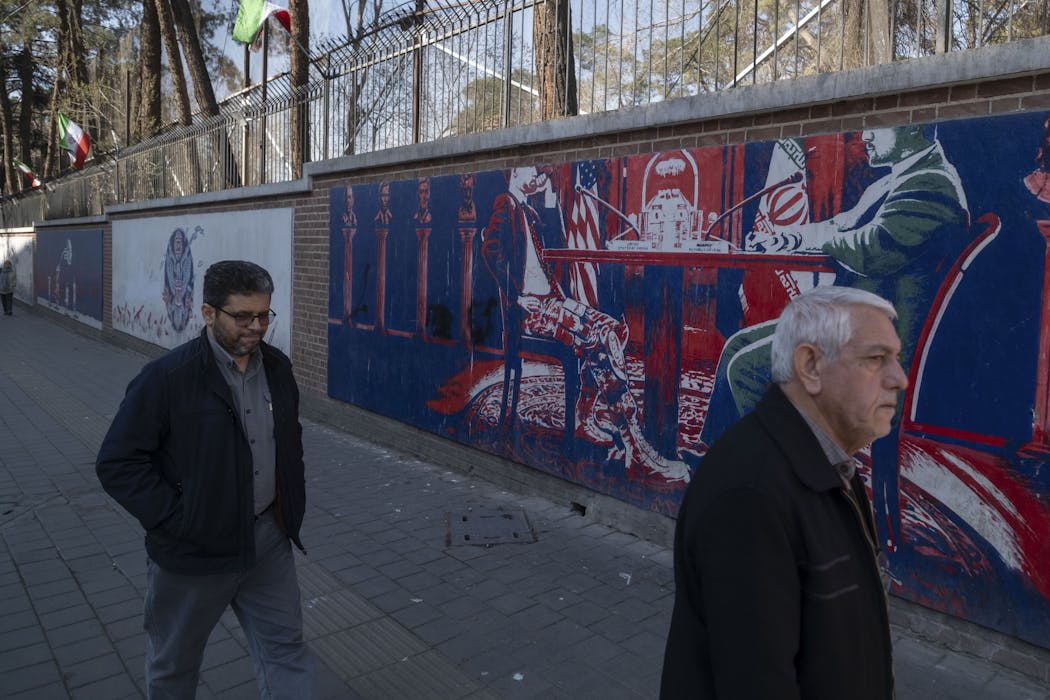
Three rounds of nuclear talks between the U.S. and Iran failed to persuade President Donald Trump that a solution to the two country’s nuclear impasse lay in diplomacy, rather than military action. A perceived lack of progress in the last of those indirect negotiations on Feb 26, 2026, was enough to prompt Trump to green-light a massive onslaught of missiles that has degraded Iran’s offensive capabilities and killed Ayatollah Ali Khamenei and several members of Iran’s senior military leadership.
In response, Tehran has launched strikes across the Middle East, targeting Israel as well as Gulf states that host U.S. airbases. At least three Americans have been killed.
While the scale of the U.S., Israeli and Iranian strikes has taken some observers by surprise, the failure of the talks that led to them was all too predictable.
For diplomacy to be successful, both sides need to agree on the issues subject to negotiation and also believe that peaceful resolution is more valuable than military engagement. This clearly was not the case in the U.S.-Iran nuclear talks of 2025 and 2026.
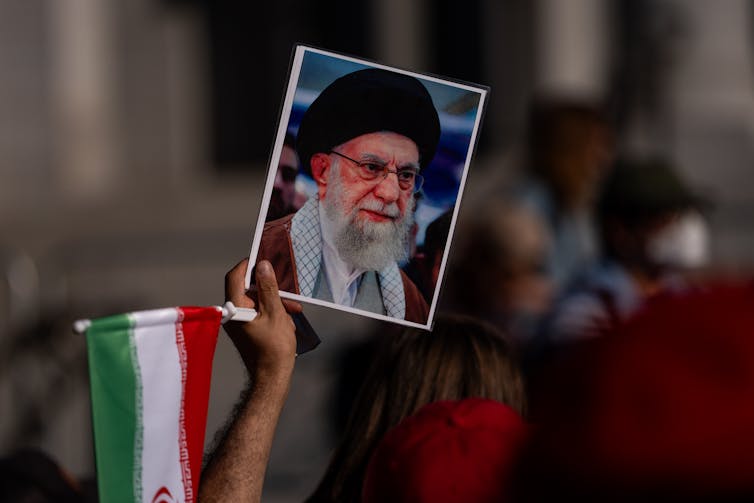
As someone who has researched nonproliferation and U.S. national security for two decades and was involved in State Department nuclear diplomacy, I know that even under more favorable conditions, negotiations often fail. And the chances for success in the Iran-U.S. talks were always slim. In fact, publicly stated red lines by both sides were incompatible with each other – meaning negotiations were always likely to fail.
Iran wanted the talks confined only to guarantees about the civilian purpose of its nuclear program, not its missile program, support of regional proxy groups or human rights abuses. Essentially it wanted a return to 2015’s Joint Comprehensive Plan of Action, which halted Iran’s development of nuclear technology and stockpiling of nuclear material in exchange for lifting multiple international economic sanctions placed on Iran.
Meanwhile, Trump insisted on limits to Iran’s ballistic missiles and the cutting of Tehran’s support for regional militias. These were not included in the 2015 agreement, with parties ultimately deciding that a nuclear deal was better than the alternative of no deal at all.
Nevertheless, there had been a slim chance for a breakthrough of late.
While the positions of both the U.S. and Iranian governments had ossified since May 8, 2018 – the date when the first Trump administration withdrew the United States from the Obama-era Iran nuclear deal – there had been some recent movement by Iran, according to former U.S. diplomats involved in negotiations during the Obama and Biden administrations.
With U.S. military building up in the region, Iran appeared more willing to negotiate within the nuclear arena than before. There were plausible solutions to the issue of Iran’s enrichment of uranium capabilities, including maintaining a minimum domestic capacity to develop medical isotopes and a removal of Iran’s stockpile of enriched uranium necessary to build a nuclear bomb.
There was less openness on other points of contention. Notably, there was no movement on ballistic missiles, which had always been a red line. On the eve of the round of discussions held in Geneva on Feb. 17, Trump stated: “I think they want to make a deal.” Iran’s foreign minister, Abbas Araghchi, noted progress over the “guiding principles” of the talks.
But a lot of this optimism appeared to have dissipated by the time the two sides held another round of talks on Feb. 26. While mediator Oman’s negotiators continued to talk of progress, the U.S. side was noticeably silent. Reporting since has suggested that Trump was displeased with the way the talks had gone, setting the stage for the Feb. 28 attack.
The threat of military action was, of course, a continued backdrop to the talks.
The USS Abraham Lincoln carrier group was deployed near Iranian waters in January as a signal of support to the Iranian protesters. The USS Gerald R Ford carrier group joined the buildup before the last round of talks.
Trump warned Iran that “if they don’t make a deal, the consequences are very steep.”
The thinking may have been that Iran, weakened by both the June 2025 U.S.-Israeli strikes and diminished capabilities of Tehran proxies Hamas and Hezbollah, was playing a weak hand in the talks.
Yet Iran also signaled a willingness to engage in military action. In the run-up to the last round of talks, Iran held military exercises and closed the Strait of Hormuz for a live-fire drill. Leaders in Tehran also declared that they would not restrain its response to another attack. The world is seeing that now, with a response that has seen Iran launch missiles across the Middle East and at rival Gulf nations.
Trump isn’t the first president to fail to secure a nuclear deal, although he is the first to respond to that failure with military action.
The Biden administration publicly pledged to strengthen and renew the Obama-era nuclear deal in 2021. However, Iran had significantly increased its nuclear technical capability during the years that had passed since the Joint Comprehensive Plan of Action collapsed. That increased the difficulty – just to return to the previous deal would have required Iran to give up the new technical capability it had achieved for no new benefits.
That window closed in 2022 after Iran removed all of the International Atomic Energy Agency’s surveillance and monitoring under the deal and started enriching uranium to near-weapons levels and stockpiling sufficient amounts for several nuclear weapons. The IAEA, the United Nations’ nuclear watchdog, maintains only normal safeguards that Iran had agreed to before the plan of action.
Optimism also existed for a short time in spring 2025 during five rounds of indirect talks that preceded the United States bombing Iran’s nuclear infrastructure in June as part of a broader Israeli attack.
When I worked in multilateral nuclear diplomacy for the U.S. State Department, we saw talks fail in 2009 regarding North Korea’s nuclear weapons program, after six years of on-and-off progress. The consequence of that failure is a more unstable East Asia and renewed interest by South Korea in developing nuclear weapons.
Unfortunately, the same dynamic appears to be playing out in the Middle East.
Military strikes have already killed more than 200 in Iran and across the region. A wider war in the Middle East is a possibility, and should the Iranian regime survive, it may commit to developing nuclear weapons given that the lack of them proved no deterrent to U.S. and Israeli military action.
Talks do not necessarily need an end point – in the shape of a deal – for them to have purpose. Under situations of increased military brinkmanship, talks could have helped the U.S. and Iran step back from the edge, build trust and perhaps develop better political relations – even if an actual deal remained out of reach.
Instead, Trump opted to go a different route.
This article includes sections originally published by The Conversation U.S. on Feb. 17, 2026.

Nina Srinivasan Rathbun does not work for, consult, own shares in or receive funding from any company or organization that would benefit from this article, and has disclosed no relevant affiliations beyond their academic appointment.
– ref. Failure of US-Iran talks was all-too predictable – but Trump could still have stuck with diplomacy over strikes – https://theconversation.com/failure-of-us-iran-talks-was-all-too-predictable-but-trump-could-still-have-stuck-with-diplomacy-over-strikes-277209
The Ministry of Health wishes to formally respond to the Samoa Observer breaking news article dated Friday, 12 th December 2025, titled “Hospital generators kick in late.”
The article reported that the generator at the National Hospital, Motoʻotua, took almost 30 minutes to activate following a power outage, allegedly affecting patient care and medical services.
The Ministry confirms that this information is incorrect and provides the following verified technical report to ensure accuracy and transparency.
Verified Technical Findings – Power Outage at Motoʻotua (12 December 2025) On Friday, 12 th December 2025, at approximately 6:00pm, the hospital feeder experienced a power outage. Following a full assessment by the Ministry’s Maintenance Division, the findings are as follows:
1. Generator Activation Time
* The Tupua Tamasese Meaole (TTM) Hospital generator activated after a 47-second delay, in accordance with the system’s programmed settings.
* This timing aligns with the safety protocols established by the
manufacturer for essential health facilities.
2. Impact of EPC Power Fluctuations
* The EPC power supply was fluctuating significantly at the time of the outage.
* Due to these fluctuations, the generator required additional time to stabilize its voltage output before it could safely supply power to the hospital building.
* This is a built-in protective feature designed to prevent equipment damage, electrical hazards, and potential harm to staff and patients.
3. Load Transfer Safety Design
* The generator is not permitted to transfer load to the hospital while EPC voltage remains unstable.
* The system is designed to wait until all three electrical phases fully disconnect before taking over the building load. This prevents dangerous back-feeding or equipment failure.
4. Manufacturer’s Cool-Down Protocol
* During periods of fluctuation, the generator is required to undergo a cool-down period before shutting down.
* This is part of the standard safety configuration to preserve generator lifespan and ensure operational reliability during subsequent outages.
Assurance to the Public
At no point during the incident were critical patient services left unsupported for an extended period, as suggested in the article. The automated generator system functioned exactly as designed, prioritizing the safety of patients, staff, and hospital infrastructure.
The Ministry encourages media partners to verify information related to essential health services with the Ministry prior to publication to avoid unnecessary public concern.
The Ministry of Health remains committed to maintaining reliable, safe, and resilient health service operations for Samoa.
END.
The post OFFICIAL STATEMENT – CLARIFICATION OF SAMOA OBSERVER BREAKING NEWS “Hospital generator kick in late” [Friday 12th December 2025] appeared first on Government of Samoa.
[PRESS RELEASE] – The Central Bank of Samoa (CBS) has been made aware of media reports circulating regarding alleged counterfeit banknotes currently being used in Samoa. CBS takes these reports seriously and is looking into the matter and will work closely with our Financial Institutions and relevant Authorities to address the issue and protect the integrity of Samoa’s currency.
CBS wishes to reassure the public that Samoa’s banknotes include advanced security features to help the public distinguish genuine notes from counterfeits. Key features and tips for checking them:
Polymer Notes
• Teuila Window: Look for a transparent window with a clear Teuila flower design. Hold the note up to the light to confirm clarity.
• Tactile Dots: each denomination has a series of raised dots
Paper Notes
• Watermark: Hold the note up to the light to see the watermark image (profile of the late Head of State and ‘CBS’ letters) embedded in the paper.
• Metallic Thread (5,10 and 20): changes from green to red and vice versa when tilted against the light.
Additional Tips
• Check the Texture: Polymer notes feel smoother and more durable than paper notes.
• Compare with a Genuine Note: If in doubt, compare with a note you know is authentic.
These simple checks can help businesses and individuals quickly verify banknotes and reduce the risk of accepting counterfeit currency.
The public is also reminded that the following notes are legal tender in Samoa: 5 tala, 10 tala, 20 tala, 50 tala, 60 tala, and 100 tala.
Legal tender refers to the official banknotes and coins issued by the Central Bank that must be accepted as a valid form of payment for goods, services, and the settlement of debts within the country.
The Central Bank encourages all members of the public and businesses to remain vigilant and to check banknotes carefully when receiving cash, especially for higher denominations.
If you suspect that a banknote is counterfeit:
1. Do not return the note to the person who gave it to you.
2. Keep the note safely and report it immediately to the Samoa Police or bring it to the Central Bank for verification.
3. To record where and how you received the note, as this information is critical for supporting investigations.
CBS also reminds the public that under the Crimes Act 2013, it is an offence to knowingly possess, use, or attempt to use counterfeit or forged banknotes. Individuals found guilty of this offence are liable to a term of imprisonment of up to five (5) years.
The Central Bank will continue to support our legal enforcement agencies in all counterfeit-related investigations and will work closely with Financial Institutions to strengthen detection, reporting, and prevention measures. Maintaining the integrity of Samoa’s currency remains a key priority of the Central Bank.
Should you require further information you may contact our Banking and Currency Department on telephone 34100.
END.
Central Bank of Samoa
The post “COUNTERFEIT BANKNOTE WARNING: CBS ADVISES PUBLIC TO STAY ALERT” appeared first on Government of Samoa.
His Excellency Patryk Michal Blaszczak presented his Letters of Credence to the Head of State of the Independent State of Samoa, Afioga Tuimaleali’ifano Va’aletoa Sualauvi II, at a Credentials Ceremony held this morning at the Official Residence of the Head of State at Vailele. The presentation formally accredited His Excellency as Ambassador Extraordinary and Plenipotentiary of the Republic of Poland to Samoa, with residence in Wellington, New Zealand.
Samoa and Poland have enjoyed cordial relations since the establishment of diplomatic ties on 8 March 2012. The two countries continue to engage closely through their shared membership in the United Nations, the OACPS–EU framework, and other international fora on matters of mutual interest, including international peace and security, the promotion of democracy and fundamental human rights, and climate change. Ambassador Błaszczak reaffirmed Poland’s commitment to strengthening the diplomatic partnership between Samoa and Poland, both bilaterally and multilaterally, building on the solid foundation established by his predecessors.
Afioga Tuimaleali‘ifano Va‘aletoa Sualauvi II welcomed the Ambassador and acknowledged the positive development of relations between Samoa and Poland. The Head of State conveyed his congratulations to the Government of Poland on the establishment of an Honorary Consul in Samoa and extended his best wishes to Mr. Anthony Pereira on his appointment as the first Honorary Consul of Poland to Samoa. He expressed confidence that this new representation will further strengthen cooperation and people-to-people ties, and that Ambassador Blaszczak’s tenure will continue to enhance friendship and cooperation between the two countries.
His Excellency Patryk Michał Błaszczak is currently the Ambassador of Poland to New Zealand (since 2025) with concurrent accreditation to Samoa and other Pacific countries. He has held senior diplomatic including Deputy Head of Mission in Copenhagen, Acting Director of the European Policy Department at Poland’s Ministry of Foreign Affairs, and Head of the Political Section at the Polish Embassy in Paris. Ambassador Błaszczak holds a Master’s degree in Applied Linguistics from the University of Warsaw, is fluent in English and French, and is a recipient of the Bronze Cross of Merit of the Republic of Poland.
END


The post PRESENTATION OF CREDENTIALS OF THE AMBASSADOR OF THE REPUBLIC OF POLAND TO THE INDEPENDENT STATE OF SAMOA appeared first on Government of Samoa.
His Excellency Dr. Gábor Tamás Nagy presented his Letter of Credence to the Head of State of the Independent State of Samoa, Afioga Tuimaleali’ifano Va’aletoa Sualauvi II, at a Credentials Ceremony held this morning at the Official Residence of the Head of State at Vailele. The presentation formally accredited His Excellency as Ambassador Extraordinary and Plenipotentiary of Hungary to Samoa, with residence in Wellington, New Zealand.
Samoa and Hungary have enjoyed cordial relations since the establishment of diplomatic ties on 7 September 2011. Despite the geographical distance between us, we continue to engage through our shared membership in the United Nations, the OACP-EU and other international fora on matters of mutual interest, including peace and security, respect for sovereignty, human rights, and the implementation of the 2030 Agenda for Sustainable Development. Ambassador Nagy reaffirmed Hungary’s commitment to the diplomatic partnership between our two countries in various areas, be it bilateral as well as multilateral formats based on the solid foundation that has already been established by his predecessors.
Afioga Tuimaleali‘ifano Va‘aletoa Sualauvi II welcomed the Ambassador and acknowledged the positive development of relations between Samoa and Hungary. The Head of State conveyed his congratulations to the Government of Hungary on the establishment of an Honorary Consulate in Samoa and extended his best wishes to Afioga Saumalaulu Stefan Szegedi on his appointment as the first Honorary Consul of Hungary to Samoa. He expressed confidence that this new representation will further strengthen cooperation and people-to-people ties between the two countries. The Head of State also stated that Ambassador Nagy’s tenure would further strengthen existing friendship and cooperation between Samoa and Hungary.
H.E. Dr. Gábor Tamás Nagy has a distinguished career in public service, academia, and politics. He most recently served as Deputy Head of Mission and Consul at the Permanent Mission of Hungary to Vilnius, Lithuania (2022–2024). Over his extensive career, he has held prominent roles including as Mayor of Budapest’s 1st District (Buda Castle Municipality), Member of the Hungarian Parliament and its Foreign Affairs Committee, and Member of the Budapest City Council. Prior to his political career, he worked as a lecturer at Eötvös Loránd University and as a researcher at the Hungarian Academy of Sciences. Dr. Nagy holds degrees in Law and Sociology from Eötvös Loránd University and is fluent in English and German.
END


The post PRESENTATION OF CREDENTIALS OF THE AMBASSADOR OF HUNGARY TO THE INDEPENDENT STATE OF SAMOA [THURSDAY 5 FEBRUARY 2026] appeared first on Government of Samoa.
[PRESS RELEASE, 24 December 2025] – The Ministry of Agriculture & Fisheries (MAF) wishes to inform the public of the recent detection of American Foulbrood (AFB) in Samoa. The detection was reported in late November 2025 by the Samoa Apiculture Association (SAO), led by its President Papalii Richard Wetzell. The affected locations include Siusega and nearby villages, where AFB has been confirmed in several bee hives.
About American Foulbrood (AFB):
American Foulbrood is a highly contagious bacterial disease that affects honeybee colonies. It is caused by the bacterium Paenibacillus larvae, which produces extremely resilient spores capable of surviving in the environment for more than 20 years.
While AFB was first detected in Samoa in 2016, periodic emergence can occur due to a long-term persistence of these spores.
Eradication and Control Measures:
MAF, in collaboration with SAO, is implementing necessary eradication and containment measures to control and eliminate the disease. These measures include:
• Full spraying and disinfection of affected apiaries.
• Collection and on-site destruction of all infested hives through controlled burning.
• Surveillance and monitoring of surrounding areas to prevent further spread.
Public Advisory:
Members of the public, particularly families residing in the affected areas identified by SAO, are kindly requested to fully cooperate with MAF and SAO officers undertaking surveillance and eradication activities.
A formal notification has been issued through the Ministry of Women, Community & Social Development (MWCSD) via village Mayors to ensure that households permit access to their properties for surveillance and eradication activities.
At this stage, there is no cause for alarm. MAF and SAO are actively managing the situation, and are currently engaging only with households where AFB has been confirmed.
The community is encouraged to remain vigilant, follow guidelines provided by authorities, and support ongoing efforts to protect our honeybee industry.
For further information, please contact:
Matai’a Ricky Faatonu, email: ricky.faatonu@maf.gov.ws or phone: 7735353, Seumaloisalafai Afele Faiilagi, afele.faiilagi@maf.gov.ws or phone: 7591723
END.
Ministry of Agriculture and Fisheries – Samoa
The post PUBLIC AWARENESS ON THE DETECTION OF AMERICAN FOULBROOD (AFB) IN SAMOA appeared first on Government of Samoa.
[PRESS RELEASE 18 December 2025 Apia, SAMOA] – The latest round of funding from the Small Grants Programme (SGP) – funded by the Global Environment Facility (GEF) and implemented by the United Nations Development Programme (UNDP) – will now benefit 57 communities whose project proposals have been successful.
These new projects will be funded by the Government of Australia through the Samoa CARES programme, which is implemented in partnership with the Ministry of Natural Resources and Environment (MNRE), and technical support from the Ministry of Agriculture and Fisheries (MAF).
A grant award ceremony and inception workshop was held on November 17, 2025 to help build these communities’ capacities in implementing their approved workplans and financial reporting.
One of the successful recipients, the village of Faletagaloa Safune in Savai‘i, welcomed the approval of their project saying it will contribute to environmental sustainability through the use of renewable solar energy. The project will also address critical lighting needs in areas of the village that are not currently connected to the main electricity grid, thereby enhancing community safety and overall wellbeing.
“We extend our profound gratitude to the Government of Australia, GEF, UNDP, and the SGP National Steering Committee for their leadership, commitment, and careful consideration in reviewing and approving our proposal. We look forward to the successful implementation of this project in partnership with all stakeholders,” said Tologataua Sioeli Alofaifo, Faletagaloa village and project representative.
A total of 113 applications were received during the Call for Proposals, reflecting widespread interest once again in the SGP mechanism.
“What has always stood out to the Australian High Commission is the way that the SGP (Small Grants Programme) projects innovatively combine elements of environmental protection with resilience building, economic opportunities, and social inclusion efforts – leading to holistic sustainable development outcomes,” said Claire McGeechan, Deputy High Commissioner,
Australia.
.
The selection of successful projects came after an intensive screening and approval process that was based on the technical assessment and recommendations from the SGP Technical Advisory Group and signed off by the National Steering Committee (NSC).
“I offer my warmest congratulations to the Community-Based Organizations that have been successful with their project proposals. Your success reflects your commitment, leadership, and your strong understanding of the needs of your communities and environment. These projects show that meaningful solutions to climate change and environmental challenges are best led by communities themselves,” said Paolo Dalla Stella, UNDP Officer-In-Charge.
END.
The post FIFTY-SEVEN NEW COMMUNITY PROJECTS FUNDED UNDER THE SMALL GRANTS PROGRAMME appeared first on Government of Samoa.