Could joining the state sector be an option for private schools?

Source: The Conversation – UK – By Tilly Clough, Lecturer in Law, Queen’s University Belfast

Molodid Studio/Shutterstock

Private schools in England are facing new financial realities. Following the UK general election in July 2024, the new government introduced VAT on school fees and removed charitable business rates relief for independent schools. At the same time, staffing costs have continued to rise. Employer national insurance contributions have increased, and the national minimum wage has risen.

For some schools – particularly smaller institutions with limited endowments or declining enrolments – this has raised questions about their sustainability.

Although the full impact of these funding changes remains to be seen, they have intensified concerns about sustainability within parts of the independent sector and raised broader questions about reform.

One viable yet underexplored option is the conversion of private schools to the state sector.

Although still relatively rare, a small number of independent schools have taken this route over the past two decades. In a new report, commissioned by thinktank the Private Education Policy Forum, my colleague Tom Richmond and I have carried out the first comprehensive analysis of what happens when independent schools become state schools in England.

Between 2007 and 2017, 27 independent schools converted into state-funded academies or free schools. Twenty-four are still operating today. While the legal route from independent to state provision technically still exists, it has largely fallen out of use, with no conversions taking place since 2017. Independent to state conversion is therefore often overlooked in debates about the future of private education.

Conversion is often viewed as a last resort taken only by schools in serious financial trouble. However, while financial pressures were relevant to many of the schools that converted between 2007 and 2017, they were not the whole story. Schools have also framed conversion as a way to return to their founding missions, which were often explicitly about inclusion and serving local communities rather than educating a fee-paying intake.

The transition itself was not straightforward. Schools reported significant challenges in adapting to the expectations of the state sector. These included the loss of academic selection, the requirement to deliver the national curriculum, and regular inspections by Ofsted, England’s school inspectorate. Many also highlighted the absence of clear guidance from government on key aspects of the conversion process.

In practical terms, this meant that schools which had previously operated with considerable autonomy had to adjust to a far more regulated environment. In some cases, early Ofsted inspections highlighted weaknesses in data use, governance and oversight as schools adjusted to the demands of state accountability.

However, these difficulties were not permanent. Over time, outcomes improved markedly. All but one of the schools that converted and remained open are now rated “good” or “outstanding” by Ofsted.

Former independent primary schools perform at broadly similar levels than other schools in their local authorities. Former independent secondary schools generally achieve stronger attainment and progress outcomes than nearby state schools, though performance varies. Initial adjustment challenges, in other words, did not prevent long-term success.

The consequences – and the future

One of the most significant changes following conversion is in pupil intake.

Removing academic selection and fees transformed who these schools serve. Since conversion, the proportion of pupils with special educational needs has more than doubled. The share eligible for free school meals has risen sharply.

Children on school staircase
There are challenges in moving to the state sector.
Monkey Business Images/Shutterstock

Research has shown that while these schools do not perfectly mirror the national state school population, the gap between them and their local communities has narrowed dramatically.

In many cases, they are far more representative of their surrounding areas than they were as independent institutions. Conversion does not simply change how a school is funded. It can reshape who benefits from its facilities and educational offer.

A common concern is that families will withdraw their children once fees are removed. In practice, this rarely appears to have happened at scale.

Consultation evidence and enrolment patterns show that large majorities of parents supported the move, particularly because it eliminated fees and provided financial certainty. Where schools were required to demonstrate parental demand, applications frequently exceeded available places. Widespread collapse in enrolment – a frequently voiced fear – did not materialise.

Conversion to the state sector is not a solution for every school. Local context matters. The availability of places, building condition and leadership capacity all shape whether conversion is viable. But, the experience of the past two decades suggests that, where carefully managed, conversion can preserve provision, widen access and deliver strong outcomes.

As debates about school funding and the future of private education continue, independent to state conversion is likely to resurface.

If the route is to become viable again, greater clarity is necessary. A clear and permanent pathway – assessed case by case and aligned with local need – would reduce uncertainty. Drawing on the more flexible elements of earlier academy reforms and providing practical support during transition could make the process more workable.

The Conversation

This report was commissioned by the Private Education Policy Forum.

ref. Could joining the state sector be an option for private schools? – https://theconversation.com/could-joining-the-state-sector-be-an-option-for-private-schools-275132

Former Harvard president Summers’ soft landing after Epstein revelations is case study of economics’ trouble with misbehaving men

Source: The Conversation – USA (2) – By Yana van der Meulen Rodgers, Professor of Labor Studies, Rutgers University

Larry Summers, center, is surrounded by the media in 2005 amid calls for his resignation. Jodi Hilton/Getty Images

Economist Larry Summers will resign from his tenured job as a professor at Harvard University, the school announced on Feb. 25, 2026, following heightened scrutiny of his ties with the late convicted sex offender Jeffrey Epstein. Summers will leave at the end of the 2025-26 academic year, with a new title: president emeritus.

It’s a soft landing for his fall from grace.

In November 2025, Harvard launched an investigation of Summers, a former U.S. treasury secretary who previously served as Harvard’s president.

The probe looked into whether Summers and other members of Harvard’s faculty and administration had interactions with Epstein that violated its guidelines on accepting gifts and should be subject to disciplinary action. Summers’ resignation is connected with this ongoing investigation, a Harvard spokesperson told The Hill.

Despite repeated calls by students for Harvard to revoke Summers’ tenure, he held onto his teaching and academic appointments at Harvard until he chose to retire. Students and staff also called for his resignation in 2005 following his disparaging comments about women in science.

“Free of formal responsibility, as President Emeritus and a retired professor, I look forward in time to engaging in research, analysis, and commentary on a range of global economic issues,” Summers said in a statement released on Feb. 25.

Not surprised

As a female economist and a board member of the Committee on the Status of Women in the Economics Profession – a standing committee of the American Economic Association – I wasn’t surprised by the revelations of Summers’ apparent chumminess with Epstein, shocking as they may appear.

After all, it was Summers’ disparaging remarks about what he said was women’s relative inability to do math that led him to agree to relinquish the Harvard presidency in 2006.

And for years, researchers have documented the gender bias that pervades the field of economics.

The title of president emeritus is honorary. It brings with it symbolic recognition and the opportunity to maintain a formal connection to the university. Emeritus status is selective and requires approval at most universities. It’s usually bestowed on retiring professors.

In my view, by conferring this title on Summers, Harvard is signaling that powerful men can outlast gross misconduct with their honorifics intact.

Mugshot of Jeffrey Epstein, left, and headshot of economist Larry Summers.
Documents released in 2025 pointed to close ties between Jeffrey Epstein and Larry Summers.
New York State Sex Offender Registry via AP/Michel Euler

Summers’ ties to Epstein

Summers, until his entanglement in the Epstein scandal came to light, was among the nation’s most influential economists.

But his history of public controversy stretches back to at least 1991, when a memo he wrote while serving as the World Bank’s chief economist appeared to justify sending toxic waste to poorer countries.

Criticism of Summers surged after the House of Representatives released damning messages between Summers and Epstein as part of a dump of more than 20,000 public documents from Epstein’s estate in November 2025.

A series of emails and texts documented how Summers repeatedly sought Epstein’s advice while pursuing an intimate relationship with a woman he was mentoring – while the economist was married to someone else.

Summers was close enough to Epstein that in 2014, the sex offender named the economist as a backup executor for his estate.

The Department of Justice released a much larger tranche of documents in January 2026 in compliance with a law passed by Congress. So far, no major media outlet has reported on any new Summers materials discovered as a result.

Four women hold photos of Jeffrey Epstein aloft.
Protesters hold signs bearing photos of convicted sex criminal and Larry Summers confidante Jeffrey Epstein in front of a federal courthouse on July 8, 2019, in New York.
Stephanie Keith/Getty Images

Harvard’s slow response

The Summers-Epstein exchanges released in November ignited a new round of scrutiny and led to the unraveling of Summers’ prestigious career.

Summers went on leave from teaching at Harvard on Nov. 19 and stepped down from several high-profile boards.

But beyond launching the investigation, Harvard took no decisive action to discipline or sanction Summers. This calculated hesitation, which reflects the institution’s efforts to court funding, power and influence among top donors, appears to have put donor politics above basic accountability.

By contrast, the American Economic Association, the primary professional association for economists, did take swift and harsh action. In an unprecedented move, on Dec. 2, 2025, the AEA announced that it had placed a lifetime ban on Summers from all its conferences and other activities.

Having lots of company

To be sure, Harvard is not the only prestigious university dealing with the aftermath of the Epstein revelations.

The Epstein documents include evidence that administrators and professors at other prestigious colleges and universities like Duke, Yale, Bard, Princeton and Columbia also exchanged messages with Epstein.

As public funding for higher education has eroded, universities have increasingly turned to wealthy donors to underwrite major projects and supplement budgets by endowing professorships and research centers. Epstein appears to have taken advantage of this dependence on rich supporters by presenting himself as someone who could deliver both his own money and access to other affluent donors.

The Epstein files uncovered many email exchanges, meetings and discussions with the sex offender about research and funding opportunities, and they demonstrated how thoroughly the man had embedded himself in academic circles.

Disturbingly, Summers was hardly the only scholar to solicit Epstein’s help in pursuing women.

Among others, Duke University economist Dan Ariely asked him for the contact information of a “redhead” he had met, and Yale computer scientist David Gelernter told Epstein about a woman he called a “v small goodlooking blonde.”

Young women hold signs that say 'Larry Must Go!'
Harvard students and other protesters demand an end to Larry Summers’ Harvard presidency in 2005, after he made disparaging remarks about women in science.
Jodi Hilton/Getty Images

An economics problem

While Summers’ behavior and the reported dynamics between him and a woman he mentored may appear shocking, they are all too common in economics. For years, researchers have been documenting the gender bias that pervades the profession.

The data shows that abuse of power is common among male economists.

A 2019 survey by the AEA documented widespread sexual discrimination and harassment. Almost half of the women surveyed said that they had experienced sexual discrimination, and 43% reported having experienced offensive sexual behavior from another economist – almost always men.

Also, a 2021 study published by the National Bureau of Economic Research documented hostile environments in economics seminars, with female presenters experiencing more interruptions and encountering more patronizing behavior.

In 2024, according to the National Science Foundation, about 1 in 3 newly minted economics Ph.D.s in the U.S. were women, a considerably lower share than in other social sciences, business, the humanities and scientific disciplines. This ratio has changed very little since 1995.

After earning doctoral degrees in economics, women face a leaky pipeline in the tenure track, which represents the highest-paid, most secure and prestigious academic jobs. The higher the rank, the lower the representation of women.

The gender gap is wider in influential positions, such as economics department chairs and the editorial board members of economics journals. Women are also substantially underrepresented as authors in the top economics journals.

This bias not only hurts women who are economists; it can also hamper policymaking by limiting the range of perspectives that inform economic decisions.

Allowing a soft landing

Allowing Summers to commence a dignified retirement while continuing to hold honorifics risks signaling that there are ultimately few consequences at the very top in higher education.

I believe that if colleges and universities want to prove that they are serious about confronting abuses of power within their ranks, they must show that prestige does not entitle anyone, however accomplished, to a soft landing.

Portions of this article appeared in a related article published on Dec. 2, 2025.

The Conversation

Yana van der Meulen Rodgers is a board member of the Committee on the Status of Women in the Economics Association.

ref. Former Harvard president Summers’ soft landing after Epstein revelations is case study of economics’ trouble with misbehaving men – https://theconversation.com/former-harvard-president-summers-soft-landing-after-epstein-revelations-is-case-study-of-economics-trouble-with-misbehaving-men-277025

The man who fell in love with the sound of Spitfires – here’s what this unusual symptom can teach us about dementia

Source: The Conversation – UK – By Lucy Core, Postdoctoral Researcher in the Brain Behaviour Group, UCL

A 68-year-old man’s sudden love for Spitfire engine noises turned out to be an early sign of dementia. Kev Gregory/ Shutterstock

When people hear the word dementia, they often think of someone who has problems with memory. While memory is often affected in dementia, this is not always the case. There are many different types of dementia – and each can produce a wide range of symptoms.

A recent case study has even described a 68-year-old man with a rare form of dementia that caused him to develop a fascination with a very specific type of noise. As this type of dementia has only been recently recognised by medical experts, this finding suggests that changes in preferences for sounds may be a key feature of the syndrome.

Dementia is an umbrella term to describe cognitive (thinking) problems that are severe enough to affect everyday life. There are many types of dementia – such as Alzheimer’s disease, which is the most common form. It is characterised by memory loss and other cognitive changes.

Another subtype is frontotemporal dementia, which tends to affect people before age 65.

As the name suggests, frontotemporal dementia affects brain regions in the frontal and temporal lobes, which sit behind the forehead and above the ears. These areas of the brain are involved in a wide range of functions – including personality, behaviour, problem solving, planning, language, processing and understanding sounds. This form of dementia mainly affects behaviour or language abilities.

There are three main variants of frontotemporal dementia, each of which have differing symptoms: the behavioural variant (affecting behaviour and personality), the non-fluent variant (affecting speech production) and the semantic variant (affecting knowledge and understanding speech).

But some researchers believe there’s a fourth variant of frontotemporal dementia, as well. Evidence for this fourth variant was described in a case study I helped conduct.

A 68-year-old man, who we called “CP”, developed an unusual love for Spitfire engine noises. CP’s wife first noticed this strange behaviour about two years before he was diagnosed with dementia.

CP lived near an airfield, and veteran aircraft would frequently fly over his home. He would drop whatever he was doing and run outside, waving at the planes and crying tears of joy whenever he heard them. He had never reacted this way before the onset of his condition.

His love for engine noises was very specific to this type of plane. He did not react the same way to the sound of other planes, nor show a general interest in aircraft or vehicles. He also found birdsong and people with high-pitched voices irritating. He even became very particular about music, disliking covers and preferring originals.

A few years before his sudden love for Spitfire noises began, CP became moody and short-tempered. He became increasingly cold and apathetic towards others and lacked impulse control and awareness of socially acceptable behaviour. For instance, he was indifferent to a death in the family and frequently interrupted other people when they were speaking – things he would have never done before his disease.

He also lost understanding of humour, developed a sweet tooth and became fixated on playing chess and doing word searches. He sometimes failed to recognise the faces of acquaintances but did not have problems recognising people’s voices over the telephone. CP did not show any problems with remembering previous events or language.

About five years after symptoms emerged, CP was diagnosed with behavioural variant frontotemporal dementia. But we believe CP had a newer, fourth variant – sometimes referred to as the “right temporal variant”.

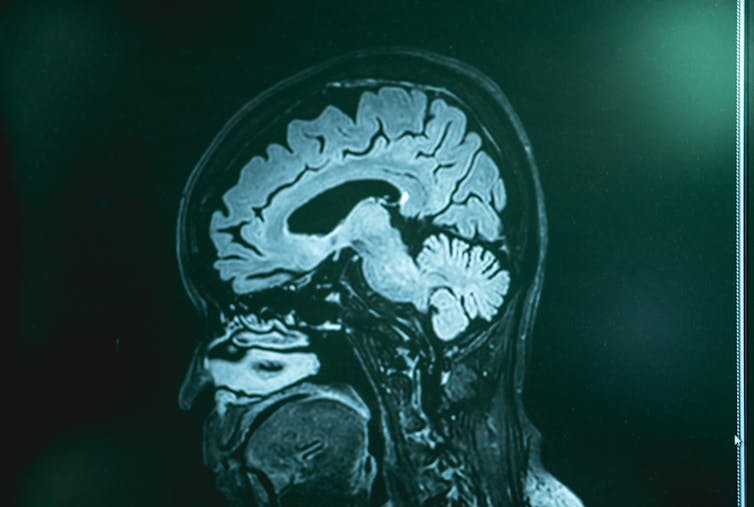
An MRI scan showing a brain with frontotemporal dementia.
There are potentially four variants of frontotemporal dementia.
Atthapon Raksthaput/ Shutterstock

This variant was given its name because most of the tissue loss occurs in the right temporal lobe of the brain. This brain area is mainly involved in understanding concepts and deriving meaning from nonverbal information, such as social cues. Scans of CP’s brain showed that large portions of this region were missing.

The right temporal variant of frontotemporal dementia also appears to cause a mix of symptoms typically seen in both the behavioural and semantic variants. However, there’s still debate within the research community over how to define it.

Learning about dementia

There’s a lot that can be learned from CP.

First, his story helps spread awareness of frontotemporal dementia. Lack of awareness is a major issue – even among doctors, as it’s commonly misdiagnosed as other psychiatric illnesses or Alzheimer’s disease.

CP’s story also helps to clarify the right temporal variant of frontotemporal dementia. His symptoms suggest that the development of new fixations may be a defining feature of the syndrome.

CP’s case is also an example of how dementia can cause changes in how people process sounds.

A link between hearing impairment and dementia is already well established. However, the nature of this relationship is unclear.

Although it has been widely claimed in the media that hearing loss causes dementia, it might also be the other way around – that dementia causes hearing changes. CP’s story provides evidence of this, as his abnormal love for specific noises only occurred after disease onset.

Alzheimer’s disease research also supports the idea of dementia causing hearing changes. For instance, impairments in auditory scene analysis – the ability to separate overlapping sounds, such as listening to one speaker among background noise – has emerged as a common symptom.

CP’s story also demonstrates how dementia can change what people find pleasurable as well as their emotions. Intense obsessions, aversions and changes in preferences (such as suddenly loving or hating certain foods, music or colours) have been widely reported in frontotemporal dementia.

I had the pleasure of meeting CP and his wife and learning about their dementia journey first-hand. CP’s story illustrates how important it is to recognise the variety of symptoms in dementia. This will in turn help lead to earlier diagnosis and the development of tailored interventions.

The Conversation

Lucy Core was supported by the UCL Research Excellence Scholarship while the case study was conducted and received funding from the Royal National Institute of the Deaf while preparing this article.

ref. The man who fell in love with the sound of Spitfires – here’s what this unusual symptom can teach us about dementia – https://theconversation.com/the-man-who-fell-in-love-with-the-sound-of-spitfires-heres-what-this-unusual-symptom-can-teach-us-about-dementia-275107

Drug company ads are easy to blame for misleading patients and raising costs, but research shows they do help patients get needed treatment

Source: The Conversation – USA (3) – By Anna Chorniy, Assistant Professor of Pediatrics, Icahn School of Medicine at Mount Sinai; Institute for Humane Studies

The United States is one of just two countries where drugmakers can advertise directly to patients. BrianAJackson/iStock via Getty Images

It’s a familiar experience for many Americans: You’re watching your favorite show and suddenly you’re ambushed by an ad for a drug whose name sounds like a Wi-Fi password, before a relentlessly cheerful voice tells you to “Ask your doctor” and then blasts through a side-effect list that’s laughably long.

But that might soon change. After nearly 30 years of giving pharmaceutical companies free rein to advertise prescription drugs directly to consumers, U.S. officials are now seeking to curb this practice.

Soon after his appointment in 2025, Health and Human Services Secretary Robert F. Kennedy Jr. stated that he believes direct-to-consumer advertising of prescription drugs has contributed to overmedication and inflated health care costs, and that stronger oversight is long overdue. Meanwhile, politicians on both sides of the aisle have called for banning direct-to-consumer drug ads outright – though the Food and Drug Administration has so far focused on restricting “digital” loopholes and enforcing the laws about advertisement.

As a health economist who studies how health care policies shape decisions made by doctors and patients, I agree that the practice can steer patients toward heavily marketed brands instead of the most appropriate treatment.

But the research on how such advertising affects patients is more nuanced. Many rigorous studies show that these ads can benefit patients’ health by encouraging them to seek lifesaving treatment for conditions such as depression and heart disease and sparking conversations with their doctors. In my view, within the realities of the U.S. health care system, getting rid of direct-to-consumer drug advertising may do more harm than good.

The origins of US prescription drug advertising

Only two countries – the U.S. and New Zealand – allow drug companies to advertise prescription medications directly to the public. Elsewhere, this practice is banned out of concern that short ads cannot adequately explain medical risks and that prescribing decisions should remain under physicians’ control.

And for good reason: Research on risk statements in drug ads on television shows they are often dense, fast-paced and paired with distracting visuals, making them difficult for consumers to understand.

In the European Union, Canada and Japan, for example, manufacturers may run disease awareness campaigns but cannot name specific products.

The U.S. approach to regulating drug advertising evolved gradually over more than a century. Congress’ 1906 Pure Food and Drugs Act was the first major federal step in drug oversight. It required manufacturers to label their products accurately and to disclose the presence of key ingredients.

An old-fashioned illustration of a herald arriving on horseback to a pharmacy to promote Carter's Little Liver Pills
An early 20th-century advertisement for a cure-all medicine called Carter’s Little Liver Pills, made by a Pennsylvania company. In 1959 the Federal Trade Commission made the company take ‘liver’ out of the name.
Wellcome Collection, CC BY

For decades, pharmaceutical marketing focused on physicians by advertising in medical journals, visits by sales representatives and providing free samples. Drug companies still market heavily to physicians, but FDA policies and television changed the calculus.

By the 1960s and ’70s, the reach of mass media prompted companies to communicate complex medical information in brief commercial formats. The 1962 Kefauver–Harris Amendments, which required drugmakers to prove their products were both safe and effective to receive FDA approval, also gave the FDA explicit authority over prescription drug advertising. This allowed the agency to police exaggerated claims and require that promotional materials present a fair balance of benefits and risks, including clear disclosure of known side effects.

In the 1980s, several pharmaceutical companies experimented with marketing drugs directly to consumers in magazines and newspapers. The FDA paused these efforts in 1985 to study their effects but later allowed them to resume.

An opening for television ads

The pivotal change came in 1997, when the agency issued draft guidance that television ads needed to present only major risk information and could direct viewers elsewhere – via phone lines, print materials or websites – for the full details.

Reliable, up-to-date figures are hard to come by, but according to a widely cited estimate, the U.S. pharmaceutical industry now spends more than US$6 billion on direct-to-consumer advertising, roughly twice the amount spent in 2012.

In September 2025, the FDA announced it would revoke this change, restoring pre-1997 standards for fuller disclosure, and would more aggressively enforce currently existing rules for direct-to-consumer drug advertising. Despite growing interest from policymakers and Congress to ban them outright, a total ban likely would not survive a Supreme Court challenge.

How direct-to-consumer ads affect patients

Studies show direct-to-consumer drug advertising increases demand for medications and prompts more doctor visits and diagnoses. Policymakers and the FDA specifically have raised concerns that these ads mislead patients, encouraging them to overuse or inappropriately use drugs and choose more expensive treatments over less costly alternatives. This, in addition, could raise drug prices and result in wasteful spending. But research convincingly demonstrating this has been difficult to come by.

For example, a 2023 analysis showed that drug companies spend more on advertising drugs that have been rated as having relatively lower clinical benefit than on drugs that offer higher clinical benefit. This may imply, according to the authors, that drug companies are trying to steer patients to drugs that physicians would be less likely to prescribe.

Interestingly, though, rigorous research showed that direct-to-consumer advertising increases prescribing of both advertised and nonadvertised drugs – suggesting that overall this increase is serving patients.

U.S. health officials are moving to restrict direct-to-consumer drug advertising.

Demonstrated benefits

For all the criticism that these ads are deceptive, the evidence indicates they can generate substantial clinical benefits for patients.

Research finds that ads bring patients into care, while leaving prescribing decisions largely in physicians’ hands, resulting in more patients being diagnosed and treated. For example, according to a 2022 study on antidepressants, advertising encouraged more people to start treatment and expanded overall use, especially for underdiagnosed conditions.

During the 2008 election season, political ads displaced drug commercials, providing a natural experiment on the effects of direct-to-consumer drug advertising. One study probed that period to examine ads for cholesterol-lowering medications known as statins, which are some of the most widely prescribed medications in the U.S. It found that removing drug ads reduced sales.

That study also ran a simulation banning drug ads entirely to show that doing so would have reduced new statin users by about 600,000 in 2008. Combining their estimates with clinical evidence on the drug’s benefits, the researchers found that health gains from additional treatment outweighed the costs of advertising.

Another study took advantage of the rollout of Medicare Part D, which helps cover the cost of prescription drugs, as a natural experiment. After Part D expanded drug coverage, pharmaceutical advertising increased more in areas with larger Medicare populations. In those areas, researchers found that more patients began treatment and stuck with it.

Importantly, the number of prescriptions also rose for nonadvertised drugs, including lower-cost generics, suggesting that advertising expanded overall treatment rather than simply shifting patients to heavily promoted brands.

It’s easy to single out pharmaceutical ads aimed at patients, but they are only one piece of a complex health care system – one in which drug manufacturers, providers, insurers and pharmacies all have financial incentives that shape which medications patients can access.

For example, drug company marketing directly to physicians does skew prescribing, increasing drug costs, with little evidence that patients receive better or more appropriate treatment as a result. Yet in the absence of direct-to-consumer advertising, patients’ choices of medications would be more heavily controlled by that dynamic.

The challenge for policymakers will be to curb misleading promotion without cutting off patients’ access to reliable information or undermining their role in directing their own care – and that will likely require addressing broader issues in the health care system.

The Conversation

Anna Chorniy does not work for, consult, own shares in or receive funding from any company or organization that would benefit from this article, and has disclosed no relevant affiliations beyond their academic appointment.

ref. Drug company ads are easy to blame for misleading patients and raising costs, but research shows they do help patients get needed treatment – https://theconversation.com/drug-company-ads-are-easy-to-blame-for-misleading-patients-and-raising-costs-but-research-shows-they-do-help-patients-get-needed-treatment-265724

Twenty-year sentence for Hong Kong media mogul Jimmy Lai is a further blow for journalists feeling the heat of Beijing’s crackdown on press freedom

Source: The Conversation – UK – By Yuen Chan, Senior Lecturer, School of Arts and Social Sciences, Department of Journalism, City St George’s, University of London

The sentencing of Hong Kong media mogul Jimmy Lai to 20 years in prison on February 8 on charges of sedition and collusion with foreign forces prompted international outrage.

Lai founded the now shuttered pro-democracy Apple Daily newspaper – and supporters of press freedom around the world pointed to the chilling effect the sentence would have on the media, in a city once vaunted as a beacon for press freedom in Asia.

The reaction was more muted in Hong Kong, where dissent has been stifled since Beijing imposed the draconian National Security Law in 2020, following months of protests in 2019. A local security law enacted in 2024 further expanded the scope of the city’s national security legislation.

Privately, some local journalists say Lai’s conviction will have limited impact on their work. They have already felt heavily constrained by the security laws and what they’re calling the “new normal” – an overarching national security apparatus and culture. Although saddened, they were not altogether surprised at the severity of Lai’s sentence.

One journalist told me they were more shaken by the sentences of up to ten years that were meted out to six senior Apple Daily editors and writers for “just doing their jobs”.

Since the national security law, Hong Kong journalists’ jobs have involved a great deal of dancing around shifting boundaries as to what can and can’t be reported. Inevitably, this has meant exercising greater self-censorship.

In an editorial on the sentencing, the Ming Pao newspaper, which has long positioned itself as a neutral paper of record, suggested the Lai ruling has brought these boundaries into sharper focus, concluding: “Collusion with foreign forces cannot readily be dressed up as journalism.”

The newspaper said that as Hong Kong now operates within the framework of the national security legislation: “The media must operate within this legal framework while continuing to report facts and hold power to account, a balance essential to preserving the city’s pluralism and openness.”

But it hoped “the Lai case will prove a watershed, allowing space for press freedom to widen step by step, so the media can fulfil its responsibilities more effectively”.

However, local journalists I spoke to described this position as naïve and wishful thinking, and said the red lines are no clearer now than before. Selina Cheng, chair of the Hong Kong Journalists Association (HKJA), believes the constraints on free expression in Hong Kong go far beyond a legal framework.

“If we call it a legal framework, it’s giving the system some kind of legitimacy,” Cheng told me. “In reality, the way it operates is there is a lot of destruction of due process, creating an atmosphere of fear and anxiety in those working in industries of expression.”

Apart from being arrested and jailed, Cheng says journalists and their family members have been doxed, with their personal details posted online, and harassed. Both individual journalists and news outlets have been targeted by unusual tax audits.

Tai Po tragedy

Cheng was one of several journalists I spoke to who pointed to the November 2025 fire which killed 168 people in Tai Po’s Wang Fuk Court Estate as a potent symbol of the current state of press freedom and freedom of speech in Hong Kong.

In the immediate aftermath, local and international journalists interviewed victims and reported extensively on suspected corruption and lack of oversight of building works on the site. But residents and other potential interviewees soon became reluctant to speak to reporters following the arrests of people who had posted comments online.

A student who started a petition for an independent inquiry was arrested – and then recently expelled from his university just weeks from graduation, even though he hasn’t been charged.

For one veteran journalist, who asked to remain anonymous for fear of bringing trouble to their organisation, what led to the Tai Po tragedy highlights a “media failure”. The news outlets which had most doggedly pursued stories about building maintenance, bid-rigging and corruption were the investigative site Factwire and Apple Daily, so “when these outlets disappeared, a lot of the reports also petered out”.

“In the past, you’d have lots of commentary in the media after an incident like this,” they explained. “There’d be legal scholars, experts, people from all different sectors. But now, the universities don’t allow people to comment and articles are spiked or censored, so it’s hard to raise and maintain public concern.”

Snitch culture

The journalist spoke of a system that extends beyond the legal framework of the national security law that restricts speech, through the control of public opinion and a “snitch culture” that weaponises complaints.

A Hong Kong police national security hotline was launched in November 2020; by June 2025, the city’s security chief said it had received more than 920,000 reports. Public bodies and funding organisations also regularly receive complaints about platforming of funding groups or individuals perceived to be pro-democracy or supportive of the 2019 protests.

Last October, a public venue cancelled a play written by Candace Chong, a leading playwright who was been vocal about censorship. The body that manages the Xiqu Centre, part of the West Kowloon Cultural District, said it had received complaints that the show – which depicts a love triangle between three men – defamed Hong Kong.

There are signs the “media failure” is already affecting governance. In January, the government introduced a controversial seat belt law requiring all bus passengers to buckle up while seated, only to shelve it five days later. The bill had received little scrutiny in Hong Kong’s now opposition-free legislature.

“It’s really unthinkable for a government to push out a bill, get it rubber-stamped by the legislature, and then withdraw it because they suddenly realise people are unhappy or the legislative details haven’t been thought through,” the HKJA’s Cheng told me. “It shows how the government misjudged public sentiment. This can be attributed to how the media isn’t free any more.”

The Conversation

Yuen Chan does not work for, consult, own shares in or receive funding from any company or organisation that would benefit from this article, and has disclosed no relevant affiliations beyond their academic appointment.

ref. Twenty-year sentence for Hong Kong media mogul Jimmy Lai is a further blow for journalists feeling the heat of Beijing’s crackdown on press freedom – https://theconversation.com/twenty-year-sentence-for-hong-kong-media-mogul-jimmy-lai-is-a-further-blow-for-journalists-feeling-the-heat-of-beijings-crackdown-on-press-freedom-276992

‘Working hard used to get you something’: what Hannah Spencer’s speech tells us about her, and the state of British politics

Source: The Conversation – UK – By Alex Prior, Lecturer in Politics with International Relations, London South Bank University

Hannah Spencer’s parliamentary story – as the new Green MP for Gorton and Denton – has just begun.

Nevertheless, the life story that she presented in her victory speech was that of a plumber, not a politician. She identified herself – in present tense – by that trade; she had not grown up wanting to be a politician. She also celebrated qualifying as a plasterer during the “chaos” and “pressure” of the election campaign. She described campaigning jovially as “all this”, as if it were just a challenge in the broader adventure, not the adventure itself.

Despite, or perhaps because of, accusations that the Greens used “sectarian politics” to secure victory, the speech was one of solidarity, of aligning herself with the struggles and achievements of “the community that I am from”. Spencer said that she had lived there in one of the hardest times of her life, and presented the strength of the community “at holding things together” as an inspiration.

She aligned herself and her personal characteristics with those of the constituency, stressing that “I am no different to every single person here in this constituency. I work hard. That is what we do.”

Alongside all the talk of “we”, of common interests and lack of difference, Spencer singled out several audiences for her story. One such audience? Her now-plumberless “customers”, to whom she duly apologised: “I’m sorry, but I think I might have to cancel the work that you had booked in, because I’m heading to parliament”.

Spencer also addressed those who voted for her, and those who didn’t. She spoke of “my Muslim friends and neighbours”, who “are just like me: human”. She discussed the “left-behind” (“I see you, and I will fight for you”), and people doing jobs like hers: “We will finally get a seat at the table”. And she addressed “our white working class communities, the background that I have become so glad to be from”.

A personal and political journey

My research focuses on political narratives and storytelling as a means of communication: the stories that parliaments contain and project, the stories we tell about the places we’re in and the stories that politicians use to communicate themselves to voters. Spencer’s speech is an attempt to portray a compelling story to her new constituency.

She spoke about how moving away from the constituency to nearby Trafford made the qualities of Gorton and Denton’s community “even clearer”. Only realising your love for a place and the people in it when you’ve moved away is a familiar narrative device. As Joni Mitchell once sang, “You don’t know what you’ve got ‘til it’s gone”.

In Spencer’s speech, this tactic carried a sharper political edge. This is a constituency that people move away from to get the “nice life” that Spencer described: “good schools, a thriving high street and clean air”.

This part of the story carried a rebuke to an audience that Spencer was addressing, but not by name: the Labour Party, for whom this was a traditionally safe seat. Spencer observed that “working hard used to get you something”.

I would argue that “you”, in this context, is a reference to traditional Labour voters. The implication here is that it is voting Labour that “used to get you something”.

Being a politician now isn’t an aspect of Spencer’s story that she’s keen to claim. She may now sit at Westminster, but she appears to frame this as an extension of who she already is — a worker, a neighbour, a constituent — in a new arena.

In doing so, she attempts to recast political representation itself as continuity of identity. The challenge, of course, will be whether she can sustain that claim. It is easier to say “I am no different” on a victory stage following a byelection win than from the House of Commons. The durability of her narrative – and perhaps her political appeal – will rest on whether she can remain recognisably “from” the constituency while operating within the institution of parliament.

The Conversation

Alex Prior does not work for, consult, own shares in or receive funding from any company or organisation that would benefit from this article, and has disclosed no relevant affiliations beyond their academic appointment.

ref. ‘Working hard used to get you something’: what Hannah Spencer’s speech tells us about her, and the state of British politics – https://theconversation.com/working-hard-used-to-get-you-something-what-hannah-spencers-speech-tells-us-about-her-and-the-state-of-british-politics-277121

No, autistic people are not ‘mind blind’ – here’s why

Source: The Conversation – UK – By Travis LaCroix, Assistant Professor of Philosophy, Durham University

maxim ibragimov/Shutterstock.com

For four decades, a controversial idea has shaped how autism is understood by researchers, healthcare professionals and the public: the claim that autistic people are “mind blind”. The phrase suggests an inability to grasp what others think or feel. It is simple, memorable – and wrong.

The claim rests on a concept called “theory of mind”. In everyday terms, theory of mind is the ability to recognise that other people’s thoughts, beliefs and emotions may differ from your own. This idea explains why someone understands that a joke can fall flat, that a promise can be broken, or that a friend can be mistaken without lying. It is often presented as the key to how people make sense of one another.

The idea entered psychology in the late 1970s, when researchers began asking how children learn to reason about other minds. Simple stories were designed to test this ability, often involving a character who holds a false belief. If a child could predict that the character would act on that belief, they were taken to have a theory of mind. These tasks quickly became a standard tool in developmental research.

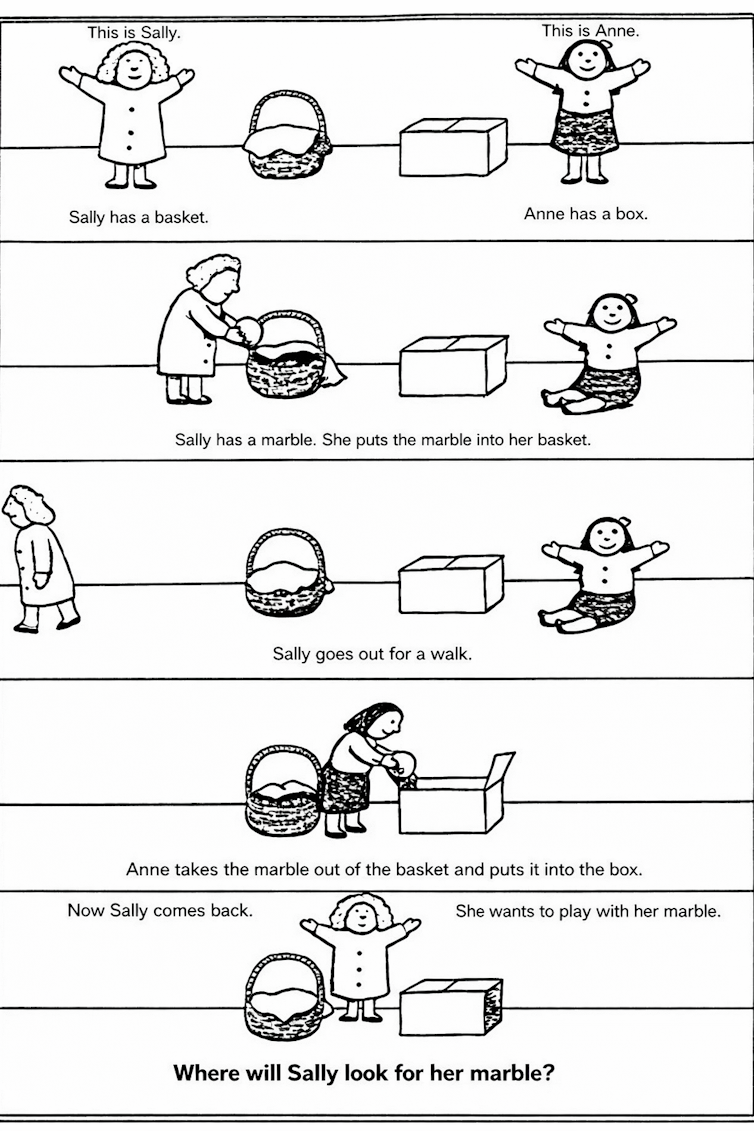
In 1985, one such test was used in a study of autistic children. In the “Sally-Anne” task, a doll (Sally) hides a marble, leaves the room, and returns after another doll (Anne) has moved it. Asked where Sally will look, many autistic children in that study gave the “wrong” answer. This finding was interpreted as evidence that autistic children lacked theory of mind.

The Sally-Anne test

A cartoon of the Sally-Anne test.
Does the autistic child really not have a ‘theory of mind’?
Simon Baron-Cohen, Alan M. Leslie, and Uta Frith

From this experiment, a vast research programme followed. New tasks multiplied: reading emotions from photos of eyes, interpreting short stories, judging intentions from animated shapes.

Across the late 1980s and 1990s, scientific papers and popular media represented autism as defined by a core failure to understand minds. The theory stuck, appearing in academic articles, textbooks, court rulings and popular science writing.

The problem is that the evidence never supported the claim. Even in the original study, one in five autistic children passed the task. Later research found huge variation. Some studies showed most autistic participants passing theory-of-mind tests; others found little or no difference between autistic and non-autistic groups. A theory meant to describe a key deficit kept running into exceptions.

More troubling is the tests themselves. Many rely heavily on language. Performance is often better predicted by vocabulary level than whether someone is autistic.

Different theory-of-mind tasks also fail to line up with one another, suggesting they are not measuring a single underlying ability at all. If an ability cannot be measured consistently, claims about its absence become doubtful.

At this point, a straightforward scientific response would have been to reconsider the theory. Instead, it was repeatedly patched.

When autistic people passed a task, researchers argued that the task was too simple. New, more complex tasks were introduced, which produced the same mixed results. When findings contradicted the core idea, the definition of “theory of mind” quietly expanded to include eye contact, joint attention, or social motivation.

When science stops testing

This pattern matters because of what it says about how science works. Drawing on the philosophy of science, my recent analysis argues that theory-of-mind research in autism has become “degenerating”. Rather than generating new, risky predictions, the theory survives by shifting definitions and goalposts to avoid being disproved. When no possible result counts against a theory, it stops being scientific. In a subsequent response to commentators, I explore why the theory-of-mind paradigm has persisted despite its deep empirical and conceptual difficulties.

Questioning this idea did not come from a single paper or field. Psychologists, linguists, and philosophers all raised concerns. So did autistic people, whose everyday experiences often flatly contradicted the idea that they lacked insights into others.

Studies began to show that non-autistic people are just as poor at interpreting autistic expressions as the reverse. Social misunderstanding, it turns out, goes both ways.

That insight helped fuel alternative approaches. One approach frames communication breakdowns as mutual mismatches between different styles of thinking and communicating, rather than deficits located in autistic people.

Another focuses on differences in attention and interest, offering an explanation of perception, motivation and learning. These approaches generate new, testable questions and align more closely with people’s actual experiences.

Today, the field is at a crossroads. The idea that autistic people are mind blind lacks a secure foundation. Its empirical support has weakened, and its assumptions are increasingly questioned. What remains is its influence. When educators or healthcare professionals assume a lack of empathy, they are less likely to trust autistic people’s own accounts or involve them in decisions that affect their lives.

Abandoning this myth does not weaken autism science. It strengthens it. Social understanding is not absent in autism; it is shaped differently, expressed in different contexts, and often overlooked when the wrong tools are used. Autistic people are not mind blind. They think and understand differently, and the evidence has pointed that way for some time. It’s time science reflected that.

The Conversation

Travis LaCroix received funding from the Social Science and Humanities Research Council (Canada).

ref. No, autistic people are not ‘mind blind’ – here’s why – https://theconversation.com/no-autistic-people-are-not-mind-blind-heres-why-272848

Why the Legend of Zelda games still resonate with players after 40 years

Source: The Conversation – UK – By Annayah Prosser, Assistant Professor in Marketing, Business and Society, University of Bath

A large model of Link from the Zelda games, in Tokyo. yu_photo/Shutterstock

Nintendo’s Legend of Zelda video game series celebrated its 40th anniversary in February 2026. Millions of players across the world have grown up alongside the 21-title series, from the release of the original game on the Famicom gaming system in 1986, to the most recent game, Echoes of Wisdom, published for the Switch in 2024.

The Zelda games were inspired by series creator Shigeru Miyamoto’s childhood in the Japanese countryside. They frequently involve complex environmental exploration and problem solving.

Over time, the series has moved from pixelated forests into high resolution, awe-inspiring landscapes. In that time, Zelda has become an intergenerational success, released in new forms for new generations with each Nintendo console.

Many Zelda games serve as flagships for these new consoles, tying the game experience into new technological capacities – showcasing the motion control of the Wii, the dual screens of the DS, and the joystick first introduced on the the N64. Just as the console technology has evolved, so has the Zelda series.

The series is one of Nintendo’s biggest commercial successes, with an estimated 150 million copies of the games sold worldwide. The most popular game within the series, Breath of the Wild (released on the Switch in 2018), has sold more than 34 million copies to date.


Read more:
The Legend of Zelda: Tears of the Kingdom review – a masterclass in rewarding curiosity


Beyond the game

As well as fun past times, video games can be important vehicles for social connection and personal development. The Zelda series grapples with age-old struggles of good versus evil and destruction versus creation.

I’m the editor of the Psychgeist of Pop Culture: The Legend of Zelda – an open-access book which explores the social and psychological impact of the series across a variety of domains. In the book, researchers like myself show how engaging with virtual stories and problems can help us to better understand our own day-to-day lives. For example, recent research from social scientist George Farmer shows that playing video games can be a helpful form of stress relief during times of crisis.

The moral dilemmas presented in the Zelda games also help to train players for real-world social action. Experimental psychologist Kathryn Francis argues in her chapter that the games provide players with an immersive virtual space for moral reflection and development.

In my own chapter, I analysed the environmental narratives of the games Breath of the Wild and Tears of the Kingdom to assess their potential impact on players. I argued that experiencing the environmental devastation wrought by villains in the games, and having the power to save the world in this setting might also equip players with the tools and motivation to address the climate crisis in real life.

The Zelda series can also help players to understand and interrogate their identities, and the roles we play within our own lives. The games allow players to explore what it means to be a hero, villain, or a princess with increasing freedom of expression and action.

They can choose to save the world as quickly as possible (by doing a “speedrun”) or they can take their time to get to know the community and environment. This freedom of play allows for different experiences which appeal to different types of players, making the series particularly versatile. In the games players get to experiment with different quests and narrative paths, and learn more about themselves, their values and preferences in the process.

Forty years on, the Zelda franchise shouldn’t just be seen as a purely economic success. Rather, it should be understood as a cultural powerhouse which has had a very real impact on the lives of millions around the world.

Given the generational staying power of these games, many Zelda fans across the world will be eagerly awaiting the next step for the series. What might the 40th anniversary celebrations bring? Will a new title be revealed? What will the first Switch 2 Zelda game be? Will the virtual world translate well to the upcoming live-action film?

Regardless of the answers to these questions, the series likely will likely to have a significant impact on its players around the world for decades to come.


Looking for something good? Cut through the noise with a carefully curated selection of the latest releases, live events and exhibitions, straight to your inbox every fortnight, on Fridays. Sign up here.


The Conversation

Annayah Prosser does not work for, consult, own shares in or receive funding from any company or organisation that would benefit from this article, and has disclosed no relevant affiliations beyond their academic appointment.

ref. Why the Legend of Zelda games still resonate with players after 40 years – https://theconversation.com/why-the-legend-of-zelda-games-still-resonate-with-players-after-40-years-276456

A virus hiding inside bacteria may help explain colorectal cancer

Source: The Conversation – UK – By Ryan Cook, Research Scientist, Bioscience, Quadram Institute

SewCreamStudio/Shutterstock.com

The gut bacterium Bacteroides fragilis has long presented researchers with a paradox. It has been associated with colorectal cancer, yet it also lives quite happily in most healthy people. A new study from a Danish research team offers a possible clue. When they looked beyond the bacterium itself and into its genome, they found a previously unknown virus embedded within it – one that was significantly more common in cancer patients.

Colorectal cancer is the third most common cancer worldwide and is responsible for the second highest number of cancer-related deaths. Up to 80% of colorectal cancer cases are attributed to environmental factors, with one of the most significant being the gut microbiome – the collection of bacteria, fungi and viruses that live in the human gut.

This means that colorectal cancer could – in theory – be partly preventable. But the precise link between the microbiome and colorectal cancer remains poorly understood. It is much easier to associate two things than it is to show a mechanism.

Most studies of the gut microbiome examine which species of bacteria are present and how abundant they are. But species are not homogeneous. Think of how all domestic dogs belong to the same species (Canis familiaris) yet show enormous within-species diversity – a chihuahua is not the same as a great dane. The same is true for bacteria, even if it is harder to visualise.

Just looking at which species are present may not give us the resolution we need to understand what is going on. Perhaps the answer lies not in which bacteria are in the gut, but in the finer genetic differences between strains of the same species.

Bacteroides fragilis is generally considered a harmless member of the gut microbiome and is found in most healthy people. Despite this, it has repeatedly been found to be more abundant in people with colorectal cancer. So could there be specific genetic features that set some strains of B fragilis apart from others, and could these features be linked to colorectal cancer?

Even bacteria get infections

All cellular life can be infected by viruses. Bacteria are no exception. The specific viruses that infect bacteria are called bacteriophages – from the Greek phagos, meaning to eat or devour. They selectively infect bacteria and, importantly, do not infect human cells.

But not all of these viruses kill the bacteria they infect. Some integrate their own genome within the bacterium’s genome, becoming what is known as a prophage – a hitchhiker within the bacterial cell.

Many prophages carry genes that can alter the characteristics of their bacterial host. Diseases such as cholera, botulism and diphtheria are all the result of toxins carried by prophages within otherwise (mostly) harmless bacteria. The conversion of harmless bacteria to harmful ones by prophages is well documented.

To determine whether specific genetic signatures linked B fragilis to colorectal cancer, a Danish team sequenced the genomes of B fragilis from people with and without a colorectal cancer diagnosis.

First, they looked at whether the cancer-associated bacteria came from a distinct evolutionary lineage. They did not. But not all genetic features of bacteria are passed from mother to daughter. Some are acquired sideways, through a process called horizontal gene transfer – such as infection by a prophage.

When the researchers compared the genomes more closely, they found that bacteria from cancer patients carried two previously unknown prophages that were largely absent in bacteria from people without cancer.

These prophages did not carry any obvious genes that would link the bacteria to colorectal cancer – in the way that cholera toxin genes are readily identifiable – but most prophage-carried genes are very poorly understood and we know little about what they do.

A broader test

This initial finding was based on 48 bacteria collected from patients, so the team wanted to test whether the pattern held more broadly. They screened data from faecal samples taken from 877 people across Europe, the US and Asia – 434 with colorectal cancer and 443 without.

Patients with colorectal cancer were more than twice as likely to have detectable levels of the prophages. It is important to stress that this is an association, not proof that these prophages cause or contribute to colorectal cancer. No biological mechanism by which they might do so has been proposed.

It is also possible that the gut environment in cancer patients simply suits these particular strains of B fragilis – meaning the disease could be creating conditions in which the bacteria thrive, rather than the bacteria helping to cause the disease. An alternative explanation is that the gut environment itself predisposes people both to harbour these prophage-containing strains and to develop colorectal cancer.

The study had limitations worth noting. The bacteria originally examined came from patients with bloodstream infections rather than bowel cancer itself, while the broader validation used stool samples – a different source entirely. And some of the “healthy” comparison group had not been formally confirmed to be cancer free.

Despite these limitations, the finding raises an interesting possibility for cancer screening. The most common non-invasive screening method for colorectal cancer is the “faecal immunochemical test”, which checks stool samples for traces of blood. A test that also screened for these viral traces could, in principle, be performed on the same samples.

A preliminary analysis by the researchers found that a panel based on fragments of the prophage genomes detected around 40% of colorectal cancer cases. This is a very early result and would need considerable further work, but it points to the possibility of using viral signatures alongside existing screening methods.

The broader implication of this work is a shift in how we think about the gut microbiome and its relationship to disease. It may not be enough to ask which bacteria are present. We may also need to look at what is inside those bacteria – and what those hidden passengers might be doing.

The Conversation

Ryan Cook does not work for, consult, own shares in or receive funding from any company or organisation that would benefit from this article, and has disclosed no relevant affiliations beyond their academic appointment.

ref. A virus hiding inside bacteria may help explain colorectal cancer – https://theconversation.com/a-virus-hiding-inside-bacteria-may-help-explain-colorectal-cancer-276695

Wallace & Gromit, Biba style and the irrepressible Tracey Emin: what to visit and see this week

Source: The Conversation – UK – By Jane Wright, Commissioning Editor, Arts & Culture, The Conversation

When I was growing up there were three channels on the telly, which seems quaint now. You watched what was on, like it or lump it. But I have only good memories of children’s TV in the 1970s. Hiding behind a cushion as we watched Dr Who, singing along to Sesame Street, lots of excellent dramas, and a surprising array of weird trippy stop-motion animation that featured stoned rabbits and talking TVs.

But my favourite was a wonderful art show aimed primarily at deaf children called Vision On. (For anyone who’d like a walk down memory lane, listen to the groovy theme tune below and transport yourself back to your 1970s living room.)

Vision On.

A lovely man called Tony Hart shared simple art techniques, and later got his own spin-off show called Take Hart. It was here in 1977 that I first encountered a charming little Plasticine character called Morph who persisted in interrupting Tony has he tried to make art, generally making a mess and causing chaos. But always in the most endearing way.

It was groundbreaking stuff in those days, watching a ball of plasticine unfurl into this funny little figure with big eyes and a bigger heart. Who would have guessed Morph was the beginning of Aardman, one of the most successful stop-motion animation studios in the world? One that would go on to create beloved characters like Wallace & Gromit and even win Oscars?

That success is surely down to a very British sensibility that celebrates quirk and eccentricity, chewy regional accents, DIY and a heroic sweetness that remains untainted by cynicism. I still marvel at the genius of the long-suffering Gromit’s scowl, conveyed only by two indented thumbprints for eyebrows.

Aardman’s work is now rightly being celebrated in an exhibition at the Young V&A in London. We sent along animation expert Christopher Holliday to give us his take as the studio celebrates almost half a century of hi-octane slapstick, unlikely heroes and comical villains.

Two national treasures

It’s a great week for celebrating quintessential Britishness in film, art and fashion. In Edinburgh The Biba Story has just begun at the wonderful Dovecot tapestry studio. The show is a warm, inclusive and affectionate look at the impact of Barbara Hulanicki’s groundbreaking Biba fashion and lifestyle label that brought a splash of excitement to drab postwar Britain in the mid-1960s. Best of all are the vivid memories of women now in their eighties describing the thrill of high fashion at low prices in their teens.

At the Tate Modern in London, the irrepressible Tracey Emin is back with a restrospective called, appropriately, Tracey Emin: A Second Life after she rose like a phoenix from the ashes of her grim encounter with cancer and the life-changing surgery that followed. I adore Emin (even though I don’t always like her work) because she makes art utterly on her own terms. Complicated, contradictory, uncompromising and fearless, many people find that altogether too much in one woman. But Emin mines her life and experience in ways that make her vulnerable which I find brave, honest and admirable.

Films heading for the Oscars

Wagner Moura and Rose Byrne are each nominated for best actor/actress gongs at this year’s Oscars, and both, according to our reviewers, would be worthy winners.

Set in 1977 during Brazil’s two-decade dictatorship, The Secret Agent is a gripping thriller that features an outstanding performance from Moura. The Brazilian actor plays Armando, an academic forced into hiding after clashing with big business interests aligned with the regime who want to get their hands on his research. Kleber Mendonça Filho’s film makes clear that authoritarianism attacks society not only through violence and repression of civilians, but through the silencing of knowledge and learning. This timely and important film reminds us why academic freedom must be protected.

Rose Byrne gives a relentless performance as Linda, an exhausted resentful mother quickly unravelling in If I Had Legs I’d Kick You. Her husband who works away is unconcerned that she is looking after their seriously ill daughter solo. Her unfulfilling but demanding work as a therapist piles on more pressure and her own therapist is deeply unsympathetic. Unsupported and drowning in despair, she is unable to find respite. This dark and unsettling film, says our reviewer Laura O’Flanagan, “is an example of how cinema has become less interested in saccharine, idealised depictions of mothers and more concerned with their inner lives, however messy”.

The Conversation

ref. Wallace & Gromit, Biba style and the irrepressible Tracey Emin: what to visit and see this week – https://theconversation.com/wallace-and-gromit-biba-style-and-the-irrepressible-tracey-emin-what-to-visit-and-see-this-week-274175