Tracey Emin: A Second Life – Tate Modern’s must-see retrospective explores trauma and transcendence

Source: The Conversation – UK – By Pippa Catterall, Professor of History and Policy, University of Westminster

The most powerful art speaks of and to the emotions. It tackles trauma and cathartically helps us to cope with it. It acknowledges pain, suffering and betrayal. It goes beyond an aestheticised veneer to raw emotion. It seeks to touch not just the eyes, but the soul.

The major retrospective of Tracey Emin’s career at London’s Tate Modern does just that, and features her most significant surviving works. It also reflects her characteristic subjects, techniques, materials and approaches.

The monumental bronze I Followed You to the End (2024), displayed on the approach to the Tate, is a foretaste of the anguished bodies in the statues within. These and the agonised black lines, floods of blood-red and bleak white backgrounds of paintings like Rape (2018) graphically engage with such traumatic experiences.

Emin made her name in the 1990s through dramatic installations and art that unflinchingly confronted the visceral realities of women’s bodies. These used her own body and experiences to create artworks that connected emotionally as raw cries of anguish. Or of lost innocence.

The latter comes out particularly in her short film Why I Never Became a Dancer (1995), deliberately placed near the start of the exhibition. In this, affectionate shots of Emin’s childhood hometown of Margate jarringly contrast with her narration of sexual abuse and misogyny.

This voiceover reflects Emin’s talent for pithy, poignant and allusive language. Appliqued into quilts such as Mad Tracey from Margate. Everyone’s Been There (1997), or expressed in the emotionally charged titles of artworks and neon signs, Emin’s words – as well as her body – confront her trauma.

Some of these works do so by foregrounding love, desire, longing, betrayal and abuse. Others resist the silence and stigma that have for so long shrouded women’s bodily functions.

The exploration of the soul

Throughout the exhibition, Emin’s work is deeply personal. Yet, by centring her own experience, Emin also humanises and universalises it. You don’t have to have had an abortion, or even be a woman, to respond emotionally to a work like The Last of the Gold (2002), publicly exhibited here for the first time.

Similarly, her textual contributions universalise the experiences of victimhood. Her handwritten memoir, Exploration of the Soul (1994), for example, movingly conveys a child’s attempt to understand the cruelty of unspoken racism.

Despite the trauma, throughout there’s an indomitable sense of defiance. Sewn into the quilt No Chance (WHAT A YEAR) (1999) a small text responds to her rapists pointing abusively at her: “I was only 13 and even then I knew they were pointing the wrong way.” In the same way, Why I Never Became a Dancer ends with Emin defiantly showing us her moves.

This combination of vulnerability and strength gives Emin’s work its emotional richness. This also comes out in her determination to document the trauma of her cancer. In works that take on the taboos around this disease, Emin depicts the procedures that our society squeamishly hides away in hospitals and the impact that these have had upon her body.

Of course, one of the most celebrated of her works does not directly feature her body but its absence. Yet My Bed (1998) is still a self-portrait of the traces of her life. Alongside the dishevelled bed and assorted detritus on and around it, what really struck me, seeing it for the first time, were the adjacent suitcases, packed and ready and the layered stories wordlessly conveyed in this installation. My Bed may on one level be an extended metaphor for struggling with depression, but the suitcases also speak of the will to escape.

Exorcism of the Last Painting I Ever Made (1996) is another even larger installation dealing with depression. It takes up an entire room in this exhibition. During pregnancy and in the aftermath of her abortions, Emin found it impossible to paint. The text behind the box containing this installation states: “I hated my body … I was suffering from guilt and punishing myself so I threw myself in a box and gave myself three and a half weeks to sort it out. And I did.”

The result is an insight into the artist’s studio as well as their body and mind. It reminded me of the installation of Francis Bacon’s studio in Dublin. Emin has cited the Norwegian painter Edvard Munch as a major influence, even holding an exhibition of her own work alongside that of Munch entitled The Loneliness of the Soul at the Royal Academy in 2021. Yet, to me, the comparisons with Bacon are more striking, both in the subject matters of sex and trauma and in the solemnity of their larger canvases.


Read more:
Francis Bacon: Human Presence – a compelling look at how the artist redefined portraiture


This was particularly marked in the final room. Throughout the exhibition the walls are painted a petrol blue, the same shade that Bacon used for oppressive interiors such as Man at a Washbasin (1954). This, combined with subdued lighting, produces a womb-like atmosphere. The intimacy this creates both heightens the emotional connection and impact on the viewer and shows Emin’s work to best effect.

It might seem odd to create such an ambience when so many of the artworks deal with trauma. Yet, although Emin observes what is happening to her body, literally in the case of I Watched Myself Die and Come Alive (2023) that fills the final wall of the final room, her art also has a detached, transcendent quality.

The spiritual atmosphere of that final room, with identically sized canvasses hung along it like altarpieces – including one of The Crucifixion (2022) – speaks through the spectral traces of bodies in the artworks more of the soul than the body, less of trauma than of the transcendence of pain.

Tracey Emin: A Second Life is at the Tate Modern from February 27 2026 to August 31 2026.


Looking for something good? Cut through the noise with a carefully curated selection of the latest releases, live events and exhibitions, straight to your inbox every fortnight, on Fridays. Sign up here.


The Conversation

Pippa Catterall does not work for, consult, own shares in or receive funding from any company or organisation that would benefit from this article, and has disclosed no relevant affiliations beyond their academic appointment.

ref. Tracey Emin: A Second Life – Tate Modern’s must-see retrospective explores trauma and transcendence – https://theconversation.com/tracey-emin-a-second-life-tate-moderns-must-see-retrospective-explores-trauma-and-transcendence-277014


What Hannah Spencer’s historic win means for the Green party’s future

Source: The Conversation – UK – By Louise Thompson, Senior Lecturer in Politics, University of Manchester

Thursday’s byelection in Gorton and Denton has been huge for the Green party of England and Wales, with Hannah Spencer pushing Reform’s Matt Goodwin into second place, and Labour into third. Having one extra MP in parliament may not seem like a big milestone, but this byelection win is record-breaking for the Greens. I believe it shows their potential to be a credible alternative to Labour.

The Greens have never won a byelection before. They polled less than 7% of the vote (coming in fourth place) in the Runcorn and Helsby byelection in May 2025. And, unlike Reform UK in that byelection, the Greens didn’t just edge this victory – they took nearly 41% of the vote. That’s a whopping 28-point increase on their performance in the same constituency at the 2024 general election.


Read more:
Victory in Gorton and Denton is historic for the Greens – and cataclysmic for Britain’s two-party politics


The victory has given party leader Zack Polanski the confidence that voters now see the Greens as a viable alternative to Labour, even in former Labour strongholds. He announced to supporters, “this is what replacing Labour looks like”.

Over the past few years the Greens have really professionalised their party. We saw the impact of this in the 2024 general election, when they quadrupled their number of MPs and finished second in 40 constituencies.

Under Polanski’s leadership, they’ve developed a more populist edge, focusing on issues such as the cost of living and moving away from being “just” a climate party. They’ve also had a more visible media presence and started to take their communication strategy more seriously.

Spencer’s win increases the size of the Green parliamentary group to five MPs. In the context of a 650-member House of Commons, this doesn’t seem like much.

The Greens certainly aren’t large enough to swing any votes, or cause the government many problems. And although they now have more MPs than ever before, they are still only the sixth-largest party group in the Commons. There are still over twice as many independent MPs as there are Greens.

The win will, however, give the Greens some breathing space. It’s a tough job being a small party in the Commons, and the existing group of four Green MPs have shared a heavy burden of responsibilities in the chamber since their arrival in 2024. As Spencer finds her feet, she will be able to take on some of these policy portfolio responsibilities.

Having a bigger parliamentary team doesn’t just alleviate some of the pressure to be in the chamber all the time. It also allows the party to be more strategic, and to insert Green voices into more conversations than before.

This could be through places on committees scrutinising legislation, trying to catch the speaker’s eye during high-profile government statements and question times, or holding backbench debates on more local issues. There is no place for passengers in any small party, so we can expect to see Spencer playing a very visible role for the rest of the parliament.

The battle ahead

When the next general election draws closer, the Greens may be grateful of this bigger team. They will want to capitalise on their success in Manchester and continue to professionalise their operations as a national party.

They are also likely to face more hostility at Westminster. Labour is now fighting a war on two fronts. The party’s embarrassing third-place result in Gorton and Denton – which Keir Starmer called “very disappointing” – will have hammered this home. We can expect to see more attacks on the Greens, including in the Commons chamber.

Until now, the prime minister has focused much more consistent attention on discrediting Reform. Now, he needs to worry much more about Polanski and the Greens, and will be directing some focus to winning back Labour voters who see the Greens as the stronger party of the left.

We had a glimpse of this in January, when North Herefordshire’s Ellie Chowns used her occasional opportunity to question the prime minister to ask about water pollution. Starmer turned it into a partisan attack on the unrelated topic of Polanski’s comments about Nato.

While the Reform UK leader, Nigel Farage, regularly berates Starmer in the Commons, the Greens rarely take such an overtly partisan approach. Reform MPs tend to participate more frequently in high-profile parliamentary occasions, where they can question the government. The Greens tend to have a more balanced, policy-focused approach, regularly popping up on committees to scrutinise legislation.

This is helped by Polanski’s position as a leader who sits outside the Commons (a member of the London Assembly). He can delegate the scrutiny of government policy to Chowns and her colleagues, while he takes broader comments about the government’s performance directly to the press.

This balance will be important as the Greens think about the upcoming local elections. Spencer told the press today that the party can now “win anywhere”, and Polanski predicted a “tidal wave” of Green MPs at the next election.

To do this, they need to maintain the momentum they’ve created this week. This means keeping a tight hold of the former Labour voters who chose them instead in Gorton and Denton.

It will be difficult for the party to carry out the same intensive campaign strategy on a more national level, but this sort of intensity is key to ensuring that the left vote goes to the Greens rather than to the other alternatives. Having more party members than ever before will help with this, but they will need to rely on their on-the-ground campaigners to feel secure.

The Conversation

Louise Thompson receives funding from the ESRC ES/R005915/2

ref. What Hannah Spencer’s historic win means for the Green party’s future – https://theconversation.com/what-hannah-spencers-historic-win-means-for-the-green-partys-future-277114

Atmospheric dust: the overlooked suspect in urban air pollution

Source: The Conversation – France – By Emmanouil Proestakis, National Observatory of Athens

Cities are rapidly becoming the defining residential space of human life. Over 55% of the global population lived in urban areas in 2018, a proportion projected to reach nearly 68% by 2050, according to the United Nations (UN).

While this unprecedented urban growth fuels innovation and economic activity, it simultaneously concentrates human exposure to environmental stressors and intensifies urban environmental pressures. In this context, the World Health Organization (WHO) has underlined the multifaceted challenges and severe risks that poor air quality poses to socioeconomic activities and human health. And although emissions – such as NO₂, SO₂, CO₂ and O₃ – are the usual suspects when it comes to air quality degradation, our recent study highlights that atmospheric dust that accumulates over urban areas represents an additional and considerable, yet frequently overlooked, contributor to adverse health implications.

Mineral dust’s impact on Public health deserves more attention

Among the aerosol species contributing to air quality degradation, atmospheric dust originating from natural sources and anthropogenic activities is often considered less consequential. However, this assumption overlooks a growing body of research evidence reporting on airborne dust as a health hazard and neglects several important facts.

To begin with, dust is not a marginal component of the total aerosol load. By mass, dust is the second-most abundant aerosol type globally, surpassed only by sea-salt particles, and the dominant component of the atmospheric aerosol load over large continental areas.

More specifically, it has been estimated that natural sources – mainly arid and semi-arid areas – emit around 4,680 teragrams (Tg) (1 Tg= 1 billion kilograms) of dust into the atmosphere each year. Yet, this estimate does not account for all the dust present in the atmosphere.

Globally, natural processes contribute to approximately three quarters of the total dust load, with the remaining quarter linked to human activities frequently evolving around urban and highly industrialised areas, including transportation, infrastructure development, land-use change, deforestation, grazing and agricultural practices.

To put this into perspective, this staggering airborne dust mass exceeds 615,000 times the equivalent weight of the Eiffel tower released globally into the atmosphere each year.

Furthermore, these particles composing the atmospheric dust layers are far from uniform in size. Large-scale experiments, (designed to study atmospheric pollutants in detail) focusing on mineral dust and employing airborne in situ instrumentation have revealed that particles in wind-transported atmospheric layers range widely in size, from less than 0.1 μm (roughly the size of a SARS-CoV-2 virus (coronavirus) to more than 100 μm (approximately the diameter of a human hair).

More concerning is that accumulated evidence from epidemiological studies links airborne dust to multiple adverse health outcomes. While coarse mineral dust is often considered relatively harmless, typically causing minor skin irritation or allergic reactions even over long exposure periods, it is a completely different story when it comes to fine particles. Because of their small size, these fine particles allow for deep lung penetration that potentially triggers respiratory and cardiovascular diseases, allergic reactions, even cancer. Beyond these direct effects, scientists are still exploring the role of dust as a carrier for bacteria, as suggested by meningitis outbreaks in the Sahel desert.

Fine particles, big questions

These concerns naturally raise a series of questions: to what extent have the fine-mode and coarse-mode fractions of airborne dust changed over highly industrialised and densely populated urban areas in the past two decades?

Can we detect meaningful, increasing or decreasing temporal trends in these changes? Which major cities currently experience, or are likely to experience in the near future, dust concentrations exceeding WHO air quality safety thresholds?

Megacities under the microscope: 15 years of satellite observations reveal how dust levels are changing

To gain a better understanding of how much dust urban populations are actually breathing in, our recent study examined satellite-based Earth observations spanning over 15 years. We examined the accumulation and temporal dynamics of dust in the lowest atmospheric layer above the Earth’s surface in 81 of the world’s largest cities and urban areas (with populations exceeding 5 million), where human activity and exposure are most prevalent.
The results reveal several important takeaways:

  1. Atmospheric dust unequivocally poses a hazard to public health in a substantial number of major urban areas worldwide. Based on population data and projections provided by the UN approximately 9 out of 10 of the roughly 800 million people living in the 81 largest cities are exposed to dust levels exceeding annual-mean air quality safety thresholds. A clear geographic pattern emerges, with the most affected urban areas located in the Middle East, the Indian subcontinent, East Asia, and the Sahel.

  2. Dust levels appear to be declining in most large cities. However, this encouraging, seemingly positive news comes with two important caveats: in many cases, the temporal declining trends are not statistically significant and frequently the overall dust burdens remain considerable. In other words, even where reductions are observed, they may not translate into meaningful reductions in health risk.

  3. Looking ahead to the near future, the challenge is unlikely to disappear. According to estimates provided by UN, urban populations in these megacities are projected to grow, reaching more than 1 billion people in the mid-thirties.

Consequently, atmospheric dust will remain an environmental health hazard, however, of a lower degree due to the apparent declining atmospheric load compared to present-day conditions, yet potentially affecting a larger number of individuals.

From science to policy: tackling the hazard of airborne dust

In response to mounting scientific evidence that airborne dust poses a risk to human health, countries are strengthening air quality legislation and launching national and international initiatives to confront dust-related challenges.

Efforts such as the World Meteorological Organization’s SDS-WAS, DANA and CAMS NCP among others, reflect growing collaboration to improve monitoring, modelling, and the translation of science into practical solutions. At the same time, governments are moving to align regulations with WHO recommendations.

For instance, the European Union’s revised Ambient Air Quality Directive explicitly recognises natural aerosols like dust as a cumulative health hazard. Together, advancing research, coordinated policy, and improved regulation provide a stronger foundation for action.

As urbanisation accelerates, tackling air quality, including atmospheric dust, is becoming central to protecting public health, strengthening urban resilience, and ensuring a more sustainable future for the world’s rapidly growing cities.


Created in 2007 to help accelerate and share scientific knowledge on key societal issues, the Axa Research Fund – now part of the Axa Foundation for Human Progress – has supported over 750 projects around the world on key environmental, health & socioeconomic risks. To learn more, visit the website of the AXA Research Fund or follow @ AXAResearchFund on LinkedIn.


A weekly e-mail in English featuring expertise from scholars and researchers. It provides an introduction to the diversity of research coming out of the continent and considers some of the key issues facing European countries. Get the newsletter!


The Conversation

Emmanouil Proestakis has been supported by the AXA Research Fund for postdoctoral researchers under the project entitled “Earth Observation for Air-Quality – Dust Fine-Mode (EO4AQ-DustFM).

ref. Atmospheric dust: the overlooked suspect in urban air pollution – https://theconversation.com/atmospheric-dust-the-overlooked-suspect-in-urban-air-pollution-276422

Bad Bunny says reggaeton is Puerto Rican, but it was born in Panama

Source: The Conversation – USA (2) – By Brendan Frizzell, PhD Student in Sociology, USC Dornsife College of Letters, Arts and Sciences

Puerto Rican reggaeton artist Bad Bunny performs the Super Bowl halftime show on Feb. 8, 2026, in Santa Clara, Calif. Bob Kupbens/Icon Sportswire via Getty Images

Bad Bunny likes to remind the world where he and his music come from.

In “EoO,” a song from his 2025 album “DeBÍ TiRAR MáS FOToS,” he raps, “‘Tás escuchando música de Puerto Rico” (“You’re listening to music from Puerto Rico”). Similarly, in the album’s second track, “VOY A LLeVARTE PA PR,” he announces that both he and reggaeton were born in Puerto Rico: “Aquí nací yo y el reggaetón, pa’ que sepa’.”

Puerto Rican artists like Bad Bunny certainly helped popularize the genre. But they didn’t create it.

In my own research of Latin America, I’ve explored how reggaeton comes from the small Central American nation of Panama, where the sound emerged from a swirl of sonic influences that included Spanish conquistadors, Caribbean immigrants and American colonizers.

English and Spanish collide

Understanding reggaeton requires understanding the intermingling of cultures and languages that Panama experienced over a relatively short period of time.

After Panama gained its independence from Spain in 1821, it became part of Gran Colombia, which, at its peak, included modern-day Colombia, Venezuela, Ecuador and Panama.

Throughout the 19th century, Panama experienced population growth and mass industrialization, and waves of Afro Caribbean immigrants arrived in northern Panama in search of economic opportunities. Since they came from former British colonies, many of them spoke English. Meanwhile, the many Afro Panamanians already living in the country, whose descendants had been trafficked as slaves, spoke Spanish.

These linguistic distinctions resulted in two primary groups of Black people in Panama: Spanish-speaking Afro Panamanians and English-speaking West Indians. They worked alongside one another on construction projects, such as the trans-Isthmus railroad, in the mid-19th century. But with their different languages, colonial histories and cultures, they didn’t always get along.

In 1903, Panama separated from Gran Colombia, becoming the independent nation we know today. The U.S. had supported Panama’s independence for strategic reasons: It wanted to build and control the Panama Canal to secure influence over maritime trade and military movement in the Western Hemisphere. While Gran Colombia had rebuffed earlier U.S. overtures, leaders of the newly independent Panama were more receptive to American interests.

Jim Crow is imported to the Canal Zone

Police brutality, exploitation and intra-racial and interracial tensions also served as scaffolding for reggaeton.

During the canal’s construction, the U.S. operated and controlled the Panama Canal Zone, a 553 square-mile (1,432 square-kilometer) parcel of land encompassing the canal. Up to 60,000 people lived there while the canal was being built, with residents segregated by race into “gold roll” and “silver roll” workers. Gold roll workers were usually white. Silver roll workers were Black, and they were tasked with the most dangerous jobs.

The Canal Zone’s white residents were far more likely to have access to health services and have proper sanitation; Afro Panamanian and immigrant workers from Barbados, the Antilles, Jamaica and other Caribbean countries were much more likely to be exposed to – and die from – malaria.

West Indians and Afro Panamanians also experienced police brutality. Black women, in particular, were harassed by white police officers, who often accused them of sex work.

While both West Indians and Afro Panamanians were subjected to segregation and police brutality, the Americans running the Canal Zone tended to treat the English-speaking West Indians better. Meanwhile, children born and raised in the Canal Zone were only taught English in schools, which Afro Panamanians resented.

These tensions led to the rise of “panameñismo,” a movement that sought to preserve and promote Spanish language and culture in Panama. This movement culminated in the passing of restrictive immigration laws targeted at West Indians and stripping second-generation West Indians of their citizenship.

Despite these anti-West Indian policies, many Jamaican, Barbadian and Antillean immigrants who had already built a life in Panama remained in the country even after the canal was completed in 1914.

Black-and-white photo of a huge metal gate with tiny workers either posing or working from the wooden scaffolding.
Laborers work from scaffolding during the construction of the gates of Gatun Locks at the Panama Canal, c. 1914.
Detroit Publishing Company/Library of Congress via Getty Images

Reggae with a Spanish twist

In the 1960s and 1970s, Jamaicans introduced three subgenres of reggaemento, ska and dancehall – to Panama.

The lyrics were in English and Jamaican Patois, an English-based creole language. But it didn’t take long for an offshoot of reggae, “reggae en español,” to emerge. By the end of the 1970s, reggae en español had become popular in Panama and had spread throughout Latin America. Similarly, the nascent genre of hip-hop was gaining steam in the U.S. and eventually made its way to Panama, where an American presence had remained since the completion of the canal. It wasn’t until 1979 that the Canal Zone was abolished, and Panama did not have ownership over the canal until 2000.

It was out of this diverse mix of musical and linguistic influences that reggaeton was born, a genre that features the looping drum pattern – called “dembow riddim” – of Jamaican dancehall, the tropical vibe of reggae and a mixture of rapping and singing. Like reggae and hip-hop, reggaeton lyrics often emphasize Black solidarity and speak out against racial oppression and police violence.

The Panamanian artist Renato is credited with releasing the first reggaeton song, titled, “El D.E.N.I.,” in 1985.

The D.E.N.I. – an acronym for the Departamento Nacional de Investigaciones, or National Department of Investigations – was a tool of repression for Panama’s military dictatorship under Omar Torrijos in the 1970s and later under Manuel Noriega in the 1980s. The secret police force became entangled in drug trafficking and political corruption.

In ‘El D.E.N.I.,’ Renato denounces police brutality and racism.

In the song, Renato assumes the role of a racist police officer, the kind he encountered after relocating from the Canal Zone to Rio Abajo, an impoverished neighborhood in Panama City:

Con mi cara albina, te puedo golpear …

(With my albino face, I can hit you …)

Te voy a enseñar

(I am going to teach you)

Que a la justicia no se puede burlar

(That you cannot make fun of the justice system)

After its release, the track became a protest anthem against Panama’s military government.

While Renato’s popularity was growing in Panama, early Panamanian reggaeton artists and producers like El General were collaborating with Jamaican and American artists in New York City, where the underground dancehall and “hip-hop en español” scene thrived.

Even though El General primarily produced music, one of his tracks, “No Mas Guerra,” channeled the fighting spirit of original reggaeton, calling for Latin American communities to come together to end violence and wars.

A sanitized version of reggaeton goes mainstream

Despite not being responsible for its creation, Puerto Rico is where the genre went mainstream – largely thanks to the popular Puerto Rican artist Daddy Yankee.

Daddy Yankee’s music spread, in part, thanks to American brands like Kellogg’s and Reebok, whose ads featuring his songs were broadcast to American audiences. Few of his tracks contained the social justice themes that characterized early reggaeton.

Meanwhile, Tego Calderon, a Black Puerto Rican reggaeton artist, struggled to find a buyer for his 2003 debut album, “El Abayarde,” after being told he was too ugly for a musical career – a remark rooted in the anti-Blackness that’s pervasive in Puerto Rico.

Calderon’s experience in the industry and as a Black Puerto Rican dictated how he viewed the genre and created his music. Like Calderon, Renato and other Black reggaeton artists have spoken out against racism in reggaeton.

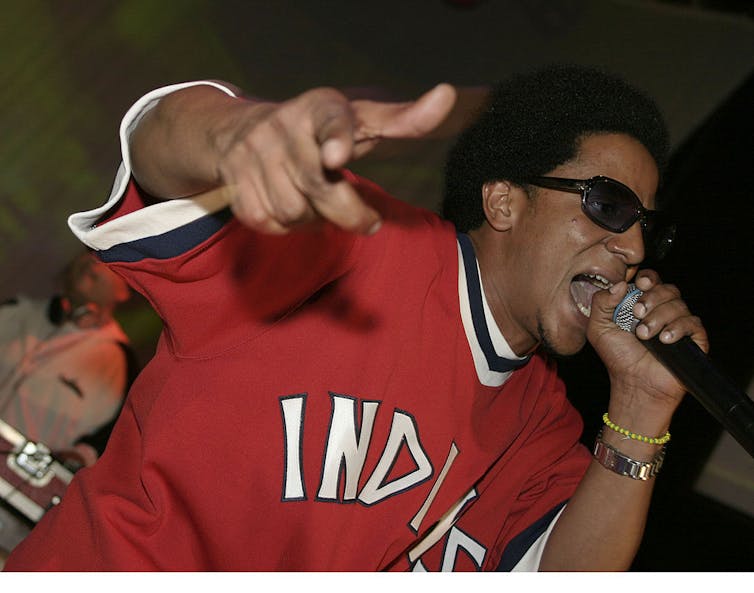
Man with afro wearing sunglasses and a red baseball jersey gestures while rapping into a microphone.
Reggaeton artist Tego Calderon performs at the BMG Music Showcase at Billboard Live in Miami Beach in 2003.
Rodrigo Varela/WireImage via Getty Images

Bringing reggaeton back to its roots

Though he may have the genre’s history slightly wrong, Bad Bunny’s own tracks return to reggaeton’s social justice roots.

Performed during the Super Bowl halftime show by Ricky Martin, Bad Bunny’s “LO QUE LE PASÓ A HAWAii” describes the history of U.S. colonialism in Hawaii and Puerto Rico, pointing out how local communities have been forced out by gentrifiers:

Quieren quitarme el río y también la playa

(They want to take the river and the beach away from me)

Quieren al barrio mío y que tus hijos se vayan

(They want my neighborhood and for your kids to leave)

And while the early-2000s reggaeton popularized by Daddy Yankee, Tego Calderon and Don Omar contained elements of misogyny and homophobia, Bad Bunny’s tracks “Yo Perreo Sola” and “YO VISTO ASÍ” build on feminist reggaeton anthems like Ivy Queen’s “Yo Quiero Bailar.”

Reggaeton was born out of a call for freedom, equality and justice. So I find it fitting that Bad Bunny is creating music that speaks to all types of people from all over the world.

The Conversation

Brendan Frizzell does not work for, consult, own shares in or receive funding from any company or organization that would benefit from this article, and has disclosed no relevant affiliations beyond their academic appointment.

ref. Bad Bunny says reggaeton is Puerto Rican, but it was born in Panama – https://theconversation.com/bad-bunny-says-reggaeton-is-puerto-rican-but-it-was-born-in-panama-276347

What the UK’s first geothermal power plant means for the nation’s electricity supply

Source: The Conversation – UK – By Mark Ireland, Senior Lecturer in Energy Geoscience, Newcastle University

More than half of the UK’s electrical power was supplied by renewable energy on February 25 2026.

That consisted mainly of solar, wind and hydroelectric sources. The next day, a new source of electricity started feeding into the grid for the first time – geothermal power.

At a site near Redruth called United Downs, in Cornwall, a company called Geothermal Engineering Ltd has started producing geothermal electricity.

To generate power (electricity), this project is using two of the deepest wells ever drilled in the UK – down to three miles beneath the surface. A considerable feat of engineering.

To understand why the Cornish landscape is so suitable for geothermal power, imagine life on Earth roughly 300 million years ago, when magma from deep beneath the Earth’s surface cooled to formed large bodies of granite. This igneous rock with a crystalline structure contains small amounts of naturally radioactive elements, such as uranium, thorium and potassium.

Over a long geological timescale, these give off heat. Geologists call this a “granite‑hosted geothermal system”. Fractures throughout this granite provide pathways for fluids to flow. This is key to harnessing the thermal energy (heat) from within these rocks.

To exploit the heat in the rocks, Geothermal Engineering Ltd has drilled two angled wells. The production well reaches a depth of approximately three miles, intersecting an area known as the Porthtowan fault zone. This well produces hot fluid, at over 150°C. The vapour from this fluid is used to turn a turbine to produce electricity. The second well, drilled to a depth of almost 1.5 miles is used to inject the slightly cooled fluid back into the ground after it has passed through the turbine.

Unlike wind and solar which are weather-dependent sources of renewable energy, geothermal is always “on”. Geothermal heat is not susceptible to changes at the surface – and this means it can produce power steadily, day and night, all year round.

The deep geothermal power plant at United Downs will produce approximately 3 megawatts (MW) of electricity, the equivalent of enough power for 10,000 homes. This will meet only around 0.01% of the UK’s electricity demand. But capacity isn’t the only consideration. We need to look beyond the capacity to understand the full picture and future opportunity.

First, there is the cost of generation. Geothermal, like other renewable sources, has lower operating costs compared with traditional gas power, however the upfront costs for developers and investors are high. The cost of electricity from wind and solar has fallen significantly over the past decade. Geothermal is just at the start of its cost reduction journey. As the potential for reduced drilling time and costs increases, the scale up of geothermal could become more affordable.

Then there is the wider grid benefits. As the UK grid will rely more heavily on wind and solar in the future, it will require much more flexibility. Any source that is less susceptible to variability in energy generation can better match supply to demand. This makes it easier to incorporate other less consistent renewable sources into the grid.

While the capacity of some geothermal power plants such as United Downs is not comparable to the scale of an offshore wind development or a nuclear plant, they can deliver meaningful grid support, resilience and, in particular, benefits for consumers. For example, the UK government’s planned expansion of AI and data centres could further increase electricity demand; cooling them alone currently accounts for about 40% of a data centre’s electricity use, so matching them with local sources of energy makes sense.

While electricity production is the primary goal, United Downs will also produce lithium, a critical mineral that is essential for batteries. Fluids at depth contain relatively high concentrations of lithium. Locally sourced lithium can help reduce the UK’s reliance on importing sources.

The future outlook

Geothermal Engineering Ltd is currently developing two other sites in Cornwall. These could deliver a further 10MW of geothermal power in the UK by 2030. Recent estimates suggest that the eventual resource potential for electricity from geothermal is around 25GW nationally – roughly 2.5 times the contribution that wind currently provides.

However, it took wind more than 25 years to scale to 30GW of installed capacity in the UK. So perhaps the most pertinent question isn’t a geological one, but rather a question of economic feasibility: can geothermal electricity compete on the same scale and cost as other options for low-carbon electricity?

Looking beyond power generation, several recent reports, including work commissioned by Department of Energy Security and Net Zero shows that geothermal can be a significant low-carbon source of heating and cooling. Resource estimates for heating and cooling are more than 100 times greater than the estimated electricity generation potential. Geothermal heating can help address the cost of heating and greenhouse gas emissions associated with natural gas.

This single development in Cornwall, or even a small number of other projects, probably won’t change household electricity bills in the near future. However with gas still setting the price for electricity in the UK, the cumulative potential for geothermal energy to complement other renewable energy sources and deliver energy that could reduce this reliance is considerable.


Don’t have time to read about climate change as much as you’d like?

Get a weekly roundup in your inbox instead. Every Wednesday, The Conversation’s environment editor writes Imagine, a short email that goes a little deeper into just one climate issue. Join the 47,000+ readers who’ve subscribed so far.


The Conversation

He has previously provided consulting services to Project InnerSpace and has received UKRI funding for geothermal‑energy research in the past.

ref. What the UK’s first geothermal power plant means for the nation’s electricity supply – https://theconversation.com/what-the-uks-first-geothermal-power-plant-means-for-the-nations-electricity-supply-276909

Tiny recording backpacks reveal bats’ surprising hunting strategy

Source: The Conversation – USA – By Leonie Baier, Postdoctoral Fellow in Behavioral Biology, Naturalis Biodiversity Center

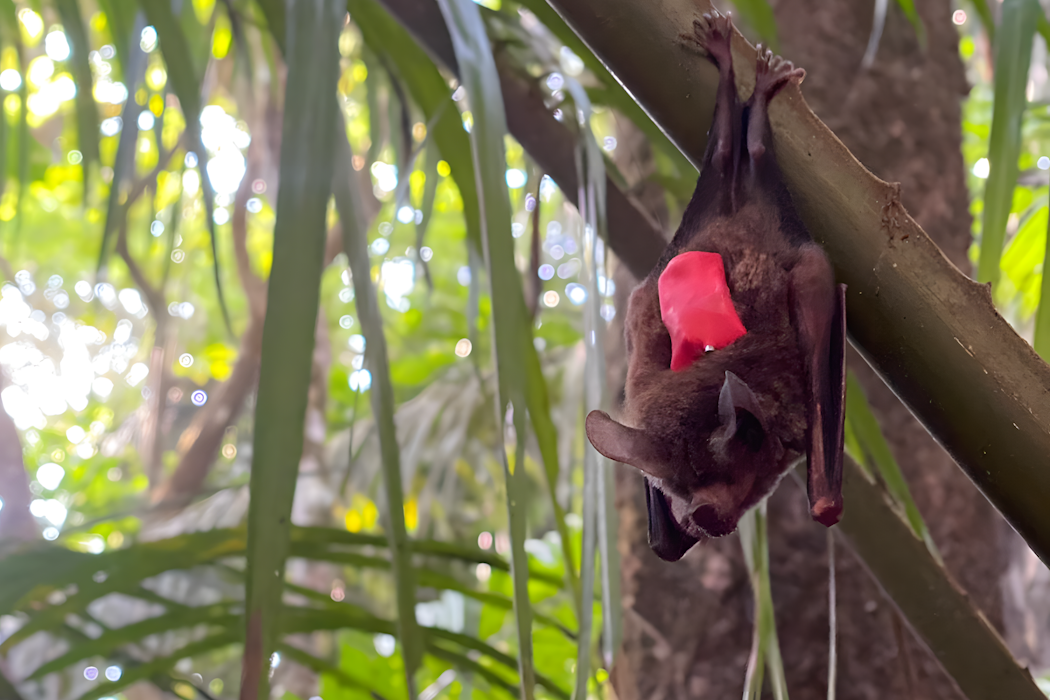
A fringe-lipped bat carries a sound-and-movement biologging tag. Leonie Baier, CC BY-SA

Deep into the Panamanian night, the forest hums with sound. Chirping insects form a steady backdrop, rain softly trickles from leaves. Somewhere above a stream, frogs call into the darkness.

But I am not there to see this scene.

It’s already passed. What I hold now is a small, mud-smeared biologger, no larger than a Lego brick. This tag recorded the sounds of the previous night.

Three people wearing headlamps seated on the ground tagging bats at night.
Deep in the jungle of Soberanía National Park, researchers Gregg Cohen, Leonie Baier and Sebastian Mortensen process fringe-lipped bats under red-light headlamps. The nonintrusive light minimizes disturbance as the team weighs, measures and assesses each bat before tagging it.
Imran Razik, Smithsonian Tropical Research Institute, CC BY-SA

The evening before, my team and I had set nets outside the roosts – hollow trees or human-made structures such as tunnels or bunkers – where fringe-lipped bats (Trachops cirrhosus) sleep during the day. Under the faint glow of red headlamps, we weighed each bat we caught on its way out of the roost, checked its age and sex, and carefully glued a tiny tag to the fur between its shoulder blades.

When we released a tagged bat into the darkness, it vanished into the trees, carrying our recorder into the night.

The researchers carefully release the tagged bats into the night. Credit: Eric de Framond

Within a few days, the tags either fell off naturally or I gently removed them from recaptured bats with a quick trim of fur. Each biologger captured five to six hours of continuous sound and movement data – every flight, every attack, every crunch of prey bones between sharp teeth.

For the first time, I could follow a predator through the forest from its own point of view. And what those recordings revealed surprised me: Our fringe-lipped bats don’t simply grab the first thing they detect. Instead, they stalk the forest’s creatures with a patience and precision I hadn’t expected.

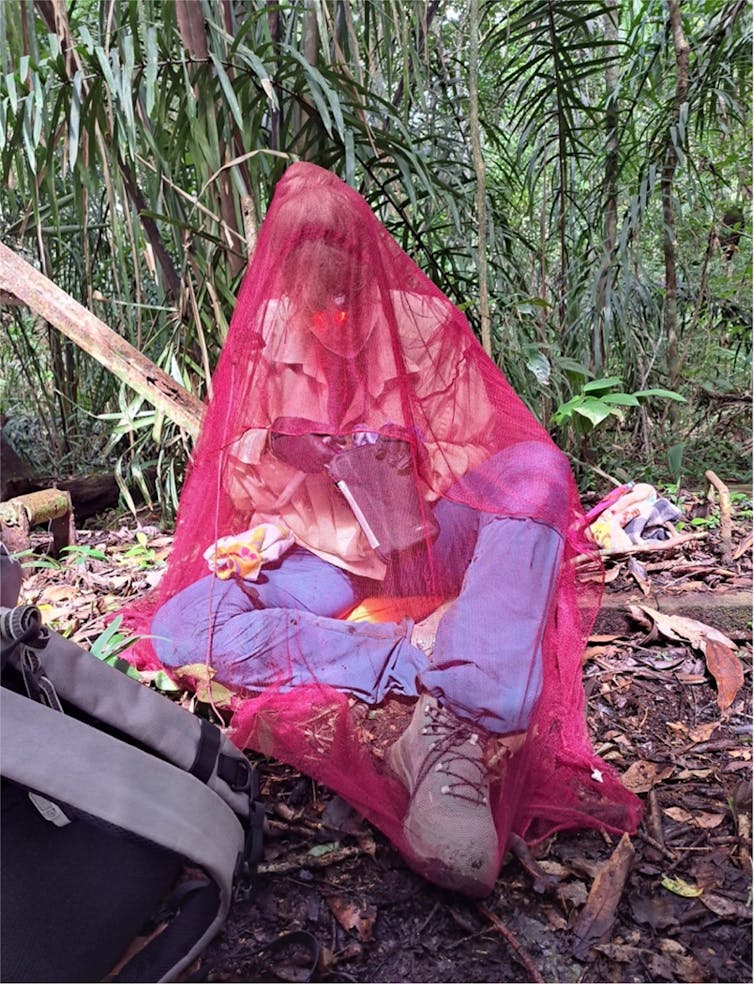
Person seated on forest floor wrapped in a mosquito net
Once a bat is recaptured, no chances are taken that it might fly off with its precious load – the biologger holding all the data – still attached. Here, Leonie Baier works under a mosquito net to safely remove the tag before releasing the bat, tag-free.
Eric de Framond, Smithsonian Tropical Research Institute, CC BY-SA

Tiny tags for tiny hunters

I’m a behavioral ecologist, and fringe-lipped bats have been part of my scientific life for years, through my work with animal behavior researcher Rachel Page at the Smithsonian Tropical Research Institute in Panama. In our recent study published in the journal Current Biology, we paired decades of field knowledge with miniature biologging technology, allowing us to accompany the bats through the night.

When I plug a tag into my laptop, I follow that journey in sound and movement. Through my headphones, I hear a familiar note. A túngara frog (Engystomops pustulosus) calls; that distinctive “whiiiiine-chuck-chuck” I know so well.

A túngara frog calls, looking for a mate. Credit: Leonie Baier

On my screen, the line charting the bat’s motions stirs: a tremor of movement, then a sharp burst of wingbeats. At the same time, the audio trace fills with a rapid series of ultrasonic echolocation calls, the staccato sound of a hunter steering through darkness. In my ears, a rush of air surges past the tiny microphone, then there’s a splash, more wingbeats, and finally the faint, wet crunching of teeth. A few minutes later, it’s over.

The bat has eaten the frog. I smile; we’ve studied this bat for so many years, the data matches what we have observed in the laboratory. But now, for the first time, I can hear how the hunt unfolds in the wild.

Biologger recording of a bat catching a frog from flight.
Leonie Baier434 KB (download)

I scroll further in my recording.

A new sequence begins, but this time there are no frog calls. No sound to guide a strike. Just a sudden rush of air, a violent rustling, and then the unmistakable sounds of a fight thrash through my headphones: wings flapping, claws scraping, and the harsh cries of a prey animal fighting to survive.

Biologger recording of a bat attacking its protesting prey.
Leonie Baier297 KB (download)

Eventually – silence.

For a long moment, I hear only the sounds of the forest. Then again, the beat of wings. The bat is flying once more. It lands. And then comes that telltale sound again – slow, steady and deliberate. The bat is eating its catch.

Five minutes pass. Ten. Twenty. The chewing stops. The motion trace falls flat. As the night drifts on, nothing moves. The bat has fallen asleep.

Much later, the silence breaks. A quick shudder, a few brief pulses of echolocation: The bat is awake again. But it doesn’t fly off. It starts chewing again. And again. In the end, I count a total of 84 minutes of chewing, spread out across several bouts. Whatever this tiny bat caught, it was nothing like the quick frog meal I’d heard before.

Size of predator usually matches size of prey

In the animal kingdom, size usually dictates strategy.

Large lions, wolves and polar bears chase prey nearly their own size, at enormous costs: hours of stalking, bursts of sprinting and long fasts between meals. Their energy reserves let them weather failure after failure until finally a single successful kill restores the balance.

Small predators live by different rules. The tiny bodies of weasels, shrews and bats burn energy so fast that skipping even one meal can mean starvation. For bats, the demands of powered flight push those costs even higher. So they hunt small, abundant prey: quick, low-cost meals that keep the metabolic fire burning.

On average, the bats we tracked made around seven attacks per night and succeeded roughly half the time. Hearing that more-than-one-hour-long chewing episode recorded on the biologger left me astonished. Was this individual bat just an exceptionally slow eater? Or had it taken down something very large?

In the flight cage, a fringe-lipped bat (Trachops cirrhosus) feeds on a túngara frog. Under controlled conditions, researchers can observe its feeding behavior in detail: The bat holds its prey in its jaws, braced by one or both thumb claws, and methodically gnaws until only the gallbladder is left uneaten. Credit: Joseph See, Smithsonian Tropical Research Institute

To find out, I turned to a feeding experiment I had run in captivity, where I measured how long bats chewed prey of known weights. That calibration allowed me to translate chewing time in the wild into meal size. I discovered that most prey weighed around 2 grams, about 7% of a bat’s body mass. But some meals were far larger, reaching up to 30 grams – nearly the bat’s own weight.

How can a creature so small, with so little energy to spare, afford to hunt like a lion?

Listening to dinner

Our bats’ style of hunting is close to that of lions or polar bears, but the efficiency of their hunts sets the bats apart from any large predator. After leaving the roost at dusk, they spent just over five minutes flying in total before making their first attack. So rather than spending the whole night in search on the wing, they flew only about 11% of the time – less than half an hour over five hours of recording.

How could they find their meals so quickly? The answer lies in their extraordinary ears.

Fringe-lipped bats are masters of acoustic espionage. Instead of using echolocation alone to detect their prey, they eavesdrop on the sounds that frogs and other animals make. A túngara frog’s distinctive “tuuuuungara,” for example, carries through the forest and serves as a perfect beacon for a hungry bat.

Trachops splashing while catching a tungara frog from a pond
The fringe-lipped bat (Trachops cirrhosus) splashes while catching a túngara frog from a pond in the rainforest in Panama.
Grant Maslowski, CC BY-SA

Our recordings show that attacks were eight to 12 times more likely when frog calls were present. Strikes launched from flight clustered near loud choruses, while nearly all attacks from perches occurred in silence.

The bats have a dual ambush strategy. They launch strikes from the air when prey are advertising themselves. When the forest falls quiet, they hang almost motionless from branches to listen for subtler cues, sweeping the scene with their large ears before swooping down onto their prey.

By alternating between active flight and patient perch hunting, they minimize effort and maximize success.

Learning to thrive in a changing world

Fringe-lipped bats have solved the small-predator dilemma by hunting large prey – such as frogs, lizards, birds or rodents – with remarkably little effort.

But not every bat we tracked was equally efficient. Adults tackled a wider range of prey, while juveniles focused only on smaller, more manageable meals – likely smaller frogs, grasshoppers and dragonflies. This variation suggests that experience plays a major role.

Fringe-lipped bats are long-lived – some over 14 years – and have exceptional memories. They can learn new prey sounds by trial and error, or even by observing other bats. Over a lifetime, a bat refines its strategy, becoming more selective in its choice of prey. In this way, it seems that its hunting success is not just a product of anatomy or instinct – it’s also a story of cognitive evolution.

The bats’ success, however, depends on a thriving forest. As amphibians face global declines from disease, habitat loss and climate change, the bats’ longevity gives them some time to respond and learn, offering hope that these extraordinary predators can persist even as ecosystems change – if we work to keep their forests alive.

Extreme hunting efficiency in a carnivorous bat.

The Conversation

Leonie Baier has received funding from the European Union’s Horizon 2020 research and innovation
program (Marie Skłodowska-Curie Actions) and the Smithsonian Tropical Research Institute.

ref. Tiny recording backpacks reveal bats’ surprising hunting strategy – https://theconversation.com/tiny-recording-backpacks-reveal-bats-surprising-hunting-strategy-271996

Thousands of dead puffins are washing up on Europe’s beaches – why it’s been such a dangerous winter for seabirds

Source: The Conversation – UK – By Ruth Dunn, Senior Research Associate in Marine Ecology, Lancaster University

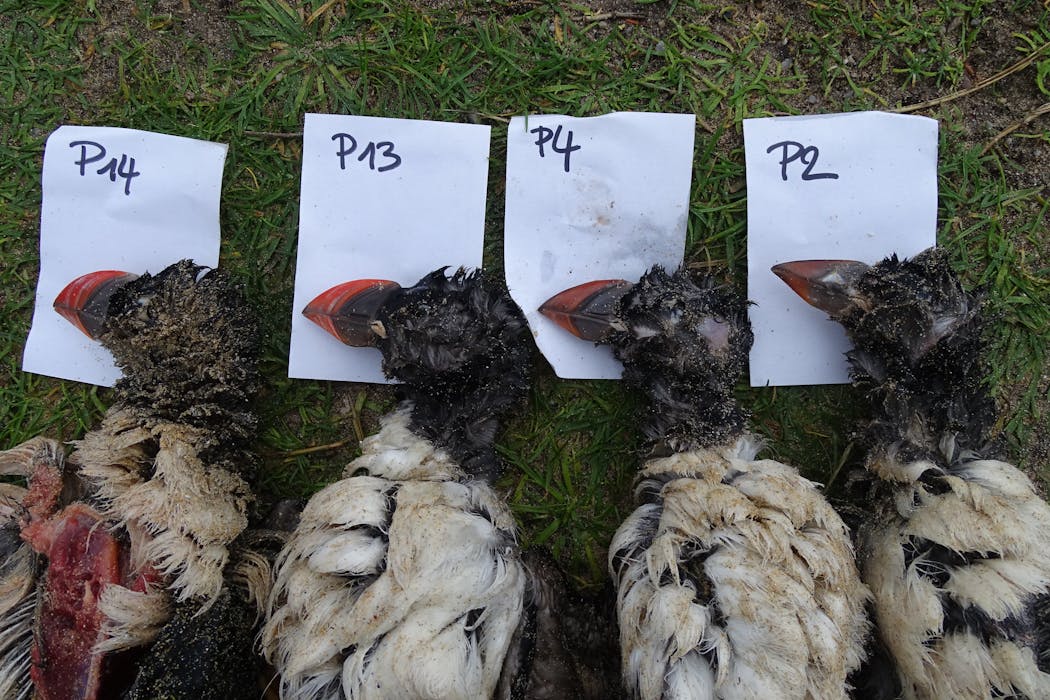
Puffins are dying from starvation due to recent storms. Bernard Cadiou, CC BY-ND

February 2026 has seen thousands of dead seabirds washing up along the coastlines of the UK, France, Spain and Portugal.

There’s evidence that these “wrecks” (where large numbers of seabirds are found along beaches) are becoming increasingly common because of climate change. Worse still, these dead birds – including Atlantic puffins and European shags – only tell a fraction of the story. Many more are likely to have been lost out in the stormy open ocean.

Even as someone who has dedicated the last decade of my life to researching seabirds, I have found myself beginning to feel desensitised to the increasingly regular news of these dead birds found in great numbers. Current estimates are high: over 20,000 birds swept up along beaches in France alone since mid January.

Seabirds’ bodies are also being found on beaches along the the North Sea, off the southern coast of Ireland and the Bay of Biscay.

Although increasing temperatures are perhaps the most well-known consequence of human-induced climate change, increased storm frequencies and intensities are another critical symptom.

A number of storms have swept across Europe so far this year. Storm Chandra poured down over the UK and other parts of Europe in late January, while six further named storms blew across Portugal, Spain and France in quick succession throughout February. Looking at the evidence, it is possible that this ensemble of storms concocted a lethal cocktail of conditions for wintering seabirds, by creating multiple wreck events over a short amount of time.

The back-to-back barrage of storms this winter has provided little respite for seabirds that must struggle with strong winds, torrential rain and high seas, desperately hungry but apparently unable to feed. The bodies of birds washed up in wreck events are skinny and their muscles are very hard (indicated by high levels of lactate). Despite paddling hard amongst the waves, they were unable to catch enough prey to survive.

Studying survival

The Isle of May Long-Term Study, led by the UK Centre for Ecology and Hydrology, has been monitoring seabirds since 1973, making it one of the most data-rich studies of its kind.

This monitoring includes looping small metal rings, engraved with unique identification codes, around the legs of seabirds. These rings allow corpses to be traced back to the Isle of May, off the east coast of Scotland, or other seabird colonies where seabird ringing takes place.

Every year, the Isle of May team deal with these reports and use them to understand seabird deaths and survival rates. In 2026, Josie Hewitt, an expert in avian ecology, has received more than usual: 33 dead shags and nine dead puffins throughout February.

Among these numbers are birds that survived the avian flu outbreak in 2022-23, and the stormy 2023-24 winter, making these reports even more heartbreaking.

Seabird colonies are often home to thousands of birds during the breeding season – too many to ring. Many more that don’t have these rings are also being found. Others swallowed by the waves may never be recovered.

In winter, seabirds must forage intensively to catch enough prey to survive the cold, while also building up reserves for the approaching breeding season. Many are therefore experts at navigating the underwater marine environment.

Puffins flap their wings to move through the water to chase fish, while shags propel themselves by thrusting their feet.

However, when bad weather hits, seabirds can struggle. Even during their summer breeding seasons, when storms are less common and less severe, they are more reluctant to forage in high winds, struggling to capture prey in churned-up waters.

Populations in crisis

Seabirds live for a long time (one victim of the current wreck was a 34-year-old puffin) and only breed once a year, meaning their populations rely on adults surviving. These huge numbers of deaths can therefore have a long-term impact on population trends.

This is especially true when adult birds, which are generally better at surviving winters than juveniles, are among the casualties. Worse still, these events are happening increasingly regularly, with less time to recover in between.

When I stayed on the Isle of May last summer, there was an eerie quietness along large stretches of the island’s rocky borders. During previous visits, I had become used to sharing the island with more than 500 noisy, smelly pairs of breeding shags – each pair taking great care of their oversized nests, gently shifting broken twigs and fronds of seaweed into the perfect position with their beaks.

Though widely considered less charismatic than the puffins that strut around clumps of grass and sea campion, proudly displaying beaks full of silver fish, fierce-looking shags have a beauty too – with their shining black plumage, piercing green eyes and prehistoric-looking webbed feet.

The Isle of May shag population declined to a fraction of its previous size following the storms of winter 2023-24, and is being hit again by this year’s storms. It’s devastating to think just how few of these birds might be on the island this summer.

It is disappointing that at a time when our seabirds are facing unprecedented threats to their survival, scientific funding is becoming increasingly squeezed in the US and the UK. Continuation of long-term studies such as the one on the Isle of May is crucial to understanding the impacts of climate change on our seabirds.

The Conversation

Ruth Dunn has previously received funding from NERC.

ref. Thousands of dead puffins are washing up on Europe’s beaches – why it’s been such a dangerous winter for seabirds – https://theconversation.com/thousands-of-dead-puffins-are-washing-up-on-europes-beaches-why-its-been-such-a-dangerous-winter-for-seabirds-276545

Nanoparticles and artificial intelligence can help researchers detect pollutants in water, soil and blood

Source: The Conversation – USA (2) – By Andres B. Sanchez Alvarado, Ph.D. Candidate in Chemistry, Rice University

Nanoparticles on a glass slide amplify the sensitivity of a microscope to detect trace amounts of hazardous pollutants. Brandon Martin/Rice University

Across the U.S., hundreds of sites on land or in lakes and rivers are heavily contaminated with hazardous waste produced by human activity. Many of these places, designated as Superfund sites by the Environmental Protection Agency, can be found in Houston, Texas, the city where my colleagues and I live and work.

Hazardous contaminants present at these sites that can increase the risk of cancer – such as polycyclic aromatic hydrocarbons, or PAHs – are pervasive in soil and water. Detecting these contaminants is only the first step to cleaning them up and keeping the environment safe.

The EPA’s standard methods for analyzing water samples from a well, for example, involve expensive techniques that must be carried out in a separate location, taking weeks.

Our chemistry research group develops new methods that are more accessible and portable to detect toxic pollutants in soil, water and even blood.

My colleagues and I use machine learning methods to detect individual compounds in mixtures without separating them and to automatically identify those compounds by comparing them to a digital database. With machine learning we can streamline analysis of a contaminated site, detecting hazardous pollutants faster and on-site, for more efficient environmental monitoring.

Nanomaterials are extra sensitive

Imagine trying to look at the end of a strand of your hair head on. You would barely see the width of the tiny filament. Now try to imagine a material that is 1,000 times smaller than the width of that hair strand. You wouldn’t see anything at all. My research uses microscopic objects known as nanoparticles that are about that size.

These nanoparticles interact with light in unique ways – kind of like how a magnifying glass focuses sunlight. Any substances near the nanoparticles are exposed to this focused light. We take advantage of this property by shining a beam of infrared light on the nanoparticles, so the substances around them absorb the intense light and generate a signal. We can detect the signal with a spectrophotometer: an instrument that measures the amount of light of a specific frequency.

Any toxic pollutant near the nanoparticles will absorb more of that infrared light than it normally would, enhancing the signal that we can measure. This process occurs only when the pollutant is close to the nanoparticles’ surface. But even the smallest concentrations of these pollutants can be detected using the nanoparticles’ enhancement, if they’re nearby.

In our laboratory, I make the nanoparticles using solutions of metal salts. I then dissolve them in a liquid to make an ink, which I then paint onto glass microscope plates. After the ink dries, I am left with nanoparticles packed together on the surface of the glass, like beads on a diamond painting kit.

A gloved hand holding a tube containing reddish-green liquid.
Nanoparticle ‘ink’ used for sample preparation shows the special way these nanomaterials interact with light. From a certain angle the liquid looks red, and from another, green.
Brandon Martin/Rice University

Once the nanoparticle painting is ready, I add a drop of contaminated water on top of the tinted glass and let it dry again. During this process, the contaminant molecules stick to the nanoparticles. Once dry, I slide the glass inside a spectrophotometer and measure the light absorbed and emitted by the pollutants on the nanoparticles.

The specific frequencies of light that a compound absorbs and emits are like a signature. Each contaminant will have a different signature that we can use to identify them in the water.

A diagram showing light, indicated by a wavy arrow, entering a cluster of nanoparticles and being amplified by molecules on the particles' surface
A schematic representation of the nanoparticles on a glass slide, as they are irradiated by infrared light. The molecules stuck to the particles’ surface amplify the light they can absorb, making even trace amounts of a compound detectable.
Andres B. Sanchez Alvarado

Machine learning simplifies the analysis

Sometimes, the contaminated water contains a mix of many different compounds, which complicates the analysis. Each compound will absorb light, and they might absorb similar wavelengths. To prevent this interference, scientists usually need to use sophisticated techniques to physically separate out each compound. These techniques can be time-consuming, so our team wanted to figure out how to circumvent this step.

We partnered with computer scientists who have been designing tailored algorithms that use machine learning. These programs take the data from our measurements and find patterns so subtle that even the most skilled analyst would miss them.

The left photos shows a gloved hand holding a jar full of water, the right shows a gloved hand holding a small tube of clear liquid.
Researchers first sample water or soil from a site. Then they analyze the sample using the combination of spectroscopy and machine learning to identify any pollutants present.
Brandon Martin from Rice University

These methods can simplify the data and extract the most significant characteristics from each compound. These distinctive characteristics help the computer distinguish the individual compounds present in a mixture, bypassing any physical separation stage in the analysis. Computer scientists can make these algorithms so sophisticated that we don’t even need to train the machine before analyzing a sample.

We can use our nanoparticles to measure water or soil polluted with a toxic contaminant, feed the data into the algorithms, and the machine will find the most important features and match them to a reference database. This analysis takes only a few hours, making it at least twice as fast as standard methods.

However, our method is far from perfect. One of the biggest challenges we face is optimizing the nanoparticles’ composition for different classes of contaminants. It can take different nanoparticles to enhance the detection of different pollutants. We also have to tweak the algorithm to look more closely for different signatures in the data.

This method could screen a site for broad classes of contaminants that are similar in chemical structure. Subsequently, in the future a specific type of nanoparticle and a more refined model could be used to identify each specific pollutant molecule.

Streamlined analysis can get the job done

Analyzing contaminants in the environment helps detect the presence of hazardous pollutants, and doing so efficiently can prevent exposure to people. The techniques our group uses to detect contaminants and analyze the data have been used in the field with portable instrumentation by other researchers. These portable instruments are still cheaper than those required for standard techniques.

Currently, our team is exploring the use of these machine learning-enhanced methods in different environmental contexts. We’ve analyzed other types of samples, such as water and air from contaminated sites. We are working on expanding the scope of analysis to a wider range of hazardous pollutants. We also collaborate with toxicologists and environmental engineers in the Texas Medical Center, with the goal of transferring this technology as an alternative method for environmental and public health agencies.

To that end, we’ve filed a patent for our method that combines spectroscopy and machine learning to analyze complex samples. While our team is not currently pursuing commercialization of this technology, it is a possibility down the road.

Still, detection is not the end for environmental safety. After a hazardous pollutant has been identified, a site must be investigated to decide how to clean it up. Our motivation is to streamline the process of detecting and identifying contaminants. The faster we can detect a hazardous substance, the faster we can prevent future emissions and begin cleanups.

The Conversation

Andres B. Sanchez Alvarado participated in research into combining spectroscopy and ML to analyze complex samples, which has a patent pending.

ref. Nanoparticles and artificial intelligence can help researchers detect pollutants in water, soil and blood – https://theconversation.com/nanoparticles-and-artificial-intelligence-can-help-researchers-detect-pollutants-in-water-soil-and-blood-271149

Networking can boost your earnings and get you promoted – but it’s harder for women to reap the benefits

Source: The Conversation – UK – By Andrew Kloeden, PhD Candidate in Management, University of Exeter

PeopleImages/Shutterstock

For many workers, the benefits of professional relationships and the networks they create are clear. Bringing together people and social spheres that are otherwise unconnected is linked to higher salaries and more rapid promotion. So it’s no surprise that “networking” is a serious business for so many professionals.

In network theory, the process of linking unconnected people and groups – either within the workplace or outside it – is known as “brokerage”. When you’re a broker, your networks are “open”, with lots of links to unconnected people. All these connections give brokers access to potentially useful information – after all, people who don’t know each other are likely to know different things.

And continued networking, where more new relationships are generated over time, is important to maintain the benefits. Otherwise, networks can grow stale. Being close to the “centre” of the network (having more network ties) brings additional benefits in terms of access to knowledge, information and resources.

But as in many other aspects of life, gender is a fundamental force in terms of professional relationships and the structure of professional networks. It may come as little surprise that women face disadvantages compared to men – both in the positions they hold within networks and the characteristics of their contacts.

For example, women’s networks tend to contain fewer men. Men still hold more positions of power than women in organisations, which leaves women with fewer senior-level connections. Women also tend to find themselves closer to the edge than the centre of organisational networks. Separately, they are less likely to be brokers.

Women’s networks also tend to be “stickier” – where old ties are less likely to be replaced with new ones. These new ties can help to keep the access to information fresh. What’s more, women tend to receive lower returns from the positions they occupy in their networks. For example, even when women are brokers they tend not to enjoy the benefits that can lead to rapid promotion in the way that men might.

The root of the problem

There are many reasons for these disadvantages. First, women usually carry a greater burden of unpaid domestic caring work than men in heterosexual couples (the so-called “second shift”). This can eat up the time that women could otherwise use investing in professional networks. It’s even more acute for mothers or the (mostly) women who care for adult relatives.

Second, the stereotypes of “assertive” men and “communal” women have an effect on organisational networks. Women who occupy strong network positions may not conform to this stereotype of co-operation and communality, which might be frowned upon. For the same reason, men are often seen as more legitimate or useful networking partners.

This also explains why women tend to feel “stereotype threat” (where people fear living up to negative stereotypes) when they are brokers. They may be sensitive to being seen negatively for violating this stereotype.

a woman crouches down to greet two children coming out of school.
The ‘second shift’ can make it harder to find the time for networking.
Kzenon/Shutterstock

Similarly, homophily (the tendency for people to form relationships with those they see as similar to themselves) can harm women’s network position and the returns they get, especially in organisations with more men than women. In these situations, women can miss out on senior-level connections (who are more likely to be men). Or they may just end up with smaller networks.

While all women face barriers to network success, there are strategies that can help them to overcome these. Successful women tend to embrace network churn by keeping a core group of contacts but otherwise strategically changing their professional networks. This can help to keep contacts fresh.

And the most successful women have been shown to resist the temptation to focus purely on social support from their contacts. Instead (or in addition), they seek more strategic support – things like introductions and information.

Of course, these strategies all involve women doing extra work to navigate environments that were not built for them. So it is important for employers to take steps to mitigate these problems. This can also help organisations retain staff, and it can help to tackle other workplace problems related to gender biases.

It doesn’t have to be difficult. Employers can structure teams or committees to increase opportunities for interaction between women and senior men. They can also run surveys to map the social networks in their organisations to identify exclusion and disadvantage. Lastly, they can educate senior staff and executives about the issues.

Ultimately, everyone should understand the importance of networking to an employee’s prospects and how they can help to share out the benefits equally.

The Conversation

Andrew Kloeden does not work for, consult, own shares in or receive funding from any company or organisation that would benefit from this article, and has disclosed no relevant affiliations beyond their academic appointment.

ref. Networking can boost your earnings and get you promoted – but it’s harder for women to reap the benefits – https://theconversation.com/networking-can-boost-your-earnings-and-get-you-promoted-but-its-harder-for-women-to-reap-the-benefits-276315

How the Seattle Seahawks’ sale will score a touchdown for charity 8 years after Paul Allen’s death

Source: The Conversation – USA (2) – By Reid Kress Weisbord, Distinguished Professor of Law and Judge Norma Shapiro Scholar, Rutgers University – Newark

Paul Allen, wearing a gray jacket, salutes the crowd during a celebration of the Seattle Seahawks’ Super Bowl victory in 2014. AP Photo/Ted S. Warren

When Microsoft co-founder Paul Allen died on Oct. 15, 2018, he left behind an estimated US$26 billion that he wanted to largely leave to charity.

Allen died at 65 of septic shock after a yearslong cancer battle. He’s back in the news because his estate is finally selling an asset that represents nearly a quarter of his fortune: the Seattle Seahawks football team, which he bought in 1997 for roughly $200 million.

The sale of the 2014 and 2026 Super Bowl champions could fetch more than $6.5 billion – a potentially record-breaking sum.

Allen never married and he had no children. His sister, businesswoman Jody Allen, is his estate’s trustee and executor. She’s now overseeing the Seahawks’ sale.

As law professors who study the transfer of property after death, we can explain why it often takes a long time for complex estates to settle following the death of ultrawealthy people.

Settling the estates of billionaires

When most people die, the distribution of any wealth they leave to their heirs or charitable causes can be relatively straightforward.

If all goes well, the process will take a few years at most. Homes, vehicles, bank accounts and retirement assets can usually be relatively quickly sold or transferred to members of the family or friends of the deceased.

When people hear that an estate is still being sorted out years after someone’s death, they often assume that big disputes have interfered with the settlement process.

Indeed, high-profile celebrity estates, including those that celebrity musicians such Prince and Aretha Franklin left behind, have been delayed by legal battles.

But delays are common even without conflicts, particularly when an estate is very large or complex.

Similar to sprawling empires

As you might imagine, billionaires’ estates are different. They tend to be more like sprawling business empires than what your beloved aunt left behind when she died. Multibillion-dollar estates usually take many years to unwind because they involve complex assets that are hard to assess and sell.

Some of Allen’s holdings, for example, were patents, which often complicate estate administration because intellectual property rights can be difficult to value for tax purposes.

Although the contents of Allen’s will were made public in 2018, the specifics of his estate plan remain confidential.

That’s because he used a private family office to manage his wealth – and he left all of his property owned at death to a private trust.

The specific terms of that trust aren’t publicly known, but his family foundation continues to support charitable causes tied to the arts, the environment and the engagement of young people in civic life.

An ecstatic woman holds a shiny trophy aloft while a man behind her pumps his fist into the air.
Jody Allen, the sister of the Seattle Seahawks’ late owner Paul Allen, lifts the Vince Lombardi Trophy as she celebrates with head coach Mike Macdonald after the Seattle Seahawks won their second Super Bowl in 2026.
Josh Edelson/AFP via Getty Images

Unwinding unusual assets

Sports teams, while clearly valuable, are infrequently sold. That makes them some of the hardest assets to get rid of after an owner’s death.

Jody Allen, as her brother’s executor and trustee, has a legal obligation to sell the team for as much money as possible, which requires careful timing and good business judgment when appraising the asset’s fair market value.

She managed the sale of another sports franchise Allen owned, the NBA’s Portland Trail Blazers, in 2025. The reportedly $4.25 billion deal brought the estate revenue that’s also slated for charity. The timing of the Seahawks’ pending sale – shortly after their latest Super Bowl win – is most likely intended to maximize the amount of money the estate will collect from the eventual buyer.

But some of the National Football League’s rules can complicate a team’s sale.

Other team owners and league officials, for example, must approve any change of ownership. Approval requires the support of more than three-quarters of the league’s other owners.

The NFL also requires all teams to submit a succession plan that explains what will happen if their owner dies to reduce the chance of any disruption that could arise from uncertainty of ownership.

Bulking up his endowment

Once the sale does go through, the money could end up in the foundation Paul Allen co-founded.

Allen donated more than $2 billion during his lifetime to support a wide range of causes primarily tied to medical research, education, the arts and the environment.

Like many ultrawealthy donors, he gave through his own foundation, now called Allen Family Philanthropies.

Six years after his death, it had a roughly $1.4 billion endowment and made more than $62 million in grants annually. Jody Allen, who co-founded Allen Family Philanthropies with her late brother, serves as its board chair and president.

The sale of the Trail Blazers, like the upcoming sale of the Seattle Seahawks, may make his foundation far bigger – leading to even more charitable gifts for years to come.

The Conversation

The authors do not work for, consult, own shares in or receive funding from any company or organization that would benefit from this article, and have disclosed no relevant affiliations beyond their academic appointment.

ref. How the Seattle Seahawks’ sale will score a touchdown for charity 8 years after Paul Allen’s death – https://theconversation.com/how-the-seattle-seahawks-sale-will-score-a-touchdown-for-charity-8-years-after-paul-allens-death-276577