The hidden enemy on Mount Kilimanjaro: Safely dealing with low oxygen at high altitude

Source: MIL-OSI-Submissions-English

Source: The Conversation – Canada – By Stephen L Archer, Director of Translational Institute of Medicine (TIME), Queen’s University, Ontario

Last October, my daughter Elizabeth and I stood at Londorossi gate (elevation 2,250 metres), the western entrance to Mount Kilimanjaro National Park in Tanzania, ready to begin the nine-day Lemosho route up Mount Kilimanjaro. Climbing “Kili” would fulfil a dream I’ve had since working as a medical student in Kenya. Elizabeth’s dream was to ensure her dad came back in one piece.

Unlike Mount Everest, Kilimanjaro is a hike, not a technical climb requiring ropes or crampons. However, as a cardiologist and researcher in oxygen sensing, I knew that our key challenge would be the lack of oxygen — a condition called hypoxia.

Altitude and oxygen

Hypoxia occurs at altitude. At sea level, gravity creates barometric pressure, which compresses nitrogen and oxygen, accounting for Earth’s oxygen-rich atmosphere. However, gravity diminishes with distance from the planet’s centre. At altitude, the low barometric pressure causes gases to expand, meaning there are fewer molecules of oxygen per volume of air.

Mount Kilimanjaro, one of the world’s seven summits, is Africa’s highest point at 5,895 metres and the world’s tallest free-standing mountain. At its summit, barometric pressure falls 50 per cent compared to sea level (around 50 kiloPascals compared to 101 kiloPascals), so although oxygen still makes up 21 per cent of air, there are only half as many oxygen molecules in each breath.

Venture above 2,400 metres and you may develop acute mountain sickness (AMS) as a result of hypoxia. At altitudes of around 4,000 to 6,000 metres, the chances of developing AMS are 50/50.

Fortunately the risk of the more life-threatening hypoxia-related conditions — like high-altitude pulmonary edema (HAPE) or high-altitude cerebral edema (HACE) — is lower.

Acute mountain sickness is defined by a constellation of symptoms, including headache, nausea and vomiting, loss of appetite and dizziness.

HAPE and HACE are different than acute mountain sickness. HAPE is driven by excessive hypoxic constriction of the lung’s arteries (called pulmonary arteries). The pressure in these arteries rises, flooding the lung’s airways with bloody fluid, causing severe shortness of breath, bloody sputum and low blood oxygen.

Even more severe is HACE (hypoxic brain swelling), which shows up as severe headache, disorientation and imbalance. While one may endure acute mountain sickness with minor medical assistance, both HAPE and HACE require immediate medical intervention and rapid descent. However, distinguishing acute mountain sickness from early HAPE or HACE and choosing to descend is not always easy, particularly as climbers are often motivated to summit. Careful monitoring by impartial, safety-focused guides with twice daily oximetry is important. Oximetry measures oxygen in blood using a probe placed on the finger.

By the time we reached Barafu base camp (4,673 metres), our oxygen saturations had dropped from over 95 per cent at sea level to 87 per cent and 83 per cent. Those with oxygen saturations below 80 per cent at base camp are advised not to proceed to the summit.

Once the decision to descend due to low oxygen saturation is made, the choices are to walk down (if able), to be wheeled down on a stretcher or to take a helicopter, which is expensive and not without its own risks.

Aspiring climbers should be aware of three factors relating to hypoxia that can reduce their risk of altitude sicknesses and make climbing safer:

1. How the body detects hypoxia

Your body has oxygen sensors to detect hypoxia. These sensors are mitochondria, tiny intracellular powerhouses that trigger adaptive responses to boost oxygen uptake and delivery to vital organs.

In the carotid body — a tiny sensor in the carotid artery — and in the lung’s pulmonary arteries, mitochondria produce signalling molecules (called oxygen radicals) that trigger responses. These responses include neurotransmitter release, contraction of lung blood vessels and changes in gene expression.

The carotid body samples blood headed to the brain and, if it is acidic or hypoxic, signals the brain to increase the depth and rate of breathing. This is a helpful response because it increases ventilation, bringing more oxygen into your body.

A similar sensor in the lung’s pulmonary arteries constricts those arteries in response to hypoxic air (hypoxic pulmonary vasoconstriction, or HPV). HPV is helpful when lung hypoxia involves only a segment of lung, as in pneumonia. But at altitude, where the entire lung is filled with hypoxic air, HPV raises the pressure in the pulmonary arteries, which promotes fluid leakage from blood vessels into the airways, causing HAPE.

2. Acclimatization is key to surviving hypoxia

Slow ascent gives oxygen sensors time to condition climbers to function in the rarified air at altitudes like Kilimanjaro. The first adaptation, carotid body activation, happens quickly: breathing increases within minutes of hypoxic exposure.

Hours later, gene and protein expression changes. This is due to activation of transcription factors that control genes’ on and off switches. One such transcription factor that is activated by hypoxia, named HIF-1, regulates the hormone erythropoietin. More erythropoietin means more production of hemoglobin and red blood cells which increases the blood’s oxygen-carrying capacity.

Third, with a slow climb and sustained hypoxia, HPV gradually lessens, preventing pulmonary hypertension and HAPE. Our guides were very familiar with the necessity of acclimatization, and cheered us on with the refrain “Pole pole,” Swahili for “slowly slowly.”

Going slowly reduces the risk of developing acute mountain sickness. Like the parable of the tortoise and the hare, it more often strikes fit young people, whose bravado and strength allow rapid ascent, rather than slow-moving seniors. In addition to going “pole pole,” one can improve the chances of summiting by choosing a longer route (on Kilimanjaro, ideally a six- or seven-day ascent, like the Lemosho route) and following a “climb high, sleep low” philosophy: Hike to a higher altitude each day and then descend to your campsite.

Dr. Peter Hackett, an experienced mountaineer, documented the importance of acclimatization in a 1976 study.

Of 278 unacclimatized hikers ascending to 4,243 metres en route to Everest base camp, he found that 53 per cent developed acute mountain sickness; fewer experienced HAPE (2.5 per cent) or HACE (1.8 per cent). Acute mountain sickness was commonest among younger climbers and those who began their hike at 2,800 metres (after flying in), rather than those who hiked to the starting point at that altitude. Among those who did not acclimatize, acute mountain sickness incidence was reduced by taking acetazolamide, a drug that enhances breathing and suppresses HPV.

A more recent study further illustrates the dangers of rapid ascent, finding that 2.5 per cent of hikers trekking to 5,500 metres over four to six days developed HAPE, compared to 15.5 per cent of those airlifted directly to 5,500 metres.

3. Medications can help

Certain medicines do prevent and/or treat high altitude illnesses, increasing the chances of a safe climb by enhancing breathing and suppressing HPV (acetazolamide, brand name Diamox), suppressing HPV (sildenafil, brand name Viagra; and calcium channel blockers like nifedipine) and preventing inflammation (ibuprofen, brand name Motrin; and dexamethasone).

Our own Kilimanjaro medicine kit included three prescription medications (acetazolamide, sildenafil and dexamethasone) and one over-the-counter medicine (ibuprofen).

I’d like to stress that this article is not intended as medical advice. See your physician for fitness confirmation and prescriptions (and try any medicine pre-climb to check for allergies or side-effects) prior to climbing. Most of the medications recommended by the Wilderness Medicine Society’s 2024 Clinical Practice Guidelines for the Prevention, Diagnosis, and Treatment of Acute Altitude Illness require a prescription.

Lest you think that using medications is a cheat, trust me: The climb will be challenging despite pharmacological assistance. Elizabeth and I safely summited. Emerging happy but tired through the Mweka gate (1,680 metres), we felt gratitude to our guides, respect for the mountain and pride in realizing our dreams together.

This article was co-authored by Elizabeth Archer MFA, of Chicago, Illinois. She is a Canadian-Ukrainian playwright.

The Conversation

Stephen L Archer receives funding from CIHR

ref. The hidden enemy on Mount Kilimanjaro: Safely dealing with low oxygen at high altitude – https://theconversation.com/the-hidden-enemy-on-mount-kilimanjaro-safely-dealing-with-low-oxygen-at-high-altitude-271716
Kansas revoked transgender people’s IDs overnight – researchers anticipate cascading health and social consequences

Source: MIL-OSI-Submissions-English

Source: The Conversation – USA – By Jae A. Puckett, Associate Professor of Psychology, Michigan State University

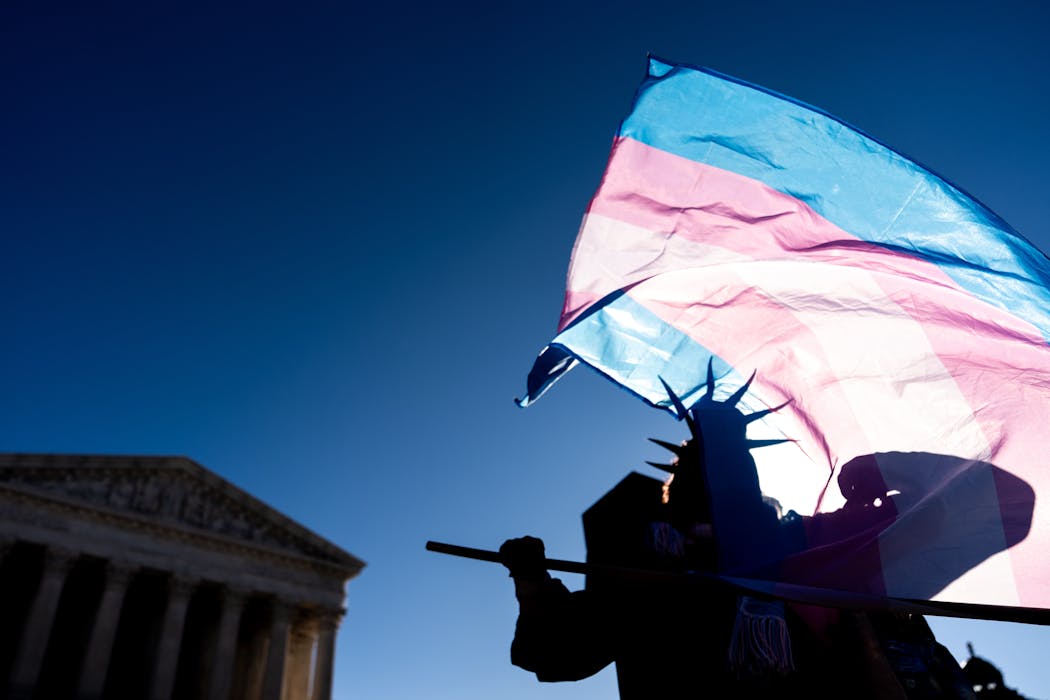
Anti-trans bills effectively restrict transgender people’s ability to participate fully in society. AP Photo/Julia Demaree Nikhinson

The number of bills directly targeting and undermining the existing legal rights of transgender and nonbinary people in the U.S. has been escalating, with sharp increases since 2021 and with each consecutive year. Kansas dealt the most radical blow yet on Feb. 26, 2026, as a law that immediately invalidates state-issued driver’s licenses, identification cards and birth certificates for holders whose gender marker does not match their sex assigned at birth took effect overnight.

This new law, called the House Substitute for Senate Bill 244, passed after legislators overrode the governor’s veto to rush it through legislation.

There is no grace period for this law, meaning trans and nonbinary people will have immediately invalid documents putting them at risk of a US$1,000 fine and up to six months in jail for driving with an invalid license. The law also restricts bathroom use to assigned sex at birth, and it allows citizens to sue transgender people for up to $1,000 for not complying.

While 21 states have passed similar bathroom restrictions, Kansas is the first to invalidate state-issued identification documents that were legally obtained.

We are researchers who study how marginalization and resilience affect the lives of trans and nonbinary people. Our work has documented how lack of access to accurate and affirming identification documents affects the health and well-being of this community.

By mandating the use of birth-assigned sex on identity documents, Kansas denies transgender people legal recognition and curtails their freedom of movement. These laws open the door to an even wider range of discriminatory policies.

People holding signs in protest, one reading 'My trans patients risk their health every day, because they are scared to use public restrooms. You just made this so much worse for them. I'll be sending the KS legislature the bill to treat those UTIs'
In addition to invalidating the IDs of transgender people, the Kansas law included what some have called a bounty hunter approach to bathroom restrictions.
AP Photo/John Hanna

ID is essential to participate in society

Invalidating someone’s identification documents has immediate and powerful consequences that cascade into all aspects of their life.

For example, without a valid driver’s license, many trans and nonbinary people will be unable to get to work, attend classes, pick up their children, visit the doctor, see friends or go to the grocery store. Trans and nonbinary people who need to drive with an invalid license risk fines and jail time, where they would be housed according to their sex assigned at birth.

Taking a train or bus is not a solution that would work for many people. Almost half of the U.S. population does not have access to public transportation, and for those who do, it is often poorly maintained, sparse or unreliable. The two transgender men who sued the state of Kansas to block the law noted how loss of their ability to drive makes them unable to work.

The effects of invalidating someone’s legal documents goes far beyond just transportation. Legal IDs are required to access health care, obtain housing, have a job, vote, attend college, access financial assistance or even purchase cold medicine at a pharmacy.

Health effects of incorrect ID

Not having identification documents with the correct gender marker also poses a safety and health risk.

Trans and nonbinary people who have not updated their identification documents are more likely to experience psychological distress and suicidality, in part due to increased day-to-day stress. For trans and nonbinary people whose physical appearance no longer aligns with their ID, not having updated documents puts them at increased risk for harassment and violence.

Roughly a quarter of trans and nonbinary people who have not updated their identification documents experience subsequent mistreatment when showing their IDs, including verbal harassment, assault and denial of services or access to settings. In our research, we similarly found that not having one’s gender legally affirmed is associated with greater discrimination and social rejection – one pathway to negative effects on mental and physical health.

To comply with the current law sets up an impossible situation for many trans and nonbinary people who have been using the restroom aligning with their gender identity and presentation for years. These individuals are set up to face violence, legal action or criminal penalties even when they are complying with the law, as using the restroom aligned with their sex assigned at birth will appear to others as contradicting their gender presentation.

Researchers and public health officials consider accurate and affirming identification documents an essential determinant of health. The World Health Organization, United Nations and the World Professional Association for Transgender Health have called for trans and nonbinary people to have the right to legal recognition of their gender.

Small LGBTQ+ and trans pride flags adorn two legislators' desks
Hundreds of anti-trans bills have circulated in the courts since 2021.
AP Photo/John Hanna

Another blow in a broader battle

The Kansas law is a flash point in the ongoing battle across the country for legal recognition of trans and nonbinary people’s existence.

The process for gender marker changes varies widely across states. Some require documentation of medical procedures to affirm one’s gender, while some do not allow gender marker changes at all. Some allow for gender-neutral gender markers, like the letter X.

According to the 2022 U.S. Trans Survey, which had over 92,000 participants, 59% of trans and nonbinary people have not updated their gender on any of their documents, and 23% have some of their documents updated but not others. This law and others like it will disadvantage even more trans and nonbinary people.

To us, this is about more than access to driving a car – it is a direct attack on the ability of trans and nonbinary people to live and survive. As of February 2026, 711 bills are under consideration across 41 states, with 110 at the national level. The restrictions these bills propose are far-reaching – prohibiting access to gender-affirming medical care, prohibiting students from using their chosen names and pronouns, banning trans and nonbinary youth from participating in sports, restricting access to bathroom facilities and censoring public education on issues related to gender.

In the face of these legislative efforts to control and erase trans and nonbinary people from public life, trans and nonbinary people, along with their allies, continue to stand up for each other and fight for their rights.

The Conversation

Jae A. Puckett co-leads the Gender Affirmation Project.

Noelle Martin is affiliated with the Gender Affirmation Project.

L. Zachary DuBois does not work for, consult, own shares in or receive funding from any company or organization that would benefit from this article, and has disclosed no relevant affiliations beyond their academic appointment.

ref. Kansas revoked transgender people’s IDs overnight – researchers anticipate cascading health and social consequences – https://theconversation.com/kansas-revoked-transgender-peoples-ids-overnight-researchers-anticipate-cascading-health-and-social-consequences-277052

Trump and Netanyahu want regime change, but Iran’s regime was built for survival. A long war is now likely

Source: MIL-OSI-Submissions-English

Source: The Conversation – Global Perspectives – By Amin Saikal, Emeritus Professor of Middle Eastern Studies, Australian National University; The University of Western Australia; Victoria University

The joint US–Israel strikes on Iran, which killed the Iranian supreme leader, Ayatollah Ali Khamenei, and Tehran’s retaliatory strikes on Israel and neighbouring Arab countries have again plunged the Middle East into war.

US President Donald Trump and Israeli Prime Minister Benjamin Netanyahu said their aim is to bring about a favourable regime change in Iran. The implications of this for Iran, the region and beyond should not be underestimated.

Although Khamenei’s killing is a significant blow to the Islamic regime, it is not insurmountable. Many Iranian leaders have been killed in the past, including Qassem Soleimani, Tehran’s regional security architect, who was assassinated by the US in January 2020.

But they have been replaced relatively smoothly, and the Islamic regime has endured.

Khamenei’s departure is unlikely to mean the end of the Islamic regime in the short run. He anticipated this eventuality, and reportedly last week arranged a line of succession for his leadership and that of senior military, security and political leaders if they were “martyred”.

However, Khamenei was both a political and spiritual leader. He has commanded followers not only among devout Shias in Iran, but also many Muslims across the wider region. His assassination will spur some of them to seek revenge, potentially sparking a wave of extremist violent actions in the region and beyond.

A regime built for survival

Under a constitutional provision of the Islamic Republic, the Assembly of Experts – the body responsible for appointing and dismissing a supreme leader – will now meet and appoint an interim or long-term leader, either from among their own ranks or outside.

There are three likely candidates to be his successor:

  • Gholam-Hossein Mohseni-Eje’i, the head of the judiciary
  • Ali Asghar Hejazi, Khamenei’s chief-of-staff
  • Hassan Khomeini, the grandson of the founder of the Islamic Republic, Ayatollah Rohullah Khomeini.

The regime has every incentive to do what it must to ensure its survival.
There are many regime enforcers and defenders, led by the Islamic Revolutionary Guard Corps (IRGC) and its subordinate paramilitary Basij group, across the country to suppress any domestic uprisings and fight for the endurance of the regime.

Their fortunes are intimately tied to the regime. So are a range of administrators and bureaucrats in the Iranian government, as well as regime sympathisers among ordinary Iranians. They are motivated by a blend of Shi’ism and fierce nationalism to remain loyal to the regime.

Trump and Netanyahu have called on the Iranian people – some 60% of whom are below the age of 30 – to topple the regime once the US-Israeli operations have crippled it.

Many are deeply aggrieved by the regime’s theocratic impositions and dire economic situation and took to the streets in protests in late 2025 and early 2026. The regime cracked down harshly then, killing thousands.

Could a public uprising happen now? So far, the coercive and administrative state apparatus seems to be solidly backing the regime. Without serious cracks appearing among these figures – particularly the IRGC – the regime can be expected to survive this crisis.

Global economic pain

The regime has also been able to respond very quickly to outside aggression. It has already hit back at Israel and US military bases across the Persian Gulf, using short-range and long-range advanced ballistic missiles and drones.

While many of the projectiles have been repelled, some have hit their targets, causing serious damage.

The IRGC has also set out to choke the Strait of Hormuz – the narrow strategic waterway that connects the Persian Gulf to the Gulf of Oman and Indian Ocean. Some 20% of the world’s oil and 25% of its liquefied gas flows through the strait every day.

The United States has vowed to keep the strait remain open, but the IRGC is potentially well-placed to block traffic from going through. There could be serious implications for the global energy supply and broader economy.

Both sides in this conflict have trespassed all of the previous red lines. They are now in open warfare, which is engulfing the entire region.

A prolonged war looks likely

If there was any pretence on the part of Washington and Jerusalem that their attacks would not lead to a regional war, they were wrong. This is
already happening.

Many countries that have close cooperation agreements with Iran, including China and Russia, have condemned the US-Israeli actions. The United Nations secretary-general António Guterres has also urgently called for de-escalation and a return to diplomatic negotiations, as have many others.

But the chances for this look very slim. The US and Iran were in the middle of a second round of talks over Tehran’s nuclear program when the attacks happened. The Omani foreign minister, who mediated between the two sides, publicly said just days ago that “peace was within reach”.

But this was not enough to convince Trump and Netanyahu to let the negotiations continue. They sensed now was the best time to strike the Islamic Republic to destroy not just its nuclear program but also its military capability after Israel degraded some of Tehran’s regional affiliates, such as Hamas and Hezbollah, and expanded its footprint in Lebanon and Syria over the last two and a half years.

While it is difficult to be definitive about where the war is likely to lead, the scene is set for a long conflict. It may not last days, but rather weeks. The US and Israel do not want anything short of regime change, and the regime is determined to survive.

With this war, the Trump leadership is also signalling to its adversaries – China, in particular – that the US remains the preeminent global power, while Netanyahu is seeking to cement Israel’s position as the dominant regional actor.

Pity the Iranian people, the region and the world that have to endure the consequences of another war of choice in the Middle East for geopolitical gains in an already deeply troubled world.

The Conversation

Amin Saikal does not work for, consult, own shares in or receive funding from any company or organisation that would benefit from this article, and has disclosed no relevant affiliations beyond their academic appointment.

ref. Trump and Netanyahu want regime change, but Iran’s regime was built for survival. A long war is now likely – https://theconversation.com/trump-and-netanyahu-want-regime-change-but-irans-regime-was-built-for-survival-a-long-war-is-now-likely-277193

Joseph Kony: how a Ugandan war criminal and his soldiers have evaded capture and endured for decades

Source: MIL-OSI-Submissions-English

Source: The Conversation – Africa (2) – By Kristof Titeca, Professor in International Development, University of Antwerp

Joseph Kony, the leader of the Lord’s Resistance Army (LRA), remains at large two decades after the International Criminal Court issued its first arrest warrants against him and four of his commanders.

The LRA emerged nearly 40 years ago. Between 1987 and 2006, northern Uganda’s civilians were caught between LRA brutality – massacres and mass abductions – and a government counterinsurgency. This forced nearly two million people into camps for internally displaced people.

The LRA framed its struggle as resistance to President Yoweri Museveni and the sidelining of the Acholi, the dominant ethnic group in northern Uganda. However, over time violence ceased to be merely a strategy. It became the organising logic of the movement itself.

The YouTube video Kony 2012, produced by the American advocacy organisation Invisible Children, went viral in 2012. It turned a long war into a global cause célèbre. In 2013, Washington followed with a US$5 million bounty, which remains in place.

The International Criminal Court arrest warrants were for war crimes and crimes against humanity between 1 July 2002 (when the court’s jurisdiction took effect) and July 2005 (when the arrest warrants were issued).

Today, the LRA is no more than a small, mobile group (possibly 12 to 20 fighters) living off trade, agriculture and protection in one of Africa’s least governed border zones. It operates within the remote borderlands of the Central African Republic (CAR), Sudan and the Democratic Republic of Congo (DRC).

The LRA may now be small, but its survival matters.

Kony’s continued evasion of arrest – despite two decades of warrants, bounties and military operations – exposes the limits of both regional security cooperation and international justice. Recent intelligence and defector accounts suggest he is still alive, operating in the Sudan-CAR borderlands.

As long as he remains at large, the International Criminal Court’s first arrest warrants risk becoming a symbol – not of global justice, but of its limits.

I have been researching the LRA for more than 20 years and in a recently published article, I answer the question: how has the group survived, even in extreme decline?

Drawing on interviews with former combatants, local actors and policymakers, my analysis looks as the LRA’s evolving strategies of endurance since 2011.

Two things have been crucial: borderlands and the lack of political priority.

Borderlands – particularly between Sudan and the CAR, and to a lesser extent with the DRC – have offered Kony and his LRA members a way to disappear, to trade and to buy protection.

At the same time, the shifting political priorities of the states tracking Kony have repeatedly undermined their own goals.

Why borderlands matter

Given their weak state presence, borderlands are often described as peripheral, marginal or forgotten. But in much of Africa, they are not empty spaces. They are active political and economic zones, shaped by cross-border networks of trade, migration, armed mobilisation and patronage.

For rebel groups, borderlands offer a particular set of advantages: access to sanctuaries across borders; rough terrain and low population density; cross-border trade routes; and opportunities to link into alternative centres of power.

This is precisely the kind of environment in which the LRA has been operating.

For roughly two decades, between 1987 and 2006, the LRA was primarily fighting a Ugandan war. The conflict produced vast civilian suffering, including the displacement of nearly two million people into camps – what has been described as “social torture”.

From 1994 onwards, southern Sudan became crucial to the war, as Khartoum offered the LRA sanctuary and weapons. Further, before peace talks began in 2006 between Uganda and an LRA delegation, the rebel group crossed into the DRC and established itself in the dense and (at the time) mostly ungoverned Garamba National Park.

Following the collapse of negotiations, Uganda launched Operation Lightning Thunder in late 2008. The operation failed, and the LRA retaliated with massacres in north-eastern DRC in 2008-10.

These attacks were the LRA’s last moment of large-scale violence. Military pressure did not destroy the group, but fragmented it and pushed it out of the DRC.

Anticipating further offensives, the LRA began moving into the remote borderlands between the CAR, Sudan and South Sudan.

By 2010, it was operating around the contested Kafia Kingi enclave – a strip of territory that is, in principle, part of South Sudan but has long been controlled by Sudan.

From this point onward, Kony’s strategy shifted: the group reduced attacks, limited abductions and tried to become less visible.

It was no longer trying to win a war, but trying to avoid being found.

The borderland economy

As looting declined, the LRA needed income streams that attracted little attention. Trade and agriculture became central. In the Sudan-CAR borderlands, established routes for licit goods like bamboo intersect with trade in cannabis, gold, ivory and diamonds.

The LRA did not only participate in this economy, but also taxed it. It set up checkpoints along trading routes. It also cultivated a variety of crops on a large scale and was active in the trade of honey.

All of this allowed the group to survive quietly from around 2010 onwards, and become part of the border landscape. Its relationships included nomadic cattle herders, armed groups in the CAR and elements of the Sudanese military.

Kony also bought protection with the proceeds of illicit trade. Armed groups provided warnings about military threats and information about who was moving where. When necessary, Kony could move across borders quickly.

But borderlands are not only spaces of opportunity: they are also volatile.

Under military pressure, Kony divided his troops into smaller units to avoid detection. That made control harder. His violent internal rule – including the killing of commanders – pushed more people towards defection, leading to two splinter groups in 2014 and 2018.

They still operated under the LRA banner (in the CAR-DRC borderlands), but were no longer under Kony’s command. In 2023, through the work of the Dutch NGO PAX and Congolese NGO APRU, and amid growing insecurity, these groups demobilised in the largest LRA defection ever.

The outbreak of war in Sudan in 2023 disrupted the borderland economy. Trade slowed dramatically, increasing hardship and fuelling more defections.

The politics of the chase

The LRA has not been a security priority for Uganda, the CAR, the DRC, Sudan or South Sudan for decades.

The group operates far from capitals, poses little direct threat to state power and is expensive to pursue.

It has largely disappeared from the American political horizon. Advocacy networks that once kept the issue alive have faded.

Even when Kony’s location has been known by various intelligence services and analysts, it has not reliably triggered action. As my recent article shows, this was the case as recently as 2022-2023. In April 2024, reports surfaced that the Wagner group had attacked Kony’s trading camp in eastern CAR – but failed to capture him.

The end game that never arrives

The LRA’s survival reflects the sanctuary offered by borderlands, and uneven and inconsistent political will, shaped by shifting interests that often have little to do with justice for victims.

The ICC hearings in November 2025 that confirmed war crimes charges against Kony underline this paradox. While the court has built a legal case against him, the conditions that have kept him alive remain largely intact.

The Conversation

Kristof Titeca does not work for, consult, own shares in or receive funding from any company or organisation that would benefit from this article, and has disclosed no relevant affiliations beyond their academic appointment.

ref. Joseph Kony: how a Ugandan war criminal and his soldiers have evaded capture and endured for decades – https://theconversation.com/joseph-kony-how-a-ugandan-war-criminal-and-his-soldiers-have-evaded-capture-and-endured-for-decades-276680

Trump’s tariffs have gutted Agoa’s duty‑free promise: our model shows how

Source: MIL-OSI-Submissions-English

Source: The Conversation – Africa – By Tim Vogel, Researcher, German Institute of Development and Sustainability (IDOS)

The African Growth and Opportunity Act (Agoa) was introduced in 2000 as the cornerstone of US development-oriented trade policy towards sub-Saharan Africa. It was designed to grant eligible countries duty-free access to the US market.

In February 2026, President Donald Trump signed a one-year extension after the programme lapsed in September 2025.

Yet the programme’s core benefit has already been effectively eliminated.

Since April 2025, the US has imposed additional bilateral “reciprocal” tariffs ranging lately from 10% to 30% on countries eligible for the Agoa terms. Critically, Agoa only waives the standard tariff rate the US applies to all World Trade Organisation members (called the Most Favoured Nation tariff). This averaged just 3.3% in 2017.

The US Supreme Court struck down the much larger reciprocal surcharges on 20 February 2026. But the White House responded immediately, imposing a 15% surcharge on most imports, effective 24 February 2026 for 150 days.

Agoa technically lives on after a one-year extension. But its main advantage has largely disappeared since the US added tariffs on top of it.

As economists and trade modellers at the German Institute of Development and Sustainablity, we are interested in quantifying the effects of the changing US tariff regime. We ran a model that captures economy-wide adjustments across sectors and countries after a tariff shock via prices, production, consumption and trade diversion.

Our simulations show that new Trump-era tariffs drive large declines in US-bound exports from Africa. The steepest damage is in a few Agoa-dependent countries and sectors such as apparel. Our results remain valid after the latest shift to the 15% tariff surcharge.

African exporters face substantial duties. Agoa offers only a modest advantage over other developing countries still subject to Most Favoured Nation status tariffs.

Thus, the promise of duty-free access has been hollowed out.

When preferences vanish but ‘America First’ stays

Our simulations of the “Liberation Day” tariff package – the April 2025 “America First” tariffs applied on top of Agoa expiry – show that Agoa-eligible countries do lose out, but the aggregate effect on all countries at large is relatively small.

Agoa countries’ exports to the US fall sharply by 34.7%. But in context of their global exports the decline equates only to 1.1%. Real GDP of Agoa-eligible countries remains largely unchanged.

Behind this average, however, some countries and sectors are hit hard. Lesotho’s total exports could drop by about 5.9%, Madagascar’s by 3.3%, and those of both Chad and Botswana by 1.9%.

Wearing apparel is the most affected sector: bilateral Agoa exports to the US fall by nearly half. For Madagascar and Mauritius they are almost wiped out, with losses of roughly US$128.5 million and US$147 million respectively.

According to our latest simulation updates accounting for the lower November 2025 tariff rates, negotiating tariff cuts with Washington or accepting US concessions seem to change little. Agoa-eligible countries still face a 9.2 percentage point rise in their trade-weighted average US tariff (vs 14.8 percentage points in April), leading to a fall of Agoa exports to the US by 9.6%.

Total exports in our simulation decline only by 0.7% as trade diversion to other markets offsets over 40% of US losses.

The limits of preferences

Even before the “Liberation Day” tariffs, Agoa’s effectiveness was limited. Our simulations of a simple shift from Agoa preferences to standard Most Favoured Nation tariffs show only modest impacts on beneficiary countries. Bilateral exports to the US fall by 3.7%, but total exports for Agoa-eligible countries decline by just 0.1%.

This underscores how little Agoa mattered for African trade growth on a larger scale.

This limited effectiveness stems from three main factors.

First, for most sub-Saharan Africa economies, the US is no longer the primary export destination. EU and Chinese markets have become more important.

Second, meeting Agoa’s rules of origin – if a product qualifies for the preferences based on location of value creation – is often costly. In contrast, the tariff advantage has been narrow due to already low US Most Favoured Nation rates.

Third, uncertainty over programme renewals and eligibility reviews has long discouraged firms from investing in Agoa compliance.

To make Agoa work for development again would require substantial reforms. These would need to include:

  • longer timelines and automatic continuation provisions

  • more predictable eligibility through transparent biennial reviews

  • updated rules of origin

  • broader coverage of increasingly important trade issues, such as digital trade, services, as well as non-tariff related trade barriers.

The bipartisan Agoa Renewal and Improvement Act of 2024 proposed some of these improvements, including a 16-year extension to 2041. But it stalled under the “America First” priorities.

Alternatives

In practice, deep reform looks unlikely amid volatile tariffs and short extensions, leaving Agoa increasingly irrelevant.

African policymakers must look elsewhere for new trade opportunities.

China’s new zero-tariff policy for 53 African countries beginning 1 May 2026 offers some relief from US protectionism.

Covering all tariff lines, it extends previous preferences for the continent’s 33 least developed countries to a much wider group of African partners. Middle-income exporters such as Kenya, South Africa, Nigeria, Egypt and Morocco stand to benefit. These countries previously faced Chinese tariffs of up to 25% on processed goods. They will now gain duty-free access on the same terms as the poorest African economies.

Such policies have boosted export diversification modestly for least developed countries in the past. But the benefits will depend on product fit and value-chain dynamics. Until now African exports to China have largely been dominated by low-value, primary products. African countries would need substantial investments to make use of preferential market access to China.

Beyond Chinese offers, the EU offers a stable partnership with substantial market scale. Its own unilateral tariff preferences through Generalised System of Preferences, Everything But Arms and reciprocal Economic Partnership Agreements provide more predictable access than the US tariff rollercoaster.

On top of this, the EU actively tries to pursue strategic alignment around critical raw materials, green energy and sustainable investment. It does this via Clean Trade and Investment Partnerships and Sustainable Investment Facilitation Agreements.

Developing countries, however, often criticise the EU sustainability measures or costly compliance to EU standards which worsen their trade opportunities. Hence, the EU has to find a better balance of its sustainable trade and development playbook to build trust with the global south.

What needs to be done

African policymakers should seize this moment to build a foundation for a trade system that doesn’t depend on uncertain preferences and external policy shocks. Accelerating the African Continental Free Trade Area (AfCFTA) serves as the most credible route to trade resilience, diversification and industrial upgrading.

The free trade area agreement can’t immediately replace US demand (different products, limited value-chain overlap). But it can reduce structural vulnerability to external shocks like US tariff volatility.

The Conversation

Tim Vogel receives funding from the German Federal Ministry for Economic Cooperation and Development (BMZ).

Zoryana Olekseyuk receives funding from the German Federal Ministry for Economic Cooperation and Development (BMZ). .

ref. Trump’s tariffs have gutted Agoa’s duty‑free promise: our model shows how – https://theconversation.com/trumps-tariffs-have-gutted-agoas-duty-free-promise-our-model-shows-how-276641

Despite massive US attack and death of Ayatollah, regime change in Iran is unlikely

Source: MIL-OSI-Submissions-English

Source: The Conversation – USA – By Donald Heflin, Executive Director of the Edward R. Murrow Center and Senior Fellow of Diplomatic Practice, The Fletcher School, Tufts University

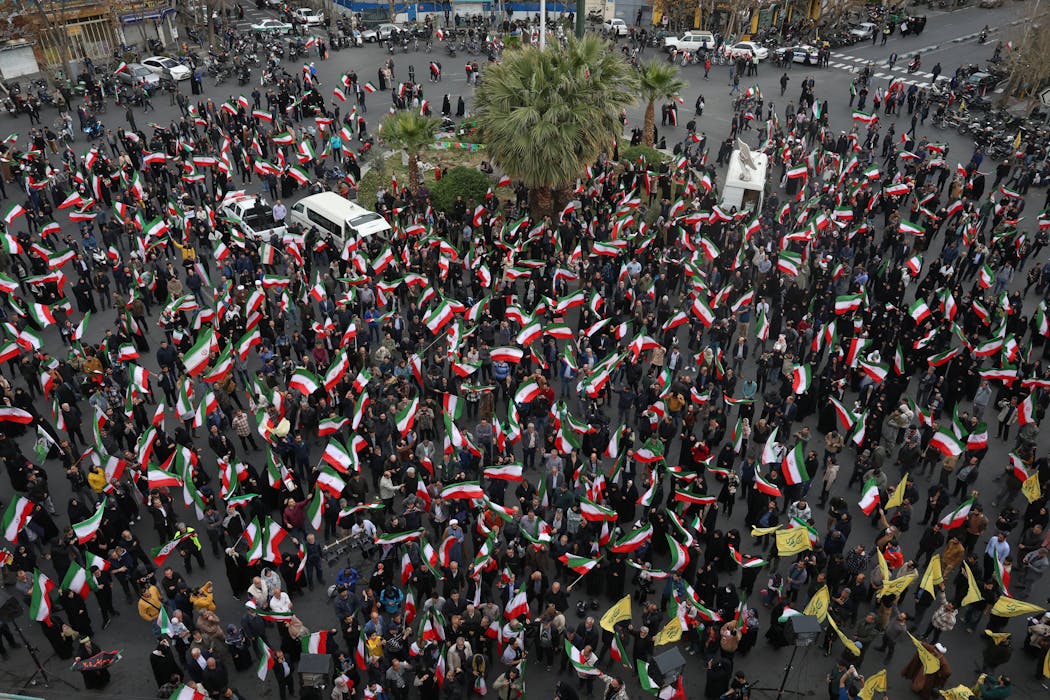
A group of demonstrators in Tehran wave Iranian flags in support of the government on Feb. 28, 2026 AP Photo/Vahid Salemi

After the largest buildup of U.S. warships and aircraft in the Middle East in decades, American and Israeli military forces launched a massive assault on Iran on Feb. 28, 2026.

President Donald Trump has called the attacks “major combat operations” and has urged regime change in Tehran. Iranian media reported Supreme Leader Ayatollah Ali Khamenei was killed in the strikes.

To better understand what this means for the U.S. and Iran, Alfonso Serrano, a U.S. politics editor at The Conversation, interviewed Donald Heflin, a veteran diplomat who now teaches at Tufts University’s Fletcher School.

Widespread attacks have been reported across Iran, following weeks of U.S. military buildup in the region. What does the scale of the attacks tell you?

I think that Trump and his administration are going for regime change with these massive strikes and with all the ships and some troops in the area. I think there will probably be a couple more days’ worth of strikes. They’ll start off with the time-honored strategy of attacking what’s known as command and control, the nerve centers for controlling Iran’s military. From media reporting, we already know that the residence of Khamenei was attacked.

What is the U.S. strategic end game here?

Regime change is going to be difficult. We heard Trump today call for the Iranian people to bring the government down. In the first place, that’s difficult. It’s hard for people with no arms in their hands to bring down a very tightly controlled regime that has a lot of arms.

The second point is that U.S. history in that area of the world is not good with this. You may recall that during the Gulf War of 1990-1991, the U.S. basically encouraged the Iraqi people to rise up, and then made its own decision not to attack Baghdad, to stop short. And that has not been forgotten in Iraq or surrounding countries. I would be surprised if we saw a popular uprising in Iran that really had a chance of bringing the regime down.

Several men wave flags in front of a building.
A group of men wave Iranian flags as they protest U.S. and Israeli strikes in Tehran, Iran, on Feb. 28, 2026.
AP Photo/Vahid Salemi

Do you see the possibility of U.S. troops on the ground to bring about regime change?

I will stick my neck out here and say that’s not going to happen. I mean, there may be some small special forces sent in. That’ll be kept quiet for a while. But as far as large numbers of U.S. troops, no, I don’t think it’s going to happen.

Two reasons. First off, any president would feel that was extremely risky. Iran’s a big country with a big military. The risks you would be taking are large amounts of casualties, and you may not succeed in what you’re trying to do.

But Trump, in particular, despite the military strike against Iran and the one against Venezuela, is not a big fan of big military interventions and war. He’s a guy who will send in fighter planes and small special forces units, but not 10,000 or 20,000 troops.

And the reason for that is, throughout his career, he does well with a little bit of chaos. He doesn’t mind creating a little bit of chaos and figuring out a way to make a profit on the other side of that. War is too much chaos. It’s really hard to predict what the outcome is going to be, what all the ramifications are going to be. Throughout his first term and the first year of his second term, he has shown no inclination to send ground troops anywhere.

Speaking of President Trump, what are the risks he faces?

One risk is going on right now, which is that the Iranians may get lucky or smart and manage to attack a really good target and kill a lot of people, like something in Jerusalem or Tel Aviv or a U.S. military base.

The second risk is that the attacks don’t work, that the supreme leader and whoever else is considered the political leadership of Iran survives, and the U.S. winds up with egg on its face.

The third risk is that it works to a certain extent. You take out the top people, but then who steps into their shoes? I mean, go back and look at Venezuela. Most people would have thought that who was going to wind up winning at the end of that was the head of the opposition. But it wound up being the vice president of the old regime, Delcy Rodríguez.

I can see a similar scenario in Iran. The regime has enough depth to survive the death of several of its leaders. The thing to watch will be who winds up in the top jobs, hardliners or realists. But the only institution in Iran strong enough to succeed them is the army, the Revolutionary Guards in particular. Would that be an improvement for the U.S.? It depends on what their attitude was. The same attitude that the vice president of Venezuela has been taking, which is, “Look, this is a fact of life. We better negotiate with the Americans and figure out some way forward we can both live with.”

But these guys are pretty hardcore revolutionaries. I mean, Iran has been under revolutionary leadership for 47 years. All these guys are true believers. I don’t know if we’ll be able to work with them.

Smoke rises over a city center.
Smoke rises over Tehran on Feb. 28, 2026, after the U.S. and Israel launched airstrikes on Iran.
Fatemeh Bahrami/Anadolu via Getty Images

Any last thoughts?

I think the timing is interesting. If you go back to last year, Trump, after being in office a little and watching the situation between Israel and Gaza, was given an opening, when Israeli Prime Minister Benjamin Netanyahu attacked Qatar.

A lot of conservative Mideast regimes, who didn’t have a huge problem with Israel, essentially said “That’s going too far.” And Trump was able to use that as an excuse. He was able to essentially say, “Okay, you’ve gone too far. You’re really taking risk with world peace. Everybody’s gonna sit at the table.”

I think the same thing’s happening here. I believe many countries would love to see regime change in Iran. But you can’t go into the country and say, “We don’t like the political leadership being elected. We’re going to get rid of them for you.” What often happens in that situation is people begin to rally around the flag. They begin to rally around the government when the bombs start falling.

But in the last few months, we’ve seen a huge human rights crackdown in Iran. We may never know the number of people the Iranian regime killed in the last few months, but 10,000 to 15,000 protesters seems a minimum.

That’s the excuse Trump can use. You can sell it to the Iranian people and say, “Look, they’re killing you in the streets. Forget about your problems with Israel and the U.S. and everything. They’re real, but you’re getting killed in the streets, and that’s why we’re intervening.” It’s a bit of a fig leaf.

Now, as I said earlier, the problem with this is if your next line is, “You know, we’re going to really soften this regime up with bombs; now it’s your time to go out in the streets and bring the regime down.” I may eat these words, but I don’t think that’s going to happen. The regime is just too strong for it to be brought down by bare hands.

This article was updated on Feb 28, 2026, to include confirmation of Ayatollah Ali Khamenei’s death.

The Conversation

Donald Heflin does not work for, consult, own shares in or receive funding from any company or organization that would benefit from this article, and has disclosed no relevant affiliations beyond their academic appointment.

ref. Despite massive US attack and death of Ayatollah, regime change in Iran is unlikely – https://theconversation.com/despite-massive-us-attack-and-death-of-ayatollah-regime-change-in-iran-is-unlikely-277180

Ayatollah Ali Khamenei ruled Iran with defiance and brutality for 36 years. For many Iranians, he will not be revered

Source: MIL-OSI-Submissions-English

Source: The Conversation – Global Perspectives – By Andrew Thomas, Lecturer in Middle East Studies, Deakin University

Ayatollah Ali Khamenei, Iran’s supreme leader for 36 years, has been killed in US and Israeli airstrikes on his country, Iranian state media reported.

As one of Iran’s longest-serving leaders, Khamenei was almost as ubiquitous in Iranian society as his predecessor, Ayatollah Ruhollah Khomeini, who founded the Islamic Republic of Iran in 1979.

And despite the fact Khomeini authored the Iranian Revolution, some say Khamenei was actually the most powerful leader modern Iran has had.

In more than three decades as supreme leader, Khamenei amassed unprecedented power over domestic politics and cracked down ever more harshly on internal dissent. In recent years, he prioritised his survival – and that of his regime – above all else. His government brutally put down a popular uprising in December 2025–January 2026 that killed thousands.

Ultimately, though, Khamenei will not be remembered by most Iranians as a strong leader. Nor will he be revered. Instead, his legacy will be the profound weakness his regime brought the Islamic Republic on all fronts.

Khamenei’s rise through the ranks

Khamenei was born in the city of Marshad in northeastern Iran in 1939. As a boy, he began to form his political and religious world view by studying at Islamic seminaries in Najaf and Qom. At 13, he started to embrace ideas relating to revolutionary Islam. These included the teachings of cleric Navab Safavi, who often called for political violence against the rule of the shah of Iran, Mohammad Reza Pahlavi.

Khamenei met Khomeini in 1958 and immediately embraced his philosophy, often referred to as “Khomeinism”.

This world view was informed by anti-colonial sentiment, Shia Islam and elements of social engineering through state planning, particularly when it came to preserving a “just” Islamic society. Khomeinism stipulates that a system of earthly laws alone cannot create a just society – Iran must draw its legitimacy from “God Almighty”.

The concept of velayat-e faqih, also known as guardianship of the jurist, is central to Khomeinism. It dictates that the supreme leader should be endowed with “all the authorities that the Prophet and infallible Imams were entitled”.

Essentially, this means Iran was to be ruled by a single scholar of Shia Islam. This is where Khomeini, and later Khamenei, would draw their sweeping power and control.

From 1962, Khamenei began almost two decades of revolutionary activity against Pahlavi (the shah) on behalf of Khomeini, who was exiled in 1964. Khamenei was arrested by the shah’s secret police in 1971 and tortured, according to his memoirs.

When the shah was overthrown in the Islamic Revolution in 1979, Khomeini returned from exile to become the new supreme leader.

Khamenei was selected to join the Revolutionary Council, which ruled alongside the provisional government. He then became deputy defence minister and assisted in organising the Islamic Revolutionary Guard Corps (IRGC). This military institution – initially created to protect the revolution and supreme leader – would become one of the most powerful political forces in Iran.

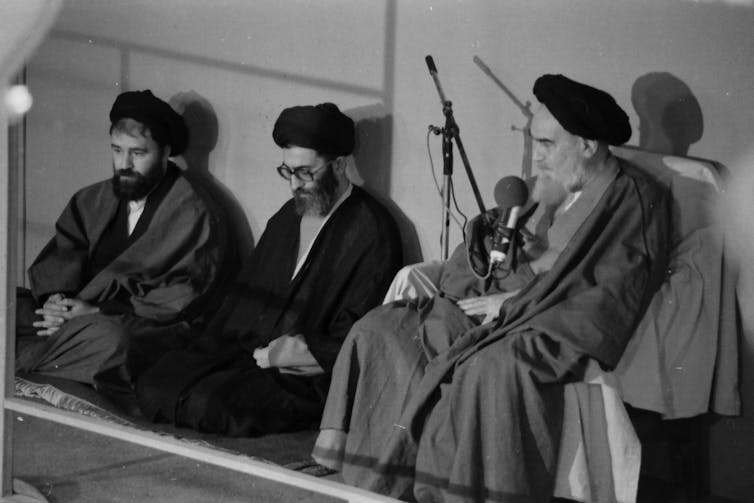
Ayatollah Ruhollah Khomeini (sitting on chair), Ali Khamenei (middle), and Khomeini’s son, Ahmad Khomeini (left), pictured in 1981.
Wikimedia Commons

After surviving an assassination attempt in 1981, Khamenei was elected president of Iran in 1982 and again in 1985. He held the presidency during the majority of the Iran–Iraq war – a conflict that devastated both countries in both human and economic cost.

Although subordinate to the supreme leader, Khamenei wielded significant power compared to later presidents, given the revolution was still very young and the Iraq war posed a great threat to the regime. But he remained in lock-step with Khomeini’s wishes. He also managed to build a close relationship with the IRGC that would go far beyond his presidency.

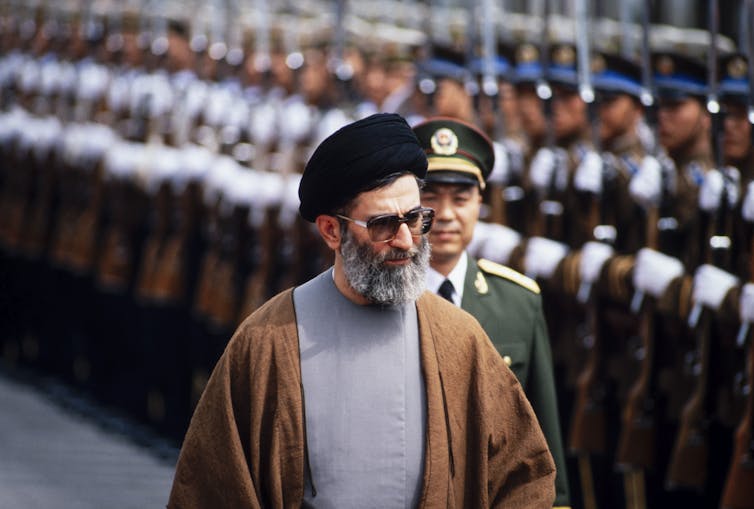
Then-President Ali Khamenei during a state visit to China in May 1989.
Forrest Anderson/Getty Images

A surprising choice for supreme leader

Khomeini died in June 1989 after a period of deteriorating health, with no clear successor.

Khomeini had initially supported Grand Ayatollah Hossein-Ali Montazeri to be his successor. However, Montazeri had become increasingly critical of the supreme leader’s authority and human rights violations in the country. He resigned in 1988 and was put under house arrest until his death in 2009.

Khamenei had the political credentials to lead. He was also a steadfast support of Khomeinism. However, he was seen a surprising choice for supreme leader when he was elected by the Assembly of Experts, a group of Islamic clerics.

In fact, his appointment sparked a significant amount of controversy and criticism. Some Islamic scholars believed he lacked the clerical rank of grand ayatollah, which was required under the constitution to ascend to the position. These critics believed the Iranian people would not respect the word of “a mere human being” without a proper connection to God.

A referendum was held in July 1989 to change the constitution to allow for a supreme leader who has shown “Islamic scholarship”. It passed overwhelmingly and Khamenei became an ayatollah.

Khamenei’s position had been consolidated on paper, but despite being president since 1982, he did not enjoy the same popularity as Khomeini within both the clerical elite and general public.

The constitutional amendments, however, had given Khamenei significantly more power to intervene in political affairs. In fact, he had far more power as supreme leader than Khomeini ever enjoyed.

This included the ability to determine general policies, appoint and dismiss members of the Council of Guardians, and order public referendums. He also had enough power to silence dissent with relative ease.

Consolidating power over the decades

Khamenei worked with his presidents to varying degrees, though he exercised his power to undermine legislation when he disagreed with it.

For example, he largely backed the economic agenda of President Hashemi Rafsanjani (who served from 1989 to 1997), but he often stood in the way of Mohammad Khatami (1997–2005) and Hassan Rouhani (2013–21). Both had attempted to reform Iran’s political system and foster a better relationship with the West.

Khamenei’s most famous intervention in domestic politics occurred after the first term of President Mahmoud Ahmadinejad (2005–13). After Ahmadinejad claimed victory in the disputed 2009 presidential election, thousands of Iranians took to the streets in one of the largest protest movements since the revolution. Khamenei backed the election result and cracked down harshly on the protesters. Dozens were killed (perhaps more), while thousands were arbitrarily arrested.

Khamenei later clashed with Ahmadinejad and warned him against seeking the presidency again in 2017. Ahmadinejad defied him, but was later barred from running.

After the death of hardline President Ebrahim Raisi in a helicopter crash in 2024, Khameini continued his manoeuvring behind the scenes. After the reformist Masoud Pezeshkian won the presidency, Khameini immediately blocked him from negotiating with the United States over sanctions relief and used his influence to thwart his economic reform agenda.

And when protests again broke out at the end of 2025 over the struggling economy, Khamenei again ordered them to be crushed by any means necessary.

A tarnished legacy

Thanks to the powers vested in him in the constitution, Khamenei also had extraordinary control over Iran’s foreign policy.

Like his mentor, Khomeini, he staunchly supported the regime’s resistance to what it considered “Western imperialism”. He was also a key architect of Iran’s regional proxy strategy, funding militant groups like Hezbollah, Hamas, the Houthis and others to carry out Iran’s military objectives.

Khamenei had, at times, been amenable to cooperation with the West – namely negotiating with the US over Iran’s nuclear enrichment program.

During the first Trump administration, however, Khamenei returned to a staunchly anti-Western posture. His government railed against Trump’s scuttling of the 2015 nuclear deal, the reimposed economic sanctions on Iran’s energy sector and the assassination of the head of the IRGC’s Quds force, Qassem Soleimani.

After Trump returned to office in 2025, Iran grew even weaker. And Khamenei’s anti-Western posture began to look increasingly hollow. Iran’s defeat in the 12-day war with Israel in 2025 shredded whatever legitimacy his regime had left.

In the months that followed, Khamenei ruled over a population increasingly resentful of the Iranian political system and its leadership. In the 2025–26 protests, some openly chanted for Khamenei’s death.

When Khomenei died in 1989, his state funeral was attended by millions. Mourners pulled him out of his coffin and scrambled for sacred mementos.

Though Khameini served longer, Iranians will likely not show the same grief for him.

The Conversation

Andrew Thomas does not work for, consult, own shares in or receive funding from any company or organisation that would benefit from this article, and has disclosed no relevant affiliations beyond their academic appointment.

ref. Ayatollah Ali Khamenei ruled Iran with defiance and brutality for 36 years. For many Iranians, he will not be revered – https://theconversation.com/ayatollah-ali-khamenei-ruled-iran-with-defiance-and-brutality-for-36-years-for-many-iranians-he-will-not-be-revered-259268