
Dance scenes in South African rock art: a closer look at ritual, music and movement

Source: The Conversation – Africa – By Joshua Kumbani, Postdoctoral fellow, University of Tübingen

Rock art is widespread across southern Africa and includes a wide range of depictions such as human figures, animals, dots, handprints, and other painted or engraved imagery on rock surfaces. The rock art tradition of paintings was made by San hunter gatherers over thousands of years.

The first dance scenes in southern African rock art were documented 100 years ago. But there’s been some confusion as to whether certain scenes could indeed be interpreted as a dance.

Dance can be simply defined as intentional and organised bodily movement. It also functions as an expression of mood and a form of nonverbal communication. In southern African cultures, dance is also performed during moments of celebration and in ritual contexts. Sometimes dancers go into a trance.

Scholars in the past have interpreted the dances in San rock art as ritual dances, mainly trance dances. But ethnography (the study of living people) points to the fact that San communities also danced for leisure and entertainment. Hence the need to systematically examine and categorise dancing scenes in the rock art.

We are archaeologists with a special interest in sound and music in rock art. In a recent study, we examined selected dancing scenes in rock art from four of South Africa’s provinces: the Free State, KwaZulu-Natal, the Eastern Cape and the Western Cape. The aim was to categorise the different types of dances depicted and to explore whether all dancing scenes represent ritual performances or whether some might reflect entertainment or leisure activities.

We concluded that some of the performances depicted were likely undertaken for leisure and enjoyment rather than ritual purposes.

We hope that our study provides a way to categorise dancing scenes in San rock art. This framework can be refined and expanded by future researchers working in music archaeology, the study of sound and its effects, or the iconographic analysis of musical instruments and dance imagery (working out what the images mean). This kind of research also helps people appreciate their music heritage from the past.

Sources and categories

Our article examined selected dancing scenes through a literature review and by consulting the African Rock Art Digital Archive database curated by the Rock Art Research Institute at the University of the Witwatersrand.

We consulted foundational works on rock art by pioneers George Stow and Dorothea Bleek (1930), and by more recent scholars such as Patricia Vinnicombe and David Lewis-Williams. Ethnographic accounts by Lorna Marshall (1969, 1976), Richard Katz (1982) and Megan Biesele (1993) of dance among San communities in the Kalahari (Botswana) and Nyae Nyae (Namibia) regions further informed our analysis.


Read more:
An enigmatic theme in San rock paintings is finally unlocked


We identified three broad categories of dances in the ethnographic records: ritual dances, circumstantial dances, and entertainment dances. Some circumstantial dances were performed to celebrate a successful hunt, while entertainment dances included those celebrating a newlywed couple, as well as dances done simply for fun and games by boys and girls.

We therefore argue that dancing scenes in the archaeological record should be examined critically: not all of them depict rituals.


Read more:
What archaeology tells us about the music and sounds made by Africa’s ancestors


Six points of identification

To systematically identify dancing scenes, we applied six analytical attributes:

  • body postures, including bent figures, outstretched arms and flexed legs

  • paraphernalia held by dancers, such as sticks, rattles or headgear

  • interaction between dancers

  • evidence of synchrony (moving in unison)

  • direction of movement

  • the gender of the figures represented.

In the following section, we provide examples of different kinds of dances in rock art and suggest how they may be interpreted on the basis of ethnographic information.

Ritual dances

Our study identified several ritual dances depicted in the rock art, including the trance or medicine dance. (An example is the Attakwas Kloof dance image above, from a site in the Klein Karoo in the Western Cape.) This is one of the most widespread dances among San communities. It is a communal healing practice in which medicine men, believed to possess healing powers, treat the sick through touch and dispel harmful spirits or misfortune.

During the trance dance, men dance while women sing and clap in accompaniment. Some of the male dancers serve as healers. The dancers move in a circular pattern, stamping their feet until a shallow furrow forms on the ground. Prolonged dancing induces an altered state of consciousness, during which healers may fall or collapse as they enter trance.

In South Africa, several forms of trance dance are depicted in the rock art. These scenes typically show clapping female figures accompanying male dancers, who are often shown bending forward. In some images, however, the clapping figures are absent, and only the dancers are represented.

Ethnographic accounts (for example, Wilhelm Bleek and Lucy Lloyd, 1911: 190) note that leg rattles are commonly used during trance dances to produce a sharp, rhythmic vibration, yet these rattles are not frequently depicted in the rock art. A notable exception comes from the Halstone site in the Eastern Cape (above), where several dancers are shown wearing leg rattles. Some figures balance on dancing sticks and appear to be in an altered state of consciousness, or in a trance.

Female initiation rituals that are accompanied by eland dances, performed during the first menstruation rite, also appear in the rock art.

The women mimic the moves of the female eland, a spiritually important animal. These dances are performed only by women, usually in a secluded space. The dancers move in a circle while bending forward, and the ceremony celebrates a girl’s first menstruation. This interpretation is supported by ethnographic research conducted among San communities in Botswana and Namibia by anthropologists such as Marshall and Biesele.

Other ritual dances depicted in the rock art include boys’ initiation ceremonies, commonly known as the Tshoma. This dance marks the transition from boyhood to manhood and is performed exclusively by males. The ethnographic accounts mentioned above indicate that these ceremonies take place in secluded areas away from the main camp.

We identified some other dance scenes at G3 Site II (Vinnicombe 1976) (below) as possibly circumstantial or leisure dances and we suggested that this could have well been the case for the performance depicted at Witsieshoek (bottom).

It is likely that, because of their non-ritual nature, circumstantial or leisure dances – which ethnographic literature suggests were very common – were only rarely depicted in paintings.

The Conversation

This article is part of the ERC Artsoundscapes project (Grant Agreement No. 787842) that has received funding from the European Research Council (ERC) under the European Union’s Horizon 2020 research and innovation programme. PI: Margarita Díaz-Andreu.

Joshua Kumbani does not work for, consult, own shares in or receive funding from any company or organisation that would benefit from this article, and has disclosed no relevant affiliations beyond their academic appointment.

ref. Dance scenes in South African rock art: a closer look at ritual, music and movement – https://theconversation.com/dance-scenes-in-south-african-rock-art-a-closer-look-at-ritual-music-and-movement-275489
South Korea’s birth rate is rising – but the population is still shrinking

Source: The Conversation – UK – By Gemma Ware, Host, The Conversation Weekly Podcast, The Conversation

leungchopan/Shutterstock

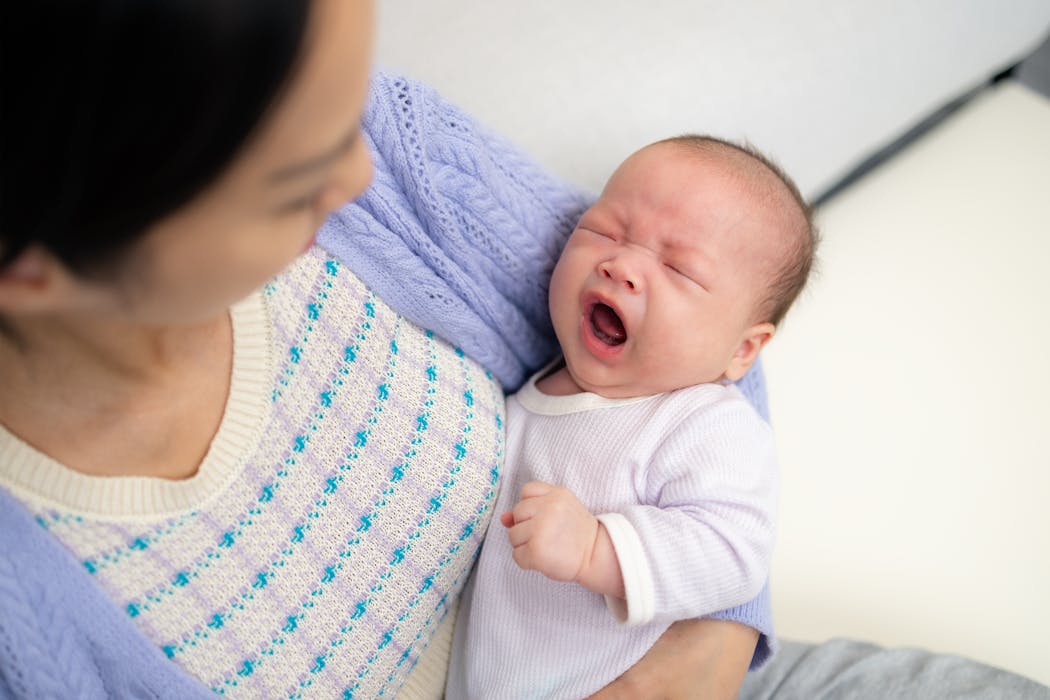
South Korea’s very low birth rate and ageing population have long served as a cautionary tale for other governments worried that they’ll see similar demographic challenges.

But now, for the second year running, more people in South Korea are having children, according to new preliminary data published by the ministry for data and statistics.

The 6.8% rise in births in 2025 is the largest rise since 2007, and has taken the country’s total fertility rate to 0.80, up from 0.75 in 2024. The news is being cautiously celebrated, but with South Korea’s overall population still shrinking, it is yet to reverse its demographic fortunes.

In this episode of The Conversation Weekly podcast, we speak to Stuart Gietel-Basten, a demographer and professor of social science and public policy at Hong Kong University of Science and Technology, about how South Korea has got to this point. Part of the reason is that a generation of so-called “echo-boomers”, born in the 1990s after a relaxation of the coutry’s strict anti-natalist policies, are now starting to have children.

But Gietel-Basten says many of the issues stopping people in South Korea from having children remain, despite huge sums spent by the government on tax incentives, housing benefit and childcare support. “ Unless you change underlying structural issues around gender roles, around work, culture, and so on, then even well-meaning policies are not necessarily going to have the impact that they should,” he says.

Listen to the interview with Stuart Gietel-Basten on The Conversation Weekly podcast. This episode was written and produced by Gemma Ware and Katie Flood. Mixing by Eleanor Brezzi and theme music by Neeta Sarl. Gemma Ware is the executive producer.

Newsclips in this episode from WION.

Listen to The Conversation Weekly via any of the apps listed above, download it directly via our RSS feed or find out how else to listen here. A transcript of this episode is available via the Apple Podcasts or Spotify apps.

The Conversation

Stuart Gietel-Basten is a also guest professor at Osaka University and an adjunct professor at Khalifa University.

ref. South Korea’s birth rate is rising – but the population is still shrinking – https://theconversation.com/south-koreas-birth-rate-is-rising-but-the-population-is-still-shrinking-276924

Self-control is a strength, but being too good at discipline can backfire

Source: The Conversation – Canada – By Christy Zhou Koval, Professor, Smith School of Business, Queen’s University, Ontario

Self-control has long been regarded as one of the strongest predictors of success. Most of us can picture that colleague who never misses a deadline, volunteers for extra projects and keeps everything running smoothly.

Research shows individuals who can resist short-term temptations in pursuit of long-term goals tend to fare better across nearly every aspect of life.

As a researcher who has spent years studying workplace dynamics, I set out to examine what happens to these highly disciplined individuals. What I found was surprising: the very trait that makes them valuable — their high levels of self-control — can also come with hidden costs.

Self-control as a social signal

My colleagues and I conducted six studies examining how people treat others based on their perceived self-control. We defined perceived self-control as a person’s beliefs about someone else’s level of self-control, such as resisting temptations, staying focused and persisting in the pursuit of goals.

Across our studies, self-control functioned as a powerful social signal.

In one study, participants read about a student who either resisted the temptation to purchase music online (demonstrating self-control) or gave in to it, then imagined working with this student on a group project. Participants expected substantially higher performance from the student who had demonstrated self-control, even though resisting an impulse to buy music had nothing to do with academic ability.

We replicated this pattern in a workplace context. Participants read about an employee who either stuck to a savings goal or struggled with it. Even though saving money has nothing to do with job performance, participants expected the self-controlled employee to have an accuracy rate roughly 15 per cent higher than the employee who showed less self-control.

In another experiment, we asked people to delegate proofreading work among student volunteers. Participants consistently assigned about 30 per cent more essays to volunteers they believed had high self-control, compared to those with moderate or low self-control, even when all volunteers were described as academically qualified.

The hidden costs of high self-control

A particularly revealing set of findings suggests that observers typically underestimate the cost of self-control.

In one study, we asked participants to complete a demanding typing task requiring a high degree of self-control. Observers who were told that someone had high self-control estimated the task required less effort. But those actually doing the work found it equally draining regardless of their self-control levels. This perceptual gap is problematic because it demonstrates that exerting self-control is physically costly.

Recent research shows people will pay money to avoid having to exercise self-control. In experiments where dieters could pay to remove tempting food from their presence, most did; and they paid more when stressed or when temptation was stronger.

High self-control individuals are doing more cognitively demanding work than their peers. They are exercising self-control more frequently. And because they do it well, observers don’t see the effort required. Research suggests that people with high self-control are perceived as more robot-like, as if their discipline means they don’t struggle like everyone else.

In one of our studies using 360-degree feedback data, we analyzed archival survey data collected from MBA students and their coworkers and supervisors.

Employees who were higher in self-control reported making more personal sacrifices and feeling more burdened by coworkers’ reliance. Their colleagues, however, did not recognize this burden. While they acknowledged the sacrifices these individuals made, they did not perceive the strain they were under.

The spillover into home life

The more capable you seem, the more you’re asked to carry. For high self-control individuals, that reputation can become a fast track to burnout in the office and at home.

In an experiment with romantic couples, participants with high self-control reported feeling more burdened by their partners’ reliance on them. This sense of burden reduced their overall relationship satisfaction.

When people high in self-control are overwhelmed at home because partners assume they can handle everything, that exhaustion can carry over into work. Similarly, when high self-control individuals are overburdened at work, it can diminish their energy and presence in their personal relationships.

This creates a vicious cycle in which highly self-controlled individuals are asked to do more at both work and at home, and the cumulative demands can result in burnout.

Burnout is a widespread issue in the workplace. A Deloitte survey found that 77 per cent of professionals have experienced burnout at their current job.

Breaking the cycle

Our findings revealed a problematic cycle: the more self-control individuals were perceived to have, the more others expected of them and the more responsibility they were assigned.

For people with high self-control, our findings underscore the importance of setting boundaries in the workplace. Saying yes to everything is unsustainable. Because disciplined employees often make demanding tasks appear effortless, colleagues and loved ones may underestimate how much they are asking of them.

For managers, our findings suggest the importance of distributing responsibilities fairly and checking in with employees about workload. Managers should ask explicitly about their employees’ capacity rather than inferring it from past performance.

Self-control remains one of the most valuable traits a person can have. But when we assume it comes effortlessly to those who demonstrate it, we risk burning out the people we depend on most. Acknowledging the hidden burden is necessary if we want capable people to thrive.

The Conversation

Christy Zhou Koval does not work for, consult, own shares in or receive funding from any company or organisation that would benefit from this article, and has disclosed no relevant affiliations beyond their academic appointment.

ref. Self-control is a strength, but being too good at discipline can backfire – https://theconversation.com/self-control-is-a-strength-but-being-too-good-at-discipline-can-backfire-275634

Four years of bitter conflict in Ukraine

Source: The Conversation – UK – By Jonathan Este, Senior International Affairs Editor, Associate Editor, The Conversation

This article was first published in The Conversation UK’s World Affairs Briefing email. Sign up to receive weekly analysis of the latest developments in international relations, direct to your inbox.


It would be wrong to say Russia’s full-scale invasion of Ukraine, four years ago this week, came out of the blue. For months there had been worrying reports of a huge build-up of Russian troops on Ukraine’s border. Through the winter of 2021/22, Moscow scoffed at suggestions it was planning to invade its neighbour as “alarmist”. But at the same time the Russian president, Vladimir Putin, was making aggressive noises, issuing demands for Nato to pull its troops back from its eastern front and calling for a ban on Ukraine’s accession to the western alliance.

And on February 21, he made a speech in which he called Ukraine “an inalienable part of our own history, culture and spiritual space” which had been taken over by a neo-Nazi “puppet regime” that should be removed.

Still, it was a shock to wake in the early hours of Thursday February 22 to learn that Putin had launched what he called a “special military operation … to protect people who have been subjected to abuse and genocide by the Kyiv regime for eight years”. Images began to emerge of tanks and armoured vehicles with the now-familiar “Z” (a Russian victory symbol) streaming across the borders from Russia and Belarus, the latter the shortest route to the Ukrainian capital Kyiv.

A diagram showing the build-up of Russian troops near the Ukraine borders at the end of 2021.
How Russian forces assembled in the winter of 2021/22, according to US intelligence sources.
US intelligence reported in the Washington Post.

Four years and about 1.8 million casualties later, Russia has gained about 75,000sq km of territory, about 12% of Ukraine to add to the 7% it had occupied since it annexed Crimea and parts of eastern Ukraine in 2014. The war has developed into a “meat-grinder” – Russia’s advances have been glacially slow and very costly, an estimated 78 casualties per square kilometre in 2025.

But if, as many insist, the war on the battlefield itself has slowed into something resembling a stalemate, the geopolitical shifts that have accompanied the conflict have been considerable – particularly since Donald Trump was elected for a second term as US president, promising to end the conflict, “in a single day”. Of course, like many of his campaign promises this has proved to be pie in the sky, but the US president’s cordial relations with Putin, his decision to curtail US financial aid to Kyiv and his apparent support for many of the Russian president’s war aims have come as an unpleasant surprise for Ukraine and its allies.

Another big feature of this war, the biggest armed conflict in Europe since 1945, has been the huge technological changes we’ve seen employed on the battlefield. Stefan Wolff and Tetyana Malyarenko call it the “drone war”, as both sides have become heavily reliant on unmanned autonomous vehicles (UAVs) for both combat and reconnaisance. Wolff – an expert in international security at the University of Birmingham – and Malyarenko – of the National University Odesa Law Academy – have been regular contributors to our coverage of the conflict since February 2022.

This week they are part of a panel of experts analysing the four years of conflict, alongside Wolff’s colleague Mark Webber as well as Scott Lucas of University College Dublin, both also regular contributors. They have looked into the key issues raised by the four years of conflict, including the way the war has been prosecuted, the involvement of the US president and the potential for China and/or Europe to break the stalement: Beijing potentially abandoning its support for Moscow or Europe vastly increasing its support for Ukraine in an attempt to tip the balance in Kyiv’s favour.


Read more:
Ukraine war: after four surprising years, where does it go next? Experts give their view


It’s hard to imagine any reasons to be cheerful about the conflict. But optimists may take heart at the prospect of trilateral talks in March between Ukraine, Russia and the US. Realistically the prospect of the talks achieving anything significant seem pretty bleak at present. Russia continues to take Ukrainian territory and even if these are snail’s pace advances, Putin will consider that they add leverage to Russia’s negotiating position. Ukraine’s president, Volodymyr Zelensky, meanwhile, will consider that the cost of this slow pace of advance, both in terms of casualties and the damage the war is now certainly doing to Russia’s economy, are good reasons to keep going. Surveys suggest he is supported in this by the majority of Ukrainians.

In the end it will probably be sheer exhaustion that forces and end to the conflict, writes Alex Titov of Queen’s University Belfast. Without the wholehearted support of the US president, Ukraine cannot defeat Russia on the battlefield. And, despite the massive advantage in manpower, Russia is really beginning to feel the
effects of this war of attrition – both on the health of its economy and its ability to attract enough new recruits to replace the casualties who are being either killed or wounded faster than they can be replaced. For this reason alone, Titov sees chinks of light in what is a very dark time.


Read more:
Ukraine: after four years of war, exhaustion on both sides is the main hope for peace


Let’s share Titov’s cautious optimism for the present. Say a peace deal is struck sometime soon, Ukraine is faced with a massive task of rebuilding. The most recent World Bank estimate is that this will take more than a decade and cost around US$588 billion (£435 billion). The biggest and most immediate question facing Kyiv and its allies, writes Olena Borodyna, a senior geopolitical risks advisor at ODI Global is how this can be funded.

The consensus is that Ukraine will need to find ways to incentivise private-sector investment in reconstruction, something for which Borodyna sees varying amounts of enthusiasm for from Ukraine’s partners and friends. Part of the problem is the volatile security situation, which represents a considerable risk moving forward. Add to that the corruption which has dogged Ukraine since well before the invasion and the incentive to invest looks very shaky indeed.

Another big problem, she writes, is that so many Ukrainians left the country since February 2022, which has caused acute labour shortages. The challenge of persuading people to return will be paramount and here again, the lack of security will work against Ukraine.

There is also the strong possibility that political developments in Europe could affect the level of support for Kyiv, with elections in countries such as France, Italy and Denmark. There are already several EU members which are pretty openly hostile to the notion of supporting Ukraine, including Slovakia, the Czech Republic and Hungary – the latter is already trying to obstruct a vital €90 billion (£78 billion) to help cover Ukraine’s needs for 2026 and 2027.

Peace deal or not, it’s a long and hard road ahead for Ukraine.


Read more:
The three big challenges facing Ukraine when the war ends


But adversity can often be inspiring. Hugh Roberts, an expert in language and culture at the University of Exeter, has been charting the upsurge in Ukrainian poetry since the invasion. He has unearthed two poets who have come to represent this cultural renaissance: Yaryna Chornohuz and Artur Dron’.

Both have served in Ukraine’s armed forces. Chornohuz is still a drone operator of the Ukrainian Marine Corps in the frontline city of Kherson. Dron’ signed up in February 2022, four years before he reached the age of conscription. He’s now a veteran following serious injury. The words of both are available in English and both have been recognised with major literary awards in their home country.

Roberts gives us some of their most moving lines.


Read more:
Lines from the frontline: the poet soldiers defending Ukraine


Death in Mexico

Also this week, we heard of the death of Mexican drug kingpin Nemesio Oseguera Cervantes, also known as El Mencho, in what was reportedly a massive military operation involving what appears to have been hundreds of troops and the killing of 74 people, including 25 national guard officers.

Repercussions will continue for some time, writes Raul Zepeda Gil, an expert in crime and conflict at King’s College London. The apprehension or killing of a cartel boss often causes a spike in violence as other criminal groups try to cut in on the cartel’s operations. There also likely to be a bitter and violent power struggle within El Menche’s organisation, the Jalisco New Generation Cartel (CJNG).


Read more:
Mexico may pay a steep price for the killing of Jalisco cartel leader El Mencho


There has already bee speculation that Oseguera may be succeeded by his wife, Rosalinda González Valencia. Otherwise known as “La Jefa” (the boss), she is alleged to control the cartel’s finances, although apart from a five-year jail spell for money laundering, there has reportedly never been enough evidence of the wrongdoing of which she is suspected to charge her with anything else.

Adriana Marin, who specialises in terrorism, organised crime, and transnational threats in Latin America, examines the prominent role some women have played in organised crime gangs.


Read more:
La Jefa: the wife of slain drug kingpin El Mencho and the women at the heart of the cartels


Sign up to receive our weekly World Affairs Briefing newsletter from The Conversation UK. Every Thursday we’ll bring you expert analysis of the big stories in international relations.


The Conversation

ref. Four years of bitter conflict in Ukraine – https://theconversation.com/four-years-of-bitter-conflict-in-ukraine-277000

Michael Caine’s voice is iconic. Why would he sell that to AI?

Source: The Conversation – Global Perspectives – By Amy Hume, Lecturer In Theatre (Voice), Victorian College of the Arts, The University of Melbourne

Few actors are imitated as often as Michael Caine. Even Michael Caine has imitated Michael Caine.

His voice has been used in birthday card greetings and been the source of jokes in various comedy sketches. It is synonymous with a certain type of Britishness.

Last week, artificial intelligence company ElevenLabs announced Caine has licensed his voice to the company. It will be available on their ElevenReader app, which allows you to listen to any text in a voice of your choosing, as well as being available on their licensing platform, Iconic Marketplace.

To understand why Caine’s voice is so iconic (and wanted by AI) we need to look deeper at what people actually hear in it.

Why do people love listening to Michael Caine?

Caine was born in London in 1933. His mother was a cook and a cleaner, and his father worked in a fish market. Caine speaks with a Cockney accent, setting him aside from most other actors of his generation.

Cockney hails from London’s East End and is often associated with London’s working class – think Eliza Doolittle from My Fair Lady, the Artful Dodger from Oliver!, or Bert the Chimney Sweep from Mary Poppins (although Dick van Dyke’s accent is not the most accurate, it’s still recognisably Cockney).

Traditionally, you were said to be a true Cockney if you were born within earshot of the Bow Bells – the bells of St. Mary-le-Bow church on Cheapside.

That distinctiveness matters because the accent carried heavy class meaning in mid-20th century Britain.

We don’t hear many contemporary examples of Cockney. Accents change and evolve over time and it has gradually been replaced by a new dialect called Multicultural London English (MLE).

While most actors of his age acquired a “stage accent” – known as Received Pronunciation (RP) – Caine made a conscious decision to hold onto his working-class roots and not change his accent. Instead, he built his career on it.

He once said,

I could’ve gone to voice lessons, but I always thought if I had any use […] I could fight the class system in England.

His accent became cultural capital and helped him land roles in Alfie (1966), The Italian Job (1969) and Jack Carter (1971). By the 1970s, he was a British cultural icon.

What do we hear when we hear celebrity voices?

Hearing a person’s voice is never just about acoustics. We hear social meaning: culture, identity, character and story.

Sociolinguist Asif Agha coined the term “enregisterment” to describe how a way of speaking becomes publicly recognised as signalling particular social types and values.

Over time, Caine’s voice has become enregistered as a recognisable Cockney accent associated with East London and historically linked to a working-class identity. Hearing his voice activates a socially shared register of meanings attached to Cockney.

This contrasts with, say, Queen Elizabeth II, whose accent was enregistered with royalty, prestige and wealth.

Another useful concept here is what sociolinguists sometimes call “dialectal memes”: the images and character types that circulate around particular accents. These memes are transmitted through books, television, film, and even celebrity figures themselves.

Caine has been a carrier of Cockney dialectal memes in popular culture.

When you look at it this way, AI voice licensing commodifies not just the acoustic properties of Caine’s voice, but the enregistered social meanings audiences recognise in it.

What AI licensing means for Caine

ElevenLabs describes its Iconic Marketplace platform as “the performer-first approach the entertainment industry has been calling for”. Through licensing, actors maintain ownership of their voices in a digital, AI landscape.

Caine licensing his voice theoretically ensures he receives credit and compensation, and prevents unauthorised clones appearing elsewhere.

It is possible this is exactly the direction actors want AI to go in – for use of their voice to be controlled by themselves, with clear credit and payment.

However, this model is not without risk to the actor or the listener. We should ask: do we need to hear something in Caine’s voice? Will we process information differently or hear it with more authority if it’s delivered in the voice of a cultural icon like Caine?

Giving power over to machines

People who admire Caine may want him to read to them. Some will be willing to pay for it. We need to remain conscious of the decisions we are making here.

In the 1960s, computer scientist Joseph Weizenbaum, creator of the world’s first chatbot, Eliza, warned about the dangers of forming relationships with machines. He was alarmed to see users confiding in Eliza and responding to the chatbot as if it actually understood them, even when they knew it did not.

What happens if an AI voice is not actually generic, but recognisably tied to a real human?

An actor’s likeness and voice may be protected with licensing, but their human self is not. That creates a pathway to attachment or even infatuation.

Caine is not just licensing his voice, but also the Cockney persona audiences recognise in it. Suddenly, a machine speaks with the authority of a real human behind it.

The Conversation

Amy Hume does not work for, consult, own shares in or receive funding from any company or organisation that would benefit from this article, and has disclosed no relevant affiliations beyond their academic appointment.

ref. Michael Caine’s voice is iconic. Why would he sell that to AI? – https://theconversation.com/michael-caines-voice-is-iconic-why-would-he-sell-that-to-ai-276506

How China is betting cheap AI will get the world hooked on its tech

Source: The Conversation – Global Perspectives – By Nicholas Morieson, Research Fellow, Deakin Institute for Citizenship and Globalisation, Deakin University

VGC / Getty Images

Artificial intelligence (AI) is at a very Chinese time in its life. Recent moves from Chinese AI labs are throwing the dominance of American “frontier labs” such as Google and OpenAI into question.

Last week ByteDance, the company behind TikTok, released an AI video-generating tool called Seedance 2.0 which produces high-quality film-like clips from text prompts, with a casual disregard for copyright concerns. This week Anthropic, the US company behind the chatbot Claude, said three Chinese AI labs created thousands of fake accounts to harvest Claude’s answers in a practice called “distillation” which can be used to improve AI models.

These events have led to suggestions that China may be gaining the upper hand in the battle to dominate AI. So, is China winning the “AI race”?

Cheap, widely used tools

While most advanced frontier models are still made by American companies, China is pushing hard to develop cheap, widely used AI tools, which could create global dependence on Chinese platforms.

Reuters reports the industry is bracing for a “flurry” of low-cost Chinese AI models, with Chinese systems repeatedly driving usage costs down.

What’s the plan? China’s official AI policy documents suggest China sees AI as “a new engine for building China into both a manufacturing and cyber superpower”, and “a new engine of economic development”.

Since 2017, China has recognised that the technology is at the centre of “international competition”. “By 2030,” one key policy document says, China’s AI “technology and application should achieve world-leading levels, making China the world’s primary AI innovation center”.

This focus on becoming the dominant player in AI helps explain why Chinese firms are pushing hard on price. If you can make your AI cheap enough, you might just make it globally ubiquitous.

Cost helps determine who adopts AI first, and which models are first implemented in software and services. Even if the United States remains ahead on most elite benchmarks, Chinese products could still become globally influential if they are widely used and widely depended upon.

High-tech soft power

But China does not present its AI technology to the world as only benefiting itself. Instead, it’s pitched as a contribution to humanity.

A 2019 statement of “governance principles” from a national AI governance expert committee argues that AI development should enhance “the common well-being of humanity” and “serve the progress of human civilization”.

These phrases portray AI as a technology that advances the human story itself, rather than only serving Chinese interests. It suggests Chinese AI leadership is good for everyone.

This is an example of Chinese soft power. Tools such as Seedance may threaten Hollywood’s business model, but they do something else too. High-quality, low-cost generative media can spread quickly.

If Chinese systems become widespread, they can influence creators, developer habits, and platform dependencies, especially in non-Western markets that need affordable tools and may dislike American tech dominance.

The spread of the ‘Chinese model’

For liberal democracies such as the United Kingdom, Australia and Canada, the growth of Chinese AI tools creates a strategic headache. It will not be easy to manage security concerns about Chinese technology while avoiding technological isolation if Chinese AI tools become widely adopted.

There is a darker side to China’s AI tools. US think-tank Freedom House describes China as having the world’s “worst conditions for internet freedom”, and suggests other nations are now “embracing the ‘Chinese model’ of extensive censorship and automated surveillance”.

In 2022, the Cyberspace Administration of China issued rules for the algorithms that curate news feeds and short video platforms. Providers are required to “uphold mainstream value orientations” and “vigorously disseminate positive energy”.

These algorithms are important because they shape what people see and what is suppressed. As a result, these rules suggest the Chinese government is deeply concerned with controlling information across its social media platforms and AI tools.

A dilemma for third parties

Not every Chinese AI tool is a propaganda weapon. Rather, China is building world-class AI technology within an authoritarian system that prioritises the control of information.

This means China’s ability to make generative AI commercially powerful will likely also, despite its claims about serving “human civilisation”, make censorship and narrative management cheaper and easier.

China’s business and soft-power model is a much bigger story than just Seedance’s cavalier attitude towards copyright or Anthropic’s concerns about intellectual property. China’s goal is to build AI tools that rival those created by America’s tech giants, and to make them inexpensive and adopted globally.

For other countries, this may create a dilemma. Once a technology becomes a standard, it can be difficult to justify using a different product.

The question that remains is whether liberal democracies can adopt China’s low-cost products without drifting into dependence on systems shaped by an authoritarian political model.

The Conversation

Nicholas Morieson does not work for, consult, own shares in or receive funding from any company or organisation that would benefit from this article, and has disclosed no relevant affiliations beyond their academic appointment.

ref. How China is betting cheap AI will get the world hooked on its tech – https://theconversation.com/how-china-is-betting-cheap-ai-will-get-the-world-hooked-on-its-tech-276878