

Source: French to English Tester Published on: 2026-05-03
Source: The Conversation – France in French (3)– By Nicola Redhouse, Lecturer, Publishing and Editing, The University of Melbourne
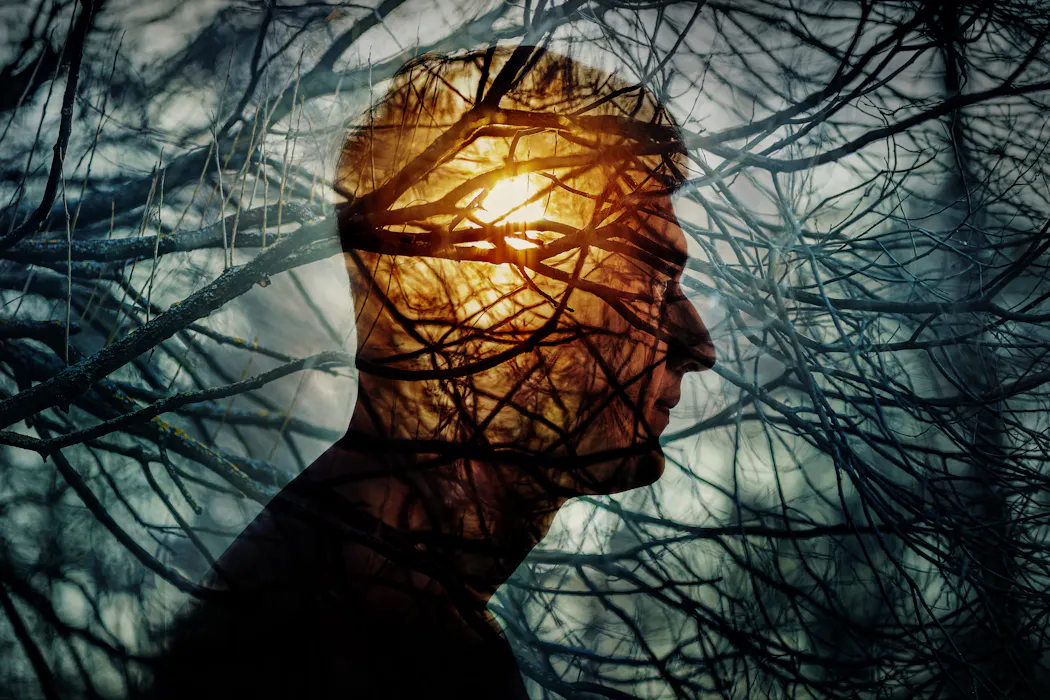
In a unstable and violent world, it is tempting to cling to certainties and binary, partisan oppositions. The essayist Nicola Redhouse draws inspiration from psychoanalyst Wilfred Bion (1897-1979), who argued that being in touch with reality involves enduring uncertainty. In a positive sense, this uncertainty allows for an expansion of openness and a salutary curiosity.
When I taught short story writing, I often quotedMeg WolitzerA: “You will find yourself in a place you did not know. A place where you did not think you would go.”
The principle, I was telling my students, is to make the reader curious. That was ten years ago. Since then, curiosity seems to have gone out of fashion.
AI encourages quick responses, often fragile, rather than patient and nuanced investigations (while right now, a culture of lying in the White House – as whenDonald Trumpstated that a regime change had taken place in Iran – would require averification workrigorous). AI also promotes brief and superficial forms of entertainment, in a world where 36% of 18–24 year olds get their information via TikTok.
Today, the world seems particularly unstable. New conflicts in Iran and Lebanon are added to those in Ukraine and Gaza – where a ceasefire holds, for now. Trump is quarrelling with the pope. The only bright spot: the defeat of the autocrat Viktor Orban in Hungary. All this against the backdrop of an accelerating climate disaster.
Under these conditions, it is not surprising that we seek certainty. But it is perhaps its opposite – curiosity – that we need. It might reopen possibilities a little, allow us to be interested in what the other person feels, in the way they suffer, or even in what could make us laugh together.
My worldview was deeply influenced by the psychoanalyst of the 20th centuryeAt centuryWilfred Bionand by what is called “the psychoanalytic attitude”: an open, available curiosity, devoid of haste. Bion’s ideas offer, it seems to me, a way to engage with the world – and perhaps to mitigate the current forms of fundamentalism.
The psychoanalytic attitude
Over time, I became less interested in the answers and more in understanding what leads us to question – to groping blindly. To trying to imagine what it would be like to be outside of my own body, or in someone else’s head. “Curiosity is the opposite of fanaticism; it leads us to ask ourselves: ‘Are there other truths?'”written by psychotherapist Mannie Sher.
For Wilfred Bion, the very possibility of thinking – and of being in touch with reality – depends on our ability to tolerate uncertainty. Without this, thought easily shifts into fear, anger, or fantasies of annihilation.

Bion understood that adopting a stance of prior knowledge prevented the possibility of genuine understanding. His work relied on whatpoet John Keatsconsidered essential to any great thought – the “negative capability” which he defines as “the faculty, in a man of knowledge, to exist amidst uncertainties, mysteries, doubts, without irritable reaching after fact and reason at any cost.”
Bion’s theory originates from the mother-baby relationship. The mother or the person who takes care of the child adopts a form of listening and attention and endures not understanding what the baby wants. She can contain the infant’s rage or disappointment through language and soothing gestures – like cooing or rocking – until she understands what he expresses by meeting his needs.
“The psychoanalytic attitude” has become the cornerstone of fruitful work for those who draw inspiration from Bion’s thinking. The psychotherapistRobert Snelldescribes it as “an emotional orientation… a commitment, based on respect, to maintaining a radically open-minded stance.”
Confronting complex truths
Partisanship, outrage, and deep divisions increasingly characterize our political and ideological culture.
The conflict in Gaza has become a focal point. Taking a position – or being perceived as belonging to a camp – now involves real risks.
“The conflict between Israel and Gaza is the most polarizing issue of the 21st centurye“Century”stated a participant in a 2024 survey.
On social networks, thespeed of circulation of false or inflammatory information, combined with the imposed brevity, reinforces this polarization. The result is a form of asserted certainty that prevents hearing other truths – those, lived and emotional, of individuals or communities that are not our own.
These truths, often outside our algorithms, require us to lower our defenses a little and truly listen – to be moved.
These last years, this has happened to me. I am Jewish, and I was shaken to see how, after October 7, some havedenied or downplayed the Hamas attacks. But I also began to wonder what I didn’t know – or what I had avoided understanding. I had only been taught certain parts of Israel’s history. I became curious.
This opened my mind to experiences I hadn’t been sufficiently confronted with: I listened to Palestinian testimonies, read Palestinian historical accounts, watched images of Gaza – trying to do so without the weight of what I thought I already knew. I was deeply shaken by it.
I retained the feeling of horror and sorrow regarding the events of October 7th as well as the memory of my own recent experiences with antisemitism.
The understanding I reached was emotional in nature. It is contained in thewords of a Holocaust survivor protesting in IsraelA: “I don’t think we can remember our suffering without recognizing that of Gaza… It holds the same place in my heart.”
We can only reach this type of knowledge if we can, as the writingSher, “to mourn without accusation […] to stay connected without falling into ideology […] to preserve the capacity to think amid the noise of certainty.”
These truths can be disordered: narratives where the perpetrators are also victims, or the reverse; where ordinary individuals commit terrible acts in the name of bureaucracy; where entire societies, under the influence of a brutal power or system, act wrongly – or do not act at all. They may even involve our responsibility.
Turning away from these truths only reinforces simple oppositions – this “us” against “them” – in which horrors such as genocides, pogroms, or ethnic cleansings can take root.
Warning, algorithms and “alternative facts”
“The interests that are ours, the attention we develop to certain things seem to be the best means to access the lives we desire,” writes the psychoanalystAdam Phillips.
Any form of attention other than fragmented has become a luxury. Everything seems accelerated, including the process of gathering information and forming our opinions.
An analysis of 35 million Facebook posts showed that75% of shared linkshad not even been read by those who published them. Onelarge-scale studyon Twitter (now X) has shown that a user’s ideological position in one debate predicts their positions in others. We derive truths from the discourse of those we already agree with.
The “other camp” often proposes another truth. The gap widens.
What is still real, the younger ones might ask, in an era where it is hard to distinguish a human song from a song generated by an AI; where scams are multiplying; where satirical sites confuse more than they make people laugh.
On social networks, where we spend more time than ever, the constraints of space and immediacy shape the way we express our thoughts, favoring clear-cut conclusions.
We already know – and we think we know enough. Entire stories are reduced to slogans. Personal traumas reduced to 30 characters. I like, I laugh, I love, I sympathize, I am outraged. One single click.
This type of knowledge cannot accommodate the real.
A fruitful uncertainty
This also leaves little room for a position of not-knowing — what I call a “generative uncertainty.” A position that can open up to a shift, to a change. A starting point rather than an end.
Years ago, after a roundtable, a woman came up to me to say that she wouldn’t buy my book. “It seems to ask a lot of questions, and I want answers.” At the time, it amused me. Today, much less so.
With its pattern recognition logic, AI offers precisely this type of closed knowledge – without room for uncertainty. It can be useful for processing certain data, for example inrare disease identifier. But it makes mistakes as soon as it comes to context, sometimes givingdangerous advice, especially on eating disorders ordepression.
Automated responses satisfy our desire to know without going through the research work – a process that requires time, reflection, sometimes extensive reading. It is for this reason that the philosopherGillian Rosecriticized the tendency to write “as” – “as a woman”, “as a Jew” – as if identity could stand in for knowledge.
“My trajectory follows no logic of that kind,” she writes. “If I knew who or what I am, I wouldn’t write.” Like so many others, she writes to discover it.
Embracing confusion
Outside the psychoanalysis office, we could mobilize this “psychoanalytic attitude” to transform the brutal indignation that dominates so many online speeches into a curiosity turned towards ourselves – in order to better understand our own desires and prejudices. “We should welcome confusion as a desirable state of mind,” writes the psychoanalystStephen Seligman.
This is not about giving up on the truth. We must rely on testimonies, archives, facts in order to make a “disciplined and sober” judgment, according to the words ofRaimond Gaita.
The knowledge I aspire to is born from this dual requirement: genuine openness and faithfulness to the facts.
We must also be able to endure the ambivalence of reality, without succumbing to what the philosopher Paul Katsafanas calls a “politics of resentment.”
The fear or hatred that makes us so sure of the other’s fault must be tempered by an ability to be interested in the other.
Curiosity, allied with anger, can produce what the philosopher Martha Nussbaum calls a “transitional anger” – an anger aimed at repair rather than revenge.
The lessons of literature
One of my favorite short stories is “The Lottery” by Shirley Jackson, a disturbing tale of a village where a ritual stoning takes place. The shock—the realization that the lottery selects the person who will be put to death—is staggering.
During its publication in theNew YorkerIn 1948, the text caused misunderstanding and protests. Many readers thought that such a village actually existed.
Today, this story of collective violence almost resembles a news report. But the literary form that seems to me best able to help us today is the poem.
The psychoanalyst and poetDavid Shaddockwrites that poetic imagination, like analytical work, opens a space of psychic truth: A “field that opens when the real is recognized.” We are touched – and this capacity to be touched anchors us in the real.
Poetry can disarm our certainties and create a space where something new can happen. A space of imagination where we stop being sure — to become curious again.

Dr. Mannie Sher is a relative of the author
–ref. “Why the psychoanalytic attitude serves as my compass in this chaotic world” –https://theconversation.com/why-the-psychoanalytic-attitude-acts-as-a-compass-for-me-in-this-chaotic-world-280922