

Source: French to English Tester Published on: 2026-05-03
Source: The Conversation – in French– By Vincent Berry, Professor, University of Montpellier
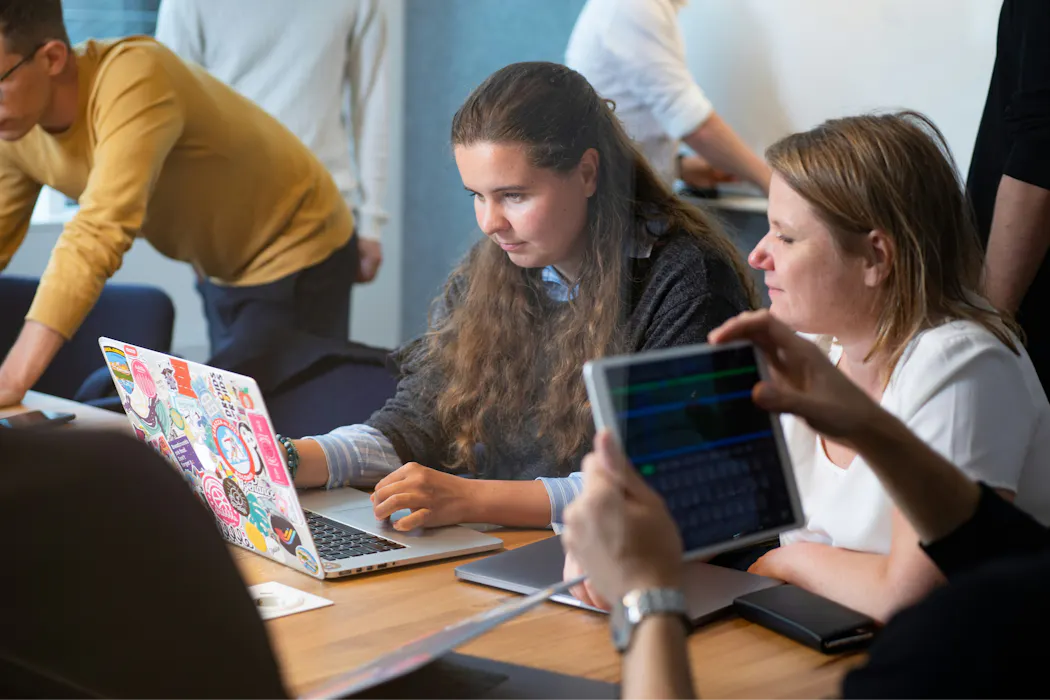
In higher education, the journey of foreign students remains marked by a central challenge: understanding, following, and participating in a language they do not fully master. Recent advances in artificial intelligence for translation and interpretation offer new possibilities, while raising sensitive issues of data protection. A potential solution emerges: developing alternative tools, directly hosted by the institutions themselves. Researchers at the University of Montpellier have developed such a prototype.
French higher education attracted nearly 450,000 foreign students in 2024-2025, placing France 7theAt the global level. They represent nearly15%student numbers in French universities.
Student mobility is constantincrease. In Europe, there have been more organized moves in ten years than in the previous twenty-seven years, with demand in 2025 increasing by9%compared to 2024. This acceleration is correlated with the increase in bilateral agreements between countries and aErasmus+ expansion, the European support program for international mobility.
At the global level, the most attractive countries are unsurprisingly theEnglish-speaking countries, notably the United States, the United Kingdom, and Australia, English being the norm in international exchanges. But for those who choose France and French, what kind of adventure are they embarking on?
Difficulties faced by foreign students
For these students, the language barrier complicates theassimilationtechnical knowledge, hindersactive participationin class and theimmersionin student life, and this despite the teachings of French as a Foreign Language (FLE). The complexity of the French languageincreases this challenge, even for foreign francophone students who have had little exposure to academic French.
The European Union is aware of thisbrake on mobilityandencourage its StatesTo provide university and extracurricular support.
We conducted a survey in 2024 and 2025 with a portion of the9,000 foreign studentswelcomed each year by the University of Montpellier. It reveals clear needs for assistance:
-
during classes and lectures, to understand the teachers orally and have the transcription of the content in order to better grasp their training;
-
after classes, with the aim of memorizing, reviewing, and verifying the content of the classes.
Recent advances in artificial intelligence (AI) make it possible to respond to apart of these needs.
A comparative analysis of AI-based simultaneous translation solutions was conducted according to three main criteria: the capability of automatic speech language recognition (allowing dynamic adaptation when the speaker changes language or when a question is asked in another language), ease of use (minimizing installation and configuration constraints for students and teachers), and the quality of the translation produced. This analysis highlights two types of solutions: commercial tools accessible through thecloudand open source tools that can be installed locally on own servers.
Commercial tools: effective, but expensive and risky in terms of intellectual property
On the commercial tools side, our technological monitoring indicates that the tool best suited to the identified needs iseventCat. Such a tool provides a turnkey service, generating few IT and audiovisual constraints for deployment. This tool was tested in 2024 and then in 2025 during a medical conference shared between two universities. The speakers had varied linguistic profiles: researchers with a high level of English, doctors accustomed to speaking in French, and patient representatives with limited knowledge of English. The audience consisted of French and Dutch students, the latter being proficient in English but not understanding French.
The tool allowed the speakers to express themselves in their preferred language, while the English-speaking students followed via simultaneous translation on a dedicated link. The feedback from the speakers was very positive. Displaying the translations on a large screen installed beside the speakers rather than on the smartphones or laptops of the students helped reduce their cognitive load, as they had to simultaneously follow the oral speech and read the transcription. The quality of the translation was generally satisfactory, although acronyms from the field and the speakers’ accents posed some challenges. This highlights the need for more precise contextual adaptation for highly specialized content.
The disadvantages of such a solution are an annual cost of several tens of thousands of euros per training and uncertainty regarding the data. For example, at the date of writing this article, theGDPR policyof the identified tool is not to store the received audio streams and their transcriptions for more than seven days and not to use this data to train its AI models, whichwould expose this datato attacks bymalicious prompts.
However, the company operating this service is located in the United States, so it is subject toCloud Act, requiring to communicate the data it stores in the event of an injunction from an administrative authority of its country. Concerns about data protection were raised repeatedly in our exchanges with teachers and also with students during our survey. Let us recall that higher education teachers and teacher-researchers areholders of copyrighton the courses they offer, it is therefore their intellectual property that can be exposed by an automatic transcription and translation tool.
An open source tool prototype to protect data
It is therefore preferable that educational teams have alternative solutions hosted within their institution. Open source software is the natural way in this context; unfortunately, in 2025, no such solution yet existed to meet the needs expressed by foreign students in our analyses.
We have therefore developed the foundations of such a tool and proposed afirst prototype. This one already performs locally the translation of a textual content, by aopen-source AI modelthat can run on a standard server. However, the transcription of audio streams still relies on AI services offered by several players in thecloud(the most effective models for this stage are either heavier or simply proprietary), although not tied to any particular provider. This prototype benefits from RAG technology (retrieval-augmented generation) to adapt to a technical vocabulary and has been used in classes of 20 to 30 students. The students report a strong interest in this type of tool, which they also use for social discussions.
However, they all note difficulties in technical courses in French that involve many anglicisms. These shortcomings remain to be corrected but the next major step is to perform the transcription of the audio into text locally, without resorting to a servicecloud. In the current state of models, this requires the use ofspecific processors (GPUs), representing an equipment effort of several thousand euros per site. It is the cost to pay for data preservation.
Learning the language of the host country is a central objective of international mobility. The digital tools mentioned above facilitate this learning and the academic success of foreign students, but do not replace French as a Foreign Language (FLE) teaching. AI tools promote the acquisition of disciplinary knowledge and, to a certain extent, the acculturation of foreign students. But they are not sufficient for successful integration. In this regard, what the country of origin implements to prepare for mobility remainspredominant.

Vincent Berry received funding from the University of Montpellier (CNUMF).
Chouki Tibermacine is a member of the ACM (Association of Computing Machinery). He has received several public funds for his research work: ANR, DGA, Region Brittany.
Chrysta Pelissier, Vanessa Vigano and Éric Anglaret do not work for, do not advise, do not own shares in, do not receive funds from any organization that could benefit from this article, and have declared no other affiliation than their academic position.
–ref. Foreign students: artificial intelligence tools to reduce the language barrier? –https://theconversation.com/foreign-students-artificial-intelligence-tools-to-reduce-the-language-barrier-276236