

Source: French to English Tester Published on: 2026-05-02
Source: The Conversation – in French– By Marcus Michelangeli, Lecturer, Environmental Sustainability and Management, Griffith University
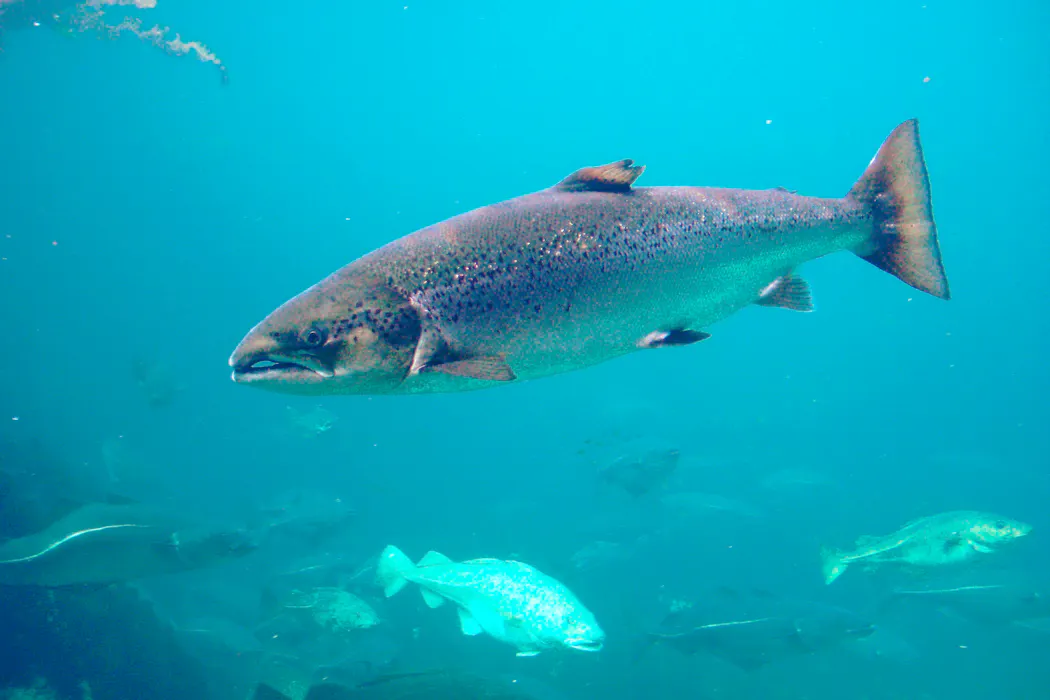
The increasing presence of drugs in aquatic environments is no longer anecdotal. A new study conducted in Sweden shows that even at low doses, these substances can disrupt fish movements and potentially weaken species already under pressure.
Fish or sharks on cocaine: the image seems straight out of a Hollywood script, but the reality is far less entertaining. Increasingly often, scientists detect cocaine and other powerful drugs in aquatic environments and even find them in the brains and bodies of wild animals.
One2024 study conducted in Brazilhas done theheadlinesafter highlighting the presence of cocaine in the muscles and liver of wild sharks caught off the coast of Rio de Janeiro. While this may be surprising, this discovery reflects a broader and expanding phenomenon: drugs consumed by humans are now found in rivers, lakes, and oceans worldwide.
Inour new study, recently published inCurrent Biology, we tried to understand what this means for wildlife.
Fish “on cocaine” in the wild
We studied how concentrations of cocaine comparable to those observed in the environment influence the behavior of wild fish. We also focused on a substance called benzoylecgonine, the main residual compound resulting from the degradation of cocaine by the organism.
For this, we conducted an experiment in Lake Vättern, Sweden, the country’s second largest lake, where we tracked young Atlantic salmon for eight weeks.
Using slow-release chemical implants, we exposed the fish to either cocaine or benzoylecgonine, then tracked their movements using acoustic telemetry. This method allowed us to observe their behavior in a natural environment rather than in laboratory tanks.
What we observed is striking. Fish exposed to benzoylecgonine traveled up to 1.9 times more distance per week than unexposed fish and dispersed up to 12.3 kilometers further across the lake. Fish exposed to cocaine showed a similar trend, but the effect was weaker and less consistent.
Wastewater to aquatic environments
How do these substances end up in aquatic environments?
After consumption, cocaine is rapidly broken down by the body, mainly into benzoylecgonine. Compounds of this type – residues resulting from the transformation of a substance by the body – are called metabolites. Both the original drug and its metabolite are then excreted and enter wastewater systems.
However, sewage treatment plants are not designed to completely eliminate these compounds: they therefore pass through the treatments and are discharged into rivers, lakes, and coastal waters.
This phenomenon is not localized. Cocaine is now one of the most frequently detected illicit drugs in aquatic environments worldwide.
Oneglobal analysisrevealed average concentrations in surface waters of about 105 nanograms per liter for cocaine and 257 nanograms per liter for benzoylecgonine, with peaks reaching several thousand nanograms. While these levels remain low, they nevertheless raise concerns, because these compounds target brain systems shared by many animals: even at low doses, they can potentially affect wildlife.
Why behavior is crucial
Behavioral changes are among the earliest and most sensitive indicators of an environmental disturbance affecting wildlife. They can influence essential functions, from foraging and predator avoidance to social interactions, reproduction, and survival.
When contaminants alter behaviors, their effects can ripple far beyond the individual. Slight changes in the way animals move, feed, or respond to threats can, on a larger scale, affect population dynamics, interspecies interactions, and the functioning of ecosystems as a whole.
The changes we observed in the way fish move in their environment after exposure to cocaine could lead to increased energy expenditure, frequenting lower-quality habitats, or greater exposure to predation risk.
For species such as Atlantic salmon, already subject to pressures from climate change, habitat loss, and other pollutants, even slight behavioral disturbances can exacerbate the difficulties they face.
Why the metabolite matters
One of the most surprising results of our study is that benzoylecgonine had a more pronounced effect on fish behavior than cocaine itself. This is a crucial point, as environmental risk assessments generally focus on substances consumed by humans, such as cocaine, rather than those they subsequently excrete, like benzoylecgonine.
Yet these metabolites are often more abundant and more persistent in aquatic environments. Our results suggest that we may be underestimating the ecological risks associated with these pollutants.
Our study focused on behavior, not on long-term health effects. We have not yet evaluated whether these changes influence survival or reproduction.
However, someprevious worksshow that cocaine and related compounds can alter brain chemistry, increase oxidative stress, and disrupt energy metabolism in aquatic animals. These processes being closely linked to health and physical condition, they suggest broader effects.
The idea of “cocaine fish” may make you smile, but it points to a much larger problem. Aquatic environments are increasingly contaminated by complex mixtures of substances of human origin, from medications to illicit drugs. Many of these compounds are biologically active at very low concentrations, and we are only beginning to understand their effects.

Marcus Michelangeli works for Griffith University. He received funding and research support from the Swedish Research Council Formas (2022-00503), as well as from the European Union’s Horizon 2020 research and innovation programme under a Marie Skłodowska-Curie grant (101061889) to carry out this work.
Jack Brand works for the Swedish University of Agricultural Sciences and receives funding from the Swedish Research Council Formas (2024-00507). He also holds a visiting researcher position at the Institute of Zoology of the Zoological Society of London.
–ref. Cocaine residues in rivers and oceans modify the movements of salmon –https://theconversation.com/cocaine-residues-in-rivers-and-oceans-modify-salmon-movements-281545