

PM Edition: Here are the top 10 energy articles on LiveNews.co.nz for April 30, 2026 – Full Text
What alternatives do Gulf states have to the Strait of Hormuz?
April 30, 2026
Source: MIL-OSI-Submissions-English
Source: The Conversation – UK – By David B Roberts, Associate Professor, School of Security Studies, King’s College London
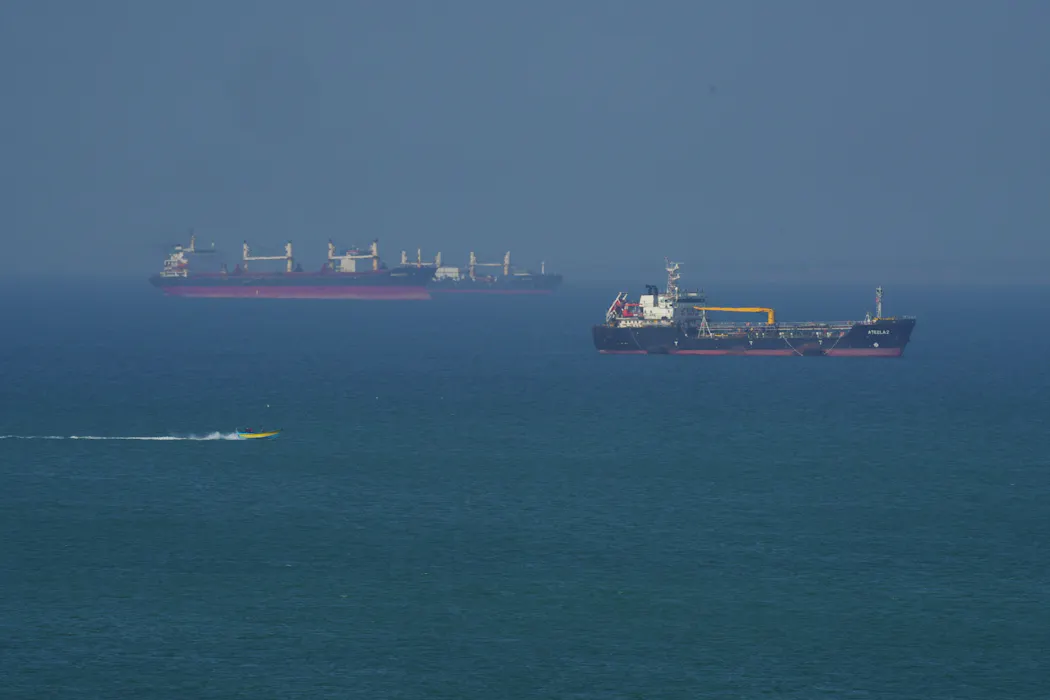
Two months into the Iran war and the Strait of Hormuz is still mostly shut. Vessel traffic is running at a fraction of pre-war levels, with the patchwork of ceasefires, blockades and re-closures since February 28 not restoring confidence on the bridge of any tanker.
Hormuz has long been understood as one of the world’s central trade chokepoints. It normally carries around 20 million barrels of crude and oil products each day, as well as roughly a fifth of global liquefied natural gas (LNG) exports. A third of the world’s helium and a similar amount of the urea that ends up as fertiliser also pass through the strait.
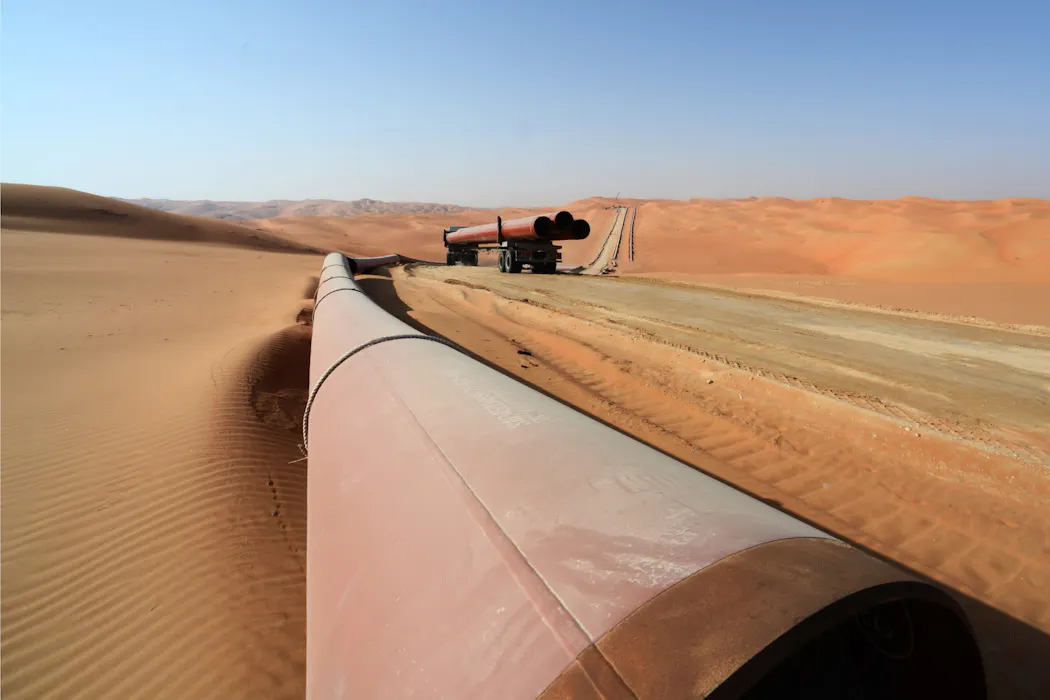
Plans and projects to diversify away from Hormuz have been on drawing boards for decades, and those workarounds are now being stress-tested as never before. The bypass infrastructure is doing roughly what architects had hoped, providing around 3.5 million barrels to 5.5 million barrels a day of crude capacity.
But this is still nowhere near enough.
Hormuz workarounds
The most important pipeline on the planet right now runs across Saudi Arabia. The East-West Pipeline – also known as Petroline – was built in the 1980s during the original Tanker war, when Iran and Iraq attacked merchant vessels in the Gulf as part of their wider conflict.
The pipeline’s capacity was expanded to a 7 million barrel emergency ceiling in 2019. However, the loading terminals in the city of Yanbu on Saudi Arabia’s Red Sea coast were never designed to carry this much oil this fast, and analysts tracking tanker traffic estimate that less oil is currently flowing through the pipeline than its theoretical ceiling.
From Yanbu, oil bound for Europe still has to cross Egypt via the Sumed pipeline, which has a capacity of just 2.5 million barrels per day. Although oil flows through this pipeline have surged by 150% since the start of the war, its comparatively small capacity remains a binding constraint on European supply.
Iran noticed the geoeconomic importance of Petroline and has targeted it accordingly. An Iranian drone strike on a pumping station in April knocked 700,000 barrels a day offline. Saudi Aramco, the operator, had the line back at full capacity within three days. While the repair time is reassuring, the fact of the strike is not.
The other half of the Gulf bypass story runs through the United Arab Emirates (UAE). The Abu Dhabi Crude Oil Pipeline (Adcop) goes from Habshan to Fujairah on the Gulf of Oman side of the country. With a capacity of just under 2 million barrels per day, Adcop is the only major bypass that exits the Gulf directly into the Indian Ocean.
But as with Petroline, it has been targeted during the war. Iranian drone strikes on Fujairah on March 3, 14 and 16 set storage tanks on fire and suspended loadings. While Adcop offers some diversification for the UAE, it does not solve the targeting problem.

Peter Hermes Furian / Shutterstock
The situation is worse for the Gulf region’s other big oil producers. Iraq’s 3.4 million barrels per day of pre-war crude exports went almost entirely through the southern port city of Basra and the Strait of Hormuz.
There is one northern pipeline, connecting oil fields in Kirkuk to Ceyhan in Turkey. This pipeline was reopened in September 2025 after a two-and-a-half-year halt, with flows ramped up to 250,000 barrels a day in March. But this volume pales in comparison to what Iraq has lost.
Kuwait has it worse still. Pre-war crude exports ran at around 2 million barrels per day, with every barrel exiting through Hormuz. Kuwait has no pipeline alternative. Kuwait Petroleum Corporation declared force majeure in March, temporarily allowing it to suspend its obligations to meet delivery contracts.
This was extended on April 20, with the oil company saying it could not meet contractual obligations even if Hormuz reopened. Overcoming the damage that has been inflicted on Kuwait’s production base – and then ramping up production – will take months.
Qatar’s vulnerability is a different shape. Its pre-war crude exports were smaller than its Gulf neigbours, at around 0.6 million barrels per day. These exports all left Qatar via the strait. For Qatar, the story is gas. Its 77 million tonne LNG capacity at Ras Laffan is the largest in the world, supplying about 19% of global LNG trade. There is no alternative to shipping this gas through Hormuz.
Iran itself has built a Hormuz bypass: a 1,000-kilometre pipeline from Goreh at the head of the Gulf to a terminal at Jask on the Gulf of Oman. It is designed for 1 million barrels per day. But in practice, sanctions and unfinished terminal infrastructure have kept actual throughput at a fraction of design.
The US Energy Information Administration estimated that, in summer 2024, under 70,000 barrels per day were flowing through the pipeline. Loadings stopped altogether that September. According to Kpler, which provides real-time data on global shipping movements, only a single tanker – around two million barrels – has loaded at Jask in the war so far.
A call for more pipes in the Gulf, as there have been since the war began, is understandable. But it is no answer. Replicating Hormuz in pipelines would cost hundreds of billions of US dollars and a decade of construction. And at the end of it, new pipelines and terminals at Yanbu, Fujairah and wherever else would be no harder to reach with a drone than the old ones.

David B Roberts does not work for, consult, own shares in or receive funding from any company or organisation that would benefit from this article, and has disclosed no relevant affiliations beyond their academic appointment.
– ref. What alternatives do Gulf states have to the Strait of Hormuz? – https://theconversation.com/what-alternatives-do-gulf-states-have-to-the-strait-of-hormuz-281805
Back to index · Read original article
The US has long used economic coercion to achieve foreign policy goals — the war in Iran shows how that power has declined
April 30, 2026
Source: MIL-OSI-Submissions-English
Source: The Conversation – Global Perspectives – By Charmaine N. Willis, Assistant Professor of Political Science, Old Dominion University
Two months after the United States, along with Israel, launched a war against Iran, that conflict appears far from a lasting resolution.
Much commentary on the protracted nature of the conflict has centered on the limits of both the military and diplomatic approaches to the war. But the conflict has also exposed another key reality: the limits of U.S. sanctions.
The U.S. has been the world’s preeminent economic and military power for decades, certainly since the end of the Cold War. It is at the center of much global financial activity and has a military budget well beyond China, the closest competitor.
Leveraging that power, the U.S. has long used economic coercion to achieve its foreign policy goals, whether against North Korea under the Kim regime, Russia over its invasion of Ukraine or Iran since the 1979 revolution that overthrew the U.S.-allied shah.
But as U.S. power in the world has slowly declined amid the rise of China and an increasingly multipolar world, the country has likewise lost some of its ability to effectively use economics as a weapon. Indeed, as scholars of economic sanctions and statecraft, we believe that the conflict against Iran has made clear the diminishing returns of U.S. economic sanctions.
The limits of sanctions on Iran
Since 1979, relations between Washington and Iran have been antagonistic. U.S. policy has been largely to punish, contain or isolate Iran, and successive administrations have done so in part through a mix of primary, secondary and targeted financial economic sanctions.
U.S. economic coercion has been applied on Iran for a variety of reasons, including its alleged state sponsorship of terrorism throughout the region and its nuclear program.
The emergence of that nuclear program in 2003, which later resulted in United Nations sanctions against Iran, saw U.S. and European Union interests around Iran converge.
AP Photo / Patrick Semansky
This convergence led to the U.S. and EU cooperating on economic sanctions against Iran, which limited Iranian access to the European banking system. The combined coordinated efforts proved onerous for the Iranian economy, which, as political scientist Adam Tarock notes, meant Iran was “winning a little, losing a lot.”
The Joint Comprehensive Plan of Action (JCPOA), negotiated between the U.S., Iran, members of the EU, Russia and China in 2015, placed limits on Iran’s nuclear program in exchange for sanctions relief. At the time, the Iranian economy was suffering crushing inflation and rampant food prices. The agreement would provide relief from decades of economic punishment and the removal of EU, UN and U.S. economic sanctions.
However, the U.S. withdrew from the agreement in 2018 under the first Trump administration and later reimposed sanctions on Iran. The return of economic sanctions as part of the first Trump administration’s maximum pressure campaign – even if not supported by other nations – saw most global firms refrain from doing business with Iran out of risk aversion.
Additionally, despite the EU’s efforts to preserve the JCPOA, Iran restarted its nuclear enrichment program in 2019, one year after the U.S. withdrawal. The Biden administration’s subsequent expressed intention to reenter the deal never came to fruition.
Believing sanctions relief was not a realistic outcome after the agreement’s failure, Iran – though battered by losing access to the global financial system – has found increasingly creative workarounds. Those have included utilizing so-called shadow fleets shipping illicit Iranian goods, creating successful homemade military products like cheaply made drones and ramping up trade with partners outside the Western orbit.
Indeed, since the nuclear agreement’s collapse, Iran has pursued much closer ties with China and Russia at the expense of prior robust economic relations with Europe. As Iran reorients its trade and economic relations, the U.S. and the West have lost economic coercive leverage.
Separated from a diplomatic endgame, U.S. sanctions – and the current blockade of Iranian-linked ships – appear to be only hardening Iranian resolve. Even if a deal were reached to reopen the Strait of Hormuz, Iran has said it plans to push for commercial ships to pay a toll going forward – something that didn’t exist before the war.
In effect, Iran’s ongoing de facto closure of the strait has redirected U.S. economic coercion back at the Trump administration.
Blowback in the energy markets
The biggest costs of that ongoing closure for the U.S. has been in energy.
The U.S. today is one of the largest exporters of crude and refined petroleum globally, making it particularly exposed to oil price volatility. At the same time, some Americans see the development of fossil fuel resources as a key policy priority. As the U.S. becomes more embedded in the export energy sector, it is increasingly experiencing collateral damage – namely, higher oil and gasoline prices – when its foreign policy decisions disrupt oil-related trade.

AP Photo / Jenny Kane
One way that collateral damage manifests is the affordability problem for many Americans as gas prices rise, which is likely to also create political costs for the Trump administration.
While the U.S. has taken steps to ease the economic disruptions to American consumers by relaxing oil sanctions on Russia and Iran – thus undermining its own sanctions policy – these policy shifts have done little to nothing to offset rising fuel prices. They will likewise fail to ameliorate the potential for economic damage caused by the ongoing disruptions to commerce due to the Strait of Hormuz dangers and uncertainties.
Famed economist Albert O. Hirschman once noted that countries use their strategic position to shift others’ cost–benefit calculations, especially through trade disruptions. And for decades, the U.S. used its privileged position in the global financial system to pressure both rising countries and those not explicitly part of the U.S. alliance.
But as the U.S. becomes more exposed to the consequences of its own decisions, its ability to lead and coerce has stalled under costs it cannot easily absorb.
No longer leading by example
Historically, U.S. economic power was made possible not only by the country’s unilateral strengths but its willingness to pool resources and work multilaterally with other nations.
The Trump White House’s inability to put together a multinational coalition to address the political and economic challenges caused by U.S.-Israeli attacks on Iran is not surprising. But they further reflect the evaporation of goodwill the U.S. previously enjoyed with allies in and outside the region.
As the U.S. abandons a playbook that has buttressed its power for decades, Russia has grown bolder, China is edging ahead of the West and middle powers like Iran are able to hold out against American economic and military strength.
None of this means the U.S. no longer holds significant global power. But its turn toward a sanction-first, ask-questions-later approach has, we believe, eroded its ability to shape the behavior of other nations. And it has done so while imposing increasingly tangible costs on both American strategy and the well-being of its own citizens.

The authors do not work for, consult, own shares in or receive funding from any company or organization that would benefit from this article, and have disclosed no relevant affiliations beyond their academic appointment.
– ref. The US has long used economic coercion to achieve foreign policy goals — the war in Iran shows how that power has declined – https://theconversation.com/the-us-has-long-used-economic-coercion-to-achieve-foreign-policy-goals-the-war-in-iran-shows-how-that-power-has-declined-280066
Back to index · Read original article
Working from home in Nigeria: study finds women don’t have much choice
April 30, 2026
Source: MIL-OSI-Submissions-English
Source: The Conversation – Africa – By Ikechukwu (Ike) Nwaka, Assistant Lecturer, Business Economics, University of Alberta
Nigerian women of working age are mostly (90%) self-employed. By comparison, self-employment accounts for less than 16% of employment in high-income countries such as the United States, Germany and the United Kingdom. It is far lower in middle-income countries like South Africa and Turkey too.
Official statistics show that self-employment in Nigeria is concentrated in the northern regions. And there’s a gender difference: women make up the majority of those working for themselves (Figure 1).
What these numbers do not explain is why women are far more likely than men to operate businesses from their homes, or whether those businesses generate meaningful economic returns.
As economists working on labour, gender, energy and development, we addressed these questions in a recent paper.
Using nationally representative household data from 2010 to 2019, the study examines why Nigerian women run enterprises from their homes. These kinds of operations include selling goods from a front room, preparing food at home, or offering haircuts, beauty services, laundry and dry cleaning, and shoe repair. They also make textiles, crafts, garments, shoes and cosmetics at home rather than in shops, kiosks or workshops.
The findings challenge the idea that home-based self-employment is mainly about personal preference or flexibility.
Childcare responsibilities, housing access, electricity and cultural norms strongly shape women’s work location. These insights reveal that supporting women in business must go beyond training or microfinance, and remove structural barriers.
Childcare limits women’s workplaces
We first identified factors associated with operating home-based businesses, using data (2010-2019) from national surveys that follow the same households over time.
We then examined how individual, household and contextual factors shape the likelihood of operating a business from home. We found that childcare was the strongest factor influencing women’s choice of work location.
The presence of young children doesn’t much affect where men work. For women, however, having young children makes it more likely they will run a business from home.
In Nigeria, women shoulder most of the unpaid domestic labour, including childcare, cooking and cleaning. Home-based businesses allow women to earn income while doing that labour.
For many women, home-based work may not be the most attractive option. Rather, the patterns we saw in the data suggest that it’s a way to reconcile income-earning with unpaid domestic responsibilities. Other research into women’s experiences has also shown that working from home may be a necessity rather than a choice.
Why home ownership doesn’t benefit women equally
Homeowners who operate home-based enterprises are better positioned to use property as collateral, access credit, expand workspace, or invest in equipment. They are able to turn housing into productive capital.
However, these advantages are not equally accessible to women.
Only 8.2% of women aged 20-49 are sole owners of land, compared with 34.2% of men, according to World Bank research into gender disparities in property ownership in sub-Saharan Africa.
The Nigerian constitution grants women equal rights to own, inherit and manage property. But many face legal, financial and social barriers that limit their actual control over assets.
Even in owner-occupied households, customary and patriarchal practices can mean that ownership doesn’t translate into decision-making power. Consequently, the same asset generates different economic returns for men and women. It confines women to lower-return home-based activities.
We found that 67% of female homeowners operate home-based enterprises compared with 33% of male owners. Most men who own homes work away from home.
Geography and social norms matter
We found that home-based enterprises are concentrated in poorer regions where returns are low, particularly in northern Nigeria, as shown in figure 2.
Even after accounting for income and education, women in northern Nigeria are far more likely to run businesses from home than women in the south. Cultural and religious norms that restrict women’s mobility and public participation probably play a central role.
This complicates global policy narratives that frame home-based work as inherently empowering. In Nigeria, it often reflects the need to juggle paid work with household obligations under restrictive conditions. These businesses tend to cluster in low-entry sectors, offer limited skill development, and have little growth potential.
Education helps, but only up to a point
Education and household income do expand women’s options, but their effects are limited. Our study shows that better-educated women are less likely than equally educated men to remain in home-based businesses when alternatives are available.
As household income rises, women are also less likely to operate enterprises from home. Importantly, observable characteristics do not explain the full gender gap. The study finds that less than half of the difference in home-based self-employment can be attributed to education, household size, marital status and housing. The rest likely reflects deeper structural forces that shape outcomes differently for men and women. These are forces like social norms, unequal access to finance, gendered returns to assets, and expectations around unpaid care work.
What this means for policy
Promoting home-based self-employment as a route to women’s economic empowerment can be misleading. When women are pushed into home-based enterprises because childcare is expensive, institutions and property rights are weak, or finance is inaccessible, entrepreneurship becomes a response to constraint, not opportunity.
Policies that reduce childcare costs, strengthen women’s property and inheritance rights, and improve access to credit are likely to do more to expand women’s choices than entrepreneurship programmes alone.
Digital infrastructure can help some home-based businesses reach wider markets, but only if deeper barriers are addressed. And because constraints vary across regions, one-size-fits-all solutions are unlikely to work.
More than flexibility
Home-based self-employment in Nigeria reflects deeply gendered expectations about work and care. Many women work from home not to assert independence, but because they have limited options.
Recognising this distinction matters. Celebrating women’s “flexibility” without addressing the constraints behind it risks turning resilience into a permanent requirement. A more equal future is one in which women can choose where and how they work, rather than adjusting their livelihoods around structural barriers.

Ikechukwu (Ike) Nwaka is affiliated with REACH Edmonton Council for Safe Communities as a Board Member
George Nwokike Ike does not work for, consult, own shares in or receive funding from any company or organisation that would benefit from this article, and has disclosed no relevant affiliations beyond their academic appointment.
– ref. Working from home in Nigeria: study finds women don’t have much choice – https://theconversation.com/working-from-home-in-nigeria-study-finds-women-dont-have-much-choice-274792
Back to index · Read original article
Americans care more about future generations than many think – and that gap could matter for policy
April 30, 2026
Source: MIL-OSI-Submissions-English
Source: The Conversation – USA (3) – By Kyle Fiore Law, Postdoctoral Research Scholar in Sustainability, Arizona State University

Caring about future generations means believing that people who will live decades or centuries from now deserve ethical consideration. In practice, that means taking their interests into account when making all kinds of decisions across a range of issues – from aggressively cutting carbon emissions to investing in pandemic preparedness initiatives and regulating powerful emerging technologies, such as artificial intelligence.
While it may sound like a niche moral view to care about future generations in this way, our new research, published in the academic journal Futures, suggests otherwise. In fact, Americans appear to care substantially about future generations. Nevertheless, they also systematically underestimate how much other Americans care.
To study this, we conducted two online surveys of U.S. adults, totaling 1,000 respondents. The samples were built to roughly match the U.S. population in age, gender, race or ethnicity, and political affiliation. In one survey, people told us their own views about future generations. In the other, a different group told us what they thought the average American believes.
We examined this in three ways. First, we asked how many future generations people think society should keep in mind when making collective decisions. For example, when setting climate targets or designing pandemic response systems, how many future generations should count as stakeholders in that decision? Second, we asked how many future generations elected officials should keep in mind when making decisions about laws and public policy. Third, we asked how far into the future people still deserve “moral concern.”
For the third question, participants were shown a list of the present generation and the next 50 generations, with each generation defined as a 25-year period. They then indicated how many of those generations still belonged inside their “moral circle.” In plain terms: If someone will live 100, 200, or even 1,000 years from now, does their suffering matter – and do we have some responsibility to help make their lives go better?
We found that Americans, on average, extended at least some moral concern about 28 generations into the future, or roughly 700 years. But there was a mismatch about when other people’s concern faded – respondents guessed that it happened around 21 generations out, about 175 years sooner.
A similar pattern appeared on the policy questions. Americans said society and government should take into account people living roughly 16 to 17 generations ahead, respectively – around 400 to 425 years into the future. But they assumed other Americans would endorse a shorter horizon of only about 13 generations, or roughly 325 years. In other words, Americans are more future-oriented than they think their fellow citizens are.
Why it matters
Public support for long-term policies depends partly on what people think other people value. Research on climate policy, for example, shows that Americans often underestimate how much support already exists for major mitigation measures. When people wrongly think their view is unusual, they can become less likely to speak up, join with others or pressure leaders to act.
Our findings suggest a similar dynamic may shape support for future-oriented policies more broadly. For issues such as pandemic preparedness, nuclear risk and emerging technologies, decisions made now can affect people far into the future.
It’s possible that a person might support stronger emissions cuts, better disease-prevention systems or safeguards on high-risk technologies, but stay quiet if they assume most other Americans do not care about those kinds of long-term consequences.
What’s next

Alistair Berg/DigitalVision via Getty Images
For climate change, misperceptions are partly driven by partisan polarization, visible disagreement among leaders and vocal opposition from skeptics. Together, they can make public support appear weaker than it is.
Concern for future generations, by contrast, is much less overtly politicized – meaning it does not divide along party lines the way climate policy does. Most Americans, regardless of political affiliation, say they care about people living centuries from now. Yet this concern is rarely voiced in everyday conversation, in media coverage or in political debate.
Future research needs to examine why concern for future generations isn’t more visible in public life, such as in the media or voiced in everyday conversations. As a result, people might assume that others do not care as much as they actually do.
The Research Brief is a short take on interesting academic work.

The authors do not work for, consult, own shares in or receive funding from any company or organization that would benefit from this article, and have disclosed no relevant affiliations beyond their academic appointment.
– ref. Americans care more about future generations than many think – and that gap could matter for policy – https://theconversation.com/americans-care-more-about-future-generations-than-many-think-and-that-gap-could-matter-for-policy-280315
Back to index · Read original article
Seeing an eclipse from Earth is awe-inspiring – for astronauts seeing one from space, the scene was even more grand
April 30, 2026
Source: MIL-OSI-Submissions-English
Source: The Conversation – USA – By Deana L. Weibel, Professor of Anthropology, Grand Valley State University

The astronauts on Artemis II’s trip to the Moon in April 2026 didn’t just have an amazing journey through space. They also saw something extraordinary. They were the first humans to see a total solar eclipse from space.
A solar eclipse happens when the Moon moves in front of the Sun. In a total eclipse, the Sun’s central disc is covered completely.
From Earth, the circle of the Sun is about the same size as the circle of the Moon. With the bright circle blocked, you can see the undulating rays of the Sun’s corona, or outer atmosphere, that are normally too dim to be observed.

NASA/Aubrey Gemignani
I’m a cultural anthropologist who studies awe-inspiring aspects of space exploration. I have been lucky enough to have seen two total solar eclipses. The first one was in Nebraska in 2017, the second in Indiana in 2024.
During my second total eclipse, the period of totality – that short span when you can remove your protective glasses and look directly at the eclipse – lasted close to 4 minutes. I saw waves of diffuse light snaking around an ink-black hole in the sky. It looked very wrong – almost alien.
On Aug. 12, 2026, there will be another total solar eclipse, visible only from Greenland, Iceland, Spain and the Balearic Islands of the Mediterranean. Some fortunate viewers in Spain and nearby islands may see the eclipse just before sunset, low on the horizon. The Moon illusion, a phenomenon where the Moon looks bigger when it’s near the horizon, might make this eclipse look unusually large.
Unusual eclipse perspectives
Astronauts will occasionally also have less common eclipse experiences. I interviewed one I call by the pseudonym “Jackie” in my research about astronauts’ experiences of awe. She was part of an astronaut training group that did a flight exercise during a total solar eclipse.
Jackie and her squad flew their jets in the shadow of the Moon. This lengthened their time in totality because they could follow and stay within the shadow. Jackie was most impressed with how the Sun’s corona seemed to shift and ripple.
“It’s not static … it’s alive,” she told me.
On April 6, 2026, the astronauts of NASA’s Artemis II mission saw another kind of unusual eclipse as they flew around the Moon. At one point during their flight, the Moon and the spacecraft aligned so that the Moon was directly between them and the Sun, blocking the Sun’s disk in a way that looks very different from what we see on Earth.
Astronaut Victor Glover said it felt like they “just went sci-fi.”
The astronauts were so close to the Moon that the Moon looked bigger than the Sun and hid more of its bright circle. Earth was also in view, and sunlight reflected from the Earth onto the Moon in a phenomenon NASA calls “earthshine.” This dim light is very similar to the moonlight that shines on the Earth at night.
Imagine the Sun hidden behind the Moon, creating a hazy halo around the Moon’s edges. At the same time, faint light reflected from Earth softly illuminates the Moon, revealing mountains and craters in a dim twilight. Now imagine this striking scene lasting 54 minutes.
This sight was, without a doubt, one of the most unusual eclipses ever seen by human eyes.
Although Artemis’ astronauts are trained to think scientifically, this experience propelled them into a state of awe. They talked openly about how their brains were “not processing” what they observed. While NASA kept them busy with a variety of tasks, the sound of emotion and excitement in their voices as they broadcast live from their lunar flyby was unmistakable.

NASA
The psychology of awe
Researchers have studied the effects of awe on the human brain, including awe felt during solar eclipses. Moments of wonder like these can transform how you feel and even how you think, making you more thoughtful and open-minded.
In my own work I’ve found these experiences can change how astronauts understand their own place in the universe.
One astronaut said she gained an awareness of the fragility of our planet that now shapes everything she does, while another described becoming more curious after returning to Earth. A third said the awe he experienced in lunar orbit changed his understanding of time and infinity.
Space travel creates many opportunities for awe, but a solar eclipse from behind the Moon, as Mission Commander Reid Wiseman put it, required “20 new superlatives.”
It’s an experience most of the earthbound eclipse-chasers heading to Greenland or Iceland or Spain this summer will only dream about. Whether eclipses happen in space or on Earth, though, close encounters with the grandeur of our universe can make you feel profoundly human.

Deana L. Weibel is currently working on a project with funding from the National Air and Space Museum’s Aviation Space Writers Foundation Award. She has published a book, The Ultraview Effect: What We Can Learn from Astronauts about Awe, Humility, and Exploring the Unknown, with the University of California Press.
– ref. Seeing an eclipse from Earth is awe-inspiring – for astronauts seeing one from space, the scene was even more grand – https://theconversation.com/seeing-an-eclipse-from-earth-is-awe-inspiring-for-astronauts-seeing-one-from-space-the-scene-was-even-more-grand-281488
Back to index · Read original article