

Source: French to English Tester Published on: 2026-04-27
Source: The Conversation – France in French (3)– By Oriana Jimenez, PhD student in Slavic studies, Université Bordeaux Montaigne
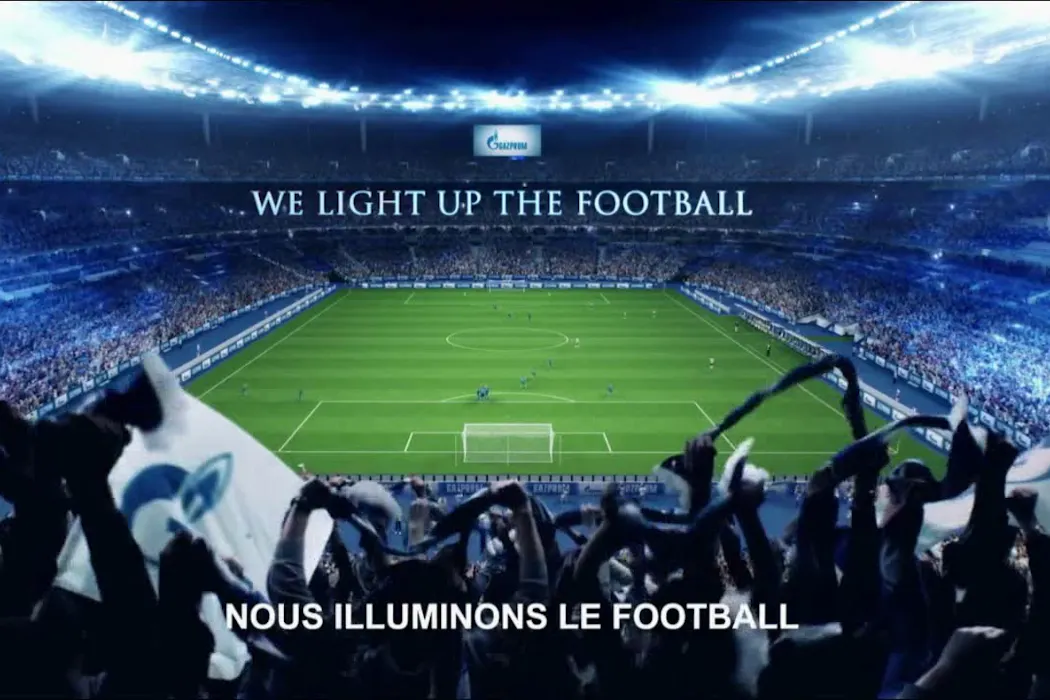
“Artwashing” and “sportwashing” represent two contemporary forms of soft power. These strategies, whose names are inspired by the more common “greenwashing,” consist of mobilizing art, culture, or sport to improve the image of controversial state or economic actors. The company Gazprom, the Russian gas giant, has been heavily involved in this kind of activity over the past twenty years in an attempt to give Russia the reputation of a modern, benevolent, and constructive state. Efforts which the large-scale invasion of Ukraine in 2022 almost everywhere in the West has put an end to, but which have since been redirected towards the BRICS countries.
For several years now, the concepts ofartwashingand ofsportwashinghave established themselves in the public debate to designate new strategies of influence. These practices involve mobilizing art, culture, or sport to improve the image of state or economic actors – often in a context of political or ethical controversies. They fit within a logic of soft power, acting not on governments, but directly on public opinions.
Theartwashingdesignates a use of art, culture, or artistic sponsorship to improve the public image of an actor. The term appears in the writings of Mel Evans, inArtwash: Big Oil and the Arts(2015), where it is used to denounce the links between an oil company (BP) and the funding of culture (the Tate Museum in London). Thesportwashing, for its part, refers to the use of sport as a tool of communication and political legitimization. It is a matter, for a State or a company, of associating its image with the positive values of sport. According toStephen Crossley and Adam Woolf, the earliest mention of the term would date back to 2012.
The analysis of these campaigns highlights a central element: they rely on a precise representation of the target audience. Each operation assumes a thorough knowledge of the social, cultural, or moral imaginaries that can be mobilized to foster adherence. Theartwashingis mainly addressed to a more limited audience. Thesportwashing, on the contrary, is addressed to a mass audience. These two logics do not oppose each other; they complement each other. Together, they form the two sides of the same project: redefining the image of a company or a State in language accessible to all.
It is from this perspective that the case of Gazprom, the world leader in natural gas, deserves particular attention.
Gazprom and “sportwashing”
The gas industry Gazprom – abbreviation ofGas Industry– iscontrolled by the “Putin clan” since the early 2000s. The Russian state holds a majority stake in it and has granted it the monopoly on gas exports. In the sports sector, the company has multiplied its strategic investments. In 2012, it first signed a contract with UEFA (Union of European Football Associations, ed.) until 2015, estimated at 40 million euros annually, to sponsor the main continental club competition: the Champions League. This agreement was renewed several times untilits breakup in 2022, in the aftermath of the large-scale invasion of Ukraine in February 2022.
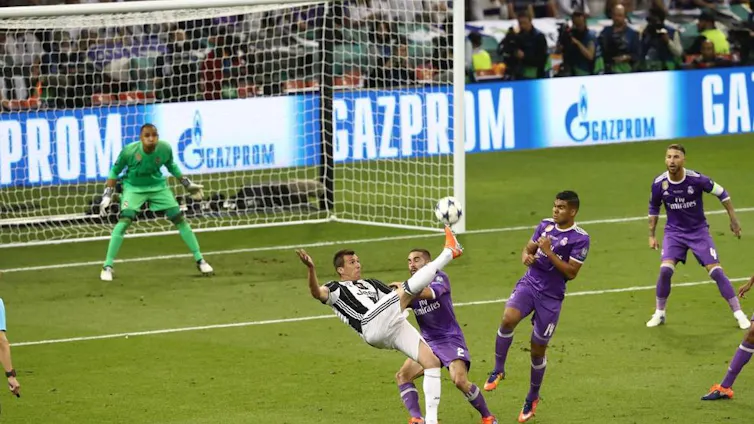
Uefa.com
The following year, Gazprom reached an agreement with FIFA (International Federation of Association Football, editor’s note) for the period 2015-2018. Theseinvestmentsconstituting both a way to compensate for a degraded image due to the annexation of Crimea and a promotional tool in line with 19th-century Russian expansionism. By sponsoring these international competitions, Gazprom becomes a “world-enterprise,” capturing part of the symbolic value of the sporting events associated with its name. One of thepublic reportsThe company’s involvement in financing the 2018 World Cup leaves no doubt about the effectiveness of this advertising campaign. This is reflected in the opinion polls conducted by Gazprom: more than half of the Europeans surveyed perceive Gazprom as a reliable gas supplier, especially among football fans.
At the local level, Gazprom has been developing a close relationship since 2005 with Zenit Saint Petersburg – a club located near the starting point of the Nord Stream pipeline, in Vyborg – whose stadium is moreover renamedGazprom Arena. In 2007, it became the main sponsor of the German clubSchalke 04from Gelsenkirchen (North Rhine-Westphalia) for about 9 million euros per year – a price well above the market average. Thus, Schalke ranks sixth among the best-financed clubs, just after giants like AC Milan, Chelsea, orReal Madrid – which does not correspond to his sporting level nor his notoriety. This choice is symbolic: Gelsenkirchen is one of the historical centers of the German energy market.
Since 2010, Gazprom has also been sponsoring theRed Star Belgrade, saving the club from disappearance, at a time when the South Stream pipeline — since abandoned — was under negotiation.This pipelinewas supposed to cross seven European countries, including Serbia – a historical ally of Russia. South Stream was part of Russia’s strategy to consolidate regional alliances. Aofficial documentThe 2025 Serbian government plan details Belgrade’s intention to strengthen economic ties with Russia, particularly in the energy sector. Thus, Gazprom’s strategy appears to be bearing fruit. The agreement was maintained despite the invasion of Ukraine.
Since February 2022, after losing many contracts, the company has been seeking again to expand its network of sports influence, notably in Hungary, where FC Ferencváros was targeted. However,the agreementhas not been officially concluded, and the recent electoral defeat of Prime Minister Viktor Orban – one of the few European leaders openly supporting Vladimir Putin and his policies – does not seem to bode any rapprochement between the Russian giant and the Budapest club.
Gazprom and “artwashing”
At the same time, Gazprom owns a vast media group,Gazprom-Media, which controls dozens of television channels, radios, digital platforms, and cinemas. The company also funds exhibitions, festivals, and artistic projects in Russia and abroad.
Gazprom was notably a patron, alongside Engie, of the exhibitionPeter the Great, a tsar in France. 1717at the Château de Versailles in 2017. The CEO of Gazprom France stated then that, if fossil fuels were to disappear one day, the major cultural institutions would remain and keep the names of their benefactors. This sponsorship took place in a specific diplomatic context: despite the sanctions related to the annexation of Crimea, France and Russia displayed a willingness to come closer, embodied by this exhibition to whichEmmanuel Macron and Vladimir Putinstood side by side.
Since 2022 and the exclusion of Russia from major international sporting competitions, Gazprom seems to have redirected its investments.
Abroad, Gazprom’s cultural projects are now mainly focused on China, the BRICS countries, and the Global South — an initiative that reflects a desire to build new symbolic hubs outside the Western framework.
In 2025, Gazprom-Media supported the Russian filmBlood group, presented at the China Film International Festival. This film, dedicated to the memory of the Second World War, participates in a historical reinterpretation that highlights Soviet suffering and draws parallels with Chinese memory. This approach has been part of a broader strategy of rapprochement between Russia and China, in a context of geopolitical reconfiguration and a desire to dissociate from the Western world.
From patronage to soft power
These practices illustrate the emergence of a new form of diplomacy that no longer addresses only governments, but directly targets the public.
The founding father ofsoft power, Joseph Nye defines it as the “ability to influence through attraction rather than coercion”, while Nicholas Cull mentions a“new public diplomacy”involving businesses, cultural institutions, and media. However, as Maxime Audinet points out, this diplomacy remains historically linked to forms ofpropaganda.
Theartwashingand thesportwashingthus appear as contemporary avatars of this public diplomacy. They mobilize emotions and cultural values to influence international perceptions, just like the new forms of destabilization employed by the Kremlin. They are an innovative way to sway public opinion on certain topics. This functioning is reminiscent of the recent strategies of influence and interference employed by the Kremlin after 2022, such as that ofStars of Davidpainted in the Paris region, suggesting a multiplication of influence strategies.
The boundary between cultural diplomacy, soft power, and propaganda remains fragile, however. Behind the promotion of art or sport often lie economic and political objectives, raising major ethical issues.
Gazprom thus appears as an innovative actor in terms of influence and diplomacy. The Russian giant was one of the first state actors to massively finance modern European football, particularly targeting strategic areas related to energy infrastructures. Since 2022, the company seems to place some importance on cultural patronage and artistic collaborations to continue shaping foreign public opinion, establishing emotional and cultural bridges that bypass traditional government channels and speak directly to populations. The year 2022 thus marks a turning point for Gazprom and Russia, with a strategic readjustment oriented towards new opportunities, particularly China, the BRICS, and their few European allies.

Oriana Jimenez does not work for, advise, own shares in, or receive funds from any organization that could benefit from this article, and has declared no other affiliation than her research organization.
–ref. Gazprom and the strategies of artwashing and sportwashing –https://theconversation.com/gazprom-and-the-strategies-of-artwashing-and-sportwashing-278615