

Source: French to English Tester Published on: 2026-04-27
Source: The Conversation – France in French (3)– By Sonia Boussaguet, Neoma Business School
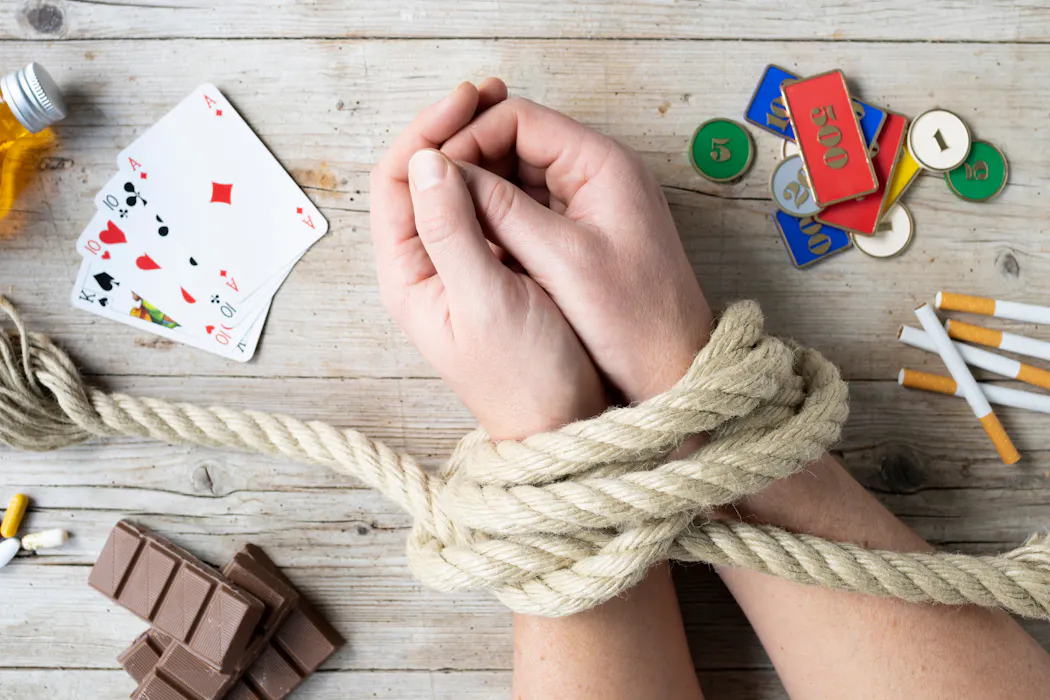
Behind the heroic figures of tireless entrepreneurs, the use of psychoactive substances, work addiction, and risky behaviors quietly take root. Some pay a high price for their performance.
The workDoping to workdecodes the perverse mechanisms ofcertain addictive consumptions among employees. Applied to entrepreneurs, the term “doping” serves to criticize the dominant discourse. It reveals the other side of the story: to maintain a level of performance deemed essential, some may be tempted or become addicted.
Theaddictionis defined as a repetitive and compulsive behavior that provides immediate gratification but leads, in the long term, to negative effects on health, social relationships, or performance.Many behaviors are potentially addictive, including those that do not involve drug ingestion, such asgambling, sex, physical exercise, video games, and internet use. Simple use is not pathological by definition when it involves no loss of control or lasting damage. The transition from simple use to harmful use and then to dependence generally occurs progressively and is potentially reversible. However, this depends on the addictive potential and the profile of the person concerned.
To explore these possible deviations among entrepreneurs, with Iris Ramos, an expert in psychology and occupational health, we conducted an online study with a population of 160 leaders, members of Medef Centre-Val de Loire. This sample consists of two-thirds men and one-third women, with an average age of 51.5 years, having worked on average for more than ten years in various activity sectors.
How some entrepreneurs “hold on” and at what price?
Stressful days for 96% of interviewees
Our results generally show a deterioration in the mental health of the executives surveyed. One in three entrepreneurs says they are in poor psychological shape. Nearly 96% of participants admit that most of their days are stressful. Nearly 46% are completely dissatisfied with their sleep. And 31% do not engage in any regular (non-sporting) physical activity.
In this delicate landscape, leaders declare suffering from various addictions, some of which seem socially tolerated, even valued, or conversely made invisible in entrepreneurial circles.
Work addiction
Nearly 72% of the people interviewed think about work in the evenings and on weekends. The problem is not so much the working hours or the workload as the lack of psychological detachment from work.
The boundaries blur between intense commitment, self-transcendence… and constant tension. Professional activity constantly spills over into the personal sphere. Entrepreneurs are unable to disconnect, even during their vacation periods.
Behavioral addictions
Nearly 17% say they are affected by so-called behavioral addictions (understood as dependencies without substances and outside of work). They mention hyperconnectivity with the use of screens – emails, professional social networks, monitoring performance metrics – but also playing online games.
Others mention food addictions such as sugar. Some turn to compensatory activities with high emotional intensity, such as engaging in intense or extreme sports activities. Four entrepreneurs admit to having a sex addiction.
Addictions to psychoactive substances
Decision-makers report the use of stimulants or ofpsychoactive substances. Nearly 48% consider that tobacco helps them manage their stress, 34% drink one or two glasses, or even more, during an ordinary day. And 11% consume medication or drugs.
All of these figures align with thealarming conclusions of the latest barometer from the MMA Foundation of entrepreneurs of the future and BpiFrance le Lab.
Immediate gains, deferred losses
The subject of addictions is far from trivial. As shown inUsing drugs to work, the problem is not the compensation itself, but what it reveals about the actual work.
The working conditions create a favorable environment for “entrepreneurial doping”: total responsibility, permanent uncertainty, financial pressure, and decision-making loneliness are recognized asreal occupational stressors. These conditions make the entrepreneur aparticularly vulnerable profile, even though warning signals are often denied or trivialized.
Our analyses make visible the situations of suffering, exhaustion, and mental wear among business leaders. They suggest that entrepreneurial activity has become, for some, hardly sustainable without costly personal adjustments.
Addictions insidiously become entrenched in their daily lives to cope with stress, risk, or fatigue. They promise immediate gains — performance, concentration, relaxation — at the cost of deferred losses — cognitive dispersion, strategic lucidity — with potential harm to health and/or the sustainability of their business.
Their uses become silent tools of self-regulation to “hold on” – in an illusory way – but tend to delay the verbalization of related symptoms and the seeking of support.
By directly addressing the issue of “entrepreneurial doping,” this article calls for facing what public authorities often prefer not to see. Entrepreneurs – unlike their subordinates – are still rarely considered a population requiring specific protection policies in terms of public health. They are even less covered by addiction prevention measures.
This article was co-written with Iris Ramos, an occupational psychologist, lecturer at the University of Tours, affiliated with the Qualipsy research team and founder of the STEP service (Entrepreneurs’ Occupational Health through Prevention).

Sonia Boussaguet does not work for, does not advise, does not own shares in, does not receive funds from any organization that could benefit from this article, and has declared no other affiliation than her research institution.
–ref. Are entrepreneurs fueled to keep going? The addictions that no one talks about –https://theconversation.com/are-entrepreneurs-doped-to-handle-addictions-that-no-one-talks-about-272518