

Summary of defence and geopolitical posts for April 22, 2026.
In mediating the US-Iran peace talks, Pakistan is flexing its geopolitical muscles
April 22, 2026
Source: The Conversation – Global Perspectives
When news of the fragile ceasefire between the United States, Israel and Iran first broke, it came via a post on X by Pakistan’s Prime Minister, Shehbaz Sharif.
Securing such a big diplomatic win is highly significant for Pakistan, irrespective of how the agreement has since been tested.
Pakistan will remain central to ongoing peace negotiations, with talks between the parties being held in the country on April 10.
So how did Pakistan manage to bring the parties together? It harnessed long-running relationships, shared histories and security agreements to flex its diplomatic muscles.
Pakistan and Iran go back a long way
Pakistan and Iran have a long history as friends and allies. Sharing more than 900 kilometres of border, the countries have been involved in dispute mediation for one another since Pakistan’s creation in 1947.
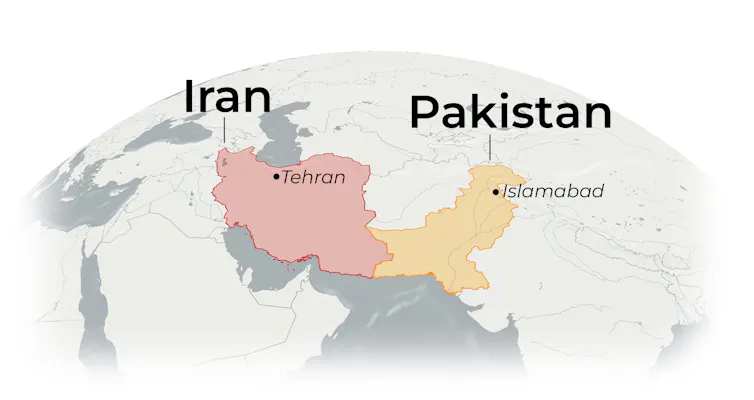
CC BY-SA
During Iran’s monarchical period, which ended in 1979, Pakistan relied on Iran’s mediation in its disputes with Afghanistan, and active support in Pakistan’s wars with India in 1965 and 1971.
But the relationship has not been free of challenges. Pakistan’s Prime Minister Z A Bhutto, according to some sources on the ground, resented the Iranian Shah’s overbearing attitude.
The closeness has held since the Islamic regime took over. With nearly 20% of Pakistan’s population being comprised of Shia Muslims, the dominant form of Islam in Iran, there’s long been a close relationship between those Pakistani Muslims and the Iranian regime.
Iran has used these communities to spread their version of Islam and politics, but it has walked a fine line. The regime has ensured tensions do not exceed beyond certain point where the Pakistani government considers it to be a destabilising factor and a threat to Pakistan’s security.
Because of this shared history and the geographic proximity, the Iranian regime is at least willing to listen to Pakistan.
Eyeing regional and national security
This is particularly so because of Pakistan’s own security situation, especially in the event that a weakened or fragmented Iran would result in the emergence of multiple smaller states.
Pakistan’s geographically largest province, Balochistan, has been experiencing renewed militancy spearheaded by separatist group the Baloch Liberation Army. The militants have attacked multiple military targets, law enforcement agencies and public servants, especially those hailing from the Punjab province (the largest in terms of population and resources).
There has been a growing sense in Pakistan that a weakened or fragmented Iran could further strengthen the appeal of Baloch Liberation Army ideology. The Pakistani government doesn’t want a situation where calls for a greater Balochistan encompass areas on both sides of its border with Iran.
Another consideration is that Pakistan has a nuclear program. The Pakistani government may fear its nuclear arsenal being next in line for targeting by foreign countries, and therefore seek to de-escalate tensions across the region.
It’s also worth noting the potentially precarious position Pakistan finds itself in geographically. The spectre of being sandwiched between an Israeli-controlled Iran, and close Israel ally India, would be something to be avoided.
It’s likely the Iranian regime is aware of these concerns and appreciates that Pakistan’s mediation is grounded in the latter’s own security concerns. But from an Iranian perspective, that’s hardly a bad thing: it means exploring all possible scenarios to reach a ceasefire and a settlement.
Friends in MAGA places
Pakistan is highly credible with the Trump regime. This is primarily because of the dominant role the Pakistani military has played in shaping the country’s foreign policy. This influence has existed for almost 80 years, but has ramped up recently.
In 2022, General Asim Munir took over as the Chief of Army Staff. He was promoted to the rank of Field Marshal in the wake of Pakistan-Indian “mini-war” in May 2025.
Currently occupying the position of Chief of Defence Forces with a guaranteed command of the military for the next five years with the possibility of extension until 2035, he has emerged as the strongest army general to have ruled Pakistan in decades.
Munir has established a cordial relationship with US President Donald Trump. He visited the administration twice, including a meeting in the Oval Office. This was before Australian Prime Minister Anthony Albanese had secured even a telephone phone call with the president.

Andrew Harnick/Getty
Munir has also guided Pakistan’s Gulf policy, particularly the signing of a Strategic Mutual Defence Agreement with Saudi Arabia in September 2025. The agreement builds on the decades of a defence relationship between Pakistan and Saudi Arabia. It includes the clear articulation that any attack on one is considered an attack on both.
Though Pakistan is careful to stress that it does not extend a nuclear umbrella to Saudi Arabia, the agreement signals regional deterrence and ability of the two states collaborating against opponents.
The agreement was followed by a Strategic Defense Agreement between Saudi Arabia and the US during the Crown Prince Mohammed bin Salman’s visit to Washington in November 2025.
Effectively, therefore, a tripartite quasi alliance has emerged between the US, Saudi Arabia and Pakistan.
And then there’s China
At the same time, Pakistan also maintains strong military, economic, and political relations with China. Beijing has been keen to de-escalate the situation in the Gulf due to China’s reliance on oil supplies from the region.
This interest was categorically expressed during the visit by Pakistan’s Foreign Minister, Ishaq Dar, to China on March 31.
Coming soon after Pakistan’s quadrilateral meetings with Saudi, Egyptian and Turkish foreign ministers, the negotiations established Pakistan’s credentials as a state that has the backing of significant Muslim majority states. Combined with the support of China, Pakistan was in prime position to explore solutions to the conflict, without Trump losing face.

Samina Yasmeen does not work for, consult, own shares in or receive funding from any company or organisation that would benefit from this article, and has disclosed no relevant affiliations beyond their academic appointment.
Back to index · Read original article
Why the US military is stuck using $1 million missiles against Iran’s $20,000 drones
April 22, 2026
Source: MIL-OSI-Submissions-English
Source: The Conversation – USA – By Aaron Brynildson, Law Instructor, University of Mississippi
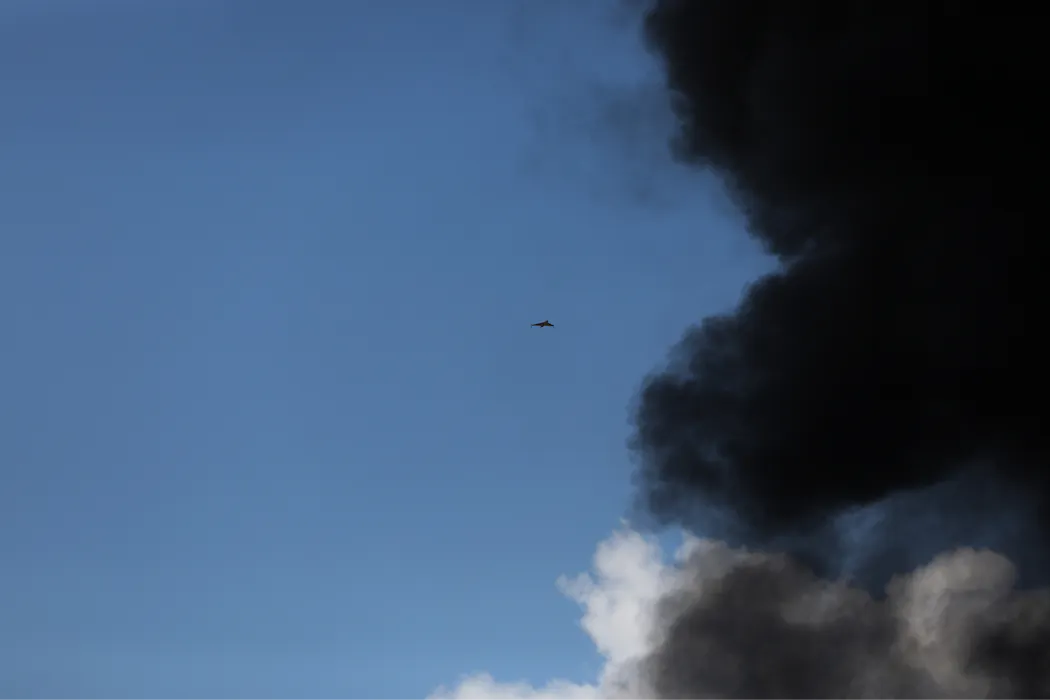
It may sound hard to believe, but the almost trillion-dollar U.S. military is struggling to fight cheap drones in its war with Iran.
Iran has built a simple drone, the Shahed, with a motorcycle-type engine, loaded it with explosives and successfully targeted its neighbors’ cities and power plants.
Iran has also hit U.S. military bases with these drones, including an early April 2026 attack on the U.S. Victory Base Complex in Baghdad.
The drones cost between US$20,000 and $50,000 to build. In response, the U.S. military sometimes fires missiles worth more than $1 million to shoot one down.
As a former U.S. Air Force officer and now national security scholar, I believe that math is a problem: The U.S. military for now has a $1 million answer to a $20,000 question. This math tells you almost everything you need to know about one of America’s biggest national security headaches.
And the frustrating part is that the U.S. military watched this happen in Ukraine for years. It knew the threat was coming.
The weapon that changed modern war
The Shahed isn’t impressive because it’s high-tech. It’s impressive because it isn’t.
Inspection of captured Shahed drones has found that many of their parts are made by ordinary commercial companies. That includes processors from a U.S. manufacturer, fuel pumps from a U.K. company and converters from China.
These military components aren’t hard to get. You could find similar parts in factories or farm machinery. That’s exactly what makes the Shahed so tough to deal with.
Russia, which also produces the drone, tolerates losing more than 75% of its Shahed stock because even at those loss rates, it’s winning the math battle against Ukraine. Russia or Iran don’t need every drone to hit its target. They just need to keep sending waves of them until their opponent runs out of expensive missiles to shoot back.
Ukraine, which had no choice but to learn fast, eventually figured out a better answer. Ukraine developed cheap interceptor drones that could slam into Shahed drones before they reached their targets. Each interceptor costs about $1,000 to $2,000, and Ukrainian manufacturers are producing thousands of them per month. That’s better math: a $2,000 interceptor against a $20,000 attacker.

Ukrainian military’s Strategic Communications Directorate via AP
Ukraine’s battlefield experience, as a result, has become one of the most valuable resources in the world, with American and allied forces asking Ukrainian drone experts to share their knowledge.
Why can’t the U.S. churn out a solution of its own? Because the U.S. military doesn’t have a technology problem but a bureaucracy problem.
The Pentagon’s three-legged slowdown
The U.S. Department of Defense typically can’t just buy things. It follows a long, complicated process that can take a decade or more to go from “we need something” to “here it is.” That process runs through three separate bureaucratic systems, each of which can cause years of delay.
First, someone must write a formal document, known as a requirement, that explains exactly what they need and why. A military service, such as the Air Force, for example, drafts up a requirement and routes it through an internal service review within only their branch.
Until recently, this service-vetted requirement went through a Pentagon review process, the Joint Capabilities Integration and Development System, where all joint services took a look. This process, which the Department of Defense ended in 2025, required approval from military officials.
Even though the joint requirements process was ended, implementation of a new system is far from complete, and the existing culture potentially remains. Under the old requirements process, it took over 800 days to get a requirement approved.
Second, any new program then needs money. This is handled through the planning, programming, budgeting and execution process, a budget cycle designed in 1961. Getting a new program into the budget typically takes more than two years after the requirement is approved, because the military must submit its budget request years in advance. By then, the threat has potentially already moved on.
Third, once a requirement is approved and money allocated, the program then must be developed and built. The average major defense acquisition program now takes almost 12 years from program start just to deliver an initial capability to troops in the field, according to a 2025 Government Accountability Office report.
Add it up and you get a system where the military sees a threat, begs for a solution, argues for money and waits a decade.
Why the system is built this way
The Shahed drone exposed a gap that defense experts have been warning about for years: The U.S. military is very good at building the most advanced, most expensive weapons in the world, but it struggles to build cheap, simple things fast. That is the opposite of what this new kind of warfare demands.
It would be easy, but inaccurate, to blame the military for the decade-long contract process. The real answer is more complicated.

Tom Brenner for The Washington Post via Getty Images
The Pentagon’s lengthy process was designed by the Department of Defense and Congress for a reason. Policymakers created the current system during the Cold War to combat excessive and redundant spending by the separate service branches. The system is built with checkpoints, reviews and approvals to make sure taxpayer money isn’t wasted.
Legacy military contractors also benefit from this dysfunctional process and resist change. They have the capital and know-how to wait out the predictable and stable existing contracts, while vying for new ones. These military contractors rarely need to worry about upstart contractors because they know small companies cannot survive waiting for a decade to secure funding for their prototypes.
The problem is that those rules were built for a world where the biggest threat was another superpower’s expensive jets and missiles. It wasn’t built to fight a flying bomb made from tractor parts. This type of threat requires fast innovation from lean companies, the exact companies that struggle in the current budget process.
What’s changing
There are signs of movement. In August 2025, the Pentagon killed its old requirements process entirely and replaced it with a faster, more flexible system.
However, killing the requirements process dealt with only one leg of the three-legged monster. The 1960s-era budget process that determines how money flows remains largely intact.
The most important reforms still need Congress to act, and Congress moves slowly, too. Congress has launched studies into reforming this system numerous times, with the answers being too politically difficult to implement.
Officials are expanding the use of flexible contracting tools, such as Other Transaction Authority, that let the military skip some traditional rules to get anti-drone technology faster. Yet these flexible contracting tools still represent a small slice of the Defense budget, and their effectiveness is unclear.
Ultimately, instead of using flexible contracting tools to quickly buy new prototypes, the bureaucratically easier solution could be to buy more of the expensive, already approved missiles.
This quick fix would reload the military’s stock of interceptors with existing weapons systems, which is the source of the bad math. The math would get worse and at the same time the operational imperative to find cheaper and better solutions might disappear.
So, as the Shahed keeps flying, the most powerful military in the world is still figuring out the paperwork and looking to other countries for help.

Aaron Brynildson served in the U.S. Air Force from 2016-2025.
– ref. Why the US military is stuck using $1 million missiles against Iran’s $20,000 drones – https://theconversation.com/why-the-us-military-is-stuck-using-1-million-missiles-against-irans-20-000-drones-281089
Back to index · Read original article
Canada urgently needs a civilian defence strategy — before the next crisis forces one
April 22, 2026
Source: The Conversation – Canada
On April 9, 1917, my great-grandfather, A. Harold Carter, was a 16-year-old underage Canadian Expeditionary Force soldier from the 5th Canadian Mounted Rifles, 8th Brigade, 3rd Division.
At 5:30 am, he went over the trench at Vimy Ridge. He was a scrawny, 5’4″ kid from London, Ont., who defied his mother and signed up two years earlier at age 14. He survived.
Almost 109 years after the war that was to end all wars, Canada must once again consider training its citizens, as it did my great-grandfather, for a potential global conflict.
Prime Minister Mark Carney’s first mandate letter in May 2025, a month after his election, clearly prioritized Canada’s industrial, military and civilian global sovereignty as a key pillar of his new government.
His first budget, entitled Canada Strong, attempted to lay the fiscal foundation for Canada to act boldly and decisively, specifically on the much-neglected defence portfolio.
The June 2025 Building Canada Act has begun to cement that industry/civilian vision into reality, and the Canadian Armed Forces (CAF) Inflection Point 2025 seeks to enable the CAF to be “Ready, Resilient and Relevant” to fulfil this mandate.
Canadian needs
Not since the Second World War have all levels of Canadian society — government, industry, citizenry and military — been fully aligned to “ensure that Canada is once again the master of its own defence,” as Carney puts it.
But either by intention or incompetence, the ill-timed leak in November 2025 of the CAF’s Defence Mobilization Plan raised serious concerns due to its suggestion that more than 300,000 federal employees should be trained for emergency quasi-combat duties. The intent was valid, but the context wasn’t.
The CAF’s “Defence of Canada” vision prioritizes a total defence framework. Canada currently deploys an emergency management, whole-of-society governance strategy, which is a layer of total defence, to ensure that all levels of society recover quickly from a crisis.
It’s a tested and proven model used by South Korea’s Civil Defence Corps and Australia’s State Emergency Service, which are primarily focused on disaster relief.
The recently revised Humanitarian Workforce Program is Canada’s primary federal funding vehicle for building a professional, civilian, disaster-response capacity training, led by non-governmental partners.
In practice, a whole-of-society approach is designed to free up the military from non-combat duties during major crises. But a total defence doctrine supports both civilian auxiliary and military roles and responsibilities. Canada is missing that piece of the equation.
A Finnish solution?
Canada’s 400-year legacy of voyageurs, militia, pathfinders and rangers reflects a long tradition of civilian contribution to defence. Since the War of 1812, the country has not faced invasion, due in part to co-ordinated efforts among regular forces, allied Indigenous Nations and civilian auxiliaries.
That history raises a contemporary question: if civilian capability once played a decisive role in national defence, what form should it take today? As modern threats evolve beyond conventional warfare, Canada must reconsider how to structure, train and mobilize civilian expertise, not as an ad hoc reserve, but as a genuine component of national resilience.
Canada could draw from the very successful defence-adjacent, civilian-co-managed National Defence Training Association of Finland (MPK), a mixed-model approach that supports annual training for ex-military personnel, reservists and, specifically, non-military civilians.
The Finnish system is based on a total defence doctrine adopted and successfully deployed primarily by the Scandinavian and Baltic states as a direct result to their proximity to Russia, a much larger adversarial nation. The doctrine recognizes that survival and mobilization of their civilian population is necessary in the face of an existential threat or a major war.
National defence has consequently becomes not only a military function, but also a societal capability.
A Finnish-inspired Canadian Defence Training Organization would align with the intent of the CAF’s Defence Mobilization Plan, while expanding civilian participation beyond national and provincial public service employees to a broader, self-selecting and even transnational pool of defence-minded Canadians.
For Canadians who want to contribute
As part of a broader civilian defence system, volunteers could receive annual training in practical skills like first aid, logistics, communications and evacuation. Over time, the program could also expand to include drone use and countermeasures, as well as small arms training.
It would function as a distributed, community-based resilience network — a modern civilian defence initiative similar to the Canadian Rangers training programs, but adapted for civilian use in southern urban and rural settings.
It would not replace the CAF’s Reserve Force, but instead offer a complementary pathway for civilians who want to contribute to defence in a supporting role.
Read more:
Amid U.S. threats, Canada’s national security plans must include training in non-violent resistance
Using the Finnish model would boldly address Carney’s mandate letter and captures the spirit of the Defence Mobilization Plan within a more Canadian sensibility. It’s defence-oriented without being alarmist.
Many civilians want to contribute to national defence, but are put off by the demands of reserve service and the challenge of fitting it into established civilian lives. This approach would give willing, highly skilled volunteers a way to help defend Canada without taking on a major, immediate commitment.
By adopting the shared military–civilian governance model of Finland’s MPK and drawing on the Canadian Rangers’ strong sense of community and resilience, a Canadian defence training organization could serve as both a force multiplier in times of crisis and a community builder in times of peace.

William Michael Carter does not work for, consult, own shares in or receive funding from any company or organisation that would benefit from this article, and has disclosed no relevant affiliations beyond their academic appointment.
Back to index · Read original article
One-way attack drones: Low-cost, high-tech weapons ‘democratize’ precision warfare
April 22, 2026
Source: The Conversation – USA [2]
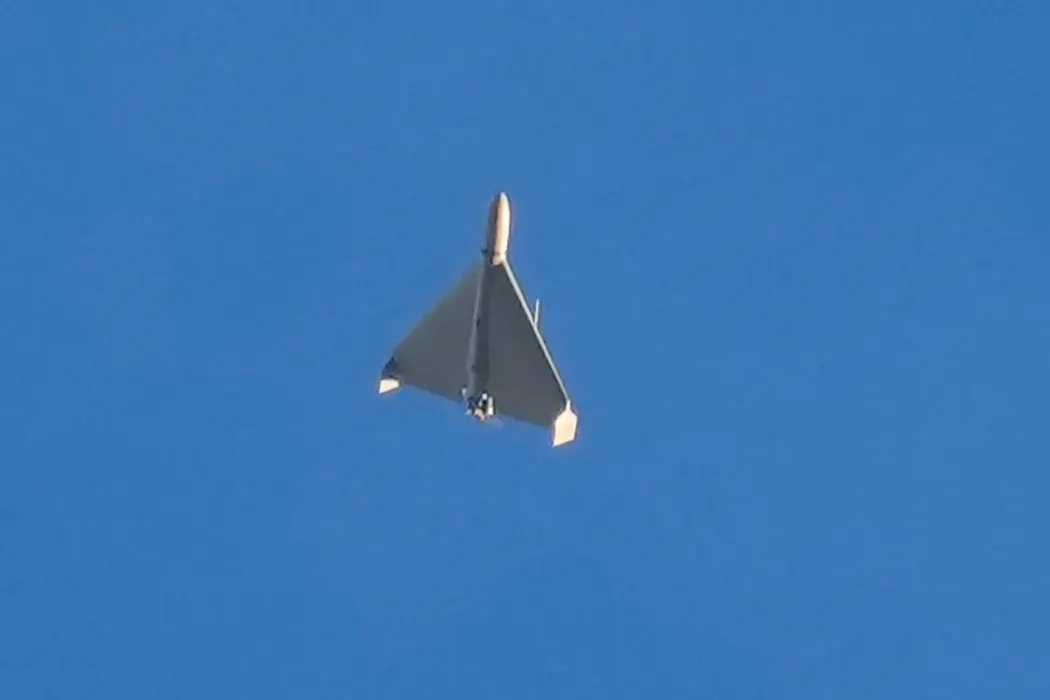
Wars in Ukraine and the Middle East have propelled drones into the headlines. The word “drone” now stretches to cover everything from hobbyist camera rigs available on Amazon to the Predator and Reaper systems the United States has relied on to fight terrorist organizations over the past 20 years.
A common ancestor in the animal kingdom can give rise, under sufficient environmental pressure, to distinct species that demand their own classification. Drones have undergone their own rapid speciation: the one-way attack drone, the medium-altitude, long-endurance and high-altitude, long-endurance drones, the collaborative combat aircraft drone – these share a lineage and a label, but in terms of cost, range and use, increasingly little else.
Nowhere is this variation more consequential than in the category of one-way attack drones: systems designed not to return home like an airplane, but to fly directly into a target and destroy it, like a bullet or a missile. Russia and Ukraine have fired millions of these at each other since 2022, and Iran has launched thousands at United States military bases and embassies, Israel and other countries in the Middle East in 2026.
The world is now in an era we call “precise mass.” In the past, military power was often determined by size – the number of knights, soldiers, guns or tanks, depending on the era, that an army had. Since the Cold War, advanced militaries have emphasized precise munitions, such as cruise missiles, gaining advantage with fewer but more accurately targeted weapons. Inexpensive but technologically sophisticated drones bring mass and precision together.
Commercial manufacturing, precision guidance and advances in artificial intelligence and autonomy have democratized the ability of militaries and militant groups to accurately strike their adversaries. This includes first-person-view, or FPV, drones – a type of one-way attack drone with interfaces like video games – that groups aligned with Iran are already using to target American forces in the Middle East.
One-way attack drones
One-way attack drones have featured most prominently in the war between Russia and Ukraine, and in the Middle East today. The first category of one-way attack drones is longer range and can travel hundreds or even thousands of miles to strike targets deep in an adversary’s territory. They are like extremely cheap cruise missiles – Iran’s Shahed-136 one-way attack drone, for instance, has a reported range of up to 1,250 miles (2,000 km) and costs between US$20,000 and $50,000 each. In comparison, America’s Tomahawk cruise missile costs $2 million each.
Russia acquired the Shahed technology almost immediately after Iran debuted it in 2022, creating its own version, the Geran-2, and has since used these drones to pummel Ukrainian cities and energy infrastructure. Most recently, the U.S. military has followed Russia’s lead and reverse-engineered its own version, the LUCAS, which debuted in the earliest days of Operation Epic Fury, the U.S. military operation against Iran that started on Feb. 28, 2026.
Since late February 2026, Tehran has fired thousands of one-way attack drones at targets across the Middle East. Iran’s one-way attack drones have hit buildings in Bahrain, Kuwait and the United Arab Emirates, and damaged the United States Embassy in Saudi Arabia. The UAE alone was targeted by nearly 700 Iranian drones in the war’s early days. Iran’s one-way attack drones have killed U.S. service members and destroyed critical American radar systems.
Because long-range, one-way attack drones are so slow, they are easier to shoot down than, say, a Tomahawk missile, but attackers can fire so many of them that they can overwhelm air defense systems.
The second category of one-way attack drones operates more like traditional artillery – typically from short distances, up to about 100 miles (160 km). Ukraine’s battlefield has showcased these systems extensively, where they generate 60%-70% of the casualties on the front lines.

AP Photo/Andrii Marienko
FPV drones
One of the most common types of short-range, one-way attack drones is the FPV drone, sometimes built for a few hundred dollars each from commercial parts purchased online. In Ukraine, operators wearing video goggles fly FPV drones directly into Russian vehicles, fortifications and troops, and they feature guidance interfaces for remote operators that are not dissimilar to those of first-person video games.
FPV drones are not magic. Operating them requires a continuous data link between the operator and the drone, making them vulnerable to electronic jamming that can disrupt radio signals. To address this vulnerability, many Ukrainian FPV drones now use physical communication lines in the form of fiber-optic cables to avoid jamming, but the cables can be cut, and that limits the range of these systems. FPV drones with fiber-optic cables have ranges of about 12 miles (20 km). Effectively using FPV drones also requires skilled operators.
America and Israel’s war with Iran hit the pause button on April 7, but if it starts again and the U.S. deploys ground forces, they would likely face the kind of short-range, one-way attack drone barrages that have come to terrorize both Russian and Ukrainian forces alike.
The threat has proved so hard to stop that Ukraine has resorted to low-tech solutions: Hundreds of kilometers of roads are now covered with nets, donated by European fishermen and farmers. The nets stop FPV drones by tangling their propellers. Nets cover tanks and hospital courtyards and line supply routes and city streets. Ukraine’s government plans to install about 2,500 miles (4,000 km) of them on key roads by the end of 2026.

AP Photo/Efrem Lukatsky
Iranian forces could similarly deploy one-way attack drones against American convoys, personnel or parked aircraft in ways that are difficult to defend against. Additionally, just as American adversaries such as ISIS and al-Qaida used video footage of attacks to try to scare the American public, Iran is likely to use FPV strike footage – the operator’s-eye view of the attack, easily edited and uploaded – to try to shape American attitudes.
In March 2026, an Iran-backed militia used FPV drones to strike a parked U.S. Army medevac Black Hawk helicopter and destroy an air defense radar at the Victory Base Complex near Baghdad. The attackers then released footage from the drone’s perspective as propaganda, blurring out the red crosses identifying the Black Hawk as a medevac aircraft.
The new reality
Short-range, one-way attack drones have redefined the front lines; long-range ones have changed what it means to wage war at strategic distances. Iran’s battlefield record – thousands of drones launched, air defenses nearing exhaustion across multiple targeted countries, American troops killed – demonstrates what a mid-tier military can achieve with precise mass.
Any military that fails to invest in these capabilities – and in the ability to defend against them – places itself at risk, including the U.S. military.

Michael C. Horowitz is a senior fellow with the Council on Foreign Relations. From 2022 to 2024 he was Deputy Assistant Secretary of Defense and Director of the Emerging Capabilities Policy Office at the United States Department of Defense.
The views, thoughts, and opinions expressed in an article are solely those of the author and do not represent the official policy, position, or endorsement of any U.S. government department, agency, or branch of service
Lauren Kahn does not work for, consult, own shares in or receive funding from any company or organization that would benefit from this article, and has disclosed no relevant affiliations beyond their academic appointment.
Back to index · Read original article
The use of artificial intelligence in the war in Iran: what does international law say?
April 22, 2026
Source: French to English Tester Published on: 2026-04-21
Source: The Conversation – France in French (3)– By Louis Perez, Postdoctoral Researcher in International Law, University Paris-Panthéon-Assas
The ongoing conflict in Iran demonstrates the advanced dependence of the US and Israeli militaries on military AI, particularly for targeting and strike planning. The bombing of a school in Minab on February 28, presented as a targeting error and causing the death of 168 civilians, mainly children, highlights legal risks, system flaws, and accountability issues.
The armed conflict against Iran launched last February 28 by Washington and Tel Aviv was quickly described as“first AI war”. A statement that is actually misleading in several respects. Not only has AI already been used intensively in recent conflicts, notablyby Israel in Gaza, but more broadly, AI, as a digital means of processing and analyzing data, has a long-standing history with armed conflicts, including the technical foundationsdate back to the Second World War.
Certainly, the Iranian situation is distinguished by the unprecedented level of sophistication of these means and by the unprecedented dependence of the armies on them. It also differs from the conflict in Gaza in that, this time, AI was deployed against a state adversary in the context of a high-intensity war. Finally, never have states soopenly communicated about their use of these systems. It is this communication combined with the dramatic consequences of certain strikes that raises questions about the compatibility of these practices with international law.
The facts: the use of AI in the war in Iran
Israel’s use of AI in its war against Hamas had beenrevealed by the newspaper+972. This media outlet had exposed what many specialists had suspected for several years. In the context of the conflict in Iran, however, it is the American authorities themselves whohave announcedtheir use of AI.
Indeed, the American military forces admitted to having used AI systems to identify and sort the list of targets at a lightning-fast speed. This process would have resulted inmore than 1,000 strikes, described as very precise, during the first twenty-four hours of the conflict. They reportedly used the system notablyMaven Smart System, a joint project using Palantir’s AI software for surveillance and data collection, coupled with the generative AI system Claude, developed by Anthropic.
However, on the first day of the war, one of the American strikestargeted a school in Minab, causing the death of about 170 civilian victims, mainly children. The United States hasacknowledged their responsibilityin this strike, presented as a mistake. The school was indeed located near a naval base of the Guardians of the Revolution. It used to be an integral part of the same complex before being separated from it. It was therefore outdated information that would have led to authorizing the strike.
Such a misunderstanding is not trivial. ManymediaandNGOquickly established the link between the school and the naval base. It was thus put forward that the American army had probably targeted this building based on outdated data by blindly following arecommendation from an AI systemwithout carrying out the verification that was required.
The legality of using AI
To what extent is the use of AI to carry out these strikes, and the mistake made, lawful under international law?
It should first be specified that AI is not prohibited as such by the law of armed conflict (LOAC, also known as international humanitarian law). For the time being, no legal rule specifically addresses the question of its legality. However, the issue does not evolve in a legal vacuum. The general rules of LOAC apply to the conduct of hostilities, regardless of the means and methods deployed.
One of these rules is theprinciple of distinctionaccording to which only military targets may be subject to attacks, and civilian persons and property must be preserved. Directly targeting a school, such as the one in Minab, in the absence of any military objective within it, therefore constitutes a clear violation of this principle. However, it is unlikely that the American military had the deliberate intention to destroy the school as such. As indicated, it is more likely a target identification error, possibly linked to an AI system trained on outdated data, dating back to the time when the building was still attached to the naval base.
Consequently, the violation is rather related to the precautionary principle. The latter notably prescribes that the parties to the conflict must do everything that is practically possible toverify that the targets to be attacked are indeed military targets. In this case, the American army does not appear to have carried out the necessary checks to ensure that the target was a school. A basic verification, like the one conducted by some media outlets, could have quickly dispelled any doubt.
It should be recalled that, during the war in Gaza,he had been reportedthat Israeli soldiers sometimes had only twenty seconds to validate a target, which raises questions about the practical possibility of effectively adhering to this principle. Concerns related to military AI often focus on the issue of autonomy and the risk that a system designates and engages a target on its own; this is the challenge posed by lethal autonomous weapon systems. However, this example shows that formally maintaining human control may be merely fictitious if the operator lacks both the time and the critical thinking needed to evaluate an algorithmic recommendation.
On the Iranian side, it should be noted that the precautionary principle was not respected either. This principle imposes obligations not only on the attacker but also requires the attacked party to take certain passive precautions: in particular, the parties mustremove civilians and civilian property from military objectives. In this case, converting a building of a naval base into a school, while keeping it in immediate proximity to the rest of the military complex, deliberately exposed this civilian facility to the risks associated with the conduct of hostilities.
What legal, political, and moral responsibilities?
Individual responsibility. The attack does not constitute a war crime.
If the attack constitutes a violation of the UCMJ, it is likely that no American military personnel will be convicted for such acts. Beyond issues of jurisdiction, the main obstacle lies in the fact that neither theviolation of the precautionary principlenor theerrorsleading to violations of IHL do not constitute war crimes under international criminal law.
The material act is well characterized, but the intentional element, that is to say the will to commit the offense, is lacking. The current regime of international criminal liability does not recognize liability for negligence in this context. However, this pragmatic approach could evolve. On the one hand, if algorithmic targeting errors multiply, the “reasonable” nature of the error will become increasingly difficult to invoke, and the conscious use of a system known for its failures could imply a form of indirect intent to target civilians. On the other hand, the law could in the future develop to punish military personnel who, through their negligence, cause the death of civilians.
The responsibility of AI companies. A tug of war between economic and political powers.
Another point of concern relates to the role of private companies specializing in AI, which today hold the majority of the technological expertise deployed on the battlefield. These companies could be held responsible when they develop faulty systems, but beyond this responsibility, a fundamental moral and political question arises regarding the sale of AI technologies for military purposes.
Just before the United States entered the war, Anthropic, which produces the Claude system, hadopposed to unlimited cooperationwith the Pentagon, notably on autonomous weapons, citing its ethical commitments and the technical reliability limits of its systems for the intended uses. The Pentagon had then accused Anthropic ofbetrayal, although its systems continue to be used by the army.
Other companies in the sector, such as OpenAI, Google, Amazon, or Microsoft, on their part, seem to collaborate unreservedly with the militaries, imposing themselvesde factolike real defense companies. It is interesting to note that companies, normally driven by profit, sometimes have more scruples in this matter than certain States, which are nonetheless guarantors of the general interest.
State responsibility. Being accountable for one’s actions and preventing future violations.
States that develop and use military AI bear a particular responsibility. In this case, the United States incurs its international responsibility for the commission of an internationally wrongful act. This responsibility will certainly be difficult to enforce in practice. But beyond that, both legal and political responsibility emerges. Under Article 1 common to the Geneva Conventions, States indeed have the obligation to respect and ensure respect for IHL. Yet, the development of military AI tends to undermine this respect, even to favor and conceal violations of the law.
Various mechanisms could curb this phenomenon, such as training military personnel on the specificities of AI systems, developing rules of engagement specific to AI, technical guarantees of reliability and transparency of systems, as well as regular testing and evaluations. Several international initiatives call for integrating such measures into new legal instruments. However, political will is lacking, particularly among the states at the forefront of the development and use of military AI.
Thus, Pete Hegseth, United States Secretary of Defense, actually seems to be acting in the opposite direction. He recently dismissed military legal advisors whom he considered asobstacles to the proper conduct of hostilitiesand hasqualifies the rules of engagement as stupid. More broadly, the United States opposes any international legal regulation of military AI. AI thus appears both as one of the drivers and the indicator of a profound erosion of IHL.
Jacques Lacan said: “The real is when you bump into it.” The Minab accident is a dramatic event that confirms the risks military AI experts have been warning about for several years and should have prompted much more reaction.
In reality, this information seems to have been overshadowed by other considerations perceived as more urgent and more visible in the context of this war, starting with thenuclear risk. The Minab accident was not the shock expected to prompt states to agree on a specific legal framework applicable to military AI. It remains to be seen whether such a shock is still possible or even desirable.

Louis Perez does not work for, advise, own shares in, or receive funds from any organization that could benefit from this article, and has declared no affiliation other than his research institution.
–ref. The use of artificial intelligence in the war in Iran: what does international law say? –https://theconversation.com/the-use-of-artificial-intelligence-in-the-war-in-iran-what-does-international-law-say-280562
Back to index · Read original article
Attaque, défense, digestion… les venins de fourmis révèlent enfin leurs secrets
April 22, 2026
Source: The Conversation – France in French (2) [1]
Les venins de fourmis commencent à révéler leurs secrets. Ils sont longtemps restés dans l’ombre, car la quantité produite par chaque individu est très faible, mais de nouvelles techniques permettent de les analyser et de comprendre leur fascinante complexité.
En étudiant des espèces de fourmis de la forêt amazonienne de Guyane, nos recherches mettent en lumière une diversité et une sophistication inattendues largement façonnées par les proies qu’elles consomment, leur socialité mais aussi par la nécessité de se protéger contre les prédateurs. Ces résultats, publiés dans Molecular Ecology et dans Science, offrent un nouvel éclairage sur l’évolution des venins chez les insectes sociaux.
Nous avons découvert que toutes les fourmis d’une même colonie ne possèdent pas une composition de venin identique. Chez les fourmis légionnaires, le venin des soldats contient des enzymes digestives, probablement impliquées dans la prédigestion des proies. Chez la fourmi Neoponera goeldii, le venin contient une molécule qui imite une hormone de vertébré, provoquant une douleur immédiate pour dissuader les prédateurs.
Des venins encore largement méconnus
Les venins sont des mélanges complexes de dizaines voire de centaines de molécules biologiquement actives utilisées pour immobiliser des proies et se défendre. Ils contiennent des molécules appelées « toxines », souvent des protéines, qui perturbent rapidement des fonctions vitales, telles que la transmission nerveuse ou la coagulation sanguine.
Les recherches se sont surtout concentrées sur les grands animaux venimeux, comme les serpents, les scorpions ou les araignées. Cela s’explique par la quantité de venin qu’ils produisent, mais aussi par leur dangerosité pour l’humain. Aujourd’hui, ces venins sont également étudiés pour leur potentiel thérapeutique, car certaines toxines ont déjà inspiré des médicaments commercialisés. Une molécule issue du venin d’une vipère d’Amazonie (Bothrops jararaca) a, par exemple, conduit au développement du Captopril, un médicament aujourd’hui largement prescrit dans le traitement de l’hypertension artérielle.
Historiquement, le tout premier composé de venin à avoir été caractérisé est l’acide formique, isolé à partir de la distillation des fourmis du genre Formica par John Wray en 1670. Si presque toutes les fourmis sont venimeuses, toutes ne piquent pas. Certaines projettent des substances chimiques, souvent à base d’acide formique ou d’autres composés volatils. Environ la moitié des espèces possèdent toutefois un aiguillon fonctionnel comparable à celui des guêpes et des abeilles, leur permettant d’injecter un venin riche en protéines.
Ces venins sont longtemps restés peu étudiés. La raison en est simple : chaque fourmi ne produit que quelques nanolitres de venin, ce qui rend leur collecte et leur analyse difficiles. Pourtant, avec presque 15 000 espèces décrites, les fourmis constituent un immense réservoir de diversité chimique encore largement inexploré.
Un défi technique pour les scientifiques
Avant d’étudier les venins, les chercheurs doivent d’abord prospecter dans la forêt afin de localiser les espèces et collecter les colonies. Les fourmis occupent en effet toutes les strates de l’écosystème terrestre, du sous-sol jusqu’à la canopée, et certaines espèces peuvent s’avérer particulièrement difficiles à trouver.
Une fois au laboratoire, les fourmis sont disséquées individuellement sous loupe binoculaire. À l’aide de pinces extrêmement fines, notre équipe de recherche extrait les réservoirs à venin. Des dizaines, voire des centaines d’individus sont souvent nécessaires pour obtenir une quantité de venin suffisante pour les analyses.
La composition du venin est étudiée grâce à des techniques de pointe : la spectrométrie de masse identifie précisément les protéines présentes, tandis que le séquençage des ARN permet de lire les instructions génétiques utilisées par les fourmis pour les produire. En combinant ces méthodes, nous pouvons relier chaque molécule à son gène, révélant toute la richesse chimique de ces venins.
Chez les fourmis légionnaires, une division des tâches jusqu’au venin
Parmi les espèces étudiées, nous nous sommes intéressés aux fourmis légionnaires (Eciton hamatum), dont le venin n’avait encore jamais été exploré. Ces fourmis se distinguent par leur mode de vie nomade : elles ne construisent pas de nid fixe, ce qui les rend particulièrement vulnérables aux prédateurs.
Pour y faire face, elles ont développé une organisation sociale très spécialisée. Certaines ouvrières, appelées « soldats », ont des mandibules hypertrophiées en forme de crochet qu’elles utilisent pour pincer efficacement les vertébrés susceptibles de les attaquer. Les autres ouvrières, appelées « minors », assurent l’ensemble des tâches de la colonie tout en participant également à sa défense. Ainsi, toutes les fourmis légionnaires disposent d’un venin douloureux. Ces insectes sont également de redoutables prédatrices : elles organisent des raids massifs, parfois mobilisant des milliers d’individus, pour capturer une grande variété de proies, principalement d’autres fourmis, des guêpes, mais aussi des araignées et parfois de petits vertébrés, comme des lézards.
L’étude du venin de la fourmi légionnaire a montré que celui des soldats présente une composition en protéines plus simple que celui des autres ouvrières. Tous ces venins provoquent une douleur chez les vertébrés, mais seul celui des soldats est capable de paralyser efficacement les insectes. Plus surprenant encore, ce venin contient également des enzymes digestives, les chymotrypsines. Cela suggère que le venin ne sert pas uniquement à immobiliser les proies ou à provoquer de la douleur, mais qu’il pourrait aussi contribuer à leur prédigestion.
Cette hypothèse prend tout son sens lorsque l’on considère le cycle de vie de ces fourmis. Les colonies alternent entre une phase statique d’environ vingt jours, durant laquelle elles restent en bivouac, chassent intensivement tandis que la reine pond massivement, et une phase nomade d’environ quinze jours, marquée par le déplacement quotidien de la colonie pour répondre aux besoins alimentaires élevés des larves nouvellement écloses. Or, les fourmis adultes ne peuvent consommer que des liquides, car leur système digestif filtre les particules solides. Ce sont donc les larves qui digèrent habituellement les proies. Mais lors de la phase statique, les larves sont rares, voire absentes. En temps normal, ce sont donc les larves qui assurent la digestion des proies. Nous avançons ainsi l’hypothèse que les enzymes présentes dans le venin des soldats permettraient de prédigérer les proies, facilitant ainsi l’alimentation des adultes, même en l’absence de larves.
Imiter son ennemi pour mieux se défendre
Une autre stratégie a été mise en évidence chez la fourmi Neoponera goeldii. Son venin contient en effet une toxine qui imite la bradykinine, une hormone propre aux vertébrés et impliquée dans la douleur et l’inflammation. Or, les insectes ne possèdent ni cette hormone ni les récepteurs qui lui sont associés. Autrement dit, cette molécule ne cible pas les proies, mais leurs prédateurs, notamment les oiseaux et les mammifères. En activant les récepteurs de la douleur chez les vertébrés, elle provoque une douleur immédiate et intense, ce qui constitue une défense efficace contre les prédateurs.
Dans notre étude, nous avons également identifié des toxines imitant la bradykinine dans certains venins de guêpes, mais Neoponera goeldii est la seule espèce de fourmis connue pour posséder une telle toxine.
L’écologie de cette espèce éclaire cette adaptation. Neoponera goeldii est une fourmi arboricole qui vit dans des structures étonnantes appelées « jardins de fourmis ». Les ouvrières construisent leurs nids en assemblant des débris végétaux, des fibres et de la terre, formant ainsi un terreau suspendu dans la végétation. Elles y intègrent des graines de plantes épiphytes, c’est-à-dire des plantes qui poussent sur d’autres sans les parasiter (comme certaines broméliacées ou orchidées), qui germent directement dans le nid. Avec le temps, les racines de ces plantes grandissent et stabilisent la structure, tandis que les fourmis bénéficient d’un abri durable en hauteur. Cette association forme de véritables « jardins suspendus », parfois volumineux et très visibles dans la canopée. Cependant, cette visibilité a un coût : contrairement aux espèces discrètes qui vivent dans le sol ou le bois mort, ces colonies sont exposées en permanence aux prédateurs. Dans ce contexte, la fuite ou la dissimulation sont peu efficaces. La défense repose donc sur un venin capable de provoquer une douleur chez un prédateur.
Ces résultats montrent à quel point la composition des venins de fourmis est liée au mode de vie des espèces : ce sont des cocktails chimiques façonnés par l’évolution pour répondre à des contraintes écologiques très spécifiques.

Axel Touchard ne travaille pas, ne conseille pas, ne possède pas de parts, ne reçoit pas de fonds d'une organisation qui pourrait tirer profit de cet article, et n'a déclaré aucune autre affiliation que son organisme de recherche.
Back to index · Read original article
Why the ceasefire in Lebanon is unlikely to change much on the ground
April 22, 2026
Source: The Conversation – UK
Following direct talks between Lebanese and Israeli officials, a ten-day ceasefire has been agreed between the two countries. It is currently unclear whether Hezbollah, the Iran-backed group that has been fighting Israel in southern Lebanon since early March, has agreed to observe the temporary cessation of hostilities.
If it holds, the ceasefire will be welcomed by the Lebanese government. This latest conflict has brought the state to its knees. Not only is Lebanon’s government logistically and administratively stretched, having to find shelter for and relocate over a million displaced citizens, it is also in a fragile position politically.
Having taken the decision to ban Hezbollah’s military activities and restrict its role to the political sphere on March 2, the government is now attempting to establish full control over the capital of Beirut. The cessation of hostilities between Israel and Hezbollah is thus essential to avoid a complete breakdown in state authority.
The ceasefire also comes despite Israel’s seemingly mixed stance on ending its conflict with Hezbollah. Hours after the signing of an earlier ceasefire between the US and Iran, Israel launched over 100 missiles towards Lebanese territory. The attacks, which came amid confusion over whether Lebanon was covered by the deal, killed more than 300 people in what has become known as “Black Wednesday” in Lebanon.
There has been much speculation about the strategy behind this attack. Some argued the Israelis were taking advantage of the unclear situation. Others saw the attack as a deliberate tactic to derail the entire negotiation process, knowing Iran would insist on Lebanon’s inclusion in any talks. But it soon became clear that the Trump administration preferred for hostilities to, at the very least, de-escalate in Lebanon.
With the US insisting that Israel preserves “its right to take all necessary measures in self-defense, at any time, against planned, imminent or ongoing attacks”, it is unclear what kind of ceasefire will be implemented. The most likely outcome is a scenario in which Israeli attacks on Beirut end, while troops continue their skirmishes with Hezbollah in and around the southern villages.
Hezbollah has already insisted the ceasefire must not allow Israeli troops freedom of movement in the south. However, the Lebanese army has reported that there have been “several Israeli attacks” in southern Lebanon since the ceasefire took effect.
Long road ahead
With ten days to seek further agreements, there is still much left to be negotiated. An ultimate goal for the Lebanese government will be to secure full Israeli withdrawal from the territories it has captured along the border.
The Israeli military has taken full control of the first line of villages and towns along the border and is currently sitting a few kilometres inside Lebanese territory. There has been irreparable damage to buildings in the villages it has occupied, leading some to compare the destruction to that seen in Gaza.
But there is no obvious reason for Israel to withdraw. Local media has reported that Israel is insisting on a long-term security zone in Lebanon of up to 0.8km to provide protection from future Hezbollah rocket attacks. A second zone up to the Litani River – around 30km from the border – would remain under Israeli control and would be “gradually” handed back to the Lebanese armed forces.
A 2006 UN resolution demanded the withdrawal of all armed groups, except for the Lebanese army and UN peacekeepers, from this area. However, the resolution has been violated repeatedly both by Israel and Hezbollah. Israel’s defence minister, Israel Katz, has previously stated that this larger security zone is an objective for his country’s military.
There is also no real bargaining chip the Lebanese government can play. The only resistance to Israel’s presence on Lebanese soil in the current conflict is being provided by Hezbollah, which is not represented in the direct talks. And it is clear by now that Israeli officials simply do not trust the Lebanese state’s ability to control or rein in the Iran-backed party.
There are rumours that Israeli and Lebanese officials may be working on a possible peace treaty, emulating the 1978 Camp David accords. These accords allowed Egypt to reclaim the Sinai peninsula in exchange for peace with Israel. A similar treaty could make Israeli withdrawal from Lebanon possible.
But there are three factors that make a peace treaty unlikely. First, the issue of peace with Israel remains highly divisive in Lebanon. In 2022, surveys implied that roughly 17% of Lebanese people supported normalisation with Israel, a relatively high percentage among Arab countries.
After two conflicts since then, it is unclear how these numbers now break down. But recent Shia-dominated protests in Beirut show just how divided the country remains over this issue. At a protest on April 13, demonstrators called Lebanon’s Sunni prime minister, Nawaf Salam, a “Zionist” for agreeing to engage in talks.
Second, it is unclear that the Israelis themselves are looking for peace. There is considerable division among members of the Israeli cabinet on this issue. While the foreign minister, Gideon Saar, has insisted that “peace and normalisation” are desired, the more extreme right-wing minister Bezalel Smotrich has continued to call for the permanent annexation of southern Lebanon.
And third, what remains an insurmountable reality for both countries is Hezbollah itself. The party’s reason for existence is to resist Israeli occupation and it has said over the years that it would only hand over its weapons in exchange for full Israeli withdrawal and if a Lebanese state emerges that showcases an ability to repel Israeli forces on the border.
The fact that the Lebanese armed forces have not entered the current fight with Israel and have evacuated positions in the south ahead of Israeli incursions will not encourage Hezbollah or its base to trust any peace process and lay down its arms peacefully.
All of this leaves Lebanon with few realistic outcomes. What people inside the country now fear is a return to the status quo: a fragile and unobservable ceasefire, Israeli troops stationed in Lebanese territory and a state stuck in gridlock.

Tarek Abou Jaoude receives funding from The Leverhulme Trust.
Back to index · Read original article
Médiation entre les États-Unis et l’Iran : le Pakistan sur le devant de la scène diplomatique mondiale
April 22, 2026
Source: The Conversation – France in French (3) [1]
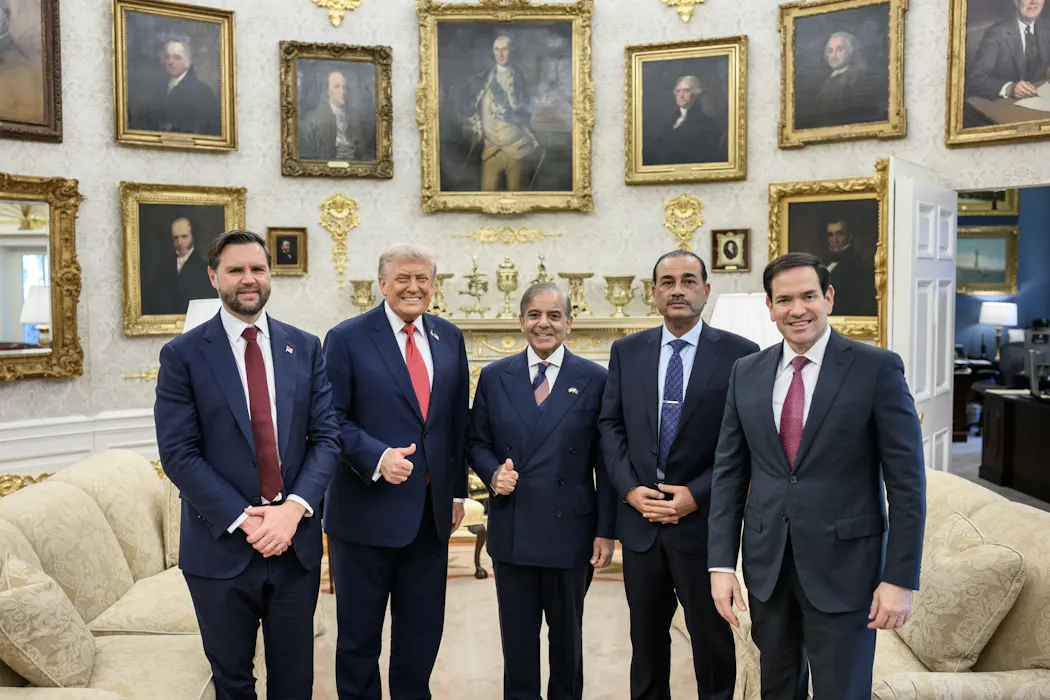
Whitehouse.gov
Alors que Donald Trump venait de menacer d’anéantir la civilisation iranienne, Washington et Téhéran ont finalement conclu, le 7 avril 2026, un cessez-le-feu temporaire de deux semaines, en échange de la réouverture du détroit d’Ormuz. Le Pakistan, fort de ses relations privilégiées avec les deux pays, a joué un rôle important dans les négociations et accueillera sur son territoire les discussions prévues ces tout prochains jours.
L’annonce du fragile cessez-le-feu passé entre les États-Unis, Israël et l’Iran fut premièrement communiquée via une publication du premier ministre pakistanais Shehbaz Sharif sur son compte X.
Il s’agit, en soi, d’une grande victoire diplomatique pour le Pakistan, quand bien même l’accord a rapidement été menacé par la poursuite et même l’intensification des bombardements israéliens sur le Liban.
Le Pakistan demeurera au cœur des négociations de paix, puisque des discussions entre les parties se tiendront sur son territoire à partir de ce 10 avril.
Islamabad est parvenu à réunir les deux adversaires en s’appuyant sur les relations de longue date qu’il entretient avec eux et sur des accords passés avec l’un comme avec l’autre. Ce faisant, il apparaît comme une puissance diplomatique avec laquelle compter.
La longue relation avec l’Iran
Le Pakistan et l’Iran entretiennent une amitié et une alliance anciennes. Partageant plus de 900 kilomètres de frontières, les deux pays ont, depuis la création du Pakistan en 1947, cherché plusieurs fois à s’aider mutuellement à résoudre des crises diplomatiques.
CC BY-SA
Durant la période monarchique de l’Iran, qui prit fin en 1979, le Pakistan bénéficia d’une médiation iranienne dans ses différends avec l’Afghanistan ainsi que d’un soutien actif de Téhéran lors des guerres qui l’opposèrent à l’Inde en 1965 et en 1971. La relation ne fut pas toujours pas exempte de tensions. Selon certaines sources, l’ancien premier ministre pakistanais Zulfikar Ali Bhutto (1973-1977) n’appréciait guère l’attitude hautaine du shah d’Iran.
Ces liens étroits se sont maintenus après la révolution islamique en Iran. Près de 20 % de la population pakistanaise est chiite et entretient depuis longtemps une relation étroite avec le régime iranien.
Téhéran s’est par ailleurs servi de ces communautés pour diffuser sa propre vision de l’islam et de la politique, en prenant toutefois soin de ne pas franchir certaines limites. Le régime a veillé à ce que les tensions ne dépassent pas un seuil au-delà duquel le gouvernement pakistanais le considérerait comme un facteur de déstabilisation et une menace pour sa propre sécurité.
En raison de cette histoire commune et de cette proximité géographique, le régime iranien est particulièrement disposé à écouter son homologue pakistanais.
Sécurité régionale et nationale
Contribuer à une stabilisation de la situation en Iran est d’autant plus crucial pour le Pakistan que ce dernier souhaite absolument éviter une fragmentation de son voisin de l’ouest en plusieurs petits États.
Le Baloutchistan, la plus grande province du Pakistan, connaît une recrudescence des violences armées commises par le groupe séparatiste Armée de libération du Baloutchistan (BLA). Ses combattants ont attaqué de nombreuses installations militaires, des forces de l’ordre et des fonctionnaires, en particulier ceux originaires de la province du Pendjab (la plus importante sur le plan démographique et économique).
À lire aussi :
Who are the Baloch Liberation Army? Pakistan train hijacking was fuelled by decades of neglect and violence
Le Pakistan a conscience qu’un Iran affaibli ou fragmenté pourrait renforcer l’attrait pour l’idéologie de la BLA. Islamabad refuse d’envisager la création d’un grand Baloutchistan qui engloberait des territoires des deux côtés de ses frontières avec l’Iran.
Autre considération : le Pakistan craint que son arsenal nucléaire ne devienne la prochaine cible des puissances étrangères, et cherche ainsi à désamorcer les tensions dans l’ensemble de la région.
La situation géographique du Pakistan est également à prendre en compte. Islamabad ne veut surtout pas se retrouver en étau entre un Iran qui serait contrôlé par Israël et une Inde qui est déjà une proche alliée de Tel-Aviv.
Il est probable que le régime iranien soit conscient de ces préoccupations et comprenne que la médiation du Pakistan repose sur ses propres inquiétudes quant à la sûreté du pays. Mais, du point de vue iranien, ce n’est pas forcément une mauvaise chose : cela signifie que toutes les pistes sont explorées pour parvenir à un cessez-le-feu et à un règlement durable.
Des amis dans le camp MAGA
Le Pakistan jouit d’une réelle crédibilité aux yeux de l’administration Trump. Cela s’explique principalement par le rôle prépondérant que l’armée pakistanaise a joué dans l’élaboration de la politique étrangère du pays. Cette influence, sensible dès la naissance du Pakistan il y a près de 80 ans, s’est encore renforcée récemment.
En 2022, le général Asim Munir a pris ses fonctions de chef d’état-major de l’armée. Il a été promu au grade de maréchal à la suite de la « mini-guerre » qui a opposé le Pakistan à l’Inde en mai 2025.
À lire aussi :
Inde-Pakistan : vers une nouvelle guerre de grande ampleur ?
En poste pour les cinq prochaines années et possiblement jusqu’en 2035, il s’est imposé comme le général le plus puissant à la tête du Pakistan depuis des décennies.
Munir a noué des relations cordiales avec le président états-unien Donald Trump. Il s’est rendu à deux reprises au siège de l’administration, où il a notamment été reçu dans le bureau Ovale.
Andrew Harnick/Getty
Munir a également influencé la politique du Pakistan à l’égard du Golfe, notamment en ce qui concerne la signature d’un accord stratégique de défense mutuelle avec l’Arabie saoudite en septembre 2025. Cet accord s’appuie sur des décennies de coopération en matière de défense entre les deux pays. Il stipule clairement que toute attaque contre l’un des deux pays sera considérée comme une attaque contre les deux.
Bien que le Pakistan ait pris soin de souligner qu’il n’étend pas son parapluie nucléaire à l’Arabie saoudite, cet accord témoigne d’une dissuasion régionale partagée et de la capacité des deux États à collaborer contre leurs adversaires.
La signature de cet accord fut suivie de celle d’un accord de défense stratégique entre l’Arabie saoudite et les États-Unis, lors de la visite du prince héritier Mohammed ben Salmane à Washington, en novembre 2025.
Une alliance est donc désormais formée entre les États-Unis, l’Arabie saoudite et le Pakistan.
La Chine, autre alliée
Dans le même temps, le Pakistan maintient des relations militaires, économiques et politiques solides avec la Chine. Pékin s’est montré favorable à une désescalade du conflit dans le Golfe, en raison de sa forte dépendance à l’égard du pétrole provenant de la région. Cet intérêt fut clairement exprimé lors de la visite du ministre pakistanais des affaires étrangères Ishaq Dar en Chine, le 31 mars dernier. Peu avant, il avait rencontré ses homologues saoudien, égyptien et turc, confirmant que le Pakistan bénéficie à la fois du soutien de toutes les grandes puissances à majorité musulmane et de la Chine.
En contribuant à une solution possible au conflit en Iran d’une façon telle que Donald Trump peut mettre sa médiation en avant et donc ne pas perdre la face, Islamabad s’impose comme le grand vainqueur diplomatique de la séquence actuelle.

Samina Yasmeen ne travaille pas, ne conseille pas, ne possède pas de parts, ne reçoit pas de fonds d'une organisation qui pourrait tirer profit de cet article, et n'a déclaré aucune autre affiliation que son organisme de recherche.
Back to index · Read original article
Iran’s military forces combine state-of-the-art drones and hackers with out-of-date conventional weapons
April 22, 2026
Source: The Conversation – USA [1]
Six weeks of U.S. and Israeli bombardment have served to degrade Iran’s nuclear facilities and cripple parts of its military.
But the Islamic Republic’s offensive capabilities have been built up over nearly 50 years, during which Iran has been either at war or under the threat of conflict.
As an expert in military history and theory, I believe that to understand what may come next in Operation Epic Fury, it’s valuable to grasp the development of Iran’s modern military structure, capabilities and international activities.
Iranian military technology
Prior to the establishment of the Islamic Republic of Iran in 1979, Iran’s military was largely supplied by Western powers, particularly the United States.
It entered the Iran-Iraq war in 1980 with a substantial amount of then-modern equipment. That included nearly 80 F-14 fighter aircraft, over 200 F-4 and F-5 aircraft and thousands of tanks.
But Iran’s military was exhausted when the war ended in 1988. And the government had by then become a world pariah, making resupply all but impossible.
Although Iran imported some military equipment from the Soviet Union and China in 1990, its economy could not support substantial military spending.
Ironically, the arms embargoes that Iran faced during and after its war with Iraq made the regime self-reliant on its weapons stockpiles. And that triggered the development of a substantial domestic arms industry.
Most modern Iranian military equipment consists of reverse-engineered American and Soviet equipment, much of it obsolete. Since 1990, however, Iranian missile technology has substantially improved. That’s due to domestic production and importing expertise from other marginalized states, such as North Korea.

Gailan Haji/Middle East Images/AFP via Getty Images
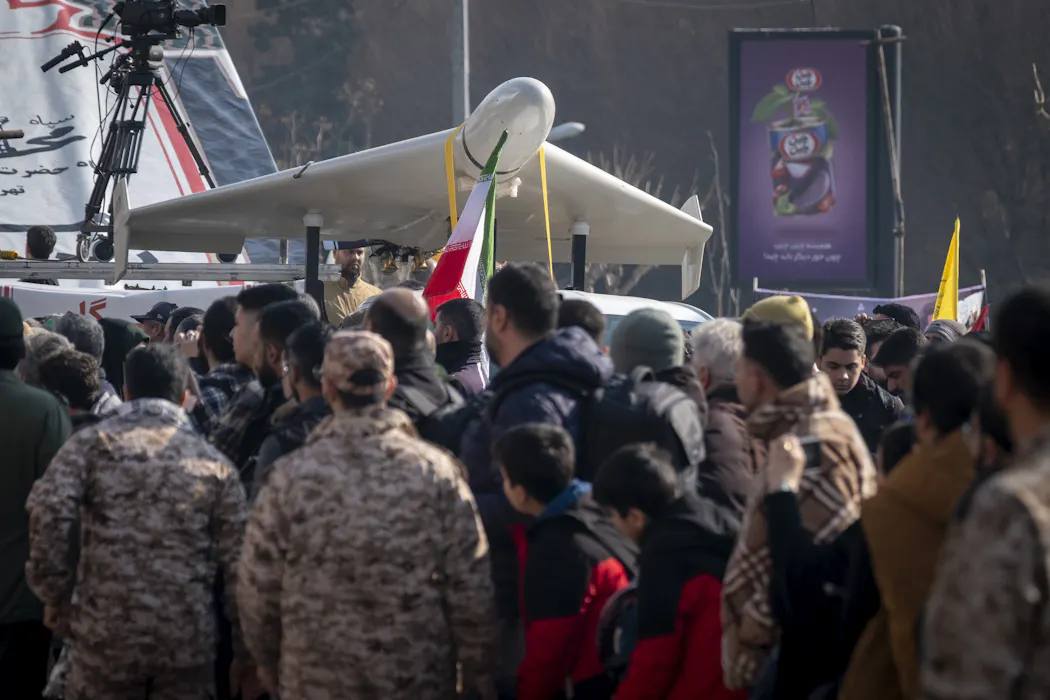
Starting in the 1990s, Iran also innovated a series of one-way attack drones, a relatively inexpensive way to attack distant targets.
The modern Iranian military
The Iranian military is split into the regular military, or “Artesh,” and the Islamic Revolutionary Guard Corps. The Artesh plays a domestic defense role akin to a militia, while the Revolutionary Guard serves as the more professional military force.
The Revolutionary Guard projects regional power. During the 2003 U.S.-Iraq war, for instance, it provided improvised explosive devices to insurgents targeting American forces.
The Revolutionary Guard tends to receive the bulk of Iranian military resources, including the best personnel and equipment. Quds Force, the unconventional warfare wing of the Revolutionary Guard, has long played a role in exporting the revolutionary beliefs of the Iranian rulers. The Quds Force provides arms and guidance to proxies throughout the Middle East, primarily by fomenting insurrections against Arab Sunni governments.
Iran has long been the patron of Hezbollah, based in Lebanon, whose primary goal is the eradication of Israel. More recently, Iran has also engaged in substantial support of Hamas in Gaza, despite the fact that Hamas is a Sunni organization, while the rulers of Iran are members of the Shiite branch of Islam.
Iran has constantly sought means of exerting military influence beyond its borders, without risking external attack. It has embraced the use of cyber warfare, a method of attack with a relatively low cost for participation and a potentially outsized influence on the world stage.
Iranian hackers have attacked Western military and government networks, including a hack of FBI Director Kash Patel’s personal emails. Iranian-backed hackers have also launched attacks on infrastructure and cultural institutions, including U.S. wastewater treatment plants and electrical grids.

Hummam Sheikh Ali/Xinhua via Getty Images
Iran’s pursuit of atomic weaponry
Iran’s government has relentlessly pursued nuclear weapons since at least the 1980s.
The Iranian government has always maintained that its nuclear program is to provide power for the developing nation, rather than weaponry. But definitive evidence of uranium enrichment far beyond the requirements of power generation have caused Western states to demand an end to the Iranian nuclear program.
In 2010, cybersecurity researcher Sergey Ulasen discovered an incredibly complex malware program, dubbed Stuxnet, that was created to undermine the Iranian nuclear program by disrupting the function of enrichment centrifuges. No nation has ever taken responsibility for the attack, which set back Iranian uranium enrichment efforts by years.
In 2015, after negotiations with the five permanent members of the U.N. Security Council and Germany, Iran agreed to halt its uranium enrichment program in exchange for relief from economic sanctions and the release of frozen Iranian assets. The negotiations resulted in the Joint Comprehensive Plan of Action, or JCPOA.
Although the Trump administration withdrew the U.S. from the JCPOA in 2018, the agreement continued to function, and Iran seemed poised to reenter the global economy.

Behrouz Mehri/AFP via Getty Images
However, in 2020 the Iranians restarted their nuclear program. They also ramped up production of ballistic missiles and one-way attack drones.
In June 2025, the United States and Israel launched a massive aerial attack on Iranian nuclear facilities, an effort that Trump characterized as having destroyed Iran’s nuclear facilities.
Iran responded by launching a wave of ballistic missiles and drones toward Israel, most of which were intercepted before entering Israeli airspace.
The missile and interceptor war
Prior to Operation Epic Fury, analysts estimated that Iran possessed 3,000 ballistic missiles and tens of thousands of one-way attack drones. They also concluded that Iran had a substantial production capacity to increase its stockpiles.
In the first six weeks of the current conflict, Iran expended at least 650 missiles in attacks on Israel and hundreds more against other targets in the region.
The U.S. has placed a heavy emphasis on attacking missile production and storage facilities. But it’s difficult to ascertain how many missiles and drones the Iranian military might still possess.
Iranian production and transportation has almost certainly sustained substantial losses in capacity. And U.S. and Israeli aircraft prowl the skies over Iran seeking signs of mobile launchers or attempts to transport missiles to firing locations.
The rate of Iranian missile fire has substantially declined since the first days of the conflict, but it has never dropped to zero. That has led some analysts to suspect that Iran maintains a significant cache of long-range weaponry in reserve, while U.S. Secretary of Defense Pete Hegseth argues that it has lost the capacity to launch major barrages.

Paul J. Springer is a Senior Fellow of the Foreign Policy Research Institute. His comments represent his own opinion and do not reflect the official policy of the United States Government, the U.S. Department of Defense, or the U.S. Air Force.
Back to index · Read original article