

Education Morning briefing summary for April 22, 2026.
We collected data on how 779 Michigan school districts are regulating student cellphones − here are the trends
April 22, 2026
Source: The Conversation – USA (2) [3]
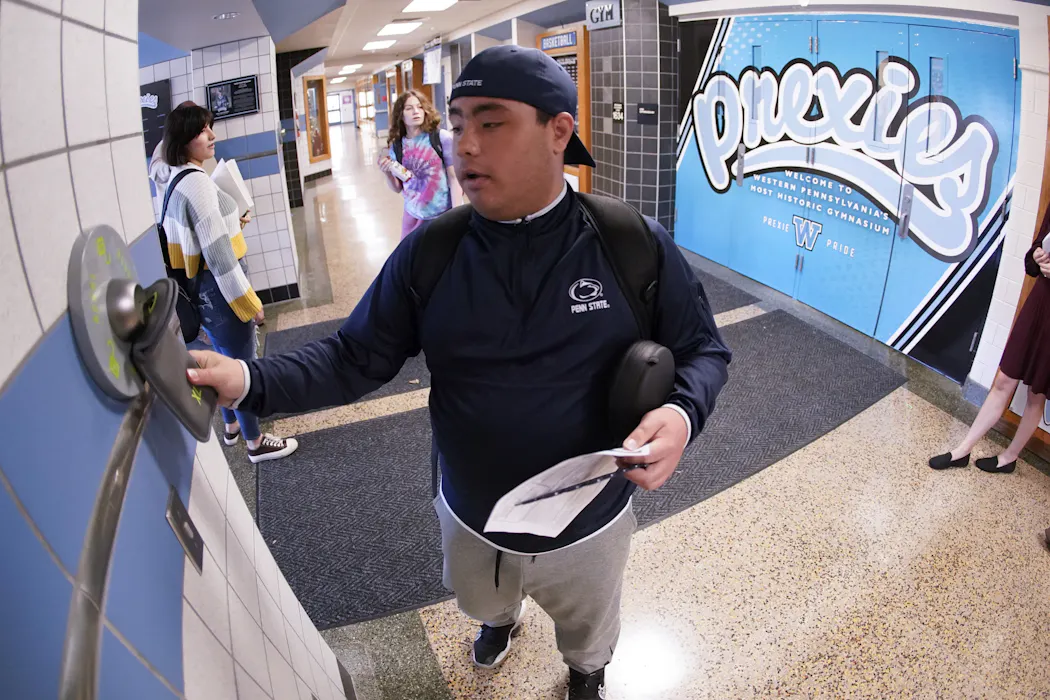
What is the best way to handle cellphones in schools?
That’s a question Michigan educators are grappling with this spring after Gov. Gretchen Whitmer signed into law a ban on smartphone use in Michigan schools.
The law goes into effect in the school year that begins in August 2026. It requires public and charter K-12 schools to adopt rules prohibiting students from using smartphones during instructional time, but it allows educators and school officials to determine the best way to do that.
The new law includes several exemptions, including medical or emergency use, and does not apply to Michigan’s private schools.
We are University of Michigan faculty in the schools of Public Health, Public Policy and Education, and we are interested in how cellphone access both helps and hurts students in schools.
Many districts already have cellphone policies, but the new law creates an opportunity to look at which policies best support student well-being and academic success.
Drawbacks and benefits to student learning
Cellphones were used by 97% of young people ages 11-17 during the school day in 2022, with both good and bad effects.
Cellphone use can distract students and lead to disengagement from school, impaired learning and poorer mental health. It can also lead to exposure to interpersonal violence, such as bullying or fights, and harm broader well-being.
But students also use phones in beneficial ways, such as monitoring their blood sugar levels, connecting with family and peers, and even contacting digital tip lines to prevent violence.
Defining the array of cellphone policies
As part of a CDC-funded project focused on cellphone policies and health, we collected data on existing cellphone policies in the 2025-26 school year for every school district in Michigan. Our team checked hundreds of local and regional education authority webpages and consulted student handbooks. When digital information was missing, we contacted districts directly. Building on a national teacher survey called Phones in Focus, we recorded not only when phone use is restricted but how schools restrict it, noting cases in which the district policy varied by grade level.
At the time of this writing, our data reflects 779, or 95%, of publicly funded traditional and charter school districts in Michigan.
At the start of the 2025-26 school year, 94.7% of districts had existing mandates, compared to 2.5% of districts that required individual schools to set their own policies.
Just under 3% of all Michigan districts had no stated policy at all. It is possible that these districts communicated a set policy through informal channels or, in practice, were letting schools decide on their own rules.
Among districts with mandated policies, there were important differences in rules relating to cellphones. To help think through policies, we sorted them on two criteria: when policies are enforced and how policies are enforced.
About half of the district policies provided different rules by grade level. In these cases, we include the policies for high school students to generate the statistics below.
When and how to limit use
Let’s start with when: In districts with stated policies, 50% specified “bell-to-bell” restrictions, meaning that students were not permitted to use their phones at any point during the school day, including during lunch or passing periods. The remaining 50% of districts mandated “schedule-based” restrictions, which typically meant that phones were prohibited during instructional time but could be used at other times, such as lunch or between classes.
When it comes to the “how,” districts specified a number of different approaches to enforcing cellphone restrictions.
The most common approach, adopted by 62% of districts, is what we describe as a “no show,” meaning that students are required to keep their phones out of sight, such as in their backpacks or pockets. This policy is used in Alanson Public Schools, for example.
Seventeen percent of districts require students to keep their phones in their lockers throughout the school day. Sturgis Public Schools, a school district that provides special education and early childhood services, is one.
Other school districts enforce stricter policies. Detroit Premier Academy, a charter school, implemented a “no phones” rule that bans phones inside school buildings. Roughly 8% of districts surveyed use this approach.
Another 8% collected phones in each classroom, often using structured, numbered pocket charts or a designated bin.
Less common was the “centralized collection” approach, meaning when students arrive at school, staff collect their phones and store them for the remainder of the day. Stockbridge Community Schools was among the 21 school districts, or about 3%, we found that follow this policy.
The final 2% used lockable pouches.
Location and type of school mattered
We found that policy features were associated with the type and location of districts.
Charter and urban districts were substantially more likely than suburban or rural schools to adopt bell-to-bell policies that prohibit phones during the school day.
Roughly 20% of charter districts prohibited students from bringing phones to school, while 2% of traditional districts adopted this approach.
Traditional districts relied more on “lockers” – 22% – and “classroom collection” – 11% – approaches.
Twenty-five percent of rural, 15% of suburban and 5% of city districts used the lockers approach.
These approaches have important implications for enforcement.
The “no show” and “classroom collection” approaches place most of the enforcement burden on teachers, and both methods require monitoring throughout the school day.
The “centralized collection” and “lockable pouch” approaches place more burden on school administrators, but in theory they require enforcement only at the beginning of the day.
It is less clear how the “lockers” and “no phone” approaches are enforced in practice, but they rely more heavily on an individual student’s adherence to policy and resisting the temptation to use a phone throughout the day.
Is one approach better than others?
With so many policies, it’s natural to ask which one is best. No doubt, education leaders across the state will be debating that question with a renewed focus on policies. Here’s some guidelines to help guide those debates:
-
Set and communicate clear policies: This will make it easier on school staff responsible for making sure students do not access their phones during the school day. Implementation will be critical. No policy can be effective if it is enforced inconsistently or not at all. Ideally, students should get the same message from the district, principal, teachers and their parents or caregivers.
-
Consider difficult trade-offs: “Classroom collection” and “no show” policies allow for parents and students to stay in touch as needed and call less attention to students who use their personal devices for medical or other permitted reasons. On the other hand, these approaches will require teachers to monitor students and enforce the rules throughout the school day, which may be less effective in preventing student phone use than the “centralized collection” approach or rules that completely prohibit phones on school premises.
-
Watch out for unintended consequences: Some policies are cheap to implement. Others require the purchasing of expensive equipment or a good deal of staff time. Think about what protocols need to be in place to keep up and enforce those rules. That will enhance resource efficiency and protect teachers who report challenges with monitoring phone use and even violence when they try to enforce the rules.

Justin Heinze receives funding from the Centers for Disease Control, including for the data collected for this article (R01CE003837).
Brian Jacob receives funding from the Centers for Disease Control, the Arnold Foundation and the Smith Richardson Foundation. He is currently conducting an evaluation of Yondr lockable pouches and, as part of this project, has interacted with Yondr staff to obtain data and gain greater understanding of how Yondr is implemented in schools.
Elyse Thulin receives funding from the Centers for Disease Control and Prevention. She is affiliated with Sandy Hook Promise Foundation's National Research Advisory Council.
Back to index · Read original article
What Ontarians need to know about ‘student achievement’ reforms that will run school boards like businesses
April 22, 2026
Source: The Conversation – Canada
The Ontario government has introduced legislation that will make its school boards run more like businesses. The recently announced Putting Student Achievement First Act reduces the power of elected trustees and creates a powerful new chief executive officer (CEO) position to head school boards.
Unlike previous directors of education who were required to have education backgrounds and shared power with elected boards, CEOs will be required to have business qualifications and will have ultimate authority over decision-making.
CEOs will lead the preparation of school board budgets with elected trustees relegated to an advisory role. Instead of elected trustees representing the public at the bargaining table, CEOs will negotiate and ratify collective agreements at both the local and provincial level.
The goal of all of these reforms is to bring a more business-like focus to schools. The CEO is expected to focus on “effective resource allocation” and “corporate services oversight.”
Over the past five years, we have been studying the challenges to implementing equity reforms in Ontario school districts.
Decades of educational research, including our own, confirms that attempts to force efficiency into schools serve to sacrifice student equity and the material needs of the most vulnerable for short-term cost savings.
‘Chief education officer’ under CEO
School boards will be required to have a chief education officer position, with required teaching qualifications. This role will focus on academic programming.
However, this “CEdO” will be hired by and be subservient to the CEO. What this means is that the traditional educational mission of schools is now going to take a backseat to financial considerations.
Read more:
Attacks on school boards threaten local democracy
For a preview of how this will impact students, we only need to look at the changes that have been made at the eight school boards that have been placed under provincial supervision.
Lowest per-pupil funding in 10 years
These boards were repeatedly accused by the minister of education of financial mismanagement.
While there were instances of questionable expenses, subsequent reporting found that two-thirds of Ontario school boards were either running budget deficits or close to it. This suggests the problem was really chronic underfunding.
According to the Financial Accountability Office of Ontario: “In 2024-25, real per-student provincial operating funding to school boards was $14,504, the lowest level over the last 10 years.” But instead of addressing this underfunding, the province installed supervisors that have been making cuts to staff.
Reductions, layoffs
In the Thames Valley District School Board, there have been staff reductions in its equity and human rights office.
The Peel District School Board is looking at possibly laying off hundreds of teachers.
In the Toronto District School Board, class sizes have increased and summer school programming has been cut by more than half.
The board will no longer provide additional staff for its highest-needs schools, and it will cut almost 300 teachers and 40 vice-principals next year.
LBGTQ+, racialized, Indigenous students
The province is also ending the requirements for boards to conduct school climate surveys, which examine the degree to which students from different backgrounds feel welcome and accepted or experience bullying and discrimination in schools.
As a result, many Ontario schools will no longer even know how their racialized and/or LGBTQ+ students are being treated.
Also concerning is its approach to increasing school attendance by making it part of students’ final grades.
The reality is that the causes of school absenteeism are complex. Taking a punitive approach may end up further marginalizing Indigenous and racialized students.
Read more:
Racism contributes to poor attendance of Indigenous students in Alberta schools: New study
Risk of exacerbating disparities
Taken together, it’s clear that, while all students and families will be impacted, those who are already disadvantaged will bear the brunt of the cuts and provincial reforms.
This will only exacerbate disparities in schools on the basis of race, social class, gender and sexuality, and disability that exist in our education system. This is especially true of Black students, whose continued marginalization was documented last year by the Ontario Human Rights Commission.
Read more:
‘Dreams delayed’ no longer: Report identifies key changes needed around Black students’ education
As put in a recent letter to Premier Doug Ford by the Black Trustees’ Caucus: “Ontario cannot address systemic anti-Black racism while weakening the governance and equity structures designed to confront it.”
Advocating for vulnerable students
In part of our study, already presented at academic conferences and now under peer review for publication, we interviewed around 100 people working in several different school boards across Ontario. Participants included trustees, directors of education, associate directors, superintendents, people working in equity departments, school principals and teachers.
What we heard is that in districts across the province, school board staff and trustees have consistently reported struggling to advocate for vulnerable students in the face of a provincial government that appears determined to undermine such efforts.
This includes public comments like Ford repeatedly accusing school boards of indoctrinating students.
Interviewees noted that over recent years, as the province has asserted greater control over school boards, senior school board staff have received ministry guidance to focus more on literacy and numeracy and less on equity and social justice initiatives.
As a result, educators engaged in equity work reported feeling like they were constantly under surveillance and that any real efforts made to help vulnerable students — including racialized and LGBTQ+ students — would put their careers at risk.
Improving outcomes: A better approach
Educators understand that best practices for improving outcomes for all students depend on strong connections between schools, families and communities; a focus on overall well-being (physical, social-emotional and mental); decision-making that reflects the larger contexts in which schools are situated and individual circumstances; and giving educators the respect, autonomy and resources they need to strengthen their teaching.
The Putting Student Achievement First Act promotes the opposite approach — another reason why those with classroom expertise, not CEOs, should be making the key decisions about schools.
An education system that is run like a business ultimately views students with the highest needs as a liability to cut rather than a collective moral responsibility.
It erodes the accountability of leadership under a democratic system, leadership that is responsible to communities it serves. It also erodes the autonomy of teachers who require professional respect and the ability to access resources to serve the specific needs of their students.
Some ‘too expensive’ to serve?
When public school is treated like a commodity to be optimized rather than a fundamental right, it’s a betrayal of the values of a system that should instead centre students and their learning.
Although there were significant challenges with school governance under the previous model, the solution is not to diminish local democratic control, but to strengthen it.
Once we view education through the lens of a balance sheet, we have already decided that some students are too expensive to serve.

Sachin Maharaj receives funding from the Social Sciences and Humanities Research Council of Canada.
Beyhan Farhadi receives funding from the Social Sciences and Humanities Research Council of Canada.
Vidya Shah consults in school boards. She receives funding from the Social Sciences and Humanities Research Council of Canada.
Back to index · Read original article
Students expect their university will mishandle sexual misconduct, if they ever report it
April 22, 2026
Source: The Conversation – USA (2) [3]
Sexual misconduct – including sexual harassment, stalking, intimate partner violence and sexual assault – is a common problem on U.S. college campuses.
According to the 2024 Higher Education Sexual Misconduct and Awareness Survey, about 1 in 5 women and transgender or nonbinary undergraduates experienced sexual assault during college. The survey included 180,323 undergraduate, graduate and professional students across 10 schools. One in 17 undergraduate men also reported experiencing sexual assault.
Despite how common these experiences are, only 16% of sexual misconduct victims reported the incident to a school resource, like campus police or a student counseling office. Among those who did seek formal support, fewer than half found the advice or support given to be helpful.
As a sociologist, psychologist and Ph.D. student who study sexual harm, we wanted to understand how members of a campus community expected their university would support students who experience sexual misconduct.
We found that many students, whether or not they had experienced sexual misconduct themselves or knew someone who had, did not trust their university to handle these situations appropriately.
Understanding people’s perceptions
In 2022, we surveyed about 2,500 students at a large U.S. university to examine their experiences and perceptions of sexual misconduct.
Before our 2022 survey, we also conducted interviews and focus groups with a separate group of 67 students, faculty and staff at the same university. These conversations provided detailed insights that helped us better understand our survey findings.
Because we were interested in general perceptions of university support, participants did not need to have personal experience with sexual misconduct.
We asked participants how they believed their university would support students who experienced sexual assault or other forms of sexual harm.
Although our questions focused on sexual misconduct, many participants brought up how their university handled other types of harm, such as racism and anti-LGBTQ+ incidents. They used these observations to surmise how they believed university officials might respond to sexual misconduct.

Jason Ardan/Citizens’ Voice via Getty Images
Lacking trust in their schools
Research shows that anywhere between 50% to 90% of college students who experience sexual assault also feel institutional betrayal.
Institutional betrayal refers to situations in which people feel their school or another institution failed to protect them from harm or to respond adequately after harm occurred.
Both sexual misconduct and institutional betrayal are linked to anxiety, post-traumatic stress symptoms and other negative mental health outcomes.
While some participants shared their own experiences of sexual misconduct, many displayed what scholars call secondary institutional betrayal. This occurs when people feel betrayed based on how they see their institution respond to others who have been harmed.
Anticipating a negative response
Many of those we talked to said they believed their university often responded inadequately to sexual misconduct.
Participants in our interviews and focus groups also pointed to what they saw as inadequate responses to other types of harm.
For example, multiple participants described their university failing to reprimand a student group for using words like “degeneracy” and “deviant” to publicly shame LGBTQ+ students.
Participants felt that their university’s failure to address harmful behavior signaled a lack of support for victims of sexual misconduct.
“If the university isn’t going to socially advocate for these students in terms of injustice and discrimination, what makes us think that they would trust us and validate us in situations of sexual violence?” one student said.
A common theme from our interviews and focus groups was that participants believed their university avoided addressing harmful behavior because administrators prioritized the institution’s reputation over student well-being. They described the university as risk-averse, seeking to stay out of the news and avoid lawsuits.
In the words of one participant, the university does more to exercise “damage control” than to “try and help the victim.”
Different kinds of harm are connected
Our study was conducted with a small sample on a single campus.
However, we suspect that our findings may be valuable to other college campuses.
Research shows that different forms of harm are connected: Sexual misconduct is more common on campuses where more students report discrimination based on marginalized identities.
For this reason, some scholars have recommended addressing sexual misconduct and discrimination simultaneously.
This approach may become more difficult in light of a 2025 Trump administration executive order banning diversity, equity and inclusion initiatives. Since the order was issued, universities have largely eliminated programs that support marginalized students. For example, some campuses have closed women’s centers and multicultural centers, leaving fewer avenues to report discrimination.
Universities could explore other ways to promote inclusion and protect students from harm.
For instance, universities could hold community meetings to better understand students’ experiences of harm on campus. They could also reach out to students and other community members to gather ideas for improvement.
These suggestions are starting points and have not yet been formally tested. It is important for campus administrators and researchers to evaluate strategies that prevent harm – both physical and otherwise – and to strengthen trust across the campus community.

Heather Hensman Kettrey has received funding from the Department of Justice Office on Violence Against Women. The perspectives expressed here are those of the authors and do not represent the perspectives of their employer.
Heidi Zinzow receives funding from the South Carolina Opioid Recovery Funds, the Bureau of Justice Assistance, and the Agency for Healthcare Research and Quality. The perspectives expressed here are those of the authors and do not represent the perspectives of their employer.
The perspectives expressed here are those of the authors and do not represent the perspectives of their employee.
Back to index · Read original article
About half of young Americans can’t name a single Holocaust site, repeating a pattern of ignorance seen in postwar Germany
April 22, 2026
Source: The Conversation – USA (2) [3]

In 2025, 48% of Americans ages 18-29 could not name a single concentration or death camp, according to a survey by the nonprofit Conference on Jewish Material Claims Against Germany, which works to secure compensation and restitution for Holocaust survivors.
Another 53% of surveyed Americans said that they had encountered Holocaust “denial or distortion while on social media.”
Given their ages, approximately 70% of living Holocaust survivors will likely die by 2035. As they do, more and more people will never hear firsthand experiences about the atrocities Nazis perpetuated during the genocide of European Jews.
My research shows that Holocaust education and awareness, though, doesn’t always follow a linear path.

Klaudia Radecka/NurPhoto via Getty Images
Teaching a dark chapter
In my 2024 book, “Teaching a Dark Chapter: History Books and the Holocaust in Italy and the Germanys”, I study how Holocaust education evolved in East Germany, West Germany and Italy from the 1940s through the 1980s. In particular, I focus on the content of history textbooks that schools used for middle school students.
I also explore how two antisemitic incidents, one in 1959-60 and then another in 1977, revealed West German students’ lack of Holocaust knowledge.
Both times, international and domestic West German news outlets expressed alarm about students’ ignorance.
These antisemitic incidents also led to a series of educational reforms, in which educational leaders affirmed the need for Holocaust education and specified how educators should teach about the Holocaust.
The ‘swastika epidemic’
All of the synagogues in Cologne, Germany, were either destroyed or badly damaged during the Nazi pogroms of 1938, sometimes called Kristallnacht, or the “Night of the Broken Glass.”
The prominent, historic Roonstrasse synagogue was among the badly damaged Jewish houses of worship and was one of the few synagogues in West Germany to be rebuilt following World War II. In September 1959, West German Chancellor Konrad Adenauer attended a high-profile ceremony when the synagogue’s reconstruction was complete.
But then on Christmas Day of that year, Roonstrasse was defaced with antisemitic graffiti.
Two 25-year-old men were arrested for the vandalism. They testified during their 1960 trial that they never learned about Nazism in school. At the time, West Germany had vague guidelines on how to teach students about the Nazis and the Holocaust.
Historian James Loeffler has challenged whether these arrested men were actually responsible for the vandalism. He argues that the Soviet KGB actually drew the swastikas in order to discredit West Germany.
Regardless, following the Roonstrasse defacement, a wave of additional antisemitic vandalism spread throughout West Germany and other places, including the United States. The press called this trend the “swastika epidemic.”
Many people attributed the rise in antisemitic activity to a lack of education about the Nazi period. They questioned what West German students were learning about their country’s recent past.
New guidelines on how to teach Nazism
The swastika epidemic wasn’t happening in isolation.
In April 1959, the TV documentary “Blick auf unsere Jugend,” meaning “Focus on Our Youth”, focused on a class of West German high school students. Very few of them knew how many Jews were killed by the Nazis.
The negative media coverage coincided with representatives of German and international Jewish organizations meeting with the West German federal president, Theodor Heuss, regarding the antisemitic vandalism and the failures of the West German education system to teach about Nazism.
A committee of West German state cultural representatives called the Kultusministerkonferenz, or KMK, began issuing new guidelines in 1960 and again in 1962 about how to teach about Nazism in schools.
The West German federal states were instructed to examine how Nazism and what we now know as the Holocaust – the term was not used at the time – was depicted in school textbooks. Feedback was then provided to the textbook publishers.
How books were revised
I analyzed many versions of the same middle school history textbook called “Kletts geschichtliches Unterrichtswerk Ausgabe B,” which translates into “Klett’s Historical Instructional Materials Version B.”
Between 1959 and 1960, the textbook authors completely revised a subsection on “Terror and Crimes,” which examined how the Nazis murdered disabled people, as well as how the Nazis persecuted and murdered Jews.
The subsection tripled in size between the 1959 and 1960 textbook editions. The new version also included important new information, such as that the Nazis murdered an estimated 6 million Jews.
Previous editions had used generalizations like “many million,” without providing actual numbers.
A second controversy
Seventeen years later, in 1977, a West German teacher named Dieter Bossmann published a widely publicized study that offered more detail on the widespread ignorance among West German students, at every level.
Some students admitted to knowing almost nothing about Hitler. Some said relatively positive things about Hitler. One student thought that the Nazis had killed tens of thousands of Jews. Another thought that 16 million Jews had been killed.
The West German news magazine Der Spiegel observed at the time that the issue was perhaps not so much what students were learning, but rather how they were being taught. Although West German textbooks had been revised in the 1960s, somehow there was a disconnect between the textbook page and students’ understanding.
The KMK issued a new resolution in April 1978 that called for new curricular material for schools.
After this, more West German teachers began to prioritize an active teaching model. They encouraged students to analyze primary sources and participate in experiential learning activities, such as visiting concentration camp memorials and conducting local history research.

Dominika Zarzycka/SOPA Images/LightRocket via Getty Images
Remembering history
Holocaust education in West Germany was not perfect after 1978 – or any time since.
For example, Deutsche Welle, Germany’s public news broadcaster, quoted a Berlin history teacher saying in 2023 that among his students, “Adolf Hitler is known by most; the term National Socialism too. Some of them also know about the Holocaust, but knowledge is selective and it contains many blank spots.”
An estimated 18% of German adults incorrectly said in 2025 that 2 million or fewer Jews were killed during the Holocaust.
My particular focus on textbooks and curricular guidelines, though, demonstrates that sometimes, knowledge gaps lead to leaps forward.
Today, in part because of these developments, it’s mandatory to teach about the Holocaust in all federal states in Germany.
In the U.S., Holocaust education requirements are determined at the state level, and not all states provide Holocaust education guidance or mandates. If the West German case shows anything, I think, it is that guidance on teaching history should be continuously updated and reiterated.

Daniela R. P. Weiner has received funding from the Jack, Joseph and Morton Mandel Center for Advanced Holocaust Studies at the United States Holocaust Memorial Museum, the German-American Fulbright Commission, the German Historical Institute, Washington, DC, the Leibniz Institute for Educational Media | Georg Eckert Institute, the Carolina Center for Jewish Studies, the Stanford Graduate School of Education, and the Department of History at the University of North Carolina at Chapel Hill. She is also affiliated with the Association for Jewish Studies.
Back to index · Read original article
Standards-based grading offers a different model of assessing student learning in the classroom
April 22, 2026
Source: The Conversation – USA (2) [3]

Some school districts, including ones in Maine, New Mexico, Iowa and Oregon, are shifting to standards-based grading, where students are graded on the skills and concepts they learn instead of points accumulated from assignments and tests throughout the school year.
Jerrid Kruse, a professor of education at Drake University, studies how people learn and teach science, and standards-based grading is one aspect of this work.
The Conversation has collaborated with SciLine to bring you highlights from the discussion, edited for brevity and clarity.
What is standards-based grading, and how is it different from traditional grading?
Jerrid Kruse: The main thrust of standards-based grading is really an increased transparency between what teachers are teaching and how they are assessing their students.
I think when most people think of traditional grading, they think of accumulating points or making deposits like in a banking model, where if I turn in the homework every day, I get 5 points. And I keep building those points up so that even if I do poorly on a test, I still end up with a B in the class, even though I may have gotten a C or even lower on a test.
Standards-based grading is a shift away from that. Instead of focusing on student behaviors, such as completing homework and showing up to class on time, standards-based grading focuses on if the student is actually learning the things we’re trying to teach them.
How exactly does it impact student learning?
Kruse: If teachers can assess student learning more transparently, then teachers have more accurate information about what students do and do not know, and students also have more information about what they themselves do and do not know. Then teachers and students can act on that information; that’s the key.
We cannot expect standards-based grading to magically fix the teaching and the learning that’s happening in the classroom. Instead, what it does is provide a more transparent assessment of to what extent the learning is happening in the classroom. And then it’s up to the teachers and the students to act on that information.
So the student can go home and study the particular things that they’re having trouble with, and the teachers can say, “OK, my class is really struggling with standard number 4, so let’s spend some more time on standard number 4.” It’s really about what teachers and students do with that information.
What are some of the challenges?
Kruse: One of the big things is teacher buy-in. Top-down initiatives oftentimes end up with really poor implementation or superficial implementation. In my experience, the best standards-based grading efforts have come from the teachers themselves rather than from an administrator. So I think it’s important to spend time getting teacher buy-in and maybe even making it optional at first to let it be more of a grassroots effort.
Another challenge for teachers is identifying the key standards. So rather than thinking, “Okay, I’m going to teach Chapter 3,” it’s shifting that thinking to: “What is the thing or concept that I want students to learn out of Chapter 3?” From there, they can better communicate that to students.
Also, what will the report card look like? Are we going to continue to report A, B, C, D and F grades? Are we going to report all of the standards? These are questions teachers and school administrators need to decide together.
Then finally, in terms of helping parents and students understand why a school might move to standards-based grading, I suggest leaning into the transparency piece. The goal is more communication and more accurate communication between schools and kids and parents. That’s going to be a key piece for any district considering this.
Why should people care?
Kruse: Grades are a consistent source of struggle for students. For some kids, it’s really about how we can help them be less concerned about the grade and more concerned about the learning. And so standards-based grading can help push in that direction.
And then on the other side, we have kids who have been underserved by traditional education, and a standards-based approach can help these kids see school as something that they can do because they can see incremental progress on the standards rather than just a C or other letter grade. It’s the difference between “I got a C,” and “I got a C, and these are the three standards that I need to work on.”
I think it helps all students, including high achievers and traditionally low achievers, but in different ways.
SciLine is a free service based at the American Association for the Advancement of Science, a nonprofit that helps journalists include scientific evidence and experts in their news stories.

Jerrid Kruse receives funding from the National Science Foundation and the William G. Stowe Foundation.
Back to index · Read original article
Trump administration’s lawsuits against Harvard and UCLA have roots in a decades-old fight over civil rights law
April 22, 2026
Source: The Conversation – USA (2) [3]
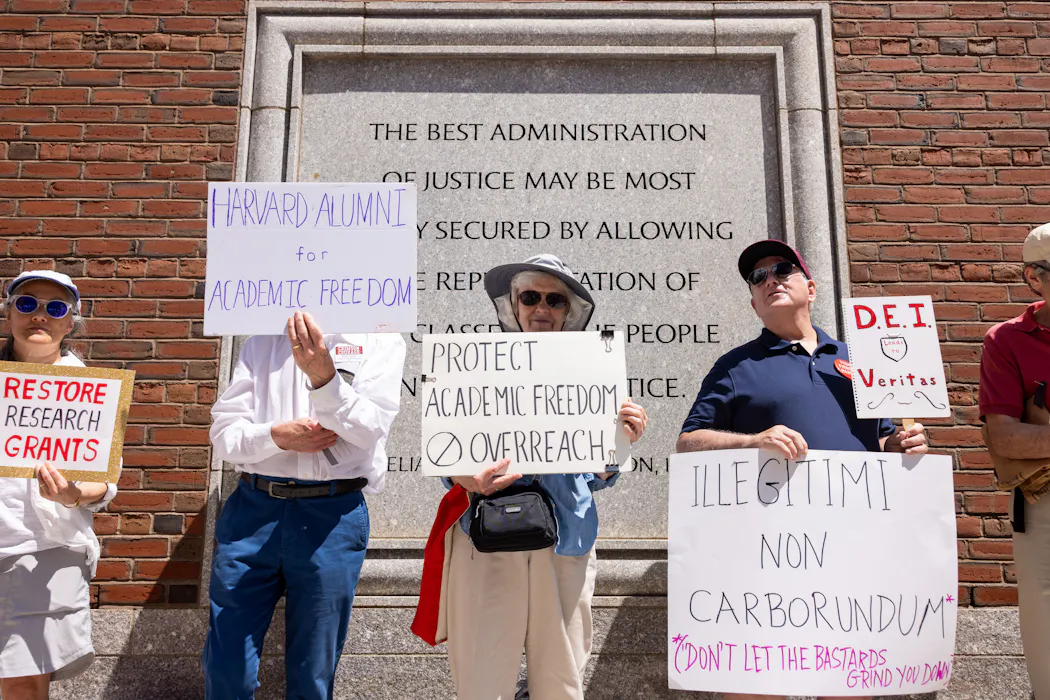
The Department of Justice announced in March 2026 that it is suing Harvard University and the University of California, Los Angeles.
The lawsuits allege that both universities failed to adequately address antisemitism on campus, violating students’ civil rights.
These cases follow earlier efforts by the Trump administration in 2025 to block federal funding to several major universities. The Trump administration has also – largely unsuccessfully – pushed universities to sign agreements that would give the federal government greater oversight over their day-to-day operations.
In 2025, the Trump administration launched broad Title VI investigations into 60 colleges and universities. These investigations focused on whether schools had done enough to protect Jewish students from discrimination and harassment, particularly in the wake of the Oct. 7, 2023, attacks on Israel, the subsequent war in Gaza, and widespread protests across U.S. college campuses.
Many of those investigations continue. Title VI is part of the Civil Rights Act of 1964 and prohibits discrimination on the basis of race, color or national origin in any program that receives federal funding.
These federal investigations have prompted scientific researchers, among others, across higher education to ask whether the government can invoke claims of civil rights law violations to justify cutting off federal research funding that supports their labs and projects.
As a scholar of educational leadership and policy, I think it is helpful to place the Trump administration approach to higher education within a broader understanding of how courts have interpreted civil rights laws within the past few decades and the nuanced way the Supreme Court has found they apply to universities.

Creattie/iStock/Getty Images Plus
Supreme Court weighs in
In 1964, Congress passed the Civil Rights Act. This law banned discrimination based on race, color, religion, sex or national origin in employment, education and public places.
Congress then passed the Higher Education Act in 1965. This law significantly increased the federal government’s investment in colleges and universities. It also created the Pell Grant program – the first federally funded need-based financial aid program for undergraduate students.
In addition, the Higher Education Act spelled out that schools that receive federal funding need to comply with civil rights laws.
Leaders of Grove City College, a small nondenominational Christian college in rural Pennsylvania, were concerned that this law would bring unwanted government oversight.
At the time, the college did not accept any direct federal funding. But some of its students received Basic Educational Opportunity Grants. These grants helped undergraduate students pay for college. Unlike loans, these grants did not have to be repaid.
In 1975, the Department of Health, Education and Welfare asked all universities and colleges with students who received federal grants to agree to comply with Title IX, a 1972 law that prohibits discrimination based on someone’s sex.
In 1976, Grove City refused to sign on to this agreement. A legal back-and-forth ensued.
Grove City College argued that the federal government’s request amounted to unwarranted government intervention, because the college did not directly receive federal funding. The Department of Health, Education and Welfare threatened to cut off the federal grants Grove City students received.
The Supreme Court eventually ruled in 1984 that Grove City’s financial aid program – but not the entire college – needed to comply with Title IX in order to receive federal aid. That’s because this specific office directly handled federal student aid.
A 1988 law clarifies the ruling
Many House Democrats perceived this Supreme Court ruling as a loophole that would let universities and colleges sidestep civil rights laws by applying them only to the specific programs that received federal funds.
In 1984, a group of Democrats unsuccessfully tried to pass legislation that would have extended civil rights protections across all programs within colleges and universities that receive federal aid for any program. A different version of this bill passed Congress with bipartisan support in 1988, on the brink of the presidential elections.
President Ronald Reagan vetoed the bill. Reagan stated in his explanation to the Senate that this bill “would vastly and unjustifiably expand the power of the Federal Government over the decisions and affairs of private organizations.”
However, many Republicans seeking reelection in Congress feared that rejecting the bill could alienate women and people of color in the upcoming election.
Within a week, Congress voted to override the veto and enacted the Civil Rights Restoration Act in 1988. This law clarified that any college accepting federal funds must comply with civil rights laws in all of its programs. This law also allowed the government to withhold federal research funding from colleges based on civil rights violations.

Robyn Beck/AFP via Getty Images
Enforcing civil rights laws today
The Trump administration is testing just how much the federal government can exert power over colleges and universities that receive federal funding. Some Trump administration supporters say they see this strategy as overdue enforcement against discrimination.
On the other hand, the Association of American Universities, an organization made up of American research universities, is among the opposition arguing that the administration is trying to weaponize civil rights laws to control how colleges and universities are run.
Antisemitic incidents are on the rise in the U.S., including on college campuses. But some observers have noted that the issue is nuanced, and that the administration is likely exploiting a controversial issue to achieve ideological goals.
Federal courts’ interpretations in the Harvard and UCLA lawsuits will further shape how civil rights protections are enforced at colleges and universities. Specifically, these cases will help determine whether the mere allegations of civil rights violations against a university can justify a sweeping freeze of federal research funding.

Ryan Creps does not work for, consult, own shares in or receive funding from any company or organization that would benefit from this article, and has disclosed no relevant affiliations beyond their academic appointment.
Back to index · Read original article
District school boards have become political hotbeds for book bans and more – here’s what they actually do
April 22, 2026
Source: The Conversation – USA (2) [3]
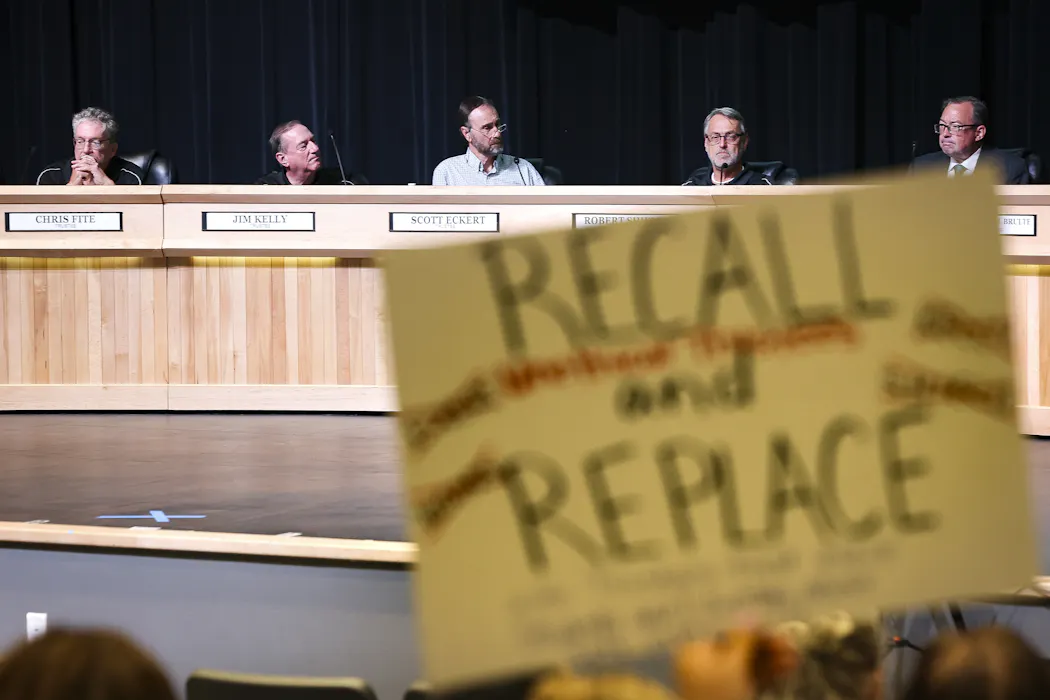
Election races for local school boards have become hotly contested in many states as they have become forums for debates over gender-identity discussions, immigrant students and even prayer at school events.
Liberal candidates largely swept school board elections on April 7, 2026, in politically contentious districts in Wisconsin, Missouri, Alaska and Oklahoma, where book bans, gender identity and prayer during school events were on the table.
Amy Lieberman, the education editor at The Conversation U.S., spoke with Carrie Sampson, a scholar of educational leadership and policy with an emphasis on school boards, to understand what school board members do and why these local elections carry weight for many parents, teachers and students.

Leonard Ortiz/MediaNews Group/Orange County Register via Getty Images
What are district school boards?
School boards are the governing organization for local school districts. There are typically anywhere from five to 21 members of a school board in a district. On average, there are seven to nine members on a school board.
Overall, there are approximately 13,000 school districts and about 90,000 local school board members in the United States.
School board members are typically elected, but sometimes they are appointed by mayors or other local or state officials. They are representatives of their local communities, as well as trustees who make governing decisions about school district budgets, hiring and other issues like a school district’s educational priorities.
School board elections typically have relatively low voter turnout. Research shows that nearly 40% of school board elections go uncontested.
The majority of school board members are unpaid, but some receive a small stipend for their work. A handful of school boards, like in Los Angeles, for example, receive a relatively large salary.
What does a school board member’s day-to-day work look like?
School boards typically meet twice a month, often to deliberate over issues such as budget or policy decisions.
One of a school board’s major jobs in most districts is hiring and firing a district superintendent, who effectively acts as the CEO of the district.
In terms of fiscal decisions, a school district administrator often presents what budget allocations should be for schools, and a school board votes to approve or disapprove that.
Most school boards create agendas and vote on a range of issues that are not particularly controversial, like whether the district will adopt an after-school program.
Why does a school board’s work matter?
School boards can make some critical decisions that impact the lives of students, parents and teachers. Many school districts are dealing with issues around school closures. Ultimately, school boards decide whether they are going to close a school in a district.
Many school districts are experiencing declining student enrollment, in part because of birth rate declines. People also have more and more school options to pick from, be it private schools, charter schools or homeschooling.
Within the past few years, school boards have also gained a lot of attention about whether they should ban particular books from districts, and whether they should ban or approve certain curriculum.
What other controversial issues have they taken on in the past few years?
Years before COVID-19, school boards in some conservative communities took on questions about which bathroom transgender students in public schools should use. Another big issue is whether schools should allow transgender students to participate on gendered sports teams.
During the pandemic, a rising number of communities began to see school boards as critical decision-makers. School boards were often making decisions about whether to close or reopen schools. They were also voting on requirements related to mask mandates or vaccines. Even people who didn’t live in certain school districts showed up at board meetings to advocate for certain COVID policies.
During the Black Lives Matter protest movement in 2020, some conservative communities started to speak out against critical race theory and their fear that it was being taught in K-12 schools. Most teachers don’t actually instruct on critical race theory.
Around this time, two major school advocacy organizations emerged nationwide: Moms for Liberty and Defending Education, formerly known as Parents Defending Education. These groups tried to elect conservative school board members to take on issues like book bans – and in some cases did so successfully.
My colleague Gabriela Lopez and I wrote a research paper in 2024 about people’s attempts to recall school board members. In 2021, we found, there was an all-time high of 545 school board members who faced recall, mostly because of mask mandates and other COVID-related issues.
Another trend was that police arrested or charged at least 59 people due to unrest at school board meetings from May 2021 through November 2022.

Paul Hennessy/SOPA Images/LightRocket via Getty Images
Are school boards taking on more controversial issues than they used to?
Every era has a point at which these controversial issues come to the school board level.
School boards made critical decisions around school desegregation in the 1950s through the 1970s. My research with colleagues on this topic shows that while many districts were legally mandated to desegregate schools, it was often school boards that voted on how these schools would be desegregated. Some school boards voted on policies that placed the burden on Black children and their families. One school board in Virginia even temporarily closed the schools completely to avoid desegregation.
Twenty to 30 years ago, many school boards faced tension over whether and how schools should teach sex ed.
Today, a lot of the political controversy about school boards is more widely known, for a few reasons. First, more communities have access to school board meetings, since many are video recorded. Second, social media has amplified what school boards do. There are also more outside organizations, such as local chapters of Moms for Liberty, that have been involved with school boards.
School boards taking on controversial issues are more likely to be in suburban and racially diverse school districts, compared to their rural or urban counterparts.
A report in 2024 found that the cost of conflict among school boards nationwide in 2023-24 was nearly $3.2 billion, when considering the amount of turnover or security needed for school board meetings.

Carrie Sampson does not work for, consult, own shares in or receive funding from any company or organization that would benefit from this article, and has disclosed no relevant affiliations beyond their academic appointment.
Back to index · Read original article
How Ontario’s post-secondary student funding changes echo Ronald Reagan reforms
April 22, 2026
Source: The Conversation – Canada
Ontario’s recent announcement of a tuition increase and major changes to grant and loan structures have prompted student protests at the provincial legislature.
The province has said the changes are required for sustainability.
But changes to financial aid will have significant implications for many students who rely on grants and loans. As The Toronto Star reports, the reforms have almost reversed the ratio of non-repayable grants and loans students can access.
Education is a pillar of “social reproduction,” meaning it’s a social service necessary for maintaining daily life now and for future generations. When governments alter access to education and the way they deliver it, they shape everyday lives today and beyond.
Since legal and regulatory changes shape how society is reproduced, it is possible to draw from these changes some ideas about the government’s social values. From this perspective, Ontario’s Doug Ford government is sending the message that education is about generating private wealth and social order.
Read more:
What are universities for? Canadian higher education is at a critical crossroads
These changes risk entrenching inequalities and raise questions about students’ freedom and their futures.
For a precedent, it’s possible to look at the record of a past U.S. president, namely Ronald Reagan.
Education as a private asset
Currently, students can access up to 85 per cent grants and 15 per cent loans from the Ontario Student Assistance Program (OSAP). But under the financial aid reforms, a maximum of one quarter of a student’s OSAP funding will be non-repayable grants and a minimum of 75 per cent will be loans.
These changes mean there’s an upside for banks. With less funding through grants, students will be funnelled into private sector financial arrangements. Canada’s banks stand ready with student lines of credit.
As household assets (including financial investments, like Registered Retirement Savings Plans) continued to increase in value in the third quarter of 2025, it may seem rational and even attractive to view education as an asset meant to generate private wealth.
When Ford unveiled these changes, the private asset approach to education was clear when he responded to reporters:
“I mentioned to the students, you have to invest in your future, into in-demand jobs.”
Yet this approach ignores record-setting levels of household debt. It also glosses over the fact that the wealth gap is increasing. In the third quarter last year, the top 20 per cent wealthiest households accounted for 65.5 per cent of net worth, and the bottom 40 per cent accounted for 3.1 per cent.
Read more:
What Doug Ford could learn from Wisconsin about higher education
Just as we have seen with a profit-driven, wealth-generating housing market and the housing crisis, a private asset approach to education risks dividing society further into haves and have-nots.
This is not lost on students, as reflected in a recent University Affairs article quoting Grade 12 student Radhika Cappelletti:
“Things won’t run if people don’t continue to be educated and they can’t even choose to be educated because they can’t afford it.”
When students are financially bound to banks and dependent on their families, they face lasting pressures beyond the campus.
Revisiting Reagan
Ontario’s changes reflect a trend across the provinces that has been ongoing since the 1990s. They also follow a similar pathway as the Reagan era in the United States, with greater emphasis on student loans instead of grants.
As social and political theorist Melinda Cooper argues in her book Family Values: Between Neoliberalism and the New Social Conservatism, Reagan pursued student discipline and budget cuts for universities, relying on police for one and the introduction of tuition fees for the other.
As California governor between 1967-1975, Reagan sat on the University of California’s Board of Regents. Considered the “crown jewel of American public universities,” the university system benefitted from public funding during the post-Second World War era.
Bipartisan support for this was based on the belief that post-secondary education was a public good benefitting the whole state, not just graduates.
Later, as president throughout the 1980s, Reagan’s appetite to curb public spending grew, leading him to expand the role of loans and limit the availability of grants.
Cooper’s research shows that, as inflation outpaced wage growth in the early 1980s, growing wealth meant growing the value of assets — for those who had them. For those without assets, acquiring them required taking on debt. As the financial burden of education spreads through the family unit, it reinforces student dependency on the family, which encourages deference toward more traditional forms of authority.
Cooper finds that Reagan’s legacy was to make “parental responsibility” and “private-debt-based inclusion” the bases of access to education.
In these ways, socially conservative values resonate in what might otherwise be read as pragmatic, even politically and morally neutral financial decisions.
Narrowing educational paths
Ford’s plan to increase tuition sits in stark contrast beside his April 2023 announcement of free tuition for police trainees. This shows that the government’s approach to education reflects certain social values, which have consequences for the future.
Research suggests that viewing student debt primarily as an investment in their personal job prospects invites cuts to post-secondary degree offerings and opens the door to predatory for-profit institutions.
There is also a question of how students can even achieve a brighter future. As long as they remain dependent on existing power structures, it is difficult to expect anything other than an ever-widening wealth gap.
Another Ford initiative has been a push to allow students to opt out of fees that are the lifeblood of campus groups. The Student Choice Initiative failed several court challenges, but a version reappears in the fast-tracked Supporting Children and Students Act that passed in November 2025.
Critics say that this scaling back of student fees could have detrimental effects on equity-seeking groups and also potentially weaken student governance — something Ford has derided in the past.
Read more:
Ontario’s Bill 33 raises serious concern about campus equity and student rights
For all of Ford’s talk of choice and the future, then, changes in post-secondary funding limit the choices students have over their own lives. By deepening inequalities, Ford is casting a long shadow over the future of all Ontarians.

Susan Dianne Brophy is a member of the federal New Democratic Party.
Back to index · Read original article