

AM Edition: Here are the top 10 law and security articles on LiveNews.co.nz for April 22, 2026: AM – Full Text
US government ramps up mass surveillance with help of AI tech, data brokers – and your apps and devices
April 21, 2026
Source: MIL-OSI-Submissions-English
Source: The Conversation – USA – By Anne Toomey McKenna, Affiliated Faculty Member, Institute for Computational and Data Sciences, Penn State
On a Saturday morning, you head to the hardware store. Your neighbors’ Ring cameras film your walk to the car. Your car’s sensors, cameras and microphones record your speed, how you drive, where you’re going, who’s with you, what you say, and biological metrics such as facial expression, weight and heart rate. Your car may also collect text messages and contacts from your connected smartphone.
Meanwhile, your phone continuously senses and records your communications, info about your health, what apps you’re using, and tracks your location via cell towers, GPS satellites and Wi-Fi and Bluetooth.
As you enter the store, its surveillance cameras identify your face and track your movements through the aisles. If you then use Apple or Google Pay to make your purchase, your phone tracks what you bought and how much you paid.
All this data quickly becomes commercially available, bought and sold by data brokers. Aggregated and analyzed by artificial intelligence, the data reveals detailed, sensitive information about you that can be used to predict and manipulate your behavior, including what you buy, feel, think and do.
Companies unilaterally collect data from most of your activities. This “surveillance capitalism” is often unrelated to the services device manufacturers, apps and stores are providing you. For example, Tinder is planning to use AI to scan your entire camera roll. And despite their promises, “opting out” doesn’t actually stop companies’ data collection.
While companies can manipulate you, they cannot put you in jail. But the U.S. government can, and it now purchases massive quantities of your information from commercial data brokers. The government is able to purchase Americans’ sensitive data because the information it buys is not subject to the same restrictions as information it collects directly.
The federal government is also ramping up its abilities to directly collect data through partnerships with private tech companies. These surveillance tech partnerships are becoming entrenched, domestically and abroad, as advances in AI take surveillance to unprecedented levels.
As a privacy, electronic surveillance and tech law attorney, author and legal educator, I have spent years researching, writing and advising about privacy and legal issues related to surveillance and data use. To understand the issues, it is critical to know how these technologies function, who collects what data about you, how that data can be used against you, and why the laws you might think are protecting your data do not apply or are ignored.
Big money for AI-driven tech and more data
Congressional funding is supercharging huge government investments in surveillance tech and data analytics driven by AI, which automates analysis of very large amounts of data. The massive 2025 tax-and-spending law netted the Department of Homeland Security an unprecedented US$165 billion in yearly funding. Immigration and Customs Enforcement, part of DHS, got about $86 billion.
Disclosure of documents allegedly hacked from Homeland Security reveal a massive surveillance web that has all Americans in its scope.
DHS is expanding its AI surveillance capabilities with a surge in contracts to private companies. It is reportedly funding companies that provide more AI-automated surveillance in airports; adapters to convert agents’ phones into biometric scanners; and an AI platform that acquires all 911 call center data to build geospatial heat maps to predict incident trends. Predicting incident trends can be a form of predictive policing, which uses data to anticipate where, when and how crime may occur.
DHS has also spent millions on AI-driven software used to detect sentiment and emotion in users’ online posts. Have you been complaining about Immigration and Customs Enforcement policies online? If so, social media companies including Google, Reddit, Discord, and Facebook and Instagram owner Meta may have sent identifying data, such as your name, email address, phone number and activity, to DHS in response to hundreds of DHS subpoenas served on the companies.
Meanwhile, the Trump administration’s national policy framework for artificial intelligence, released on March 20, 2026, urges Congress to use grants and tax incentives to fund “wider deployment of AI tools across American industry” and to allow industry and academia to use federal datasets to train AI.
Using federal datasets this way raises privacy law concerns because they contain a lifetime of sensitive details about you, including biographical, employment and tax information.
Blurring lines and little oversight
In foreign intelligence work, the funding, development and controlled use of certain AI-driven gathering of data makes sense. The CIA’s new acquisition framework to turbocharge collaboration with the private sector may be legal with proper oversight. But the line between collaborating for lawful national security purposes versus unlawful domestic spying is becoming dangerously blurred or ignored.
For example, the Pentagon has declared a contractor, Anthropic, a national security risk because Anthropic insisted that its powerful agentic AI model, Claude, not be used for mass domestic surveillance of Americans or fully autonomous weapons.
On March 18, 2026, FBI Director Kash Patel confirmed to Congress that the FBI is buying Americans’ data from data brokers, including location histories, to track American citizens.
As the federal government accelerates the use of and investment in AI-driven spy tech, it is mandating less oversight around AI technology. In addition to the national AI policy framework, which discourages state regulation of AI, the president has issued executive orders to accelerate federal government adoption of AI systems, remove state law AI regulation barriers and require that the federal government not procure the use of AI models that attempt to adjust for bias. But using advanced AI systems is risky, given reports of AI agents going rogue, exposing sensitive data and becoming a threat, even during routine tasks.
Your data
The surveillance capitalism system requires people to unwittingly participate in a manipulative cycle of group- and self-surveillance. Neighborhood doorbell cameras, Flock license plate readers and hyperlocal social media sites like Nextdoor create a crowdsourced record of all people’s movements in public spaces.
Sensors in phones and wearable devices, such as earbuds and rings, collect ever more sensitive details. These include health data, including your heart rate and heart rate variability, blood oxygen, sweat and stress levels, behavioral patterns, neurological changes and even brain waves. Smartphones can be used to diagnose, assess and treat Parkinson’s disease. Earbuds could be used to monitor brain health.
This data is not protected under HIPAA, which prohibits health care providers and those working with them from disclosing your health information without your permission, because the law does not consider tech companies to be health care providers nor these wearables to be medical devices.
Legal protections
People have little choice when buying devices, using apps or opening accounts but to agree to lengthy terms that include consent for companies to collect and sell their personal data. This “consent” allows their data to end up in the largely unregulated commercial data market.
The government claims it can lawfully purchase this data from data brokers. But in buying your data in bulk on the commercial market, the government is circumventing the Constitution, Supreme Court decisions and federal laws designed to protect your privacy from unwarranted government overreach.
The Fourth Amendment prohibits unreasonable search and seizure by the government. Supreme Court cases require police to get a warrant to search a phone or use cellular or GPS location information to track someone. The Electronic Communications Privacy Act’s Wiretap Act prohibits unauthorized interception of wire, oral and electronic communications.
Despite some efforts, Congress has failed to enact legislation to protect data privacy, the use of sensitive data by AI systems or to restore the intent of the Electronic Communications Privacy Act. Courts have allowed the broad electronic privacy protections in the federal Wiretap Act to be eviscerated by companies claiming consent.
In my opinion, the way to begin to address these problems is to restore the Wiretap Act and related laws to their intended purposes of protecting Americans’ privacy in communications, and for Congress to follow through on its promises and efforts by passing legislation that secures Americans’ data privacy and protects them from AI harms.
This article is part of a series on data privacy that explores who collects your data, what and how they collect, who sells and buys your data, what they all do with it, and what you can do about it.

Anne Toomey McKenna serves on the Advisory Board to the Institute for Electrical and Electronics Engineers (IEEE)-USA’s Artificial Intelligence Policy Committee (AIPC) and Chairs multiple AIPC subcommittees. The AIPC work involves subject matter and education-related interaction with U.S. Senate and House congressional staffers and the Congressional AI Caucus. McKenna has received funding from the National Security Agency for the development of legal educational materials about cyberlaw (a course which the government still makes available online for the public) and funding from The National Police Foundation together with the U.S. Department of Justice-COPS division for legal analysis regarding the use of drones in domestic policing.
– ref. US government ramps up mass surveillance with help of AI tech, data brokers – and your apps and devices – https://theconversation.com/us-government-ramps-up-mass-surveillance-with-help-of-ai-tech-data-brokers-and-your-apps-and-devices-277440
Back to index · Read original article
Ghana’s mining law aims to stop speculation but leaves communities in limbo – insights from a lithium case study
April 21, 2026
Source: MIL-OSI-Submissions-English
Source: The Conversation – Africa – By Clement Sefa-Nyarko, Lecturer in Security, Development and Leadership in Africa, King’s College London
Ghana’s parliament ratified the country’s first lithium mining agreement in March 2026. This came three years after lithium mining was confirmed as commercially viable in September 2023.
The Ewoyaa Lithium Project, in the Central Region of Ghana, covers an area where farming communities have lived for generations. It spans several communities.
The agreement is between the government and Barari DV Ghana Limited, the local subsidiary of Australia-based Atlantic Lithium. Lithium is a mineral used in batteries that power electric vehicles, renewable energy storage systems and everyday electronics. It’s at the heart of global minerals supply chains to decarbonise energy and transport.
With the deal in place, formal discussions will begin with mining communities about relocation, compensation and restoring livelihoods. Compensation could include payment for land, crops, construction work and other assets that will be affected by mining operations, as required under Ghana’s Minerals and Mining Act.
The ratification of the deal also marks the end of a legal moratorium set out in Ghanaian law. This comes into force once minerals of commercial value are discovered.
The moratorium, which lasted three years in the case of the Ewoyaa Lithium Project, was designed to protect both the state and mining firms from complications such as speculative construction, sudden land claims, and inflated compensation demands that may arise from new developments.
Under Ghana’s mining law, once minerals of commercial value are confirmed, temporary restrictions are placed on new permanent structures, farm expansion and other major land use changes in the affected area. It lasts until there is a mineral agreement and compensation arrangements are clear. The intention is to stabilise land use and ensure fair valuation.
It has profound social consequences.
For people already living in these areas, the moratorium can mean extended periods of uncertainty. During this time, everyday decisions about livelihoods, housing and the future are placed on hold.
Its practical impact is that residents living on or near the mining area can’t build, expand their farms, or make other major decisions about land use.
The affected communities live in a state of suspended time during the moratorium. Farmers are unable to plan their next season confidently. Families delay home improvements. Young people postpone major life decisions because their future access to land remains unclear.
The mining agreement doesn’t end the waiting. Instead, it opens a new phase of negotiations, compensation assessments and administrative back and forth. It could stretch on for months or even years.
This prolonged uncertainty causes real social and economic harm. Yet its effects are often overlooked.
My academic work examines governance, natural resources, politics, and energy transitions. In a recent paper, based on extensive fieldwork in the lithium-rich communities of Ewoyaa, Krampa Krom and Krofu, I investigated how these delays and uncertainty shaped everyday life. I gathered firsthand accounts of how people navigated this period of waiting. All are affected by the project.
The effects were unmistakable. People described the moratorium as a form of “frozen time”, when life could not move forward.
The economic setbacks and emotional strain from long periods of uncertainty often go unrecognised in public policy discussions.
Time on hold
My research identified a number of negative effects of the delays in getting mining operations off the ground.
Firstly, households described how it eroded local opportunities and contributed to young people leaving the area. Young people expressed frustration as their job prospects remained frozen, and they lacked clarity on whether future employment at the mine would be accessible or meaningful.
Many young adults, already frustrated by years of stalled prospects, had left in search of work elsewhere.
The few lower-paid jobs associated with early stage mining activities were not yet available.
Secondly, farmers reported clear losses: they could not expand or invest.
Thirdly, women traders, many of whom sell farm produce and foodstuffs, reported disruptions in household income patterns because farming activities were stalled.
Fourth, community elders, reflecting on years of limited communication, described a growing distrust towards government institutions and the processes governing the mineral agreement.
Across these accounts, what united residents was the feeling that their lives had been interrupted by forces far beyond their control. The moratorium did more than pause development, it suspended decision making, aspirations and the ability to plan even the simplest aspects of the future.
“Time on hold” shaped economic choices, social relationships and the very rhythm of community life.
In my study, I argue that these prolonged delays are a form of “temporal injustice”. This concept emerged directly from listening to residents describe how their aspirations, livelihoods and sense of security were reshaped by bureaucratic time.
Temporal injustice occurs when certain groups bear unfair burdens of waiting, uncertainty and delayed decision-making. These disruptions may seem minor when viewed from the outside. But they have broader implications. They affect project timelines, investor confidence, and the long-term reliability of the supply chains that power the global clean energy transition.
Looking forward
As Ghana and the mining company move into the compensation and community engagement phase, they have an opportunity to address not only material losses but the temporal burdens that communities have endured.
First, compensation frameworks should recognise that the moratorium itself caused harm. Beyond land, crops and structures, policymakers must account for the economic and social costs of years spent waiting.
Second, community engagement must be timely, transparent and genuinely participatory.
Information should flow consistently, especially when people’s livelihoods depend on it.
Third, Ghana should incorporate temporal justice principles into mining governance, including clearer timelines, regular updates and support for communities facing prolonged delays.
Finally, as Ghana deepens its role in the global critical minerals supply chains, local communities should share the benefits rather than being left to carry hidden costs. A just energy transition demands fair distribution not only of mineral wealth, but of time, certainty and opportunity.

Clement Sefa-Nyarko receives funding from UK Research and Innovation (UKRI) for a Future Leaders Fellowship that is researching justice in critical minerals governance and energy transitions. Clement also does occasional consultancy for Participatory Development Associates for research and evaluation in Africa, but not directly related to mining.
– ref. Ghana’s mining law aims to stop speculation but leaves communities in limbo – insights from a lithium case study – https://theconversation.com/ghanas-mining-law-aims-to-stop-speculation-but-leaves-communities-in-limbo-insights-from-a-lithium-case-study-279594
Back to index · Read original article
How US presidents shift controversial actions abroad to get around limits at home
April 21, 2026
Source: MIL-OSI-Submissions-English
Source: The Conversation – UK – By Andrew Gawthorpe, Lecturer in History and International Studies, Leiden University
When Donald Trump deported a group of Venezuelan nationals to El Salvador in 2025, it was the fulfilment of a long-held wish. Across both of his administrations Trump has pushed officials to find ways to brutalise immigrants, particularly those who are undocumented, believing that doing so will deter others from making the trip.
The Venezuelan nationals were destined for El Salvador’s Terrorism Confinement Center, known as Cecot. When they arrived, according to a Human Rights Watch report, they were subjected to systematic beatings, sexual abuse and psychological duress.
The Trump administration amplified reports of conditions in the prison. Trump’s former homeland security secretary, Kristi Noem, for example, filmed a video inside Cecot in 2025 in which she thanked El Salvador for “bringing our terrorists here and incarcerating them”.
Trump’s deportations were a chilling sign of how easy it is for US presidents to sidestep the constitution. If Cecot were in the US, it would be recognised as a site of illegal abuses. The constitution’s protection against “cruel and unusual punishments” would cause judges to order it shut down – and it is likely that political outrage would not cease until that order was followed.
Yet by making an agreement with El Salvador’s president, Nayib Bukele, Trump managed to get around these legal and political obstacles. In a recent paper, I explored how Trump’s deportations are part of a broader pattern of what I call “presidential extra-territorialization” – American presidents acting in or through a foreign jurisdiction to circumvent the US constitution.
There is a long-term pattern of cooperation between presidents from both the Republican and Democratic parties and the leaders of foreign countries. It is a pattern that could have grave implications for the future of US democracy.
Outsourcing abuses
The ability of US presidents to engage in this outsourcing of abuses is rooted in two things. First, their control over the vast capabilities of the modern executive branch, with its array of spies, soldiers and law enforcement officials. And second, control over US diplomacy, which is enshrined in Supreme Court precedent.
In 1936, the court ruled that the president is “the sole organ of the federal government in the field of international relations”. This has commonly been interpreted as meaning US presidents cannot be constrained by the other branches of government when conducting diplomacy.
Combined, these factors mean presidents face fewer constraints in foreign affairs than in the domestic realm. They are able to avoid oversight from the courts and Congress by keeping agreements with other governments secret and by acting too fast to be stopped. If they can find just one foreign government willing to enable them, then what is not possible at home suddenly becomes possible overseas.
This lack of constraint was evident in Trump’s deportations. The US government sent the men to El Salvador despite a last-minute ruling by a federal court ordering their return.
And once they were in El Salvador, the Trump administation claimed it was no longer responsible for them and could not be expected to bring them back. The Supreme Court stepped in to pause further such deportations, but only weeks after the fact.

United States Department of Homeland Security
Other examples of the power and flexibility of extra-territorialization became apparent during the “war on terror”, when successive US presidents faced the issue of where to send detainees who were suspected terrorists.
If they were brought to the US, they would have had constitutional rights and could not have been tortured or indefinitely imprisoned. So presidents from Bill Clinton in the 1990s onward established a series of agreements with other countries to take and mistreat them instead.
After the 9/11 terrorist attacks in 2001, the Bush administration established a series of “black sites” in countries such as Poland, Thailand and Romania in which to hold detainees in secret. Abuses were committed directly by US agents, but still beyond the reach of US courts. The administration held prisoners at Guantanamo Bay in Cuba too, another place where the constitution’s reach was limited.
Presidents can also shift territory in response to attempts to constrain their actions. When the US Supreme Court ruled that detainees at Guantanamo Bay had to be afforded certain rights in 2008, the Obama administration transferred some detainees to Bagram Air Base in Afghanistan. Bagram was not covered by the Supreme Court ruling.
As a US court of appeals noted in 2010, the ability to shift territories so easily seemed to allow the administration to “switch the constitution on or off at will”.
Yet another example of extra-territorialization is the “Five Eyes” intelligence agreement between Australia, Canada, New Zealand, the UK and US. As part of this pact, members have been reported to spy on each other’s citizens – an outsourcing of surveillance that allows each to circumvent domestic privacy constraints.
The fact that Trump has engaged in extra-territorialization so openly, in contrast to previous administrations who tried to keep it hidden, is a stark warning.
Even when the president said he was exploring a proposal to send US citizens to Cecot in April 2025, he received little pushback from within his own party. This suggests they have accepted it as a legitimate strategy to achieve policy goals.
In the hyper-polarised atmosphere of contemporary US politics, extra-territorialization is threatening to become a regular tool of governance. To stop that from happening, it is vital to expose and confront it. But first we must understand it.

Andrew Gawthorpe is affiliated with the Foreign Policy Centre in London.
– ref. How US presidents shift controversial actions abroad to get around limits at home – https://theconversation.com/how-us-presidents-shift-controversial-actions-abroad-to-get-around-limits-at-home-280769
Back to index · Read original article
Le Liban n’arrive toujours pas à résorber le trou abyssal de son système bancaire
April 21, 2026
Source: MIL-OSI-Submissions-French
Source: The Conversation – France in French (3) – By Nizar Atrissi, Professeur associé, IAE Paris – Sorbonne Business School; Université Paris 1 Panthéon-Sorbonne

Le Liban traverse une crise bancaire sans précédent avec des dépôts bloqués, une baisse de 98 % de la valeur de la livre libanaise et un trou financier de 70 milliards de dollars états-uniens, soit plus de 59,4 milliards d’euros. Un projet de loi « Gap Law » vise à établir un nouveau cadre pour organiser la répartition entre l’État, la banque centrale, les banques commerciales et les déposants. Avec quels perdants ? Au cœur des débats : la confiance dans l’avenir du pays.
Le Liban traverse l’une des crises financières les plus graves observées au niveau mondial depuis plusieurs décennies. Avec l’effondrement de son système financier en 2019, les dépôts (dont les fonds peuvent être retirés partiellement ou totalement à tout instant) sont largement bloqués, la monnaie nationale a perdu l’essentiel de sa valeur et l’économie fonctionne sous un régime de restrictions informelles en l’absence de cadre légal.
Dans ce contexte, l’adoption par le gouvernement d’un projet de loi « Gap Law » visant à organiser la répartition des pertes bancaires le 26 décembre 2025, constitue une étape longtemps attendue, mais soulève de profondes questions quant à sa capacité à restaurer la confiance.
Alors comment le Liban peut restaurer cette confiance dans son système bancaire ?
Trou financier équivalent à trois fois le PIB du Liban
La crise financière libanaise est le résultat de déséquilibres économiques profonds accumulés pendant plusieurs décennies.
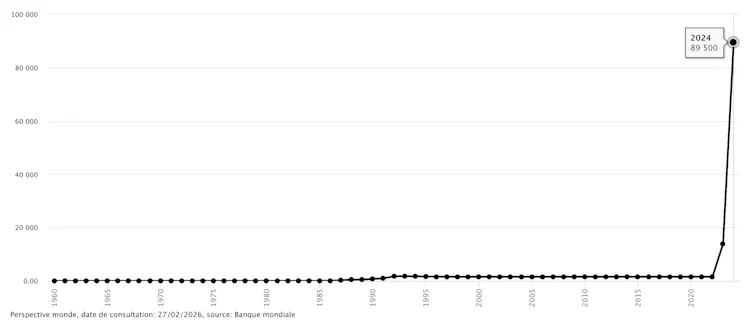
Le modèle économique reposait sur un endettement massif de l’État auprès des banques, elles-mêmes fortement exposées à la banque centrale, ou Banque du Liban. Ce système dépendait d’entrées continues de capitaux, notamment de la diaspora, facilitées par un régime de change maintenu « artificiellement » fixe entre la livre libanaise et le dollar – 1 507 livres libanaises pour un dollar états-unien de 1997 à octobre 2019.
Il favorisait de facto la circulation des flux de capitaux. Lorsque ces flux se sont taris, l’insolvabilité conjointe de l’État, de la Banque du Liban et du secteur bancaire est apparue, conduisant au défaut souverain de mars 2020.
Université de Sherbrooke
Depuis, la crise est gérée sans cadre légal de résolution bancaire ni contrôle des capitaux. Des restrictions sur les dépôts ont été imposées par des circulaires de la Banque du Liban. Parallèlement, la livre s’est effondrée sur le marché parallèle, perdant plus de 98 % de sa valeur, détruisant le pouvoir d’achat des Libanais et des Libanaises. Selon le FMI et d’autres organismes internationaux, le « trou financier » actuel du système bancaire dépasse 70 milliards de dollars, soit plus de trois fois le PIB annuel du pays.
« Gap Law » sur le « trou financier »
Le projet de loi « Gap Law » de la régularité financière et de la restitution des dépôts vise à établir un cadre légal pour traiter les pertes financières accumulées en devises. Il organise leur répartition entre l’État, la Banque du Liban, les banques commerciales et les déposants.
Il prévoit la protection des dépôts jusqu’à 100 000 dollars états-unien par déposant, avec remboursement sur quatre années. Ce plafond s’applique de manière consolidée à l’ensemble des comptes détenus par un même déposant dans le système bancaire, indépendamment du nombre d’établissements concernés.
Les dépôts consolidés excédant ce seuil seraient convertis en instruments financiers de long terme, essentiellement des obligations zéro-coupon (pas d’intérêts jusqu’à la fin de durée de l’obligation), émises par la Banque du Liban, avec des maturités de dix à vingt ans selon le montant.
À lire aussi :
La crise économique au Liban en 1966 a-t-elle été provoquée par les États-Unis ?
Le Conseil central de la Banque du Liban aurait un pouvoir étendu pour déterminer les modalités de remboursement, y compris la possibilité d’accélérer les échéances, sans critères prédéfinis, alors que le Conseil des ministres pourrait les rééchelonner en fonction de l’évolution de la situation économique.
Le texte évoque une restructuration du secteur bancaire, sans préciser les critères de viabilité des établissements, les modalités de recapitalisation, ni la séquence de mise en œuvre, renvoyés à des textes d’application ultérieurs.
Les déposants en première ligne
L’un des aspects les plus singuliers du dispositif réside dans la manière dont les pertes sont consolidées. Contrairement aux pratiques généralement observées, la garantie des dépôts et la répartition des pertes ne s’effectuent pas par établissement, mais par déposant, à l’échelle du système bancaire. Lors de la crise chypriote ou en Islande, les pertes ont été rapidement reconnues, explicitement chiffrées et appliquées dans un cadre institutionnel clair visant à restaurer la confiance.
Les mécanismes de résolution bancaire reposent principalement sur une hiérarchie claire des pertes, où les actionnaires et créanciers absorbent les chocs avant toute atteinte aux dépôts, et ce banque par banque.
En agrégeant les pertes, le projet ne procède à aucune différenciation entre banques, indépendamment de leur contribution à l’effondrement financier. Celui-ci a été largement alimenté par des opérations d’ingénierie financière complexes ayant encouragé une prise de risque démesurée. Sans critères économiques conditionnant la répartition des pertes, le dispositif privilégie une stabilisation globale du système sans traitement préalable de l’aléa moral issu de ces pratiques.
Un engagement au présent sans fondement
L’enjeu ne réside pas seulement dans la manière dont les pertes sont réparties ou différées. La crédibilité des engagements repose sur la capacité future de l’économie à générer des ressources suffisantes pour les honorer, largement incertaine. En l’absence de sources de financement identifiées ou de trajectoire macroéconomique crédible, les promesses de remboursement s’apparentent davantage à des engagements conditionnels qu’à des obligations fermes.

Banque Mondiale
L’expérience internationale montre que ce type de dispositifs – obligations issues de restructurations ou instruments indexés sur la croissance – ne peut fonctionner que s’il est adossé à des règles claires, une gouvernance crédible et une visibilité minimale sur les flux futurs. En Grèce, Argentine ou Chypre, la valeur réelle de ces instruments dépendait moins de leur valeur faciale que de la confiance dans les institutions et le cadre macroéconomique sous-jacent.
Les instruments de la loi risquent donc d’incarner une forme de dette différée, dont la soutenabilité dépend d’une reprise hypothétique et de décisions politiques incertaines.
Faire reposer sur l’épargne privée
Sans mécanismes clairs de responsabilisation, de hiérarchisation des pertes, de recapitalisation bancaire substantielle et de collatéraux définis, le projet fait reposer une part majeure de l’ajustement sur l’épargne privée.
Cette socialisation ex post des pertes érode la richesse des ménages, réduit leur capacité d’épargne future et contribue peu à restaurer la confiance. Or, la confiance est au cœur du fonctionnement bancaire et de l’intermédiation, indispensable à la reprise de l’investissement et de l’activité économique.
Le projet de loi rompt avec des années d’inaction, mais l’enjeu dépasse la simple répartition comptable des pertes, profondément arbitraire et opaque : il touche au cœur du contrat de confiance entre l’État, le système bancaire et les citoyens, condition indispensable à toute reprise économique durable.

Nizar Atrissi ne travaille pas, ne conseille pas, ne possède pas de parts, ne reçoit pas de fonds d’une organisation qui pourrait tirer profit de cet article, et n’a déclaré aucune autre affiliation que son organisme de recherche.
– ref. Le Liban n’arrive toujours pas à résorber le trou abyssal de son système bancaire – https://theconversation.com/le-liban-narrive-toujours-pas-a-resorber-le-trou-abyssal-de-son-systeme-bancaire-273401
Back to index · Read original article
Cloud tech outages: how the EU plans to bolster its digital infrastructure
April 21, 2026
Source: MIL-OSI-Submissions-English
Source: The Conversation – France – By Christine Abdalla Mikhaeil, Assistant professor in information systems, IÉSEG School of Management
When Amazon Web Services (AWS) went down globally in October 2025, millions of users were abruptly reminded how invisible yet indispensable cloud technology has become.
From banks and hospitals to airlines and retail platforms, entire sectors slowed or came to a standstill. The disruption followed a separate catastrophe earlier in July 2024, when CrowdStrike’s software update grounded operations around the world.
Different companies. Different causes. Yet both events exposed the same uncomfortable truth: the world’s digital infrastructure, the networks, servers and software that underpin nearly every modern service, is far more fragile than we like to believe.
Technically, these were very different failures, but the similarity lies in how quickly they cascaded. A single error in a single company rippled across global systems that had no direct relationship to that company at all.
The illusion of resilience
For years, cloud providers have marketed themselves as the answer to such fragility. Distributed computing, automated backup, and redundant systems are supposed to keep data and services online even when local components fail. However, the cloud model depends heavily on network connectivity and can introduce latency and other vulnerabilities, that mitigates certain failures, but does not eliminate fragility entirely.
As both the AWS and CrowdStrike incidents show, redundancy on paper doesn’t always mean resilience in practice. Many organisations that rely on AWS for critical services also use AWS for their backup, monitoring or authentication. When a core network fails, so do the fail-over mechanisms designed to prevent downtime. In other words, “diversification” often exists only within the same provider’s ecosystem, a classic case of putting all eggs in one digital basket.
At the heart of the issue is cloud concentration. A small number of companies, primarily AWS, Microsoft and Google, now host the majority of the world’s digital infrastructure. Even more when, cloud computing has become the backbone of modern AI by relying on large, centralized data centers that offer substantial processing power and scalability.
Governments, universities, hospitals and even competitors run their critical services on these same platforms. The convenience and cost efficiency are undeniable. But this consolidation has created a structural vulnerability. A single misconfiguration or software flaw in one of these providers can have global consequences, similar to how a major bank failure can destabilise the financial system.
The situation is further complicated by opacity: cloud providers rarely disclose full details of their interdependencies or internal resilience practices. Customers often have no clear map of how their services are distributed, where their data resides, or which other systems they rely on indirectly. When outages happen, even identifying who’s responsible can be a challenge.
Europe’s dependence and ‘digital sovereignty’
What makes these incidents particularly concerning is that they involve private companies running public infrastructure. AWS and CrowdStrike aren’t just serving commercial clients, they underpin hospitals, airports, energy grids and government systems. When they fail, entire ecosystems fail, not just their direct customers. Yet oversight of these critical dependencies remains minimal.
For Europe, these outages turned an abstract “digital sovereignty” debate into a very concrete dependency problem.
Digital sovereignty is about the capacity to ensure that critical data, infrastructure, and AI systems operate under EU rules and remain controllable in crises. This sovereignty framing ties outages to broader issues of jurisdiction (US access to data), trade power, and strategic autonomy for critical sectors, like finance, health, and public administration.
Politically, it responds to dependence on a handful of US hyperscalers who hold over 70% of the European cloud market and are also subject to US laws like the CLOUD Act. On the CLOUD Act side, explanations by EU‑focused providers and analysts emphasise that US‑headquartered cloud firms (including AWS, Microsoft, Google) are subject to the Clarifying Lawful Overseas Use of Data Act, which can compel disclosure of data stored in European data centers.
Cloud and AI sovereignty frameworks address where and under which law sensitive data and workloads run, and how easily European users can exit, port, or reconfigure in the face of outages or geopolitical shocks.
Recent European initiatives explicitly treat hyperscalers and major Information and Communication Technology (ICT) providers as systemic infrastructure, not just vendors.
Under the Digital Operational Resilience Act (DORA), in force since 2025, EU financial regulators can designate “critical third party ICT service providers” and subject them to direct oversight to reduce systemic risk.
EU debates on cloud now emphasise exit, portability, and multi‑cloud architectures, arguing that resilience depends less on “more providers” and more on avoiding structural lock‑in that makes switching or redundancy impossible in practice. DORA addresses who runs critical digital infrastructure for finance and how the European Union can oversee and stress test them as systemic actors.
Guaranteeing cybersecurity across Europe
The Cyber Resilience Act (CRA), in force since December 2024, is the EU’s way of hard wiring “resilience by design” into the entire stack of connected hardware and software that underpins Europe’s digital infrastructure.
CRA addresses what characteristics all networked digital products must have so they do not import unmanageable cyber risk or opaque vulnerability handling into the EU.
The NIS2 (Directive (EU) 2022/2555 came into effect in January 2023 and required transposition into national law by October 2024, expanding from NIS1’s narrow scope to cover medium/large entities in energy, transport, health, finance, digital infrastructure (including cloud), public administration, manufacturing, and more. NIS2 operationalises sovereignty at the entity level: critical operators must align their practices with EU standards, even when relying on non-EU providers, creating a harmonised resilience baseline across the single market. It integrates with CRA, DORA, and cloud initiatives by requiring entities to demand equivalent resilience from suppliers, closing gaps in the dependency chain.
Beyond regulations, the Commission is building practical sovereignty tools around cloud and AI.
A “Cloud Sovereignty Framework” tender (up to €180 million for 6 years), launched in 2025 and awarded in April 2026 to Luxembourg’s Post Telecom, Germany’s StackIT, French Iliad’s data centre unit Scaleway and Belgium’s Proximus, sets concrete sovereignty criteria, strategic, legal, operational, environmental, supply chain transparency, openness, security, and EU law compliance, for cloud services procured by EU institutions.

A weekly e-mail in English featuring expertise from scholars and researchers. It provides an introduction to the diversity of research coming out of the continent and considers some of the key issues facing European countries. Get the newsletter!

Christine Abdalla Mikhaeil est membre de l’Association for Information Systems (AIS).
– ref. Cloud tech outages: how the EU plans to bolster its digital infrastructure – https://theconversation.com/cloud-tech-outages-how-the-eu-plans-to-bolster-its-digital-infrastructure-280928
Back to index · Read original article
Generative AI will not destroy your job, but it will profoundly change your profession
April 21, 2026
Source: French to English Tester Published on: 2026-04-21
Source: The Conversation – France (in French)– By Hugo Spring-Ragain, Doctoral student in economics / mathematical economics, Center for Diplomatic and Strategic Studies (CEDS)
Artificial intelligence does not so much destroy jobs as it profoundly changes the skills required to perform them. From this confusion between jobs and skills, errors may arise in policies supporting the ongoing transformations.
Each major technological wave has produced its share of contradictory predictions about employment. Artificial intelligence (AI) is no exception. But before knowing how many jobs AI will create or destroy, it is necessary to agree on what it actually automates. The answer requires distinguishing three concepts that public debate regularly confuses: employment, skill, and task.
The major waves of automation have followed a remarkably stable logic over two centuries: steam, electricity, industrial robotics have displaced repetitive physical tasks and spared non-routine cognitive work. This empirical regularity has beenformalized by Autor, Levy, and Murnanesince 2003 under the name “task polarization hypothesis”.
A persistent illusion
Automation is eroding intermediate jobs, those of skilled blue-collar workers and office employees performing routine tasks, but spares the two extremes. On one side, non-routine manual tasks, such as plumbing or caregiving; on the other, non-routine cognitive tasks, such as analysis, consulting, or expert writing. The latter constituted the core of skilled tertiary professions, and there was a firmly established belief that they would remain out of reach.
Also to read:
Why AI forces companies to rethink the value of work
This conviction was based on a conceptual confusion that must be cleared up above all. It was not the job of lawyer or financial analyst that was protected, but a set of specific tasks that made up this job and that have so far resisted automation. The distinction between these three levels is fundamental.
A job refers to a position held within an organization, with a contract, a salary, and a job description. A skill is a cognitive or technical ability that can be applied in various professional contexts. A task is a specific, definable action, for which it is possible to assess whether it can be automated at a given cost. It is at this third level that the ongoing transformation truly takes place, and it is precisely this level that the public debate ignores.
Break in the long history of industrial capitalism
Generative AI represents a break in this long history. For the first time since industrialization, qualified cognitive tasks—writing, document analysis, synthesis, production of first drafts—are directly exposed.Eloundou, Manning, Mishkin and Rockestimate that about 80% of the active U.S. workforce could see at least 10% of their tasks affected by large language models, and that this exposure increases with salary level. This is the exact opposite of the pattern observed in all previous waves.
The analytical framework developed byAcemoglu and Restrepoallows to go further. Their model distinguishes two opposing effects produced by any wave of automation:
-
The displacement effect, first: workers lose tasks to the advantage of the machine, which mechanically reduces the demand for labor and puts pressure on the wages of the affected groups;
-
The reintegration effect, then: automation produces new tasks where human value is decisive, generating compensatory demand.
The long history of industrial capitalism can be read as a succession of these two effects, the second generally ending up compensating for the first.
The case of translation allows us to see very concretely how displacement and reintegration combine; generative AI can produce a first draft in another language in a few seconds, which shifts part of the work previously done by human translators to the machine. But this automation simultaneously reintegrates other tasks or strengthens their importance, such as checking for misinterpretations, adapting to cultural context, harmonizing terminology, quality control, and final validation.
Potential imbalance
What is worrisome with generative AI is the potential imbalance between these two dynamics. The displacement occurs at a speed that labor markets and training institutions struggle to absorb, while reintegration still remains largely to be built.
However, the most important phenomenon is not sectoral, but internal to the professions themselves. In its“Employment Outlook,” the OECDhighlights that the professions most exposed to generative AI are precisely those with high cognitive density: finance, law, consulting, higher education. Unlike previous waves that impacted rural areas and industrial regions, the exposure is now stronger in large metropolitan areas and among highly skilled workers, an unprecedented geographical and social reversal.
Redistribute tasks
This reversal takes place concretely at the task level.
In the same position of financial analyst or legal advisor, some tasks move towards AI (producing an executive summary, generating a first contract analysis, synthesizing a literature review), while others mechanically gain value: defining the relevant analytical framework, evaluating the quality of automated reasoning, detecting a factual error in an output, assuming the legal or ethical responsibility of a decision. These are not jobs that disappear. These are bundles of tasks that are redistributed between humans and machines, transforming from within what an employer expects of a qualified employee.
This redistribution of tasks has a direct implication on the skills that will truly be valued in the years to come, and it overturns some of the usual assumptions about professional training.
Train workers to use AI in an instrumental sense, master a tool, writepromptsEffective, mastering an interface is useful in the short term, but it is insufficient if the skill truly required tomorrow is not to produce with AI, but to supervise and critique what it produces.
A training challenge
However, effectively supervising an AI output requires exactly what short technical training programs struggle to develop: a solid general culture that allows detecting a fundamental error, argumentative skills to evaluate the coherence of a reasoning, knowledge of cognitive biases to identify the blind spots of an automated analysis. These are skills thateducation sciences group under the term of meta-skillsTo learn to learn, to exercise critical judgment, to mobilize knowledge in unprecedented situations.
The paradox then becomes the following. As AI automates routine knowledge tasks, it precisely values what generalist training and humanities curricula have long cultivated and what debates on employability have tended to discredit in favor of more immediately measurable technical skills.
Not out of nostalgia for the humanities, but out of pure economic logic. If the machine produces the text, the analysis, and the synthesis, the marginal value of the human lies in their ability to judge whether this text tells the truth, whether this analysis is relevant in light of the real context, whether this synthesis serves the pursued objective.

Hugo Spring-Ragain does not work for, advise, own shares in, or receive funds from any organization that could benefit from this article, and has declared no other affiliation than his research organization.
–ref. Generative AI will not destroy your job but it will profoundly change your profession –https://theconversation.com/lia-generative-will-not-destroy-your-job-but-it-will-profoundly-change-your-profession-279911
Back to index · Read original article
From floppy discs to Claude Mythos, how ransomware grew into a multibillion-dollar industry
April 21, 2026
Source: MIL-OSI-Submissions-English
Source: The Conversation – UK – By Anja Shortland, Professor in Political Economy, King’s College London

When evolutionary biologist Joseph Popp coded the first documented piece of ransomware in 1989, he had little idea it would become a major criminal business model capable of bringing economies to their knees.
Popp, who worked for the World Health Organization at the time, wanted to warn people about the dangers of ignoring health warnings, poor sexual hygiene and (human) virus transmission.
He sent out 20,0000 floppy discs that, when loaded, flashed up a demand for money to regain files that had supposedly been encrypted (in fact, it was just their file names). He was later arrested and charged with 11 counts of blackmail, but declared mentally unfit to stand trial.
In 1996, two Columbia University computer scientists published a paper explaining how criminals could use more sophisticated versions of Popp’s scheme to mount large-scale extortion operations. At the heart of this was malicious software that could be used to encrypt, block access to or steal a person or organisation’s files and data.
However, two preconditions still had to be met for ransomware to become a feasible criminal business: communication channels that were difficult to monitor, and a payments process outside financial regulation.
The Tor protocol, released by US intelligence services to protect their covert communications, solved the first problem in 2004. Cryptocurrencies solved the second – in particular, when bitcoin cash machines started appearing in North American cities from 2013.
Today, artifical intelligence makes malware coding and crafting convincing phishing-emails in any language simple. And the latest model in Anthropic’s AI system, Claude Mythos, recently proved more effective at hacking into computer systems than humans.
As an expert in extortive crime, I am increasingly concerned about public and political apathy to the threats posed by ransomware. To better understand these, it’s worth tracing its evolution over the past two decades – and how improvements in computer security and law enforcement, plus changes in data regulation, have led to new criminal strategies each time.
Cut out the middlemen
The first generation, which came to global attention in the mid-2010s, was known as “commodity ransomware”. A pioneering example, Cryptolocker, was developed by Russia-based hackers who infiltrated hundreds of thousands of computers, seeking to cut out the middlemen previously needed to commit financial fraud. They proved that a large majority of their victims would happily pay a small ransom to restore data that had been locked by their malware.
As both competent and incompetent hackers piled into this new market, victims shared information about rogue operators and put them out of business. This led to the second generation of ransomware such as Ryuk, which emerged in 2018.
In this phase, criminals abandoned the indiscriminate “spray-and-pray” approach in favour of targeting individual cash-rich businesses. They would set an individual ransom, negotiate with the company, and even offer to help with decryption if paid. Fast-rising ransoms more than compensated for this increased administrative effort.
In response, many companies began investing in multi-factor authentication, better threat monitoring, advance warning systems and software patches for known vulnerabilities.
However, these security benefits were soon offset by the impact of COVID on work practices across the world. The pandemic led to widespread remote working, with many people using unsecured devices and connections that were vulnerable to cyber-attack.
A multibillion-dollar industry
The next ransomware innovation was driven by the emergence of back-up systems that enabled companies to restore encrypted files without the criminals’ help. This was coupled with the emergence of tighter data privacy regulation such as GDPR in Europe and the UK.
Invented in 2019, third-generation ransomware weaponised these regulations, which threatened firms with massive fines if confidential data about clients or staff was revealed. The criminal gangs now sought out and exfiltrated an organisation’s most sensitive files, then threatened to publicise them through dedicated dark web leak sites.
This so-called double-extortion model – encrypting an organisation’s data while threatening to make it public – brought many businesses back to the negotiation table.
Ransomware had become a multibillion-dollar industry – with the Conti gang, sheltered by Russia and employing hundreds of people, among the key players setting new records for ransomware demands. Its attacks on critical infrastructure and hospitals saw it sanctioned by the UK government in 2023.
This new approach forced many governments to row back on imposing hefty fines for data breaches, since many were the result of criminal attacks. Meanwhile, new initiatives by law enforcement – supported by the private sector – targeted and broke up the largest and most egregious ransomware gangs.
Today’s fourth generation of ransomware, building on the latest AI technology, looks nimbler and slimmed-down in comparison. Anyone who gains access to a network can lease weapons-grade malware on the dark web without forming long-term ties with a particular gang.
Advanced AI-based hacking tools make ransomware accessible to many more criminals and politically motivated hacktivists. And around one-quarter of breaches still result in ransom payments. For criminals sheltered by their governments, only the digital infrastructure is at risk of being taken down by western law enforcement.
Lessons not learned
While coverage of Claude Mythos suggests even the most sophisticated cyber defences could now be vulnerable, the troubling reality is that many individuals and organisations are still using out-of date, unpatched or only partially upgraded software. This means even early-generation ransomware techniques are still lucrative.
While Popp sent out his floppy discs to promote better sexual hygiene, today’s poor cyberhygiene is leaving many public and private networks open to malware attacks. The intended lesson of his original ransomware caper – be vigilant and properly heed health warnings – has still only been partially learnt in the digital world.
Many western societies appear to have grown accepting of criminals leaching on business conducted on the internet. Not even a steady stream of human fatalities, caused by attacks on hospitals and medical providers, has generated the level of response required to stamp out this dangerous threat.
The hope that governments sheltering cybercriminals can be encouraged (or forced) to stop them targeting critical national infrastructure appears increasingly fragile amid current geopolitical tensions. At all levels of society, we need to get smarter about cyber defence.

Anja Shortland does not work for, consult, own shares in or receive funding from any company or organisation that would benefit from this article, and has disclosed no relevant affiliations beyond their academic appointment. Anja’s latest book, We Know You Can Pay a Million: Inside the Dark Economy of Hacking and Ransomware, is published by Profile Books.
– ref. From floppy discs to Claude Mythos, how ransomware grew into a multibillion-dollar industry – https://theconversation.com/from-floppy-discs-to-claude-mythos-how-ransomware-grew-into-a-multibillion-dollar-industry-281000
Back to index · Read original article
With talk of closer EU alignment, the UK is signalling to Europe that it’s a partner worthy of trust
April 21, 2026
Source: MIL-OSI-Submissions-English
Source: The Conversation – UK – By Ursula F Ott, Professor of International Business, Nottingham Trent University

It is now almost a decade since the UK voted for Brexit and since the tariffs of US president Donald Trump’s first term increased global trade frictions. Brexit removed the UK from the European single market for goods and services. Now though, the country is proposing a pivot back towards alignment with EU regulations.
What could have not been widely predicted back in 2016 was the COVID pandemic, nor a war on European soil. The UK has been exposed to these shocks without the EU support system. So what may once have been impossible to imagine is now on the cards: adopting EU single market rules under new UK legislation.
In May 2025, the UK and EU reached a new trade agreement, paving the way for both sides to move closer on their economies and business. This was hastened by unpredictable US trade tariffs and a weakening of the US-UK-EU relationship. In addition, it has been estimated in a comprehensive study that Brexit has reduced the size of the UK economy by 6-8%.
Politically, the approach announced by the UK prime minister, Keir Starmer, is a courageous step. UK legislation would allow the country to adopt new EU laws without the need for parliament to vote each time. But any plan is certain to provoke strong opposition from the Conservatives and Reform UK.
However, it is a signal of the seriousness of the UK’s intentions to move closer to the EU by adapting to its regulations and giving up independence from EU law. That is a costly move for the UK in terms of its credibility, but the U-turn should reinforce its commitment to the EU.
But beyond this, there are three clear benefits to the UK.
-
The EU is built on rules and regulations that guide the bloc’s labour market, trade and security systems. Alignment would clearly help UK businesses, consumers and individual workers to manoeuvre within these systems.
-
By breaking from the single market, the UK chose a costlier approach to trading and investing across the EU border. Aligning regulations would reduce cross-border bureaucracy.
-
The EU is looking for new trading partners after supply chain disruptions from COVID and the Ukraine war – not to mention the current impact on oil and gas supplies. The EU does not need to rely on the UK, but a new direction in the relationship could reduce the threat of supply chain disruption in future.
A better deal for consumers?
So what could this mean for UK businesses and consumers? Food producers trading within the UK-EU zone would have a quicker turnaround of their fresh produce. This would reach shop shelves in the UK and EU more quickly, giving shoppers better-quality fresh foods.
Reducing the amount of complex paperwork and export health certificates at borders would allow a free flow of fresh food even between Great Britain and Northern Ireland (which remained part of the single market). This trade has been disrupted since Brexit and affects both trade between food producers due to paperwork and border delays, and food security.
Border checks, paperwork and adapting to legal requirements are expensive and so increase food prices (and with that, inflation). Bringing trade between the EU and the UK closer could reduce these costs, and should also allow producers to benefit more from global value chains.
US tariffs are at their highest levels since the second world war, and the knock-on cost effects of supply chain disruption in the Middle East make a strong case for strengthening ties between neighbours.
Going forward, it will be resilience rather than efficiency in trade that will be important for both businesses and nations. Both will want to be able to reconfigure networks at speed. If inflation rises due to product shortages, governments have limited fiscal space to offer direct support to citizens (which would mean increased levels of spending), or to cut taxes.
Another benefit could come in the form of foreign direct investment into the UK from overseas. In 2025, this began shifting from low-cost developing countries towards capital-intensive and technologically-driven investments in developed countries – and especially in the EU (Germany, Italy and France).
Alignment with EU regulation could give investors more confidence to commit to the UK. Foreign direct investment in renewable energy and AI products, for example, would benefit both the UK’s workers and its consumers.
This is a time of new geopolitical alliances, cooperation and blocs. Trading and investment options could help secure economic, political and societal stability in a volatile world. So far, this is a relatively small step by the UK – but starting to align to EU regulations could ease a complex relationship.

Ursula F Ott does not work for, consult, own shares in or receive funding from any company or organisation that would benefit from this article, and has disclosed no relevant affiliations beyond their academic appointment.
– ref. With talk of closer EU alignment, the UK is signalling to Europe that it’s a partner worthy of trust – https://theconversation.com/with-talk-of-closer-eu-alignment-the-uk-is-signalling-to-europe-that-its-a-partner-worthy-of-trust-280961
Back to index · Read original article
Dogs, cats, and mental health: How attached are the French to their pets?
April 21, 2026
Source: French to English Tester Published on: 2026-04-21
Source: The Conversation – France in French (3)– By Tiphaine Blanchard, teacher in geriatrics and veterinary nutrition, National Veterinary School of Toulouse; Inrae
More and more studies show that living with a dog or a cat can have positive effects on physical health and mental well-being. These effects are notably due to the strong attachment owners have to their pets. An original study focused on this bond and its main characteristics.
In France, pets are not just companions: they actively contribute to our well-being. But what does this bond reveal about our mental health and lifestyles?
Onerecent studyconducted at the National Veterinary School of Toulouse has made it possible, for the first time, to measure the attachment of the French to their dogs and cats.
Animals, allies of our physical and mental health
The benefits of having an animal present on human health are no longer to be demonstrated. Numerous studies show that it is associated with areduction of cardiovascular riskand that she canhelp reduce stress, especially among people who maintain a strong emotional bond with their pet.
The owners ofdogs, for example, walk more, have a more active social life, and exhibit alower risk of depression. Among theelderly people, studies suggest that the presence of an animal helps topreserve cognitive abilities, such as memory, as well as themorale, while in children, it promotesthe learning of empathy and responsibilities.
This link is not only behavioral: it also touches our emotional needs. In a society marked by thesolitude,anxietyand theaging of the population, the dog or thecatsometimes becomes a real psychological support, capable of creating a feeling of stability and usefulness in daily life.
However, this relationship, beneficial in many cases, can also become a source of emotional distress. Some people develop aanxious attachmentTo their animal, characterized by excessive anxiety at the idea of separation or when the animal becomes ill.
In elderly people, even without strong attachment, forced separation from their animal during hospitalization or entry into a nursing home often represents areal trauma, since the animal is part of their emotional balance and their daily life.
Also to read:
When cats improve the quality of life in nursing homes
The human-animal relationship as a therapeutic tool
The positive effects of the human-animal bond are now being utilized in several hospital and medico-social programs.
The presence of animals inmedico-social establishments(type nursing home) can encourage exchanges, evoke memories, and help temporarily break the feeling of loneliness among residents. Offering animal-assisted therapyin psychotherapies intended for adolescentsalso proves beneficial. Finally, in certain unitspediatric, notably inoncology, specially trained animals accompany patients during care to reduce anxiety and improve well-being during hospitalization.
More recently, several French police stations have introduced the presence ofkittensto soothe the victims of violence, an approach inspired by measures already implemented abroad. Thus, in the United States, somespecially trained dogsare integrated into certain police stations and courts to support victims during hearings. To date, there is no scientific data evaluating their impact in this specific context, but thetestimoniesare positive. Furthermore, benefits have been reported among professionals: astudyA survey conducted with Canadian police officers showed that the presence of dogs in their work environment was perceived as reducing stress and improving well-being.
This topic deserves to be explored through specific research to study the extent to which contact with an animal helps restore a sense of security after a trauma.
These initiatives, increasingly widespread, all rely on the same idea: strengthening human health by relying on the relationship with animals. Understanding the complex links between well-being, dependence, and vulnerability requires a reliable tool, which did not exist in the French version until recently.
A first scale to measure attachment to one’s pet in France
To better understand these relationships, little studied in France, an international reference tool has beentranslated into FrenchÂ: the Lexington Attachment to Pets Scale (LAPS). This tool allows quantifying the emotional attachment between an owner and their animal through 23 items (for example: “My animal understands when I am sad”).
Nearly 1,900 French dog and cat owners responded to this survey.
How do we measure attachment to one’s animal?
The LAPS scale assigns an attachment score from 0 to 69, with a higher score indicating a stronger attachment of the owner to their animal.
In France, dog owners achieved a median score of 58.5 compared to 52 for cats. This is higher than in England, Denmark, or Austria!
Marked differences according to the profile of the owners
The study highlights several factors influencing the attachment score:
-
Women have a higher score than men, a result also observed in other countries.
-
People living without children also have a higher score, their pets sometimes playing the role of substitute family figures.
-
Dog owners have a higher score than cat owners, perhaps due to more active interaction.
-
People with a higher level of education have lower scores, perhaps because they tend to express their emotional attachment less.
These trends reflect profound social realities. In a society where loneliness is increasing, where families are being reshaped, and where remote work is becoming widespread, the animal plays an increasingly emotional role. It soothes, structures daily life, and fulfills a need for connection that human relationships do not always satisfy.
When our dogs and cats become our attachment figures
In psychology, theattachment theorydescribes our fundamental need for security and reassurance from an “attachment figure,” often a parent, a partner, or… an animal.
Dogs, more demonstrative, offer an emotional interactionclose to that of a childÂ: they solicit, react, express joy. Cats, more independent, sometimes require a form of attachment that is more “projective,” where the owner interprets their signs of affection.
These differences explain why dogs obtain higher attachment scores: they actively respond to the human need for connection and reciprocity. But in all owners, the attachment is very real.
And now? When the health of the animal influences that of the owner
The French validated version of the LAPS scale is already used in other research work.
One of them focuses on the impact of osteoarthritis in dogs on the daily life of their owners. When an animal suffers, it is often the entire household that feels the consequences. You can participate in this new study by answeringthis online questionnaire :
The questionnaire is addressed to all dog owners, whether or not they are affected by arthritis, in order to better understand how the health of dogs affects that of their owners and to improve the joint care of the dog and its family.

Tiphaine Blanchard does not work for, advise, hold shares in, receive funds from any organization that could benefit from this article, and has declared no other affiliation than her research organization.
–ref. Dogs, cats and mental health: how attached are the French to their pets? –https://theconversation.com/dogs-cats-and-mental-health-to-what-extent-are-the-french-attached-to-their-pets-280326
Back to index · Read original article
East African Community’s expansion has triggered financial troubles: why solutions come with risks
April 21, 2026
Source: MIL-OSI-Submissions-English
Source: The Conversation – Africa – By Nicodemus Minde, Researcher, United States International University
The East African Community is one of Africa’s oldest regional economic organisations. Its birth in 1967 was the culmination of decades of economic ties forged in the colonial era between Kenya, Uganda and Tanzania. It’s no surprise that the EAC is also the most deeply integrated regional entity.
In its heyday between 1967 and 1977, the bloc shared a common currency, jointly operated a development bank and administered its transport infrastructure as one. There was a common education policy with a single syllabus and examining body as well as the University of East Africa with specialised colleges in the three countries.
Political friction and conflicting priorities, among other factors, led to its collapse in 1977 but it was revived in 1999. Citizens within the bloc currently benefit from free movement of goods, services, labour and capital, along with the rights of establishment and residence. Unmet objectives include the return of a common currency and a political federation.
Meanwhile, the bloc has grown from three to eight – Rwanda and Burundi joined in 2007; South Sudan in 2016, the DR Congo in 2022 and Somalia in 2023. The territory covers stretches from the Indian Ocean to the Atlantic and brings together over 331 million people and a combined GDP of US$313 billion as of 2025.
However, this rapid expansion has triggered financial difficulties, putting the economic integration agenda at risk. While partner states are expected to contribute to fund the bloc’s operations, only Kenya, Tanzania and Uganda regularly meet their quota. The budget shortfall has led to massive staff layoffs and a freeze on new recruitment.
So serious is the crisis that it was top of the agenda at the annual summit of the heads of state in March 2026. The leaders stepped up to reform the funding model and signalled that the bloc was ready to sanction or sideline countries that compromise funding.
I have studied regionalism and integration in eastern Africa, conducted research on the EAC and published on Tanzanian citizens’ sovereignty, popular participation, and the EAC integration and democratisation.
It is my view that the radical proposals will compel non-paying partner states to either shape up or ship out. These reforms will salvage the East African Community but could potentially trigger mistrust and perception of unequal benefits in the long run.
The cost of rapid expansion
Each of the eight partner states is expected to contribute approximately US$7 million to fund the bloc’s operations. In addition, the bloc relies on development partners to fund some activities.
In recent years, six of the eight member states have missed their budget contributions. This resulted in a US$90 million budget shortfall. Regional institutions affected by these include:
-
the East African Legislative Assembly, the regional parliament
-
the East African Court of Justice, responsible for the interpretation and application of the EAC Treaty.
The two have failed to perform their core functions due to resource constraints. The regional assembly, on occasion, has been forced to skip sittings. This has an effect on critical debates and enactment of new laws to foster economic integration. The regional court grapples with case backlogs.
In November 2023, the EAC Summit adopted a new financing model. It shared 65% of the budget equally among partner states and the rest based on each country’s financial capacity. This capacity is assessed using the World Bank’s average nominal GDP per capita metric for the previous five years.
But only Kenya, Tanzania, and Uganda – and occasionally Rwanda – have remitted their contributions on time. Domestic conflicts in South Sudan, the DRC and Somalia may have played a role in the slow contributions of these newer EAC members. In the 2024-2025 financial year, Burundi paid only 19% of its expected contribution, the DRC paid 14%, Somalia paid around half, and South Sudan paid a mere 7%.
Overall compliance stood at roughly 58%, leaving the bloc with arrears exceeding US$55 million. In the 2025-2026 cycle, the picture was even bleaker: compliance slipped to just 36.6%, while outstanding obligations climbed to about US$90 million.
The pattern also hints at something deeper: political ambivalence among non-paying members, and uneasiness among some partner states about the benefits of belonging to the bloc. Despite the funding challenges, inter-regional trade in the EAC has been on the rise due to increased trade facilitation under the customs union and common markets protocols. The EAC has also made advances in peace and security. In 2022 for example, through the Nairobi Process, the EAC facilitated peace talks and deployed the East African Community Regional Force in DRC.
Beyond funding, personal and political differences between the DRC’s President Felix Tshisekedi and Rwanda’s Paul Kagame have contributed to tensions within the bloc.
What did the leaders decide at the March summit?
Kenya, Uganda and Tanzania, in a rather surprising but decisive move, pushed for a new financing formula, replacing the model adopted in 2023.
The highlights of the new financing formula include:
-
50% of the budget will be shared equally among all partner states, while the remaining 50% will be based on each country’s economic strength. The formula will take effect from 1 July 2026. By factoring in differences in economic capacity, the reform aims to reduce the burden on smaller economies and make the bloc’s funding more sustainable.
-
members of the legislative assembly should be paid by their respective national assemblies with effect from December 2027
-
the council of ministers should finalise the schedule of sanctions considering the new financing formula. The EAC aims to deal with mounting arrears and non-payment through a sanction regime.
A quorum for the meeting of all organs and institutions of the community will be two-thirds of all partner states. Previously, all states had to participate in passing crucial resolutions, and this was frustrated by absenteeism, especially by non-paying countries.
Nominations for the key institutional positions will depend on the sponsor state’s ratification of all community legal instruments, domestication of the treaty, and full implementation of the roadmap for the partner state’s integration.
What’s next
These are radical proposals, with consequences. Take the example of the decision to appoint Stephen Mbundi of Tanzania as the new secretary general. Based on the rotational principles of the EAC, South Sudan was poised to take over the position from Kenya’s Veronica Nduva. But South Sudan is a defaulter.
This decision signalled the bloc’s commitment to financial compliance and commitment to the spirit of regional integration. Uganda’s president, Yoweri Museveni, also took over the chairman’s position, bypassing Somalia and the DRC, which were poised to lead the community for a year. Somalia and the DRC have been behind in their annual payments.
The proposals, which appear to have been orchestrated by the founding members, suggest a pragmatic move to salvage the EAC.

Nicodemus Minde does not work for, consult, own shares in or receive funding from any company or organisation that would benefit from this article, and has disclosed no relevant affiliations beyond their academic appointment.
– ref. East African Community’s expansion has triggered financial troubles: why solutions come with risks – https://theconversation.com/east-african-communitys-expansion-has-triggered-financial-troubles-why-solutions-come-with-risks-280632
Back to index · Read original article