

Source: French to English Tester Published on: 2026-04-21
Source: The Conversation – in French– By Joan Le Goff, Professor of Management Sciences, University Paris-Est Créteil Val de Marne (UPEC)
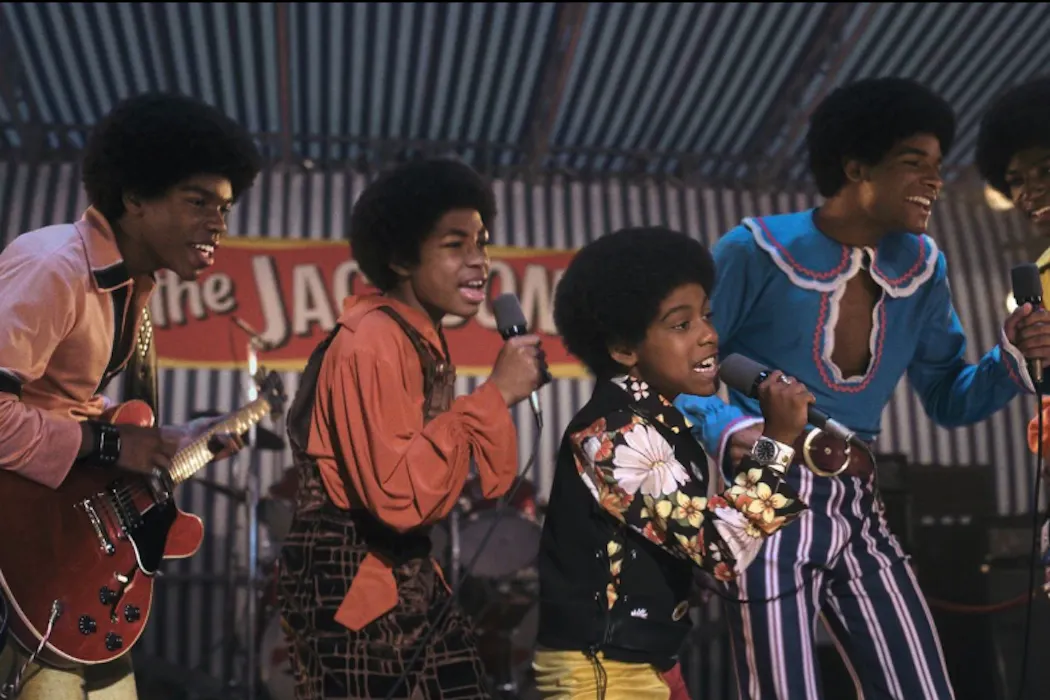
The theatrical release ofMichael, a biographical film devoted to the King of Pop who died in 2009, fits into a now well-established genre. Lucrative for both Hollywood and the music industry, biopics do not escape a certain script and aesthetic uniformity, despite some bold attempts at renewal.
How can one forget with what fervor Bette Midler portrayed Janis Joplin in 1979 inThe Roseor with what disturbing mimicry Val Kilmer played Jim Morrison inThe Doors, by Oliver Stone, in 1991? But an abundance of goods can be harmful and, in January 2025, several film critics were wonderingif there is no risk of a “biopic overdose”.
The release, on Wednesday, April 22, of the film dedicated to Michael Jackson is a good reason to question these works inspired by the lives of rock, rap, and pop stars, as well as singers (Barbara, Charles Aznavour) or classical musicians (Maria Callas, Leonard Bernstein).
From “Superman” to “Rocketman”: a profitable alternative to superhero movies
Over the past ten years, faced with competition from streaming platforms, the major film studios have capitalized on three major genres, very profitable: at the top, thesuperhero movies, then adventure licenses (ofMission ImpossibleÃFast & Furious) and, third major source of profit, animation (dominated by Disney/Pixar). Faced with this winning trio, biopics assert themselves as an equally promising vein to attract families and teenagers on an international scale.
Moreover, the figures follow:Bohemian Rhapsody(2018, dedicated to Queen and Freddie Mercury) reached almost one billion dollars in revenue, followed byElvis, by Baz Luhrmann (2022, 300 million),Straight Outta Compton(2015, around the rap group N.W.A) andRocketman(2019, about Elton John). This public success is complemented by critical recognition since these same films have won Oscars, Golden Globes, or Baftas. The consequence of this positive assessment did not take long: the widespread enthusiasm for this new formula sparked an avalanche of releases. Among the most notable biopics, aside from those already mentioned, we recallLove & Mercy(2015, on the leader of the Beach Boys, Brian Wilson),I Wanna Dance with Somebody(2022, dedicated to Whitney Houston) orBack to Black(2024, about Amy Winehouse).
And the announced projects are just as numerous, whether it is thefour (!) films by Sam Mendes for each of the Beatlesor the one on theJohnny Hallyday myth, by Cédric Jimenez.
“Remember the time”: a genre in tune with the nostalgic trend
This wave of films, which retrace the glory days of stars from the 1950s (Elvis Presley), 1960s (Bob Dylan), 1970s (Elton John), 1980s (Freddie Mercury), 1990s (Robbie Williams), fits within a deeper trend in today’s consumer society, which looks back tenderly on a revisited past. This concerns series, too.Mad men(the 1960s) toStranger Things(the 1980s) orTapie(from 1965 to 1995). But one also thinks of the publishing sector, from Pierre Lemaitre’s bestseller on the Trente Glorieuses to the issues of the magazineSchnock dedicated to Joe Dassin or Sheila.
Music is not left out,with the return of vinyl and the audio cassette, the attendance at the concerts oftribute bands, these groups who fill the halls incovering the hits of Queen or Abba.
Also to read:
What fills concert halls?
Nostalgia, of course!
The biopic about Michael Jackson is a nostalgic look in the rearview mirror that accompanies the reissue of the Renault 5 or the new launch of the magazineHim. In this context, it is unsurprising that the albumThriller, published in 1982, was still listedin the top 5 of 33 RPM record sales in France in 2025!
Best of, remix or covers: rebooting the hit machine
For the record industry precisely, biopics play a welcome role in bringing past stars’ songs back into fashion. Because music has to be profitable and, better yet, it can be even more so than other more conventional products. This profit perspective has attractedinvestment funds that buy out the catalogs of idols from former Sixties fans, from Bob Dylan to Bruce Springsteen or Neil Young.
Also to read:
Bob Marley, herald of emancipation
From now on, faced with such financial stakes, it is no longer just a question of accompanying the film with a soundtrack that would serve as the definitive best of (typically, like that of the Ray Charles biopic in 2004), but it is necessary to attract a novice audience, if possible by using contemporary talents, like Doja Cat and Yola in theElvisby Baz Luhrmann. This impact on the sales of the star’s catalog titles also explains why some biopics are purely commissioned products from the rights holders, like the one about Bob Marley: the fire needs to be rekindled…
And yet, biopics are always the same old story
Popular successes and lucrative products, are biopics therefore films that will make their mark in the history of cinema? In terms of scripts, there are only two variants: the first (and most frequent) stages the grandeur and decadence of the idol, as foreshadowed in 1972 by David Bowie’s concept album title about a fictional rock star,The Rise and Fall of Ziggy StardustÂ; the second focuses on a personality crisis, a pivotal moment, like the films about Bob Dylan or Bruce Springsteen.
Whether it is about a triumphant peak or the intimate chronicle of a turning point, all these films resemble each other by their immoderate use of flashbacks, diving into the hero’s childhood as if one does not become a star but is predestined to be one. And each time, the screenwriters take a mischievous pleasure in scattering signs announcing the coming miracle – “It was written,” the fan might say, in a naive religiosity.
The narrative structure presents another inherent commonality in the exercise: these big-budget productions that need to appeal to viewers who are fans ofSpidermanand ofJurassic Parkcannot afford downtime. Action, twists, climaxes like in a traditional blockbuster are necessary. Heightening conflicts, exaggerating facts to capture the attention of a known fickle audience becomes a golden rule. It is significant that the director chosen to film Michael Jackson’s rise to the zenith is Antoine Fuqua, known forTraining Dayor all threeEqualizerwith Denzel Washington, an archetype of the specialist in violent thrillers with multiple twists and turns andcliffhangerseffective.
The shadow highlighted
If the musical biopic therefore remains largely formulaic and stereotyped, one can nevertheless detect some recent innovations in the writing that bring a welcome renewal. Indeed, after a series of films dedicated to a charismatic figure (Great Balls of Fire!, 1989;The Doors, 1991;Walk the Line, 2006), it is observed that biopics now more willingly focus on the discreet heroes of the music business by eagerly depicting these men and women behind the scenes who work for the glory of their protégé. Despite its failure, the seriesVinyl, by Martin Scorsese (2016), has certainly marked the script model of contemporary biopics by its will to broaden the scope of investigation into a society of spectacle rich in colorful and moving characters.
This very “serial” inflation of secondary characters creates a denser and more complex narrative fabric. Thus, the terrible Colonel Parker (Elvis), the empathetic Jon Landau (Springsteen: Deliver Me From Nowhere) or the shrewd Albert Grossman (A complete stranger) offer representations of managers that allow understanding how a myth is built at the cost of a few bribes, threats, or wild psychoanalyses.
The public is no longer dazzled solely by the Christ-like journey of a pop star figure; it is invited to explore the sordid and sometimes burlesque mysteries of a world devoted to unbridled capitalism and the quest for glory.
“Man in the Mirror”: embodying or imitating, a challenge for actors
Another aesthetic question concerns the performance of the actor tasked with resurrecting the deceased star or, in rare exceptions, portraying them in their youth while they continue their career (Bob Dylan, Elton John). Should one disappear into an absolute imitation or embody an idea rather than an appearance?
The visual and/or vocal look-alike game of Timothée Chalamet inA complete strangerdoes it tell better about Bob Dylan than the kaleidoscope of incarnations ofI’m Not There(Todd Haynes, 2007, featuring notably Heath Ledger, Christian Bale, Richard Gere, and Cate Blanchett)Â ? The biopicMichaelrelying on the resemblance of the young Jaafar Jeremiah Jackson whose limited experience seems insignificant compared to his relationship with the author of “Billie Jean”: son of Jermaine Jackson, he is Michael’s nephew; he is therefore qualifiedde factoto embody his uncle, with the genealogical link being the authority on his acting talents, while legitimizing a work that becomes an ode to the resilience of the Jackson family.
Here we find the same problem as with tribute bands, some of which push the similarity with their model to a high degree of perfection and make it a commercial argument: does wearing a costume justify an acting price? A process parodied by Jérôme Commandeur offering the Césars afake trailer of a biopic about the comedic singer Carlos.
The true story? No, a watered-down or altered version
The paradox of biopics is that, despite the similarity between the actor and their model, these films often miss the mark on their subject. The audience witnesses mystical melodramas, with an ascension through pain or a saving redemption accompanied by plenty of tears, but they learn nothing about the musical creation process. When it is not treated through ellipsis, or even completely forgotten, the subject is approached as a bolt from the blue, the star then being struck by the genius of composition. Among notable exceptions: the film about Bruce Springsteen, focused on songwriting, and especially the one aboutN.W.A(Straight Outta Compton) due to the technical, almost tactile, nature of creation based on samples.
Similarly, the timeline of the artist’s career is often subjected to anachronisms, inaccuracies, or narrative pitfalls in the name of an ever more spectacular effectiveness on screen.Bohemian Rhapsodyis a perfect example of this chronological falsification, either on details (it is impossible that the title “Fat Bottomed Girls” was played during the 1974 American tour, the title having only been released in 1978), or on much more painful biographical elements (the announcement of Freddie Mercury’s HIV-positive status to his colleagues before the Live Aid concert… two years before his diagnosis!). So many small or large adjustments to reality that amplify the pathos and the prodigious at the expense of documentary accuracy.
Another deviation from reality – even if the story is presented as true – music biopics tend to offer a socially acceptable version of their heroes, whereas these are often rock stars with dissolute lives or behavior far from exemplary. Misogyny,sexist and sexual violence, drug use is downplayed or kept silent in order to be broadcast without age restrictions and attract a large number of consumers, without offending anyone.
The roughness is abolished, the deviations from morality or the law revised and corrected in the light of contemporary issues. The Dylan embodied by Chalamet is an exception, as unlikeable as the original. At a time when therock rebels are inducted intoRock and Roll Hall of Fame, biopics contribute to their museification. In this quest for respectability, the stars’ entourage is now gaining more importance: the hero is inevitably a victim of their manager, the media, the system.
More sincerity in fiction?
What are ultimately the best biopics about music stars? Those that take winding paths, likeVelvet Goldmine(by Todd Haynes, about David Bowie) orAline(by Valérie Lemercier, about Céline Dion)? Or the fiction films played by rock stars?
Indeed, every David Bowie was already inThe man who came from elsewhere(1976),Viva Las Vegas(1956) is a form of premonition of Elvis’s fate, and Michael Jackson’s ambivalence is reflected inThe Wiz(1978), adaptation of The Wizard of Oz, with Diana Ross and whose music was supervised byQuincy Jones, the man who will make ofThrilleran unparalleled success.
Alban Jamin, musician and film teacher (Auguste-et-Louis-Lumière High School, Lyon), is co-author of this article. He is one of the contributors to Biopic, from reality to fiction.

Joan Le Goff does not work for, advise, own shares in, or receive funds from any organization that could benefit from this article, and has declared no other affiliation than her research institution.
–ref. “I Want You Back”: The sanitized (but lucrative) legacy of the musical biopic –https://theconversation.com/i-want-you-back-the-aseptic-but-lucrative-afterlife-of-the-musical-biopic-279576