

Source: French to English Tester Published on: 2026-04-21
Source: The Conversation – France (in French)– By Sanae Okamoto, Senior Researcher in Behavioural Science and Psychology, United Nations University – Maastricht Economic and Social Research Institute on Innovation and Technology (UNU-MERIT), United Nations University
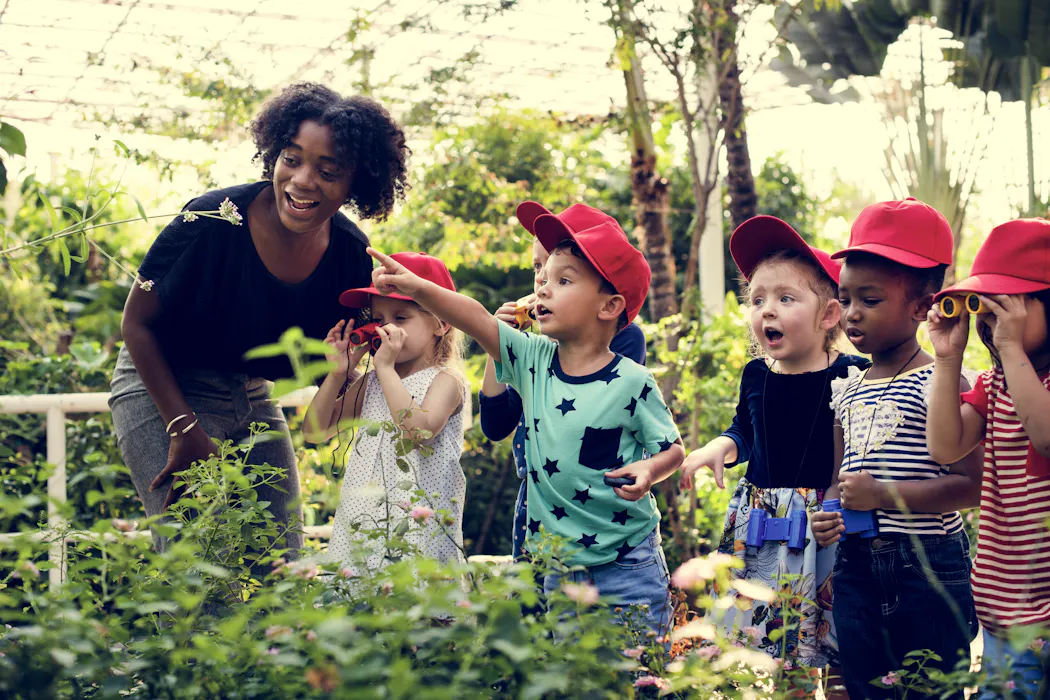
Rather than focusing on what is wrong, climate education can help children ask themselves what they can do. By cultivating their agency, that is, their ability to be masters of their own existence, and their critical thinking, it can bring forth a generation ready to act for a more sustainable future.
Children are those who have the least control over the future of the planet, but they will also be among the most affected by its changes. They can thus feel the psychological weight of what is called the “valley of futility”: the feeling that individual actions hardly matter in the face of society’s broader inaction on the climate crisis.
In this context, it is essential to promote ahealthy psychological activity – that is to say the conviction we have taken about our own life. There are levers to act against the crisisclimatic. Children must be accompanied so that they do not lose hope.
With our colleague Kariuki Weru, we have developed a guide explaining how adults can support the healthy psychological development of children.
Our approach recognizesthe seriousness of climate change while grounding children in hope. The goal is to transform feelings of powerlessness into a sense of personal efficacy – the conviction that they can take action.
At home
To protect the emotional well-being of children while addressing the realities of the climate, adults must also learnTalking about climate change with children. This involves listening to children, learning with them, and using language adapted to their age and capacity for understanding. Schools and communities could also assist parents byoffering advice on how to have these conversations.
Monitoring a child’s online activity can also protect them from traumatic information. Parents can focus on progress and solutions, and help their children spend time observing and appreciating the evolution of the weather and their environment.
In class
Schools, teaching methods, as well as children’s relationships with their teachers and peers play a central role in the development of their psychological agency. Strengthening their resilience to climate change could involve moving beyond traditional rote learning, in favor of a“Critical climate education”adapted to their age.
The objective is to give students the means to question existing systems and to imagine profound transformations, rather than feeling defeated by the established order.
Outdoor learning, in contact with nature, can also reinforce this development. It can both improve mental health and transform abstract concepts related to climate into concrete experiences. Learning outside canpromote more constructive discussions on climateand establish a direct link between human actions, the environment, and sustainable solutions. Field observations and survey projects thus help bridge the gap between learning and action.
On the Web
Learning about the climate through digital tools is a powerful lever for contemporary education. It offers interactive and global perspectives on the climate crisis. Butit must be supervisedin order to limit the effects of“filter bubbles”on the Internet – when algorithms only show users information corresponding to their past interests. This phenomenon can isolate children and overwhelm them with repetitive content that harms their well-being.
Used correctly, digital tools can on the contrarybroaden the children’s perspectiveon thesolutions to climate changebeyond their local environment.
By combining the approaches
Effective climate education can combine digital learning and concrete field experiences. When supported by teachers and adults who act as guides—while giving children the necessary space to explore and create independently—they can benefit from an education that is both realistic andbalanced. Ofpioneering programsalready combine the sciences taught in class, digital tools, and outdoor experiments to transform students’ ideas into concrete projects that serve their community.
On a broader scale, climate education must also bridge the gap between individual responsibility and collective power. The narrative around climate should shift from the question “What’s wrong?” to “What can we do?” This change can give children a sense of agency in the world rather than fueling their climate anxiety. Social networks constitute a key space wherethis evolution can occur.
When used with the support of adults and good digital media education, these tools can foster constructive dialogues and data-driven actions. A usagemoderate and positivedigital tools can help children connect their own awareness to the world around them and encourage actions toward awider scaleto truly confront the climate crisis.
In the long term, this can allow children to share their knowledge about climate change and inspire actions within their family and surroundings. They can thus become influential actorsAt school and in their community.
To address the climate crisis while preserving the well-being of young people, it is essential to help children recognize their capacity to act. They can become agents of change, capable offight against disinformationand to develop asustainable psychological resilience.
Schools can work with families, communities, and public officials to create an environment conducive to climate learning.Such an approachcould bridge the gap between scientific knowledge about the climate and lived experiences, by providing the emotional support and practical skills needed to empower climate generations to build a sustainable future together.

The authors do not work for, do not consult for, do not hold shares in, do not receive funds from any organization that could benefit from this article, and have declared no affiliation other than their research institution.
–ref. How to help children move from climate anxiety to action?https://theconversation.com/how-to-help-children-move-from-climate-anxiety-to-action-280294