

Source: French to English Tester Published on: 2026-04-20
Source: The Conversation – in French– By Dominique Torre, Professor of Economic Sciences, Côte d’Azur University
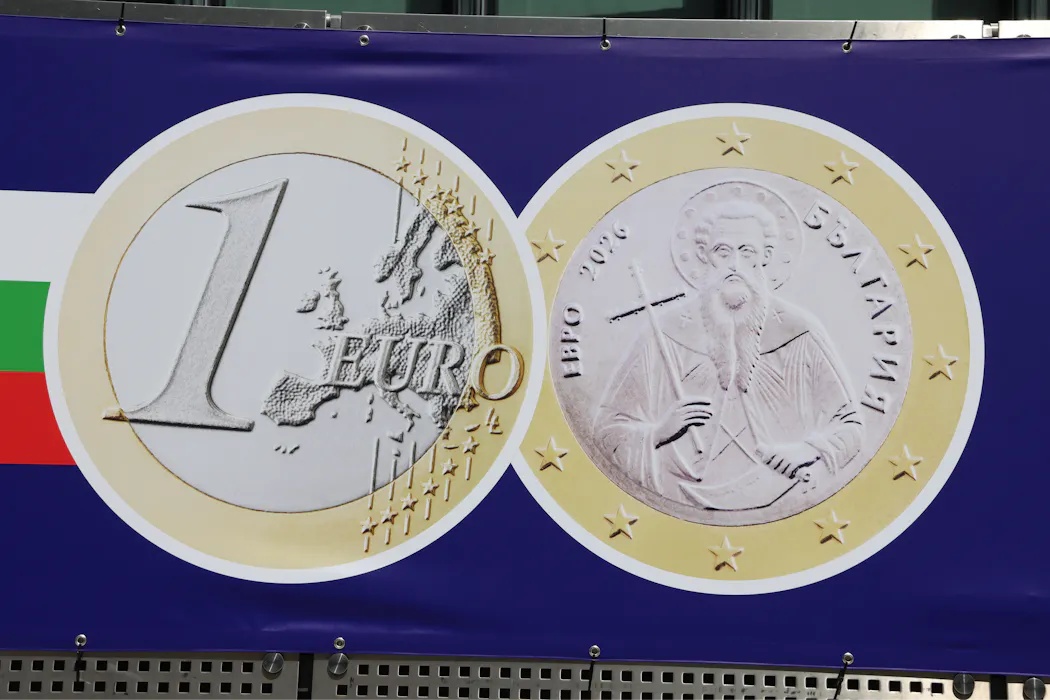
After Croatia was admitted in 2023, Bulgaria has been, since the 1stheIn January 2026, the 21st member country of the eurozone. This is the result of a long process that began with the fall of the autocratic regime of Todor Zhivkov in 1989, and following the trauma of hyperinflation at 1,058.4% in 1997. Why did this adoption take so long? With what challenges?
Sunday, April 19, 2026, the former pro-Russian Bulgarian president Roumen Radev wins the legislative elections with 130 seats out of 240 in Parliament.
He inherits a country that adopted the euro, the 1erIn February 2026. The lev – 1.95583 lev was equivalent to 1 euro – the historical currency, disappeared. The National Bank of Bulgaria (Българска народна банка) became a member of theEurosystemof the euro area.
Why this decision? Historical review from 1990 to the present.
Hyperinflation since the fall of the Berlin Wall
In 1997, Bulgaria went through a periodof hyperinflationwith a peak at 1,058.4%. In such a situation, employees are tempted to immediately convert their salary amount into foreign currency, which depreciates the domestic currency. For merchants, the situation compels them to constantly adjust prices in order to avoid the risk of selling at a loss.
Political and monetary authorities then adopt aCurrency Board, a very restrictive but effective monetary system to combat inflation. Specifically, to peg the value of the lev to another currency, such as the euro or the deutschemark.
If the result of this strategy is successful, with inflation falling to 22% in 1998, Bulgaria loses the levers of its economic policy.

World Bank
At the same time, an average growth rate that is too low and above all toovolatile(-9.12% annual GDP growth in 1992, 5.21% in 1996 or -8.40% in 1999) discourages the elites, who gradually leave the country. Between 1992 and 2001, the population falls by6%. Decision-makers resistant to expatriation are still awaiting the benefits of the European Union, which Bulgaria joined in 2007.
Despite repeated requests from the Bulgarian authorities, the European Union is delaying matters to integrate the country into the eurozone. While the quantifiable indicators – inflation level, interest rate – are not all in the green, the European Union mainly points to the artificially stable exchange rate, a necessary condition forCurrency Board. More informally, the European Union is alarmed by the instability of institutions and their difficulty in controlling – sometimes even within themselves – a worrying level of corruption.
Economic catch-up of Bulgaria
In July 2020, Bulgaria joined the European Exchange Rate Mechanism (the antechamber of the eurozone) with a target of adopting the euro in 2024. After years of hesitation, its admission was decided inJuly 2025.
Questions remain: are the institutions strong enough? Could a Bulgarian economic or financial crisis occur and undermine the Monetary Union?
The decision to join the eurozone comes down to answering the first question positively. If a crisis were to develop in Bulgaria, it is believed that the Bulgarians, supported by their neighbors, would be able to control it locally.
In 2025, Bulgaria’s 100 billion euros of gross domestic product (GDP) represent only0.7% to 0.8% of the euro area GDP, which limits the power of any potential spillover effects. Bulgaria’s real catch-up (taking inflation into account) has been very tangible since 2007: the gross domestic product per capita, evaluated at 41% of the eurozone average at the time of its admission to the European Union, now stands at67% of this average.
Passage to the euro seen from Bulgaria
The Bulgarian political class has been mostlypro-Europeanfor decades. It supported the transition to the euro, since the currency reduced transaction costs andmade banks safer, now monitored according to the standards of the European Central Bank. These latter distance Bulgaria from the situation in 1996 when more than 60% of loans were not being repaid.
In 2026, this political class wishes to attract new capital that creates jobs. As in other Central European countries, nationalism and euroscepticism are gaining ground in the Bulgarian political class. Rumen Radev, the president of the country, hasresignedlast January. After a pro-European presidency, his speech is more ambiguous:
“The definitive rupture between the Bulgarians and the political class occurred with the Parliament’s refusal to organize a referendum on the date of introduction of the European single currency. The representatives of the people denied the people their right to choose.”
Also to read:
Faced with public debt, “three” Europes and a single currency
The surveys conducted by the Bulgarian instituteAlpha Researchindicated inMay 2026that voters in favor of and against the euro are balanced — 49% for, 45.8% against. According to the latestEuropean Commission Eurobarometer, 49% of Bulgarians are opposed to the single currency in 2025. Unfavorable opinions largely prevailed in 2022, which puts into perspective the mixed impression of these figures.
Of course, consumers fear a loss of purchasing power, which always occurs marginally when a country switches to the euro. The latest experiences have shown that thisexcess inflation is limited– from 0.2% to 0.35% – and temporary.
So one can therefore think that it will be the same in Bulgaria, and that this development will be beneficial for the country.
Why has everything taken so long?
In reality, Bulgaria has come a long way.Currency Board, this monetary system which saved it from hyperinflation in 1997, is both a curiosity in a world of widespread currency floating and a trap that can close in on those who adopt it⦠when they wish to join a monetary union.
This monetary issuance system somewhat resembles what theoretically was thegold standard(a currency equivalent to a fixed weight of gold), coupled with full convertibility of banknotes into gold. The Bulgarian central bank, which in this case is called the “issuing office”, can only provide liquidity in lev in exchange for a reserve currency, initially the Deutsche Mark, then the euro, or public debt denominated in this reserve currency.
Also read:
Croatia in the eurozone, the culmination of 30 years of economic recovery
Access to liquidity in the form of leverage is becoming constrained, which mechanically reduces inflation – banks are limited in their lending, and by extension avoid a surge in prices and wages. Theacademic literatureexplains that, beyond this “disciplinary effect,” the mechanism itself generates the public’s trust who agrees to holdwithdraw, instead of converting them immediately into “strong” currencies, like the deutschemark or the euro. This is what happened at the time of the Bulgarian stabilization in 1998-1999.
This system has its limits. The discipline also applies to the State, which cannot rely on the issuing authority’s account to implement a policy ofopen market(purchase and sale of public bonds on the money market) and help it borrow at reasonable costs. The Bulgarian State thus borrows in euros on the Luxembourg market from foreign lenders (the Luxembourg stock exchange operates as a listing centre for international securities). As for the banks, they cannot rely on a“lender of last resort”in case of a setback, the issuing fund cannot play this role by definition.
Ultimately
The Bulgarians find themselves a little more connected to the rest of Europe to which they have been supplying for years theirdoctors, their researchers and other expatriate engineers. The Bulgarian state will be able to benefit from better rates in Luxembourg, which will probably remain the place of issuance of Bulgarian debt, as long as there is no sufficiently developed local market.

Transparency International
The European Central Bank will be able to act as a lender of last resort to local banks. Transfers of goods, services, and money will be streamlined to benefit exporters. These advantages could increase prices and wages, thereby limiting the deferred competitiveness of the Bulgarian economy. In any case, it will have to improve its score at the level of theinternational corruption perception index.

Dominique Torre does not work for, does not advise, does not own shares, does not receive funds from any organization that could benefit from this article, and has declared no affiliations other than their research organization.
–ref. Bulgaria adopted the euro to forget its trauma of hyperinflation –https://theconversation.com/bulgaria-adopted-the-euro-to-forget-its-hyperinflation-trauma-275754