

Source: French to English Tester Published on: 2026-05-20
Source: The Conversation – France in French (3)– By Christiane Denys, Professor Emeritus of the Museum, National Museum of Natural History (MNHN)
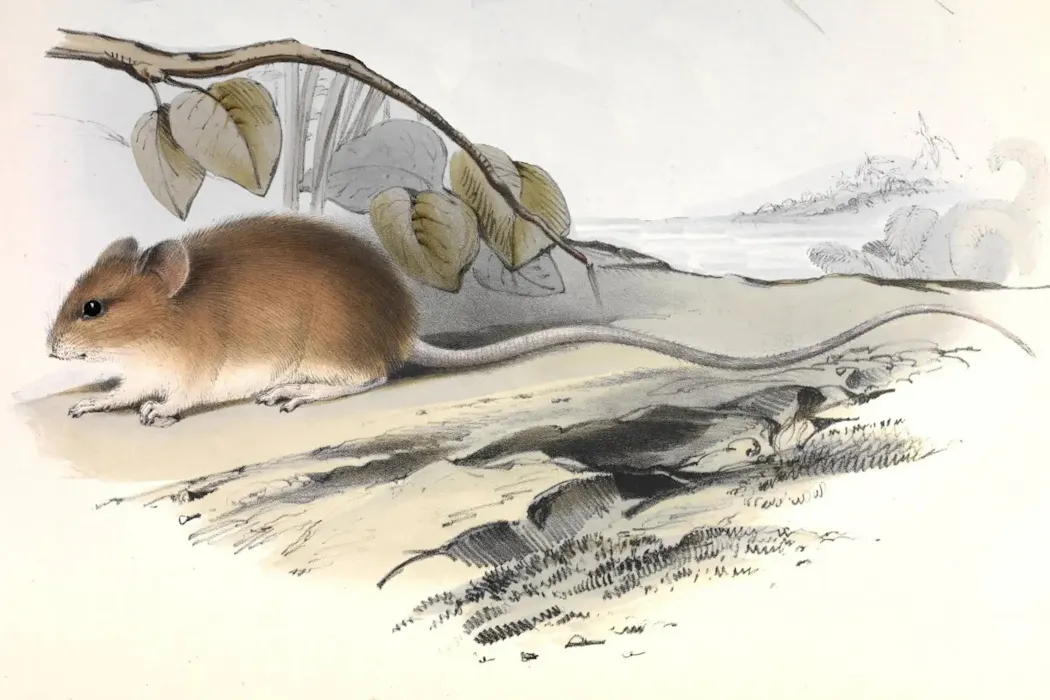
The long-tailed pygmy rice rat,Oligoryzomys longicaudatus, is a natural reservoir of hantavirus. Specifically, of the Andes strain, suspected to be responsible for the death of several passengers on a cruise ship. This rodent, endemic to South America, has long been poorly understood, but ecological studies conducted since 1995, the year of the first human hantavirus infection case, have made it possible to outline its profile and the conditions that promote its transmission to humans.
The long-tailed pygmy rice ratOligoryzomys longicaudatusis exclusively South American. It lives in Argentina and Chile and can transmit the Andes hantavirus (ANDV) to humans, which is transmissible from human to human, in case of inhalation of aerosols from its urine, feces, or secretions. It is the main animal reservoir of this propelled virusin the spotlightsince thedeath of several passengers from the cruise shipHondius.
Its original description dates from 1832. The British naturalist Edward Turner Bennett depicts it, from the Valparaiso region in Chile, as having a long scaly tail with short hair, soft brown-yellow fur on top, white lips, a long black and silver mustache, and round ears. At that time, he classified it as a species of mouse (Long-tailed mouse).
It was not until 1894 that it was finally integrated into the genusOryzomysthen in 1900 under the genusOligoryzomysby the American ornithologist Outram Bangs. Despite its name, the animal is not particularly small (as the prefix suggestsoligo), nor resident of the rice fields (as the etymology oforyzomys).
Known since 1995, the date of the discovery of the first human case of hantavirus infection, the Andes hantavirus is a recurring public health problem in Chile and Argentina, which has led to several ecological studies on this rodent that has remained poorly understood until now. These studies provide some keys to understanding what promotes the circulation of the virus in the rodent and its transmission to humans.
The “colilargo,” an all-terrain and opportunistic rodent
In Chile, it is nicknamed “long-tailed opossum» (long-tailed rat). It belongs to the family ofCricetidaewhich includes hamsters, voles, lemmings, as well as rats and mice of the “New World”. It is the second most diverse family of rodents after that ofMuridae(rats and mice of Europe).
Within the Cricetidae, the genusOligoryzomysbelongs to the group (tribe) of Oryzomyini, which includes 141 species of rodents distributed in North and South America. The genusOligoryzomysis found exclusively in Central and South America, from Mexico to Patagonia. The number of known species has increased from 21 species in 2017 to25 at the current hour.
Onea related species was moreover described in 2021andanother one in 2024, which however has not changed the status of the long-tailed pygmy rice rat. The latter remains described as genetically homogeneous throughout its range.
Despite its name, it is the largest species in the genus. Indeed, the body of an adult long-tailed pygmy rice rat can measure from 9 cm to 12 cm, to which must be added a tail of 11 cm to 13 cm for a weight ranging from 33 g to 50 g. This is more than the house mouse (15 g to 20 g) but less than thebrown rat of our European cities(from 100 g to 500 g).

Its name is even doubly misleading, because it does not live in rice fields, but frequents the temperate Patagonian forests ofNothofagus(deciduous or evergreen tree that can reach 30 m in height, also called “false beech” or “southern beech”, present in the Southern Hemisphere) and bamboos, where it is the most abundant rodent.
However, it also seems capable of living in the grassy shrub steppes of the Patagonian tundras as well as in the edges of cultivated fields and pastures, shrubs of peri-domestic areas in Argentina. It has never been captured inside houses. It can live from sea level up to 2,000 meters in altitude, but is never far from a watercourse as it cannot do without it.
The ecology of this rodent has been studiedin the 1980s by Oliver Pearson, but since the discovery in 1995 of the Andes hantavirusof which this rat is a carrier, studies have multiplied. It is known that this rodent is nocturnal and terrestrial, but it can sometimes climb up to 3 meters high in trees. It is an opportunist that has been described as omnivorous with a diet often dominated by seeds, flowers, or fruits. However, it also consumes, to varying degrees, grass, insects, worms, or mushrooms.
Periods of proliferation called “ratadas” during the flowering of bamboos
It is known for sudden population increases linked to the synchronized cyclical flowering, every twelve to fourteen years, of bamboos whose seeds it consumes. These episodes also occur after periods of heavy rainfall and hot summers, inlink with the El Niño climatic phenomenon.
These increases in population are called“bullshit»by the local populations. During these episodes, up to 100 individuals per hectare can be counted, compared to an average of 5.7 individuals per hectare under normal conditions.
On the contrary, during drought episodes (favored notably by climatic episodes ofLa Niña), its populations canto disappear locally or persist in riverside bushes, because the species does not survive without water.
The lifespan of the long-tailed pygmy rice rat has been estimated at one year in the wild. The reproduction of this rodent can occur throughout the year when conditions are favorable, but a peak in births is observed in spring and summer. Females can have an average of five to seven young, after a gestation of twenty-three days, and this can happen three or four times a year.
Also to read:
Who is the capybara, this astonishing rodent who has won the hearts of internet users?
Male competition responsible for the spread of the virus
In Argentina, females have territories varying from 200 to 3,400 square meters (m²), while those of males, larger on average,can cover up to 9,000 m².
When the population increases, the competition among males for access to females also increases. A study has shown thatOnly 40% of males managed to mate. The territories of males do not overlap, and many males bear scars and wounds that testify to violent fights between them, especially when population densities are high.
It would be this competition between males that would be responsible formaintenance of Andes hantavirus in the rat population, because these would become infectedduring grooming and by bites. In addition, non-reproductive males disperse to acquire more distant territories.
In Chile, a virological study showed that8% of rodents are positive for Andes hantavirus, with a peak in winter and spring. She also concluded that male rodents with scars were ten times more infected than other males and adult females, which aligns with theresults of other rodent research conducted in Argentina.
All these particular characteristics make the long-tailed pygmy rice rat a model for understanding the transmission of the Andes virus to humans. It is known that contact with aerosols of urine, feces, or mucus secretions is involved.
In Argentina, hantavirus cases correlated with episodes of rodent population outbreaks
Human-to-human transmission specific to this virus is a little less well understood.
The farmers and foresters have beenidentified as risk groups. It has been shown that, in pine forests planted by humans, some rodents encountered were positive for the virus, but in smaller quantities than in native forests. The probability of finding a rodent positive for the virus is thustwice as high in peri-domestic areas (granaries, vegetable gardens, chicken coops, barns made of planks, bricks, cement…) than in the nearby pine forest.
In the Buenos Aires region of Argentina, the study of the distribution of cases of pulmonary respiratory syndrome caused by the virus in humans (hantavirus pulmonary syndrome, or HPS by its English acronym) between 1998 and 2001 showed strong seasonality and especially acorrelation with ecological conditions. The periods of rodent population explosion could thus promote contact with humans and interspecies transmission of the virus.
Present in Argentina and Chile since the Pleistocene (about two million years ago), the long-tailed pygmy rice rat coevolved with the native forests of South America and the assemblage of other rodents endemic to them. It should also be noted that the rodent here onlyadapt to climate changecaused by humans, from landscape transformation to forest fragmentation.
But the increase in tourism, the frequency of forest fires, El Niño or La Niña events and their consequences on wildlife and livestock grazing, or even ofinteractions with invasive speciesare all unknowns for the future. And this applies both to the future of this species and to the strain of hantavirus transmissible to humans that it carries.

Christiane Denys does not work for, advise, own shares in, receive funds from any organization that could benefit from this article, and has declared no other affiliation than her research institution.
–ref. Who is the long-tailed pygmy rice rat, vector of the Andes hantavirus?https://theconversation.com/who-is-the-long-tailed-pygmy-rice-rat-vector-of-the-andes-hantavirus-283172