

Source: French to English Tester Published on: 2026-05-20
Source: The Conversation – France in French (3)– By Paco Milhiet, Visiting fellow at the Rajaratnam School of International Studies (NTU-Singapore), associate researcher at the Catholic Institute of Paris, Catholic Institute of Paris (ICP)
Meisterdrucke.fr
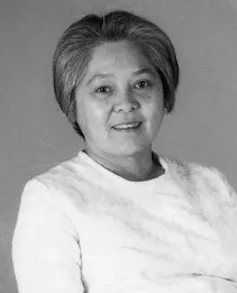
The notion of the “Indo-Pacific” has become a focal point in French diplomacy, with Emmanuel Macron not hesitating to designate the vast area thus named as a “strategic priority.” While the term is now commonly used in the public sphere, it is generally not known that it was first employed as a geopolitical concept by a historian of spices, Madeleine Ly-Tio-Fane, to describe French colonial expansion in the 18th century.
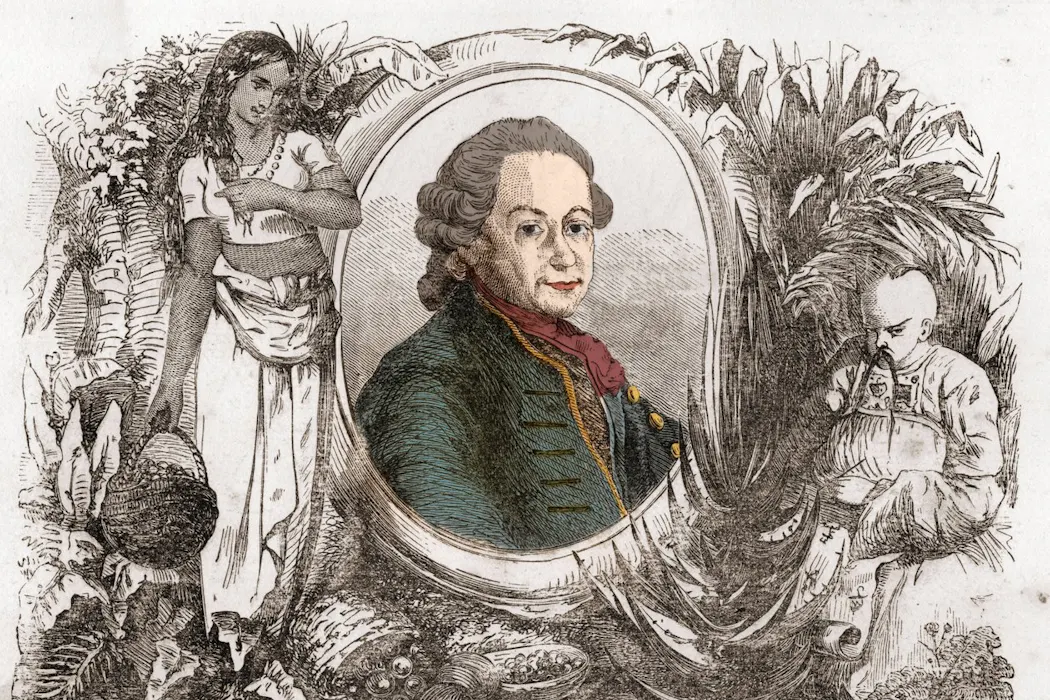
Madeleine Ly-Tio-Fane(1928-2011) was a unique intellectual figure. Originally from Mauritius, she made her role as a librarian at the Mauritius Sugar Industry Research Institute the starting point of a body of work as a historian devoted to natural sciences and exchanges in the Indian Ocean. Her research focused particularly on the actions of three French botanists and their role in the introduction of plant species — notably those producing spices — to the islands of France (Mauritius) and Bourbon (La Réunion):Pierre Poivre(1719-1786);Jean-Nicolas Céré(1738-1810) andPierre Sonnerat(1748-1814).
One article in particular caught our attention:“Pierre Poivre and the French expansion in the Indo-Pacific”, published in 1967 inthe Bulletin of the French School of the Far East. To our knowledge, this is the first time that the term “Indo-Pacific” has been used in its strictly geopolitical sense to describe the French endeavor in the region. Ly-Tio-Fane, for the duration of an article, would she have thus transformed into a geopolitical analyst?
History of a geographical name
The term “Indo-Pacific” was certainly not invented by the Mauritian academic. It made an early appearance in the social sciences as early as the 19th century under the pen of the British naturalistJames Logan(1819-1869), before being taken up by the German geopoliticianKarl Haushofer(1869-1946) in the interwar period.
In France, other analytical frameworks prevail: Far East, Asia-Pacific, Pacific Basin. One will have to wait for the development of aIndo-Pacific strategyby Emmanuel Macron, in May 2018, so that the nomenclature becomes established. It is now widely adopted by the administrations and relevant authorities as well as by someuniversity.
It is therefore a Mauritian, Madeleine Ly-Tio-Fane, who deserves credit for having conceptualized this term in its French meaning, fifty years before the French president. Under her pen, the Indo-Pacific designates the arc of a French colonial expansion from the strongholds of Bourbon (today La Réunion, NLDR) and Île-de-France (name of Mauritius during the French colonization from 1715 to 1810, NLDR) all the way to the Polynesian confines. In an 18th century full of effervescence, at a time when science and geopolitical conquest advanced hand in hand, the unique journey of Pierre Poivre embodies this pivotal period of European projection into the Indo-Pacific space.
Pierre Poivre, a French-style geopolitics of spices
Ending the Dutch monopoly on spices: that was Pierre Poivre’s great project.
Long controlled by Arab merchants, the spice trade in the Indian Ocean constitutes astrategic issuesecular, exacerbated by the arrival of European powers from 1498, when Vasco da Gama rounded the Cape of Good Hope. After Portuguese domination, the Dutch East India Company (VOC) locked down this trade from the 1620s and established itself ashegemonic actressby coercion and destruction.
At the beginning of the 18th century, the Dutch monopoly wavers: the rise of British power and the restructuring of Euro-Asian trade (growth of coffee, tea, and textiles) redefine commercial balances. France, expelled from North America in 1763, attempts to penetrate this lucrative market by acclimating on its own territories the plants that provide the precious spices.
The man who embodies this ambition isPierre Poivre. Originally intended for religious orders, he went to Asia in 1741 as a missionary belonging to the Paris Foreign Missions and discovered, through contact with the Indonesian archipelagos, the wealth that the Dutch drew from the spice monopoly. As much a botanist as a merchant, he gave up the priesthood and returned to France to convince the French East India Company to initiate an acclimatization policy forFrench Mascarene Islands.
He makes several trips to the Indonesian archipelago, from which he secretly brings back plants, without managing to establish them permanently on the island of Mauritius (then called Isle de France since the French took possession of it in 1715). Appointed in 1767 as intendant of the islands of France and Bourbon, he finally has the institutional means necessary for his great project.
Mauritius, a key territory of French colonial ambitions in the Indo-Pacific
A military support point and an essential stopover for trade to the Indian outposts (Pondicherry, Mahé, Chandernagor, Yanaon, and Karikal), Île de France quickly became the center of the French presence in the Indo-Pacific region.
While the island was administered by the East India Company since 1721, the kingLouis XV ordersin August 1764, to transfer the territory back to the Crown. The objectives assigned to the administrators are multiple: to stimulate the kingdom’s trade by creating a market for metropolitan goods; to develop local production of spices then monopolized by the Dutch and the English; and above all to establish a reliable transit point on the route to Asia allowing ships to undergo repairs, renew supplies and equipment, without depending on foreign-controlled stopovers.
Behind this “overwhelming role” granted to the territory, everything still has to be built: administrative framework, urbanization, agriculture, expansion of the port. The state transfers allocated to the colony being negligible, it must meet its own needs, particularly through the spice trade. This is precisely the mission entrusted to Pierre Poivre.
With in-depth knowledge oflocal political networksAcquired through his travels, Poivre identified the areas where neither the English nor the Dutch exercised effective control. Three expeditions to the Moluccas were organized; soon, ties with the population of Gebe were established, and clove plants and nutmeg seeds were brought to Mauritius. The botanists Jean-Nicolas Céré and Joseph Hubert, disciples of Pierre Poivre, succeeded in the feat of acclimatizing these two species to Mauritius and Réunion. The clove tree acclimated successfully to Mauritius, which became a significant producer by the end of the century. Nutmeg had more mixed results.
Beyond spices, intendant Pierre Poivre, also general commissioner of the Navy, seeks to transform the island of France into a center of gravity for French expansion in the Indo-Pacific area, far beyond the Indian Ocean.
Indo-Pacific Horizons: from the Île de France to the “new Cythera”
Madeleine Ly-Tio-Fane, with supporting archives, extensively transcribes the hopes and ambitions that the intendant harbored for his “boulevard” of the Île de France.
In the Indian Ocean first: mapping of currents and monsoons, searching for faster routes to the Indian trading posts, establishment of spices in the Seychelles, persistent quest for the imaginary island ofJohn of Lisbon.
In the Southern Ocean next: convinced that an as yet unknown southern continent would eventually allow control over trade between Asia and America, Poivre supports the expeditions ofKerguelenand ofMarion-Dufresne.
Finally, the General Commissioner of the Navy is also exploring the Pacific: at the time when Bougainville has just completed his first circumnavigation and discovered “the new Cythera” (Tahiti), he advocates for Mauritius to become “a springboard for French expansion towards the Pacific,” and for the new expeditions to set sail fromPort Louisrather than from the metropolis. The colony of Île de France also aims to become the “Ariadne’s thread” of any French expansion project in the Indo-Pacific zone.
This expansionist dynamic in the Indo-Pacific is not limited to Poivre’s initiative alone. It is part of a context of collective emulation that drives an entire generation of French explorers, scientists, and navigators who met Pierre Poivre on Île de France, an intellectual as well as logistical hub:Bouvet de Lozier, Surville, Bougainville, Marion-Dufresne,Commerson,Jeanne Baret,Le Gentil,Véron,the Knight Grenierand many others…
Not to forget the sadly famousAhutoru, the first Tahitian taken to mainland France by Bougainville, whose presence in Paris fuels the reflections of philosophers, notably Diderot inThe Supplement to Bougainville’s Voyage. The Polynesian will also cross paths with Pierre Poivre in Mauritius, but unfortunately dies in Madagascar in 1772 and never sees his island again.
While these journeys represent notable advances from a scientific point of view, they also reveal the tension between a geopolitical ambition and the material constraints of a fragile colony, still in search of its economic foundations. These costly expeditions are undertaken while the island lacks everything. Poivre and his expansionist ambitions will therefore be strongly criticized, notably by his successor Jacques Maillart-Dumesle.
Edinburgh University Press/José Forget
Between scientific ideal and colonial ambitions
Whether disproportionate or not, Pierre Poivre’s Indo-Pacific vision and the central role he assigns to Île de France outline the contours of a French strategic continuum linking the Indian Ocean to Southeast Asia and, beyond, to the Pacific Ocean.
Paradoxically, the success of the spice plantation project closes this first French expansionist impulse in the region, which will have no continuation. The wars of the Empire will mobilize energies and fleets elsewhere, relegating these Indo-Pacific ambitions to a deferred horizon, which will only be fully reactivated in the 19th century. A symbol if there ever was one, the island of Mauritius came under British sovereignty in 1814.
Through the study of Pierre Poivre’s odyssey and his quest to master the spice trade, Madeleine Ly-Tio-Fane perfectly conveys the dichotomy of this first French enterprise: between a scientific ideal carried by characters with extraordinary destinies, children of the Enlightenment philosophy, and the dark zones of a project that was above all colonial, mercantilist, and expansionist. An illusory and unfinished ambition, but whose traces still shape contemporary French political geography.

Paco Milhiet does not work for, does not advise, does not own shares in, and does not receive funds from any organization that could profit from this article, and has declared no other affiliation than his research institution.
–ref. Madeleine Ly-Tio-Fane, on the conceptual origins of the French Indo-Pacific –https://theconversation.com/madeleine-ly-tio-fane-at-the-conceptual-origins-of-the-french-indo-pacific-281838