

Source: French to English Tester Published on: 2026-04-08
Source: The Conversation – France (in French)– By Damien Chaney, Professor, EM Normandie
Signing a petition, sharing a message, sharing an image: can these ordinary gestures influence the fate of a cultural institution threatened with closure? In the era of social networks, some mobilizations go beyond their local roots to reach unexpected audiences. But what transforms diffuse indignation into a genuine lever of collective action?
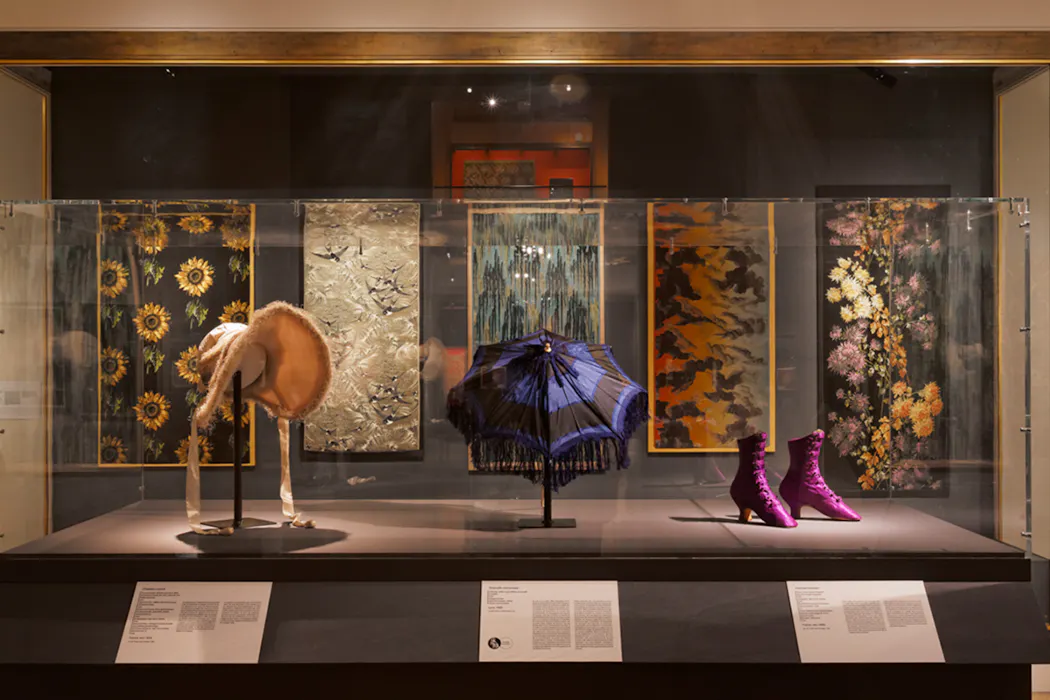
In 2015, a prestigious museum located in the heart of Lyon (Rhône) is threatened byclosing. TheMuseum of Textiles and Decorative Arts, which houses one of the most important textile collections in the world, is at risk of disappearing due to lack of funding. Two years later, it is finally saved. In the meantime, an unexpected citizen mobilization developed, largely supported by the Internet.
This episode illustrates a transformation in forms of engagement around heritage. How can a mobilization born online help to preserve a cultural site? And what does this case reveal about new dynamics of activism in the field of heritage? We conducted astudyto try to answer these questions.
A museum at the heart of Lyon’s history
The Textile Museum is intimately linked to the economic and cultural history of Lyon. In the 18th century, the city became one of the world’s leading centers for silk production. The famoussilk workers, the Lyonnais weaver workers, then play a central role in this industry. Created in the 19th century, the museum preserves and highlights the textile heritage, retracing the history of the know-how linked to fabrics.
Its collections now bring together more than two million textile pieces covering nearly 4,500 years of history, coming from numerous regions of the world. Ancient fabrics, garments, industrial samples, or contemporary creations testify to the evolution of techniques and styles through the centuries. Thanks to this heritage wealth, the museum attracts researchers, textile professionals, and visitors interested in the history of decorative arts alike.
Threat of closure and online mobilization
At the beginning of the 2010s, the museum’s financial balance became fragile. The institution is managed by the Lyon Chamber of Commerce and Industry, which then experiences a significant decrease in its resources. This situation leads the organization to consider stopping the funding of themuseum. Several scenarios are being studied to ensure the sustainability of the site: transfer of management to the City of Lyon, to the Ministry of Culture, or to other cultural institutions. But no solution materializes quickly. Gradually, the hypothesis of a closure becomes more and more likely.
It is in this context that apetitionis launched on the Internet by Daniel Fruman, textile collector, to request the maintenance of the museum. At first, the initiative is modest. But the mobilization quickly spreadsviasocial networks. Local associations, art historians, textile professionals, and other citizens are circulating the petition and publishing their own messages to defend the museum. The media are gradually taking up the issue, helping to broaden the visibility of the movement. Over the months, the mobilization far exceeds the local framework. More than 130,000 people ultimately sign the petition, with support coming from over 130 countries.
Some physical demonstrations are also organized in Lyon, however they gather only a few hundred participants. A more visual communication campaign is also carried out in the urban space, notably through posters designed by the artist Alex Beretta with the slogan “Yes We CANut” ». This is then widely shared on social networks. The bulk of the effort to save the textile museum is thus structured online.
Thus, after nearly two years of mobilization and negotiations by management with public authorities, asolutionis finally found: the Auvergne-Rhône-Alpes Region, the chamber of commerce, and several actors in the textile sector commit to financially supporting the continuation of the museum’s activities.
Why did this work?
The success of this mobilization is primarily due to the forms of discourse that were employed. Ourstudyhighlights four main ways to defend the cause: explaining the importance of the museum (educate), identifying those responsible (denounce), invoking collective values (moralize), and projecting a possible future (project).
These strategies themselves rely on three registers of interpretation: heritage (highlighting the richness of the collections or their historical value), identity (emphasizing the connection with Lyon or the history of the canuts), and a critique of economic logic (denouncing decisions guided by profitability rather than culture).
These categories are not specific to this case. They are found in other mobilizations as well, but here, their combination is particularly effective because it allows reaching very different audiences.
A first category of participants consists of people directly linked to the Museum of Textiles: visitors, art enthusiasts, historians, or textile professionals. Their involvement often relies on a personal experience of the place and a closeness to its collections.
But the mobilization goes far beyond this circle. Other participants, sometimes geographically distant or who have never visited the museum, also embrace the cause. Their involvement illustrates an expansion of the movement beyond its initial audiences, with forms of engagement less linked to a direct experience of the museum.
In the end, the movement develops discourses that are not homogeneous. They form a true polyphony. Contrary to thetraditional social movements, often structured around leadership and a centralized message, the discourse here has partially escaped the founder of the petition. This decentralization, far from weakening the movement, has allowed the support base to expand and thus made the movement increasingly visible in the public and media space.
Furthermore, this diversity works because it is rooted in the very nature of the object being defended. The museum constitutes a heritage rich in multiple meanings: everyone can project their own values onto it, whether about history, identity, or the defense of culture. This capacity for appropriation largely explains the scale taken by the mobilization.
But many campaigns fail: petitions to save neighborhood cinemas or elements of small rural heritage often remain without effect. Their mobilization remains largely local, carried by already convinced audiences, and struggles to reach wider audiences. Above all, these causes do not resonate enough with distant audiences, who do not identify with them or do not project any particular meaning onto them. Due to a lack of circulation beyond the concerned territory, these initiatives remain little visible and fail to exert sufficient pressure on public decision-makers.
Finally, it is necessary to nuance: the digital mobilization creates media and political noise, but without concrete public funding or commitment, it remains insufficient. The recent budget cuts in thePays de la Loireshow that, despite the emotion and sharing online, the Internet alone does not save a heritage.

Déborah Philippe received funding from the Swiss National Science Foundation (SNSF) for past research projects. The obtained funds are unrelated to the article submitted to The Conversation or the academic study on which it is based.
Damien Chaney does not work for, advise, own shares in, receive funds from any organization that could benefit from this article, and has declared no other affiliation than his research institution.
–ref. When the Internet saves a museum: the example of the Museum of Textiles of Lyon –https://theconversation.com/when-the-internet-saves-a-museum-the-example-of-the-lyon-textile-museum-278869