

Source: French to English Tester Published on: 2026-04-08
Source: The Conversation – France (in French)– By Julie Chiron, Project Manager for Health, Food, and Animal Welfare Risk Assessment, National Agency for Food, Environmental and Occupational Health Safety (Anses)
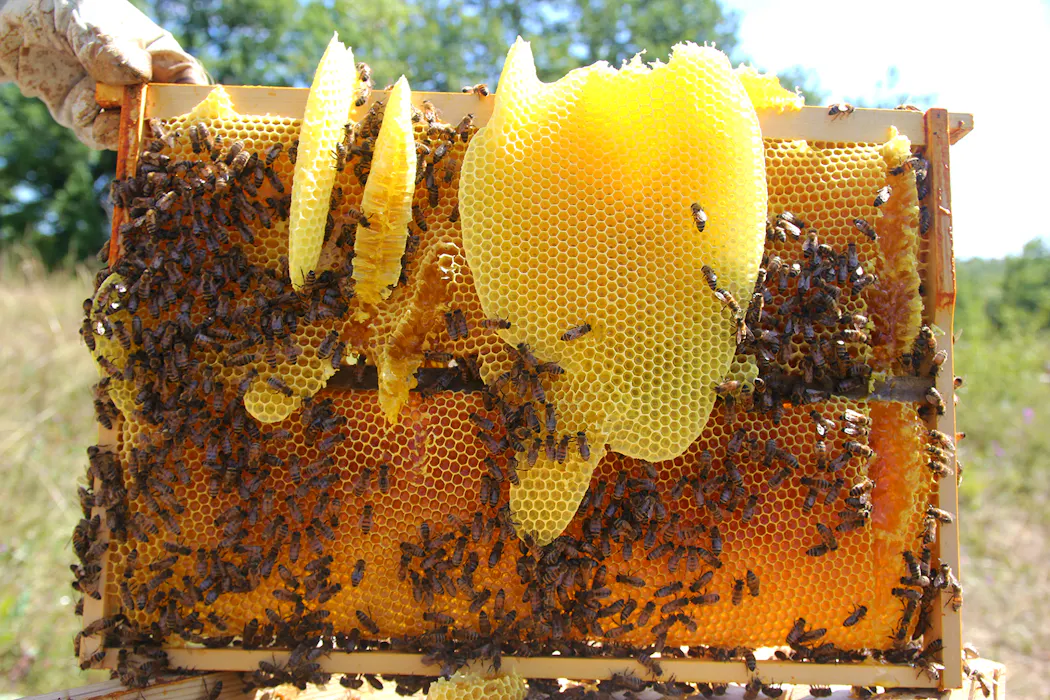
A key substance of the hive, wax also acts as a trap for pollutants, which could threaten the health of bees. An assessment by the National Agency for Food, Environmental and Occupational Health Safety, or Anses, shows that almost all waxes have chemical contaminations, with higher levels in commercial circuits than among beekeepers who recycle their own wax from one year to the next.
It is known: the sustainability of ecosystems depends on the health ofpollinators. Bees are the emblematic representatives of this, their decline causesthe concern of societyand the scientific community. The issue at stake is the evolution of landscapes, the use of chemical products in agriculture and beekeeping, particularly antiparasitics to combatthe miteVarroa destructor.
Now, the wax produced by bees, a lipophilic substance (that is to say, having a chemical affinity for fats), fixes and diffuses contaminant chemical substances. In this sense, it can serve as a biomarker of the environmental contamination of the bee colony.
Young bees naturally produce wax, but the energetic cost of its production can reduce the amount of honey produced. Adding wax in the hive gives them a valuable boost to build the cells. For this, beekeepers place sheets of embossed wax on the hive frames each year, which then serve as a base for the worker bees.

GT Cires Anses,Provided by the author
For economic reasons, these sheets are generally produced from recycled wax: the waxes are collected at the same time as the honey harvest, melted, and then reused. This recycling can lead to the progressive accumulation of chemical contaminants likely to be harmful to bees.

GT Cires Anses,Provided by the author
The good beekeeping practices ofthe Institute of the Bee and Pollination(Itsap) recommend that only the wax caps (the wax films used to seal the cells) produced during the year by the bees be recycled, but since wax is a rare product, some beekeepers obtain it from third-party suppliers.
To better understand the extent of the problem, the National Agency for Food Safety (Anses) recently conducted aexpertise to establish the status of chemical contaminants present in the waxes used in beekeeping in mainland France.
No control of imported waxes, due to lack of regulatory definition
France thus imports about 1,000 tons of wax per year, mainly from China. However, due to the absence of a regulatory definition of beeswax for beekeeping use, there is no specific control for this product, apart fromclassic documentary controls(concerning the accuracy, completeness, and validity of customs declarations) carried out at border posts.
Chronic exposure, through the wax, of brood and bees to the contaminants it contains, is likely to have an impact on their development, health, and survival. And this at all stages of development (larvae, pupae, and adults), which can threaten the health of the entire colony.
Until then, there was no inventory of wax contamination in France nor any quantified assessment of the risk posed to the health of bees.
Also to read:
Why has the bee become the symbol of the fight against pesticides?
Discovered chemical contaminations
In order to better understand the state of contamination of different types of waxes in France, two successive field studies were conducted, in addition to a literature review.
The first was conducted among professional beekeepers (studyCIMEQA) and the second (a research and development agreement, or R&D agreement, co-signed by Itsap and Anses), with recreational beekeepers.
Indeed, these two groups do not have the same practices:
-
Professional beekeepers (owning more than 150 hives) are mostly self-sufficient in wax: their apiary provides them with enough so that they can recycle it and supply the quantity necessary for the renewal of the frames of their hives. By bringing their annual production to the wax maker (industrial or artisan preparing wax or wax products), they can retrieve sheets of embossed wax resulting from the recycling of their own wax.
-
Recreational beekeepers (owning fewer than 150 hives) are generally not self-sufficient. Different recycling and wax purchase channels are available to them: wax melters, beekeepers’ collectives, specialized beekeeping stores, and finally, non-specialized stores (such as gardening or DIY stores).
It emerges that almost all of the samples analyzed are contaminated, regardless of the beekeeping population studied.
Compared to the waxes used by professional beekeepers, the waxes sold commercially show higher levels of contamination. However, it appears that the contaminants most frequently found in these two categories of waxes are generally the same: thetau-fluvalinate, coumaphos, propargite, and piperonyl butoxide (PBO).

Gilles San Martin,CC BY-SA
These are residues of plant protection products, veterinary medicines, biocides, and trace metal elements, which originate from the environment or beekeeping. In the second case, they are often linked to the fight against mites.Varroa destructor.
These analyses confirm significant occurrence frequencies of veterinary drugs, currently or previously authorized (tau-fluvalinate, coumaphos, thymol for the only study that searched, metabolites of amitraz, flumethrin).
Other results were less predictable, such as the presence of pyrethroids (used as insecticides, notably in agriculture), organophosphorus or organochlorine compounds, which are persistent organic pollutants. Among the most concerning substances, pyrethroids were found in more than 40% of the samples of commercial embossed waxes.
The waxes sold by generalist brands are more at risk
Anses then calculated the risk for the bees based on the LD50 (that is, a dose causing 50% mortality for bee populations) of each of the chemical substances identified in the samples and at the concentrations at which they were found. The lower the LD50, the more toxic the substance is.
The online toolBeeToxWax, developed by the University of Liège, was used. It allows for the instantaneous calculation of a risk quotient (RQ) qualifying the toxicity of the wax and its possible reuse in beekeeping according to thresholds defined in the scientific literature.
The thresholds were as follows:
-
QR < 250: chemical risk judged acceptable, wax considered to be of good quality for beekeeping;
-
250 < QR < 5,000: significant toxicity, the wax is classified as beingintermediate qualityfor beekeeping;
-
QRÂ > 5 000: high toxicity, the wax is considered to bepoor quality for beekeeping.
Verdict? The results obtained are more favorable for waxes from the self-renewal of professional beekeepers. Only 4.5% of samples from this self-renewal had a QR score higher than 5,000. In contrast, commercial waxes exceed this threshold for 38.8% of the samples studied.
In the end, the least contaminated waxes are found primarily among the waxes of professional beekeepers: in this group, 81% of the waxes have a QR score below 250, compared to 30% of the waxes from the CRD study (hobbyist beekeepers).
For the different supply channels, finally, the best results were obtained for wax from beekeepers’ groups, followed by wax from wax producers. Wax from specialized brands and especially those from general retailers scored the lowest.
Also to read:
Honey bees: how humans have disrupted their history and diversity
On the importance of good beekeeping practices
Thus, the toxicological quality of a wax is partly linked to its supply chain and its geographical origin.
The wax used by self-sufficient beekeepers is of much better quality than commercial wax. Likewise, AB-labeled waxes have better quality than conventional waxes. Finally, the embossed wax sheets made exclusively from cappings are of better quality than sheets made from mixtures containing all the frame waxes and/or various origins.
The risk portion attributable to beekeeping medications underscores the importance of adhering to good practices in terms of application and dosage. Flumethrin (a pyrethroid), an acaricide authorized to combat varroa mites that parasitize bees, requires particular attention regarding application doses. In the event of overdose, an exponential degradation of wax quality follows, especially in combination with PBO, which increases the insecticidal activity of this molecule and is found in 77.6% of samples analyzed from hobbyist beekeepers.
Even when removing the risk associated with veterinary medicines, the toxicological quality of the waxes remains degraded. The substances presenting the highest risk shares are, in both studies, pyrethroids. Here too, the presence of PBO increases their insecticidal activity and increases the chemical risk. However, the knowledge and tools available today do not allow for the evaluation of such synergies.
Many contaminants are present in waxes even though they are no longer — or have never been — authorized in Europe. The continued use of these substances in certain third countries, or even their diverted and misuse in France or elsewhere in the world, highlights the need to effectively control the origin and quality of the waxes available on the French market. The investigations conducted have demonstrated the better quality of waxes of French origin compared to those from the EU or outside the EU.
The preservation of molecules in recycled wax requires reintroducing waxes of the best possible quality into the cycle. For this, the beekeeper is the first to act by applying good beekeeping practices and regularly and carefully monitoring their colonies. TheAnses expertise reportincludes numerous recommendations for all actors in the beekeeping sector, primarily for beekeepers.
The author of this text extends her thanks to the Anses Cires working group: Carole Peroz (chair of the working group), Lionel Grisot (vice-chair), Frédéric Delbac, Yves Le Conte, Monique L’Hostis, Anne-Claire Martel, Freddie-Jeanne Richard, Christophe Roy, Claude Saegerman, and Cyril Vidau, as well as Caroline Boudergue (deputy head of the Anses unit)..

Julie Chiron does not work for, does not advise, does not own shares, does not receive funds from any organization that could benefit from this article, and has declared no other affiliation than her research organization.
–ref. Chemical contamination of beeswax, a health issue that goes under the radar –https://theconversation.com/the-chemical-contamination-of-beeswax-a-public-health-problem-that-goes-under-the-radar-279049