

Source: French to English Tester Published on: 2026-04-05
Source: The Conversation – in French– By Jaime Martínez Valderrama, Principal Scientist, Experimental Station of Arid Zones (EEZA – CSIC)
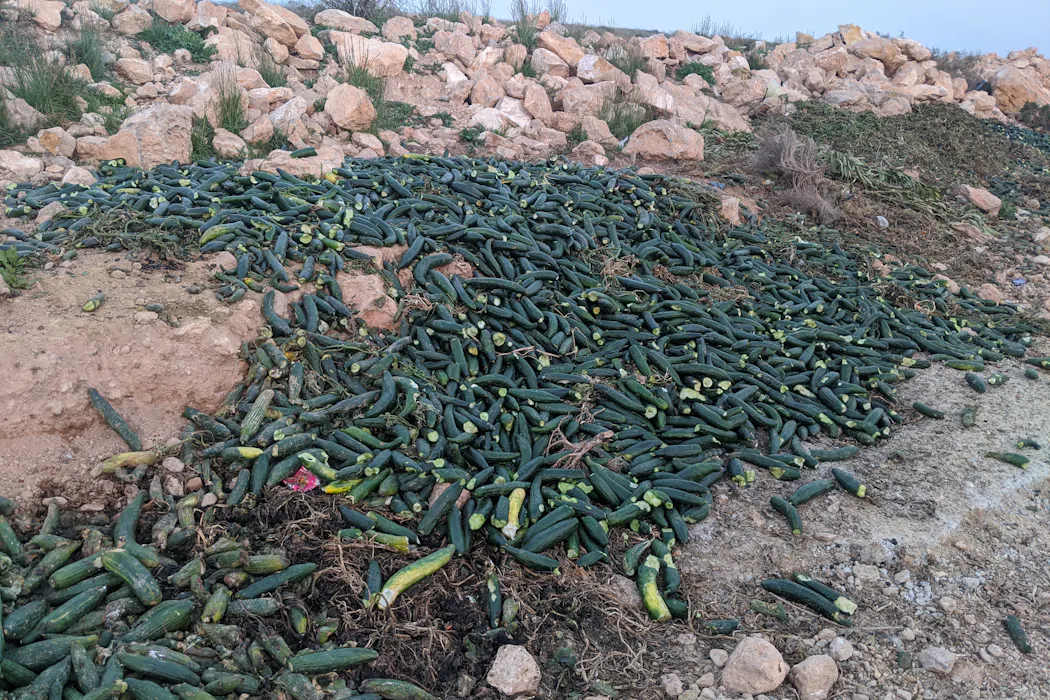
While Spain is among the countries most affected by water stress, part of the water used for agriculture ends up indirectly wasted due to abandoned crops for lack of outlets. A study highlights the extent of this largely underestimated phenomenon.
Spain is a highly arid country, that is to say, its climatic conditions are characterized by a strong lack of soil moisture. More precisely, 67% of the territory has an aridity index — the ratio between precipitation and plant evapotranspiration — below 0.65, which corresponds to dry lands or arid zones. In this context, the demand for water resources has continuously increased over the past fifty years.
This is the main cause of the water shortage, which is at the origin of many water-related conflicts, and which places Spain among the countries most affected by water stress (29th place out of 164). But this scarcity is no longer of a natural kind: it stems from a disconnect between the available supply and the demand for fresh water. The prevailing institutional framework (including pricing mechanisms and distribution tariffs), the infrastructure, and the human factor are to blame.
The numerous infrastructures intended to capture, store, and distribute water, as well as the modernization of irrigation systems, are part of the logic that, in Spain, not a single drop of water is wasted. The portion of water that ends up reaching the sea is sometimes perceived as waste. During each episode of heavy rain, there is regret for not having more reservoirs to store all that water.

World Resources Institute, Aqueduct (2024),CC BY-SA
Thousands of tons of fruits and vegetables without commercial outlets
This image of precious and carefully conserved water contrasts with the incredible images of fields covered with fruits and vegetables rotting in the sun. Thelow selling prices of producers, practiced at certain times of the year, mean that farmers do not always have an interest in investing more resources in the harvest. Thus, each year, after the considerable efforts represented by irrigation, fertilization, and maintenance of thousands of hectares of crops, some final products do not even enter commercial circuits.
We haveestimated this waste for the period 2018-2024, by type of crop and by autonomous community, starting fromdata collected every two weeks by the Spanish Agricultural Guarantee Fund(FEGA) and coefficients of water usage and CO emission2.
During this period, 483,624 tonnes of surplus were discarded, which is equivalent to a water footprint of nearly 36 hm3 (that is 36 million cubic meters, ed.)per year and with a carbon footprint of 36,694 tonnes CO2 equivalent2(t CO2-eq) per year. These wastes are not all directly sent to the landfill. A portion of the thrown away food (32.9%) is used for animal feed, another portion is given to food banks (55.4%), and finally, 11.7% is destroyed.
Tomato is the crop that generates the largest volume of waste, followed by orange and persimmon. In terms of water footprint, the crop with the highest impact is the plum, with 3,759 thousand m³ per year. Next are persimmons and oranges. Regarding the annual carbon footprint, tomato again stands out significantly, reaching 3,100 tonnes CO₂ equivalent per year. Melon is second (2,356 tonnes CO₂ equivalent per year), followed by nectarine (2,209 tonnes CO₂ equivalent per year).
At the regional level, the largest volume of waste is recorded in the Region of Murcia, with 20.2 kt per year, totaling 141.4 kt over the period 2018-2024. Next are Andalusia (17.9 kt per year and 125.9 kt accumulated) and the Valencian Community (16.7 kt per year and 119.6 kt).
In terms of water footprint, the most significant waste is observed in the Valencian Community, with 8.78 hm³ per year and a total water footprint of 61.5 hm³ over the entire period studied.

Jaime Martínez Valderrama,CC BY-SA
Mass produce to reduce costs
The very low prices explain why perfectly edible crops are sometimes left abandoned in the fields. But where do these very low prices come from? Largely from the logic of economic efficiency. To remain competitive, producers seek to reduce their production costs, which pushes them to adopt large-scale production models, with significant social and environmental consequences.
The goal is to produce very large volumes in order to lower the unit price. To achieve this, costs are reduced wherever possible – particularly labor expenses or by bypassing certain environmental obligations – to offset the necessary investments in technologies, infrastructure, and agricultural inputs, which enable increased yields per operation.
This dynamicgenerates a spiralof investments, debt, overproduction, and falling prices which ultimately trap farmers in a vicious system, where only those with the greatest financial capacity manage to stay afloat.
The rejection of perfectly edible crops is merely a symptom of this agricultural model that favors the concentration of production among an ever more restricted number of actors and generates numerous negative externalities. These are ultimately borne by society as a whole — and not by those who benefit from large-scale production — as can be seen, for example, with the need to build desalination plants after the overexploitation of groundwater.
The tip of the iceberg
The figures ofSpanish Agricultural Guarantee Fund(FEGA) correspond to the volumes eligible for a subsidy (up to 5% of the harvest) intended to compensate for these prices that are too low. Beyond this threshold, the volumes are no longer counted, even if the harvest abandonments may continue.
A simple verification makes it possible to measure the real extent of the waste. In March 2024, the press reportedthe abandonment of 300,000 tons of lemons, or 30% of the harvest, in the province of Alicante. However, FEGA data indicate that for the entire year 2024 and for the whole Valencian Community, only 132 tons would have been recorded as waste.

Jaime Martínez Valderrama,CC BY-SA
In view of this gap, the number of press articles reporting abandonments and images of fields where the fruits rot, it clearly appears that this type of waste is nothing exceptional. On the contrary, it reflects an immense waste, hardly acceptable in a context of increasing water scarcity. While the massive waste of lemons mentioned above was taking place, the idea of transporting water by boat to Barcelona was being put on the table in the face of persistent drought. The country’s water security is at stake. Yet market rules and the constantly invoked economic “efficiency” continue to lead to considerable water waste.

Jaime Martínez Valderrama received funding from the ATLAS project, funded by the Biodiversity Foundation of the Ministry of Ecological Transition and the Demographic Challenge (MITECO), as part of the Recovery, Transformation, and Resilience Plan (PRTR).
Emilio Guirado received funding from the ATLAS project, financed by the Biodiversity Foundation of the Ministry of Ecological Transition and Demographic Challenge (MITECO), as part of the Recovery, Transformation, and Resilience Plan (PRTR).
Fernando Tomás Maestre Gil receives funding from King Abdullah University of Science and Technology.
Javier Martí Talavera received funding for the ATLAS project, funded by the Biodiversity Foundation of the Ministry of Ecological Transition and the Demographic Challenge (MITECO), as part of the Recovery, Transformation, and Resilience Plan (PRTR).
Jorge Olcina Cantos received funding from the Biodiversity Foundation of the Ministry of Ecological Transition and the Demographic Challenge for the implementation of the Desertification Atlas project in Spain, within the framework of the European Recovery and Resilience program.
Juanma Cintas receives funding from the “Complementary R+D+i Plan in the field of biodiversity (PCBIO)”, funded by the European Union as part of the Recovery, Transformation and Resilience Plan (NextGenerationEU) and by the Government of Andalusia.
–ref. In Spain, thousands of tons of fruits and vegetables are never harvested and rot in the fields –https://theconversation.com/in-spain-thousands-of-tons-of-fruits-and-vegetables-are-never-harvested-and-rot-in-the-fields-279863