

AM Edition – Here are the Top Full Text Law and Order Articles on ForeignAffairs.co.nz for April 3, 2026.
Should South Africa use the army to fight gangs? The short answer is no
April 3, 2026
Source: The Conversation – Africa (2) [2]
When President Cyril Ramaphosa announced the deployment of the South African National Defence Force to the provinces of Gauteng and the Western Cape in his 2026 State of the Nation Address, he was met with desperate applause by a crime-weary nation. This is largely due to police failure in almost every aspect of their duties in protecting citizens from crime and violence. Hence the call to bring in the army.
But my research in the field of armed forces and society suggests this “show of force” creates a dangerous moral hazard. If the army is always available to “stablise” a hot spot, there’s no pressure on the South African Police Service to root out corruption, improve intelligence-gathering and rebuild community trust.
All three are weak spots in the country’s police service, affecting their ability to deal with criminal and violent crime.
Gang violence – one of the areas the defence force has been called on to control – is the byproduct of systemic neglect such as unemployment, lack of infrastructure and poor education. As long as the structural violence (lack of jobs and infrastructure) and cultural violence (the need for gang identity) remain, the military can only provide a temporary “lid” on the violence. But constantly relying on the military when core governance and policing institutions fail places the country on a dangerous, remilitarised path where military solutions begin to dominate civilian life.
An extensive international comparative study which drew in experts from 26 different countries shows that domestic military use raises concerns about democratic backsliding and extra-judicial abuse of coercive power. It shows most countries avoid using the military internally for coercive law enforcement roles due to these concerns.
The façade of action
South Africans voice the same concerns, yet the South African National Defence Force has increasingly found itself deployed to “safeguard the nation”, which includes combating gang violence.
In the 2019 deployment to the Cape Flats, gang-affected neighbourhoods in Cape Town, the initial presence of troops saw a temporary dip in crime. In 2019, the situation in the Cape Flats was described as “war zone”. In the first six months of 2019 alone, over 1,800 murders were recorded in the Western Cape.
The intervention showed that the South African National Defence Force could stabilise and bring about a “negative peace” by temporarily stopping the shooting and violence, but this was not lasting. Once the troops withdrew, the murder rate surged back to – and in some areas exceeded – pre-deployment levels.
Similar trends have been found in countries such as Brazil, El Salvador and Mexico, where the army is deployed.
An initial visible drop is frequently short-lived. It’s also costly to civil liberties and prone to fragmenting criminal groups into even more violent factions.
Military trained for combat
While the president may order the South African National Defence Force to deploy and the generals can command them into “battle”, troops on the ground express major misgivings.
The views of soldiers were presented to the Joint Standing Committee on Defence in Parliament on 13 February 2026 in Cape Town. These were based on a soon-to-be-published study of the experiences of soldiers on external and internal deployments.
Their responses reveal a deep conflict.
Soldiers overwhelmingly said they believed that this was not what the South African National Defence Force was established for.
My research shows four major challenges.
Firstly, there is inherent conflict between military training and policing roles.
Soldiers are trained to use lethal force, not for the restraint, negotiation and minimum force required in civilian law enforcement.
Secondly, they also lack the necessary “minimum force” tools (body cameras, non-lethal restraints) necessary for urban operations. Instead, they’re equipped with assault rifles like the R4. In dense urban environments like the Cape Flats, using such a weapon creates a massive risk of collateral damage. A single bullet can travel through multiple shack walls or bystanders.
Thirdly, they haven’t been trained in the “soft skills” of policing, such as persuasion and de-escalation. The result is that soldiers often resort to intimidation to maintain control. In the absence of handcuffs or the legal power to process arrests, soldiers sometimes resort to “street justice”. For example, during the COVID-19 lockdown, the public witnessed soldiers forcing citizens to “frog jump” or do push-ups as punishment.
These incidents severely damaged the military’s professional reputation.
Fourth, the mandate and rules of engagement for soldiers are often limited. Criminals and “zama zamas” (illegal artisanal miners – the other area Ramaphosa listed for troop deployment) have morphed into criminal syndicates. These exploit the fact that soldiers are not legally empowered to shoot unless their lives are directly threatened.
This creates a “toothless tiger” effect where the military is present but unable to intervene in active property crimes or smuggling without risking murder charges.
Lastly, these deployments prevent the army from meeting its primary mandate: while soldiers are diverted to “gangbusting”, South Africa’s borders remain porous, allowing criminals and illegal immigrants to flow into the country. The South African Defence Force has few dedicated resources for domestic operations. It has to draw equipment and personnel from other units, which are needed elsewhere.
Currently, the defence force has only 15 companies to protect a land border approximately 4,470km long. This requires at least 22 companies.
In 2023, the president authorised some 3,300 soldiers to be deployed at an estimated cost of roughly R492 million (over US$30 million) against illegal mining across all provinces.
Troops are being used to guard holes in the ground, tying up elite infantry units in static guard duties, causing their primary combat skills to atrophy.
The way forward
If the state continues to use the military internally, the current “one-size-fits-all” combat model must be abandoned. The soldiers themselves suggest a need for a specialised, multi-role component, akin to Italy’s Carabiniere or the United States National Guard, trained specifically for internal security and non-lethal force. This requires a change in military doctrine and the core mandate of the South African National Defence Force.
What this implies is that the military must develop a specific Urban Constabulary Doctrine that integrates human rights frameworks and community-centric policing strategies into its training. This demands a doctrinal pivot. A revision in the military’s core mandate is essential to ensure that soldiers are trained in proportionality, de-escalation and civil-military cooperation, rather than purely kinetic combat operations.
Until then, the goal must be a “task-oriented” approach – intervene, contain, and exit. The details and timeframe of the latest deployment are yet to be confirmed. The military should be a temporary shield, not a permanent crutch for a failing police service. South Africa must stop asking its soldiers to be the police before they lose the pride and dignity that defines a professional army.

Lindy Heinecken does not work for, consult, own shares in or receive funding from any company or organisation that would benefit from this article, and has disclosed no relevant affiliations beyond their academic appointment.
Back to index · Read original article
Cameras have quietly appeared in thousands of US cities – now, their integration with AI is sounding alarms
April 3, 2026
Source: The Conversation – USA (2) [1]

For decades, cars dictated urban planning in the United States.
Few could have predicted that they would one day also double as nodes for surveillance.
In thousands of towns and cities across the U.S., automatic license plate readers have been installed at major intersections, bridges and highway off-ramps.
These camera-based systems capture the license plate data of passing vehicles, along with images of the vehicle and time stamps. More recently, these systems are using artificial intelligence to create a vast, searchable database that can be integrated with other law enforcement data repositories.
As a scholar of technology policy and data governance, I see the expansion of automatic license plate readers as a source of deep concern. It’s happening as government authorities are seeking ways to target immigrant and transgender communities, are already using AI to monitor protests, and are considering deploying AI systems for mass surveillance.
Eyes on the road
Using cameras to track license plates dates to the 1970s, when the U.K. was embroiled in a long-simmering conflict with the Irish Republican Army.
The Met, London’s police force, developed a system that used closed-circuit television cameras to monitor and record the license plates of vehicles entering and exiting major roads.
The system and its successors were seen as useful crime fighting tools. Over the next two decades, they expanded to other cities in the U.K. and around the world. In 1998, U.S. Customs and Border Protection implemented this technology. By the 21st century, it had started appearing in cities across the U.S.
There are different ways for a jurisdiction to implement these systems, but local governments usually sign contracts with private companies that provide the hardware and service.
These companies often entice authorities with free trials of surveillance equipment and promises of free access to their data in ways that bypass local oversight laws.
AI thrown into the mix
Recently, AI has been incorporated into these camera systems, significantly increasing their reach.
The vehicle information that’s captured is typically stored in the cloud, creating a massive web of data repositories. If a camera collects information from a suspect’s car or truck – say, one also listed in the National Crime Information Center – AI can flag it and send an instant alert to local law enforcement.
In fact, that’s a selling point of Flock Safety, one of the biggest providers of automatic license plate readers. The company uses infrared cameras to capture images of vehicles. AI then analyzes the data to identify subjects and quickly alert local authorities.
On the surface, automatic license plate readers seem like a logical way to fight crime. More information about the whereabouts of suspects can potentially help law enforcement. And why worry about cameras if you’re following the law?
A spokesperson for Flock told The Conversation that their technology has helped reduce crime, including violent crime, in cities that use their cameras, such as San Francisco and Oakland.
But there are few peer-reviewed studies on their effectiveness. Those that exist find little evidence that they’ve led to reductions in violent crime rates, though they seem to be helpful in solving some crimes, like car thefts.
Furthermore, installation and maintenance are costly.
For example, Johnson City, Tennessee, signed a 10-year, US$8 million contract with Flock in 2025. Richmond, Virginia, paid over $1 million to the company between October 2024 and November 2025 and recently extended its contract, despite opposition from some residents.

AP Photo/David Goldman
Erosion of civil liberties in plain sight
The technology seems to highlight the pitfalls of what scholars call “technosolutionism,” the belief that complex issues like crime, poverty and climate change can be solved by technology.
Even more disquieting, to me, is the fact that these camera systems have created a mass location tracking infrastructure knitted together by artificial intelligence.
The U.S. doesn’t have a federal law like the European Union’s General Data Protection Regulation that meaningfully limits the collection, retention, sale or sharing of location and mobility data.
As a result, data gathered through surveillance infrastructure in the U.S. can circulate with limited transparency or accountability.
License plate readers can easily be accessed or repurposed beyond their original goals of managing traffic, meting out fines or catching fugitives. All it takes is a shift in enforcement priorities – or a new definition of what counts as a crime – for the original purpose of these cameras to recede from view.
Civil liberties groups and digital rights organizations have been sounding the alarm about these cameras for over a decade.
In 2013, the American Civil Liberties Union published a report titled “You are Being Tracked: How License Plate Readers Are Being Used To Record Americans’ Movements.” And the Electronic Frontier Foundation has decried them as “street-level surveillance.”
A counter-camera movement emerges
The promise of these cameras was simple: more data, less crime.
But what followed has been murkier: more data, and a significant expansion of power over the public.
Without robust legal safeguards, this data can possibly be used to target political opposition, facilitate discriminatory policing or chill constitutionally protected activities.
This has already happened during the current administration’s aggressive deportation efforts. Automatic license plate reader databases were shared with federal immigration agencies to monitor immigrant communities. Recently, Customs and Border Protection was granted access to over 80,000 Flock cameras, which have also been used to surveil protests.
Then there’s reproductive health care. After the Supreme Court overturned Roe v. Wade in 2022, there were fears that people traveling across state lines to get an abortion could potentially be identified through automatic license plate reader databases. In Texas, authorities accessed Flock’s surveillance data as part of an abortion investigation in 2025.
Flock told NPR in February 2026 that cities control how this information is shared: “Each Flock customer has sole authority over if, when, and with whom information is shared.” The company noted that it has made efforts to “strengthen sharing controls, oversight and audit capabilities within the system.” But NPR also reported that many city officials around the U.S. didn’t realize how widely the data was being shared.
In response, some states have sought to regulate the technology.
Washington state lawmakers are deliberating the Driver Privacy Act. The legislation would prohibit agencies from using the surveillance technology for immigration investigations and enforcement, and from collecting data around certain health care facilities. Protests would also be shielded from surveillance.
Meanwhile, grassroots initiatives such as DeFlock have also emerged.
DeFlock’s online platform documents the spread of automatic license plate reader networks in order to help communities resist their deployment. The movement frames these systems not merely as traffic technologies, but also as linchpins of an expanding government data dragnet – one that demands stronger democratic oversight and community consent.
This article has been updated to include a statement from Flock Safety.

Jess Reia receives funding from the Carnegie Corporation of New York. They are affiliated with the UVA Digital Technology for Democracy Lab.
Back to index · Read original article
The crisis of Indonesian policing: Guardians of the people or protectors of power?
April 3, 2026
Source: The Conversation – Indonesia
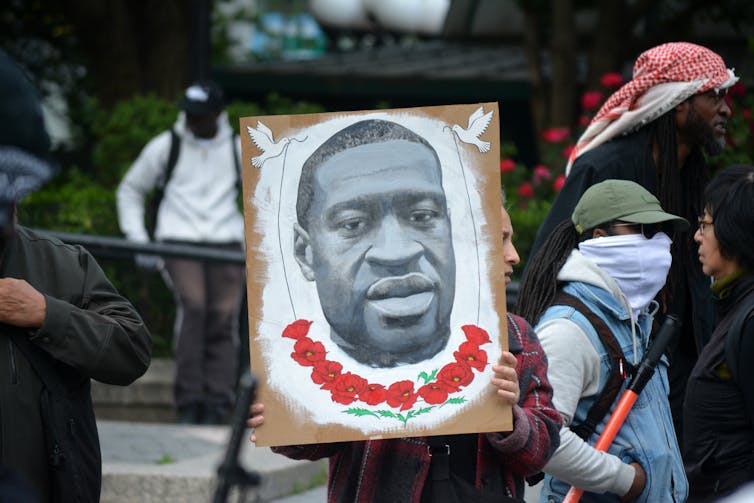
The death of 21-year-old Indonesian online delivery driver Affan Kurniawan, who was crushed by a Barracuda police vehicle during a protest, invites comparisons to George Floyd. The African American was killed by a police officer in Minneapolis in 2020, sparking global Black Lives Matter protests.
One thing unites both cases: they reflect arbitrary violence by those sworn to protect the people.
Policing in the two countries differs greatly in its context: while police in the US are deeply tied to political elites and economic power, the Indonesian police were, in principle, established to serve the people.
Yet this shared pattern of civilian killings raises a pressing question: who are the Indonesian police really protecting?
American police: Guardians of the elites
Alex Vitale, a leading scholar on American policing, argues in his influential book The End of Policing that the roots of American policing are inseparable from three foundational systems of inequality in the 18th century: slavery, colonialism, and the control over the emerging industrial working class.
Christopher Penler
In other words, the American police were not originally created to reduce or prevent crime. Rather, as in many Western nations, they emerged to protect elite interests and maintain control over the working class.
The police thus functioned less as protectors of the public and more as instruments of social control. In essence, they served political elites and economic powers in defending a status quo that favoured them — a legacy that continues to shape the U.S. legal and security system today.
According to Vitale, in such a society, equality existed only among the elites, while the broader nation became a policed society. In this context, crime was defined less by moral conduct than by a person’s socio-economic standing.
For the enslaved and the poor, political rights were nonexistent, and even free expression was unimaginable. Any protest against this imposed order was swiftly branded a crime and harshly punished.
Vitale argues that law enforcement is increasingly armed not only to control the public and instil fear, but also to shield themselves from their own fear of being attacked by the very people they are meant to protect.
This cycle of reciprocal fear persists because the police are never truly connected to, nor in solidarity with, the communities they police.
In such a system, fear governs daily life. It does not flow in just one direction but operates reciprocally — something clearly reflected in the very equipment the police carry.
Indonesian police: Once protectors of the people
I once asked my professor why police officers in the United States always carry guns, even in sacred spaces like churches.
I explained that in Indonesia, the mere presence of guns — regardless of who carries them — instils fear

Wulandari Wulandari/Shutterstock
He replied that police carry guns as a precaution, driven by fear of being attacked.
I then showed him photos of Indonesian police mingling freely with civilians, unarmed and unafraid. Intrigued, he asked how this was possible.
I explained that while Indonesian policing partly inherited its structure from the Dutch colonial apparatus, but it earned legitimacy during the nationalist struggle for independence.
In that struggle, the early police were closely tied to ordinary people, giving them a sense of belonging to the society they served.
This rootedness set them apart from the militarised culture of Western policing, where trust is absent. In Indonesia, the police and the people are inseparable — essentially one.
The social media post comparing Affan’s death to that of George Floyd raises a deeper question: whom do the Indonesian police truly serve today?
Once seen as protectors of the people, the police now increasingly appear aligned with elite interests. Public dissatisfaction is growing, fueled by recurring patterns of violence used to silence dissent, facilitate land dispossession, and suppress indigenous communities.
This perception is further reinforced by the conspicuous wealth displayed by some officers and their families, raising serious questions about integrity and accountability.
These realities deepen a crisis of trust, eroding the very foundations of police legitimacy in a democratic society.
A tool of repression
Affan’s death starkly symbolizes the police’s shift from protecting the people to serving elite interests — a perception reinforced when President Prabowo Subianto, instead of apologising or holding the institution accountable, chose to promote the officers who oversaw the protest.

Rembolle/Shutterstock
Such actions deepen public wounds and confirm suspicions that the police now serve rulers rather than citizens. If this course continues, they will stray even further from their democratic mandate and erode the very trust on which their legitimacy rests.
The Indonesian police must reflect on their roots in the people and heed Vitale’s reminder: policing should not merely serve as a tool of elite power and crime control, but as a force rooted in morality and ethical authority.
If the police forget their roots among the people, they risk ceasing to be guardians of justice and becoming nothing more than guardians of power.
At that point, public trust will collapse. The democratic mandate that once gave birth to the police will be hollowed out, and the institution will no longer be seen as a friend of the people, but as an instrument of repression.
If Indonesia’s police do not have the courage to return to their true calling, the gulf between them and the people will only deepen, leaving behind an institution stripped of legitimacy.

Perdian Tumanan tidak bekerja, menjadi konsultan, memiliki saham, atau menerima dana dari perusahaan atau organisasi mana pun yang akan mengambil untung dari artikel ini, dan telah mengungkapkan bahwa ia tidak memiliki afiliasi selain yang telah disebut di atas.
Back to index · Read original article
Mediation can speed up justice in South Africa: legal scholar makes the case
April 3, 2026
Source: The Conversation – Africa [2]
Communities in South Africa continue to be fractured by service delivery failures, crime and gang-related violence. The impact is felt by families and communities, and in schools, universities and businesses across the country.
A vicious cycle is being fuelled by a number of factors. These include constraints on law enforcement and credible allegations of corruption and political interference in the criminal justice system. At the same time, the judiciary is under strain.
The result is that government agencies, municipalities and service providers are frequently drawn into disputes. If litigated, these can take years to resolve. This drains public resources and further erodes trust in public institutions. Justice delayed is justice denied.
Read more:
Legal claims for medical mistakes are on the rise in South Africa: what’s behind the trend
Mediation can provide a crucial, timely and constructive way to resolve conflict before matters escalate into violence or protracted litigation. Mediation, facilitated by an impartial third party, supports dialogue and meaningful engagement between parties, and the settlement of disputes on mutually acceptable terms.
Mediation paved the way for South Africa’s transition from apartheid to democracy in 1994. It is deeply rooted in the country’s approach to conflict resolution and social dialogue.
Mediation is common practice in community disputes and in labour law and other statutory dispute resolution contexts. But its use in court proceedings has been limited.
The rules of court for the Magistrates’ Courts and the High Court provide for mediation in civil litigated matters. But the uptake has been slow. And the court-annexed mediation project in the Magistrates’ Courts has been put on hold.
Recent developments have seen a shift toward mandatory mediation in civil litigated matters. These include the South Africa Law Reform Commission’s discussion paper. This was published in early 2025 for public input on mediation in civil, commercial and community disputes.
As a labour law scholar and in leading the South African Law Reform Commission’s project on alternative dispute resolution, I have come to appreciate how mediation can transform conflict. It can provide an accessible dispute resolution mechanism across diverse contexts.
But to optimise the use of mediation the following are required:
-
wide-ranging awareness of mediation across institutions and communities and within the legal profession
-
support for training and skills development, particularly for community mediators who play a crucial role in dispute resolution and transforming conflict
-
an integrated and enabling regulatory, institutional and skills development framework, responsive to the diverse contexts in which mediation takes place.
The role of mediators in different contexts
A skilled mediator can mean the difference between conflict that results in violence, destruction and tragedy, and a negotiated outcome and constructive dialogue.
Community leaders, including religious and traditional leaders, can resolve a range of disputes and manage conflict within communities. This includes curbing community violence, de-escalating election violence, and intervening in student unrest and the destruction of property.
Training for community mediators
Mediation training should also be provided to counteract bullying in schools. Scholars can be equipped to intervene as peer mediators and resolve conflict constructively.
Mediation and peace building skills could also equip women to dismantle violence.
Mediation is already used in specialised statutory institutions and tribunals such as the Commission for Conciliation, Mediation and Arbitration, the Companies Tribunal and the South African Revenue Service. Its use can be extended to other administrative bodies supported by an enabling framework.
Mediation is part of a range of alternative dispute resolution mechanisms that can facilitate early dispute resolution and avoid protracted litigation. Hence many countries use court-connected mediation and alternative dispute resolution to improve access to justice.
Read more:
Do you need your day in court? The evolution of dispute resolution
Momentum towards court-connected mandatory mediation
A number of developments are under way, including:
-
the South African Law Reform Commission’s proposal for a Mediation Act for South Africa
-
the Land Court Act 6 of 2023, which allows the court to direct parties to attempt to settle an issue through mediation
-
court-mandated mediation introduced in 2025 to manage the Gauteng provincial division’s caseload. A directive and a mediation protocol were introduced.
-
proposed changes to the law on family disputes. The draft bill proposes mandatory mediation before commencing with court processes.
However, the idea of mandatory mediation has received mixed reactions.
Concerns
A range of arguments against mandatory mediation have been mounted. These include:
-
fears that mandatory mediation will be imposed where a matter isn’t suited to mediation, and the risk of coercion to settle
-
concerns that mediation doesn’t generate legal precedent and can produce outcomes not grounded in legal merits
-
the burden of additional costs and delays.
Safeguards must be put in place to mitigate these risks. This includes judicial oversight and case management to ensure that mediation in court processes is used appropriately and supports access to justice.
Mediation isn’t a substitute for court proceedings in matters better suited to litigation. Judicial reform remains important, and litigation must be accessible in cases where it is best suited.
A compelling case for mediation
Integrating mediation within judicial processes provides an opportunity to resolve structural tensions within South Africa’s plural legal system.
South Africa’s legal system incorporates elements of English common law and Roman-Dutch civilian law, alongside deep-rooted systems of indigenous laws and traditional methods of conflict resolution. The result is a dissonance between the community oriented features of indigenous customs and the individualistic and industrial nature of statutory laws.
This dissonance is countered by the relational and restorative justice potential of mediation, which resonates with traditional methods of conflict resolution and opens up space to centre the foundational values of indigenous laws.
Next steps
The move towards mandatory mediation adds momentum to an evolving legal system and legal practice. It affirms indigenous values and practices.
Mediation could relieve pressure on the justice system and contribute to an enabling environment for social and economic development.
Access to justice is a public good. It requires access to appropriate legal resources, institutions, and dispute resolution mechanisms. Importantly, building an effective justice system is an ongoing project and a complex human undertaking that cannot be achieved through policy and law reform alone.

Debbie Collier is a commissioner of the South African Law Reform Commission (SALRC) and the project leader for Project 94 on Alternative Dispute Resolution. The views expressed in this article are not necessarily those of the SALRC. Debbie Collier receives funding from the National Research Foundation (NRF).
Back to index · Read original article
New Israeli law could mean death penalty by default for Palestinians convicted of deadly attacks
April 3, 2026
Source: The Conversation – Global Perspectives
Israel’s parliament, the Knesset, this week passed legislation that would vastly expand capital punishment in Israel and in the occupied Palestinian territories.
The changes, made via an amendment to Israel’s penal law, allow for executions without proper appeal, pardons or meaningful judicial discretion.
According to media reports, 62 of 120 Knesset members voted in favour of the bill on Monday, including Prime Minister Benjamin Netanyahu, and 48 voted against. The remainder absented themselves from the vote or abstained.
UN experts and Amnesty International have warned these new death sentencing rules would apply almost exclusively to Palestinians.
It would, they argue, entrench discrimination already identified by the International Court of Justice as amounting to apartheid. UN experts said of the bill:
Since Israeli military trials of civilians typically do not meet fair trial standards under international human rights law and humanitarian law, any resulting death sentence would further violate the right to life […] Denial of a fair trial is also a war crime.
This development is a significant change for Israel, which has not executed anyone for more than 60 years. It reverses decades of global movement towards abolition, while normalising executions in an occupied territory.
Death penalty as the default
These changes were made via legislation brought by National Security Minister Itamar Ben-Gvir and his far-right Otzma Yehudit party.
The Penal Bill (Amendment ― Death Penalty for Terrorists) amends both Israeli civil law (applicable to Israeli settlers) and Israeli military law (applicable to Palestinians) in the occupied West Bank.
The law states, according to a Deutsche Welle media report:
Palestinians in the occupied West Bank convicted of terrorism in military courts will face a mandatory death sentence or, in the wording of the bill “his sentence shall be death, and this penalty only.” Only if the court determines that there are “special reasons” can it then commute the death sentence to life in prison.
Under this change:
- prosecutors do not need to request the death penalty
- the defence minister may submit an opinion to the judicial panel of three military officials who only need a simple majority to impose the death penalty
- judges need to record exceptional reasons for imposing a life sentence over the death penalty
- avenues for appeal would be tightly restricted
- there would be no possibility of a pardon
- people sentenced to death would be detained in isolated facilities that would have restricted visitor access, with legal counsel only by video link
- executions (by hanging) would take place within 90 days of the final judgement.
Another yet-to-be-passed bill that may still be brought before the Knesset – the Prosecution of Participants in the October 7 Massacre Events Bill – would also see more death sentences handed down.
It establishes ad hoc military tribunals with retrospective jurisdiction to prosecute those accused of participating in the October 7 2023 Hamas-led attacks on southern Israel.
These tribunals would:
- consist of a retired district court judge and two officers qualified to serve as judges
- be authorised to depart from ordinary rules around evidence and procedure
- be able to impose the death penalty via a simple majority, without prosecutors requesting it.
Appeals and clemency mechanisms would again be extremely limited.
Taken together, the two amendments significantly expand the scope of capital punishment in Israel. They also remove many procedural safeguards.
Supporters argue capital punishment could deter future attacks and preclude hostage-taking for prisoner exchanges.
Yet, historically, Israel’s intelligence services have opposed death sentences. They have argued it may encourage armed groups to kidnap Israelis as bargaining chips to prevent executions.
International humanitarian law
Critics have argued the new changes place Israel in breach of international humanitarian law and international human rights law.
As critics point out, Israel’s new death penalty rules limit access to legal counsel. They also:
- restrict appeals
- allows trials before ad hoc military tribunals for new capital offences
- mandate executions be carried out within 90 days.
This all runs counter to international humanitarian law.
Significant legal concerns are raised by Israel enforcing new capital offences in the occupied territory after the International Court of Justice concluded Israel’s occupation violates international law and must cease.
These concerns are compounded by longstanding criticisms of Israeli military courts in the occupied West Bank, where conviction rates for Palestinian defendants reportedly exceed 99%.
International human rights law
Under international human rights law people should be guaranteed equality before the law and protected from discrimination.
But the changes passed by the Knesset this week subject Palestinians to death sentences as the default, while Israeli citizens accused of killing Palestinians would appear before civil courts. Here, capital punishment would be discretionary and far more limited. This entrenches a discriminatory system.
Critics argue this amounts to collective punishment against Palestinians, which is prohibited under the Geneva Convention.
The European Union has warned that executions through hanging would also violate the absolute prohibition on cruel, inhuman or degrading treatment.
Taken together, the two new amendments normalise state-sanctioned executions and violate Israel’s obligations under international law.

Shannon Bosch does not work for, consult, own shares in or receive funding from any company or organisation that would benefit from this article, and has disclosed no relevant affiliations beyond their academic appointment.
Back to index · Read original article