

Source: French to English Tester Published on: 2026-03-30
Source: The Conversation – France (in French)– By Alain Rival, Agronomist. Biodiverse Agrosystems, Cirad
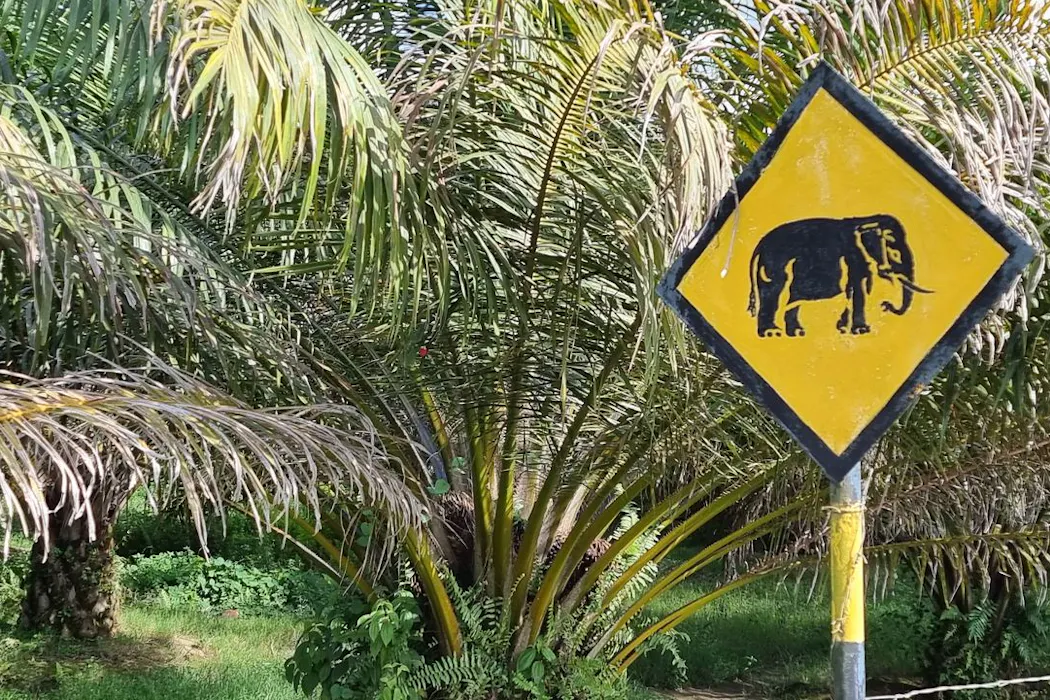
It is estimated that one in two supermarket products today contains palm oil. At a time when it seems difficult to do without this resource, one thing remains possible and even promising: practicing agroforestry so that oil palm plantations are no longer a threat to biodiversity.
The cultivation of oil palm is frequently associated with tropical deforestation and biodiversity erosion. Indeed, in Southeast Asia, the rapid expansion of industrial plantations over recent decades has profoundly transformed landscapes, fragmenting forests and reducing the habitat of emblematic species such as orangutans and Borneo elephants. This trajectory has firmly established the idea that palm oil production is fundamentally incompatible with nature conservation.
This opposition between agricultural production and biodiversity is however largely based on a specific agricultural model, that of intensive monoculture. It tends to obscurethe existence of pioneering alternatives, capable of reconciling production and ecological functions in tropical landscapes.
These other ways of producing palm oil are nevertheless crucial to develop at a time when the oil palm remains the most productive oilseed crop in the world. On an equal area, it produces on average 4 to 10 times more oil than soy, rapeseed, or sunflower. Replacing palm oil with these alternatives would therefore require much more agricultural land, with a risk of displacing deforestation rather than reducing it.
Furthermore, global demand for vegetable oils remains very high and continues to grow, driven by expanding food, cosmetic, and industrial uses. In this context, a total phase-out of palm oil appears difficult in the short term.
The main challenge is therefore not only to substitute one oil for another, but to transform the production methods of the oil palm which have changed little since the beginning of the 20th century.
The weaknesses of the dominant model
Introduced in Southeast Asia during the colonial era by European powers, the cultivation of the oil palm – originally from West Africa – was subsequently widely developed in Indonesia and Malaysia according to intensive agricultural models inherited from that period. Conventional plantations are thus designed to maximize short-term yields, relying on very homogeneous populations and a strong intensification of practices. However, this simplification of ecosystems is accompanied by well-documented negative effects: soil depletion, water pollution, increased dependence on chemical fertilizers and pesticides, loss of habitats for wildlife and flora.
as well as an increased vulnerability to parasites and pests. These can cause significant yield losses, averaging around 30% when the populations are not controlled.
With climate change, these vulnerabilities are becoming more visible. The increase in temperatures, the multiplication of heatwaves, and the greater variability of rainfall expose plantations to growing thermal and water stresses. In this context, the issue is no longer just about slowing agricultural expansion, but also about transforming existing plantations, which already cover millions of hectares in tropical areas, to make them more resilient to climate change.
Agroforestry as an alternative path
Agroforestry, which combines trees and agricultural crops on the same plot, is recognized for its ability to reconcile agricultural production and the maintenance of vital ecological functions. Numerous studies show that tropical agroforestry systems can host relatively high biodiversity, especially for birds and insects,while ensuring significant production levels, for examplein Indonesian cocoa plantations.
Contrary to the idea that biodiversity and productivity are necessarily antagonistic, some tropical agroforests achieve high levels of yield while maintaining significant biological diversity – sometimeseven higher than that of surrounding degraded forestsfor certain groups, such as bats or non-vascular plants (ferns, mosses). These results have helped to renew the perspective on tropical plantations, long considered incompatible with conservation objectives.
Testing agroforestry in oil palm plantations
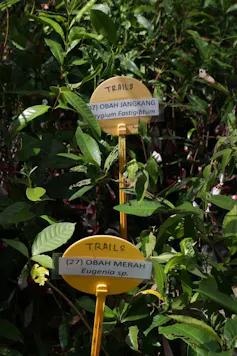
Applied to oil palm, agroforestry is still little developed on a large scale. Fears of a decrease in yield, the technical complexity of the systems to be implemented, and management constraints partly explain this situation. It is precisely to test these hypotheses on a real scale that theprojectTransitionning to Agroecological Innovative Landscapes in Sabah, East Malaysia(TRAILS), at real scale agroforestry.
The project covers 38 hectares (ha) of trials established in a commercial plantation of 8,000 ha, in the Kinabatangan river basin, in the state of Sabah, in the Malaysian part of the island of Borneo. It relies on planting systems specifically designed for oil palm, combining different densities and different types of associations of native forest trees in order to optimize both agronomic performance andecological functions of plantations.
Provided by the author
Contrary to the classic image of crops growing in the shade of tall trees, oil palms already form a relatively low and regular canopy. Agroforestry here consists of introducing other tree species within the plots, either between the rows or in small groups, in order to create a more diverse vegetation structured in several layers. This results in a landscape where palms coexist with trees of various sizes and shapes, breaking away from the uniformity of conventional plantations. The question of competition for light is central; it leads to choices of species with complementary architectures: some let light filter through, others occupy different layers of the canopy.
Innovative planting patterns
The agroforestry systems tested within the TRAILS project are based on innovative planting schemes. The tree species are selected for their ecological compatibility with the oil palm, their architecture, and their ability to structure the space without excessive competition for light, water, or nutrients. The introduced species are chosen for their complementarity with the oil palm.
In the Kinabatangan valley, restoration projects led notably by various local stakeholders, such as the village cooperative Kopel or the NGO Hutan, use local species, such asOctomeles sumatrana(binuang),Naucleasp. or fig trees (Ficus). Some grow rapidly and improve the microclimate, others tolerate flooded soils or develop deep roots, limiting competition for water and nutrients.
These trees help to modulate shading, improve microclimates, and diversify the vertical structure of plantations. The fig trees provide key food resources for wildlife throughout the year. These design choices play a decisive role in the expected performance of the system: they are the subject of detailed analysesin recent work conducted in Sabah.
Productivity and biodiversity: a less difficult compromise than expected
One of the main questions regarding the integration of agroforestry in oil palm plantations concerns its potential impact on productivity. The initial results obtained in Sabah show that oil palms grown in association with forest trees can maintain, in the early stages studied so far, aproduction levels comparable to those of conventional monocultures.
The integration of trees in plantations, whether oil palms or other crops, significantly modifies the microclimate of the plots. The presence of more diversified and stratified vegetation helps reduce ground temperatures by 2 to 5 °C, thanks to shading and tree evapotranspiration, while maintaining higher humidity and limiting water evaporation from the soils. Trees also act as windbreaks, reducing wind speed and erosion. All of these effectsmitigates water and heat stress and enhances crop resiliencein the face of climate hazards.
At the same time, the benefits for biodiversity are significant.More than 60 bird specieswere recorded in agroforestry plots, compared to generally less than 20 to 30 species in conventional oil palm plantations, often dominated by a few generalist species. The increase in plant diversity within plantations, in turn, promotes the presence of birds and other animal groups, which helps restore certain ecological functions, such as pest insect regulation or seed dispersal,in highly fragmented landscapes. In regions such as Kinabatangan, these more complex systems can also improve thequality of habitat and ecological connectivityfor certain species, in addition to the remaining forests.
As a recent article pointed out, agroforestry systems could make landscapes dominated by oil palmmore favorable to the movements of wildlife. These spaces can notably benefit endangered species, such as orangutans, elephants, or macaques, capable of crossing plantations, but also less emblematic animals, such as civets, as well as many forest birds and bats, whichuse these areas as intermediate habitats or corridors between forest fragments.
A lever against climate change
Beyond its positive effects on biodiversity, agroforestry also constitutes an important lever for adaptation to climate change in tropical plantations. The integration of trees within plots helps to reduce soil temperatures, improve water retention in the soil, and limit erosion, thereby contributing to strengthening theresilience of agricultural systems to climate disturbances.
These arrangements can also improve working conditions in plantations, notably by providing shade and reducing workers’ exposure to extreme heat, aan increasingly important health issue in tropical regions. Indeed, agricultural workers are directly confronted with the effects of climate change: higher temperatures, more irregular rainfall, or more frequent drought periods make outdoor work even more arduous. These conditions can also affect crop productivity, which increases the economic precariousness of workers and the vulnerability of agricultural sectors.
Inseparable social dimensions
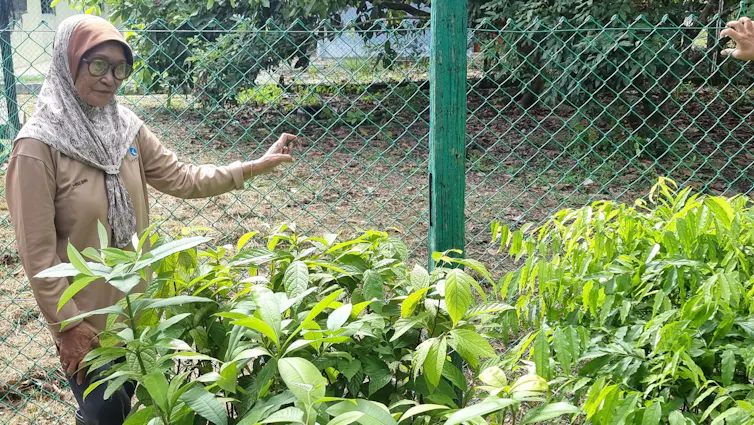
Other changes are also possible. Atthe time when plantations struggle to find workers, but where palm oil remains a crucial raw material at the global level, the TRAILS project pays particular attention to social dimensions. Community nurseries, often run by groups of women, thus ensure thecollection, selection, and production of forest seedlings.
Alain Rival, Cirad,Provided by the author
These activities are accompanied by technical training in agroforestry and sustainable land management, contributing to the strengthening of local skills and the diversification of livelihoods in a fairly isolated rural area. This continued involvement of local communities is essential to ensure the ownership of agroforestry systems and their long-term sustainability.
Alain Rival, Cirad,Provided by the author
Towards multifunctional landscapes
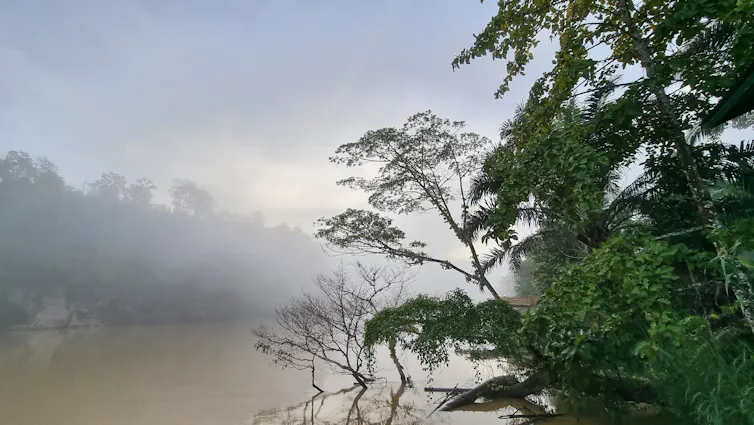
The recognition of the Kinabatangan plain as a UNESCO biosphere reserve highlights the importance of agricultural models capable of aligning with conservation objectives at the landscape scale (UNESCO, 2023).
The agroforestry approaches experimented with in Sabah fully align with this integrated logic. Without replacing intact tropical forests, oil palm-based agroforestry systems can help transform agricultural landscapes intoadditional levers for conservation and ecological resilience.
This article was produced with Isabelle Lackman, from the NGO Hutan, and Sempe Burhan, from Melangking Oil Palm Plantations.

Alain Rival received funding from the Solidarity Fund for Innovative Projects (FSPI), a financing mechanism of the Ministry of Europe and Foreign Affairs.
The TRAILS project receives financial support from the APF (Alliance for the Protection of Forests), as well as from the companies Ferrero and Saint Hubert.
Denis Fabre, Marc Ancrenaz, and Philippe Guizol do not work for, consult, own shares in, or receive funds from any organization that could benefit from this article, and have declared no affiliations other than their academic positions.
–ref. Can forests and oil palm plantations really coexist? Promising results from Borneo –https://theconversation.com/can-forests-and-oil-palm-plantations-really-coexist-promising-results-from-borneo-279154