

AM Edition: Here are the top 10 energy articles on LiveNews.co.nz for July 8, 2026 – Full Text
Italy: EIB provides €80 million to improve energy efficiency and sustainability at Venice Marco Polo Airport
July 8, 2026
Source: European Union 2 Published on: 2026-07-07
• The financing supports the electrification of operations and low-emission infrastructure
• Investments will also cover digitalisation, operational resilience and sustainable resource management
The European Investment Bank (EIB) has signed an €80 million financing agreement with Milione S.p.A., the parent company of SAVE S.p.A., which operates Venice Marco Polo Airport. In June, the airport was recognized by ACI EUROPE (Airports Council International) as the Best Airport in Europe in the 10–25 million passengers’ category.
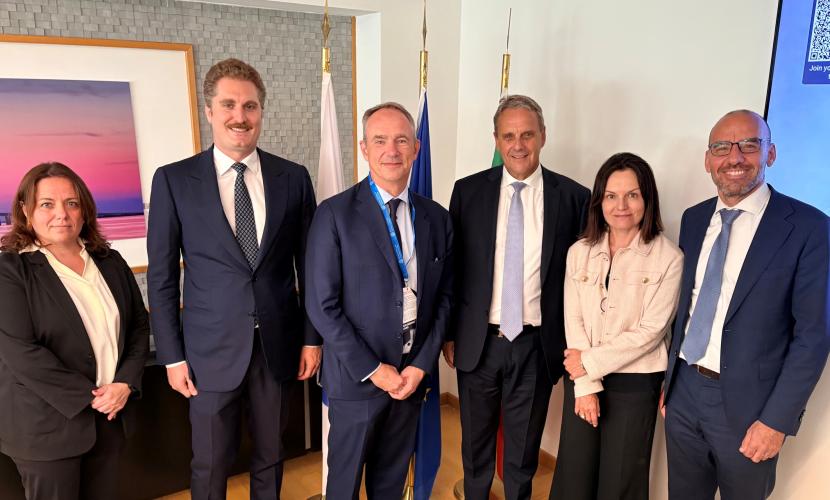
The agreement, which supports targeted investments to improve the airport’s energy efficiency and environmental sustainability, was signed in Rome by Jean Christophe Laloux, Director General and Head of EU Lending and Advisory at the EIB, and Giovanni Curtolo, Chief Financial Officer of both Milione S.p.A. and SAVE S.p.A..
The financing supports an investment program focused on the electrification of airport operations, digitalization, and strengthening operational resilience, as part of the company’s roadmap to achieve net-zero emissions by 2030. The planned investments include the development of low-emission infrastructure, the acquisition of electric vehicles, the expansion of infrastructure for electricity generation from renewable energy sources, and upgrades to IT systems, including cybersecurity.
The operation is also expected to generate positive impacts on local employment, with approximately 1,000 temporary jobs anticipated during the implementation phase of the project. The investment program includes the installation of around 500 electric vehicle charging stations and the purchase of more than 20 zero-emission electric vehicles, further advancing the decarbonization of airport operations.
The project also includes improvements to waste management and stormwater treatment, helping to reduce the airport’s environmental impact and enhance its resilience to extreme weather events. The investments do not involve any expansion of the airport’s capacity.
With 11.8 million passengers in 2025, Venice Marco Polo Airport is Italy’s third-largest intercontinental airport and the hub of the Northeast Airport System, managed by the SAVE Group.
“Airports today need to accelerate investment to make concrete reductions in their environmental footprint and strengthen the resilience of their infrastructure,” said Jean-Christophe Laloux, Director General and Head of EU Lending and Advisory at the EIB. “With this financing, the EIB is supporting a transformation pathway that combines energy efficiency, decarbonisation and innovation, helping to align the sector with Europe’s climate objectives.”
“The SAVE Group has long placed sustainability—in all its dimensions and forms—at the heart of the operations of Venice Airport and all the airports it manages,” said Giovanni Curtolo, Chief Financial Officer of Milione S.p.A. and SAVE S.p.A.. “Our strong focus on environmental issues is particularly significant given the sensitive lagoon environment in which Venice Airport operates. This commitment is reflected in a roadmap that will enable the airport to achieve net-zero emissions by 2030. At the same time, the airport serves as a key driver of the local economy, supporting 24,000 jobs—direct, indirect, and induced—and generating approximately €1.2 billion in GDP.”
Background information
The European Investment Bank (EIB) Group is the financing arm of the European Union, owned by the 27 Member States, and one of the largest multilateral development banks in the world. In 2025, the EIB Group signed €100 billion in new financing and advisory services for over 870 high-impact projects under eight core priorities that support EU policy objectives: climate action and the environment, digitalisation and technological innovation, security and defence, territorial cohesion, agriculture and the bioeconomy, social infrastructure, strong global partnerships and the savings and investments union. In Italy, the EIB Group signed 105 new financing agreements totalling €12.3 billion in 2025. Beyond long-term loans for large infrastructure, the EIB Group crowds in private investment for high-risk innovative projects and businesses, with a growing role in Europe’s markets for venture debt, venture capital, guarantees and securitisations. The European Investment Fund (EIF) is the EIB Group subsidiary specialised in guarantees and equity. Its specific role is to improve access to finance for small and medium-sized businesses and startups across Europe. Acting as an anchor investor through its extensive network of partner banks and investment funds, the EIF mobilises private investment and nurtures the venture capital fund ecosystem to support innovative European entrepreneurs.
Founded in 1987, SAVE is the holding company of a group primarily active in airport management. The Group operates the Northeast Airport System, which includes the airports of Venice, Treviso, Verona, and Brescia, and also holds a stake in the management of Belgium’s Charleroi Airport.
Through an integrated and synergistic approach across its airports, SAVE promotes the development of infrastructure, connectivity, and passenger services, with a strong focus on sustainability, innovation, and the quality of the travel experience.

Italy: EIB provides €80 million to improve energy efficiency and sustainability at Venice Marco Polo Airport
EIB
Download original

Italy: EIB provides €80 million to improve energy efficiency and sustainability at Venice Marco Polo Airport
EIB
Download original
The project concerns the electrification of airport operations, digitalisation and operational resilience upgrades, under the Venice airport 2021 Masterplan.
Related works consist of the implementation of low carbon infrastructure, acquisition of electrical vehicles, upgrade of the electrical network, IT systems (including cybersecurity), waste management, runoff water treatment and other decarbonisation measures.
The European Investment Bank (EIB) has approved financing of up to €345 million for Alperia, one of Italy’s leading green energy companies, to support a broad investment programme across multiple sectors, designed to strengthen the sustainability and security of energy supply in South Tyrol. The first €200 million tranche was signed on 1 July 2026 by Jean-Christophe Laloux, EIB Director General and Head of EU Lending and Advisory, and Luis Amort, Chief Executive Officer of Alperia.
The European Investment Bank (EIB) is providing €100 million in financing to ASA Azienda Servizi Ambientali S.p.A. (ASA), the integrated water service provider for 32 municipalities in the provinces of Livorno, Pisa and Siena. The financing is supported by SACE’s Archimede guarantee and by InvestEU, the European Union programme through which the EIB Group has already invested more than €6 billion in Italy.
The European Investment Bank (EIB) and the City of Naples signed a new €40 million financing agreement aimed at supporting a broad programme of urban regeneration, social development and climate transition.
Back to index · Read original article
EIB provides €345 million to Alperia to strengthen sustainable energy and infrastructure in South Tyrol
July 8, 2026
Source: European Union 2 Published on: 2026-07-07
• First €200 million tranche signed on 1 July 2026
• Agreement will support the modernisation of hydropower plants, electricity grids, electric vehicle charging infrastructure and district heating
The European Investment Bank (EIB) has approved financing of up to €345 million for Alperia, one of Italy’s leading green energy companies, to support a broad investment programme across multiple sectors, designed to strengthen the sustainability and security of energy supply in South Tyrol. The first €200 million tranche was signed on 1 July 2026 by Jean-Christophe Laloux, EIB Director General and Head of EU Lending and Advisory, and Luis Amort, Chief Executive Officer of Alperia.
Structured as a Green Loan[1], the financing will support investments to refurbish and modernise existing hydropower plants, upgrade electricity distribution networks, develop charging infrastructure for electric vehicles and expand district heating networks. These investments are expected to reduce CO2 and air pollutant emissions while improving the security and reliability of electricity and heat supply.
The hydropower investments will renew major generation plants in South Tyrol that produce more than 3 000 gigawatt hours (GWh) of electricity, enough to power around 1.16 million households in Italy. Investments in electricity networks will help meet additional power demand of around 140 GWh and support the installation of around 400 electric vehicle charging stations. Investments in district heating will connect more than 200 buildings through the expansion of the existing network.
“Accelerating investment is essential to help energy operators reduce their environmental footprint over the long term and ensure safer, more resilient systems,” said Jean-Christophe Laloux, EIB Director General and Head of EU Lending and Advisory. “This financing supports a comprehensive programme that strengthens strategic infrastructure and makes a tangible contribution to the energy transition.”
“This financing is an important endorsement of the strength of our Group and of the key role it plays in developing efficient, secure and sustainable energy infrastructure for the benefit of the region,” said Luis Amort, Chief Executive Officer of Alperia. “The EIB’s support is of strategic importance for the implementation of our industrial plan, backing targeted investments in hydropower plants, electricity grids, electric mobility and district heating, in line with the objectives of the energy transition.”
Background information
The European Investment Bank (EIB) Group is the financing arm of the European Union, owned by the 27 Member States, and one of the largest multilateral development banks in the world. In 2025, the EIB Group signed €100 billion in new financing and advisory services for over 870 high impact projects under eight core priorities that support EU policy objectives: climate action and the environment, digitalisation and technological innovation, security and defence, territorial cohesion, agriculture and the bioeconomy, social infrastructure, strong global partnerships and the savings and investments union. In Italy, the EIB Group signed 105 new financing agreements totalling €12.3 billion in 2025. Beyond long term loans for large infrastructure, the EIB Group crowds in private investment for high-risk innovative projects and businesses. It also plays a growing role in Europe’s markets for venture debt, venture capital, guarantees and securitisations. The European Investment Fund (EIF) is the EIB Group subsidiary specialised in guarantees and equity. Its specific role is to improve access to finance for small and medium sized businesses and startups across Europe. Acting as an anchor investor through its broad network of partner banks and investment funds, the EIF mobilises private investment and supports a venture capital ecosystem for innovative European entrepreneurs.
Alperia is one of the leading multi utilities in northern Italy, with consolidated revenue of €2.43 billion, EBITDA of €446 million and investments of €222 million in 2025. It is also one of Italy’s largest hydropower producers, with more than 1 400 MW of installed capacity. The South Tyrol based company’s activities range from renewable energy production, electricity grid and district heating management to the supply of green electricity and CO2 compensated gas, as well as solutions for electric mobility and energy efficiency. Alperia offers innovative technologies for improving building energy performance and supports companies on their decarbonisation journey, with solutions to reduce energy consumption from energy audits to artificial intelligence, advanced automation systems to optimise complex production processes and building climate control systems. Since 2020, Alperia has offset its operational emissions (Scopes 1 and 2) and has set targets to reduce emissions by 46% by 2027 and by 70% by 2031, compared with 2021, with the aim of reaching net zero by 2040.
[1] The EIB Green Loan is granted to financing that contributes 100% to the Bank’s climate action and environmental sustainability objectives, in line with the Green Loan Principles.

€345 million to Alperia to strengthen sustainable energy and infrastructure in Northern Italy
European Investment Bank
Download original

€345 million to Alperia to strengthen sustainable energy and infrastructure in Northern Italy
European Investment Bank
Download original
The project will support the promoter’s investments across several sectors between 2025 and 2030. These include e-mobility infrastructure, the modernisation of several existing hydropower plants, as well as the refurbishment, upgrading, and expansion of its electricity distribution network and district heating assets in Italy.
The European Investment Bank (EIB) has signed an €80 million financing agreement with Milione S.p.A., the parent company of SAVE S.p.A., which operates Venice Marco Polo Airport. In June, the airport was recognized by ACI EUROPE (Airports Council International) as the Best Airport in Europe in the 10–25 million passengers’ category.
La Banque européenne d’investissement (BEI) et Bpifrance annoncent la signature de deux nouvelles opérations de financement représentant un montant total de 550 millions d’euros. Ces financements visent à soutenir la transition énergétique et à renforcer la compétitivité et la sécurité européenne en accompagnant le développement des entreprises actives dans ces deux secteurs clé pour l’autonomie stratégique européenne.
The Mulembwe hydroelectric power plant in Burundi was officially inaugurated by the country’s Prime Minister of Burundi, Nestot Ntahontuye, marking a new milestone in national efforts to strengthen electricity production in Burundi.
Back to index · Read original article
EIB provides €250 million to Italgas Group to promote energy efficiency in Italy
July 8, 2026
Source: European Union 2 Published on: 2026-07-07
• First €150 million tranche signed, as part of the broader €250 million financing approved by the EIB.
• Measure to support a programme of energy efficiency upgrades across the country, carried out by Italgas Group companies.
• Focus on public and private buildings, SMEs, photovoltaic systems for self-consumption and public lighting.
• Ninth transaction between the EIB and Italgas Group, bringing the total to €1.9 billion.
The European Investment Bank (EIB) has approved a new €250 million, 15-year financing package for Italgas Group to support energy efficiency upgrades across Italy, to be carried out by Geoside and Italgas Properties, respectively the Group’s Energy Service Company (ESCo) and its new real estate company. Today, the parties signed a first tranche of €150 million.
The agreement will support a broad portfolio of small- and medium-sized projects to be implemented over the 2026–2029 period, including the energy-efficient renovation of public and private buildings, energy efficiency measures in the industrial sector, the installation of integrated photovoltaic systems for self-consumption and the modernisation of public lighting infrastructure. According to EIB estimates, the operation is expected to deliver primary energy savings of approximately 30.6 GWh per year and generate around 21.5 GWh of primary energy from renewable sources each year, equivalent to the annual electricity consumption of around 8 200 Italian households.
This is the second EIB framework loan to Italgas entirely dedicated to aggregating several investments aimed at improving energy efficiency, and the ninth operation overall with the Group. To date, the total value of EIB loans granted to Italgas Group exceeds €1.9 billion. The financing contributes to accelerating the implementation of the investment programme in a context marked by market volatility, geopolitical tensions and complex trade dynamics.
“This agreement strengthens the EIB’s role in supporting large-scale investment programmes in the energy efficiency sector, mobilising resources in a segment characterised by high fragmentation and significant financing needs. The operation enables capital to be channelled into projects spread across the country, helping to improve the sustainability profile of investments and generate long-term environmental and socioeconomic returns,” said Gelsomina Vigliotti, EIB Vice-President.
“Energy efficiency is the most tangible way to reduce energy consumption without compromising performance, while delivering immediate benefits in terms of security of supply, competitiveness for businesses and households, and environmental sustainability. The EIB financing further strengthens our ability to develop innovative solutions based on Geoside’s proprietary technologies and the artificial intelligence systems we have developed in-house. Our goal is to create value by reducing energy consumption, fully aware that the best energy is the energy we do not use,” commented Paolo Gallo, Chief Executive Officer of Italgas.
Background information
The European Investment Bank (EIB) Group is the financing arm of the European Union, owned by the 27 Member States, and one of the largest multilateral development banks in the world. In 2025, the EIB Group signed €100 billion in new financing and advisory services for over 870 high impact projects under eight core priorities that support EU policy objectives: climate action and the environment, digitalisation and technological innovation, security and defence, territorial cohesion, agriculture and the bioeconomy, social infrastructure, strong global partnerships and the savings and investments union. In Italy, the EIB Group signed 105 new financing agreements totalling €12.3 billion in 2025. Beyond long term loans for large infrastructure, the EIB Group crowds in private investment for high-risk innovative projects and businesses. It also plays a growing role in Europe’s markets for venture debt, venture capital, guarantees and securitisations. The European Investment Fund (EIF) is the EIB Group subsidiary specialised in guarantees and equity. Its specific role is to improve access to finance for small and medium sized businesses and startups across Europe. Acting as an anchor investor through its broad network of partner banks and investment funds, the EIF mobilises private investment and supports a venture capital ecosystem for innovative European entrepreneurs.
Italgas is a Network Tech Company active in gas distribution, water services, energy efficiency and IT. Following the acquisition of 2i Rete Gas, Italgas became the leading gas distribution operator in Europe, with a network of around 155 000 kilometres, 12.7 million customers in Italy and Greece, and around 6 500 employees. Through Nepta, the Group’s water sector company, it provides services directly and indirectly to 6.3 million people, equal to 10% of the Italian population, mainly in the regions of Lazio, Sicily and Campania. Geoside, the Group’s ESCo, manages energy efficiency for condominiums, public administrations and businesses across Italy. It takes an innovative approach, leveraging proprietary technologies developed to serve the Group and Artificial Intelligence applied to its energy management systems.
• The EIB in the circular economy
• Small and medium-sized enterprises
•
The European Investment Bank (EIB) has signed an €80 million financing agreement with Milione S.p.A., the parent company of SAVE S.p.A., which operates Venice Marco Polo Airport. In June, the airport was recognized by ACI EUROPE (Airports Council International) as the Best Airport in Europe in the 10–25 million passengers’ category.
La Banque européenne d’investissement (BEI) et Bpifrance annoncent la signature de deux nouvelles opérations de financement représentant un montant total de 550 millions d’euros. Ces financements visent à soutenir la transition énergétique et à renforcer la compétitivité et la sécurité européenne en accompagnant le développement des entreprises actives dans ces deux secteurs clé pour l’autonomie stratégique européenne.
The European Investment Bank (EIB) has approved financing of up to €345 million for Alperia, one of Italy’s leading green energy companies, to support a broad investment programme across multiple sectors, designed to strengthen the sustainability and security of energy supply in South Tyrol. The first €200 million tranche was signed on 1 July 2026 by Jean-Christophe Laloux, EIB Director General and Head of EU Lending and Advisory, and Luis Amort, Chief Executive Officer of Alperia.
Back to index · Read original article
Mobility Talks 34 – No charging time to lose: how to make electrification happen?
July 8, 2026
Source: European Union 2 Published on: 2026-07-07
As Europe accelerates the transition to electric mobility, the readiness of electricity grids is becoming a critical enabler of success.
To better understand the challenges ahead, EIT Urban Mobility, organised in collaboration with ACEA and ChargeUp Europe, commissioned Siemens to assess the impact of electric vehicles uptake on electricity grids across 64 European urban centres (population of at least 500,000 inhabitants).
The research examines the additional grid load expected from the electrification of light-duty and heavy-duty vehicles, the implications for different types of cities, the flexibility solutions available to manage demand, and the regulatory and investment measures needed to support the transition.
The study shows that while significant grid investments will be required, smart charging and EV load management can substantially reduce reinforcement needs, cutting projected grid upgrade costs by around 44% by 2030. It puts forward a roadmap of recommendations covering smart charging deployment, metering infrastructure, grid investment, flexibility markets, vehicle-to-grid integration and consumer incentives.
Following a short presentation of the study’s key findings and recommendations, Mobility Talks 34 will open the floor for a discussion on the actions needed at local, national and European levels to ensure that electricity grids can anticipate and adapt to vehicle electrification.
Hadrien Therond, Senior Policy and Technical Officer, ChargeUp Europe will present the key preliminary conclusions of the study on the impact of electric vehicle on electricity grids in Europe.
The panel of speakers includes:
• Lucie Mattera, Secretary General, ChargeUp Europe
• Serge Letendre, Vice-President, Energy Powerdot
• Francesco Semeraro, CEO & Co-Founder Voltaage
• Matthijs Kok, Strategic advisor grid congestion and energy system for the city of Utrecht
 You may also be interested in
Back to index · Read original article
Energy Sector – Contract awards for four development projects on the Norwegian continental shelf – Equinor
July 8, 2026
Source: Equinor
7 July 2026 – On behalf of partners, Equinor has awarded contracts worth around NOK 6 billion for four subsea projects. They are part of the first of several planned subsea development waves, in which contracts are being coordinated to increase pace and reduce costs for subsea developments on the Norwegian continental shelf.
“We envisage around 75 subsea developments towards 2035. To realise these resources, we need to develop smaller discoveries faster and at a lower cost than today. This requires significant changes in how we plan and execute subsea projects. Our ambition is to halve both costs and execution time through simpler processes and standardised solutions together with our partners and suppliers,” says Gunnar Nakken, senior vice president for projects and subsea on the Norwegian continental shelf in Equinor.
Together, the four projects will contribute between 130 and 220 million barrels of oil equivalent to future production from the Norwegian continental shelf.
“We are strengthening competition and predictability and giving suppliers the opportunity to deliver on several projects at the same time. It is essential to reduce costs, and the response from the industry confirms significant improvement potential. We will now scale this collaboration to make marginal discoveries profitable and maintain activity levels on the Norwegian continental shelf,” says Jannicke Nilsson, chief procurement officer.
These are the contracts:
TechnipFMC will deliver subsea production systems for Brime, Omega Sør and Tyrihans Nord. They will also install rigid pipelines on the Troll field. The linepipe will be supplied by Tenaris.
OneSubsea will deliver the subsea production system for the TWIN project, as well as umbilicalsfor all the projects.
Ocean Installer has been awarded the contract for marine operations. They will install and connect the subsea facilities, control cables and flexible pipelines.
NOV will deliver flexible pipelines to Omega Sør, Tyrihans Nord and Brime.
“This is equipment with long lead times, so we need to invest early if we are to halve the time from discovery to production. We order standard equipment that can be used by later projects if one of the projects in the first wave is not sanctioned by the partnership or approved by the authorities,” says Nakken.
The relevant subsea projects are:
TWIN, which will be tied back to Troll A
Omega Sør, which is planned to be tied back to Snorre A
Tyrihans Nord, which is planned to be produced via the Kristin platform
Brime, which is planned to be tied back to Gullfaks C via Visund Sør existing template on the seabed.
So far, only the TWIN project has been sanctioned by the owners and in accordance with the Petroleum Act the partnership has sent notification to the Ministry of Energy regarding the development. The remaining projects will be processed and sanctioned in accordance with the decision-making processes of the partnerships and the authorities.
Projects in wave 1:
TWIN is the third step in a phased development of the gas cap in Troll West.
The partnership has decided to invest just over NOK 4 billion in the project, which will contribute around 11 billion standard cubic metres of gas.
The project consists of two wells in a new template and a pipeline connected to existing subsea facilities. The control cable and MEG line will be extended to the new development.
The gas will be produced via Troll A before being sent to Kollsnes.
TWIN stands for Troll West Increased gas recovery North – increased recovery of gas in the northern part of the gas cap in Troll West.
Partnership: Equinor Energy AS 30.55% (operator), Petoro AS 55.93%, A/S Norske Shell 8.19%, TotalEnergies EP Norge AS 3.69% and ConocoPhillips Skandinavia 1.64%.
The other projects are currently in the early phase.
Brime is planned to be developed with four wells drilled from a template tied back to an existing subsea template at Visund Sør. From there, the wellstream, which is mainly gas, will be sent to Gullfaks C for processing before being transported onwards to Kårstø for export.
Brime also provides the basis for a possible phased development of Nøkken, planned as sidetracks from two of the wells at Brime. Recoverable volumes in Brime are estimated at 16–34 million barrels of oil equivalent. Partnership: Equinor Energy AS 74.66% (operator), Petoro AS 25.34%.
Omega Sør is an oil discovery made near the Snorre field in spring 2026, with recoverable volumes then estimated at between 25 and 89 million barrels.
The discovery is planned to be developed with a template and a Cap-X production satellite connected to existing subsea facilities. The oil is planned to be produced via Snorre A before being shipped to market via Gullfaks. Partnership: Equinor Energy AS 31% (operator), Petoro AS 30%, Harbour Energy Norge AS 24.5%, INPEX Idemitsu Norge AS 9.6%, Vår Energi ASA 4.9%.
Tyrihans Nord is a discovery from 1984 that is planned to be developed with two wells in a new template connected to the existing production pipeline between the Tyrihans subsea field and the Kristin platform in the Norwegian Sea. From there, the gas will be sent onwards to Kårstø.
Volumes are estimated at between 20 and 30 million barrels of oil equivalent, mainly gas.
Partnership: Equinor Energy AS 36.32% (operator), TotalEnergies EP Norge AS 23.15%, Petoro AS 22.52%, Vår Energi ASA 18.02%.
In addition, Sissel is included in the first wave. The discovery was made in January this year. The original plan was to develop the discovery by drilling a well through a new Cap-X structure. This has now been simplified so that the well will be drilled through the existing Utgard template. Volumes are currently estimated at between 6 and 28 million barrels of oil equivalent.
Partnership: Equinor Energy AS 50% (operator), Orlen Upstream Norway AS 50%.
Back to index · Read original article
Spain: EIB to lend €175 million for water infrastructure investments by Acosol on Costa del Sol
July 8, 2026
Source: European Union 2 Published on: 2026-07-07
• The European Investment Bank (EIB) and Acosol have signed the first tranche, for €75 million, of a total approved loan of €175 million.
• It will finance the upgrade and expansion of drinking water supply, sanitation and benefiting 1 million residents across the 11 municipalities encompassing the Association of Municipalities of the Western Costa del Sol.
• The investments are expected to help alleviate the significant water stress affecting the area, with more efficient water management thanks to more resilient infrastructure, adapted to climate change.
The EIB, part of the European Investment Bank Group (EIB Group), will provide €175 million in financing for Acosol’s investment programme to upgrade water infrastructure in western Andalusia, helping better manage a natural resource of vital importance to the region.
Today, the EIB and Acosol signed the first tranche of this loan, for €75 million. Acosol is a public company owned by the association of municipalities of the Western Costa del Sol that manages the entire urban water cycle, including water supply and sanitation services, in this part of the Province of Málaga.
The investments are expected to benefit around 1 million people in the municipalities of Benahavis, Benalmádena, Casares, Estepona, Fuengirola, Istán, Manilva, Marbella, Mijas, Ojén and Torremolinos – and more than 1.4 million in summer, when the population increases considerably. The planned measures contain energy efficiency improvements, including to generate renewable energy for own consumption at the Marbella desalination plant, EDAM (Estación Desalinizadora de Agua de Mar). This includes the rehabilitation and upgrade of water production, conveyance, storage and electromechanical systems, with the replacement of more than 20 km of collectors in the integrated sewerage network affected by leakage and seawater infiltration. They also include upgrading wastewater treatment plants and rehabilitating the integrated sewerage network to comply with environmental requirements, and helping recycle wastewater by installing reclaimed water networks. In addition, more than 30 km of drinking water pipelines will be refurbished and a new service reservoir will be built at the Río Verde drinking water treatment plant, ETAP (Estación de Tratamiento de Agua Potable de Río Verde), among other improvements.
The project will alleviate the significant water stress affecting Spain’s Costa del Sol while increasing environmental sustainability and improving services for people. By reducing water loss, increasing reuse and improving water management, it will also address recurring drought risk and strengthen the region’s climate resilience. The project will thus help meet the water needs of future generations facing a more uncertain and variable climate.
EIB support for efficient water management
Contributing to the efficient management of such a vital natural resource as water is a priority for the EIB. The project with Acosol forms part of the EIB Group’s Water Resilience Programme, an initiative to invest €15 billion between 2025 and 2027 to increase water security, upgrade infrastructure and promote more sustainable water management in Europe and around the world. The programme constitutes the EIB’s main financial contribution to the European Water Resilience Strategy, and will help mobilise up to €40 billion in investment.
In Spain, EIB financing for projects contributing to efficient water management reached a record €570 million in 2025, maintaining the strong momentum in this area from the previous financial year.
The project will contribute significantly to the climate action objectives set out in the EIB Group’s Strategic Roadmap for 2024-2027 and phase two of the Climate Bank Roadmap for 2026-2030.
Background information
The EIB Group is the financing arm of the European Union. Its shareholders are the 27 Member States, and it is one of the largest multilateral development banks in the world. In 2025, the EIB Group signed €100 billion in new financing and advisory services for over 870 high-impact projects under eight core priorities that support EU policy objectives: climate action and the environment, digitalisation and technological innovation, security and defence, cohesion, agriculture and bioeconomy, social infrastructure, global partnerships and the savings and investments union. Beyond long-term loans for large infrastructure, the EIB Group crowds in private investment for high-risk innovative projects and businesses, with a growing role in Europe’s markets for venture debt, venture capital, guarantees and securitisations. In 2025, the EIB Group completed financing and investment operations in Spain totalling around €11 billion, which came alongside an additional €2.9 billion under the Regional Resilience Fund (NextGenerationEU loans).
The European Investment Fund (EIF) is the subsidiary of the EIB Group specialised in providing guarantees and equity to improve access to finance for small and medium-sized businesses and startups across Europe. Acting as an anchor investor, through its extensive network of partnering banks and investment funds, the EIF mobilises private investment and nurtures the ecosystem of venture capital funds to support innovative European entrepreneurs.
In 2023, the EIF, together with six Member States (France, Germany, Italy, Spain, Belgium and the Netherlands), launched the European Tech Champions Initiative (ETCI), a fund of funds to help innovative companies scale up. This initiative has already enabled the creation of 15 European venture capital mega funds and scaled up 43 companies, including 12 unicorns (with more than €1 billion in capital).
Photos of the EIB Group management and headquarters, logo files and video B-roll for media use are available here.
Acosol S.A. is a public company owned by the municipalities’ association Mancomunidad de Municipios de la Costa del Sol Occidental, responsible for managing the entire urban water cycle. It covers all systems: from the abstraction, treatment and bulk distribution of drinking water to the eleven municipalities of the Costa del Sol, through to the conveyance of wastewater via the integrated sewerage network, treatment at its six wastewater treatment plants, and water reclamation, allowing it to be reused to water golf courses – an area Acosol has been active in for more than 20 years. It was founded as a public company in 1994 by the municipalities’ association to provide services throughout the Costa del Sol region, and currently employs more than 400 people.
Acosol is always evolving, and is adapting to new tools and technologies thanks to the Agua 360 digitalisation project, which forms part of the third call under the PERTE programme and is financed by NextGenerationEU funds. This modernisation and expansion extends to all of its shared infrastructure assets: the drinking water, wastewater and desalination facilities ETAP de Río Verde, Desaladora de Marbella (EDAM), EDAR Arroyo de la Miel, EDAR Cerro del Águila, EDAR Cala de Mijas, EDAR La Víbora, EDAR Casares and EDAR Guadalmansa. In 2024, an investment plan for €348 million was approved to address the new water-related challenges facing the area, following several droughts in the region. This programme of works and projects aims to strengthen Acosol’s response capacity – promoting quality, making water and energy consumption more efficient, and investing in the infrastructure required to achieve these objectives. Thanks to the EIB loan, Acosol gains access to €175 million to make these projects and measures a reality.
The project will finance water supply and wastewater schemes from the Promoter’s investment programme over the period 2025-2029.
• Water and wastewater management
•
The Mulembwe hydroelectric power plant in Burundi was officially inaugurated by the country’s Prime Minister of Burundi, Nestot Ntahontuye, marking a new milestone in national efforts to strengthen electricity production in Burundi.
The European Investment Bank (EIB) and Airbus have signed a first €1 billion loan to support the European aerospace champion’s ambitious research, development and innovation programme aimed at advancing its technological edge in commercial and defence aviation. The agreement comes under an unprecedented €3 billion envelope tailored to underpin enterprising innovation. It will contribute directly to strengthening Europe’s tech leadership and manufacturing excellence, the building blocks of economic security.
The urban development project in Joensuu is supported by the European Union under the Public Sector Loan Facility (PSLF), with a grant of €18 million complementing a €120 million loan from the European Investment Bank (EIB) and bringing the total project budget to €160 million. The remaining financing is provided by the City of Joensuu through its own resources (€22 million).
Back to index · Read original article
Energy Sector – Equinor acquires bp’s interest in Bay du Nord project
July 8, 2026
Source: Equinor
6 July 2026 – Equinor has reached an agreement with bp to acquire its interest in the Bay du Nord project offshore Canada, increasing Equinor’s ownership to 100%.
The transaction reflects bp’s ongoing portfolio simplification and provides Equinor with increased flexibility to continue maturing the project towards final investment decision (FID) planned for early 2027.
“Over the past few years, we have strengthened Bay du Nord by improving the business case and reducing key risks. This transaction reflects our confidence in the project as we continue maturing it towards a final investment decision. We will seek opportunities to bring in partners as part of the project's further development”, says Philippe Mathieu, Executive Vice President for Exploration and Production International.
Bay du Nord is located in the Flemish Pass basin, approximately 500 kilometres offshore Newfoundland and Labrador. The development concept is based on a floating production, storage and offloading vessel (FPSO) with subsea tiebacks and broader resource potential across the basin.
The project has advanced to front-end engineering and design (FEED), with continued work focused on strengthening capital efficiency, execution planning, and overall project robustness. Constructive engagement with provincial and federal governments has supported progress through key milestones and will remain important as the project continues to advance.
Equinor will continue maturing the project towards a final investment decision, currently targeted for early 2027, subject to market conditions, regulatory approvals and internal approvals.
Project facts
Discovery: Bay du Nord 2013, Cambriol 2020
Location: Approximately 500 km east of St. John’s, Newfoundland and Labrador
Basin: Flemish Pass
Water Depth: 600–1,170 metres
Discoveries included in the initial phase: Bay du Nord and Cambriol
Potential future tiebacks: Cappahayden, Harpoon, and Baccalieu
Concept: Phased subsea development tied back to a floating production, storage and offloading vessel (FPSO)
Estimated recoverable resources (initial phase): >400 million barrels of oil
Investment: ~CAD $14 billion
Final Investment Decision: planned 2027
First Oil (expected): 2031.
Back to index · Read original article
LIFE projects that build the New European Bauhaus
July 8, 2026
Source: European Union 2 Published on: 2026-07-07

From neighbours tending community food forests, to residents caring for green roofs and redesigning social housing, LIFE-funded projects are illustrating how Europe’s green transition can start at ground level.
Against the lively backdrop of the Festival of the New European Bauhaus (NEB) in Brussels, six projects demonstrated how LIFE funding is helping to deliver the NEB vision of places that are not only sustainable, but also more attractive, inclusive and resilient.
While the New European Bauhaus is rethinking how Europeans live, build and connect with their surroundings, the LIFE programme is helping communities turn those ambitions into reality.
The session ‘Building the NEB from the LIFE programme: 6 successful stories’ took the audience on a journey across Europe, discovering local projects that are delivering the NEB principles. Held on the Festival’s circularity day, the session showcased how circular solutions, nature-based approaches and community participation are already transforming neighbourhoods.
A highlight of the Festival was the visit of Jessika Roswall, European Commissioner for Environment, Water Resilience and a Competitive Circular Economy, to the LIFE projects corner. Meeting representatives from the six initiatives, the Commissioner learned how LIFE funding has helped these communities advance sustainability, circularity and climate resilience in practice.

Communities shaping greener neighbourhoods
Many of the projects shared a common message: successful green transitions begin with people.
LIFEBauhausing Europe is working with five municipalities in Spain, Hungary, Latvia and Croatia to place residents at the centre of urban renewal. Local working groups have redesigned public spaces, created urban gardens and food forests, and transformed neglected buildings into vibrant local hubs. In Budapest, the historic Bethlen Theatre has been given a new lease of life as a community space, while in Blanca, Spain, a former warehouse now serves as a youth and cultural centre.
“No green transition can be achieved in our city unless people reconnect with the places where they live and with each other,” said Maria Huertas, project coordinator of EuroVértice.
In Catalonia, Spain, BIG4LIFE is showing how nature-based solutions can make cities healthier and more resilient. Green roofs and walls on nine buildings in Barcelona and Lleida are helping to save water and energy, support biodiversity, cool urban areas and improve health and wellbeing. Seniors, students and building users are actively involved in maintaining and monitoring the sites, helping ensure long-term impact. The project’s innovative irrigation methods can reduce water use by up to 80%.
“It was an honour to talk with Commissioner Roswall about how nature-based solutions can help cities adapt to more frequent and intense heatwaves. Investment in green infrastructure is investment in public health, biodiversity and more liveable cities,” said Gabriel Pérez, University of Lleida. “In October, BIG4LIFE will host a Green Infrastructure Congress in Barcelona and Lleida to showcase its innovative solutions for greening cities,” said Laura Herrera, also from University of Lleida.

SeedNEB is also improving urban biodiversity and people’s wellbeing by helping three municipalities – Lorquí, Spain, Potenza, Italy and Dunaújváros, Hungary – tackle pollution and rising temperatures through nature-based solutions. Green roofs, living façades and biodiversity measures are being introduced in public buildings and spaces, while biodiversity offices and local grant schemes are encouraging citizens and businesses to take action themselves.
Reimagining housing through circular and bio-based solutions
Other projects demonstrated how residents, professionals and local industry can work together to transform Europe’s housing stock.
TEPLO-Panelka is developing a circular bio-based renovation model for Soviet-era apartment buildings in Ukraine, where around 90% of the housing stock is energy inefficient. Using prefabricated façade systems made from recycled materials, the project is working closely with residents and local industry to deliver renovations that meet both technical and community needs.
Be-WoodEN brings together eight partners from Italy, Belgium, Poland and Slovenia to strengthen skills and supply chains for timber construction. Through professional training and co-design challenges in social housing neighbourhoods, architects, engineers and local communities are exploring how wood-based solutions can create warmer, more sustainable shared spaces.
In Amsterdam, BIOMATINE is giving new life to around 500 social housing units and historic buildings through bio-based insulation materials such as wood fibre. Alongside the renovation works, a LIFE-supported Bio-based Academy is helping housing associations and contractors build the expertise needed to scale up these solutions.
“With a subsidy like this, you really have the chance to create a breakthrough, to create the space to work in a new way,” said Daan Jongejan, BIOMATINE project manager from the City of Amsterdam.
Jongejan discussed the application of bio-based materials as a circular strategy for the built environment in Amsterdam with Commissioner Roswall, underlining how the insulation of historic social houses and monuments is contributing to an inclusive, sustainable and beautiful Europe.

Delivering European ambitions locally
The LIFE funding has enabled the six projects to test innovative approaches that might otherwise have been considered too risky or too innovative for conventional funding. It has helped turn ideas into demonstrators, connected research with practice and built local networks that will continue long after the projects end.
In doing so, LIFE is helping bring New European Bauhaus principles to life in communities across Europe, illustrating how environmental innovation can boost collaboration, social ties and strong local communities.
Together, these projects signpost how LIFE is contributing to EU priorities on energy efficiency, climate adaptation, biodiversity and circularity, supporting objectives set out in the Energy Performance of Buildings Directive, the Renovation Wave Strategy, Nature Restoration Regulation, Biodiversity Strategy and the Circular Economy Action Plan, as well as helping to achieve the goals of the New European Bauhaus.
Back to index · Read original article
Startup World Cup Ukraine 2026: EIT Community Hub Ukraine connects founders to Europe and the global stage
July 8, 2026
Source: European Union 2 Published on: 2026-07-07
Nine Ukrainian startups competed at Startup World Cup Ukraine 2026 for the opportunity to represent Ukraine at the global finals in Silicon Valley and access opportunities through the EIT Community in Europe and beyond.
The EIT Community Hub Ukraine fosters entrepreneurship, internationalisation, and innovation-driven growth. Startup World Cup Ukraine 2026 plays a crucial role in ensuring that Ukrainian founders remain visible, competitive, and well-connected to opportunities in Europe and on the global stage.
Organised by EIT Community Hub Ukraine for the third consecutive year as part of the 2U Tech Forum, the national competition brought together founders, investors, ecosystem builders, and international partners to showcase the strength and diversity of Ukraine’s innovation ecosystem.
The winner, Jetbeep, will represent Ukraine at the Startup World Cup Grand Finale in San Francisco, where startups from around the world will compete for a USD 1 million investment prize. The team will be further supported by the EIT Community Hub Ukraine to connect with the EIT Community’s Knowledge and Innovation Communities (KICs).
Ukraine remains on the radar of global venture capital
The event opened with remarks from Bill Reichert, Chief Evangelist of Startup World Cup and General Partner at Pegasus Tech Ventures, one of Silicon Valley’s leading venture capital firms and the organiser of the global competition. His participation sent a strong signal that Ukrainian founders continue to attract international attention and investment interest despite the challenges posed by the Russian invasion of Ukraine.
Startup World Cup Ukraine has become an important platform for connecting Ukrainian startups with global investors and innovation networks, such as the EIT Community. Beyond the competition itself, it provides founders with visibility, validation, and access to opportunities that can accelerate international growth.
Showcasing the diversity of Ukrainian innovation
This year’s finalists reflected the breadth of Ukraine’s startup ecosystem. The competition featured:
• Mindship :A bio-responsive breathing app that detects users’ breathing patterns via smartphone microphone and delivers personalised 29-second stress-relief sessions in real time.
• Subjektiv : A global art marketplace with 4,000+ artworks and 1,000+ artists that lets collectors discover and buy physical art directly, with lifetime resale royalties for creators.
• LLM API : A Ukrainian AI gateway providing access to 400+ language models through a single OpenAI-compatible API, cutting LLM infrastructure costs by up to 60%.
• DIM.SYSTEMS : An IoT platform for distributed building infrastructure monitoring that uses sensors and AI-driven predictive maintenance to cut critical incidents by 80% and reduce manual management labour by 40%.
• Psynex : An AI relationships app that maps users’ behavioural patterns through short sessions to help them build more conscious personal and professional connections.
• Sirocco Energy : A cleantech startup developing U.S.-patented suburban wind turbines with linear blade movement that generate energy at $0.03–0.08/kWh — 2–4x cheaper than grid power.
• Tayra : An AI medical scribe integrated into EHRs that automatically transcribes and structures doctor-patient consultations — currently used by 1,500 doctors across 35 pilot clinics.
• Jetbeep : A Ukrainian IoT company providing battery-powered autonomous parcel locker technology with 5,800+ devices deployed across 7 European countries.
• Lex AI : An AI-powered legal intelligence platform offering semantic search across 110M+ court decisions and legislative monitoring across 12 jurisdictions for law firms and corporate counsel.
Each startup had five minutes to pitch its solution to an expert jury composed of investors, venture capital professionals, and experienced entrepreneurs.
• Oksana Izakova, Senior Project Lead at 1991 Ventures
• Andrii Zaikin, Founder and CEO of YEP Accelerator and expert at the Ukrainian Startup Fund
• Petro Soviak-Krukovskyi, Investment Director at Vesna Capital
• Roman Kirigetov, CEO and Co-Founder of FunApps and former founder of Kabanchik.ua
• Volodymyr Nerubenko, Managing Partner at Vien Capital and Co-Founder of TerraLab
The competition highlighted innovative solutions addressing challenges in healthcare, logistics, energy, enterprise software, artificial intelligence, and digital transformation, demonstrating the increasing maturity and global ambitions of Ukrainian startups.
Jetbeep wins national title
The national title was awarded to Jetbeep, a company developing autonomous smart locker infrastructure for delivery operators and logistics companies.
The startup addresses one of the fastest-growing challenges in global logistics: last-mile delivery. As parcel volumes continue to rise across Europe and beyond, Jetbeep’s technology enables logistics operators to deploy locker networks significantly faster and at lower cost than traditional solutions. The company’s proprietary technology reduces deployment time from approximately twelve months to as little as two weeks, making it faster and more cost-effective for operators to expand parcel locker networks into new locations.
Today, Jetbeep supports more than 6 500 lockers for major international operators and generates approximately €3 million in annual revenue. The company is currently raising capital to expand its own infrastructure-as-a-service network and aims to capture a share of a global market expected to reach around 10 million parcel lockers by 2030.
By winning Startup World Cup Ukraine, Jetbeep secured the opportunity to present its solution on one of the world’s most visible startup stages in Silicon Valley.
More than a competition
Startup World Cup Ukraine 2026 did more than select a national champion. The event also served as a platform for knowledge exchange and dialogue between generations of founders, investors, and innovation leaders.
The programme featured a Battle of Generations discussion with prominent Ukrainian entrepreneurs, including Oleksii Orap (YouScan), Daria Leshchenko (SupportYourApp and CoSupport.ai), Dana Bezryma (Bezryma Group), and Dmytro Suslov (Uspacy), who shared perspectives on building and scaling companies in rapidly changing environments.
Another highlight was the Crash Test session, where investors challenged founders with direct questions about business models, growth strategies, and investment readiness. Participants included Volodymyr Nerubenko (Vien Capital), Anna Bilyk (Toloka.vc), and Shahin Musaiev (PAMPIK and MAUDAU).
The programme also included a case study by Alina Ross on the role of non-fiction publishing as a business development tool and a presentation by Diana Bobrivets of EIT Community Hub Ukraine and Mariia Romanova of Radar Tech on a new hub supporting agrifood innovation and helping Ukrainian solutions access European markets.
Strengthening Ukraine’s innovation ecosystem
Startup World Cup Ukraine 2026 demonstrated the continued resilience, creativity, and international potential of Ukrainian entrepreneurship.
By connecting founders with global investors, experienced entrepreneurs, and international innovation networks, the competition contributes to the broader goal of integrating Ukrainian startups into the global innovation ecosystem.
As EIT Community Hub Ukraine continues to support entrepreneurship, internationalisation, and innovation-driven growth, initiatives such as Startup World Cup Ukraine help Ukrainian startups expand their networks, access international opportunities, and strengthen their role in the global innovation ecosystem.
You may also be interested in
Back to index · Read original article
Economy – OCR increase to 2.50% to return inflation to 2% – Reserve Bank
July 8, 2026
Source: Reserve Bank of New Zealand (RBNZ)
8 July 2026 – The Monetary Policy Committee today reached consensus to increase the OCR by 25 basis points to 2.50 percent.
Following the partial reopening of the Strait of Hormuz, global oil prices have fallen markedly. Other petrochemical prices have also moved lower. As a result, near-term inflation pressures have eased.
Although energy prices have decreased, the effects of the shock will linger for some time and the outlook for medium-term inflation pressures remains uncertain. The stance of monetary policy is calibrated to bring inflation back to target without causing unnecessary economic instability.
Global growth has been resilient to the effects of tariffs and conflict in the Middle East, largely because of strong AI-related investment and spending on defence and economic security. Headline inflation in New Zealand's trading partners has increased but is expected to ease to close to 2 percent in 2027. Markets expect global policy rates to increase above pre-conflict levels, as central banks may need to respond to persistent energy-driven inflation pressures.
New Zealand's economic recovery was underway before the Middle East conflict, but lost momentum in the June quarter as the oil shock weighed on economic activity. Growth is expected to resume in the September quarter as these effects fade and confidence improves. Over the medium term, inflation returning to the 2 percent target mid-point will lift household purchasing power and help support a sustained recovery in growth and employment.
The outlook for medium-term inflation pressures depends on the extent to which recent cost increases feed through into higher prices. Spare capacity in the economy is expected to limit firms' ability to pass on higher costs, meaning many businesses may need to absorb them in margins. However, some firms may look to rebuild margins as demand recovers. If sustained, a lower exchange rate could also add to medium-term inflation pressures.
With inflation still above target and economic activity expected to strengthen, some further reduction in monetary stimulus is likely to be required to return inflation to the 2 percent target mid-point. Future OCR decisions will depend on how incoming data, price-setting behaviour, and the strength of economic activity affect medium-term inflation pressures.
Read the full statement and Record of meeting: https://govt.us20.list-manage.com/track/click?u=bd316aa7ee4f5679c56377819&id=9eb7b7605a&e=f3c68946f8
Back to index · Read original article