

Source: French to English Tester Published on: 2026-06-09
Source: The Conversation – in French– By David Baidoo-Anu, Assistant Professor, Frazer Faculty of Education, Ontario Tech University
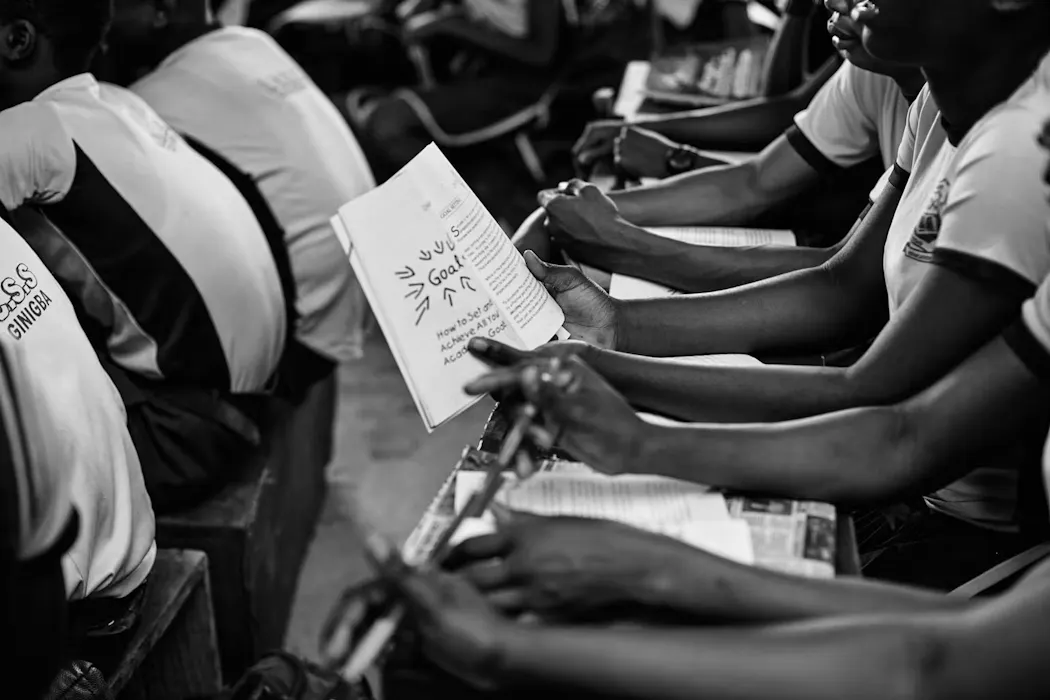
The West African Senior School Certificate (WASSCE) is a decisive exam. For decades, it has been the gateway to higher education in five countries: Ghana, Nigeria, Sierra Leone, Liberia, and The Gambia. But is it fair?
David Baidoo-Anu and Monsurat Raji state that theirresearchshows that cultural biases in exam questions can penalize students. These biases appear through the language, contexts, and examples used. This raises a fundamental question: what does a standardized assessment really measure when it claims to evaluate students’ “aptitudes.”
Why do students from the five countries take the same exam?
The examination is organized by the West African Examinations Council. It was created in 1952, duringthe colonial erato oversee standardized exams in West African countries that were under British rule.
The initial objective was to coordinate evaluations throughout the region. Universities and employers could thus interpret and compare diplomas consistently. For their part, students could seize opportunities available to them beyond borders.
Although the examination system has evolved over time, it retains its regional structure. It continues to play a central role in access to university, professional recruitment, and the recognition of diplomas between countries.
Why is this a problem?
The problem does not simply lie in the fact that students from five countries take a similar exam. The real concern is that some questions are not adapted to cultural realities. In other words, they do not always reflect the linguistic background, cultural references, or daily experiences of the students. Not all students are familiar with certain examples.
Exam questions use language, names, places, stories, images, objects, and examples to help students understand what is being asked of them. These are important elements of an assessment that is both fair and of quality. When students do not understand these references, the question can become more difficult to comprehend. It is not that the students lack abilities, but the context of the question does not reflect their experiences.
Ourresearchargues that assessment systems should pay more attention to these aspects. The language, examples, images, and scenarios used in exam questions must be relevant, fair, and adapted to the realities of learners.
Based on a framework oftest design taking into account cultural experience, we analyzed the available exam questions in mathematics, English, and science from 2019 to 2021 in Ghana and Nigeria.
We examined the extent to which the language, contexts, names, images, examples, and representations used in the exam items reflected the societies and cultures of the learners. The analysis focused on the characters, places, situations, events, and narratives used in the questions.
What are the differences that matter?
Students do not interpret questions in isolation. They give meaning to assessment tasks through their own lived experiences, their languages, their cultural knowledge, and their learning styles.
Our analysis of exam questions revealed several areas of concern. Some questions assumed familiarity with cultural references, examples, and experiences that may not be shared by everyone in the region. One of the main findings was that many exam contexts and character names primarily reflected Western experiences and identities rather than African ones. Some questions in English, for example, used Western literary names, settings, and contexts that were unfamiliar.
The study also revealed that some math and science questions relied heavily on complex technical language. There was not enough visual support. This could pose a problem for students who, although they understand the content, have difficulty interpreting the language used.
In several cases, the questions referred to objects, situations, or experiences that might not have been familiar or culturally relevant to African learners. This situation could affect their interpretation and responses.
Another important observation: images, diagrams, and abstract representations were sometimes used without sufficient explanations. In some cases, there was no visual support that could have improved students’ understanding of the questions. In other cases, the diagrams lacked sufficient contextual explanations.
Why is this exam so important?
The exam results determine access to university, scholarships, employment, and future social mobility.
AtGhana, for example, students who do not obtain the required grades cannot continue their studies in higher education. Some spend years retaking the exam. Institutions such as the Ghana Immigration Service, the Ghana Police Service, and the Ghana Armed Forces require job candidates to pass fundamental subjects such as English and mathematics. The exam is not only a school-leaving diploma, it is also an entry gate to formal employment and careers in the civil service.
Reports fromNational Bureau of Statistics of Nigeriaindicate that candidates’ exam results are generally mediocre. In 2020, only 36.4% of candidates from the Northeast passed. In 2019, only 47.4% of candidates from the Northwest passed.
The high stakes of these exams also have consequences on teaching and learning. Teachers feel obliged to prepare the students above all forpass the exam, rather than developing a deep understanding of the subjects.
Exams that do not take into account sociocultural specificities can further exacerbate existing inequalities.
What solution do you propose?
We do not argue that West Africa should completely abandon regional exams or standardized assessments. Rather, we argue that assessment systems should better take into account the students’ societies and cultures. They must be more equitable.
A fair exam does not simply mean giving exactly the same exam to all students. It must provide all students with equitable opportunities to understand what is expected of them and to demonstrate their knowledge.
We propose that exam designers pay greater attention to students’ languages, their lived experiences, their cultural contexts, and their ways of making meaning.
Specifically, this involves:
-
use clearer and more accessible language in the questions
-
include visual aids and representations
-
use culturally relevant and meaningful examples at the local level
-
examine exam topics to detect any cultural bias
-
involve educators, students, linguists, and local communities from different regions in the design and revision of the tests.
This approach does not weaken standards. On the contrary, it strengthens the validity and fairness of the assessment. It would allow measuring the real knowledge and abilities of students rather than their familiarity with dominant cultural norms or linguistic conventions.
We also propose that the organizations overseeing the exams involve communities in the entire process of test development.
How does your solution take into account the differences between countries in the region?
This approach maintains the regional examination system while being more sensitive to national and local realities. The participating countries share a common educational history, but they differ in terms of language use, cultural practices, school resources, rural and urban experiences, as well as everyday examples familiar to the students.
An adapted sociocultural approach requires that the exam organizers ensure that the words, images, examples, and scenarios used are suitable for all students, regardless of context.

Les auteurs ne travaillent pas pour, ne consultent pas, ne possèdent pas d’actions et ne reçoivent pas de financement de la part d’une entreprise ou organisation qui bénéficierait de cet article, et n’ont divulgé aucune affiliation pertinente en dehors de leur poste académique.
–ref. Cultural prejudices in final exams in West Africa penalize many students –https://theconversation.com/cultural-prejudices-in-final-exams-in-west-africa-penalize-many-students-284489