

Source: French to English Tester Published on: 2026-05-20
Source: The Conversation – France in French (2)– By Damien Guilbert, Professor in Electrical Engineering, University Le Havre Normandy
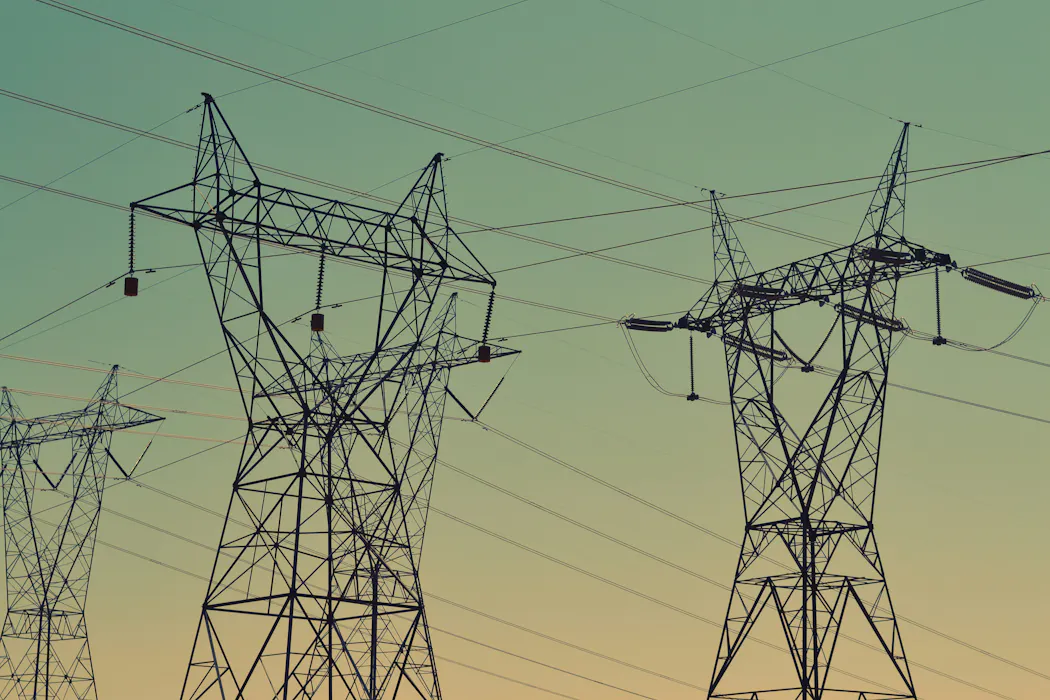
Behind the apparent simplicity of an electrical outlet or a charging station lies a complex machinery, whose balance must be maintained at all times. The challenge is significant: to guarantee a reliable supply while pursuing decarbonization objectives – France aims for carbon neutrality by 2050.
On April 28, 2025, Spain and Portugal experiencedmajor disruptions to their electrical grid, causing a power outage lasting several tens of hoursaffecting millions of people. France, although interconnected with the Iberian Peninsula, was very little affected thanks to the activation of protection mechanisms of the French network. By isolating electrical systems in this way,these devices have helped prevent the spread of disruptions to neighboring countries.
This episode is not an isolated incident: it illustrates the growing challenges faced by modern electrical systems. These must now respond to several simultaneous transformations: the rise of renewable energy, the increasing electrification of uses (transport, heating, industry), the increase in cross-border electricity exchanges, but also the aging of certain electrical infrastructures. This requires a profound change in existing infrastructures, while developing new ways of managing the electrical grid, in order to continuously ensure the balance between production and consumption.
The good news is that several solutions to ensure the stability of the network are progressing rapidly. Batteries, hydrogen, digital control of consumption, and smart inverters help make electrical networks more robust and more flexible.
The challenge now is to deploy these technologies on a large scale and in a coordinated manner in order to integrate more renewable energies while ensuring a reliable power supply.
The foundations of network stability
To understand why an electrical grid can become unstable, it is necessary to become familiar with some key concepts. An electrical grid operates like a large synchronized system. To ensure reliable operation, several quantities must remain within very precise ranges.
The frequency, for example, must be maintained around 50 Hz (that is, 50 oscillations per second) in Europe. It reflects in real time the balance between production and consumption: if demand exceeds supply, the frequency drops; conversely, it increases in case of surplus. Large deviations can damage electrical equipment or cause disconnection of electricity generation sources.
Voltage must also remain stable to ensure the proper functioning of electrical devices (electricity generation installations, electrical consumption devices, or network infrastructures). Simplified, it can be seen as a force that sets electrons in motion within a network. Like pressure in a pipeline, it allows current to flow: without a voltage difference, no flow is possible. Local variations can appear due to imbalances between production and consumption, especially in areas heavily equipped with decentralized production—that is, installations producing electricity as close as possible to consumers, such as photovoltaic panels installed on the roofs of private homes or buildings.
Another key element is the inertia of the system. Historically, large thermal or nuclear power plants, equipped with heavy turbines, naturally stabilized the frequency thanks to their mechanical inertia. However, theconnected renewable energies (wind, photovoltaic)via“inverters”bring much less inertia, which makes the network more sensitive to disturbances and rapid fluctuations in production or consumption.
Finally, network congestion occurs when certain power lines reach their maximum capacity. With the rapid development of renewable energies and the increasing electrification of uses, electricity flows on the networks are changing significantly and becoming more variable. These new configurations, associated with often decentralized production and slower evolutions of transport and distribution infrastructures, make thesemore frequent congestion constraints.

Damien Guilbert,Provided by the author
A transition that complicates the balance
The energy transition relies on increased electrification of uses and on more decentralized and variable production, both of which make network management more complex.
Unlike traditional power plants, renewable energies cannot be controlled at will: they depend on weather conditions. This variability introduces rapid and sometimes unpredictable fluctuations in the system.
Moreover, the rise of millions of small production units (such as solar panels installed on roofs) is profoundly transforming the electrical grid, which was historically designed to allow electricity to flow in only one direction, from large power plants to consumers.
But this change does not only concern production. The way electricity is consumed is also evolving strongly, like the rapidly expanding electric vehicles. Electricity is being used more and more massively and sometimes more variably throughout the day.
In other words, the challenge is therefore not only related to production, but to the constant balance between a more fluctuating supply and a demand that is increasing and evolving. It is this overall balance that makes managing the electrical grid more complex today.
Emerging solutions
Faced with these challenges, numerous technological and organizational solutions are being developed.
Energy storage plays acentral role. For example, batteries allow for quick responses to short-term fluctuations by injecting or absorbing electricity within seconds. They are particularlyuseful for stabilizing the frequency, so the balance between supply and demand.

Damien Guilbert,Provided by the author
Several technologies meet different needs:lithium-ion batteries, very widespread, offer a high energy density and a fast response; thelithium iron phosphate batteriesare safer and more durable, ideal for long-term use; thelead-acid batteries, older, remain robust and economical for certain stationary applications. Other emerging solutions, such asredox flow batteries, allow the storage of large quantities of energy for several hours or days, while theSodium-ion batteries promise a less expensive and more environmentally friendly alternative to lithium-ion batteries.
In the longer term, hydrogen offersinteresting perspectives. It can be produced from excess electricity through water electrolysis, then stored to be reconverted into electricity via a fuel cell when the grid needs it. Although this conversion chain isless efficient than that of batteries and consumes more energy, hydrogen allows managing imbalances over longer periods, for example when the sun or the wind do not produce enough electricity for several hours or several days.
Demand flexibility constitutes aanother promising lever. Thanks to digital technologies (Internet of Things (IoT), smart meters, energy management platforms), certain electrical uses can be shifted over time to adapt to the availability of electricity. For example, charging electric vehicles or the operation of certain industrial processes can be optimized based on network conditions.
Finally, thedevelopment of smart invertersallows for the integration of more renewable energies while maintaining stability. In the “grid-following” mode, these inverters synchronize their output with the existing frequency and voltage of the grid, which avoids disrupting the balance and makes the system more resilient. More advanced modes, such as “grid-forming,” even allow some inverters to create and stabilize the grid frequency themselves, which is particularly useful for microgrids or highly decentralized areas.

Damien Guilbert received funding from the National Research Agency (ANR) and the Normandy region.
–ref. What solutions are there to stabilize the electrical grid today? –https://theconversation.com/what-solutions-to-stabilize-the-electric-grid-today-281175