

Source: French to English Tester Published on: 2026-04-28
Source: The Conversation – in French– By Tegui Yvan Arnold, PhD student in sustainable tourism and public finance, University of Perpignan Via Domitia
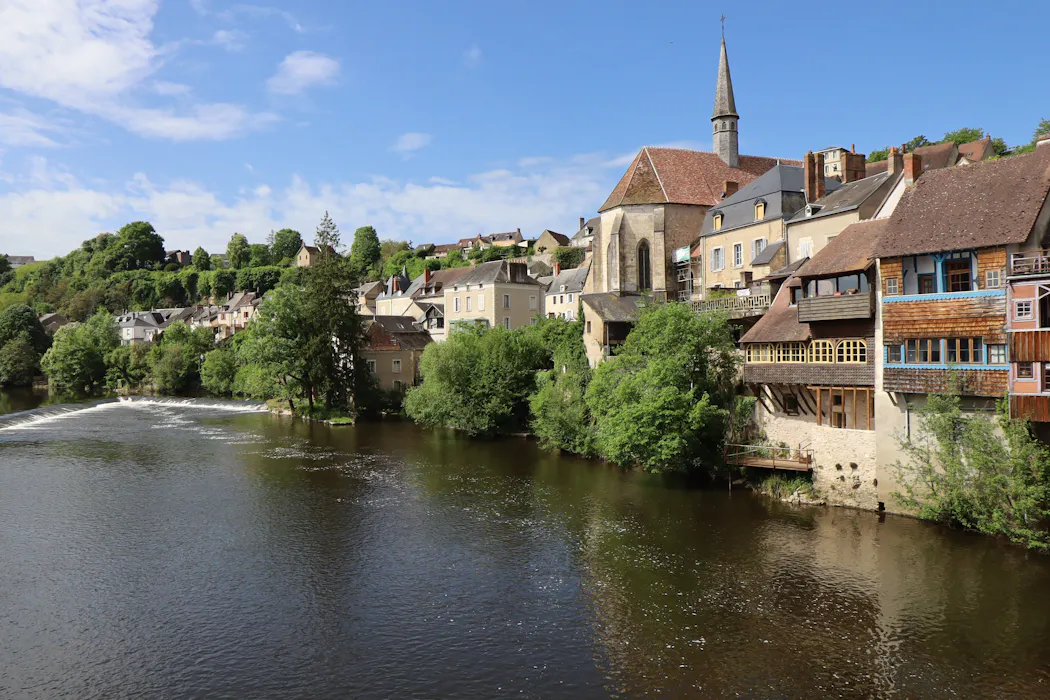
The Covid-19 pandemic has profoundly reshaped French tourism in favor of rural areas, which have seen an increase in overnight stays both in campgrounds and hotels. Today, does this transformation persist or are we witnessing a return to normal? Explanation with maps and data.
Before 2020, French tourism was massively concentrated in metropolitan areas, such as Paris, Lyon, Marseille, or Bordeaux. Between 2015 and 2019, they dominatedhospitalitywith 76% of nights and 69% ofshort-term rentals between individuals(PAP), rural areas accounting for only 15% and 23% in these segments.
The Covid-19 pandemic has initiated a gradual rebalancing of French tourism. Rural areas are gaining modest market shares in appearance (+1 and +3 points in hotels and private accommodation rentals), but representing approximately 8 million additional hotel nights and 19 million in private accommodation rentals. This dual dynamic explains why the rural tourism recovery exceeds pre-crisis levels.
Which departments are standing out? What types of accommodation are driving this transformation? And above all, is this territorial redistribution sustainable?
Myresearchdemonstrate that the superior resilience of rural areas compared to metropolitan areas from 2020-2022 was not a mere epiphenomenon. In 2024, this trend is confirmed. Rural territories withstand the decline in attendance better than large metropolises, particularly those in the Île-de-France region.
Nearly 131% more tourists in rural areas
To analyze this redistribution, I classified the departments into three categories, according to amethodologybased on the metropolitan population, low density, and remoteness, explained in detail inmy scientific article.
The analysis distinguishes 41 city departmentsmetropolises, where the majority of the population lives in an urban area of more than 250,000 inhabitants – Paris or the Rhône –; 13 intermediate urban areas, structured around medium-sized towns – Ain or Moselle – and 42 rural areas, with low density and far from major urban centers – Allier or Lozère. For each department, I modeled the attendance trajectory that would have been observed in 2020 without the Covid-19 pandemic, by extending the 2015-2019 trends. The actual nights recorded are then compared to this projection.
An index of 70% means that the territory has achieved only 70% of its projected attendance, while an index of 131% means it exceeds it by 31 points. In 2020, tourist attendance collapsed everywhere: rural areas fell to 68% of their projected level, urban areas to 61%, and metropolitan areas to 57%. In 2024, all have exceeded their reference levels with urban areas at 139%, rural areas at 131%, and metropolitan areas at 128%. All three types even outperform compared to 2019.
This homogeneity hides contrasting realities. In the hotel industry, the recovery remains timid in 2024, at 95% in rural areas, 96% in urban areas, and 94% in metropolitan areas. However, campground occupancy is increasing strongly, by 110% in rural territories and 112% in metropolitan areas. Short-term rentals between private individuals (PAP) are experiencing spectacular growth. Rural areas nearly double their pre-Covid-19 pandemic level to 187%, behind urban areas at 214% but ahead of metropolitan areas (179%), reflecting a successful diversification of the rural offer.
Rural domination for hotels and campsites
Beyond these average trends by typology, the detailed analysis of the 96 departments reveals that rural areas dominate the podium of the most resilient territories. In 2024, the three departments recording the strongest rebound are all rural: Creuse at 154% of its projected level, Lot-et-Garonne at 133%, and Lozère at 131%. These territories confirm the capacity of rural areas to turn crisis into opportunity.
The evolution of the Top 10 in hospitality also leans towards rural areas. In 2020, nine of the ten best-performing departments were rural. In 2024, activity recovery seems to balance out — five rural departments, three urban, and two metropolitan — but with a still marked presence of rural zones. Conversely, Île-de-France trails behind; from Seine-Saint-Denis to Val-d’Oise, overnight stays reach only 76% to 86% of their projected level. Even Paris, despite the effect of the 2024 Olympic Games, caps at 95% of its pre-Covid-19 pandemic level. According to our data, most major regional metropolitan areas have not reclaimed their 2019 hotel industry levels. This trend is reflected in other segments as well.
For campsites, rural dominance — nine departments out of ten in 2020 — also faded. In 2024, metropolitan city departments occupy six places in the Top 10, reflecting the boom in peri-urban camping. Short-term rentals between individuals (PAP) also continue their growth in both rural and urban areas. In 2024, the Top 10 is split evenly between five rural and five urban departments, with no metropolises. This segment particularly highlights the territories of the “second ring,” neither large cities nor isolated rural areas, such as Oise at the gates of Paris or Saône-et-Loire near Lyon.
Nature, space and low density
Three factors explain this lasting shift.
First of all, the structural fragility of metropolitan areas,dependent on business and international tourism. The generalization of remote work and videoconferencing has permanently reduced business travel. Rural areas, being less exposed, have fared better.
The second factor stems from a lasting change in preferences. Travelers are looking fornature, space and low density. Mobility restrictions led the French to rediscover nearby rural areas, creating lasting habits. Teleworking – 26% of executives according to theDepartment of Research, Studies, and Statistics Coordination(Dares) and the“workation”(contraction ofworkand of temporary work) reinforces this trend, with climate change. Urban heatwaves make metropolises less attractive, while mountainous areas offer sought-after coolness.
Finally, the 18% increase intransport pricesIn France between 2019 and 2024, local tourism has been promoted. Rural areas have particularly benefited from this, combining accessibility from metropolitan areas with attributes sought after the Covid-19 pandemic.
The metropolises are the losers
This momentum is not guaranteed. Rural areas continue to suffer from lack of accessibility, outdated digital offerings, and aging accommodation facilities. Turning the post-Covid-19 pandemic influx into sustained visitation requires bridging these structural gaps, a challenge that current data do not yet allow to be considered overcome.
This territorial redistribution does not seem to designate a single winner. While rural areas have generally resisted the decline in tourism due to the Covid-19 pandemic better, intermediate urban areas, medium-sized cities combining accessibility and quality of life, are emerging as a winning territorial profile. The real losers of this reshuffling are clearly the large metropolises, particularly Île-de-France.
The structural factors driving this redistribution will not be reversed. Territorial actors must therefore integrate this new reality into their tourism development policy. The issue is no longer whether this recomposition will persist, but how the territories adapt to it.

Tegui Yvan Arnold does not work for, advise, own shares, receive funds from an organization that could benefit from this article, and has declared no affiliation other than his research institution.
–ref. Tourists are flocking to the countryside and avoiding cities since the Covid-19 pandemic. Are you one of them? –https://theconversation.com/tourists-are-running-to-the-countryside-and-shunning-cities-since-the-covid-19-pandemic-are-you-one-of-them-276322