

Source: French to English Tester Published on: 2026-04-29
Source: The Conversation – in French– By Véronique Sadtler, Professor, University of Lorraine
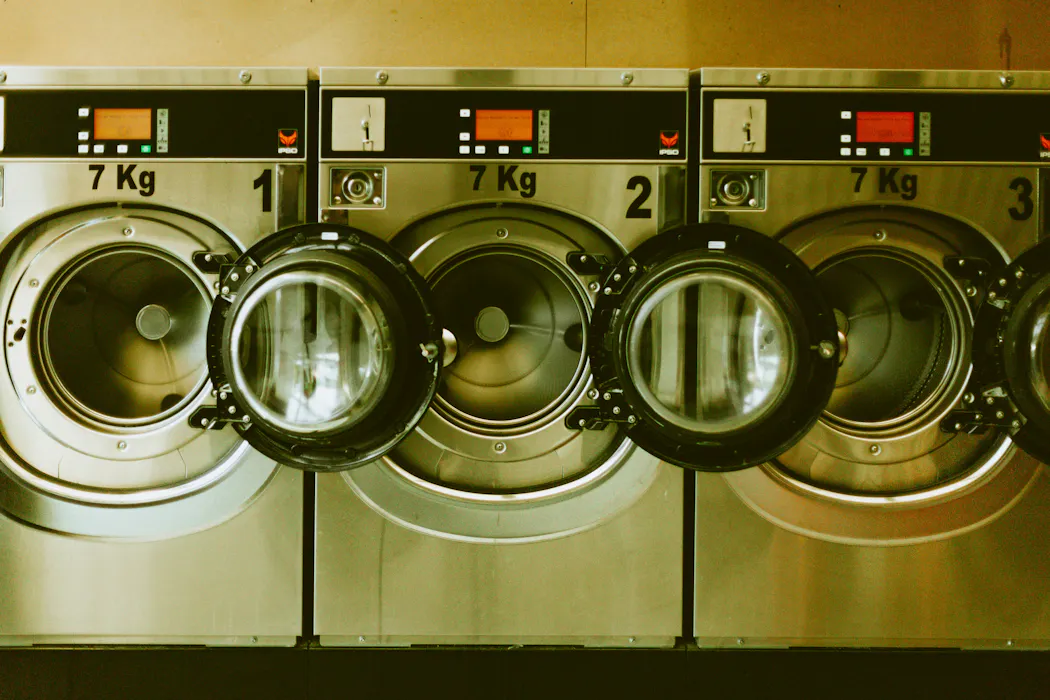
You start a machine, pour in a dose of detergent and wait for clean laundry: stains eliminated, fibers and colors preserved, even at low temperature. Behind this daily gesture lies sophisticated chemistry. Current formulations often involve more than 30 ingredients, each playing a specific role. Yet, detergents with shorter ingredient lists are appearing, sometimes reduced to fewer than 10 components, driven by a demand for transparency and lower environmental impact. But can we really simplify without losing effectiveness?
A detergent does not just clean. It must simultaneously remove dirt, preserve fabrics, and work in water of varying quality. To achieve this,each ingredient fulfills a precise role. Surfactants form the backbone of the formulation. Their amphiphilic structure – a hydrophilic head with an affinity for water and a hydrophobic tail attracting fats – allows them to intercalate between dirt and fibers, detach them, and keep them suspended in the wash bath.
Enzymes complement this action by targeting specific stains: proteases break down protein stains (blood, egg), amylases attack starches (sauces, pasta, rice), while lipases hydrolyze fats and oils. Their effectiveness at low temperatures largely explains why modern detergents can clean without heavily heating the water. Other ingredients provide complementary functions, such as washing efficiency in hard water (water rich in calcium and magnesium ions, hard water), formulation stability, or limiting the redeposition of dirt on fibers.
This complexity has been built up over the decades to meet ever higher demands. Some functions remain difficult to reconcile: improving whiteness can alter bright colors, while enhancing efficiency at low temperatures often requires more elaborate enzymatic systems. Note that theEuropean regulationdoes not require the display of the complete list of ingredients on the packaging, but only classes of components with ranges of percentages. Obtaining the exhaustive list often remains complex for the consumer. If the detailed list is theoretically accessible online, it is in practice more or less easy to consult, sometimes scattered in technical documents.
The two drivers of simplification
Formulations are nowadays tending to become shorter due to two dynamics. The first is regulatory. Thus, thephosphates, once widely used as sequestrant agents, have been severely restricted and then practically eliminated from household detergents in Europe since 2013. Discharged into wastewater after washing, phosphates contribute toeutrophication of aquatic environments, that is to say an excessive enrichment in nutrients. They thus promote the proliferation of algae, which depletes the water of oxygen and can lead to a loss of biodiversity.
The second dynamic is societal.A growing demand for transparencyand reducing the environmental footprint pushes manufacturers to offer shorter formulas. Optical brighteners, which give an impression of brighter whiteness without directly acting on cleaning, perfumes, preservatives, serve real functions, but aremore and more contestedfor their potential allergenic effects or their persistence in the environment. Some labels, like theEuropean Ecolabel, go beyond the regulation by excluding or strictly limiting them, favoring certain ecological criteria to the detriment of other performances.
To simplify is to arbitrate
Reducing the number of ingredients does not mean removing components without consequence. It involves reshaping a new balance between often contradictory constraints.
The Sinner’s circle, a classical framework in laundry chemistry, illustrates these trade-offs. It relies on four interdependent parameters: chemical action, water temperature, contact time, and mechanical action. To achieve a given level of cleanliness, these factors compensate for each other: reducing one requires strengthening another.
This is exactly the logic of “eco” programs on washing machines: by lowering the temperature to 30 or 40 °C instead of 60 °C, they lengthen the cycle duration. While this temperature reduction helps to reduce energy consumption, it can also make the washing less effective, which often requires more sophisticated formulations capable of acting in cold water. Therefore, low-temperature washing does not necessarily simplify formulas and can, on the contrary, lead to their complication.
From the can to the scoop: complexity changes form
The evolution of laundry detergent formats illustrates how complexity is sometimes redistributed rather than eliminated. Liquid detergents,today dominant, are practical and effective at low temperature, but carry a significant amount of water, often more than half of the formulation, and require preservatives.Concentrated or solid formatsaim to reduce packaging and transport impact, but require more precise dosing by the consumer.
In this context, the volume of the bottle is not always a good indicator: manufacturers generally indicate on the packaging the number of washes, which better reflects the concentration and facilitates comparison between products.
Overdosing remains commonA: out of habit or fear of an insufficient result, many consumers pour more than the recommended dose. Beyond a certain threshold, additional surfactants no longer improve cleaning; they are simply discharged into wastewater, unnecessarily increasing the environmental load.
Multi-compartment podsoffer another elegant solution: by physically separating incompatible ingredients (certain enzymes and oxidizing agents that would neutralize each other in a single mixture), they preserve the efficacy of each until the moment of washing, while imposing a predefined dose that mechanically limits overdosing. The chemical complexity has not disappeared; it has simply been integrated into the product’s architecture.
Maximum performance or sufficient performance?
The real challenge lies here. Conventional detergents are designed according to a logic of maximum performance: they must handle the most demanding situations – stubborn stains, very hard water, delicate fabrics – even if these cases remain a minority in daily life.
Yet, the Environment and Energy Management Agency (Ademe)remindsTo: the vast majority of worn laundry is only slightly or moderately soiled, and it is recommended to space out washes. Always aiming for maximal performance amounts to over-sizing the formulation for uses that do not justify it. In practice, for everyday laundry, moderate doses and low-temperature cycles are generally sufficient. Conversely, for tougher stains — sports or work clothes — it may be more appropriate to use targeted stain removers rather than systematically increasing detergent doses.
Adapting formulations to the predominant uses therefore involves moving from a universal approach to a logic of sufficient performance, that is, effectiveness adapted to the vast majority of daily washes. This is not a technical regression, but a deliberate design choice that finally makes the trade-offs visible. Laundry detergents for white clothes (with bleaching agents and optical brighteners) and those for dark clothes (without these components to preserve colors) are the perfect illustration:we cannot optimize these two objectives simultaneously.
Finally, the price plays an important role. Detergents claiming a simpler formulation or a reduced impact are oftenmore expensiveAt purchase than classic products, due to the higher cost of alternative ingredients of plant-based or biodegradable origin, generally lower production volumes, and specific certifications. However, this additional purchase cost does not necessarily translate into a higher cost of use. Thanks to often higher concentration and more precise dosing, the price per washcan approach or even alignon that of conventional laundry detergents, notably with eco-friendly private-label brands that now offer an excellent quality-price ratio.
Ultimately, simplification does not just change formulas; it also questions our habitual usage. And that may be its true contribution: not to aim for maximum performance in all circumstances, but to adjust the level of performance truly necessary according to the situations.

Véronique Sadtler does not work for, advise, own shares in, or receive funds from any organization that could benefit from this article, and has declared no other affiliation than her research organization.
–ref. Detergent: Is it possible to go from 50 to 5 ingredients and still have clean laundry? –https://theconversation.com/laundry-can-we-go-from-50-to-5-ingredients-and-still-have-clean-clothes-280642