

Source: French to English Tester Published on: 2026-05-04
Source: The Conversation – in French– By Samuel Challéat, Researcher, National Center for Scientific Research (CNRS)
As nighttime extinction spreads in municipalities, three studies respectively concerning somerobins, of thetoadsand somebatshow that, often, turning off the light for a few hours is not enough to restore a natural night. For biodiversity, the challenge is not just to turn off, but to know when and where.
In recent years, turning off public lighting in the middle of the night has become an obvious response to several issues: reducing energy bills, demonstrating a form of sobriety, and limiting light pollution and its effects on living beings. From the biodiversity perspective, the best solution would be not to illuminate at all. But this option conflicts with other legitimate uses of nocturnal spaces: ours! The remaining question is: does turning off the lights for a few hours in the middle of the night really suffice to reduce the impacts of light on biodiversity? Not necessarily: its effects on living beings depend on the context – location, large-scale light landscape, weather – and on the species concerned.
A widespread measure, but whose biological effects remain poorly evaluated
In fact, species do not all use the night in the same way. The beginning of the evening, the middle of the night, and the hours before dawn often correspond to different behaviors: searching for food, movements, returning to the shelter, falling asleep and waking up, communications… In this context, a partial switch-off of the lighting can limit certain effects of light pollution on biodiversity… or miss the point if it does not coincide with the activity peaks of the present species.
Another important point: turning off lights locally does not necessarily mean complete darkness. In cities, neighboring lights – street lamps on adjacent streets, signs, shop windows, or private lighting – as well as light diffused by clouds often maintain residual brightness. And this effect does not stop at urban centers: in rural areas as well, the light halo from cities can remain perceptible at several tens of kilometers. For species most sensitive to light, the difference between lit and unlit periods can therefore be small, even when public lighting is turned off locally. The extinction schedules of a municipality alone are therefore not sufficient to describe the actual light environment to which animals are exposed.
The European robin in the city: turning off the light in the middle of the night is not enough

Giles Laurent,CC BY
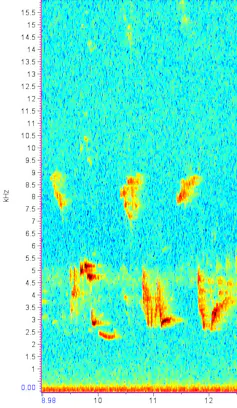
It’swhat we observe in the European robin(spelled““robin” colloquial»by the Cinfo,editor’s note). In this diurnal bird, partial extinction of lighting during the night is not sufficient, in an urban context, to restore activity rhythms comparable to those observed in unlit sites. Even when street lamps are turned off between 11 p.m. and 6 a.m., the birds tend to sing earlier in the morning and later in the evening than in truly dark areas.
Provided by the author
To test this effect in the Nantes metropolitan area (Loire-Atlantique), we compared three types of sites: sites without lighting, sites lit throughout the night, and sites subjected to partial lighting extinction, that is, a cut-off of public lighting during part of the night.
We used a simple indicator: the song of the European robin (Erithacus rubecula). By recording the sound environment over several days, it is possible to reconstruct the singing rhythms of the species throughout the entire day-night cycle and observe how they vary according to light conditions.
Laurent Godet,Provided by the author737 KB (download)
The result is clear: sites where the lighting is turned off in the middle of the night often resemble more the sites lit all night than the unlit sites. The difference appears especially at key moments for this species, at dawn and dusk — approximately forty minutes before and twenty minutes after sunset — which correspond to its peaks of vocal activity.
In our study, the peak of morning singing occurs on average before sunrise, by about a few tens of minutes. Yet, it is precisely at this moment that, in an already illuminated urban landscape, the partial extinction of lighting is hardly distinguishable from continuous lighting.
This is no doubt explained by the central role of dawn and dusk in diurnal species: these transitions serve as markers to set daily rhythms. Many lighting extinction devices still leave some light early in the evening and turn back on before daybreak. In other words, the lights go out in the middle of the night, but light is maintained at the two moments that matter most for synchronizing activity.
For a robin, this shift can have very concrete consequences: singing earlier also means defending its territory earlier, interacting differently with other individuals, and shifting essential activities such as foraging or attracting a mate.
Our data alone do not allow us to conclude a direct effect on reproduction or survival. But they show that a partial extinction of lighting does not automatically bring the situation back to normal, especially in cities where darkness often remains incomplete even when a street or neighborhood is turned off.
A Reunion bat: a small shift in extinction timing can change the game
Paul Jossigny,CC BY
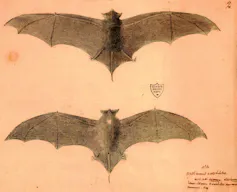
Atthe little mastiff, a nocturnal bat endemic to La Réunion, on the other hand, moving the evening extinction two hours earlier is enough to make the lighting effect at the beginning of the night disappear. However, this effect persists late at night, when the morning relighting remains early.
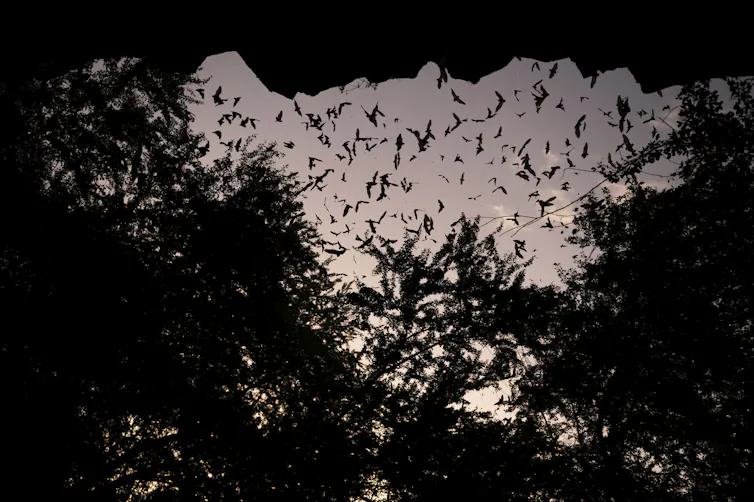
We studied this species,Mormopterus francoismoutoui, in a situation allowing to go beyond a simple comparison between lit and unlit sites. For one month, at certain sites, the partial shutdown of lighting was modified: the streetlights were turned off two hours earlier than usual. This allowed for a comparison of the situation before and after this change at the same sites, alongside control sites without lighting. The activity of bats was monitored acoustically, using recorders capturing their echolocation calls. This is not a direct counting of individuals, but an indicator of their activity.
Samuel Challéat, CNRS Night Environment Observatory, UMR Géode,Provided by the author
The results show that as long as the streetlights remain on, bats are more frequently detected near the lit areas, especially at the beginning and end of the night, that is during their activity peaks. When the evening switch-off is moved earlier, this effect disappears at the start of the night: the light no longer “structures” their activity as before. However, a difference tends to persist before dawn, which is consistent with the morning relighting remaining unchanged. The lesser molossus bats therefore still seem attracted to the lit areas during their activity peak before sunrise, particularly when the weather is favorable.
This result illustrates an important point: the effectiveness of a partial extinction of lighting depends on its overlap with the activity periods of the species present. Turning off the light in the middle of the night may have little effect if a species concentrates its movements and foraging at the extremities of the night. Conversely, a seemingly modest adjustment — here, turning off two hours earlier in the evening — can be enough to eliminate the effect of lighting during part of the night.
However, caution must be exercised in the interpretation. A greater presence near streetlights does not necessarily mean that the light is beneficial. It can represent an opportunity, for example if insects are attracted to the light, but also more ambiguous effects: altered paths, concentration of individuals in certain areas, increased competition, or greater exposure to predators. In other words, these results mainly show a redistribution of activity in time and space, without allowing a conclusion that artificial lighting is, in itself, either favorable or unfavorable.
In toads, partial extinction remains a partial solution

Frank Vassen,CC BY
At thespiny toad(Bufo spinosus), an amphibian mainly active at night, the partial extinction of lighting mitigates certain effects of artificial light, without however recreating the conditions of a truly dark night.
The spiny toad is a common species in the south and west of France, frequently found near inhabited areas, including urban and suburban settings. In its very close sister species, the common toad (Bufo bufo), artificial nocturnal light is already known to affect behavior, physiology, and even gene expression in cells: more than 1,000 genes malfunction when animals are exposed to low-intensity light at night! Moreover, in these animals, activity is often more pronounced at the beginning of the night, which suggests that a partial switch-off of lighting in the middle of the night can, at best, only mitigate its effects.
What is meant by “gene expression”?
- Gene expression corresponds to the way in which an organism “activates” or “deactivates” certain genes depending on the time, environment, or state it is in. Not all genes operate continuously. Depending on whether it is day or night, whether an animal is resting, active, or under stress, some genes are more mobilized than others. This notably allows the production of molecules necessary for the organism’s functioning. Saying that artificial light can modify gene expression therefore means that it does not only change the visible behavior of animals: it can also affect their biological functioning at a deep level.
We tested this hypothesis experimentally in individuals from one of the least light-polluted areas in western France – in Mayenne and Orne. Three groups were constituted: one group kept in natural darkness, one group exposed to low light all night (0.5 lux), and one group subjected to a lighting blackout between 11 p.m. and 5 a.m., but with the same light intensity of 0.5 lux during the rest of the night. After at least nine days of exposure, we monitored the activity of males by video during the night.
The distance traveled varied little according to the treatments, probably partly due to the experimental setup. However, one result stands out clearly: the longer the toads are exposed to light, the more time they spend in their refuge. The individuals subjected to a partial extinction of the lighting occupy an intermediate position between those placed in darkness and those exposed all night. This is also the only group to show a resumption of activity after the lights are turned back on at 5 a.m.
For a toad, this can have very concrete consequences: spending more time hiding potentially means having less time to search for food, find a mate, or move to another site. The resurgence of activity observed at the time of the lighting being turned back on could also represent an energy cost or a source of stress. Partial extinction of lighting therefore reduces certain behavioral effects, but it does not seem equivalent, for these animals, to an unlit night.
We do not yet know whether this attenuation also translates into a reduction of the physiological or genetic effects of artificial light. It also remains to better understand the impact of a sudden change in light intensity, at the moment of turning off as well as turning on.
A common observation: the importance of the key moments of the night
It would be excessive to conclude that the partial extinction of lighting is useless. But our results remind us that it is primarily thought of in terms of human nighttime use — when public spaces are less frequented and traffic is lower — rather than in terms of the times when light most influences living beings.
In our three studies, it is precisely the extremities of the night that appear decisive. In the robin, maintaining light at dusk and dawn is sufficient to sustain activity shifts, even when lighting is switched off in the middle of the night. In the pipistrelle bat, advancing the evening switch-off reduces the effect of light at the beginning of the night but not at the end of the night if the morning switch-on remains unchanged. In the toads, the switch-on at the end of the night restarts the activity when it should rather be decreasing. In all three cases, the finding is the same: to be effective, a partial switch-off must coincide with the periods when the species are most sensitive to light and produce a genuinely perceptible decrease in brightness.
Finally, speaking of extinction as simply a withdrawal of light can be misleading. This mode of managing public lighting also involves abrupt artificial transitions—switching on, switching off, switching back on—that can disrupt organisms. Turning off lights in the middle of the night is therefore not just less light: it is also another way of artificially segmenting the night.
What implications for local action?
These results do not provide, of course, a unique recipe. But they suggest three levers if one wants the partial extinction of lighting to also bring a benefit to biodiversity.
First, adjust the schedules around dusk and dawn, often decisive for the rhythms and activity of species. Next, reduce the light spilling over from still-lit areas — adjacent streets, signs, private lighting — so that the extinction results in a real decrease in brightness. Finally, adapt the lighting strategy according to the locations — downtown, residential neighborhoods, surroundings of natural areas — rather than applying the same rule everywhere.
These development decisions rely both on ecological expertise and on the experience of the inhabitants to identify sensitive locations and times, make transparent decisions, and then adjust the choices based on feedback and observations.

Samuel Challéat is the coordinator of the CNRS Observatory of the nocturnal environment, director of the CNRS GDR2202 LUMEN (Light & nocturnal environment), and deputy director of UMR 5602 GÉODE. He has received funding from the Reunion National Park and the CNRS Mission for Transversal and Interdisciplinary Initiatives (MITI).
Jean Secondi is a member of the GDR2202 LUMEN (Light & Night Environment) of the CNRS.
Kévin Barré is a member of the CNRS Night Environment Observatory and the CNRS GDR2202 LUMEN (Light & Night Environment). He has received funding from La Réunion National Park and the Mission for Transversal and Interdisciplinary Initiatives (MITI) of the CNRS.
Laurent Godet is a member of UMR 6554 LETG, the CNRS Observatory of the nocturnal environment, and CNRS GDR2202 LUMEN (Light & nocturnal environment). He has received funding from the Réunion National Park, the Mission for Cross-cutting and Interdisciplinary Initiatives (MITI) of CNRS, and the Fondation de France as part of the LARN project.
Léa Mariton is a member of the CNRS Night Environment Observatory and the CNRS GDR2202 LUMEN (Light & Night Environment). She has received funding from the Réunion National Park and the CNRS Mission for Transversal and Interdisciplinary Initiatives (MITI).
Thierry Lengagne is a member of the GDR2202 LUMEN (Light & nighttime environment) of the CNRS.
–ref. At what time should streetlights be turned off to protect biodiversity? –https://theconversation.com/at-what-time-should-streetlights-be-turned-off-to-protect-biodiversity-281362