

PM Edition: Here are the top 10 security intelligence articles on LiveNews.co.nz for April 22, 2026 – Full Text
In mediating the US-Iran peace talks, Pakistan is flexing its geopolitical muscles
April 22, 2026
Source: The Conversation – Global Perspectives
When news of the fragile ceasefire between the United States, Israel and Iran first broke, it came via a post on X by Pakistan’s Prime Minister, Shehbaz Sharif.
Securing such a big diplomatic win is highly significant for Pakistan, irrespective of how the agreement has since been tested.
Pakistan will remain central to ongoing peace negotiations, with talks between the parties being held in the country on April 10.
So how did Pakistan manage to bring the parties together? It harnessed long-running relationships, shared histories and security agreements to flex its diplomatic muscles.
Pakistan and Iran go back a long way
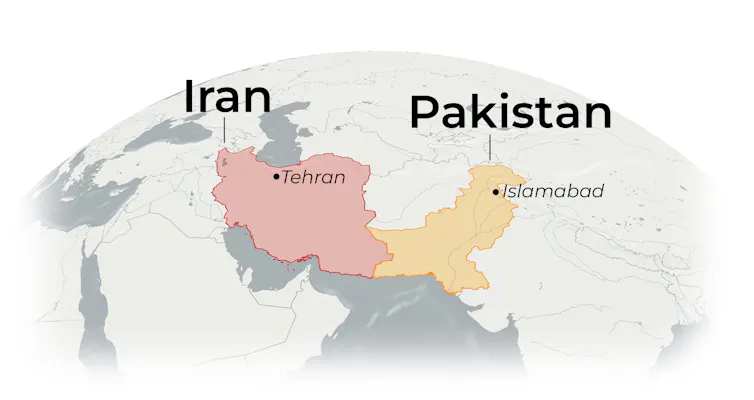
Pakistan and Iran have a long history as friends and allies. Sharing more than 900 kilometres of border, the countries have been involved in dispute mediation for one another since Pakistan’s creation in 1947.
CC BY-SA
During Iran’s monarchical period, which ended in 1979, Pakistan relied on Iran’s mediation in its disputes with Afghanistan, and active support in Pakistan’s wars with India in 1965 and 1971.
But the relationship has not been free of challenges. Pakistan’s Prime Minister Z A Bhutto, according to some sources on the ground, resented the Iranian Shah’s overbearing attitude.
The closeness has held since the Islamic regime took over. With nearly 20% of Pakistan’s population being comprised of Shia Muslims, the dominant form of Islam in Iran, there’s long been a close relationship between those Pakistani Muslims and the Iranian regime.
Iran has used these communities to spread their version of Islam and politics, but it has walked a fine line. The regime has ensured tensions do not exceed beyond certain point where the Pakistani government considers it to be a destabilising factor and a threat to Pakistan’s security.
Because of this shared history and the geographic proximity, the Iranian regime is at least willing to listen to Pakistan.
Eyeing regional and national security
This is particularly so because of Pakistan’s own security situation, especially in the event that a weakened or fragmented Iran would result in the emergence of multiple smaller states.
Pakistan’s geographically largest province, Balochistan, has been experiencing renewed militancy spearheaded by separatist group the Baloch Liberation Army. The militants have attacked multiple military targets, law enforcement agencies and public servants, especially those hailing from the Punjab province (the largest in terms of population and resources).
There has been a growing sense in Pakistan that a weakened or fragmented Iran could further strengthen the appeal of Baloch Liberation Army ideology. The Pakistani government doesn’t want a situation where calls for a greater Balochistan encompass areas on both sides of its border with Iran.
Another consideration is that Pakistan has a nuclear program. The Pakistani government may fear its nuclear arsenal being next in line for targeting by foreign countries, and therefore seek to de-escalate tensions across the region.
It’s also worth noting the potentially precarious position Pakistan finds itself in geographically. The spectre of being sandwiched between an Israeli-controlled Iran, and close Israel ally India, would be something to be avoided.
It’s likely the Iranian regime is aware of these concerns and appreciates that Pakistan’s mediation is grounded in the latter’s own security concerns. But from an Iranian perspective, that’s hardly a bad thing: it means exploring all possible scenarios to reach a ceasefire and a settlement.
Friends in MAGA places
Pakistan is highly credible with the Trump regime. This is primarily because of the dominant role the Pakistani military has played in shaping the country’s foreign policy. This influence has existed for almost 80 years, but has ramped up recently.
In 2022, General Asim Munir took over as the Chief of Army Staff. He was promoted to the rank of Field Marshal in the wake of Pakistan-Indian “mini-war” in May 2025.
Currently occupying the position of Chief of Defence Forces with a guaranteed command of the military for the next five years with the possibility of extension until 2035, he has emerged as the strongest army general to have ruled Pakistan in decades.
Munir has established a cordial relationship with US President Donald Trump. He visited the administration twice, including a meeting in the Oval Office. This was before Australian Prime Minister Anthony Albanese had secured even a telephone phone call with the president.

Andrew Harnick/Getty
Munir has also guided Pakistan’s Gulf policy, particularly the signing of a Strategic Mutual Defence Agreement with Saudi Arabia in September 2025. The agreement builds on the decades of a defence relationship between Pakistan and Saudi Arabia. It includes the clear articulation that any attack on one is considered an attack on both.
Though Pakistan is careful to stress that it does not extend a nuclear umbrella to Saudi Arabia, the agreement signals regional deterrence and ability of the two states collaborating against opponents.
The agreement was followed by a Strategic Defense Agreement between Saudi Arabia and the US during the Crown Prince Mohammed bin Salman’s visit to Washington in November 2025.
Effectively, therefore, a tripartite quasi alliance has emerged between the US, Saudi Arabia and Pakistan.
And then there’s China
At the same time, Pakistan also maintains strong military, economic, and political relations with China. Beijing has been keen to de-escalate the situation in the Gulf due to China’s reliance on oil supplies from the region.
This interest was categorically expressed during the visit by Pakistan’s Foreign Minister, Ishaq Dar, to China on March 31.
Coming soon after Pakistan’s quadrilateral meetings with Saudi, Egyptian and Turkish foreign ministers, the negotiations established Pakistan’s credentials as a state that has the backing of significant Muslim majority states. Combined with the support of China, Pakistan was in prime position to explore solutions to the conflict, without Trump losing face.

Samina Yasmeen does not work for, consult, own shares in or receive funding from any company or organisation that would benefit from this article, and has disclosed no relevant affiliations beyond their academic appointment.
Back to index · Read original article
Canada urgently needs a civilian defence strategy — before the next crisis forces one
April 22, 2026
Source: The Conversation – Canada
On April 9, 1917, my great-grandfather, A. Harold Carter, was a 16-year-old underage Canadian Expeditionary Force soldier from the 5th Canadian Mounted Rifles, 8th Brigade, 3rd Division.
At 5:30 am, he went over the trench at Vimy Ridge. He was a scrawny, 5’4″ kid from London, Ont., who defied his mother and signed up two years earlier at age 14. He survived.
Almost 109 years after the war that was to end all wars, Canada must once again consider training its citizens, as it did my great-grandfather, for a potential global conflict.
Prime Minister Mark Carney’s first mandate letter in May 2025, a month after his election, clearly prioritized Canada’s industrial, military and civilian global sovereignty as a key pillar of his new government.
His first budget, entitled Canada Strong, attempted to lay the fiscal foundation for Canada to act boldly and decisively, specifically on the much-neglected defence portfolio.
The June 2025 Building Canada Act has begun to cement that industry/civilian vision into reality, and the Canadian Armed Forces (CAF) Inflection Point 2025 seeks to enable the CAF to be “Ready, Resilient and Relevant” to fulfil this mandate.
Canadian needs
Not since the Second World War have all levels of Canadian society — government, industry, citizenry and military — been fully aligned to “ensure that Canada is once again the master of its own defence,” as Carney puts it.
But either by intention or incompetence, the ill-timed leak in November 2025 of the CAF’s Defence Mobilization Plan raised serious concerns due to its suggestion that more than 300,000 federal employees should be trained for emergency quasi-combat duties. The intent was valid, but the context wasn’t.
The CAF’s “Defence of Canada” vision prioritizes a total defence framework. Canada currently deploys an emergency management, whole-of-society governance strategy, which is a layer of total defence, to ensure that all levels of society recover quickly from a crisis.
It’s a tested and proven model used by South Korea’s Civil Defence Corps and Australia’s State Emergency Service, which are primarily focused on disaster relief.
The recently revised Humanitarian Workforce Program is Canada’s primary federal funding vehicle for building a professional, civilian, disaster-response capacity training, led by non-governmental partners.
In practice, a whole-of-society approach is designed to free up the military from non-combat duties during major crises. But a total defence doctrine supports both civilian auxiliary and military roles and responsibilities. Canada is missing that piece of the equation.
A Finnish solution?
Canada’s 400-year legacy of voyageurs, militia, pathfinders and rangers reflects a long tradition of civilian contribution to defence. Since the War of 1812, the country has not faced invasion, due in part to co-ordinated efforts among regular forces, allied Indigenous Nations and civilian auxiliaries.
That history raises a contemporary question: if civilian capability once played a decisive role in national defence, what form should it take today? As modern threats evolve beyond conventional warfare, Canada must reconsider how to structure, train and mobilize civilian expertise, not as an ad hoc reserve, but as a genuine component of national resilience.
Canada could draw from the very successful defence-adjacent, civilian-co-managed National Defence Training Association of Finland (MPK), a mixed-model approach that supports annual training for ex-military personnel, reservists and, specifically, non-military civilians.
The Finnish system is based on a total defence doctrine adopted and successfully deployed primarily by the Scandinavian and Baltic states as a direct result to their proximity to Russia, a much larger adversarial nation. The doctrine recognizes that survival and mobilization of their civilian population is necessary in the face of an existential threat or a major war.
National defence has consequently becomes not only a military function, but also a societal capability.
A Finnish-inspired Canadian Defence Training Organization would align with the intent of the CAF’s Defence Mobilization Plan, while expanding civilian participation beyond national and provincial public service employees to a broader, self-selecting and even transnational pool of defence-minded Canadians.
For Canadians who want to contribute
As part of a broader civilian defence system, volunteers could receive annual training in practical skills like first aid, logistics, communications and evacuation. Over time, the program could also expand to include drone use and countermeasures, as well as small arms training.
It would function as a distributed, community-based resilience network — a modern civilian defence initiative similar to the Canadian Rangers training programs, but adapted for civilian use in southern urban and rural settings.
It would not replace the CAF’s Reserve Force, but instead offer a complementary pathway for civilians who want to contribute to defence in a supporting role.
Read more:
Amid U.S. threats, Canada’s national security plans must include training in non-violent resistance
Using the Finnish model would boldly address Carney’s mandate letter and captures the spirit of the Defence Mobilization Plan within a more Canadian sensibility. It’s defence-oriented without being alarmist.
Many civilians want to contribute to national defence, but are put off by the demands of reserve service and the challenge of fitting it into established civilian lives. This approach would give willing, highly skilled volunteers a way to help defend Canada without taking on a major, immediate commitment.
By adopting the shared military–civilian governance model of Finland’s MPK and drawing on the Canadian Rangers’ strong sense of community and resilience, a Canadian defence training organization could serve as both a force multiplier in times of crisis and a community builder in times of peace.

William Michael Carter does not work for, consult, own shares in or receive funding from any company or organisation that would benefit from this article, and has disclosed no relevant affiliations beyond their academic appointment.
Back to index · Read original article
Mozambique relies on Rwanda’s troops to fight terrorism: what happens if they leave?
April 22, 2026
Source: The Conversation – Africa (2) [2]
Rwanda has threatened to withdraw its troops from Mozambique’s Cabo Delgado province, signalling a potentially decisive shift in the southern African country’s security architecture.
The threat of withdrawal is driven by a European Union (EU) warning that it may stop funding the Rwandan Defence Forces’ mission in Mozambique in May 2026.
Rwanda’s military intervention in northern Mozambique began in July 2021, when Kigali deployed about 1,000 troops and police at the request of the Mozambican government.
Around December 2022, the EU began to contribute to this Rwandan mission, initially disbursing €20 million, and adding another €20 million in November 2024.
The deployment followed a major escalation of violence by Islamist insurgents in Cabo Delgado. The insurgents captured strategic towns near natural resource sites, such as Mocímboa da Praia, and carried out attacks near a TotalEnergies gas project in Palma.
Rwandan forces quickly helped retake key areas and stabilise zones critical to energy infrastructure, in this way distinguishing themselves from slower-moving multilateral responses.
In 2024, Rwanda increased its troop presence. This helped fill the void left by the withdrawal of a Southern African Development Community (SADC) mission which had begun in July 2021.
However, the Rwandan mission has begun to look less effective in the last couple of years. There were only four documented clashes between Rwandan forces and Islamic State rebels in Mozambique between December 2024 and March 2025. This had deadly consequences for civilians, who are a strategic target of the rebel group.
I study security dynamics, regional interventions such as Rwanda’s mission in Mozambique, and insurgency responses across sub-Saharan Africa. In my view, Rwanda’s threatened withdrawal wouldn’t be just a tactical shift. It would be a structural turning point. This risks creating a security vacuum in Cabo Delgado.
This exposes the limits of regional and continental intervention mechanisms when local structures remain weak, fragmented and unable to sustain security gains without external support.
Read more:
Rwanda’s military support to other countries is part of a strategy to boost its reputation
Should Rwanda withdraw from Mozambique, Maputo would face a limited set of options.
It could once again turn to multilateral forces, such as the SADC or the African Union. Given that the SADC has struggled to meet past security commitments, this appears unlikely. Instead, Mozambique may continue to prefer bilateral commitments – most likely with Tanzania – to shore up its counterinsurgency efforts.
In any case, any disruption of counterinsurgency efforts – and failure to address the root causes of unrest – will inevitably lead to further violence and suffering for civilians.
Inside Cabo Delgado
Cabo Delgado is endowed with natural resources, but is one of the poorest regions of Mozambique. It holds reserves of graphite, gold, timber and precious gems. The region contributes about 80% of the world’s ruby supplies.
The discovery of a natural gas reserve in 2010 led to an influx of foreign direct investment by gas companies.
The perception that these resources and investments have not benefited the local population has driven resentment. This began to manifest in the growth of the Islamic State-affiliated Ahl al-Sunnah wa al Jamma’ah (ASWJ), which locals refer to as “Al-Shabaab” (not connected with the Somali entity of the same name).
The group sought to present itself as a legitimate alternative to a state that had failed to deliver services.
Read more:
Offshore gas finds offered major promise for Mozambique: what went wrong
Although the Cabo Delgado insurgency began in 2017, it hit major international headlines in March 2021. This followed a jihadist attack in Palma that targeted a TotalEnergies natural gas project, killing dozens and forcibly displacing thousands. TotalEnergies suspended operations, and only in November 2025 announced its intention to restart activities in Mozambique.
Since the insurgency began in 2017, about 6,500 people have been killed, and 1.3 million displaced.
After years of failing to contain the insurgency, the Mozambican army was forced to seek external counterinsurgency and counterterrorism support.
The SADC sent an initial contingent of peacekeepers in July 2021. However, member states were accused of lagging on their commitments. Meanwhile, Rwanda – outwardly eager to cement its reputation as Africa’s most professional and effective military force – quickly garnered a reputation for its incisive interventions.
But it intervened largely in areas rich in natural resources, while neglecting other areas of Cabo Delgado.
Potential scenarios
The mere announcement of a potential drawdown of Rwandan troops is a psychological victory for Mozambique’s jihadist groups. In May 2024, insurgents claimed victory over SADC forces following news of the mission’s withdrawal. A dangerous vacuum would follow the withdrawal itself.
In my view, there are three possible scenarios for the security of Mozambique.
First, Mozambique could invite the SADC to return as part of a multilateral mission. It would, however, have the same logistical and political obstacles that plagued its first mission.
Second, the African Union could intervene under Article 4(h) of the act that established it. This provision allows for intervention in cases of war crimes, genocide and crimes against humanity in member states. Though legally plausible given the documented crimes against humanity in Cabo Delgado since 2017, an AU direct intervention is unlikely. The union has shown consistent reluctance to invoke Article 4(h) without invitation from member states.
Read more:
Mozambique’s long struggle to build a nation – four novels that tell the story
Third, the most probable scenario is a reinforcement of Tanzania’s existing, if modest, military presence in Cabo Delgado. Dar es Salaam has the clearest strategic interest in stabilising its southern neighbour.
Malawi, which also borders Mozambique’s northern regions, has a fraught historical relationship with Maputo. This is a result of Lilongwe’s support for Mozambican guerrilla movements throughout the civil war of the 1970s and 1980s.
Tanzania’s porous border with Cabo Delgado and the involvement of Tanzanian nationals in Mozambique’s violent extremist groups make it the neighbouring country most affected by counterinsurgency in Mozambique.
Scaling up from the current contingent of 300 troops in Mozambique, however, would require considerable political will and logistical coordination.
What next
Those are only some of the scenarios that may occur.
The African Union will most likely not intervene with a multilateral mission of its own accord. The government of Mozambique itself would have to request it, but prefers more agile, bilateral missions.
Whichever actor may replace Rwanda, the withdrawal of troops would result in a security vacuum with likely fatal consequences for civilians in Cabo Delgado, and repercussions for neighbouring countries, particularly Tanzania.

Kaitlyn Rabe is affiliated with Mondo Internazionale APS.
Back to index · Read original article
China’s military support for Somalia is on the rise – what Taiwan and Somaliland have to do with it
April 22, 2026
Source: The Conversation – Africa (2) [2]
China recently pledged to expand military support to Somalia in its fight against al-Shabaab militants. Beijing has promised equipment, training and closer security cooperation with Mogadishu. This marks a shift from China’s traditionally cautious and small presence in the country. Brendon J. Cannon has researched how external powers – including China – engage with sub-Saharan Africa. He explains how these dynamics are converging in Somalia.
What form does China’s support in Somalia take?
China’s interests in Somalia take two paths.
The first is broadly geopolitical. It relates to China’s long-standing interests in the Horn of Africa as a strategic crossroads. The region links the Indian Ocean to the Red Sea and the Mediterranean. The Horn of Africa includes Djibouti, Ethiopia, Somalia, Eritrea and Somaliland. Sudan and Kenya are important actors in the region’s affairs.
Beijing’s priorities here are about expanding political influence and embedding itself in regional security architectures. This explains its existing military presence in Djibouti and infrastructure investments across Ethiopia, as well as neighbouring states like Kenya, Uganda and South Sudan.
The second path is specific to Somalia. It is mainly shaped by China’s domestic politics and stance on Taiwan. Beijing considers Taiwan a breakaway province, and is concerned that Somaliland’s ties with Taipei could lend legitimacy to separatist movements. Somaliland is a de facto independent state that left its voluntary union with Somalia in 1991, and diplomatically recognised Taiwan in 2020.
To understand this Somalia-specific dynamic, it is necessary to look at what China’s support to Somalia entails. Beijing provides diplomatic backing, development assistance and, more recently, security cooperation framed around counterterrorism and support for Somalia’s fight against al-Shabaab militants.
Even so, China’s economic footprint remains modest. Unlike neighbouring Ethiopia, where Beijing has financed railways, ports and airports, Somalia has not received large-scale Belt and Road infrastructure.
Chinese engagement is, therefore, better understood as selective and strategic rather than transformative.
What are the strategic interests driving this engagement?
China is increasingly involved in Somalia because of Somaliland’s diplomatic recognition of Taiwan and its progress in pushing for its own international recognition.
Since 1949, Taiwan has been an independent, self-governing state, though the People’s Republic of China lays claim to the island.
Beijing has worked over the past three decades to isolate Taiwan diplomatically. It’s offered development, technology and infrastructure assistance in exchange for states severing diplomatic relations with Taipei.
As of 2026, only Eswatini and Somaliland in Africa maintain some form of diplomatic relations with Taiwan.
From Beijing’s perspective, the fact that a small, de facto independent state in the Horn of Africa had the temerity to exchange diplomats with Taiwan was bad enough. When Israel became the first state to formally recognise Somaliland’s independence in December 2025, Beijing reaffirmed its support for Somalia’s sovereignty and territorial integrity. US policymakers are also pushing to recognise Somaliland.
China and Somalia’s leaders in Mogadishu frequently affirm their support for “One Somalia” and “One China”, respectively. In their view, Somaliland must submit to Mogadishu’s rule. Ditto for Taiwan: it must join the People’s Republic of China.
Neither Somaliland nor Taiwan wish to be part of what they view as broken political experiments.
Their larger, angry neighbours don’t care. They resort to bullying and threaten violence – in different ways.
China has wealth, economic power and a global profile. It also has a huge military and growing navy, much of it tailormade to invade Taiwan. Despite this, Taiwan still prefers to go it alone, with support from the United States, Japan, Australia and others.
Mogadishu, on the other hand, is unable to exercise legitimate control over much of its own territory. Despite decades of external security assistance and military training, Somalia still has no capable military. The national army continues to underperform against al-Shabaab and remains entangled in clan-based politics.
Failure to shift the status quo in either Taiwan or Somaliland unites China and Somalia against smaller, weaker entities.
How does China’s approach in the Horn of Africa differ from that of western actors?
In my view, Beijing’s growing interest in Somalia is less about development corridors and more about political alignment, diplomatic positioning and security cooperation.
Western states have tended to emphasise counterterrorism operations, governance reforms and security sector training. Other actors like Turkey and the United Arab Emirates have combined military engagement with infrastructure investment and commercial interests, sometimes becoming deeply embedded in Somalia’s internal politics.
China, by contrast, has focused on regime support to reinforce Somalia’s territorial integrity. This assistance has been less overtly military, and is closely tied to diplomatic objectives.
China prefers building technological and institutional dependencies – in telecommunications, technology and surveillance, for example – across much of Africa.
In both the short and long term, greater Chinese involvement risks adding another layer of geopolitical competition in an already fragile region. Rather than acting as a stabilising force, Beijing may find itself drawn into the same local dynamics that have frustrated other external actors.
Somaliland, in comparison, has developed a relatively functional security sector and a high degree of domestic political legitimacy.
What could greater Chinese involvement mean for Somalia’s security?
There is little reason to expect China’s military assistance to succeed where others have failed. Its broader impact will likely be political rather than operational.
Increased Chinese backing for Mogadishu could deepen internal divisions within Somalia. It may intensify competition over territory, authority and external patronage.
Nowhere is this dynamic more visible than in Las Anod, a contested city in eastern Somaliland.
It has recently become the focal point of a new political entity – SSC Khatumo, armed by external state actors, including China, according to reports. It is backed by Mogadishu and viewed by Somaliland as illegitimate.
Political developments in Las Anod have taken on geopolitical overtones. Abdikhadir Firdhiye was inaugurated in January 2026 as the first president of what Mogadishu has recognised as its Northeast State. The SSC Khatumo administration considers Las Anod its capital.
Among those attending Firdhiye’s inauguration were ambassadors from Turkey, Saudi Arabia, China, Djibouti and Sudan. Their interests extend well beyond local governance.
For Somaliland, the message was clear: its bid for independence is now entangled in a much wider geopolitical contest.

Brendon J. Cannon does not work for, consult, own shares in or receive funding from any company or organisation that would benefit from this article, and has disclosed no relevant affiliations beyond their academic appointment.
Back to index · Read original article
Has multilateralism hit a dead end? Could International organisations be collateral damage of the war in Iran?
April 22, 2026
Source: The Conversation – France
One of the most striking aspects of the war with Iran is the extent to which it has highlighted the irrelevance of international organisations and multilateral approaches to resolving global conflicts.
If we take war as an indicator of the viability of the rules-based international order established after World War II, then we may well conclude that the “patient” is showing a very weak pulse.
The United Nations and the European Union are two organisations that epitomise the post-1945 global normative order – an order which is founded on principles such as the rule of law, non-aggression, and respect for sovereign states’ territorial integrity and political independence.
These principles, and the international organisations that embody then, are among the first casualties of the US-Israeli military campaign. How did this happen and what could be done in order to revitalise the patient?
The United Nations – a tale of a great power struggle and double standards
Beginning with the UN, the war with Iran has made it abundantly clear that the system of collective security system established after 1945 is largely disabled when a major power decides to go it alone. The UN Security Council was designated as the guardian of international peace and security, yet has been paralysed by the veto powers of its permanent members, which have time and again used their influence to shield their own actions and those of their allies from international scrutiny.
When the US and Israel launched strikes against Iran in late February 2026, the Security Council initially failed to come up with any kind of meaningful response, let alone authorise any measures to de-escalate the crisis. Instead, the conflict unfolded outside the framework of international law, with unilateral military actions becoming the norm rather than remaining the exception.
The Security Council eventually adopted a resolution on March 11, which focused narrowly on condemning Iran’s attacks on Gulf states. The resolution, passed with 13 votes in favour and abstentions from Russia and China, labelled Iran’s actions as “egregious attacks” and demanded an immediate halt to its regional aggression.
While the resolution is an important signal that the patient is still alive and that the UN has some residual willingness to protect the fundamental norms on which it was built, the resolution’s one-sided approach underscores the Security Council’s persistent double standards: the resolution makes no mention of the initial US-Israeli strikes on Iran that triggered the escalation, nor does it address the broader context of the conflict, such as the legality of those strikes or the killing of Iran’s supreme leader.
The deafening silence of the UN Security Council in the face of US and Israeli breaches of peremptory international law suggests, once more, the use of double standards and further undermines the credibility of the UN Security Council as the guardian of international peace and security.
However, while the Council is currently more or less paralysed, there is a procedure that could revitalise the UN in this geopolitical crisis, namely the Uniting for Peace procedure.
This mechanism empowers the UN General Assembly in the case of Security Council deadlock. If this has not been used yet in the Iran crisis, it is because there has not been sufficient political will to do so.
The EU: an actor with geopolitical ‘muscle’ but no willingness to use it
Another noteworthy (yet unsurprising) aspect of the Iranian conflict is the complete irrelevance of the European Union as a mediator and peacemaker.
The founding impetus for the EU was to build peace on the basis of multilateral cooperation and the non-violent resolution of disputes.
The EU sees itself as a normative power which seeks to project its values worldwide through the use of soft power but tends to shy away from applying coercion.
Unfortunately, the world we live in is one where the most powerful states in the system have decided that violence is now the preferred tool for pursuing foreign policy objectives – either by removing unfriendly regimes from power or by usurping foreign territories through armed aggression.
In this dog-eat-dog world, Europe seems helpless. The EU was neither consulted in the run-up to the Iran war, nor is it actively taking part in hostilities. Instead, it is watching from the sidelines, issuing futile calls for restraint and sabotaging itself in internal quarrels. This is regrettable, given Europe’s historical leadership in negotiating the Iran nuclear deal.
Why does the EU find itself watching from the sidelines in the most important geopolitical event of 2026?
For one, because it – again – has failed to speak with one voice. Member states have adopted divergent positions, with some expressing support of US-Israeli actions and others calling for restraint.
Spain, for instance, has risked open conflict with the Trump administration over the use of its military bases for the war effort, while other critical players, including Germany and France have expressed a certain degree of sympathy for the air strikes.
While it is easy to criticise the EU for its lack of unity on important geopolitical questions, this multiplicity of voices is actually an intended design feature of this hybrid entity, which combines both supranational and intergovernmental elements in its institutional architecture.
At the same time, this design feature actively undermines EU agency in important geopolitical matters. Another factor condemning the EU to futility in geopolitical crises is Europe’s dependency on the US for security and the lack of a common defence policy underpinned by a European army.
However, the biggest obstacle to EU agency in geopolitics is neither institutional nor material. It is psychological. There is no will to lead, no will to use a muscular approach to counter Trump’s blatant disregard of multilateralism and international law (values that are at the heart of Europe’s identity), and a naive belief that the transatlantic relationship will somehow repair itself.
Instead of leveraging its economic and diplomatic weight to push back against unilateral US actions, the EU has often defaulted to reactive, conciliatory gestures, hoping that transatlantic harmony will somehow be restored by goodwill alone. This reflects a fundamental miscalculation: the belief that the US, under Trump or any other leader, will eventually recognise and reward European loyalty, even as Washington’s actions demonstrate the opposite.
The good news is that this can be changed. Mindsets can be changed, identities can be reconstructed, and agency can be built.
The patient is weak, yet there is hope
So no, multilateralism isn’t dead. International organisations such as the UN and the EU have not only put in place norms and mechanisms that would allow them to play a critical role in geopolitical crises, they also have enormous resources at their disposal that would enable them to play such a role.
The patient’s pulse is thus weak, but there are effective remedies available to strengthen it. Now, we must muster the political will to implement them.

A weekly e-mail in English featuring expertise from scholars and researchers. It provides an introduction to the diversity of research coming out of the continent and considers some of the key issues facing European countries. Get the newsletter!

Theresa Reinold ne travaille pas, ne conseille pas, ne possède pas de parts, ne reçoit pas de fonds d'une organisation qui pourrait tirer profit de cet article, et n'a déclaré aucune autre affiliation que son organisme de recherche.
Back to index · Read original article
4 ways the war in Iran has weakened the United States in the great power game
April 22, 2026
Source: The Conversation – USA [1]
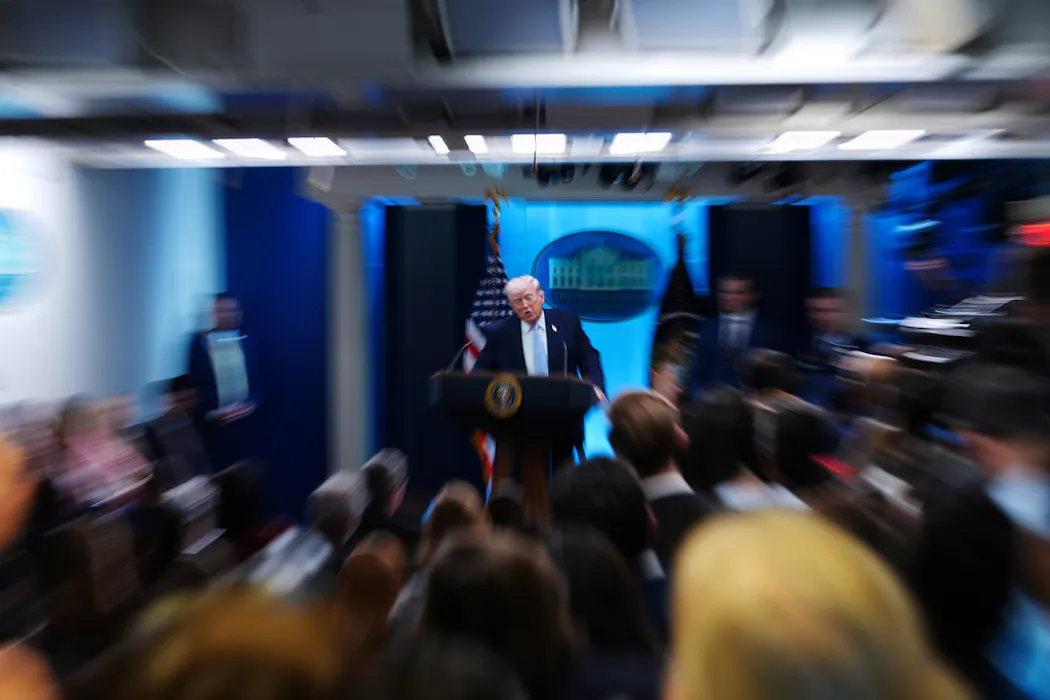
“Never interrupt your enemy when he is making a mistake.”
Napoleon Bonaparte’s maxim may well have been in the minds of policymakers in Moscow and Beijing these past weeks, as the U.S. war in Iran dragged on. And now that a 14-day ceasefire between Tehran and Washington is in effect – with both sides claiming “victory” – Russian and Chinese leaders still have an opportunity to profit from what many see as America’s latest folly in the Middle East.
Throughout the weekslong conflict, China and Russia struck a delicate balance. Both declined to give Iran – seen to a varying degree as an ally of both nations – their full-throated support or sink any real costs into the conflict.
Instead, they opted for limited assistance in the form of small-scale intelligence and diplomatic support.
As a scholar of international security and great power politics I believe that is for good reason. Beijing and Moscow were fully aware that Iran could not “win” against the combined military might of the United States and Israel. Rather, Iran just needed to survive to serve the interests of Washington’s main geopolitical rivals.
Below are four ways in which the U.S. war in Iran has damaged Washington’s position in the great power rivalries of the 21st century.
1. Losing the influence war in the Middle East
As I explore in my book “Defending Frenemies,” the U.S. has long struggled to balance competing objectives in the Middle East. During the Cold War, this meant limiting the Soviet Union’s influence in the region, while contending with the development of nuclear weapons by two troublesome allies, Israel and Pakistan.
By the 2020s, the priorities in Washington were aimed at restricting the influence of the U.S.’s great power rivals – China and to a lesser degree Russia – in the Middle East.
Lintao Zhang/Pool Photo via AP
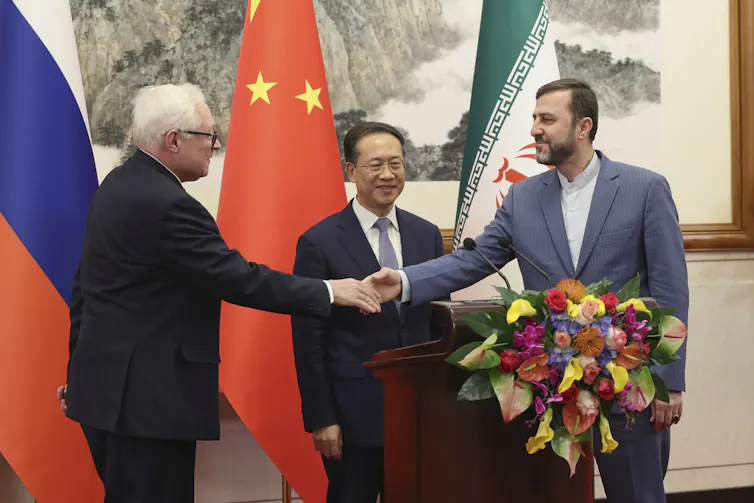
Yet under Presidents Xi Jinping and Vladimir Putin, China and Russia have sought to increase their footprint in the region through a variety of formal alliances and informal measures.
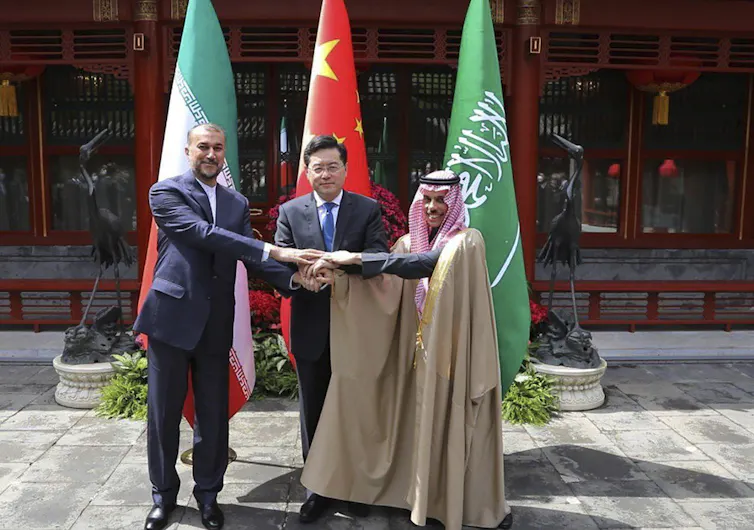
For Russia, this took the form of aligning with Iran, while also partnering with Tehran to prop up the now-ousted regime of President Bashar Assad during the Syrian civil war. Meanwhile, China increased its diplomatic profile in the Middle East, notably by acting as a mediator as Saudi Arabia and Iran restored diplomatic ties in 2023.
The irony of the latest Iran war is that it follows a period in which circumstances were unfavorable to Russian and Chinese aims of increasing their influence in the Middle East.
The fall of Assad in December 2024 deprived Russia of its one reliable ally in the region. And Trump’s May 2025 tour of the Gulf states, in which he secured major technology and economic deals with Saudi Arabia, the United Arab Emirates, Qatar and Bahrain, was aimed at countering China’s growing economic and diplomatic influence in those countries.
With Washington perceived as an increasingly unreliable protector, the Gulf states may seek greater security and economic cooperation elsewhere.
2. Taking US eyes off other strategic goals
In expanding military, diplomatic and economic ties in the Middle East, Russia and China over the past two decades were exploiting a desire by Washington to move its assets and attention away from the region following two costly wars in Iraq and Afghanistan.
Trump’s decision to wage war against Iran directly contradicts the national security strategy his administration released in November 2025. According to the strategy, the administration would prioritize the Western Hemisphere and the Indo-Pacific, while the Middle East’s importance “will recede.”
In co-launching a war in Tehran with Israel, without any prior consultation with Washington’s other allies, Trump has shown a complete disregard for their strategic and economic concerns. NATO, already riven by Trump’s repeated threats to the alliance and designs on Greenland, has now shown further signs of internal divisions.
That offers benefits for China and Russia, which have long sought to capitalize on cracks between America and its allies.
The irony, again, is that the war in Iran came as Trump’s vision of the U.S. as the hegemonic power in the Western Hemisphere was making advances. International law and legitimacy concerns aside, Washington had ousted a thorn in its side with Nicolás Maduro in Venezuela and replaced him with a more compliant leader.
3. Disproportionate economic fallout
Iran’s closure of the Strait of Hormuz, where some 20% of the world’s oil passes, was as predictable as it was destructive for U.S. interests.
But for Russia, this meant higher oil prices that boosted its war economy. It also led to the temporary but ongoing easing of U.S. sanctions, which has provided Moscow an indispensable lifeline after years of economic pressure over the war in Ukraine.
While a prolonged closure and extensive damage to oil and natural gas infrastructure in Iran and the Gulf states no doubt hurts China’s energy security and economy, these were risks Xi appears willing to accept, at least for a time.
And by building up a domestic oil reserve and diversifying energy sources to include solar, electric batteries and coal, China is far better positioned to weather a prolonged global energy crisis than the U.S. Indeed, Beijing has made strides in recent year to encourage domestic consumption as a source of economic growth, rather than be so reliant on global trade. That may have given China some protection during the global economic shock caused by the Iran war, as well as push the economy further down its own track.
The more the U.S. loses control over events in the strait, the more it loses influence in the region – especially as Iran appears to be placing restrictions on ships from unfriendly nations.
Iranian Foreign Ministry via AP
4. Loss of global leadership
Trump’s willingness to abandon talks to go to war, and the contradictory rhetoric he has employed throughout the Iran conflict, has weakened the perception of the U.S. as an honest broker.
That provides a massive soft power boost for Beijing. It was China that pressed Iran to accept the 14-day ceasefire proposal brokered by Pakistan. Indeed, China has slowly chipped away at America’s longtime status as global mediator of first resort.
Beijing has successfully mediated in the past between Iran and Saudi Arabia, and it attempted to do the same with Russia and Ukraine and Israel and the Palestinians.
In general, the Iran war adds weight to Beijing’s worldview that the U.S.-led liberal international order is over. Even if China benefited at some level from the war continuing, its decision to help broker the ceasefire shows that China is increasingly taking on the mantle of global leadership that the U.S. used to own.
And for Russia, the Iran war and the rupture between Trump and America’s NATO allies over their lack of support for it, shift world attention and U.S. involvement from the war in Ukraine.

Jeffrey Taliaferro does not work for, consult, own shares in or receive funding from any company or organization that would benefit from this article, and has disclosed no relevant affiliations beyond their academic appointment.
Back to index · Read original article
Why the US military is stuck using $1 million missiles against Iran’s $20,000 drones
April 22, 2026
Source: MIL-OSI-Submissions-English
Source: The Conversation – USA – By Aaron Brynildson, Law Instructor, University of Mississippi
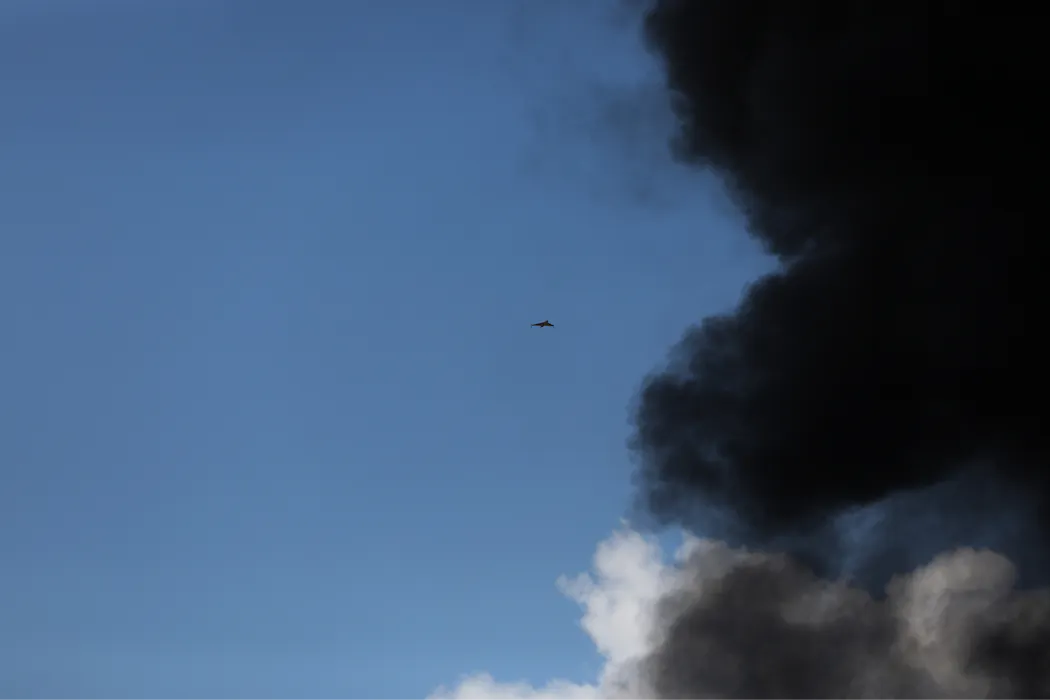
It may sound hard to believe, but the almost trillion-dollar U.S. military is struggling to fight cheap drones in its war with Iran.
Iran has built a simple drone, the Shahed, with a motorcycle-type engine, loaded it with explosives and successfully targeted its neighbors’ cities and power plants.
Iran has also hit U.S. military bases with these drones, including an early April 2026 attack on the U.S. Victory Base Complex in Baghdad.
The drones cost between US$20,000 and $50,000 to build. In response, the U.S. military sometimes fires missiles worth more than $1 million to shoot one down.
As a former U.S. Air Force officer and now national security scholar, I believe that math is a problem: The U.S. military for now has a $1 million answer to a $20,000 question. This math tells you almost everything you need to know about one of America’s biggest national security headaches.
And the frustrating part is that the U.S. military watched this happen in Ukraine for years. It knew the threat was coming.
The weapon that changed modern war
The Shahed isn’t impressive because it’s high-tech. It’s impressive because it isn’t.
Inspection of captured Shahed drones has found that many of their parts are made by ordinary commercial companies. That includes processors from a U.S. manufacturer, fuel pumps from a U.K. company and converters from China.
These military components aren’t hard to get. You could find similar parts in factories or farm machinery. That’s exactly what makes the Shahed so tough to deal with.
Russia, which also produces the drone, tolerates losing more than 75% of its Shahed stock because even at those loss rates, it’s winning the math battle against Ukraine. Russia or Iran don’t need every drone to hit its target. They just need to keep sending waves of them until their opponent runs out of expensive missiles to shoot back.
Ukraine, which had no choice but to learn fast, eventually figured out a better answer. Ukraine developed cheap interceptor drones that could slam into Shahed drones before they reached their targets. Each interceptor costs about $1,000 to $2,000, and Ukrainian manufacturers are producing thousands of them per month. That’s better math: a $2,000 interceptor against a $20,000 attacker.

Ukrainian military’s Strategic Communications Directorate via AP
Ukraine’s battlefield experience, as a result, has become one of the most valuable resources in the world, with American and allied forces asking Ukrainian drone experts to share their knowledge.
Why can’t the U.S. churn out a solution of its own? Because the U.S. military doesn’t have a technology problem but a bureaucracy problem.
The Pentagon’s three-legged slowdown
The U.S. Department of Defense typically can’t just buy things. It follows a long, complicated process that can take a decade or more to go from “we need something” to “here it is.” That process runs through three separate bureaucratic systems, each of which can cause years of delay.
First, someone must write a formal document, known as a requirement, that explains exactly what they need and why. A military service, such as the Air Force, for example, drafts up a requirement and routes it through an internal service review within only their branch.
Until recently, this service-vetted requirement went through a Pentagon review process, the Joint Capabilities Integration and Development System, where all joint services took a look. This process, which the Department of Defense ended in 2025, required approval from military officials.
Even though the joint requirements process was ended, implementation of a new system is far from complete, and the existing culture potentially remains. Under the old requirements process, it took over 800 days to get a requirement approved.
Second, any new program then needs money. This is handled through the planning, programming, budgeting and execution process, a budget cycle designed in 1961. Getting a new program into the budget typically takes more than two years after the requirement is approved, because the military must submit its budget request years in advance. By then, the threat has potentially already moved on.
Third, once a requirement is approved and money allocated, the program then must be developed and built. The average major defense acquisition program now takes almost 12 years from program start just to deliver an initial capability to troops in the field, according to a 2025 Government Accountability Office report.
Add it up and you get a system where the military sees a threat, begs for a solution, argues for money and waits a decade.
Why the system is built this way
The Shahed drone exposed a gap that defense experts have been warning about for years: The U.S. military is very good at building the most advanced, most expensive weapons in the world, but it struggles to build cheap, simple things fast. That is the opposite of what this new kind of warfare demands.
It would be easy, but inaccurate, to blame the military for the decade-long contract process. The real answer is more complicated.

Tom Brenner for The Washington Post via Getty Images
The Pentagon’s lengthy process was designed by the Department of Defense and Congress for a reason. Policymakers created the current system during the Cold War to combat excessive and redundant spending by the separate service branches. The system is built with checkpoints, reviews and approvals to make sure taxpayer money isn’t wasted.
Legacy military contractors also benefit from this dysfunctional process and resist change. They have the capital and know-how to wait out the predictable and stable existing contracts, while vying for new ones. These military contractors rarely need to worry about upstart contractors because they know small companies cannot survive waiting for a decade to secure funding for their prototypes.
The problem is that those rules were built for a world where the biggest threat was another superpower’s expensive jets and missiles. It wasn’t built to fight a flying bomb made from tractor parts. This type of threat requires fast innovation from lean companies, the exact companies that struggle in the current budget process.
What’s changing
There are signs of movement. In August 2025, the Pentagon killed its old requirements process entirely and replaced it with a faster, more flexible system.
However, killing the requirements process dealt with only one leg of the three-legged monster. The 1960s-era budget process that determines how money flows remains largely intact.
The most important reforms still need Congress to act, and Congress moves slowly, too. Congress has launched studies into reforming this system numerous times, with the answers being too politically difficult to implement.
Officials are expanding the use of flexible contracting tools, such as Other Transaction Authority, that let the military skip some traditional rules to get anti-drone technology faster. Yet these flexible contracting tools still represent a small slice of the Defense budget, and their effectiveness is unclear.
Ultimately, instead of using flexible contracting tools to quickly buy new prototypes, the bureaucratically easier solution could be to buy more of the expensive, already approved missiles.
This quick fix would reload the military’s stock of interceptors with existing weapons systems, which is the source of the bad math. The math would get worse and at the same time the operational imperative to find cheaper and better solutions might disappear.
So, as the Shahed keeps flying, the most powerful military in the world is still figuring out the paperwork and looking to other countries for help.

Aaron Brynildson served in the U.S. Air Force from 2016-2025.
– ref. Why the US military is stuck using $1 million missiles against Iran’s $20,000 drones – https://theconversation.com/why-the-us-military-is-stuck-using-1-million-missiles-against-irans-20-000-drones-281089
Back to index · Read original article
The use of artificial intelligence in the war in Iran: what does international law say?
April 22, 2026
Source: French to English Tester Published on: 2026-04-21
Source: The Conversation – France in French (3)– By Louis Perez, Postdoctoral Researcher in International Law, University Paris-Panthéon-Assas
The ongoing conflict in Iran demonstrates the advanced dependence of the US and Israeli militaries on military AI, particularly for targeting and strike planning. The bombing of a school in Minab on February 28, presented as a targeting error and causing the death of 168 civilians, mainly children, highlights legal risks, system flaws, and accountability issues.
The armed conflict against Iran launched last February 28 by Washington and Tel Aviv was quickly described as“first AI war”. A statement that is actually misleading in several respects. Not only has AI already been used intensively in recent conflicts, notablyby Israel in Gaza, but more broadly, AI, as a digital means of processing and analyzing data, has a long-standing history with armed conflicts, including the technical foundationsdate back to the Second World War.
Certainly, the Iranian situation is distinguished by the unprecedented level of sophistication of these means and by the unprecedented dependence of the armies on them. It also differs from the conflict in Gaza in that, this time, AI was deployed against a state adversary in the context of a high-intensity war. Finally, never have states soopenly communicated about their use of these systems. It is this communication combined with the dramatic consequences of certain strikes that raises questions about the compatibility of these practices with international law.
The facts: the use of AI in the war in Iran
Israel’s use of AI in its war against Hamas had beenrevealed by the newspaper+972. This media outlet had exposed what many specialists had suspected for several years. In the context of the conflict in Iran, however, it is the American authorities themselves whohave announcedtheir use of AI.
Indeed, the American military forces admitted to having used AI systems to identify and sort the list of targets at a lightning-fast speed. This process would have resulted inmore than 1,000 strikes, described as very precise, during the first twenty-four hours of the conflict. They reportedly used the system notablyMaven Smart System, a joint project using Palantir’s AI software for surveillance and data collection, coupled with the generative AI system Claude, developed by Anthropic.
However, on the first day of the war, one of the American strikestargeted a school in Minab, causing the death of about 170 civilian victims, mainly children. The United States hasacknowledged their responsibilityin this strike, presented as a mistake. The school was indeed located near a naval base of the Guardians of the Revolution. It used to be an integral part of the same complex before being separated from it. It was therefore outdated information that would have led to authorizing the strike.
Such a misunderstanding is not trivial. ManymediaandNGOquickly established the link between the school and the naval base. It was thus put forward that the American army had probably targeted this building based on outdated data by blindly following arecommendation from an AI systemwithout carrying out the verification that was required.
The legality of using AI
To what extent is the use of AI to carry out these strikes, and the mistake made, lawful under international law?
It should first be specified that AI is not prohibited as such by the law of armed conflict (LOAC, also known as international humanitarian law). For the time being, no legal rule specifically addresses the question of its legality. However, the issue does not evolve in a legal vacuum. The general rules of LOAC apply to the conduct of hostilities, regardless of the means and methods deployed.
One of these rules is theprinciple of distinctionaccording to which only military targets may be subject to attacks, and civilian persons and property must be preserved. Directly targeting a school, such as the one in Minab, in the absence of any military objective within it, therefore constitutes a clear violation of this principle. However, it is unlikely that the American military had the deliberate intention to destroy the school as such. As indicated, it is more likely a target identification error, possibly linked to an AI system trained on outdated data, dating back to the time when the building was still attached to the naval base.
Consequently, the violation is rather related to the precautionary principle. The latter notably prescribes that the parties to the conflict must do everything that is practically possible toverify that the targets to be attacked are indeed military targets. In this case, the American army does not appear to have carried out the necessary checks to ensure that the target was a school. A basic verification, like the one conducted by some media outlets, could have quickly dispelled any doubt.
It should be recalled that, during the war in Gaza,he had been reportedthat Israeli soldiers sometimes had only twenty seconds to validate a target, which raises questions about the practical possibility of effectively adhering to this principle. Concerns related to military AI often focus on the issue of autonomy and the risk that a system designates and engages a target on its own; this is the challenge posed by lethal autonomous weapon systems. However, this example shows that formally maintaining human control may be merely fictitious if the operator lacks both the time and the critical thinking needed to evaluate an algorithmic recommendation.
On the Iranian side, it should be noted that the precautionary principle was not respected either. This principle imposes obligations not only on the attacker but also requires the attacked party to take certain passive precautions: in particular, the parties mustremove civilians and civilian property from military objectives. In this case, converting a building of a naval base into a school, while keeping it in immediate proximity to the rest of the military complex, deliberately exposed this civilian facility to the risks associated with the conduct of hostilities.
What legal, political, and moral responsibilities?
Individual responsibility. The attack does not constitute a war crime.
If the attack constitutes a violation of the UCMJ, it is likely that no American military personnel will be convicted for such acts. Beyond issues of jurisdiction, the main obstacle lies in the fact that neither theviolation of the precautionary principlenor theerrorsleading to violations of IHL do not constitute war crimes under international criminal law.
The material act is well characterized, but the intentional element, that is to say the will to commit the offense, is lacking. The current regime of international criminal liability does not recognize liability for negligence in this context. However, this pragmatic approach could evolve. On the one hand, if algorithmic targeting errors multiply, the “reasonable” nature of the error will become increasingly difficult to invoke, and the conscious use of a system known for its failures could imply a form of indirect intent to target civilians. On the other hand, the law could in the future develop to punish military personnel who, through their negligence, cause the death of civilians.
The responsibility of AI companies. A tug of war between economic and political powers.
Another point of concern relates to the role of private companies specializing in AI, which today hold the majority of the technological expertise deployed on the battlefield. These companies could be held responsible when they develop faulty systems, but beyond this responsibility, a fundamental moral and political question arises regarding the sale of AI technologies for military purposes.
Just before the United States entered the war, Anthropic, which produces the Claude system, hadopposed to unlimited cooperationwith the Pentagon, notably on autonomous weapons, citing its ethical commitments and the technical reliability limits of its systems for the intended uses. The Pentagon had then accused Anthropic ofbetrayal, although its systems continue to be used by the army.
Other companies in the sector, such as OpenAI, Google, Amazon, or Microsoft, on their part, seem to collaborate unreservedly with the militaries, imposing themselvesde factolike real defense companies. It is interesting to note that companies, normally driven by profit, sometimes have more scruples in this matter than certain States, which are nonetheless guarantors of the general interest.
State responsibility. Being accountable for one’s actions and preventing future violations.
States that develop and use military AI bear a particular responsibility. In this case, the United States incurs its international responsibility for the commission of an internationally wrongful act. This responsibility will certainly be difficult to enforce in practice. But beyond that, both legal and political responsibility emerges. Under Article 1 common to the Geneva Conventions, States indeed have the obligation to respect and ensure respect for IHL. Yet, the development of military AI tends to undermine this respect, even to favor and conceal violations of the law.
Various mechanisms could curb this phenomenon, such as training military personnel on the specificities of AI systems, developing rules of engagement specific to AI, technical guarantees of reliability and transparency of systems, as well as regular testing and evaluations. Several international initiatives call for integrating such measures into new legal instruments. However, political will is lacking, particularly among the states at the forefront of the development and use of military AI.
Thus, Pete Hegseth, United States Secretary of Defense, actually seems to be acting in the opposite direction. He recently dismissed military legal advisors whom he considered asobstacles to the proper conduct of hostilitiesand hasqualifies the rules of engagement as stupid. More broadly, the United States opposes any international legal regulation of military AI. AI thus appears both as one of the drivers and the indicator of a profound erosion of IHL.
Jacques Lacan said: “The real is when you bump into it.” The Minab accident is a dramatic event that confirms the risks military AI experts have been warning about for several years and should have prompted much more reaction.
In reality, this information seems to have been overshadowed by other considerations perceived as more urgent and more visible in the context of this war, starting with thenuclear risk. The Minab accident was not the shock expected to prompt states to agree on a specific legal framework applicable to military AI. It remains to be seen whether such a shock is still possible or even desirable.

Louis Perez does not work for, advise, own shares in, or receive funds from any organization that could benefit from this article, and has declared no affiliation other than his research institution.
–ref. The use of artificial intelligence in the war in Iran: what does international law say? –https://theconversation.com/the-use-of-artificial-intelligence-in-the-war-in-iran-what-does-international-law-say-280562
Back to index · Read original article
Why the ceasefire in Lebanon is unlikely to change much on the ground
April 22, 2026
Source: The Conversation – UK
Following direct talks between Lebanese and Israeli officials, a ten-day ceasefire has been agreed between the two countries. It is currently unclear whether Hezbollah, the Iran-backed group that has been fighting Israel in southern Lebanon since early March, has agreed to observe the temporary cessation of hostilities.
If it holds, the ceasefire will be welcomed by the Lebanese government. This latest conflict has brought the state to its knees. Not only is Lebanon’s government logistically and administratively stretched, having to find shelter for and relocate over a million displaced citizens, it is also in a fragile position politically.
Having taken the decision to ban Hezbollah’s military activities and restrict its role to the political sphere on March 2, the government is now attempting to establish full control over the capital of Beirut. The cessation of hostilities between Israel and Hezbollah is thus essential to avoid a complete breakdown in state authority.
The ceasefire also comes despite Israel’s seemingly mixed stance on ending its conflict with Hezbollah. Hours after the signing of an earlier ceasefire between the US and Iran, Israel launched over 100 missiles towards Lebanese territory. The attacks, which came amid confusion over whether Lebanon was covered by the deal, killed more than 300 people in what has become known as “Black Wednesday” in Lebanon.
There has been much speculation about the strategy behind this attack. Some argued the Israelis were taking advantage of the unclear situation. Others saw the attack as a deliberate tactic to derail the entire negotiation process, knowing Iran would insist on Lebanon’s inclusion in any talks. But it soon became clear that the Trump administration preferred for hostilities to, at the very least, de-escalate in Lebanon.
With the US insisting that Israel preserves “its right to take all necessary measures in self-defense, at any time, against planned, imminent or ongoing attacks”, it is unclear what kind of ceasefire will be implemented. The most likely outcome is a scenario in which Israeli attacks on Beirut end, while troops continue their skirmishes with Hezbollah in and around the southern villages.
Hezbollah has already insisted the ceasefire must not allow Israeli troops freedom of movement in the south. However, the Lebanese army has reported that there have been “several Israeli attacks” in southern Lebanon since the ceasefire took effect.
Long road ahead
With ten days to seek further agreements, there is still much left to be negotiated. An ultimate goal for the Lebanese government will be to secure full Israeli withdrawal from the territories it has captured along the border.
The Israeli military has taken full control of the first line of villages and towns along the border and is currently sitting a few kilometres inside Lebanese territory. There has been irreparable damage to buildings in the villages it has occupied, leading some to compare the destruction to that seen in Gaza.
But there is no obvious reason for Israel to withdraw. Local media has reported that Israel is insisting on a long-term security zone in Lebanon of up to 0.8km to provide protection from future Hezbollah rocket attacks. A second zone up to the Litani River – around 30km from the border – would remain under Israeli control and would be “gradually” handed back to the Lebanese armed forces.
A 2006 UN resolution demanded the withdrawal of all armed groups, except for the Lebanese army and UN peacekeepers, from this area. However, the resolution has been violated repeatedly both by Israel and Hezbollah. Israel’s defence minister, Israel Katz, has previously stated that this larger security zone is an objective for his country’s military.
There is also no real bargaining chip the Lebanese government can play. The only resistance to Israel’s presence on Lebanese soil in the current conflict is being provided by Hezbollah, which is not represented in the direct talks. And it is clear by now that Israeli officials simply do not trust the Lebanese state’s ability to control or rein in the Iran-backed party.
There are rumours that Israeli and Lebanese officials may be working on a possible peace treaty, emulating the 1978 Camp David accords. These accords allowed Egypt to reclaim the Sinai peninsula in exchange for peace with Israel. A similar treaty could make Israeli withdrawal from Lebanon possible.
But there are three factors that make a peace treaty unlikely. First, the issue of peace with Israel remains highly divisive in Lebanon. In 2022, surveys implied that roughly 17% of Lebanese people supported normalisation with Israel, a relatively high percentage among Arab countries.
After two conflicts since then, it is unclear how these numbers now break down. But recent Shia-dominated protests in Beirut show just how divided the country remains over this issue. At a protest on April 13, demonstrators called Lebanon’s Sunni prime minister, Nawaf Salam, a “Zionist” for agreeing to engage in talks.
Second, it is unclear that the Israelis themselves are looking for peace. There is considerable division among members of the Israeli cabinet on this issue. While the foreign minister, Gideon Saar, has insisted that “peace and normalisation” are desired, the more extreme right-wing minister Bezalel Smotrich has continued to call for the permanent annexation of southern Lebanon.
And third, what remains an insurmountable reality for both countries is Hezbollah itself. The party’s reason for existence is to resist Israeli occupation and it has said over the years that it would only hand over its weapons in exchange for full Israeli withdrawal and if a Lebanese state emerges that showcases an ability to repel Israeli forces on the border.
The fact that the Lebanese armed forces have not entered the current fight with Israel and have evacuated positions in the south ahead of Israeli incursions will not encourage Hezbollah or its base to trust any peace process and lay down its arms peacefully.
All of this leaves Lebanon with few realistic outcomes. What people inside the country now fear is a return to the status quo: a fragile and unobservable ceasefire, Israeli troops stationed in Lebanese territory and a state stuck in gridlock.

Tarek Abou Jaoude receives funding from The Leverhulme Trust.
Back to index · Read original article
Three reasons Donald Trump won’t pull the US out of Nato
April 22, 2026
Source: The Conversation – Global Perspectives
President Donald Trump met Nato secretary general Mark Rutte on April 8 for what Rutte described as a “very frank, very open” discussion. The pair are reported to have discussed the US-Israeli war against Iran at which, according to White House spokesperson Karoline Leavitt, Trump believes that Nato was “tested and they failed”.
The president later posted to his Truth Social platform that “NATO WASN’T THERE WHEN WE NEEDED THEM, AND THEY WON’T BE THERE IF WE NEED THEM AGAIN.”
The US president’s meeting with Rutte came a week after he told Reuters press agency that he was “absolutely” considering withdrawing the US from Nato, after America’s allies refused to join the US-Israeli campaign against Iran. But this is very unlikely to occur for three reasons.
First, in 2023, Congress enacted a law that prohibits the president from “suspending, terminating, denouncing, or withdrawing the United States from the North Atlantic Treaty” — which established the North Atlantic Treaty Organization (Nato) — without the advice and consent of the Senate or an act of Congress. It is extremely unlikely that this will be changed before the midterm elections in November and impossible subsequently if the Democrats end up controlling the House of Representatives.
The second reason is that Nato membership is popular among Americans. A Pew survey conducted in 2025 showed that 66% of US respondents thought that America benefited from Nato membership while 32% thought the opposite. While, as in many things, the US is divided – with more Democrat voters (77%) supporting Nato membership than Republicans (45%) – it’s clear that, on the whole, Americans approve of Nato membership.
The third reason is that leaving Nato would significantly weaken the US militarily. More than half a century of research by historians and international relations specialists has concluded that leaving Nato would also significantly weaken the US.
In 1989, historian Paul Kennedy’s detailed study of wars over a period of 500 years, The Rise and Fall of the Great Powers, found that a decisive feature of success in war is the resources that parties to the conflict can mobilise. Kennedy cites the examples of the two world wars and demonstrates that a key reason why Germany was defeated was that the allies could mobilise many more resources in manpower, arms production and economic assets than Germany and its allies. Eventually, this proved decisive in both conflicts.
Research into quantifying the military capacity of nations has been conducted for more than half a century as part of the Correlates of War project founded in 1963 by American political scientist J. David Singer. The project aims to systematically collect data about the causes and consequences of wars.
One of the datasets collected in the project is called the Composite Index of National Capability. This combines data on the demographic, industrial, economic and military capabilities of nations, including the US and China. The higher the index score the more resources a county has to fight wars.
Scores in the Composite Index of National Capability of the Top Nations
The chart shows the size of the index for the top countries in the database. China is the most powerful nation in the chart with a score of 23 on the index. The US comes a rather distant second with a score of 13.
There are five Nato nations in the chart in addition to the US. They are Germany, Turkey, the UK, France and Italy. The total score of all six Nato members is 20 – much closer to the Chinese total.
The chart does not include the scores for the remaining Nato member states, but when they are added to the total the Nato score is well above that of China. So the assumption that the US can go it alone in a war with China is doubtful.
How Article 5 works
Article 5 of the Nato charter stipulates that an armed attack against one member state is considered an attack against all, triggering collective defence by all the member states. A recent report by the US Naval War College concluded that: “A large and growing body of evidence suggests that the PLA (People’s Liberation Army) is preparing credible capabilities to invade Taiwan”. The report argued that extensive deception will be used by China to confuse its opponents when the war is launched with rapid action by its armed forces to create a fait accompli. It notes that this type of blitzkrieg attack is very often successful.
If this occurred, then since the US has military advisers in Taiwan and military assets in the region that would need to be neutralised in the first phase of the war if the invasion were to be successful this would trigger Article 5 of the Nato charter. In that case China would find itself at war with 32 Nato countries – not to mention countries in the Far East, such as Japan, Indonesia and Vietnam, who have serious concerns about Chinese aggression, but are not members of the alliance.
So, whatever the US president’s ambivalence towards Nato, the fact is that without its support, the US could face a humiliating defeat by China in a future confrontation over Taiwan. America is much stronger as part of Nato – and Trump’s advisers should be strenuously reinforcing that message.

Paul Whiteley has received funding from the British Academy and the ESRC.
Back to index · Read original article