

Source: French to English Tester Published on: 2026-04-07
Source: The Conversation – France (in French)– By Salomée Ruel, Professor, Léonard de Vinci Pole
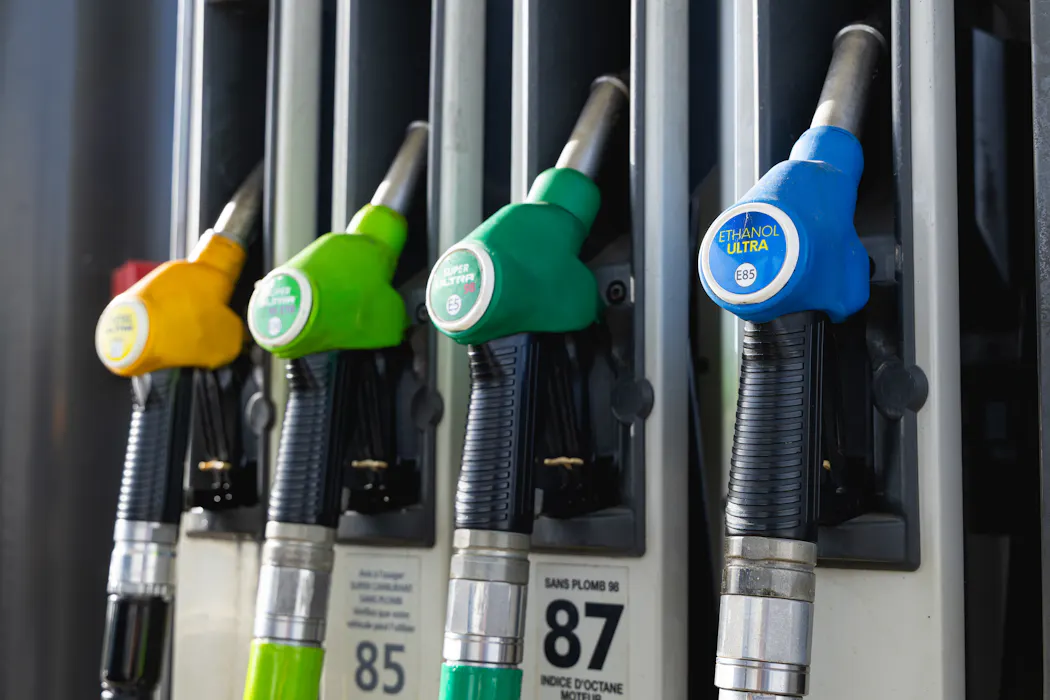
Pump prices rise like a rocket but fall like a feather. An apparently mysterious paradox. In reality, a liter of fuel is the sum of three parameters: the product, namely crude oil which is then refined, the logistics and distribution pair, and especially taxes. Understanding this breakdown clarifies the possible room for maneuver of the State, producers, and distributors.
In the beginning was the product, the “black gold.” The fuel comes from crude oil, often indexed tothe price of Brent, converted from dollar to euro, then processed in refineries. At the market opening on February 15, 2026, the price of abarrel of Brentwas $68.54 (€59.77), $100.88 (€87.98) on March 24, 2026, and $106.6 (€92.97) on March 30, 2026.

Roole
Logically, when the price of a barrel ofBrentincreases (or when the euro falls), the cost of raw materials in the final fuel price also increases. Conversely, if the crude oil price decreases, the cost of raw materials mechanically decreases, but not always instantly! Indeed, there are delays related to stocks or supply chains.
An order of magnitude helps to get one’s bearings: a barrel of Brent contains 159 liters. An additional ten-dollar variation per barrel (8.69 euros) raises the price of one liter of gasoline by 6 cents in dollars (0.052 euro cent) “before taxes”, to which the effects ofexchange rateand refining.

Boursorama
From the oil depot to the gas station
Another part of the price concerns the transportation, storage, and sale of fuel from oil depots to gas stations.
These logistical costs increase year after year due to theinflation– 5.2% in 2022 and 0.9% in 2025. Higher wages or compliance with standards will have consequences on the fuel price. According to theInsee, since 2022, transport-distribution costs have increased “more moderately” than crude oil and refining, but still by about +9 euro cents per liter over the studied period.
Even before the gas stations’ margin, part of the price reflects marginsupstream, notably the refining margin and the conditions of the wholesale market. They can vary quickly, especially in case of logistical tensions.
Another important point: despite the debates, the net margin of a service station generally remains low. From 2 euro cents per liter for stations in large retail chains to around 8 euro cents per liter for more costly stations in the independent network.

Gouv.fr
State Taxes
Thetaxes, set by the State and supplemented by the regions, are the most visible part of the price of a liter of fuel. They represent between 50% and60%of the final price, depending on the type of fuel and the barrel level. Result: when the price of crude varies, only part of the pump price can adjust, the rest being taxes and therefore relativelyrigid.
Two elements must be taken into account:
-
The excise duty (formerly internal consumption tax on energy products, or TICPE), which represents 36% of the pump price of diesel and 39% of that of unleaded petrol (SP95). The fixed amount per litre (in2026, excluding regional surcharges, is 68.29 euro cents per liter for gasoline and 59.40 euro cents per liter for diesel. The national excise tax has been stable since 2018.
-
The value-added tax (VAT),Down 20% since 2006, which applies to the pre-tax price, but also to the excise. When the product price rises, VAT increases mechanically.
In 2025, all regions,except Corsica, adopted the maximum surcharge on the excise rate.
Counterintuitive effects of a tax decrease
On the side of the State, the main leeway is fiscal. For example, temporarily or permanently modifying the excise duty, and using compensation mechanisms such as universal or targeted “discounts.”
In 2026, the government of Sébastien Lecornu favors a support plan of 70 million euros with some“targeted aid”.
Also to read:
How the Iranian revolution caused the second oil shock of 1979
Any tax reduction has a very significant budgetary cost, as the excise duty on fuels remains a major source of revenue. In 2022, discounts on pump prices had cost more thaneight billion euros to the StateIn 2023, fuel vouchers nearly abillion.
It is important to note a key counterintuitive element: when prices rise, motorists often end up reducing their consumption. Now, the excise is perceivedper liter. Consequently, if volumes decrease, excise revenues also decrease, which can cancel out (or even reverse) the VAT gain linked to a higher price.
(Low) margins of distributors

40 million motorists,CC BY-NC
On the retailers’ side, gas stations, such as Shell, Avia, TotalEnergies, Carrefour, Leclerc, or Esso, can adjust their margins. For a highly competitive product like fuel, it is a matter of only a few cents.
That is why the National Automobile Federation and the association 40 Million Motorists (opposed to urban speed cameras and cycle lanes in Paris after the lockdown) launched on March 19, 2026“The ‘transparency operation'”}]} 2 / 2 Please provide the text to be translated. Without the actual text, I cannot perform the translation. If you have the French text needing translation into English, please share it. 3 / 3 Please provide the text to translate. I am ready to assist with your translation. 4 / 4 Please provide the French text you want translated into English. I am here to assist once you do. 5 / 5 Please provide the text that needs to be translated from French to English. I am ready to help. 6 / 6 It appears no translation units or French text was submitted for translation. Could you please provide the French content for translation? 7 / 7 The initial message says: Translate each unit from fr to en…. 8 / 8 {. The issue: displaying at their cash register the precise breakdown of the price of one liter of fuel.
“Rockets and Feathers”
“Prices rise like a rocket, but fall like a feather.” In economics, this phenomenon is known asRockets and Feathers.A studyon the British market highlights that retail prices adjust more quickly when costs increase than when they decrease. Aother study, in the United States, confirms this contradiction.

Roole,CC BY-NC
This asymmetry appears for several reasons.
Deadlines and stocks
A station sells “today” fuel purchased “yesterday.” If the crude oil price drops, the “theoretical” price drops immediately, but the fuel in the tank was paid for at the previous cost.
Conversely, when costs rise, the risk of selling at a loss makes the adjustment faster. Because selling at a loss isa prohibited commercial practice.
Also to read:
Why the strikes on Iran remind us that it is urgent to abandon oil
Adjustment and coordination costs
In many distribution networks, prices are changed “in waves” rather than continuously. Stations do not update their display with each microvariation of the market, but at specific times (for example, once or twice a day), often by looking at the prices of neighboring stations. This adjustment mode can make decreases slower because the station waits for more information (confirmation of the drop) or the “right moment” to align.
Behavior of motorists
When prices soar, consumers compare more, switch stations, and competition “activates”: hence more frequent price updates. When prices fall, competitive pressure is generally less intense. The decrease then spreads more slowly.
“Rigid” taxes
The presence of a fixed excise duty “rigidifies” the price. When the product price decreases, the tax portion remains the same. Logically, the total drop at the pump is mechanically less dramatic than the change in oil prices (and therefore sometimes less noticeable).
Long-term costs
When geopolitical news gets tense,notably in the Strait of Hormuz, it is especially the “product parameter” that runs wild, then relentlessly transmits to the gas station pumps. Consequently, motorists see their fuel bills rise inexorably.
To offset these rate increases, the State has a real leverviataxes (VAT and excise duty), but it is politically sensitive and costly for public finances.
Theoil producers, like Canada, Saudi Arabia, or Kazakhstan, influence the upstreamviathe production level and the price of a barrel of crude oil (Brent). Retailers mainly rely on the speed of price pass-through, with limited profits.
These leeway margins exist, but they are rarely immediate, and almost always come with a medium and long-term cost.

Salomée Ruel does not work for, advise, own shares in, receive funds from an organization that could benefit from this article, and has declared no other affiliation than her research organization.
–ref. When you buy fuel, this is what you are paying for –https://theconversation.com/when-you-buy-fuel-this-is-who-you-pay-279632