

Source: French to English Tester Published on: 2026-04-06
Source: The Conversation – France in French (3)– By Sanam Mahoozi, Research Associate, City St George’s, University of London
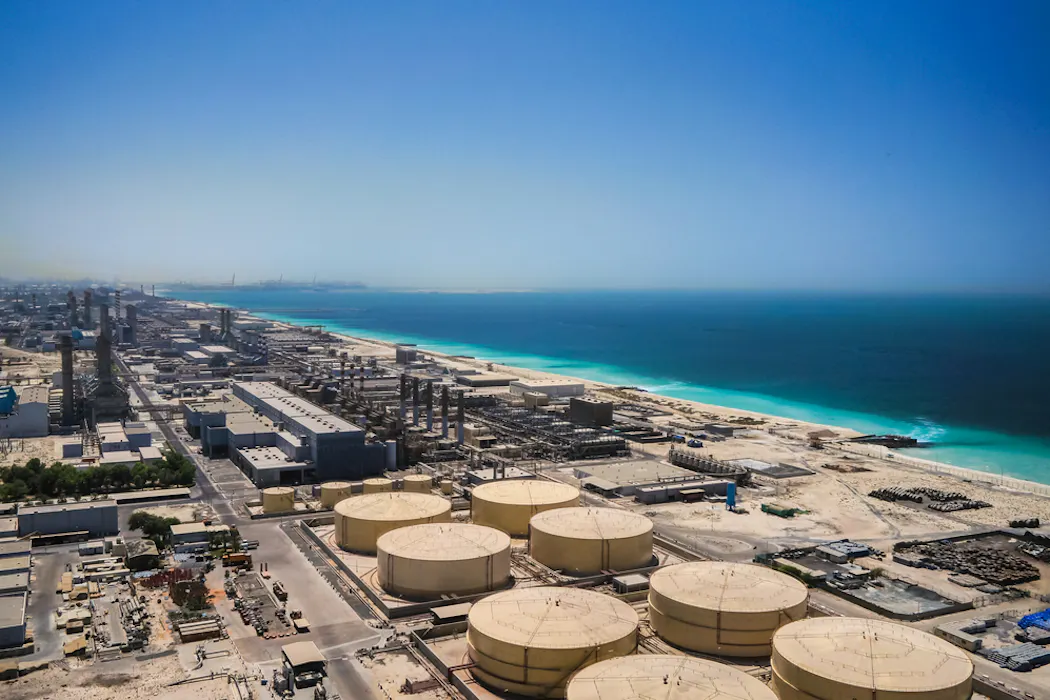
Stanislav71/Shutterstock
As military tensions escalate in the Middle East, desalination plants emerge as critical infrastructure. Their vulnerability could quickly turn a regional conflict into a humanitarian crisis.
For decades, the Gulf has been inseparable from oil. Oil tankers, pipelines, and refineries have long been considered the most strategic — as well as the most vulnerable — infrastructures of the region. In recent days, American-Israeli strikes have targeted oil depots in Tehran. In their wake, residents have mentioned ablack rain falling for hours, which some media described as acid rain.
But it is now the networks and infrastructures that provideaccess to water— as well as desalination plants — that support daily life. When oil supply tightens and prices soar, the “oil shocks”weaken the economies. But awater crisis can, in turn, destabilize entire societies.
Throughout the Arabian Peninsula, the desalination of seawater — which consists of obtaining drinking water from salt water — has transformed these landscapes, among the driest on the planet, into prosperous urban societies. Cities like Dubai, Doha, Kuwait City, or Abu Dhabidepend very largelydesalination plants.
Thus, 70% of thedrinking water of Saudi Arabiacomes from these facilities. In Kuwait and Oman, this share can reach 90%. Without these desalination plants, a large part of themodern urban systemsof the region would struggle to exist.
However, this technological feat hasdiscreetly created a newform of strategic vulnerability. Thewater securityfrom the Gulf indeed depends on a relatively limited number of immense coastal desalination plants – vast industrial complexes that serve as true lifeboats for entire cities.
Themilitary conflictongoing begins to reveal the fragilities. Missile strikes and drone interceptions took place nearlarge desalination plantsas well as complexes combining water and electricity production in the Gulf.Iran like the United Stateshave been accused of targeting these infrastructures. Even when the damage remains limited, these attacks highlight how exposed these facilities are in the context of modern warfare.
Unlike oil pipelines or oil storage terminals, desalination plants cannot be easily bypassed or replaced. They are fixed and extremely complex installations that require significant energy inputs, specialized membranes or thermal systems, as well as continuous chemical and mechanical treatment processes. Repairing major damage to a large facility could take months or even longer.
The consequences of an operational shutdown would be immediate. Most cities in the region have limited water storage capacities. If a large desalination plant were to stop functioning, thegovernments could be facedFaced with the prospect of emergency water rationing for millions of inhabitants in just a few days. Hospitals, sanitation systems, food production, and industry would all be affected simultaneously.
Dependence on desalination
This risk is amplified by the structural scarcity of water in the region. The Middle East is among the regions mostaffected by water stressin the world. Precipitation is low and very irregular there, while the rise in temperatures increases evaporation and thewater demand. The groundwater tables have been heavily overexploited in a large part of the region.
In Iran, thedecrease in river flow, prolonged droughts and the overexploitation of groundwater have already left some reservoirs dry. Similar pressures exist in other countries where renewable fresh water resources are extremely limited. Desalination has thus shifted from a complementary technology to the backbone of urban water supply systems. This evolution has given rise to what could be called a “desalination dependency”: a situation in which entire societies rely on a small number of centralized facilities to ensure their water supply.
The extent of this dependence is striking. Approximately 100 million people in the wider region depend directly ondesalinated water. The Arabian Peninsula alone represents a significant share of the global desalination capacity, and ten of thelargest factories in the worldfocus along the shores of the Gulf and the Red Sea. As the water scarcity intensifies in the region, this dependence is expected to increase further. But increased dependence also means greater exposure to risks.
Hydraulic infrastructures have historically been vulnerable during times of war. From Iraq to Syria and Yemen, water treatment plants, pumping stations, and reservoirs have beendamaged or targetedduring previous conflicts. International humanitarian law indeed recognizes this danger. Article 54(2) of the Additional Protocol to the Geneva Conventions of 12 August 1949, relating to the protection of victims of international armed conflicts (Protocol I),provides that:
It is prohibited to attack, destroy, remove, or disable objects indispensable to the survival of the civilian population, such as foodstuffs, agricultural areas intended for food production, crops, livestock, drinking water installations and reserves, as well as irrigation works, with the specific purpose of depriving the civilian population or the opposing party of their subsistence value, regardless of the reason, whether to starve civilians, force them to relocate, or for any other reason.
These protections apply equally to international armed conflicts and to non-international armed conflicts.
Major risks
The humanitarian consequences of theshutdownthe costs of these vast desalination plants would be considerable. Unlike oil infrastructure, which can sometimes be bypassed thanks to global markets or emergency reserves, urban water supply systems are highly localized. If a desalination plant supplying a major metropolis were affected and damaged during an attack, there would be very few immediate alternatives. Imports of water by tanker ships or emergency desalination units could provide temporary relief, but they could not replace the daily output of a large facility.
The cascading effects would go far beyond drinking water. Sanitation systems would begin to fail, health risks would increase, and economic activity could slow down significantly. Thetourism, industry and services— pillars of the economies of the Gulf States — depend on a stable water supply.
The geopolitical consequences would also be major. The Gulf increasingly appears as a laboratory for understanding new forms of infrastructure vulnerability in the era of climate stress: the militarization of water production systems. As desalination develops worldwide — from California to Australia, via North Africa and southern Europe — comparable vulnerabilities could emerge elsewhere. Coastal megacities facing drought are already investing massively inlarge desalination facilitiesto secure their future water supply. The issue of their protection during times of conflict therefore extends far beyond the Middle East.
Protecting desalination plants is no longer just a regional issue. It is a global challenge: how to secure the technological infrastructures on which the daily life of modern societies now depends, in a context of water scarcity.
Several strategies could reduce these risks. Developing wastewater recycling and restoring natural water storage areas would help diversify resources. More distributed desalination systems — with smaller facilities spread across multiple sites — would limit dependence on a few large plants. Increasing strategic water storage capacities would also provide cities with a buffer in case of sudden disruption.
But technical solutions alone will not be sufficient. The real challenge is to recognize what desalination plants have become: critical humanitarian infrastructures on which the water supply of entire populations depends.
During a large part of the 20th century, theoil shapedthe Gulf cities. In the 21st century, it is desalinated water that makes them live.

Sanam Mahoozi does not work for, advise, own shares in, receive funds from any organization that could benefit from this article, and has declared no affiliation other than her research institution.
–ref. Beyond oil, desalination plants are becoming the most critical infrastructure in the Gulf –https://theconversation.com/beyond-oil-desalination-plants-are-becoming-the-gulf-s-most-critical-infrastructure-279591