

Source: French to English Tester Published on: 2026-04-04
Source: The Conversation – in French– By Dennis Murphy, Ph.D. Student of International Affairs, Georgia Institute of Technology
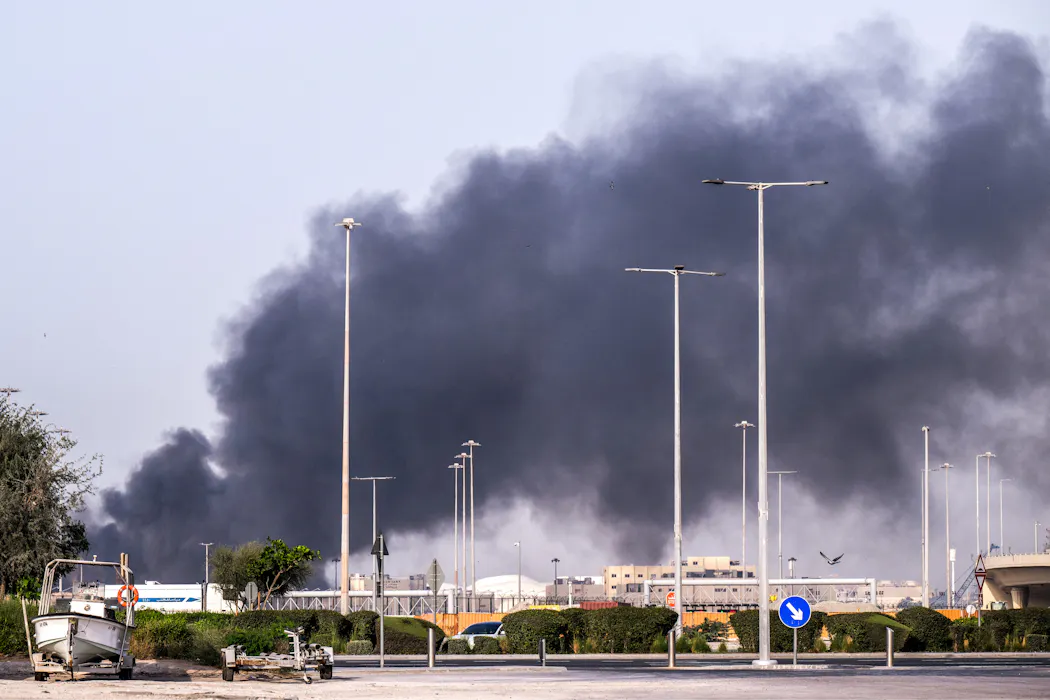
Artificial intelligence has become a central tool in military operations, notably used by the United States Army. The data centers that power it, mainly based in the Gulf region, thus constitute crucial infrastructure. However, like any critical device, they become potential targets in times of war.
The 1erMarch 2026, shortly before dawn, Iranian drones targetedtwo Amazon data centerslocated in the United Arab Emirates. A third center, in Bahrain, has also beentouched, although it is not established whether it was a deliberate target. Iran also indicated that it considered thecommercial data centerslike targets.
This is the first time that a state deliberately targets data centers as part of an armed conflict. In the past, these infrastructures had been subjected to espionage and cyberattacks, notably in 2024, when Ukrainian hackers destroyed data stored inRussian military centersbut the Iranian attack is distinguished by its nature: its drones have this time damaged physical infrastructure.
The progress of artificial intelligence strengthensthe strategic importance of data centers. The US military, in particular, has heavily invested in AI tools intended fordecision support systems(SAD) as part of its operations in Iran and Venezuela. That is why Iranian forces might seek to neutralize the infrastructures that, according to their leaders, support these military operations.
Also to read:
War in the Age of AI
It is, however, not established that these specific centers were used by the United States military. The attacks may have had the sole objective of punishing the United Arab Emirates due to their ties with the United States.
As aPhD studentat Georgia Tech specialized in the impact of technologies on international security, I do not consider that these attacks fundamentally change the nature of war. They nevertheless force nations to recognize that data centers are now potential targets in armed conflicts – even when they do not directly support military operations.
Data centers and the cloud
The American army is increasingly integrating artificial intelligence into itsdecision support systems. From the operation “Absolute Resolve,” which led to the kidnapping of the Venezuelan presidentNicolás Maduro, in support ofmilitary strikes against Iran, the United States has used AI, notably Anthropic’s Claude, for intelligence analysis and operational support.
While AI allows for accelerating the conduct of military operations, the tools it uses are not embedded on board planes or ships. When a military personnel uses Claude, the IT infrastructure that powers the model and its analyses is generally hosted on a secure Amazon Web Services (AWS) cloud platform, which stores data.confidential government dataas well as various software tools.
Commercial data centers constitute the physical foundation of the cloud. For example, whenever a user opens Netflix to watch a series, the content is probably streamed from a data center of this type.which perhaps also belongs to AWSWhen these centers fail, the interruptions affect amultitude of entertainment, information, and government services.
Since AI is an engine of economic growth, data centers represent critical infrastructure. They ensure the proper functioning of AI as well as a large part of the Internet on which governments and the private sector rely. When Iran attacked the data centers of the United Arab Emirates, it caused massive disruptions within thelocal banking system.
Commercial data centers operate most of the technologies on which the modern world relies, including AI systems. Disrupting them is tantamount to paralyzing both a country’s military and society. Given that AWS operates a large number of these centers globally, it is likely that its infrastructures will continue to be targeted in future conflicts.
Taking it out on the United States’ allies
Researchers fromJust Security noted, on March 12, 2026, that the United States now requires cloud computing service providers to store government and military data on American territory or inDepartment of Defense bases: “Transferring this data to Amazon data centers in the Gulf region would require special authorization; we do not know if this has been granted.”
The Islamic Revolutionary Guard Corps nevertheless stated that these strikes targeted data centers supporting the military and intelligence activities of “the enemy.” Ten days after the initial attack, an Iranian news agency declared that data centers of major technology companies and other physical infrastructures in the region were now considered as“enemy technological infrastructures”.
Rather than for military reasons, Iran was perhaps targeting the Emirates with the aim ofdestabilize the global economy and attract international attention. The Gulf being one of the main beneficiaries ofAmerican technological investments, the attack could have been symbolic by targeting the heart of American-Arab cooperation. AI infrastructures, particularly commercial data centers, constitute aincreasing share of American leadership in the region. This conflict could therefore jeopardize the future of AI infrastructures in the Gulf.

Giuseppe Cacace/AFP
Growing importance, vulnerable targets
And since data centers are increasingly important for national security, the economy, and society in general, it can be tempting to consider these attacks as a fundamental upheaval in the nature of war. While this hypothesis is possible, it should be recalled that Iran launches thousands of missiles and drones against targets in the Emirates. Although the vast majority have been intercepted, the two that struck the data centers represent only a small portion of the strikes that have hit civilian infrastructures, notably theairports and hotels.
The vulnerability of commercial data centers – large, relatively fragile, and lacking their own air defenses – suggests that those located in the Emirates may have been chosen as targets for reasons of opportunity or ease. In other words, they were struck because they could be.
It seems, however, likely that as the use of AI and cloud services grows on a global scale, commercial data centers will become recurring targets in future conflicts.

Dennis Murphy is affiliated with Georgia Tech, the Georgia Tech Research Institute, the RAND Corporation, the Notre Dame International Security Center, and the Astra Fellowship. He was previously affiliated with the Lawrence Livermore National Laboratory, the Marine Corps University, and the ERA Fellowship program at the University of Cambridge.
–Ref. Why Iran targets Amazon data centers – and what it changes in the war –https://theconversation.com/why-iran-is-targeting-amazon-data-centers-and-what-it-changes-in-the-war-279867