

Source: French to English Tester Published on: 2026-04-03
Source: The Conversation – France in French (2)– By Gregory Radisic, Fellow at the Centre for Space, Cyberspace and Data Law; Senior Teaching Fellow, Faculty of Law, Bond University
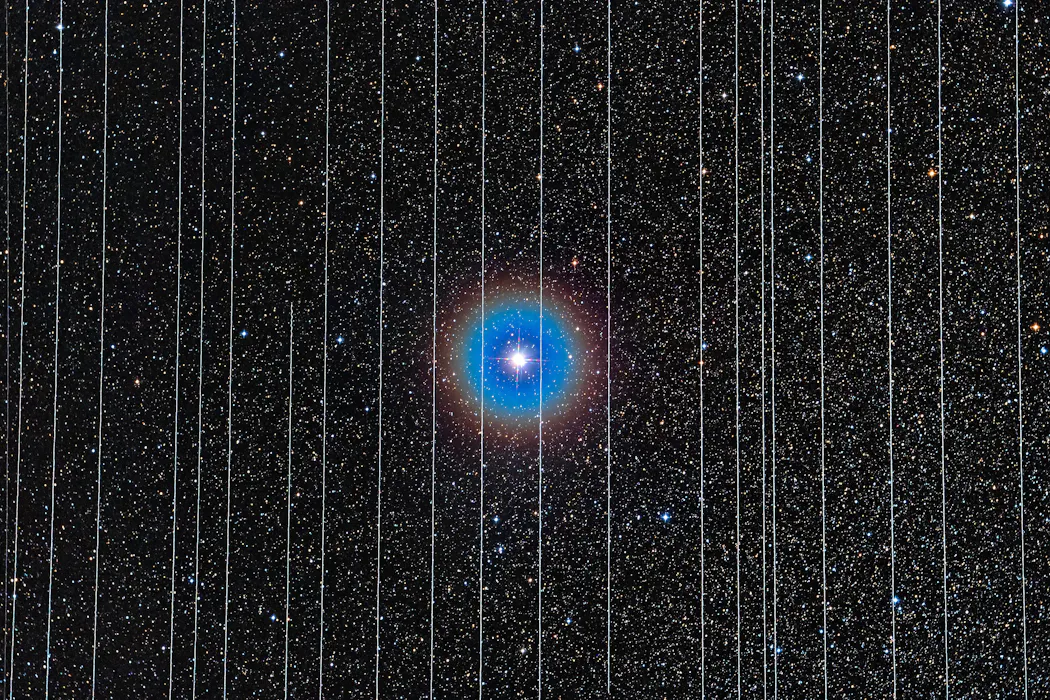
Tens of thousands of satellites are already in orbit, and more than a million are planned. This industrialization of the sky could disrupt astronomical observation, navigation, and certain cultural traditions, without these impacts being truly taken into account by regulation.
On January 30, 2026, SpaceX filed an application with the United States Federal Communications Commission (FCC) to deploy a megaconstellation that could includeup to one million satellites, constellation destined to feeddata centers in space.
The project plans satellites operating between 500 and 2,000 kilometers altitude in low Earth orbit. Some of these orbits are designed to benefit from almost permanent exposure to the sun. The public can indeedcurrently submit commentson this proposal.
The application filed by SpaceX is only the latest in a series of projects ofsatellite megaconstellations. Satellites that generally fulfill a single function and have a relatively short lifespan, about five years before being replaced.
In February 2026, approximately14,000 of themwere already in orbit. At the same time,1.23 million additional satellitesare in project. The authorization procedure for these satellites relies almost exclusively on the very limited technical information provided by the companies that produce them to the regulators. The cultural, spiritual consequences – and a large part of the environmental impacts of these objects – remain largely ignored. Yet, they should be part of the assessment.
The night sky is going to change profoundly
At this scale of growth, the night sky will be permanently transformed on a global scale, and thisfor generations.
Satellites in low Earth orbit reflect sunlight for about two hours after sunset and before sunrise. Despite engineering efforts aimed atreduce their brightness, these satellites – sometimes the size of a truck – appear in the night sky as moving points of light. Projections show that future satelliteswill considerably increase this light pollution.
In 2021, astronomers estimated that, within less than a decade, one shining point out of fifteen in the night skywould be a moving satellite. This estimate only took into account the 65,000 satellites of megaconstellations proposed at the time.
Once one million of them are deployed, the consequences for the night sky could be difficult to reverse. Even if the average lifespan of a satellite is only about five years, companies are designing these megaconstellations to be continuously replaced and expanded. The result: an ongoing industrial presence in the night sky.
All of this causes a “reference drift syndrome”(shifting baseline syndrome)applied to space: each new generation ends up considering an increasingly degraded night sky as normal. Satellites crossing the sky become the norm.
For the first time in the history of humanity, this shift in reference means that today’s children will not grow up with the same night sky as all previous generations have known.
Houston, we have a “mega” problem…
The colossal volume of planned satellites raises concerns from all sides. Astronomers are especially apprehensive about theintense bright reflectionsand theradio broadcastswhich could disrupt sky observations.
In the industry as well, alarms are multiplying: orbital traffic management, collision risks, international coordination. Unlike in aviation, there is still nounified space traffic management system.
Megaconstellations also increase the risk of Kessler syndrome, achain reaction of collisionspotentially uncontrollable. There are already50,000 pieces of debris in orbitof at least ten centimeters. If the satellites ceased all collision-avoidance maneuvers, the latest data show that aa major collision would occur on average every 3.8 days.
Cultural concerns are also numerous. The light pollution generated by satellites is likely to affectindigenous uses of the night skylinked toancient oral traditions, for navigation, hunting, or even spiritual practices.
The launch of such a large number of satellites also requires enormous quantities of fossil fuels, which candamage the ozone layer. Once their mission is completed, these satellites are designed to burn up in the atmosphere. This process raises another environmental concern: the deposition oflarge quantities of metals in the stratosphere, likely to cause aozone degradationand other potentially harmful chemical reactions.
All of this also raises legal questions. Under theinternational space law, it is the States – and not the companies – that are responsible for the damage caused by their space objects.
Legal experts specializing in space law are now trying to determine whether this legal framework can truly allow holding thecompaniesor the responsible individuals. The issue becomes all the more urgent as the risks ofmaterial damage, deathsor ofirreversible environmental damageincrease.
The flaws in regulation can no longer be ignored
Today, the rules governing satellite projects are essentially technical: for example, they concern the radio frequencies used. At the national level, authorities focus mainly on the safety of launches, limiting environmental impacts on Earth, and liability in the event of an accident.
What these regulations do not take into account, however, is the effect that hundreds of thousands of bright satellites would have on the night sky – for scientific research, navigation, transmissions, and Indigenous ceremonies…
These effects are neither traditional environmental harms nor mere engineering issues. They are cultural impacts that largely escape current regulatory frameworks. That is why the world would need an impact assessment on “night skies,” such asproposethe lawyers specialized in space law Gregory Radisic and Natalie Gillespie.
The objective would be to establish a systematic method to identify, document, and genuinely take into account all the effects of a satellite constellation before its deployment.
How would such an evaluation work?
The first step would be to collect data from all stakeholders. Astronomers – both amateur and professional – atmospheric scientists, environmental researchers, experts on cultural issues, affected communities, and industrial actors would each contribute their point of view.
Then, it would be essential to model the cumulative effects of the satellites. The assessments should analyze how these constellations will change thevisibility of the night sky and the brightness of the sky, theorbital congestionand the risk ofground victims.
Thirdly, clear criteria should be defined to determine in which cases the preservation of a clear sky is essential – for scientific research, navigation, education, cultural practices, or even the common heritage of humanity.
Fourthly, the assessment should include mitigation measures: reducing the brightness of the satellites, modifying the orbits, or adjusting the deployment to limit the damage. It could also include incentives to use as few satellites as possible for a given project.
Finally, the conclusions should be transparent, subject to independent review, and directly taken into account in authorization decisions and public policies.
This is not a veto tool
This impact assessment on night skies is not intended to block space development. Rather, it aims to clarify trade-offs and improve decision-making. It may lead to prioritizing satellites that reduce brightness and visual interference from the outset, choosing orbital configurations that limit cultural impact, conducting earlier and more thorough consultations, as well as better consideration of cultural dimensions when damage cannot be avoided.
Above all, it ensures that the communities affected by the satellite constellations do not discover their existence only once the authorizations have already been granted — when bright points begin to cross their sky.
The question is no longer whether the night sky will change: it is already changing. The time has come for governments and international institutions to establish fair rules before these transformations become irreversible.

Gregory Radisic is affiliated with the International Institute of Space Law as well as the Institute on Space Law and Ethics of the organization For All Moonkind Inc.
Samantha Lawler receives funding from the Natural Sciences and Engineering Research Council of Canada. She is also a fellow of the Outer Space Institute.
–ref. One million satellites? The new rush to orbit worries scientists and lawyers –https://theconversation.com/one-million-satellites-the-new-rush-to-orbit-worries-scientists-and-lawyers-276768