

AM Edition – Here are the Top Full Text Law and Order Articles on ForeignAffairs.co.nz for April 4, 2026.
AI in the courtroom: the dangers of using ChatGTP in legal practice in South Africa
April 3, 2026
Source: The Conversation – Africa (2) [3]
A South African court case made headlines for all the wrong reasons in January 2025. The legal team in Mavundla v MEC: Department of Co-Operative Government and Traditional Affairs KwaZulu-Natal and Others had relied on case law that simply didn’t exist. It had been generated by ChatGPT, a generative artificial intelligence (AI) chatbot developed by OpenAI.
Only two of the nine case authorities the legal team submitted to the High Court were genuine. The rest were AI-fabricated “hallucinations”. The court called this conduct “irresponsible and unprofessional” and referred the matter to the Legal Practice Council, the statutory body that regulates legal practitioners in South Africa, for investigation.
It was not the first time South African courts had encountered such an incident. Parker v Forsyth in 2023 also dealt with fake case law produced by ChatGPT. But the judge was more forgiving in that instance, finding no intent to mislead. The Mavundla ruling marks a turning point: courts are losing patience with legal practitioners who use AI irresponsibly.
We are legal academics who have been doing research on the growing use of AI, particularly generative AI, in legal research and education. While these technologies offer powerful tools for enhancing efficiency and productivity, they also present serious risks when used irresponsibly.
Aspiring legal practitioners who misuse AI tools without proper guidance or ethical grounding risk severe professional consequences, even before their careers begin. Law schools should equip students with the skills and judgment to use AI tools responsibly. But most institutions remain unprepared for the pace at which AI is being adopted.
Very few universities have formal policies or training on AI. Students are left with no guide through this rapidly evolving terrain. Our work calls for a proactive and structured approach to AI education in law schools.
When technology becomes a liability
The advocate in the Mavundla case admitted she had not verified the citations and relied instead on research done by a junior colleague. That colleague, a candidate attorney, claimed to have obtained the material from an online research tool. While she denied using ChatGPT, the pattern matched similar global incidents where lawyers unknowingly filed AI-generated judgments.
In the 2024 American case of Park v Kim, the attorney cited non-existent case law in her reply brief, which she admitted was generated using ChatGPT. In the 2024 Canadian case of Zhang v Chen, the lawyer filed a notice of application containing two non-existent case authorities fabricated by ChatGPT.
The court in Mavundla was unequivocal: no matter how advanced technology becomes, lawyers remain responsible for ensuring that every source they present is accurate. Workload pressure or ignorance of AI’s risks is no defence.
The judge also criticised the supervising attorney for failing to check the documents before filing them. The episode underscored a broader ethical principle: senior lawyers must properly train and supervise junior colleagues.
The lesson here extends far beyond one law firm. Integrity, accuracy and critical thinking are not optional extras in the legal profession. They are core values that must be taught and practised from the beginning, during legal education.
The classroom is the first courtroom
The Mavundla case should serve as a warning to universities. If experienced legal practitioners can fall into AI traps regarding law, students still learning to research and reason can too.
Generative AI tools like ChatGPT can be powerful allies – they can summarise cases, draft arguments and analyse complex texts in seconds. But they can also confidently fabricate information. Because AI models don’t always “know” when they are wrong, they produce text that looks authoritative but may be entirely false.
Read more:
AI can be a danger to students – 3 things universities must do
For students, the dangers are twofold. First, over-reliance on AI can stunt the development of critical research skills. Second, it can lead to serious academic or professional misconduct. A student who submits AI-fabricated content could face disciplinary action at university and reputational damage that follows them into their legal career.
In our paper we argue that, instead of banning AI tools outright, law schools should teach students to use them responsibly. This means developing “AI literacy”: the ability to question, verify and contextualise AI-generated information. Students should learn to treat AI systems as assistants, not authorities.
Read more:
Universities can turn AI from a threat to an opportunity by teaching critical thinking
In South African legal practice, authority traditionally refers to recognised sources such as legislation, judicial precedent and academic commentary, which lawyers cite to support their arguments. These sources are accessed through established legal databases and law reports, a process that, while time-consuming, ensures accuracy, accountability and adherence to the rule of law.
From law faculties to courtrooms
Legal educators can embed AI literacy into existing courses on research methodology, professional ethics and legal writing. Exercises could include verifying AI-generated summaries against real judgments or analysing the ethical implications of relying on machine-produced arguments.
Teaching responsible AI use is not simply about avoiding embarrassment in court. It is about protecting the integrity of the justice system itself. As seen in Mavundla, one candidate attorney’s uncritical use of AI led to professional investigation, public scrutiny and reputational damage to the firm.
The financial risks are also real. Courts can order lawyers to pay costs out of their pockets, when serious professional misconduct occurs. In the digital era, where court judgments and media reports spread instantly online, a lawyer’s reputation can collapse overnight if they are found to have relied on fake or unverified AI material. It would also be beneficial for courts to be trained in detecting fake cases generated by AI.
The way forward
Our study concludes that AI is here to stay, and so is its use in law. The challenge is not whether the legal profession should use AI, but how. Law schools have a critical opportunity, and an ethical duty, to prepare future practitioners for a world where technology and human judgment must work side by side.
Speed and convenience can never replace accuracy and integrity. As AI becomes a routine part of legal research, tomorrow’s lawyers must be trained not just to prompt – but to think.

The authors do not work for, consult, own shares in or receive funding from any company or organisation that would benefit from this article, and have disclosed no relevant affiliations beyond their academic appointment.
Back to index · Read original article
What a US attorney general actually does – a law professor spells it out
April 3, 2026
Source: MIL-OSI-Submissions-English
Source: The Conversation – USA – By Jennifer Selin, Associate Professor of Law, Arizona State University
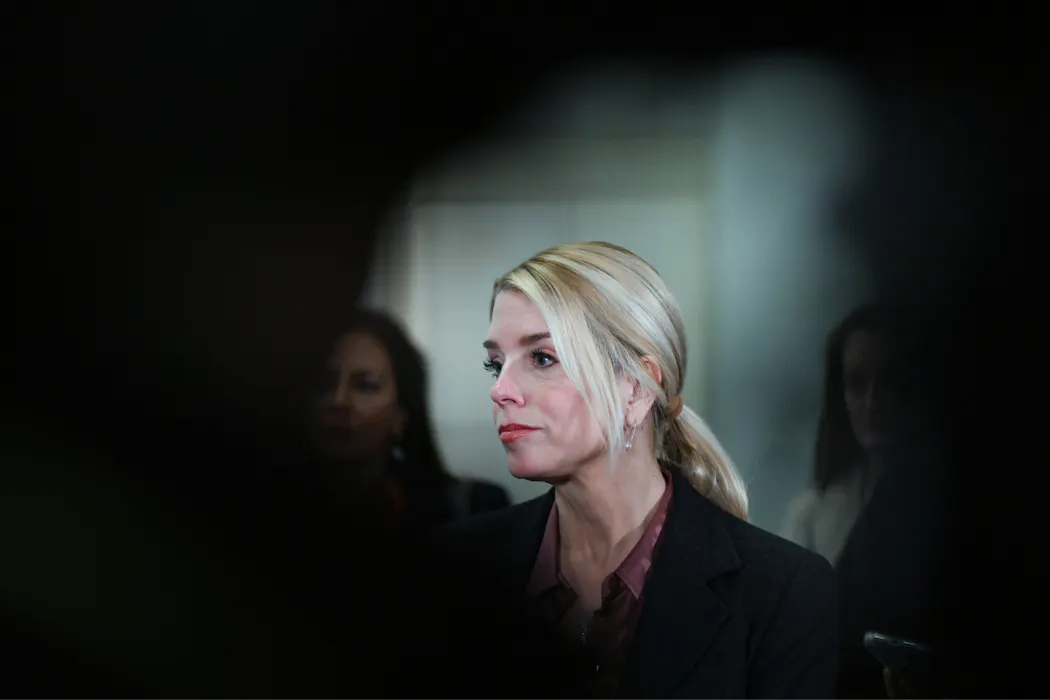
President Donald Trump fired Attorney General Pam Bondi on April 2, 2026, only 14 months after she was sworn into office, making her time in the role the shortest in 60 years.
While much recent attention has focused on Trump’s decision to fire Bondi, there has been less attention on what the attorney general actually does, or what happens when the attorney general gets fired.
The attorney general is the lawyer appointed by the president and confirmed by the Senate to lead the Department of Justice, known as the DOJ. Because the attorney general’s expansive responsibilities place the office at the forefront of both politics and the law, the position is one of the most important in the federal executive branch.

Washington Bureau/Getty Images
File lawsuits, give advice
Congress created the position of attorney general in 1789 so the national government had a designated lawyer to conduct federal lawsuits for crimes against the United States such as counterfeiting, piracy or treason, and to give legal advice to the president and cabinet officials, such as the secretary of the Treasury.
Initially, the attorney general served part time. Indeed, for the first few decades of U.S. history, most attorneys general maintained private law practices and even lived away from the capital. But as the federal government began to do more, the role of the attorney general grew and became a full-time job.
The attorney general represents the United States in all legal matters. In doing so, the attorney general supervises federal prosecutions by the 93 U.S. attorneys who live and work across the United States to enforce federal laws. The attorney general also supervises almost all legal actions involving federal agencies – from the Department of Homeland Security and the Environmental Protection Agency to the Social Security Administration.
For example, in the past few months, DOJ lawyers supervised by the attorney general have charged people with conspiring to smuggle artificial intelligence technology to China and negotiated an agreement requiring Ford Motor Company to clean contaminated groundwater in New Jersey. They have also worked with Wisconsin to successfully prosecute deceptive timeshare exit services targeting elderly customers.
Additionally, the attorney general gives legal advice to the president and heads of the cabinet departments. This includes providing recommendations to the president on whom he should appoint as federal judges and prosecutors.
In combination, these two aspects of the job, representing the U.S. and advising the cabinet departments, mean that the attorney general plays a key role in helping the president perform his constitutional duty to take care that the laws of the United States are faithfully executed.
115,000 employees
Since 1870, attorneys general have had an entire executive department – the Department of Justice – to help them execute their duties.
Today’s department contains over 70 distinct offices, initiatives and task forces, all of which the attorney general supervises. There are currently over 115,000 employees in the department.
The DOJ contains litigation units divided by subject matter like antitrust, civil rights, tax and national security. Each of these units conducts investigations and participates in federal lawsuits related to its expertise.
The Justice Department also has several law enforcement agencies that help ensure the safety and health of people who live in the United States. The most well-known of these agencies include the FBI, the Drug Enforcement Administration and the U.S. branch of the International Criminal Police Organization, known as Interpol.
Additionally, the DOJ contains corrections agencies like the Federal Bureau of Prisons and the U.S. Parole Commission. These agencies work to ensure consistent and centralized coordination of federal prisons and offenders.
Finally, the department manages several grant administration agencies. These agencies, such as Community Oriented Policing Services, the Office of Justice Programs and the Office of Sex Offender Sentencing, Monitoring, Apprehending, Registering and Tracking, or SMART, provide financial assistance, training and advice to state, local, tribal and territorial governments as they work to enforce the law in their own communities.

The Diplomatic Reception Rooms, U.S. Department of State, Washington, D.C.
Separating politics from law
Given all the attorney general’s responsibilities, the role is both political and legal. As such, attorneys general historically have a difficult task in separating their jobs as policy adviser from their duties as chief legal officer of the United States.
For example, President George W. Bush’s attorney general, Roberto Gonzales, resigned from office amid accusations of the DOJ’s politicized firing of U.S. attorneys and misuse of terrorist surveillance programs. And Loretta Lynch, President Barack Obama’s attorney general, was criticized for meeting privately with former President Bill Clinton while former Secretary of State Hillary Clinton was under investigation by the DOJ.
The attorney general’s job is complicated by the fact that the president has the constitutional power to fire them for political reasons.
During his first term, Trump replaced Attorney General Jeff Sessions after Sessions angered Trump by recusing himself – removing himself – from overseeing the Mueller investigation into Russian interference in the 2016 election.
Given the attorney general’s connection to the president and the attorney general’s position as the head of the DOJ, when Bondi originally got the job critics saw her as a key part of Trump’s plan to control the department’s agenda, including through the use of the FBI to pursue his perceived enemies.
And now Trump has reportedly fired Bondi for failure to execute his vision.
What next?
Under current law, the president can designate a Senate-confirmed official in the administration or another high-ranking person who has worked within the DOJ for 90 days to serve as acting attorney general. Presidents across both parties historically have relied on these temporary appointments to steer the department as they decide whom to nominate officially for the position.
President Trump has named Todd Blanche as acting attorney general. Blanche, who served as deputy attorney general under Bondi, represented Trump in three of the four major criminal lawsuits he faced before the 2024 presidential election.
Trump is rumored to have discussed Lee Zeldin, the current head of the Environmental Protection Agency, to be Bondi’s permanent replacement. Zeldin worked as part of Trump’s legal defense team during his first impeachment trial.
Blanche’s temporary appointment and Zeldin’s potential nomination have spurred more questions about the politicization of the DOJ.
A recent Associated Press study found that only two in 10 Americans have a great deal of confidence in the department. In part, this is a result of the longstanding political connections between the presidents and their attorneys general.
Ultimately, the fate of the nation’s top law enforcement official is in the hands of politicians.
This is an updated version of an article originally published on Dec. 19, 2024. It is part of a series of profiles explaining Cabinet and high-level administration positions.

Jennifer Selin does not work for, consult, own shares in or receive funding from any company or organization that would benefit from this article, and has disclosed no relevant affiliations beyond their academic appointment.
– ref. What a US attorney general actually does – a law professor spells it out – https://theconversation.com/what-a-us-attorney-general-actually-does-a-law-professor-spells-it-out-279949
Back to index · Read original article
What does the US attorney general actually do? A law professor explains
April 3, 2026
Source: MIL-OSI-Submissions-English
Source: The Conversation – USA – By Jennifer Selin, Associate Professor of Law, Arizona State University
President Donald Trump fired Attorney General Pam Bondi on April 2, 2026, only 14 months after she was sworn into office, making her time in the role the shortest in 60 years.
While much recent attention has focused on Trump’s decision to fire Bondi, there has been less attention on what the attorney general actually does, or what happens when the attorney general gets fired.
The attorney general is the lawyer appointed by the president and confirmed by the Senate to lead the Department of Justice, known as the DOJ. Because the attorney general’s expansive responsibilities place the office at the forefront of both politics and the law, the position is one of the most important in the federal executive branch.
Washington Bureau/Getty Images
File lawsuits, give advice
Congress created the position of attorney general in 1789 so the national government had a designated lawyer to conduct federal lawsuits for crimes against the United States such as counterfeiting, piracy or treason, and to give legal advice to the president and cabinet officials, such as the secretary of the Treasury.
Initially, the attorney general served part time. Indeed, for the first few decades of U.S. history, most attorneys general maintained private law practices and even lived away from the capital. But as the federal government began to do more, the role of the attorney general grew and became a full-time job.
The attorney general represents the United States in all legal matters. In doing so, the attorney general supervises federal prosecutions by the 93 U.S. attorneys who live and work across the United States to enforce federal laws. The attorney general also supervises almost all legal actions involving federal agencies – from the Department of Homeland Security and the Environmental Protection Agency to the Social Security Administration.
For example, in the past few months, DOJ lawyers supervised by the attorney general have charged people with conspiring to smuggle artificial intelligence technology to China and negotiated an agreement requiring Ford Motor Company to clean contaminated groundwater in New Jersey. They have also worked with Wisconsin to successfully prosecute deceptive timeshare exit services targeting elderly customers.
Additionally, the attorney general gives legal advice to the president and heads of the cabinet departments. This includes providing recommendations to the president on whom he should appoint as federal judges and prosecutors.
In combination, these two aspects of the job, representing the U.S. and advising the cabinet departments, mean that the attorney general plays a key role in helping the president perform his constitutional duty to take care that the laws of the United States are faithfully executed.
115,000 employees
Since 1870, attorneys general have had an entire executive department – the Department of Justice – to help them execute their duties.
Today’s department contains over 70 distinct offices, initiatives and task forces, all of which the attorney general supervises. There are currently over 115,000 employees in the department.
The DOJ contains litigation units divided by subject matter like antitrust, civil rights, tax and national security. Each of these units conducts investigations and participates in federal lawsuits related to its expertise.
The Justice Department also has several law enforcement agencies that help ensure the safety and health of people who live in the United States. The most well-known of these agencies include the FBI, the Drug Enforcement Administration and the U.S. branch of the International Criminal Police Organization, known as Interpol.
Additionally, the DOJ contains corrections agencies like the Federal Bureau of Prisons and the U.S. Parole Commission. These agencies work to ensure consistent and centralized coordination of federal prisons and offenders.
Finally, the department manages several grant administration agencies. These agencies, such as Community Oriented Policing Services, the Office of Justice Programs and the Office of Sex Offender Sentencing, Monitoring, Apprehending, Registering and Tracking, or SMART, provide financial assistance, training and advice to state, local, tribal and territorial governments as they work to enforce the law in their own communities.
The Diplomatic Reception Rooms, U.S. Department of State, Washington, D.C.
Separating politics from law
Given all the attorney general’s responsibilities, the role is both political and legal. As such, attorneys general historically have a difficult task in separating their jobs as policy adviser from their duties as chief legal officer of the United States.
For example, President George W. Bush’s attorney general, Roberto Gonzales, resigned from office amid accusations of the DOJ’s politicized firing of U.S. attorneys and misuse of terrorist surveillance programs. And Loretta Lynch, President Barack Obama’s attorney general, was criticized for meeting privately with former President Bill Clinton while former Secretary of State Hillary Clinton was under investigation by the DOJ.
The attorney general’s job is complicated by the fact that the president has the constitutional power to fire them for political reasons.
During his first term, Trump replaced Attorney General Jeff Sessions after Sessions angered Trump by recusing himself – removing himself – from overseeing the Mueller investigation into Russian interference in the 2016 election.
Given the attorney general’s connection to the president and the attorney general’s position as the head of the DOJ, when Bondi originally got the job critics saw her as a key part of Trump’s plan to control the department’s agenda, including through the use of the FBI to pursue his perceived enemies.
And now Trump has reportedly fired Bondi for failure to execute his vision.
What next?
Under current law, the president can designate a Senate-confirmed official in the administration or another high-ranking person who has worked within the DOJ for 90 days to serve as acting attorney general. Presidents across both parties historically have relied on these temporary appointments to steer the department as they decide whom to nominate officially for the position.
President Trump has named Todd Blanche as acting attorney general. Blanche, who served as deputy attorney general under Bondi, represented Trump in three of the four major criminal lawsuits he faced before the 2024 presidential election.
Trump is rumored to have discussed Lee Zeldin, the current head of the Environmental Protection Agency, to be Bondi’s permanent replacement. Zeldin worked as part of Trump’s legal defense team during his first impeachment trial.
Blanche’s temporary appointment and Zeldin’s potential nomination have spurred more questions about the politicization of the DOJ.
A recent Associated Press study found that only two in 10 Americans have a great deal of confidence in the department. In part, this is a result of the longstanding political connections between the presidents and their attorneys general.
Ultimately, the fate of the nation’s top law enforcement official is in the hands of politicians.
This is an updated version of an article originally published on Dec. 19, 2024. It is part of a series of profiles explaining Cabinet and high-level administration positions.
Jennifer Selin does not work for, consult, own shares in or receive funding from any company or organization that would benefit from this article, and has disclosed no relevant affiliations beyond their academic appointment.
– ref. What does the US attorney general actually do? A law professor explains – https://theconversation.com/what-does-the-us-attorney-general-actually-do-a-law-professor-explains-279949
Back to index · Read original article
Disability and access to justice in four African countries: strong laws, weak in practice
April 3, 2026
Source: The Conversation – Africa (2) [2]
South Africa has a reputation as one of the most progressive countries on the African continent when it comes to disability rights.
It has ratified the United Nations Convention on the Rights of Persons with Disabilities and adopted laws aimed at protecting the rights of persons with disabilities.
But is it truly a disability-friendly country, especially within its criminal justice system?
This question forms the core of recent research. In it I examined South Africa’s disability-friendliness in the justice system, drawing comparative insights from Nigeria, Kenya and Ghana.
I am a researcher with a focus on policing, criminal justice and social justice.
A pattern emerged across all four countries: solid legislative frameworks exist, but implementation lags badly. There are structural barriers, such as inaccessible infrastructure and lack of transport options. And there are institutional factors, like weak enforcement and inadequate sensitivity training.
Societal stigma also plays a part. This is particularly true for people with invisible disabilities, who are largely overlooked in policy and practice.
I argue that in this technological era, it is not impossible to allocate resources to improve services.
I found that South Africa’s legal framework is more comprehensive and advanced than the other three countries. But all four face similar challenges in practice.
South Africa’s legal framework: progressive yet incomplete
South Africa’s constitution explicitly prohibits discrimination based on disability. It guarantees access to healthcare, education and employment.
Laws such as the Employment Equity Act and the Promotion of Equality and Prevention of Unfair Discrimination Act insist on reasonable accommodation for people with disabilities. The White Paper on the Rights of Persons with Disabilities (2015) outlines a strategy to eliminate barriers.
Despite these progressive laws, the criminal justice system faces practical challenges.
Firstly, many courtrooms, police stations and legal procedures remain physically inaccessible to those with mobility impairments.
Secondly, communication support services such as sign language interpreters and materials in Braille or simplified legal language are not always available. It’s often left to individual officials to arrange help.
Thirdly, there’s still societal stigma and discrimination in the justice system. Some law enforcement, prosecution and judiciary personnel have negative attitudes to disability – especially invisible disabilities such as intellectual, psycho-social, or communication impairments.
People with these disabilities are often misunderstood, denied the help they need, or even excluded from legal proceedings.
Fourth, there is inadequate training for criminal justice personnel on disability rights and needs. As a result many do harm without realising it, undermining trust in the justice system.
Read more:
Disabled people in Africa get a raw deal. What’s been done to fix this
Nigeria, Kenya and Ghana
Nigeria, Kenya and Ghana also have legal frameworks that affirm the rights of people with disabilities.
All have ratified the United Nations Convention on the Rights of Persons with Disabilities and have disability laws aimed at fostering inclusion.
Nigeria ratified the convention in 2007 (and the optional protocol in 2010) and passed the Discrimination Against Persons with Disabilities (Prohibition) Act in 2018. The act prohibits discrimination, mandates accessibility, and establishes a national commission for enforcement.
Kenya ratified the UN convention in 2008, integrating it via Article 2(6) of its 2010 constitution. It has the Persons with Disabilities Act (2003, amended) focusing on inclusion in education, employment and public services.
Ghana ratified the convention and optional protocol in 2012, after signing in 2007. The Persons with Disability Act (Act 715 of 2006) promotes rights to education, health, employment and accessibility.
However, like South Africa, there are gaps in enforcement, accessibility and practical steps to accommodate people with disabilities.
In Nigeria, courthouses and police facilities are often inaccessible. And people with intellectual or mental health disabilities often struggle to understand and communicate within the legal process.
Reports of mistreatment and wrongful detention, especially those with psychosocial disabilities, are not uncommon. A notable case highlighted the denial of proper accommodations for a visually impaired person accused of theft.
Kenya’s Persons with Disabilities Act mandates accessible public buildings, including police stations and courts. Yet many facilities remain inaccessible.
There aren’t enough trained personnel who understand the needs of people with disabilities. And public transport – critical for accessing justice – is not always equipped to carry people with mobility impairments.
Ghana’s Disability Act (2006) provides a strong legal foundation, complemented by ratification of the UN convention.
But many public facilities remain inaccessible after the legislated compliance period.
Police misconduct towards people with disabilities, especially those with mental health conditions, has been documented.
Detention conditions are sometimes inhumane. Many people, particularly with psychosocial disabilities, face wrongful imprisonment without fair legal representation.
In all four countries the justice systems do more to accommodate visible disabilities, including mobility or sensory impairments. They neglect intellectual, psychosocial and communication disabilities. This neglect results in misunderstanding, exclusion and discriminatory outcomes.
Cases such as the tragic deaths in South Africa’s Life Esidimeni mental health crisis and incidents of sexual violence against women with disabilities in Kenya and Nigeria highlight the grave consequences of systemic neglect.
They also underscore the urgent need for reforms not only in legal provisions but also in attitudes, resources and operational practices.
Read more:
Nigeria’s 2027 election can set a model for disability inclusion. Here’s how
Moving forward: key recommendations for South Africa
South Africa’s strengths in disability rights legislation provide a foundation to build a more inclusive criminal justice system. However, closing the gap between law and lived experience requires focused action:
Enforcement and oversight: Regular audits of courts, police stations and correctional facilities for accessibility compliance must be mandated and resourced. Disability-specific expertise within oversight bodies can improve accountability.
Disability training: Ongoing, mandatory training on disability rights is essential. Collaborating with organisations for disabled people ensures training reflects lived realities.
Standard accommodations: Provision of sign language interpreters, accessible legal documents, and trauma-informed procedures must be codified and resourced. This must include invisible disabilities.
Inclusive policy development: Persons with disabilities and their representative organisations must be part of making and monitoring policy.
Public awareness and anti-stigma campaigns: Changing societal attitudes is key to fostering a culture of respect and inclusion.
Regional collaboration: Sharing best practices and harmonising standards can accelerate progress across the continent.
Read more:
Traditional beliefs inform attitudes to disability in Africa. Why it matters
Next steps
Comparing South Africa to Nigeria, Kenya and Ghana reveals common challenges and highlights the need for systemic, coordinated change.
Disability justice is not solely a matter of legal texts. It’s a complex interplay of attitudes, institutional practices and social inclusion. The approach must address physical, psychological, and social barriers to deliver justice for all citizens.

Azwihangwisi Judith Mphidi does not work for, consult, own shares in or receive funding from any company or organisation that would benefit from this article, and has disclosed no relevant affiliations beyond their academic appointment.
Back to index · Read original article
South Africa is sending in the army to fight crime (again). Does it ever work?
April 3, 2026
Source: The Conversation – Africa (2) [2]
Soldiers from the South African National Defence Force are going to be deployed alongside members of the South African Police Service to combat gangs and armed groups associated with illegal mining.
The announcement by South African president Cyril Ramaphosa in his State of the Nation address in mid-February 2026 received the support of opposition political parties, including the Democratic Alliance and the Economic Freedom Fighters.
More broadly, the decision was both praised and condemned by commentators.
I have studied militarised forms of policing for many years. The findings of my research suggest that there are both positive and negative aspects to these kinds of interventions.
There are clear drawbacks to the domestic deployment of the military in a policing role. But, under certain conditions, there have been crime reduction effects.
The history
The military have been deployed to assist the police in crime fighting (including
combating gang violence) in South Africa on regular occasions since the late 1990s. It was commonplace during the 1980s in apartheid South Africa.
Examples include Operation Recoil (1997), Operation Slasher (2001),
Operation Combat (2012), Operation Thunder (2018) and Operation Lockdown (2019).
The defence force was also deployed alongside the police in 2020 to enforce
“hard” COVID-19 lockdown restrictions.
This situation is not unique to South Africa. Numerous countries, such as Brazil, Colombia, El Salvador, Kenya, Mexico and the US, have used their militaries for policing.
Decisions by governments to use soldiers to perform policing functions are
primarily due to pragmatic and political considerations.
Police are at times not sufficiently capable of responding to specific criminal dangers due to their hyper violent nature (such as gang conflicts) or due to constraints such as a lack of resources, inadequate training and corruption.
The military sometimes takes on policing roles when a government wants to demonstrate that it is capable of containing criminal threats.
There are other reasons too for the use of soldiers in civilian settings. Soldiers have been deployed in contexts of intense rivalries between political parties. For example, policing scholars have emphasised that the US federal government’s deployment of the National Guard to Democrat-led cities (such as Los Angeles and Chicago) in 2025 and 2026 was an effort by the Trump administration to undermine the credibility of the political leadership in these cities.
My research has established that both pragmatic and political reasons have been behind the defence force’s involvement in police work in South Africa over the past 30 years. That is, in many high crime areas the authorities have had to contend with well-armed criminal groups and highly dangerous environments where there are low levels of community trust in the police.
In September 2025, the acting police minister, Firoz Cachalia, admitted that there was no practical plan to respond to gang violence in the Western Cape. Moreover, during times of elevated crime levels, government tends to frame its policing as a “war” and criminals as “enemies” on which the police and defence force must “stamp their authority”.
To date there has been no comprehensive multi-country research on the impact of
military involvement in combating crime. Existing studies are based on single case analyses (such as Colombia). These studies indicate that the crime reduction effect of using the military for policing is limited.
A study on US troop deployment in Africa, Latin America and the Middle East indicates that it was associated with an increase in property crime.
Furthermore, there’s evidence that the use of the military in the “war on drugs” has led to human rights abuses. In the case of the Philippines for example, it also led to extrajudicial killings.
My research on high density policing operations in South Africa has demonstrated that deploying the military can result in the reduction of violent crime (especially murder) in targeted areas. But this is dependent on the arrest of large numbers of “wanted” criminals. And the seizure of large quantities of illegal firearms.
The domestic deployment of the defence force also increases the risk of human rights abuses. Soldiers are trained to use lethal force and are not schooled in the subtleties of police work.
This was evident during the defence force’s enforcement of the COVID-19 lockdown, when numerous allegations of abuse were reported. There was also video footage on social media of soldiers forcing people to perform demeaning physical exercises as punishment for not adhering to lockdown regulations.
My research has shown that the crime reduction effect of military deployment is temporary. Violent crime levels tend to increase in high crime areas within a year of the intervention being concluded. This has been confirmed in a study done in 2023. The reason is that police operations involving the military typically do not address the underlying societal causes of violent crime and the external sources of illegal firearms.
It’s therefore encouraging that the president committed the government to carrying out the Integrated Crime and Violence Prevention Strategy and pursuing tighter firearm controls.

Guy Lamb is a Commissioner with the National Planning Commission. He receives funding from the British Academy for a joint research project on whole-of-society violence prevention policymaking in partnership with Dr Julie Berg at the University of Glasgow.
Back to index · Read original article